Search Result
Results for "
protein crosslinker
" in MedChemExpress (MCE) Product Catalog:
-
- HY-W019543
-
|
|
Biochemical Assay Reagents
|
Cancer
|
|
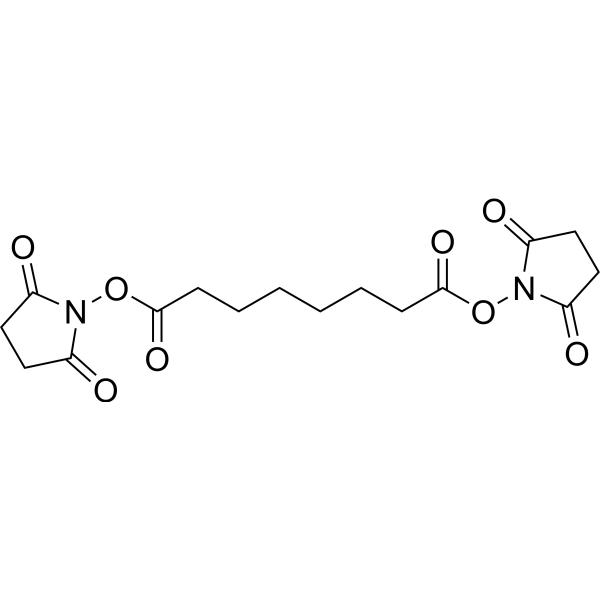
Disuccinimidyl suberate Crosslinker is an amine-reactive bifunctional protein crosslinker. Disuccinimidyl suberate Crosslinker enables stable protein-protein, peptide, and biomolecule conjugation.
|
-
-
- HY-114697
-
-
-
- HY-124329
-
|
|
Biochemical Assay Reagents
|
Cancer
|
|
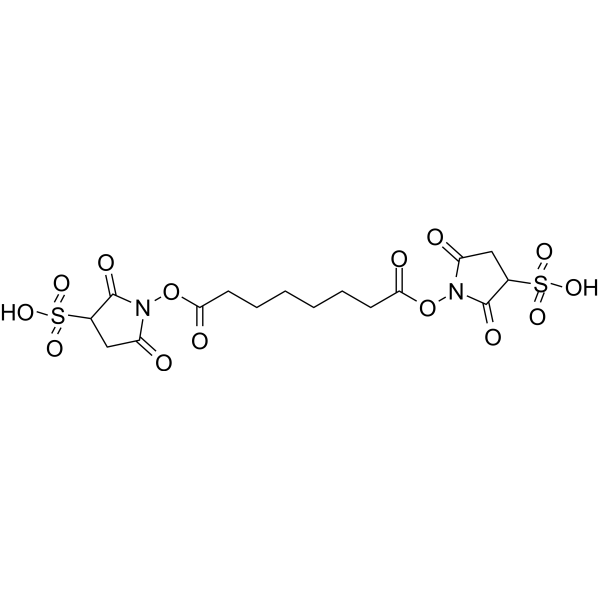
BS3 Crosslinker is an amine-reactive homobifunctional protein crosslinker. BS3 Crosslinker enables stable protein-protein, peptide, and biomolecule conjugation.
|
-
-
- HY-Y0623
-
|
HOSu; 1-Hydroxy-2,5-pyrrolidinedione
|
Biochemical Assay Reagents
|
Others
|
|
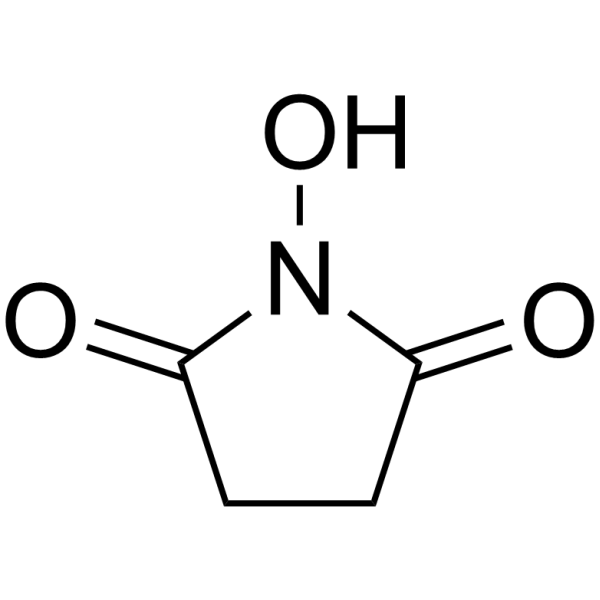
N-Hydroxysuccinimide (HOSu; 1-Hydroxy-2,5-pyrrolidinedione) is a covalent crosslinker commonly used in bioconjugation technology with a primary amine group. N-Hydroxysuccinimide reacts with amino groups (-NH2) to form a stable amide bond, which can modify amino-containing biomolecules. N-Hydroxysuccinimide can be used, for example, for protein labeling with fluorescent dyes and enzymes, surface activation of chromatography supports, microbeads, nanoparticles and microarray slides, and chemical synthesis of peptides. N-Hydroxysuccinimide has a wide range of applications in biomaterial synthesis (such as collagen, chitosan crosslinking), drug delivery systems (such as hydrogel preparation) and tissue engineering .
|
-
-
- HY-118759
-
-
-
- HY-42360
-
SMCC
1 Publications Verification
|
ADC Linker
|
Cancer
|
|
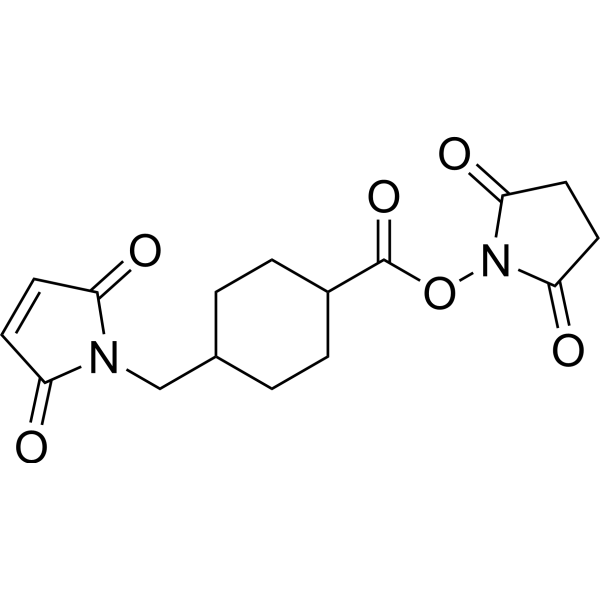
SMCC is a protein crosslinker. SMCC contains an amine-reactive N-hydroxysuccinimide ester and a sulfhydryl-reactive maleimide group that can be used in the conjugation of proteins. SMCC-conjugated antigen coupled spleen cells to induce antigen-specific immune responses .
|
-
-
- HY-124329A
-
|
|
Biochemical Assay Reagents
|
Cancer
|
|
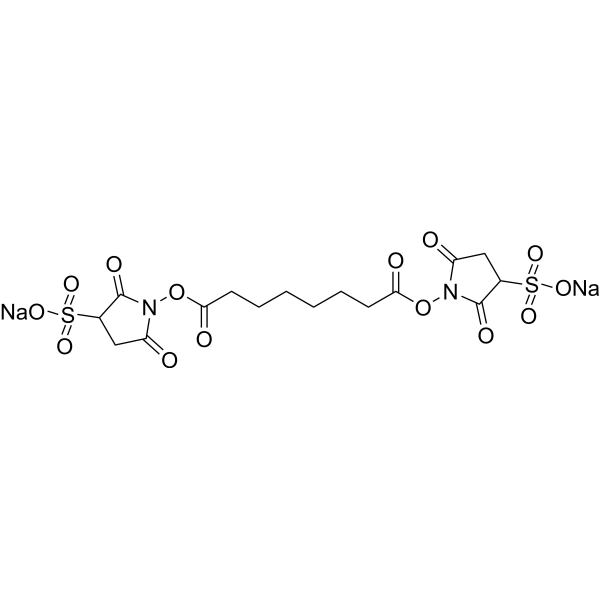
BS3 Crosslinker disodium is an amine-reactive homobifunctional protein crosslinker. BS3 Crosslinker disodium enables stable protein-protein, peptide, and biomolecule conjugation.
|
-
-
- HY-137383
-
|
|
Biochemical Assay Reagents
Reactive Oxygen Species (ROS)
|
Others
|
|
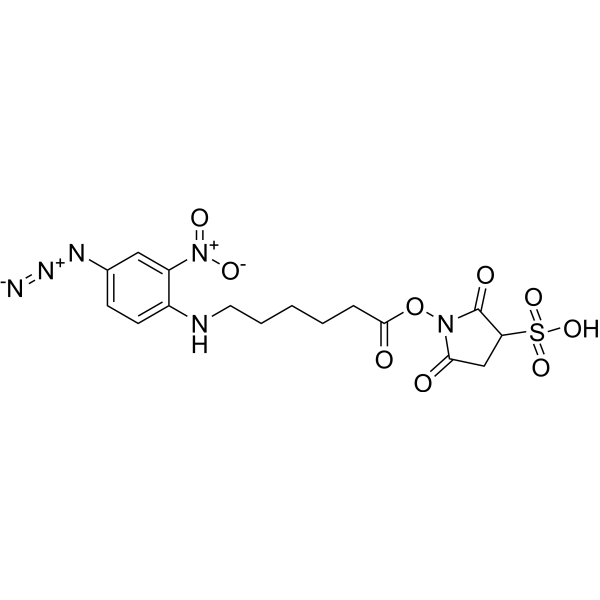
Sulfo-SANPAH is a primary amine-nitrobenzene azide cross-linker. Sulfo-SANPAH improves the functionalization process of PDMS surfaces, is covalently bound to the PAAm gel surface. Sulfo-SANPAH is widely used to crosslink ECM proteins to various substrates, including acrylic-based hydrogels, such as polyacrylamide hydrogels. Sulfo-SANPAH facilitates covalent binding through its negatively charged sulfonate group on its N-hydroxysuccinimide ester ring and a photoactivated phenyl azide group that is highly reactive with nucleophiles and free radicals .
|
-
-
- HY-157414
-
|
|
Biochemical Assay Reagents
|
Others
|
|
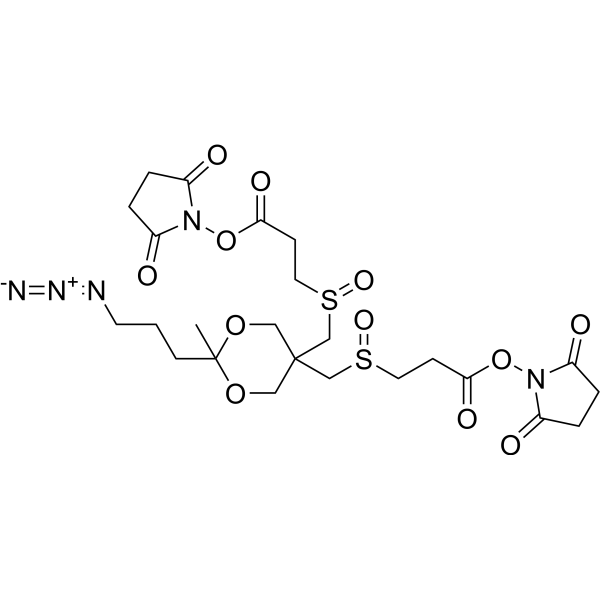
Azide-A-DSBSO crosslinker is a mass spectrometry (MS) cleavable, membrane permeable, homobifunctional, azide-labeled, acid-cleavable crosslinking peptide. Azide-A-DSBSO crosslinker crosslinks proteins via NHS ester reaction with lysine residues. Azide-A-DSBSO crosslinker can be used to study protein-protein interactions by cross-linking mass spectrometry (XL-MS) [1] .
|
-
-
- HY-123740
-
|
DSSO
|
Biochemical Assay Reagents
|
Others
|
|
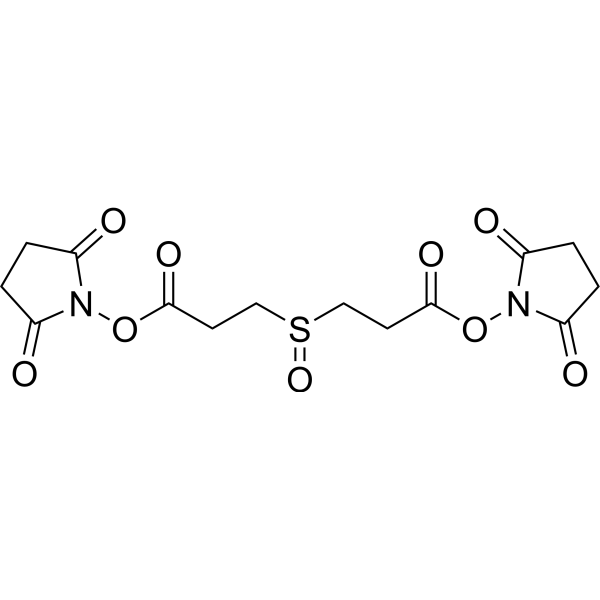
Disuccinimidyl sulfoxide (DSSO) is a sulfoxide-containing crosslinker targeting amino groups that can be cleaved by MS, and it is suitable for model peptides, proteins, and multisubunit protein complexes. Disuccinimidyl sulfoxide contains two symmetric collision-induced dissociation (CID)-cleavable sites, enabling the identification of DSSO-crosslinked peptides based on different fragmentation patterns .
|
-
-
- HY-W123005
-
|
|
Biochemical Assay Reagents
|
Others
|
|
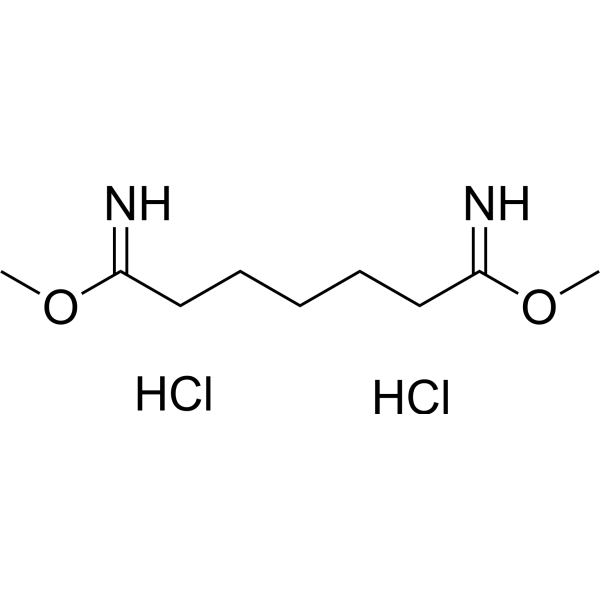
Dimethyl pimelimidate dihydrochloride is a bifunctional imidoester protein-protein crosslinker used in chromatin immunoprecipitation (ChIP) assays .
|
-
-
- HY-111434A
-
|
UAA crosslinker 1 hydrochloride
|
Amino Acid Derivatives
|
Cancer
|
|
N6-[(2-Azidoethoxy)carbonyl]-L-lysine hydrochloride (UAA crosslinker 1 hydrochloride) is a click chemistry-reactive amino acid derivative. N6-[(2-Azidoethoxy)carbonyl]-L-lysine hydrochloride mediates the generation of antibody-drug conjugates (ADCs). N6-[(2-Azidoethoxy)carbonyl]-L-lysine hydrochloride is used for site-specific incorporation into recombinant proteins, or for synthesizing chemical probes and tools for biological research .
|
-
-
- HY-W332335
-
|
|
Biochemical Assay Reagents
|
Others
|
|
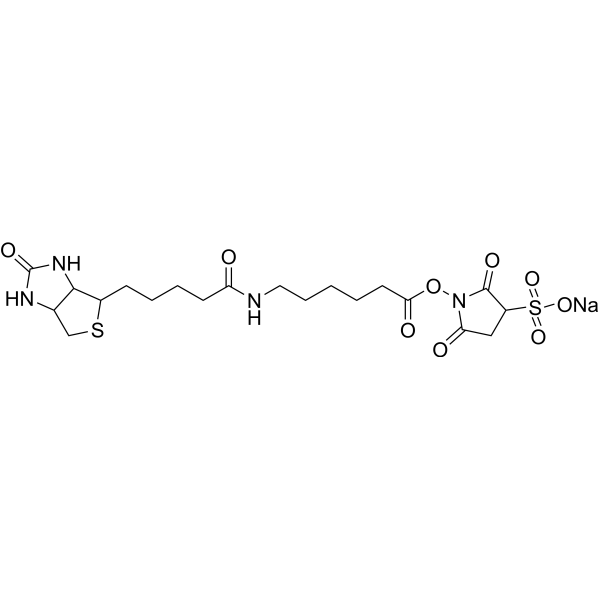
Sulfosuccinimidyl-6-(biotinamido)hexanoate sodium is a protein crosslinker, and is a biotinylation reagentcan for labeling cell surface proteins .
|
-
-
- HY-W041994
-
-
-
- HY-174892
-
|
|
Biochemical Assay Reagents
|
Others
|
|
Biotin-PEG5-NHS ester is a heterobifunctional crosslinker as well as a polyethylene glycol-containing bioconjugation reagent. Biotin-PEG5-NHS ester is widely used in scientific research fields such as the construction of highly sensitive biosensors, the development of targeted drug delivery systems (e.g., liposome modification), immunofluorescence imaging, and protein affinity purification, and serves as an important tool for achieving precise labeling and functionalization of biomolecules .
|
-
-
- HY-150014
-
|
|
Others
|
Others
|
|
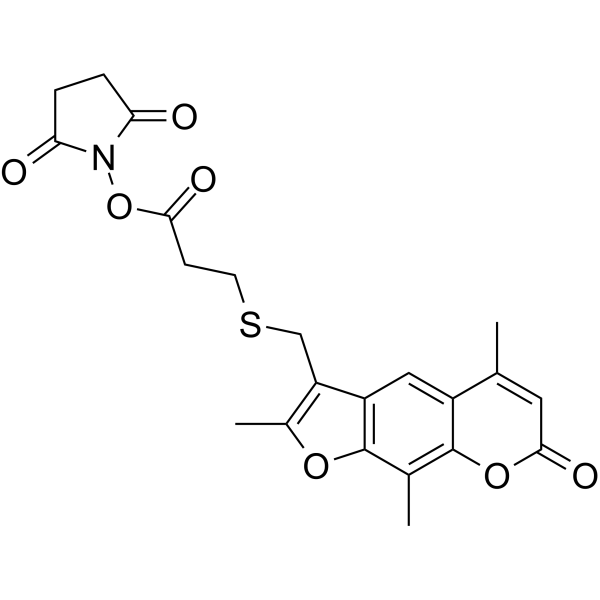
AMT-NHS is an RNA-protein crosslinker. AMT-NHS is composed of a psoralen derivative and an N-hydroxysuccinimide ester group which react with RNA bases and primary amines of protein, respectively. AMT-NHS can penetrate into living yeast cells and crosslink Cbf5 to H/ACA snoRNAs with high specificity. AMT-NHS induces different crosslinking patterns and targets both single- and double-stranded regions of RNA. AMT-NHS can be used for capturing diverse RNA-protein interactions in cells .
|
-
-
- HY-107783
-
|
|
Biochemical Assay Reagents
|
Others
|
|
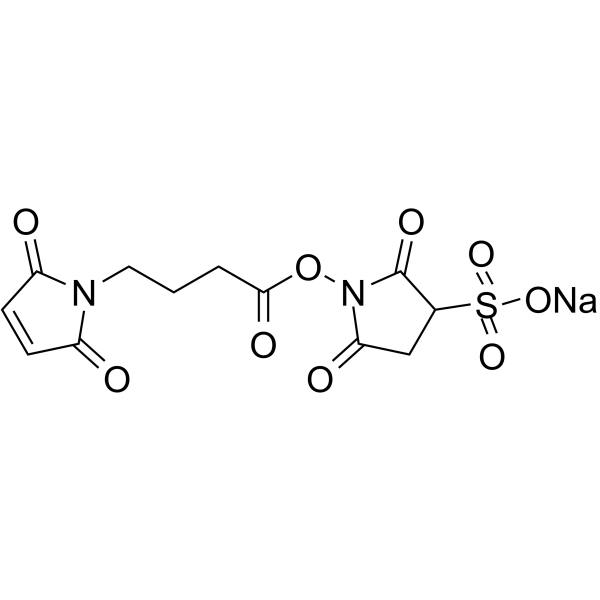
Sulfo-GMBS is a crosslinker widely used in chemical modification and coupling reactions of proteins and peptides. Among amine-thiol crosslinkers, Sulfo-GMBS generates the largest number of crosslinks and covers most of the crosslinks identified by AMAS and GMBS .
|
-
-
- HY-78985
-
|
Trimesic acid
|
MOFs
Biochemical Assay Reagents
|
Others
|
|
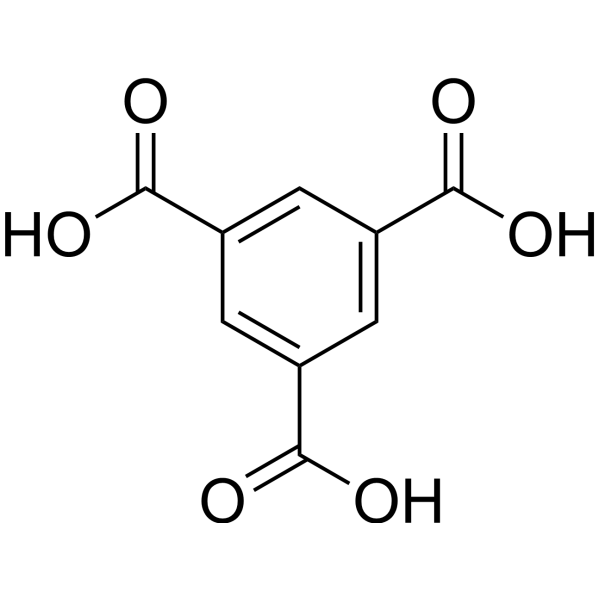
Benzene-1,3,5-tricarboxylic acid (Trimesic acid) is a rigid planar small-molecule scaffold and crosslinker. Benzene-1,3,5-tricarboxylic acid induces bicyclic peptides to adopt a planar conformation, so as to maximize surface area and bind to the flat protein surfaces involved in protein-protein interactions. Benzene-1,3,5-tricarboxylic acid forms ionic crosslinks, hydrogen bonds and π-π bonds with chitosan, thereby constructing a hydrogel network. Benzene-1,3,5-tricarboxylic acid endows chitosan hydrogel systems with specific mechanical properties, enabling sustained release of cancer therapeutic drugs including 5-Fluorouracil (HY-90006) .
|
-
-
- HY-W043748
-
|
N-Succinimidyl acrylate
|
Biochemical Assay Reagents
|
Others
|
|
2,5-Dioxopyrrolidin-1-yl acrylate (N-Succinimidyl acrylate) is a protein crosslinker. 2,5-Dioxopyrrolidin-1-yl acrylate can react with a monoclonal anti-horseradish peroxidase IgG antibody (anti-HRP) to modify lysine residues .
|
-
-
- HY-113033
-
|
|
Others
Biochemical Assay Reagents
|
Neurological Disease
Metabolic Disease
Inflammation/Immunology
|
|
Pentosidine is a fluorescent advanced glycation end product (AGE) and cross-linker. Pentosidine is a fluorescent cross-linked structure formed by lysine and arginine in sugar oxidation reactions, and it is commonly found in collagen, skin, bone, lens and plasma proteins . Pentosidine is used in research related to type 1 diabetes, brown cataracts, rheumatoid arthritis, atherosclerosis and neurodegenerative diseases .
|
-
-
- HY-W106411
-
|
Dithio-bis-maleimidoethane
|
Biochemical Assay Reagents
|
Others
|
|
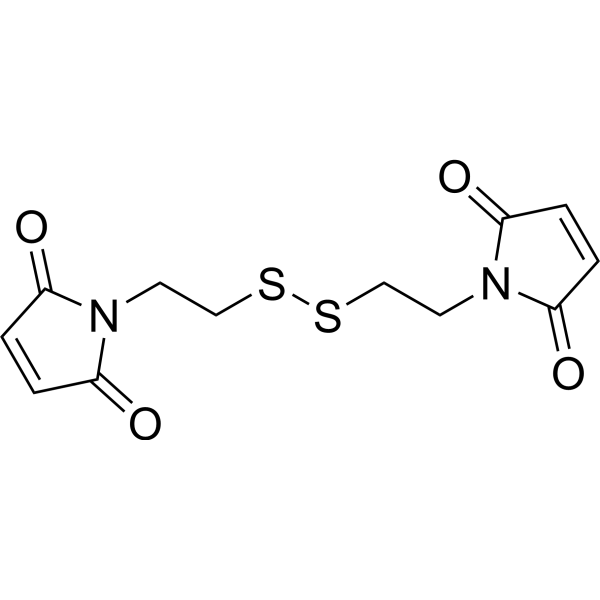
DTME (dithio-bis-maleimidoethane) is a homobifunctional, maleimide crosslinker specifically designed for conjugation between sulfhydryl groups (-SH). DTME, whose molecular structure consists of two maleimide groups connected by an ethylene disulfide bridge, can specifically react with thiol - containing molecules (such as cysteine residues) to form stable covalent bonds. DTME allows crosslinks that can be cleaved with reducing agents such as DTT (HY-15917). DTME is commonly utilized to explore and characterize protein structure, particularly oligomerization, or protein interactions .
|
-
-
- HY-111434
-
|
UAA crosslinker 1
|
Amino Acid Derivatives
|
Cancer
|
|
N6-[(2-Azidoethoxy) carbonyl]-L-lysine (UAA crosslinker 1) is a click chemistry-reactive amino acid derivative. N6-[(2-Azidoethoxy) carbonyl]-L-lysine mediates the generation of antibody-drug conjugates (ADCs). N6-[(2-Azidoethoxy) carbonyl]-L-lysine is used for site-specific incorporation into recombinant proteins, or for synthesizing chemical probes and tools for biological research .
|
-
-
- HY-117080
-
|
|
Biochemical Assay Reagents
|
Others
|
|
Sulfo-EGS is a homobifunctional, amine-reactive chemical crosslinker. Sulfo-EGS is used to study protein-protein or protein-peptide interactions, which can determine the spatial proximity of amino acid residues in a protein complex, without relying on standards .
|
-
-
- HY-W1048851B
-
|
4-Arm-PEG10000-Mal
|
Biochemical Assay Reagents
|
Others
|
|
4-Arm-PEG10000-Maleimide (4-Arm-PEG10000-Mal) is a four-arm star-shaped multifunctional PEG crosslinker with an average molecular weight of 10 kDa and maleimide terminal groups. 4-Arm-PEG10000-Maleimide efficiently conjugates biomolecules via thiol-Michael reaction, and is widely used in protein modification, antibody-drug conjugation and biomaterial preparation .
|
-
-
- HY-135066
-
|
Pentaerythritol triallyl ether
|
Biochemical Assay Reagents
|
Others
|
|
Triallyl pentaerythritol (PEATA), a crosslinker, decreases the protein rejection compared to membranes functionalized with MBAA or without any crosslinker .
|
-
-
- HY-W104848
-
-
-
- HY-W096122
-
|
|
Biochemical Assay Reagents
|
Others
|
|
DTSSP Crosslinker disodium is a protein cross-linker containing a disulfide bond. DTSSP Crosslinker disodium can react with sidechains of amino acids that are within close proximity .
|
-
-
- HY-171145
-
|
|
Biochemical Assay Reagents
|
Others
|
|
ATP-ArN3 is a UV-activatable ATP-crosslinker analog. ATP-ArN3 relys on UV irradiation to activate the aryl azide (ArN3) crosslinking group and conjugate substrate to kinases and associated proteins .
|
-
-
- HY-D2396
-
|
Sulfo SMCC R-PE
|
Fluorescent Dye
|
Cancer
|
|
Sulfo SMCC R-phycoerythrin is a conjugate composed of the protein crosslinker SMCC (HY-42360) and R-PE (R-Phycoerythrin) (HY-D0988) that can be used to label proteins to make them carry red fluorescence. Among them, SMCC is able to engage antigen-coupled spleen cells to induce antigen-specific immune responses .
|
-
-
- HY-177767
-
|
|
Biochemical Assay Reagents
|
Others
|
EY-CBS is a synthetic and rigid cross linker. EY-CBS reacts selectively with cysteines in a-helices, to stabilize the connecting helix. EY-CBS can be used for the study of the structural stability of protein polypeptides .
|
-
-
- HY-D2956
-
|
CLIP-GLA-NHS
|
Biochemical Assay Reagents
|
Others
|
|
BC-GLA-NHS (CLIP-GLA-NHS) is a NHS-labeled CLIP tag, which is an amine-reactive crosslinker and can achieve site-specific protein labeling. The NHS ester of BC-GLA-NHS reacts with the primary amine of the target molecule (such as antibodies, quantum dots) in a pH 7.5-8.5 buffer solution to form a stable amide bond. After coupling, the BC molecule undergoes a nucleophilic substitution reaction with the active site (Cys) of the CLIP-tagged fusion protein, releasing benzylcytosine and forming an irreversible thioether bond, achieving covalent labeling. BC-GLA-NHS can be used for click chemistry labeling .
|
-
-
- HY-130547A
-
|
|
DNA Alkylator/Crosslinker
|
Cancer
|
|
BS2G Crosslinker is an amine-reactive homobifunctional protein crosslinker. BS2G Crosslinker enables stable protein-protein, peptide, and biomolecule conjugation.
|
-
-
- HY-130547
-
|
|
DNA Alkylator/Crosslinker
|
Cancer
|
|
BS2G Crosslinker disodium is an amine-reactive homobifunctional protein crosslinker. BS2G Crosslinker disodium enables stable protein-protein, peptide, and biomolecule conjugation.
|
-
-
- HY-W074006
-
|
|
Biochemical Assay Reagents
|
Others
|
|
Tris(2-cyanoethyl)phosphine is a protein crosslinker. Tris(2-cyanoethyl)phosphine can be used to synthesis copper(I) complexes which shows antitumour activity .
|
-
-
- HY-W264744
-
-
-
- HY-151791
-
|
|
ADC Linker
|
Others
|
|
(S,R,S)-AHPC-C6-PEG3-butyl-N3 is a click chemistry reagent containing an azide group. (S,R,S)-AHPC-C6-PEG3-butyl-N3 serves as crosslinker-E3 ligase ligand conjugate, Click reactive protein degrader building block for PROTAC research, Template for synthesis of targeted protein degrader, VH032 conjugate . (S,R,S)-AHPC-C6-PEG3-butyl-N3 is a click chemistry reagent, it contains an Azide group and can undergo copper-catalyzed azide-alkyne cycloaddition reaction (CuAAc) with molecules containing Alkyne groups. It can also undergo strain-promoted alkyne-azide cycloaddition (SPAAC) reactions with molecules containing DBCO or BCN groups.
|
-
-
- HY-W319374
-
|
|
Biochemical Assay Reagents
|
Others
|
|
2-(Methylsulfonyl)ethyl n-succinimidyl carbonate is a protein crosslinker. 2-(Methylsulfonyl)ethyl n-succinimidyl carbonate has amino protective function .
|
-
-
- HY-142740
-
|
|
Drug-Linker Conjugates for ADC
|
Cancer
|
|
Rha-PEG3-SMCC (compound 13) is a agent-linker conjugate for ADC with potent antitumor activity by using SMCC (a protein crosslinker), linked via the noncleavable ADC linker Rha-PEG3.
|
-
-
- HY-118759S
-
|
|
Isotope-Labeled Compounds
Biochemical Assay Reagents
|
Others
|
|
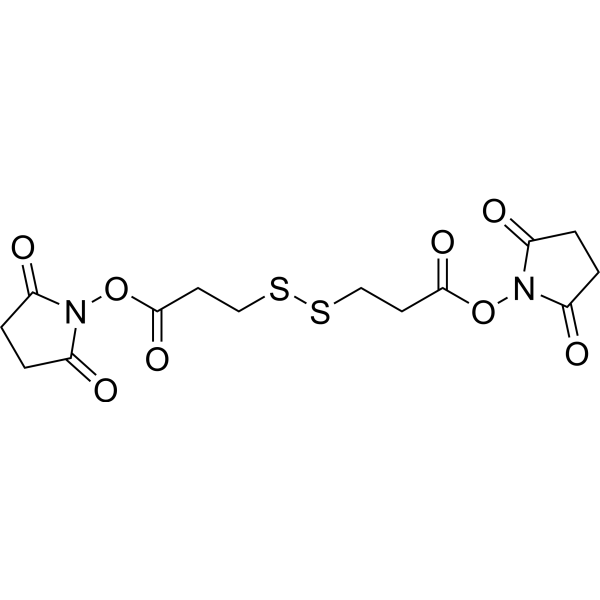
DSP Crosslinker-d8 is the deuterium labeled DSP Crosslinker (HY-118759). DSP Crosslinker is an amine-reactive and cleavable protein crosslinker. DSP Crosslinker enables stable protein-protein, peptide, and biomolecule conjugation.
|
-
-
- HY-114697S
-
|
Disuccinimidyl glutarate-d4
|
Isotope-Labeled Compounds
Biochemical Assay Reagents
|
Others
|
|
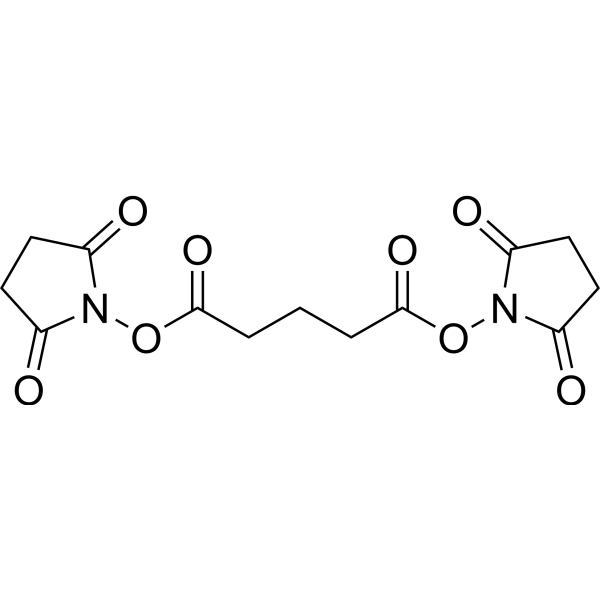
DSG Crosslinker-d4 (Disuccinimidyl glutarate-d4) is the deuterium labeled DSG Crosslinker (HY-114697). DSG Crosslinker is an amine-reactive and noncleavable protein crosslinker. DSG Crosslinker enables stable protein-protein, peptide, and biomolecule conjugation.
|
-
-
- HY-W705390
-
|
|
Biochemical Assay Reagents
|
Others
|
|
Disuccinimidyl suberate Crosslinker-d4 is the deuterium labeled Disuccinimidyl suberate Crosslinker (HY-W019543). Disuccinimidyl suberate Crosslinker is an amine-reactive bifunctional protein crosslinker. Disuccinimidyl suberate Crosslinker enables stable protein-protein, peptide, and biomolecule conjugation.
|
-
-
- HY-137251
-
|
|
Biochemical Assay Reagents
|
Others
|
|
Sulfo-MBS sodium is a heterobifunctional crosslinker with a maleimide group and an N-hydroxysuccinimide (NHS) ester group, which can react with cysteine residues and lysine residues on proteins. Sulfo-MBS sodium be used for protein cross-linking studies .
|
-
-
- HY-W800760
-
|
|
E3 Ligase Ligand-Linker Conjugates
|
Cancer
|
|
(S, R, S)-AHPC-PEG6-Tos is a combination of a von Hippel-Lindau (VHL)-recruiting ligand and PEGylated crosslinker with a tosyl group. The tosyl group is a good leaving group for nucleophilic substitution reactions. (S, R, S)-AHPC-PEG2-Tos is useful for synthesis of PROTAC compounds and molecules for targeted protein degradation.
|
-
-
- HY-78985S
-
|
Trimesic acid-d3
|
Isotope-Labeled Compounds
Biochemical Assay Reagents
MOFs
|
Others
|
|
Benzene-1,3,5-tricarboxylic acid-d3 (Trimesic acid-d3) is the deuterium labeled Benzene-1,3,5-tricarboxylic acid (HY-78985). Benzene-1,3,5-tricarboxylic acid (Trimesic acid) is a rigid planar small-molecule scaffold and crosslinker. Benzene-1,3,5-tricarboxylic acid induces bicyclic peptides to adopt a planar conformation, so as to maximize surface area and bind to the flat protein surfaces involved in protein-protein interactions. Benzene-1,3,5-tricarboxylic acid forms ionic crosslinks, hydrogen bonds and π-π bonds with chitosan, thereby constructing a hydrogel network. Benzene-1,3,5-tricarboxylic acid endows chitosan hydrogel systems with specific mechanical properties, enabling sustained release of cancer therapeutic drugs including 5-Fluorouracil (HY-90006) .
|
-
-
- HY-W354021
-
|
|
Biochemical Assay Reagents
|
Others
|
|
Bis-N-succinimidyl diglycolic acid is a multifunctional crosslinker. Bis-N-succinimidyl diglycolic acid finds application in bioconjugation and protein labeling .
|
-
-
- HY-W133907
-
|
|
Environmental Pollutants
Biochemical Assay Reagents
|
Others
|
|
Tetrakis (hydroxymethyl) phosphonium sulfate is a protein crosslinker and hydrogel modifier. Tetrakis (hydroxymethyl) phosphonium sulfate covalently binds to primary and secondary amines of amino acids or proteins via a Mannich-type reaction, thereby constructing stable crosslinking bonds between protein molecules. Tetrakis (hydroxymethyl) phosphonium sulfate not only regulates the gelation time and storage modulus of recombinant elastin-like protein hydrogels, but also exhibits excellent cytocompatibility, and supports the differentiation and growth of embryonic stem cells and neural cells in a three-dimensional encapsulation environment. Tetrakis (hydroxymethyl) phosphonium sulfate is suitable for protein-based hydrogel systems, especially for applications related to cell encapsulation .
|
-
-
- HY-124329AS
-
|
|
Isotope-Labeled Compounds
Biochemical Assay Reagents
|
Others
|
|
BS3 Crosslinker-d4 disodium is the deuterium labeled BS3 Crosslinker. BS3 Crosslinker disodium is an amine-reactive homobifunctional protein crosslinker. BS3 Crosslinker disodium enables stable protein-protein, peptide, and biomolecule conjugation.
|
-
-
- HY-130547S
-
|
|
Isotope-Labeled Compounds
DNA Alkylator/Crosslinker
|
Others
|
|
BS2G Crosslinker-d4 disodium is the deuterium labeled BS2G Crosslinker disodium (HY-130547). BS2G Crosslinker is an amine-reactive homobifunctional protein crosslinker. BS2G Crosslinker enables stable protein-protein, peptide, and biomolecule conjugation.
|
-
-
- HY-42360G
-
|
|
ADC Linker
|
Inflammation/Immunology
Cancer
|
|
SMCC (GMP) is the GMP level of SMCC (HY-42360). GMP guidelines are used to produce SMCC (HY-42360) (GMP). GMP small molecules works appropriately as an auxiliary reagent for cell research manufacture. SMCC (GMP) is a protein crosslinker. SMCC (GMP) contains an amine-reactive N-hydroxysuccinimide ester and a sulfhydryl-reactive maleimide group that can be used in the conjugation of proteins. SMCC-conjugated antigen coupled spleen cells to induce antigen-specific immune responses.
|
-
-
- HY-W190737
-
|
|
Biochemical Assay Reagents
|
|
|
NHS-SS-dPEG4-biotin (cleavable) is a biodegradable crosslinker with efficient bioconjugation activity. NHS-SS-dPEG4-biotin (cleavable) can effectively connect biomolecules, optimize the efficiency of biolabeling, and be used in targeted compound delivery systems. NHS-SS-dPEG4-biotin (cleavable) can also play an important role in protein engineering and fluorescence imaging.
|
-
- HY-D3240
-
|
|
Fluorescent Dye
|
Others
|
|
Photoactive NTR probe (Compound 1) is a covalent crosslinker and Fluorescent indicator targeting Nitroreductase. The Photoactive NTR probe undergoes a sequential activation process: it is first activated via nitroreductase-mediated nitro-to-amino conversion, and then forms a fluorescent product upon photoactivation. The Photoactive NTR probe can form covalent adducts with the side chains of cysteine, tyrosine, lysine and histidine in adjacent proteins to reduce fluorophore diffusion. The Photoactive NTR probe enables super-resolution (STORM) imaging of active mitochondrial nitroreductase microdomains in living cells .
|
-
- HY-P11661
-
|
|
Epigenetic Reader Domain
|
Inflammation/Immunology
|
DC-peptoid-1 is a specific binder and crosslinker targeting the phosphorylated Brd4 PDID domain, with a dissociation constant (Kd) of approximately 50-100 μM for human-derived targets. DC-peptoid-1 only binds to phosphorylated PDID and fails to recognize the non-phosphorylated form or other domains (such as Brd4 598-785). DC-peptoid-1 effectively crosslinks with the target protein both in solution and cell lysates. It can successfully capture phosphorylated PDID from complex systems via immobilization, without binding to bacterial-derived non-phosphorylated proteins or other non-specific phosphoproteins. DC-peptoid-1 has the potential to serve as a phosphoprotein-specific antibody substitute for applications such as immunoaffinity purification .
|
-
-
- HY-D2396
-
|
Sulfo SMCC R-PE
|
蛍光色素
|
|
Sulfo SMCC R-phycoerythrin is a conjugate composed of the protein crosslinker SMCC (HY-42360) and R-PE (R-Phycoerythrin) (HY-D0988) that can be used to label proteins to make them carry red fluorescence. Among them, SMCC is able to engage antigen-coupled spleen cells to induce antigen-specific immune responses .
|
-
- HY-D2956
-
|
CLIP-GLA-NHS
|
蛍光色素
|
|
BC-GLA-NHS (CLIP-GLA-NHS) is a NHS-labeled CLIP tag, which is an amine-reactive crosslinker and can achieve site-specific protein labeling. The NHS ester of BC-GLA-NHS reacts with the primary amine of the target molecule (such as antibodies, quantum dots) in a pH 7.5-8.5 buffer solution to form a stable amide bond. After coupling, the BC molecule undergoes a nucleophilic substitution reaction with the active site (Cys) of the CLIP-tagged fusion protein, releasing benzylcytosine and forming an irreversible thioether bond, achieving covalent labeling. BC-GLA-NHS can be used for click chemistry labeling .
|
-
- HY-42360G
-
|
|
蛍光色素
|
|
SMCC (GMP) is the GMP level of SMCC (HY-42360). GMP guidelines are used to produce SMCC (HY-42360) (GMP). GMP small molecules works appropriately as an auxiliary reagent for cell research manufacture. SMCC (GMP) is a protein crosslinker. SMCC (GMP) contains an amine-reactive N-hydroxysuccinimide ester and a sulfhydryl-reactive maleimide group that can be used in the conjugation of proteins. SMCC-conjugated antigen coupled spleen cells to induce antigen-specific immune responses.
|
-
- HY-D3240
-
|
|
蛍光色素
|
|
Photoactive NTR probe (Compound 1) is a covalent crosslinker and Fluorescent indicator targeting Nitroreductase. The Photoactive NTR probe undergoes a sequential activation process: it is first activated via nitroreductase-mediated nitro-to-amino conversion, and then forms a fluorescent product upon photoactivation. The Photoactive NTR probe can form covalent adducts with the side chains of cysteine, tyrosine, lysine and histidine in adjacent proteins to reduce fluorophore diffusion. The Photoactive NTR probe enables super-resolution (STORM) imaging of active mitochondrial nitroreductase microdomains in living cells .
|
-
- HY-Y0623
-
|
HOSu; 1-Hydroxy-2,5-pyrrolidinedione
|
生化学アッセイ試薬
|
|
N-Hydroxysuccinimide (HOSu; 1-Hydroxy-2,5-pyrrolidinedione) is a covalent crosslinker commonly used in bioconjugation technology with a primary amine group. N-Hydroxysuccinimide reacts with amino groups (-NH2) to form a stable amide bond, which can modify amino-containing biomolecules. N-Hydroxysuccinimide can be used, for example, for protein labeling with fluorescent dyes and enzymes, surface activation of chromatography supports, microbeads, nanoparticles and microarray slides, and chemical synthesis of peptides. N-Hydroxysuccinimide has a wide range of applications in biomaterial synthesis (such as collagen, chitosan crosslinking), drug delivery systems (such as hydrogel preparation) and tissue engineering .
|
-
- HY-174892
-
|
|
生化学アッセイ試薬
|
|
Biotin-PEG5-NHS ester is a heterobifunctional crosslinker as well as a polyethylene glycol-containing bioconjugation reagent. Biotin-PEG5-NHS ester is widely used in scientific research fields such as the construction of highly sensitive biosensors, the development of targeted drug delivery systems (e.g., liposome modification), immunofluorescence imaging, and protein affinity purification, and serves as an important tool for achieving precise labeling and functionalization of biomolecules .
|
-
- HY-78985
-
|
Trimesic acid
|
生化学アッセイ試薬
|
|
Benzene-1,3,5-tricarboxylic acid (Trimesic acid) is a rigid planar small-molecule scaffold and crosslinker. Benzene-1,3,5-tricarboxylic acid induces bicyclic peptides to adopt a planar conformation, so as to maximize surface area and bind to the flat protein surfaces involved in protein-protein interactions. Benzene-1,3,5-tricarboxylic acid forms ionic crosslinks, hydrogen bonds and π-π bonds with chitosan, thereby constructing a hydrogel network. Benzene-1,3,5-tricarboxylic acid endows chitosan hydrogel systems with specific mechanical properties, enabling sustained release of cancer therapeutic drugs including 5-Fluorouracil (HY-90006) .
|
-
- HY-W1048851B
-
|
4-Arm-PEG10000-Mal
|
生化学アッセイ試薬
|
|
4-Arm-PEG10000-Maleimide (4-Arm-PEG10000-Mal) is a four-arm star-shaped multifunctional PEG crosslinker with an average molecular weight of 10 kDa and maleimide terminal groups. 4-Arm-PEG10000-Maleimide efficiently conjugates biomolecules via thiol-Michael reaction, and is widely used in protein modification, antibody-drug conjugation and biomaterial preparation .
|
-
- HY-42360G
-
|
|
生化学アッセイ試薬
|
|
SMCC (GMP) is the GMP level of SMCC (HY-42360). GMP guidelines are used to produce SMCC (HY-42360) (GMP). GMP small molecules works appropriately as an auxiliary reagent for cell research manufacture. SMCC (GMP) is a protein crosslinker. SMCC (GMP) contains an amine-reactive N-hydroxysuccinimide ester and a sulfhydryl-reactive maleimide group that can be used in the conjugation of proteins. SMCC-conjugated antigen coupled spleen cells to induce antigen-specific immune responses.
|
-
- HY-P11661
-
|
|
Epigenetic Reader Domain
|
Inflammation/Immunology
|
DC-peptoid-1 is a specific binder and crosslinker targeting the phosphorylated Brd4 PDID domain, with a dissociation constant (Kd) of approximately 50-100 μM for human-derived targets. DC-peptoid-1 only binds to phosphorylated PDID and fails to recognize the non-phosphorylated form or other domains (such as Brd4 598-785). DC-peptoid-1 effectively crosslinks with the target protein both in solution and cell lysates. It can successfully capture phosphorylated PDID from complex systems via immobilization, without binding to bacterial-derived non-phosphorylated proteins or other non-specific phosphoproteins. DC-peptoid-1 has the potential to serve as a phosphoprotein-specific antibody substitute for applications such as immunoaffinity purification .
|
| 製品番号 |
製品名 |
Category |
Target |
構造式 |
-
- HY-118759S
-
|
|
|
DSP Crosslinker-d8 is the deuterium labeled DSP Crosslinker (HY-118759). DSP Crosslinker is an amine-reactive and cleavable protein crosslinker. DSP Crosslinker enables stable protein-protein, peptide, and biomolecule conjugation.
|
-
-
- HY-114697S
-
|
|
|
DSG Crosslinker-d4 (Disuccinimidyl glutarate-d4) is the deuterium labeled DSG Crosslinker (HY-114697). DSG Crosslinker is an amine-reactive and noncleavable protein crosslinker. DSG Crosslinker enables stable protein-protein, peptide, and biomolecule conjugation.
|
-
-
- HY-W705390
-
|
|
|
Disuccinimidyl suberate Crosslinker-d4 is the deuterium labeled Disuccinimidyl suberate Crosslinker (HY-W019543). Disuccinimidyl suberate Crosslinker is an amine-reactive bifunctional protein crosslinker. Disuccinimidyl suberate Crosslinker enables stable protein-protein, peptide, and biomolecule conjugation.
|
-
-
- HY-78985S
-
|
|
|
Benzene-1,3,5-tricarboxylic acid-d3 (Trimesic acid-d3) is the deuterium labeled Benzene-1,3,5-tricarboxylic acid (HY-78985). Benzene-1,3,5-tricarboxylic acid (Trimesic acid) is a rigid planar small-molecule scaffold and crosslinker. Benzene-1,3,5-tricarboxylic acid induces bicyclic peptides to adopt a planar conformation, so as to maximize surface area and bind to the flat protein surfaces involved in protein-protein interactions. Benzene-1,3,5-tricarboxylic acid forms ionic crosslinks, hydrogen bonds and π-π bonds with chitosan, thereby constructing a hydrogel network. Benzene-1,3,5-tricarboxylic acid endows chitosan hydrogel systems with specific mechanical properties, enabling sustained release of cancer therapeutic drugs including 5-Fluorouracil (HY-90006) .
|
-
-
- HY-124329AS
-
|
|
|
BS3 Crosslinker-d4 disodium is the deuterium labeled BS3 Crosslinker. BS3 Crosslinker disodium is an amine-reactive homobifunctional protein crosslinker. BS3 Crosslinker disodium enables stable protein-protein, peptide, and biomolecule conjugation.
|
-
-
- HY-130547S
-
|
|
|
BS2G Crosslinker-d4 disodium is the deuterium labeled BS2G Crosslinker disodium (HY-130547). BS2G Crosslinker is an amine-reactive homobifunctional protein crosslinker. BS2G Crosslinker enables stable protein-protein, peptide, and biomolecule conjugation.
|
-
-
- HY-111434A
-
|
UAA crosslinker 1 hydrochloride
|
|
Azide
|
|
N6-[(2-Azidoethoxy)carbonyl]-L-lysine hydrochloride (UAA crosslinker 1 hydrochloride) is a click chemistry-reactive amino acid derivative. N6-[(2-Azidoethoxy)carbonyl]-L-lysine hydrochloride mediates the generation of antibody-drug conjugates (ADCs). N6-[(2-Azidoethoxy)carbonyl]-L-lysine hydrochloride is used for site-specific incorporation into recombinant proteins, or for synthesizing chemical probes and tools for biological research .
|
-
- HY-111434
-
|
UAA crosslinker 1
|
|
Azide
|
|
N6-[(2-Azidoethoxy) carbonyl]-L-lysine (UAA crosslinker 1) is a click chemistry-reactive amino acid derivative. N6-[(2-Azidoethoxy) carbonyl]-L-lysine mediates the generation of antibody-drug conjugates (ADCs). N6-[(2-Azidoethoxy) carbonyl]-L-lysine is used for site-specific incorporation into recombinant proteins, or for synthesizing chemical probes and tools for biological research .
|
-
- HY-151791
-
|
|
|
Azide
|
|
(S,R,S)-AHPC-C6-PEG3-butyl-N3 is a click chemistry reagent containing an azide group. (S,R,S)-AHPC-C6-PEG3-butyl-N3 serves as crosslinker-E3 ligase ligand conjugate, Click reactive protein degrader building block for PROTAC research, Template for synthesis of targeted protein degrader, VH032 conjugate . (S,R,S)-AHPC-C6-PEG3-butyl-N3 is a click chemistry reagent, it contains an Azide group and can undergo copper-catalyzed azide-alkyne cycloaddition reaction (CuAAc) with molecules containing Alkyne groups. It can also undergo strain-promoted alkyne-azide cycloaddition (SPAAC) reactions with molecules containing DBCO or BCN groups.
|
入力情報は安全に管理されます. ※ 必須入力項目.
Inquiry Information
- 製品名:
- 製品番号:
- 数量:
- MCE 日本正規代理店: