1. Search Result
Search Result
Results for "

protein modification

" in MedChemExpress (MCE) Product Catalog:

200

Inhibitors & Agonists

16

Screening Libraries

12

Fluorescent Dye

85

Biochemical Assay Reagents

10

Peptides

1

MCE Kits

13

Natural
Products

5

Isotope-Labeled Compounds

17

Click Chemistry

26

Oligonucleotides

Cat. No. Product Name Target Research Areas Chemical Structure
  • HY-N0005
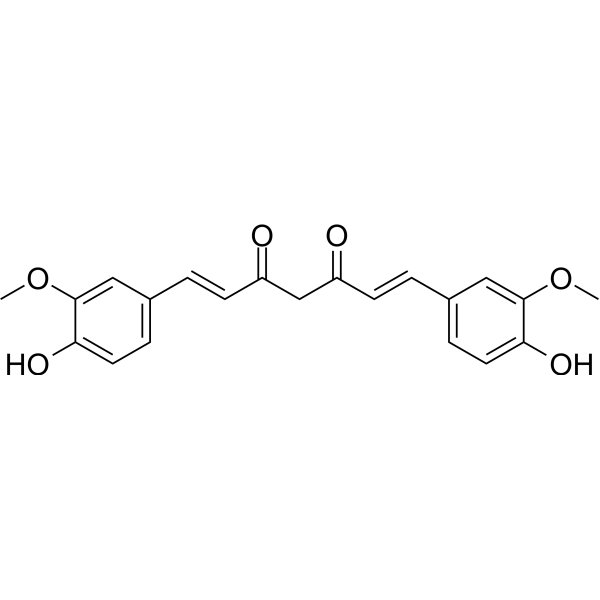
    Curcumin
    Maximum Cited Publications
    123 Publications Verification

    Diferuloylmethane; Natural Yellow 3; Turmeric yellow

    Histone Acetyltransferase Epigenetic Reader Domain Keap1-Nrf2 Autophagy Mitophagy Influenza Virus Ferroptosis Apoptosis Infection Metabolic Disease Inflammation/Immunology Cancer
    Curcumin (Diferuloylmethane), a natural phenolic compound, is a p300/CREB-binding protein-specific inhibitor of acetyltransferase, represses the acetylation of histone/nonhistone proteins and histone acetyltransferase-dependent chromatin transcription. Curcumin is a photosensitizer against microorganisms. Curcumin shows inhibitory effects on NF-κB and MAPKs, and has diverse pharmacologic effects including anti-inflammatory, antioxidant, antiproliferative and antiangiogenic activities. Curcumin induces stabilization of Nrf2 protein through Keap1 cysteine modification.
    Curcumin
  • HY-16909
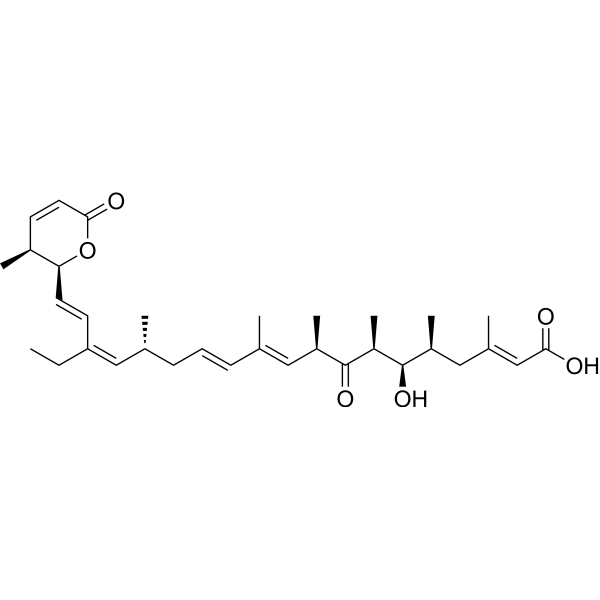
    Leptomycin B
    20+ Cited Publications

    CI 940; LMB

    CRM1 Fungal Antibiotic Infection Cancer
    Leptomycin B (CI 940; LMB) is a potent inhibitor of the nuclear export of proteins. Leptomycin B inactivates CRM1/exportin 1 by covalent modification at a cysteine residue. Leptomycin B is a potent antifungal antibiotic blocking the eukaryotic cell cycle .
    Leptomycin B
  • HY-135233

    SATA

    Biochemical Assay Reagents Others
    N-Succinimidyl S-acetylthioacetate (SATA) is a protein modifying agent. N-Succinimidyl S-acetylthioacetate adds sulfhydryl groups to proteins and other amine-containing molecules in a protected form. N-Succinimidyl-S-acetylthioacetate can thiolate antibodies, thereby promoting efficient attachment of antibodies to other molecules and exerting conjugation activity. N-Succinimidyl-S-acetylthioacetate can be used in immunoassays such as ELISA studies .
    N-Succinimidyl-S-acetylthioacetate
  • HY-116424

    Anti-dynamin II

    Biochemical Assay Reagents Cancer
    DYn-2 (Anti-dynamin II) is a chemoselective sulfenylated protein probe. DYn-2 binds to sulfenylated proteins with chemoselectivity, enabling the detection of such proteins. DYn-2 can detect differences in intracellular sulfenylation rates. DYn-2 can be used in human cancer research, including studies on breast cancer and lung cancer .
    DYn-2
  • HY-N0005R
    Curcumin (Standard)
    1 Publications Verification

    Diferuloylmethane (Standard); Natural Yellow 3 (Standard); Turmeric yellow (Standard)

    Reference Standards Histone Acetyltransferase Epigenetic Reader Domain Keap1-Nrf2 Autophagy Mitophagy Influenza Virus Ferroptosis Infection Neurological Disease Inflammation/Immunology Cancer
    Curcumin (Standard) is the analytical standard of Curcumin (HY-N0005). This product is intended for research and analytical applications. Curcumin (Diferuloylmethane), a natural phenolic compound, is a p300/CREB-binding protein-specific inhibitor of acetyltransferase, represses the acetylation of histone/nonhistone proteins and histone acetyltransferase-dependent chromatin transcription. Curcumin is a photosensitizer against microorganisms. Curcumin shows inhibitory effects on NF-κB and MAPKs, and has diverse pharmacologic effects including anti-inflammatory, antioxidant, antiproliferative and antiangiogenic activities. Curcumin induces stabilization of Nrf2 protein through Keap1 cysteine modification.
    Curcumin (Standard)
  • HY-153083

    mRNA SARS-CoV Infection
    COVID-19 Spike Protein mRNA (N1-Me-Pseudo UTP) is an mRNA encoding the SARS-CoV-2 spike protein with enhanced performance via chemical modification. COVID-19 Spike Protein mRNA (N1-Me-Pseudo UTP) replaces natural uridine (UTP) with N1-Me-Pseudo UTP, which effectively reduces immunogenicity and improves stability and translation efficiency. The 3' UTR of COVID-19 Spike Protein mRNA (N1-Me-Pseudo UTP) optimizes AU-rich elements through HuR anchor sites, exhibiting higher translation efficiency. COVID-19 Spike Protein mRNA is widely used in COVID-19-related scientific research and vaccine development .
    COVID-19 Spike Protein mRNA(N1-Me-Pseudo UTP)
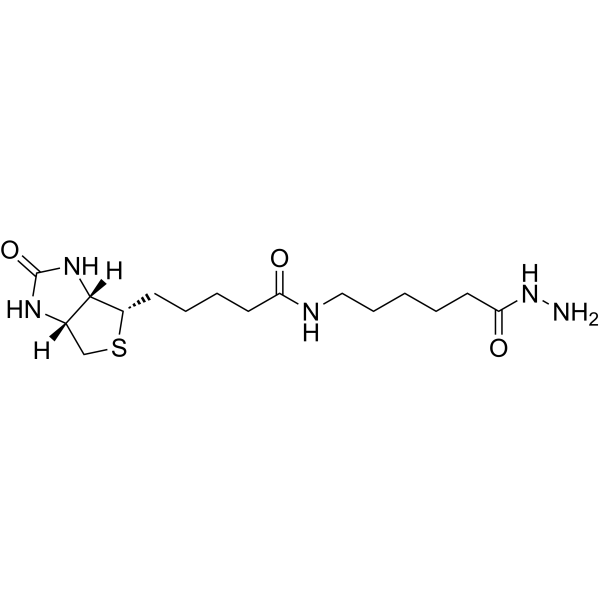
  • HY-101885

    Biotinamidocaproyl hydrazide; BACH; (+)-Biotinamidohexanoic Acid hydrazide; Biotin Aminocaproyl Hydrazide

    Biochemical Assay Reagents Others
    Biotin LC hydrazide is a long chain protein modification reagent, which can transform periodate-oxidized glycoproteins.
    Biotin LC hydrazide
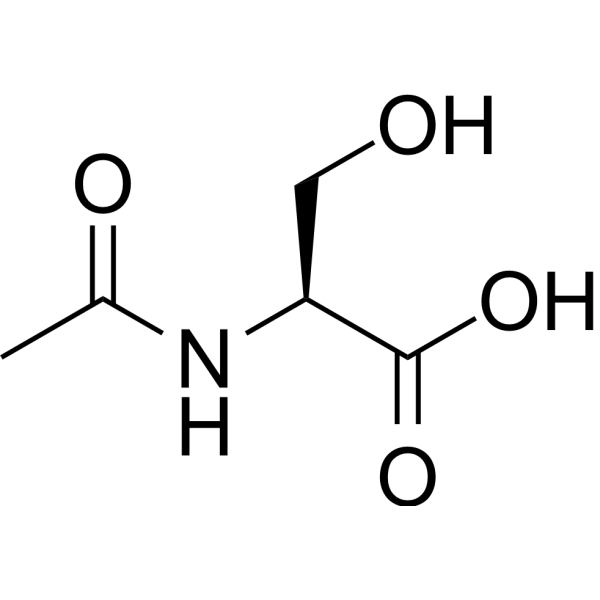
  • HY-134222A

    N-Acetyl-L-serine

    Endogenous Metabolite Complement System Others
    N-Acetylserine (N-Acetyl-L-serine) is a complement pathway modulator targeting activated third complement protein (C3b) and an amino-terminal residue (an N-terminal acetylation modification group). N-Acetylserine reacts with the exposed thioester group of C3b via its hydroxyl group, thereby blocking the covalent binding of glycerol to this thioester group. N-Acetylserine widely exists in soluble proteins of mammalian cells (accounting for approximately 80% of such proteins). N-Acetylserine has a blocking property that prevents direct Edman sequencing of proteins; deblocking is achievable through trifluoroacetic acid-catalyzed N→O acetyl migration followed by β-elimination. N-Acetylserine is suitable for sequencing of proteins with N-terminal acetylserine modification .
    N-Acetylserine
  • HY-W116606

    Fluorescent Dye Others
    Coumarin boronic acid is a fluorescent probe. The excitation and emission wavelengths of coumarin boronic acid are set to 360 nm and 430 nm, respectively. Coumarin boronic acid can be used to monitor the formation of amino acid and protein hydroxyl peroxides in real time, which is beneficial for understanding the mechanisms of oxidative stress and protein post-translational modification .
    Coumarin boronic acid
  • HY-16111

    Farnesyl Transferase Ras Cancer
    BMS-214662 is a farnesyl transferase inhibitor. BMS-214662 can effectively block the localization and function of Ras protein in the cell membrane by inhibiting the pro-group modification of Ras protein, thereby exerting anti-tumor activity. BMS-214662 has an IC50 value of 1.3 nM for H-Ras and 8.4 nM for K-Ras. BMS-214662 can be used to study Ras-related tumor diseases .
    BMS-214662
  • HY-U00447

    MDM-2/p53 DNA Alkylator/Crosslinker Cancer
    PK11000 is an alkylating agent, and stabilizes the DNA-binding domain of both WT and mutant p53 proteins by covalent cysteine modification without compromising DNA binding. PK11000 has anti-tumor activities .
    PK11000
  • HY-126396

    Antibiotic CaMK Fungal Infection
    Sordarin sodium is an eEF2 inhibitor and antibiotic. Sordarin sodium's function is dependent on the diphthamide modification on eEF2. Sordarin sodium inhibits protein synthesis by preventing the binding of eEF2 to the ribosome complex. Sordarin sodium has antifungal activity .
    Sordarin sodium
  • HY-135682

    Biochemical Assay Reagents Others
    Nitrosobiotin is prepared from biotin.
    Nitrosobiotin
  • HY-107783

    Biochemical Assay Reagents Others
    Sulfo-GMBS is a crosslinker widely used in chemical modification and coupling reactions of proteins and peptides. Among amine-thiol crosslinkers, Sulfo-GMBS generates the largest number of crosslinks and covers most of the crosslinks identified by AMAS and GMBS .
    Sulfo-GMBS
  • HY-N0005S

    Diferuloylmethane-d6; Natural Yellow 3-d6; Turmeric yellow-d6

    Isotope-Labeled Compounds Keap1-Nrf2 Ferroptosis Autophagy Histone Acetyltransferase Epigenetic Reader Domain Mitophagy Influenza Virus Infection Metabolic Disease Inflammation/Immunology Cancer
    Curcumin-d6 (Diferuloylmethane-d6 ) is deuterium labeled Curcumin (HY-N0005). Curcumin (Diferuloylmethane), a natural phenolic compound, is a p300/CREB-binding protein-specific inhibitor of acetyltransferase, represses the acetylation of histone/nonhistone proteins and histone acetyltransferase-dependent chromatin transcription. Curcumin is a photosensitizer against microorganisms. Curcumin shows inhibitory effects on NF-κB and MAPKs, and has diverse pharmacologic effects including anti-inflammatory, antioxidant, antiproliferative and antiangiogenic activities. Curcumin induces stabilization of Nrf2 protein through Keap1 cysteine modification.
    Curcumin-d6
  • HY-138246

    Biochemical Assay Reagents Others
    Pentynoic acid STP ester sodium is a click chemistry reagent containing a terminal propargyl group and a STP ester group. Pentynoic acid STP ester sodium is suitable for protein modification .
    Pentynoic acid STP ester sodium
  • HY-136276

    Amino Acid Derivatives Others
    DMNB-caged-Serine is a photocaged amino acid. DMNB-caged-Serine can be used as a catalytic residue, hydrogen bonding partner or site of post-translational modification. DMNB-caged-Serine can be used for the control of protein phosphorylation .
    DMNB-caged-Serine
  • HY-W012184

    Biochemical Assay Reagents Inflammation/Immunology
    CDAP is an organic cyanylating reagent that can be used for preparation of solid phase affinity reagents, modification of protein thiols and nucleotide delivery. CDAP also activates polysaccharides with a variety of chemical properties. CDAP can be used to prepare conjugate vaccines and other immune reagents .
    CDAP
  • HY-118093

    Drug Metabolite Others
    N-benzoyl-L-aspartic acid, a major metabolite of benzyl glucosinolate, can be used for modification of peptides or proteins .
    N-benzoyl-L-aspartic acid
  • HY-119493

    Fluorescent Dye Others
    MSBN is a highly selective fluorogenic probe for thiols. MSBN can be used to image thiols in live cells selectively and specifically label protein thiols with a signal to determine various reversible protein thiol modifications .
    MSBN
  • HY-19804

    Photo lysine

    Biochemical Assay Reagents Others
    Photo-lysine, a new lysine-based photo-reactive amino acid, captures proteins that bind lysine post-translational modifications.
    Photo-lysine
  • HY-W040294

    Methyl α-D-glucopyranoside

    Biochemical Assay Reagents Others
    Methyl α-D-glucoside (Methyl α-D-glucopyranoside) can be used for protein glycosylation modification. Methyl α-D-glucoside is a kind of biological materials or organic compounds that are widely used in life science research .
    Methyl α-D-glucoside
  • HY-16111A

    Farnesyl Transferase Ras Cancer
    BMS-214662 hydrochloride is an inhibitor of farnesyltransferase (Farnesyl Transferase). BMS-214662 hydrochloride can effectively block the localization and function of Ras proteins on the cell membrane by inhibiting the prenylation modification of Ras proteins, thereby exerting anti-tumor activity. The IC50 value of BMS-214662 hydrochloride for H-Ras is 1.3 nM, and for K-Ras it is 8.4 nM. BMS-214662 hydrochloride can be used in the research of tumor diseases related to Ras .
    BMS-214662 hydrochloride
  • HY-P2258

    Histone Methyltransferase Others
    Histone H3 (1-34) is a peptide derived from human histone isotype 3.1. Histones are the main protein components of eukaryotic chromatin. Histone variants and histone modifications modulate chromatin structure, ensuring the precise operation of cellular processes associated with genomic DNA .
    Histone H3 (1-34)
  • HY-145090

    PROTAC Linkers ADC Linker Others
    DBCO-N-bis(PEG4-NHS ester) is a PEG linker which contains two PEG4-NHS ester and a DBCO group. DBCO-N-bis(PEG4-NHS ester) is useful for protein modification or labeling. DBCO-N-bis(PEG4-NHS ester) is a click chemistry reagent, it contains a DBCO group that can undergo strain-promoted alkyne-azide cycloaddition (SPAAC) with molecules containing Azide groups.
    DBCO-N-bis(PEG4-NHS ester)
  • HY-W1048851B

    4-Arm-PEG10000-Mal

    Biochemical Assay Reagents Others
    4-Arm-PEG10000-Maleimide (4-Arm-PEG10000-Mal) is a four-arm star-shaped multifunctional PEG crosslinker with an average molecular weight of 10 kDa and maleimide terminal groups. 4-Arm-PEG10000-Maleimide efficiently conjugates biomolecules via thiol-Michael reaction, and is widely used in protein modification, antibody-drug conjugation and biomaterial preparation .
    4-Arm-PEG10000-Maleimide
  • HY-151364

    HDAC Cancer
    HDAC6/8/BRPF1-IN-1 is a dual inhibitor of both HDAC6/8 and the bromodomain and PHD finger containing protein 1 (BRPF1). HDAC6/8/BRPF1-IN-1 has inhibitory activity for HDAC1, HDAC6 and HDAC8 with IC50 values of 797 nM, 344 nM and 908 nM, respectively. HDAC6/8/BRPF1-IN-1 has inhibitory activity for BRPF1 with an Kd value of 175.2 nM. HDAC6/8/BRPF1-IN-1 can be used for the research of cancer .
    HDAC6/8/BRPF1-IN-1
  • HY-160652

    Biochemical Assay Reagents Others
    17-Azidoheptadecanoic acid is a fatty acid azide with an azide linker. 17-Azidoheptadecanoic acid can undergo copper-catalyzed click chemistry reactions with alkynes, DBCO, and BCN for protein modification .
    17-Azidoheptadecanoic acid
  • HY-D2871

    Biochemical Assay Reagents Neurological Disease
    DAyne is a Dopamine (DA)-mimetic probe. DAyne covalently binds to proteins modified by dopamine oxidation products (e.g., dopaquinone, DQ) to form adducts. DAyne is promising for research of Parkinson’s disease (PD), particularly neurotoxicity, protein modification, and related pathways (e.g., endoplasmic reticulum stress, cytoskeletal instability) caused by dopamine dysregulation .
    DAyne
  • HY-151682

    Amino Acid Derivatives Others
    H-L-Lys(Norbornene-methoxycarbonyl)-OH is a Norbornene (HY-W013021)-derivatized lysine that can be click-functionalized. H-L-Lys(Norbornene-methoxycarbonyl)-OH can be used for the mild and selective modification of proteins in a copper-free click reaction .
    H-L-Lys(Norbornene-methoxycarbonyl)-OH
  • HY-N10629

    Biochemical Assay Reagents Others
    A2G0 Glycan is a glycan, and can be used for labeling and modification of proteins.
    A2G0 Glycan
  • HY-N10630

    Biochemical Assay Reagents Others
    G-NGA2 N-Glycan is a N-Glycan, and can be used for labeling and modification of proteins.
    G-NGA2 N-Glycan
  • HY-N10628

    Biochemical Assay Reagents Others
    Neu5Acα(2-6) N-Glycan is a N-Glycan, and can be used for labeling and modification of proteins.
    Neu5Acα(2-6) N-Glycan
  • HY-D2956

    CLIP-GLA-NHS

    Biochemical Assay Reagents Others
    BC-GLA-NHS (CLIP-GLA-NHS) is a NHS-labeled CLIP tag, which is an amine-reactive crosslinker and can achieve site-specific protein labeling. The NHS ester of BC-GLA-NHS reacts with the primary amine of the target molecule (such as antibodies, quantum dots) in a pH 7.5-8.5 buffer solution to form a stable amide bond. After coupling, the BC molecule undergoes a nucleophilic substitution reaction with the active site (Cys) of the CLIP-tagged fusion protein, releasing benzylcytosine and forming an irreversible thioether bond, achieving covalent labeling. BC-GLA-NHS can be used for click chemistry labeling .
    BC-GLA-NHS
  • HY-W109513

    Amino Acid Derivatives Inflammation/Immunology
    Boc-Lys(Z)-OH (DCHA) is a involves in synthesis thymosin β4, βg and β6 fragments, and increases E-rosette forming capacity in Lupus Nephritis model. Boc-Lys(Z)-OH (DCHA) involves in synthesis Boc-Lyz-OCH3 and acts as a reagent of peptidyl thrombin inhibitors production .
    Boc-Lys(Z)-OH (DCHA)
  • HY-D1406

    Fluorescent Dye Others
    L-Biotin-NH-5MP-Br is a biotin-conjugated 5-Methylene pyrrolone (5MP). 5-Methylene pyrrolones (5MPs) are thiol-specific, reversible bioconjugation reagents for cysteine-specific protein modification, that are commonly used for protein bioconjugation .
    L-Biotin-NH-5MP-Br
  • HY-W686605

    Endogenous Metabolite Biochemical Assay Reagents
    Iodoacetic anhydride is a bioactive compound with enzyme inhibitory properties. Iodoacetic anhydride can participate in protein modification and is widely used in biochemical research and compound development. Iodoacetic anhydride is also used to synthesize various bioactive molecules, showing its diversity as a chemical reagent.
    Iodoacetic anhydride
  • HY-19804A
    Photo-lysine hydrochloride
    1 Publications Verification

    Biochemical Assay Reagents Others
    Photo-lysine hydrochloride, a new lysine-based photo-reactive amino acid, captures proteins that bind lysine post-translational modifications.
    Photo-lysine hydrochloride
  • HY-176960

    Biochemical Assay Reagents Others
    3-Amino-2-hydroxypropyl dihydrogen phosphate is a chemical modification complex of the DNA phosphate backbone, which can be used to study the interaction between HIV integrase (IN) and DNA .
    3-Amino-2-hydroxypropyl dihydrogen phosphate
  • HY-W1048851C

    4-Arm-PEG20000-Mal

    Biochemical Assay Reagents Others
    4-Arm-PEG20000-Maleimide can be used for site-specific protein and peptide modification and can be used for drug delivery .
    4-Arm-PEG20000-Maleimide
  • HY-W1052262B

    Biochemical Assay Reagents Others
    Silane-PEG5000-Mal is a PEG derivative that can be used to modify proteins, peptides and other materials. Silane-PEG5000-Mal can be used for peptide modification and drug delivery .
    Silane-PEG5000-Mal
  • HY-119994

    Protein Arginine Deiminase Others
    DFPM activates plant resistance protein signaling in roots, and triggers root growth arrest. DFPM decreases root cell viability in accession Col-0. DFPM is light sensitive in aqueous solutions. DFPM becomes bioactive during light and oxygen-dependent modification .
    DFPM
  • HY-N0005S1

    Diferuloylmethane-d3; Natural Yellow 3-d3; Turmeric yellow-d3

    Isotope-Labeled Compounds Autophagy Histone Acetyltransferase Keap1-Nrf2 Influenza Virus Mitophagy Epigenetic Reader Domain Ferroptosis Infection Metabolic Disease Inflammation/Immunology Cancer
    Curcumin-d3 (Diferuloylmethane-d3 ) is deuterium labeled Curcumin (HY-N0005). Curcumin (Diferuloylmethane), a natural phenolic compound, is a p300/CREB-binding protein-specific inhibitor of acetyltransferase, represses the acetylation of histone/nonhistone proteins and histone acetyltransferase-dependent chromatin transcription. Curcumin is a photosensitizer against microorganisms. Curcumin shows inhibitory effects on NF-κB and MAPKs, and has diverse pharmacologic effects including anti-inflammatory, antioxidant, antiproliferative and antiangiogenic activities. Curcumin induces stabilization of Nrf2 protein through Keap1 cysteine modification.
    Curcumin-d3
  • HY-138982

    Biochemical Assay Reagents Others
    D-2-Thiolhistidine can be used for modification of proteins and peptides.
    D-2-Thiolhistidine
  • HY-157140

    Biochemical Assay Reagents Others
    HibK is is a new type of histone mark that is widely distributed in histone proteins. HibK as a useful tool can be used for probing post-translational modification by site-specifically incorporate HibK into proteins .
    HibK
  • HY-134355

    PARP Others
    ADPRP is an intranuclear enzyme whose main activity is to use NAD+ (nicotinamide adenine dinucleotide) as a substrate to add ADP-ribose units to chromatin-bound proteins, including the ADPRP enzyme itself. This process, called poly(ADP-ribosylation), is a post-translational modification that regulates the interaction between DNA and nuclear proteins .
    ADPRP
  • HY-144188

    Histone Methyltransferase Cancer
    PRMT5-IN-17 (Compound 6) is a PRMT5 inhibitor with anti-tumor activity. PRMT5 is a type of protein arginine methyltransferase, and is a new anti-tumor target related to epigenetic modification .
    PRMT5-IN-17
  • HY-144187

    Histone Methyltransferase Cancer
    PRMT5-IN-16 (Compound 20) is a PRMT5 inhibitor with anti-tumor activity. PRMT5 is a type of protein arginine methyltransferase, and is a new anti-tumor target related to epigenetic modification .
    PRMT5-IN-16
  • HY-151658

    ADC Linker Others
    H-L-Lys(N3-Gly)-OH is a click chemistry containing an azide group, a lysine derivative. H-L-Lys(N3-Gly)-OH can be incorporated into proteins for click modifications . It contains an azide group and can undergo copper-catalyzed azide-alkyne cycloaddition (CuAAc) with molecules containing alkyne groups. It can also undergo ring strain-promoted alkyne-azide cycloaddition (SPAAC) with molecules containing DBCO or BCN groups.
    H-L-Lys(N3-Gly)-OH
  • HY-151658A

    ADC Linker Others
    H-L-Lys(N3-Gly)-OH hydrochloride is a click chemistry containing an azide group, a lysine derivative. H-L-Lys(N3-Gly)-OH hydrochloride can be incorporated into proteins for click modifications . It contains an azide group and can undergo copper-catalyzed azide-alkyne cycloaddition (CuAAc) with molecules containing alkyne groups. It can also undergo ring strain-promoted alkyne-azide cycloaddition (SPAAC) with molecules containing DBCO or BCN groups.
    H-L-Lys(N3-Gly)-OH hydrochloride

Inquiry Online

Your information is safe with us. * Required Fields.

Salutation


Country or Region *

Applicant Name *


Organization Name *

Department *


Email Address *


Product Name *

Cat. No.


Requested quantity *

Phone Number *


Remarks

Inquiry Online

Inquiry Information

Product Name:
Cat. No.:
Quantity:
MCE Japan Authorized Agent:

