






300 Results for "

randomized crossover trial

" in MedChemExpress (MCE) Product Catalog:
Products (300)

300 Results for "randomized crossover trial" in MCE Product Catalog:

3
3 Cited Publications
Cat. No.: HY-B0178A
CAS No.: 50-01-1
Synonyms: Guanidinium chloride; Aminoformamidine hydrochloride
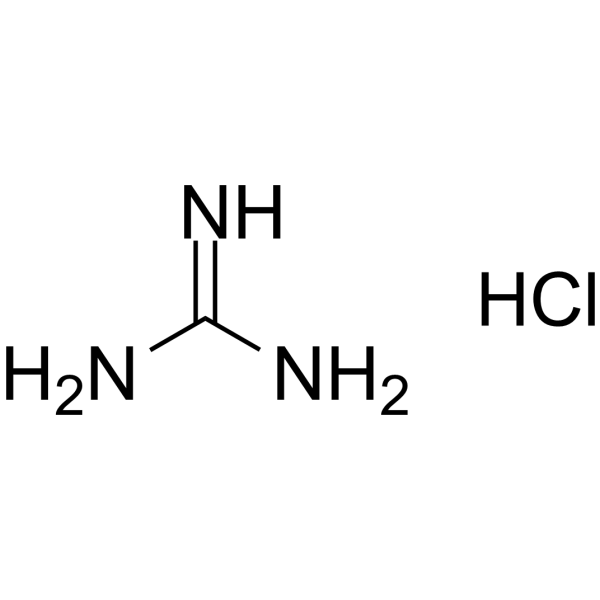
Guanidine hydrochloride (Guanidinium chloride) is a strong protein denaturant. Guanidine hydrochloride causes proteins to assume a random coil conformation .
loading...
    loading...
3
3 Cited Publications
Cat. No.: HY-15615
CAS No.: 41276-02-2
Purity:  99.91%
Synonyms: ONC201 isomer
Target:  

Drug Isomer

Research Areas:  

Others

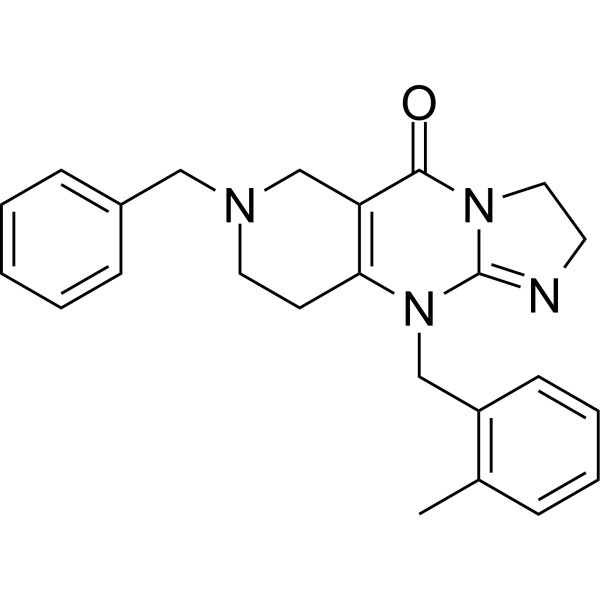
TIC10 isomer is the isomer of TIC10. TIC10 isomer does not possess the reported biological activity of inducing TRIAL expression.
loading...
    loading...
2
2 Cited Publications
Cat. No.: HY-P3211B
Synonyms: LR12-scr
Target:  

TREM receptor

Research Areas:  

Inflammation/Immunology

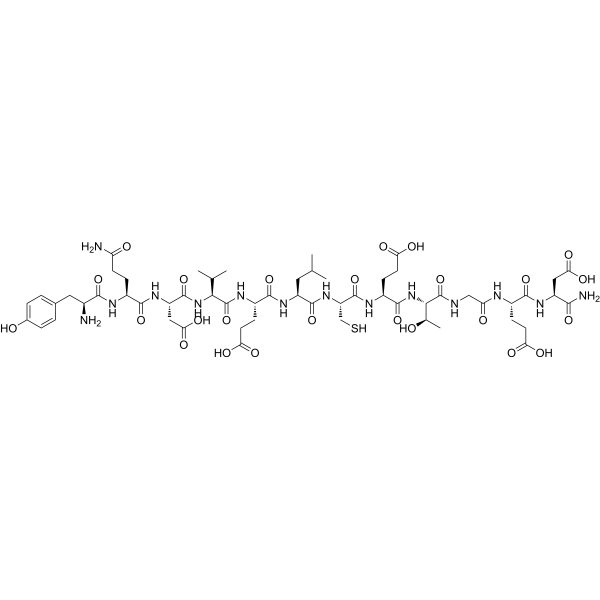
Nangibotide scrambled peptide (LR12-scr) is a scrambled control peptide composed of the same amino acids from LR12 (Nangibotide; HY-P3211) but in a random sequence (YQDVELCETGED) .
loading...
    loading...
2
2 Cited Publications
Cat. No.: HY-P1849A
Synonyms: scJag-1 TFA
Target:  

Notch

Research Areas:  

Cardiovascular Disease

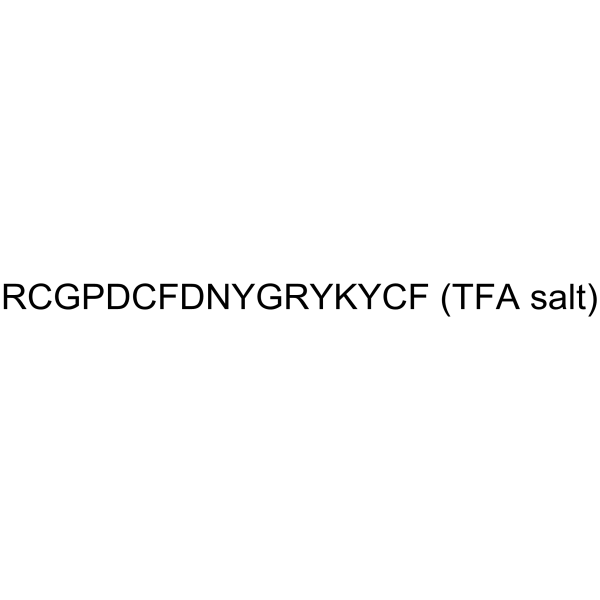
JAG-1, scrambled (scJag-1) TFA is a scrambled sequence of JAG-1 (Jagged-1 protein). JAG-1, scrambled TFA has a random sequence of the amino acids that are the same as the active fragment. JAG-1, scrambled TFA is usually used as a negative control .
loading...
    loading...
1
1 Cited Publications
Cat. No.: HY-W105970
CAS No.: 7758-16-9
Synonyms: Disodium pyrophosphate; Sodium acid pyrophosphate; SAPP
Sodium pyrophosphate (Disodium pyrophosphate) is an orally active reverse transcriptase ribonuclease H inhibitor. Sodium pyrophosphate forms soluble complexes with iron from ferric pyrophosphate to promote intestinal iron absorption. Sodium pyrophosphate increases the β-sheet content of oxidatively damaged myofibrillar protein gels and enhances the gastric digestibility and antioxidant activity of their digestion products. Sodium pyrophosphate prevents the degradation of RNA-DNA hybrids, inhibits antisense complementary DNA synthesis, induces phage DNA leakage, and causes random mutations in temperate phages .
loading...
    loading...
1
1 Cited Publications
Cat. No.: HY-D1668
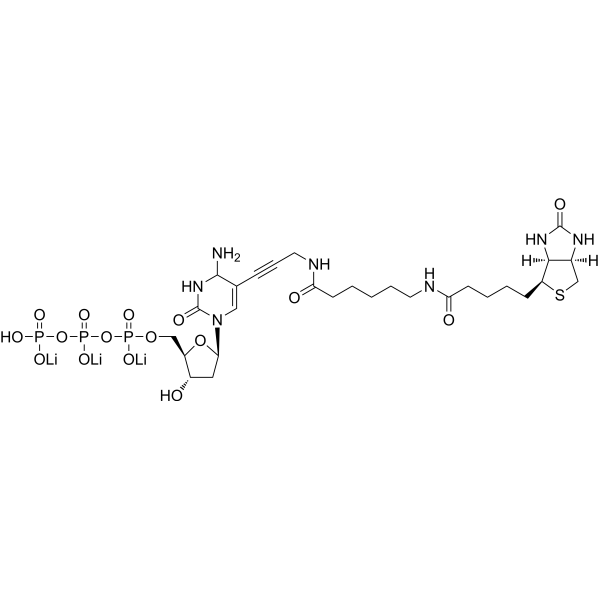
Biotin-11-dCTP is a biotinylated deoxynucleoside triphosphate and an important DNA labeling reagent. In random primer DNA labeling reactions, Biotin-11-dCTP incorporates into newly synthesized DNA strands to generate labeled DNA probes suitable for hybridization applications. In addition, Biotin-11-dCTP can serve as a substrate for terminal deoxynucleotidyl transferase to end-label oligonucleotides for telomere sequence detection, or to label the cut ends of linearized DNA molecules, thereby supporting streptavidin-based electron microscopy analysis. For example, Biotin-11-dCTP can label the cut ends of linearized DNA molecules under the action of dGTP and avian myeloblastosis virus reverse transcriptase .
loading...
    loading...
1
1 Cited Publications
Cat. No.: HY-P10776
CAS No.: 901117-08-6
Target:  

Inhibitory Antibodies

Research Areas:  

Others

RNS peptide is a randomly scrambled control peptide that can be used as a negative control for MANS peptide (HY-P10218) .
loading...
    loading...
Cat. No.: HY-171135
Research Areas:  

Cancer

Cetuximab MMAE is an antibody-drug conjugate (ADC) targeting EGFR, formed by the random conjugation of the Cetuximab (HY-P9905) antibody and VcMMAE (HY-15575) via reduced interchain cysteines. Cetuximab MMAE binds to EGFR, blocks ligand interactions, inhibits downstream signal transduction, mediates receptor internalization, and delivers MMAE to induce G2/M phase cell cycle arrest, inhibit microtubule polymerization, interfere with mitosis, and exert radiosensitizing effects. Cetuximab MMAE limits the toxicity of free MMAE to EGFR-expressing cells and circumvents EGFR resistance mechanisms. Cetuximab MMAE is applicable to research related to EGFR + tumors .
loading...
    loading...
Cat. No.: HY-P5423
CAS No.: 107658-43-5
Target:  

Exosomes Liposome

Research Areas:  

Cancer

GALA is a pH-responsive amphipathic peptide consisting of 30 amino acids, which acts as a lung endothelium-targeting ligand. GALA undergoes a conformational transition from random coil to α-helix in an acidic environment at pH 5.0, thereby inducing endosomal membrane destabilization and fusion. GALA-modified liposomes traverse lung endothelial cells via clathrin-dependent endocytosis and transcytosis, and specifically accumulate in the lungs after intravenous injection. GALA significantly promotes the cytosolic release of cargos carried by exosomes, plasmids and liposomes, effectively enhances gene transfection efficiency, and drives gene knockdown of functional macromolecules (such as siRNA) in alveolar epithelial cells (with no significant cytotoxicity at effective concentrations). GALA serves as a critical tool for studies on lung cancer metastasis (e.g., melanoma lung metastasis) and lung-targeted drug delivery systems .
loading...
    loading...
Cat. No.: HY-P991628
Synonyms: PF-08634404

Target:  

PD-1/PD-L1 VEGFR

Research Areas:  

Cancer

SSGJ-707 (PF-08634404) is a bispecific antibody targeting VEGF and PD-1. SSGJ-707 exerts dual anti-tumor effects by neutralizing VEGF and blocking the PD-1 signaling pathway. SSGJ-707 can be combined with platinum-based chemotherapy to inhibit advanced non-small cell lung cancer (NSCLC), and its inhibitory effect is not limited by PD-L1 expression levels. In the HARMONi-2 trial, the objective response rate of SSGJ-707 correlates with the PD-L1 tumor proportion score, and the incidence of grade ≥3 adverse events is comparable to that of Inetetamab (HY-P99969). SSGJ-707 is being extensively investigated for a variety of malignancies including advanced NSCLC, colorectal cancer and small cell lung cancer .
loading...
    loading...
Cat. No.: HY-D1725
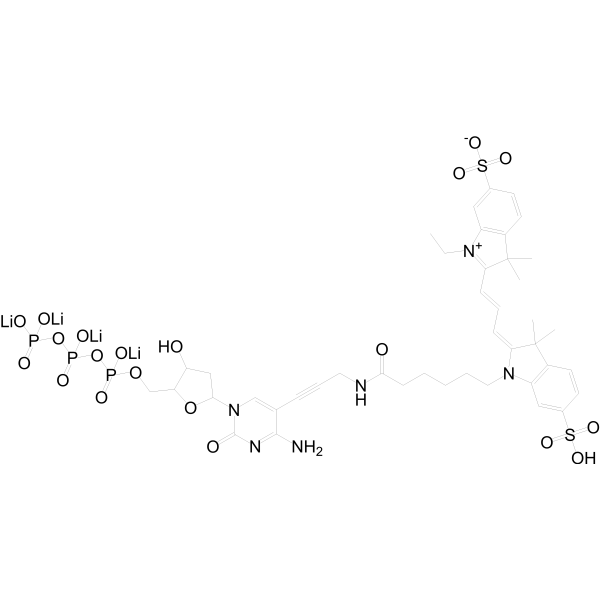
Cy3-dCTP is a directly fluorescently labeled deoxyribonucleotide, in which Cy3 is a cyanine fluorescent dye. Cy3-dCTP is used for direct enzymatic labeling of DNA and cDNA: with the aid of DNA polymerases, this modified nucleotide is incorporated into the extending DNA strand during processes such as reverse transcription, PCR, nick translation or random primer labeling .
loading...
    loading...
Cat. No.: HY-171689
CAS No.: 2760250-80-2
Synonyms: AZD 8205; P-Sam
Puxitatug samrotecan (AZD 8205) is an antibody-drug conjugate (ADC) targeting B7-H4, formed by the random conjugation of the Puxitatug (HY-P990059) antibody and AZ14170133 (HY-145399) via interchain cysteine reduction. Puxitatug samrotecan binds to B7-H4 to deliver the payload to B7-H4-expressing cells, inhibits topoisomerase I, and induces cytotoxicity in cancer cells and xenograft models. Puxitatug samrotecan can be used in studies of B7-H4-expressing tumors .
loading...
    loading...
Cat. No.: HY-E70110
CAS No.: 37288-54-3
Research Areas:  

Others

Endo-1,4-β-mannanase is an important catalyst that randomly cleaves the β-1,4-linkages in the main chain of mannan, releasing short-chain β-1,4-mannan and mannose. The catalytic activity of Endo-1,4-β-mannanase toward locust bean gum is enhanced by Mn 2+, Co 2+, Ca 2+, Ba 2+, Triton X-100, sodium azide and N-ethylmaleimide, completely inhibited by Hg 2+ and N-bromosuccinimide, and partially inhibited by EDTA and Cu 2+. Endo-1,4-β-mannanase can be used in studies related to plant hemicellulose degradation, biomass saccharification, elimination of anti-nutritional factors in feed, and manno-oligosaccharide prebiotics .
loading...
    loading...
Cat. No.: HY-P2816
CAS No.: 37278-89-0
Research Areas:  

Others

Xylanase is an enzyme targeting 1,4-β-D-xylan that randomly cleaves the β-1,4 backbone of xylan, a complex polysaccharide in plant cell walls. Xylanase finds applications in the food, feed and industrial sectors, including pulp and paper processing, baking, animal feed improvement, and biotransformation of waste .
loading...
    loading...
Cat. No.: HY-B0178B
CAS No.: 50-01-1
Synonyms: 6M Guanidinium chloride Solution; 6M Aminoformamidine hydrochloride Solution
Research Areas:  

Others

6M Guanidine hydrochloride Solution (6M Guanidinium chloride Solution) is a strong protein denaturant. 6M Guanidine hydrochloride Solution causes proteins to assume a random coil conformation .
loading...
    loading...
Cat. No.: HY-E70011
CAS No.: 9041-11-6
Research Areas:  

Others

Levanase is a slime-dissolving enzyme of Rhodotorula species. Levanase performs random hydrolysis of β-2,6 fructofuranosyl linkages in β-2,6 fructans containing more than 3 fructose units .
loading...
    loading...
Cat. No.: HY-153840A
Purity:  97.03%
Research Areas:  

Inflammation/Immunology

ODN INH-18 sodium is a linear 24-mer class B INH-ODN in which the 5' INH-ODN 4084-F sequence was followed by a random stretch of 12 nucleotides lacking the ability to form significant secondary structures. ODN INH-18 sodium showes inhibitory potency for TLR9 ligand-induced IFN-α production.
loading...
    loading...
Cat. No.: HY-16632
CAS No.: 1333990-84-3
Target:  

γ-secretase Amyloid-β

Research Areas:  

Metabolic Disease

ELND 006 (Compound 30) is a metabolically stable γ-secretase inhibitor designed to selectively inhibit amyloid beta (Aβ) generation while sparing Notch signaling. It was developed through a synthetic strategy emphasizing diversity and chirality. ELND 006, along with its analog ELND007 (Compound 34), progressed into human clinical trials. In preclinical studies, both compounds demonstrated effective reduction of Aβ levels in vitro and in vivo. Comparisons with other γ-secretase inhibitors like Semagacestat, Begacestat, and Avagacestat underscored their potency and specificity in lowering Aβ levels in cerebrospinal fluid (CSF) of healthy human volunteers, suggesting potential therapeutic efficacy in Alzheimer's disease .
loading...
    loading...
Cat. No.: HY-N8671
CAS No.: 256520-90-8
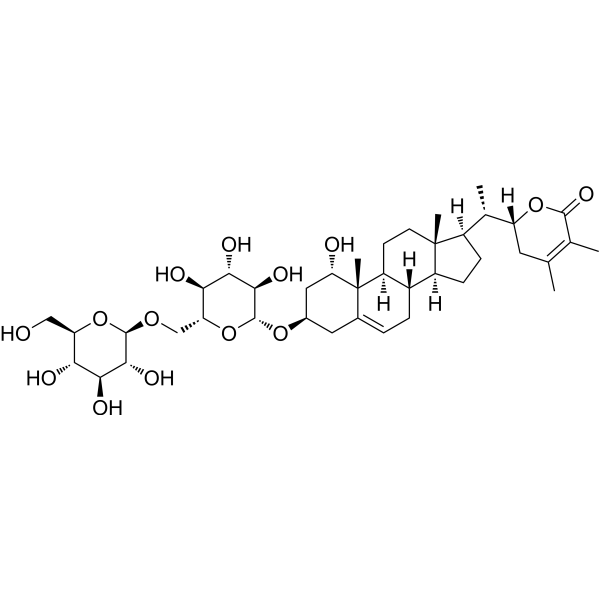
Withanoside V is a blood-brain barrier-permeable withanolide derivative . Withanoside V binds strongly to Sudlow I (domain IIA) of human serum albumin (HSA) to form a stable complex and alter the secondary structure of albumin, thereby increasing helix content and reducing β-sheet and random coil. Withanoside V binds to Aβ (1-42) to block the interaction between monomers and subsequent aggregation. Withanoside V inhibits the viability of neuroblastoma cells, reduces the number of apoptotic cells induced by Aβ (1-42), and decreases ROS production. Withanoside V inhibits SARS-CoV-2 Mpro. Withanoside V can be used for research on Alzheimer's disease and coronavirus disease 2019 .
loading...
    loading...
Cat. No.: HY-E70185
Synonyms: EC:3.2.1.24; MAN2B1; LAMAN
Research Areas:  

Metabolic Disease

Lysosomal α-mannosidase (EC:3.2.1.24) is a low pH-activated exoglycosidase that hydrolyzes α-mannosidic linkages on mannan and N-linked oligosaccharides, and its activation requires Zn 2+. As the major exoglycosidase in the glycoprotein degradation pathway, lysosomal α-mannosidase cleaves α1,2-, α1,3- and α1,6-mannosidic linkages during a non-random, ordered degradation process to generate Man1GlcNAc1-2 for further lysosomal processing. Lysosomal α-mannosidase can be used in studies related to α-mannosidosis .
loading...
    loading...

