

1. Search Result
Search Result
Results for "

recognition specificity

" in MedChemExpress (MCE) Product Catalog:

26

Inhibitors & Agonists

3

Screening Libraries

3

Fluorescent Dyes

4

Biochemical Assay Reagents

3

Peptides

2

Inhibitory Antibodies

6

Natural
Products

1

Isotope-Labeled Compounds

3

Oligonucleotides

Targets Recommended:
Cat. No. Product Name Target Research Areas Chemical Structure
  • HY-112163
    Zotatifin
    Maximum Cited Publications
    9 Publications Verification

    eFT226

    Eukaryotic Initiation Factor (eIF) SARS-CoV Apoptosis Infection Cancer
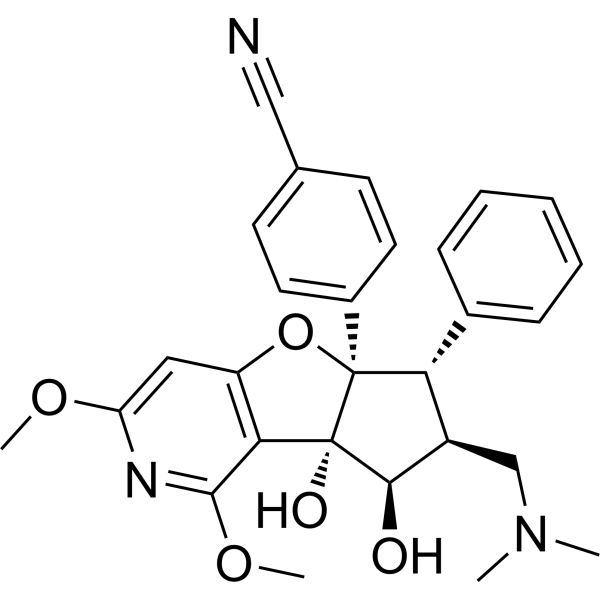
    Zotatifin (eFT226) is a potent, selective, and well-tolerated eIF4A inhibitor. Zotatifin promotes eIF4A binding to specific mRNA sequences with recognition motifs in the 5’-UTRs (IC50=2 nM) and interferes with the assembly of the eIF4F initiation complex . Zotatifin shows robust antiviral effects, it effectively reduces viral infectivity by inhibiting SARS-CoV-2 NP protein biogenesis (IC90=37 nM) . Zotatifin induces cell apoptosis .
    Zotatifin
  • HY-122815

    Fusicoccin A

    Apoptosis Cancer
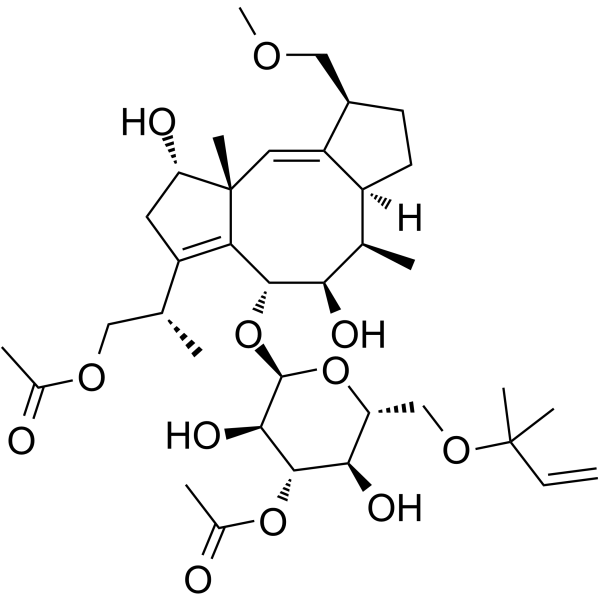
    Fusicoccin (Fusicoccin A), a fungal pytotoxin, is a stabilizer of specific 14-3-3 protein-protein interactions. Fusicoccin sabilizes H +-ATPase/14-3-3 cmplex in pants, maintaining the enzyme in activated state. Fusicoccin also stabilizes 14-3-3 protein interactions with binding partners containing a C-terminal 14-3-3 recognition motif (a mode 3 motif), such as ERα, GPIbα, TASK3, CTFR, and p53. Fusicoccin induces apoptosis in cancer cells and has anticancer activity .
    Fusicoccin
  • HY-W009444
    5-Methyluridine
    1 Publications Verification

    Endogenous Metabolite Others
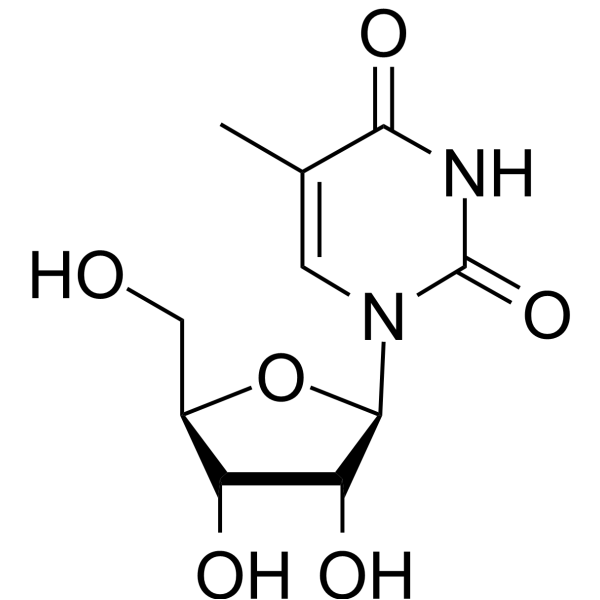
    5-Methyluridine (m 5U) is an RNA modified nucleotide generated by RNA methyltransferases (such as TrmA and RumA), which mainly targets specific uracil sites in RNA molecules such as the T arm of tRNA and rRNA. 5-Methyluridine relies on enzyme recognition of RNA secondary/tertiary structures (such as the T loop of tRNA or the specific stem-loop structure of rRNA) and participates in physiological processes such as translation accuracy and ribosome function by stabilizing RNA folding or regulating base pairing .
    5-Methyluridine
  • HY-P1745

    Insulin B chain (9-23)

    MHC Insulin Receptor IFNAR Inflammation/Immunology
    InsB (9-23) (Insulin B chain (9-23)) is an HLA-DQ8-restricted insulin B-chain peptide composed of amino acid residues 9-23. InsB (9-23) serves as a major MHC II class-restricted antigen. InsB (9-23) supports the recognition and activation of T cells, stimulates the secretion of IFN-γ and cytokines, and induces cross-reactive immune responses. InsB (9-23)-specific CD4 T cells can initiate diabetes . InsB (9-23) can be used in research related to type 1 diabetes and autoimmune diabetes .
    InsB (9-23)
  • HY-P3732

    Integrin Cancer
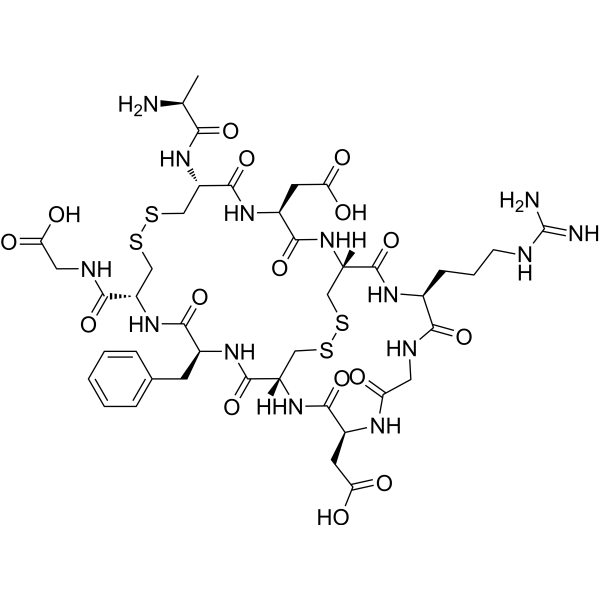
    RGD-4C is a arginine-glycine-aspartic acid peptide (ACDCRGDCFC) with integrin binding activity. The Arg-Gly-Asp (RGD) sequence serves as the primary integrin recognition site in extracellular matrix proteins, and peptides containing this sequence can mimic the recognition specificity of the matrix proteins. RGD-4C is a αv-integrin ligand, can conjugate with bioactive molecule to exert antitumor effects in animal models .
    RGD-4C
  • HY-N10633

    LS-tetrasaccharide c

    Others Infection Cancer
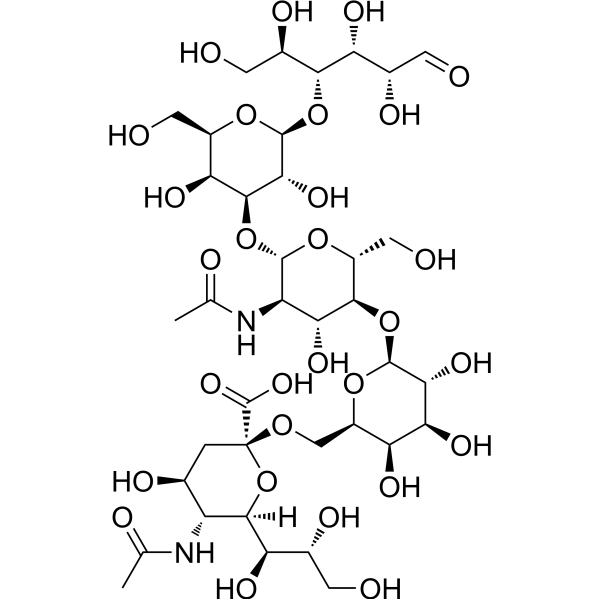
    LSTc (LS-tetrasaccharide c) is a human lactooligosaccharide presents on glycoproteins and glycolipids. LSTc is also a specific human JC polyomavirus (JCV) recognition motif. LSTc has good potential for the study of progressive multifocal leukoencephalopathy (PML) .
    LSTc
  • HY-P990981

    ALPS-12; RG-6524; RO 7616789

    CD3 Inflammation/Immunology Cancer
    Clesitamig (ALPS-12) is a trispecific T cell engager with two CD3/CD137 dual-specific Fabs and one DLL3 Fab. Clesitamig engages CD3 and CD137 on T cells to activate and co-stimulate T cells, promoting their proliferation, survival, and antitumor activity. Clesitamig binds to DLL3 on tumor cells for tumor-specific recognition. Clesitamig can be used for the research of small cell lung cancer (SCLC) .
    Clesitamig
  • HY-W089845
    Heneicosane
    1 Publications Verification

    Environmental Pollutants Fungal Sex Pheromone Infection Endocrinology
    Heneicosane is a royal-specific pheromone of insects (such as subterranean termites) and is an identification signal for queens and kings in termites. Heneicosane mediates royal recognition and the maintenance of social division of labor by being sensed by worker ants and triggering vibrations and antennal behaviors. Heneicosane can exert anti-inflammatory, analgesic and antipyretic activities by inhibiting the release of inflammatory mediators (such as prostaglandins and cytokines). At the same time, Heneicosane can also inhibit the mycelial growth of aflatoxin-producing fungi and inhibit the production of aflatoxin. Heneicosane can be used in insect chemical ecology research to analyze the regulatory mechanism of termite social behavior, and is also a potential target for new anti-inflammatory drugs .
    Heneicosane
  • HY-112163A

    rel-eFT226

    Eukaryotic Initiation Factor (eIF) SARS-CoV Apoptosis Infection Cancer
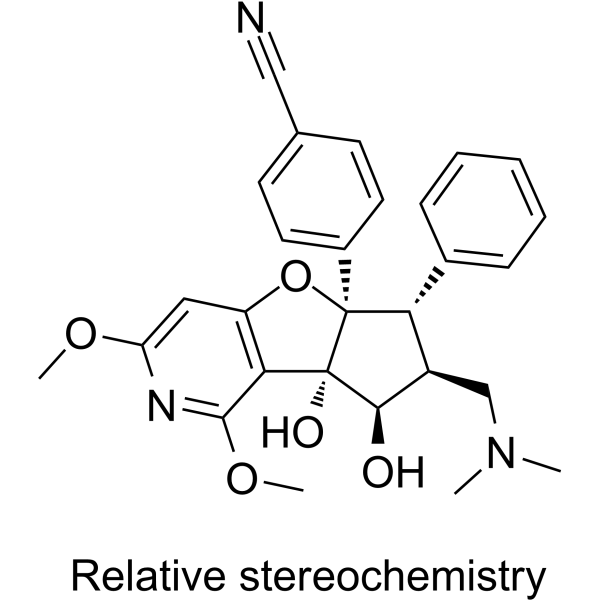
    rel-Zotatifin is the racemic isomer of Zotatifin, acts as an eIF4A inhibitor with activity less than Zotatifin. Zotatifin (eFT226) is a potent, selective, and well-tolerated eIF4A inhibitor. Zotatifin promotes eIF4A binding to specific mRNA sequences with recognition motifs in the 5’-UTRs (IC50=2 nM) and interferes with the assembly of the eIF4F initiation complex .
    rel-Zotatifin
  • HY-W014081

    Ethyl 2-oxo-2H-chromene-3-carboxylate

    Drug Derivative Others
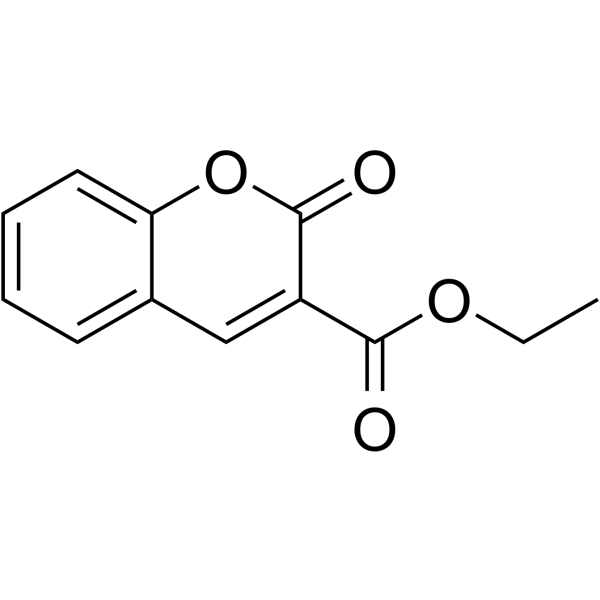
    Ethyl 3-coumarincarboxylate is a coumarin derivative. Ethyl 3-coumarincarboxylate can be used as a pseudo-template to give a molecularly imprinted polymer (MIP) that has a fairly specific recognition capability for aflatoxins .
    Ethyl 3-coumarincarboxylate
  • HY-D1262

    Thiol-green 2

    Fluorescent Dye Others
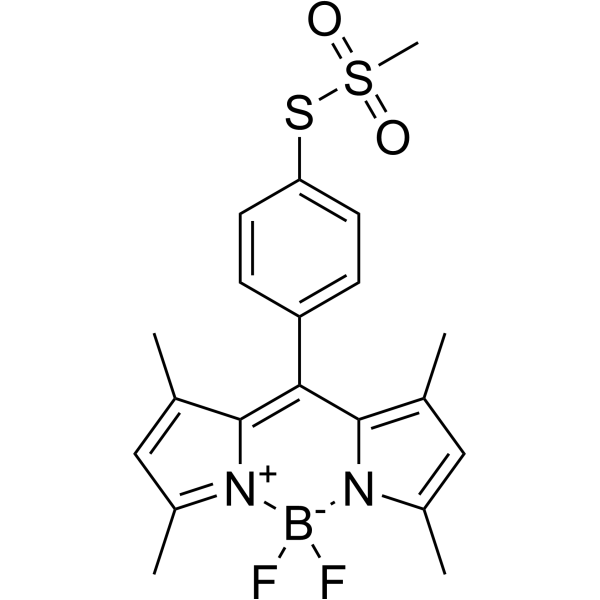
    BODIPY-TS (Thiol-green 2) is a fast response and thiol-specific turn-on probe. BODIPY-TS utilizes the thiosulfonate scaffold as a thiol recognition unit. BODIPY-TS has low toxicity, and features high selectivity, low detection limit, and quantitative reaction to thiols . Ex: 490 nM; Em: 515 nM.
    BODIPY-TS
  • HY-160052

    Interleukin Related Inflammation/Immunology Cancer
    IL-6 aptamer sodium is an aptamer that specifically binds to IL-6, and can serve as a biological recognition receptor for high-sensitivity detection. IL-6 aptamer sodium enables label-free specific detection through changes in electrical signals of carbon nanotube microarrays or alterations in capacitive impedance on the surface of gold sensors. IL-6 aptamer sodium still maintains high selectivity even below the gray zone threshold for cancer diagnosis, and shows no significant non-specific binding to bovine serum albumin. IL-6 aptamer sodium can form an ordered self-assembled monolayer with 6-mercapto-1-hexanol on gold surfaces, making it suitable for reagent-free capacitive impedance biosensing platforms. IL-6 aptamer sodium is widely used in research related to fields such as cancer, inflammatory diseases, myeloma, liver cancer and glioma .
    IL-6 aptamer sodium
  • HY-N12962

    Others Others
    11S(12R)-EET is a dominant enantiomer of epoxytrienoic acid (EET) that is metabolized at a higher rate in rat organs. It shows enantiomeric-dependent reaction selectivity in hydration, especially in the case of 11,12-EET, where water addition is non-regioselective, while in 8,9-EET, water addition occurs mainly at the C9 position. In addition, 11S(12R)-EET generates diol products with specific stereochemistry through enzymatic hydration reactions, which are affected by the selective recognition of epoxidases, reaction conversion rates, and substrate binding parameters .
    11S(12R)-EET
  • HY-D2946

    BC-TMR

    Fluorescent Dye Infection
    CLIP-TMR (BC-TMR) is a TMR-labeled CLIP tag fluorescent probe. CLIP-TMR combines the high specificity recognition ability of the CLIP-tag and the excellent optical performance of the TMR fluorophore, and can be used for the specific labeling and visualization of the HCV NS5A protein .
    CLIP-TMR
  • HY-146809

    Galectin Cancer
    Galectin-3 is a β Galactoside specific carbohydrate recognition protein (lectin) has the ability to promote the migration of B cell precursor acute lymphoblastic leukemia (BCP-ALL) cells and withstand drug research.
    Galectin-3 antagonist 2
  • HY-122637

    SF3B1 Cancer
    Sudemycin K is a selective splicing inhibitor targeting SF3B1. Sudemycin K blocks U2 snRNP recognition of branch point sequences in pre-mRNA, inducing tumor-specific splicing deregulation and apoptosis. Sudemycin K is promising for research of SF3B1-mutated malignancies such as chronic lymphocytic leukemia (CLL) and myelodysplastic syndromes (MDS) .
    Sudemycin K
  • HY-W114420

    PKC Drug Derivative Cancer
    3-Methyl-L-tyrosine is a derivative of L-Tyrosine (HY-N0473). Structurally, 3-Methyl-L-tyrosine features a methyl modification at the third position of the aromatic ring of L-Tyrosine. As a substrate for the protein tyrosine kinase Csk, 3-Methyl-L-tyrosine's relative catalytic efficiency (kcat/Km) is 38% of L-Tyrosine, indicating that the methyl modification impacts the processing efficiency of Gsk significantly. 3-Methyl-L-tyrosine helps to deepen the understanding of Gsk's molecular recognition mechanisms of its substrates, which is crucial for developing specific inhibitors targeting Gsk .
    3-Methyl-L-tyrosine
  • HY-W089845S

    Isotope-Labeled Compounds Sex Pheromone Fungal Infection Endocrinology
    Heneicosane-d44 is the deuterium labeled Heneicosane (HY-W089845). Heneicosane is a royal-specific pheromone of insects (such as subterranean termites) and is an identification signal for queens and kings in termites. Heneicosane mediates royal recognition and the maintenance of social division of labor by being sensed by worker ants and triggering vibrations and antennal behaviors. Heneicosane can exert anti-inflammatory, analgesic and antipyretic activities by inhibiting the release of inflammatory mediators (such as prostaglandins and cytokines). At the same time, Heneicosane can also inhibit the mycelial growth of aflatoxin-producing fungi and inhibit the production of aflatoxin. Heneicosane can be used in insect chemical ecology research to analyze the regulatory mechanism of termite social behavior, and is also a potential target for new anti-inflammatory drugs .
    Heneicosane-d44
  • HY-W089845R

    Reference Standards Sex Pheromone Fungal Infection Endocrinology
    Heneicosane (Standard) is the analytical standard of Heneicosane (HY-W089845). This product is intended for research and analytical applications. Heneicosane is a royal-specific pheromone of insects (such as subterranean termites) and is an identification signal for queens and kings in termites. Heneicosane mediates royal recognition and the maintenance of social division of labor by being sensed by worker ants and triggering vibrations and antennal behaviors. Heneicosane can exert anti-inflammatory, analgesic and antipyretic activities by inhibiting the release of inflammatory mediators (such as prostaglandins and cytokines). At the same time, Heneicosane can also inhibit the mycelial growth of aflatoxin-producing fungi and inhibit the production of aflatoxin. Heneicosane can be used in insect chemical ecology research to analyze the regulatory mechanism of termite social behavior, and is also a potential target for new anti-inflammatory drugs .
    Heneicosane (Standard)
  • HY-E70393I

    Others Others
    Bovine Factor IXa Beta is an inactive and highly specific enzyme, with a minimal extended substrate recognition site and a preference for particular amino acid residues at specific subsites. Bovine Factor IXa Beta plays a role in the blood coagulation cascade .
    Bovine Factor IXa Beta
  • HY-D2930

    SNAP-SS-SulfoCy5

    Fluorescent Dye Others
    BG-SS-SulfoCy5 (SNAP-SS-SulfoCy5) is a SulfoCy5-labeled SNAP tag fluorescent probe, linked by a disulfide bond. BG-SS-SulfoCy5 combines the specific recognition of SNAP-tag, the cleavability of disulfide bond, and the excellent optical properties of SulfoCy5. BG-SS-SulfoCy5 can be used for tracking the internalization of cell surface proteins and multiple labeling experiments .
    BG-SS-SulfoCy5
  • HY-182096C

    Liposome Neurological Disease
    DSPE-PEG5000-MG1 is a PEG compound which composed of DSPE and a MG1 peptide (HY-P11315). MG1 peptide is a M1 Microglia-targeting peptide. MG1 peptide can conjugate to anoparticles, crossing the BBB to precisely M1 microglia recognition and achieving controlled release and specific accumulation of drugs through intelligent molecular switching. DSPE-PEG5000-KTP can be used for drug delivery .
    DSPE-PEG5000-MG1
  • HY-182096A

    Liposome Neurological Disease
    DSPE-PEG2000-MG1 is a PEG compound which composed of DSPE and a MG1 peptide (HY-P11315). MG1 peptide is a M1 Microglia-targeting peptide. MG1 peptide can conjugate to anoparticles, crossing the BBB to precisely M1 microglia recognition and achieving controlled release and specific accumulation of drugs through intelligent molecular switching. DSPE-PEG2000-KTP can be used for drug delivery .
    DSPE-PEG2000-MG1
  • HY-182096B

    Liposome Neurological Disease
    DSPE-PEG3400-MG1 is a PEG compound which composed of DSPE and a MG1 peptide (HY-P11315). MG1 peptide is a M1 Microglia-targeting peptide. MG1 peptide can conjugate to anoparticles, crossing the BBB to precisely M1 microglia recognition and achieving controlled release and specific accumulation of drugs through intelligent molecular switching. DSPE-PEG3400-KTP can be used for drug delivery .
    DSPE-PEG3400-MG1
  • HY-182096

    Liposome Neurological Disease
    DSPE-PEG1000-MG1 is a PEG compound which composed of DSPE and a MG1 peptide (HY-P11315). MG1 peptide is a M1 Microglia-targeting peptide. MG1 peptide can conjugate to anoparticles, crossing the BBB to precisely M1 microglia recognition and achieving controlled release and specific accumulation of drugs through intelligent molecular switching. DSPE-PEG1000-KTP can be used for drug delivery .
    DSPE-PEG1000-MG1
  • HY-P992159

    SLC39 (Zinc Transporter) Metabolic Disease Inflammation/Immunology
    Anti-ZnT8 Antibody (mAb43) is a monoclonal antibody targeting the zinc transporter ZnT8, with islet-specific biodistribution characteristics. Anti-ZnT8 Antibody (mAb43) binds to extracellular ZnT8 on the surface of pancreatic β-cells and masks its insulin-co-localizing sites to block autoimmune recognition. Anti-ZnT8 Antibody (mAb43) also promotes an increase in the proportion of regulatory T cells and inhibits B cell antigen presentation, thereby effectively blocking the T cell-mediated cascade of β-cell destruction. Anti-ZnT8 Antibody (mAb43) eliminates insulitis, preserves β-cell mass and induces seroconversion of autoantibodies, without directly altering the insulin secretion function or content of β-cells. Anti-ZnT8 Antibody (mAb43) can be used for research related to type 1 diabetes .
    Anti-ZnT8 Antibody (mAb43)

Inquiry Online

Your information is safe with us. * Required Fields.

Salutation


Country or Region *

Applicant Name *


Organization Name *

Department *


Email Address *


Product Name *

Cat. No.


Requested quantity *

Phone Number *


Remarks

Inquiry Online

Inquiry Information

Product Name:
Cat. No.:
Quantity:
MCE Japan Authorized Agent:

