13 Results for "

species difference

" in MedChemExpress (MCE) Product Catalog:
Products (13)

13 Results for "species difference" in MCE Product Catalog:

11
11 Cited Publications
Cat. No.: HY-144226
CAS No.: 1787787-60-3
Purity:  98.23%
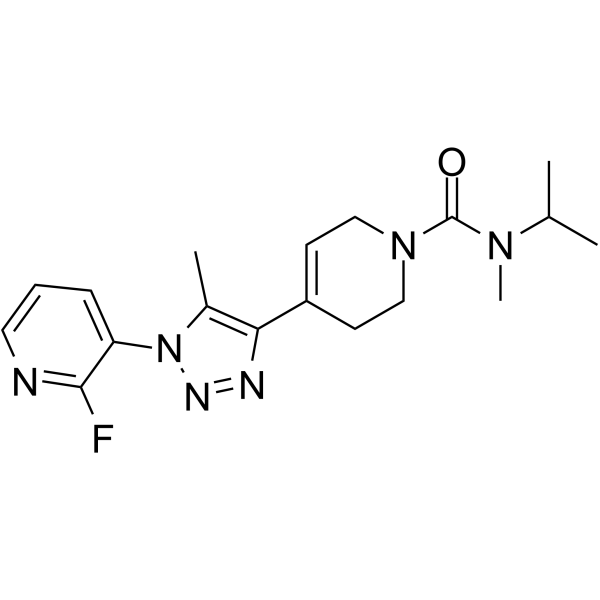
NLRP3/AIM2-IN-3 (compound 59) is a potent inhibitor with differential species specific effects against NLRP3 and AIM2 inflammasome-dependent pyroptosis. NLRP3/AIM2-IN-3 shows inhibitory efficacy against pyroptosis in THP-1 macrophages stimulated with LPS/nigericin, with an IC50 of 0.077 ± 0.008 μM. NLRP3/AIM2-IN-3 disturbs the interaction of NLRP3 or AIM2 with the adaptor protein ASC and inhibited ASC oligomerization .
loading...
    loading...
Cat. No.: HY-100405
CAS No.: 873551-53-2
Purity:  ≥97.0%
Target:  

mGluR

Research Areas:  

Neurological Disease

FTIDC is an orally active, noncompetitive, selective allosteric metabotropic glutamate receptor (mGluR) 1 antagonist with an IC50 of 5.8 nM for human mGluR1a. FTIDC has no species differences in its antagonistic activity on recombinant human, mouse, and rat mGluR1 .
loading...
    loading...
Cat. No.: HY-120124
CAS No.: 1394808-20-8
Purity:  98.65%
Synonyms: SUVN-G3031
Target:  

Histamine Receptor

Research Areas:  

Neurological Disease

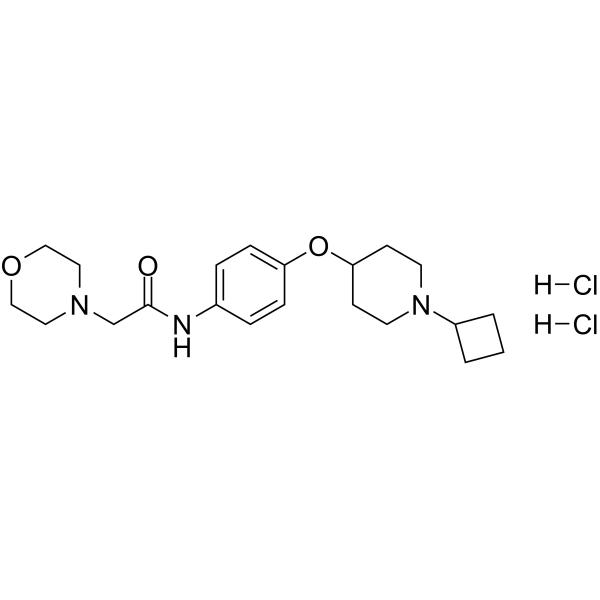
Samelisant (SUVN-G3031) is a potent and selective histamine H3 receptor (H3R) inverse agonist with good brain penetration and oral bioavailability. Samelisant has a similar binding affinity towards human (hH3R; Ki=8.7 nM) and rat (rH3R;Ki=9.8 nM) H3R indicating no inter-species differences. Samelisant can be used for the research of sleep-related disorders .
loading...
    loading...
Cat. No.: HY-N4031
CAS No.: 82375-29-9
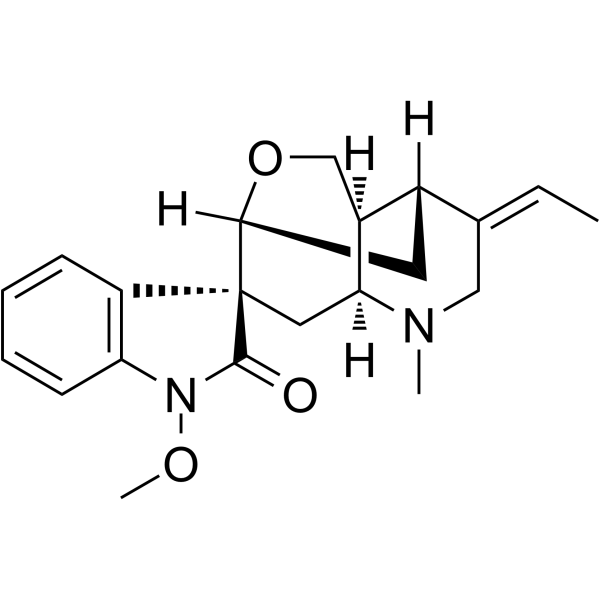
Humantenine is a highly toxic indole alkaloid from Gelsemium elegans (Gardn. & Champ.) Benth. that binds to RNA m6A modification regulatory proteins (ALKBH5, METTL). Humantenine stably binds via hydrogen bonding and hydrophobic interactions and disrupts the m6A methylation level of target genes, thereby impairing the expression of intestinal epithelial cell tight junction and cytoskeleton-related genes, causing intestinal barrier dysfunction and significant intestinal cytotoxicity. The intraperitoneal injection LD50 values of Humantenine are <1 mg/kg in mice, 1.2 mg/kg in male rats and 1.5 mg/kg in female rats, respectively. Species differences exist in the metabolism of Humantenine in human, porcine, goat and rat liver microsomes, and demethylation, dehydrogenation and oxidation occur in liver microsomes .
loading...
    loading...
Cat. No.: HY-W012168
CAS No.: 1205-30-7
Target:  

Carbonic Anhydrase

Research Areas:  

Metabolic Disease

4-Chloro-3-sulfamoylbenzoic acid is a weak inhibitor of human carbonic anhydrase isoforms hCA I, hCA II, hCA IV, and hCA IX, and a synthesis intermediate for carbonic anhydrase inhibitors. 4-Chloro-3-sulfamoylbenzoic acid is the major metabolite of tripamide detected in tissues, urine, and feces of rats and rabbits following Tripamide (HY-106570) administration. 4-Chloro-3-sulfamoylbenzoic acid can be used for the study of carbonic anhydrase inhibition and species differences in drug metabolism .
loading...
    loading...
Cat. No.: HY-135439
CAS No.: 135938-17-9
Target:  

5-HT Receptor

Research Areas:  

Neurological Disease

SB-203186 is a highly selective 5-HT4 receptor antagonist. SB-203186 exhibits a potent competitive antagonistic effect, with its pKB value being 8.3 in the isolated right atrium model of piglets. SB-203186 can dose-dependently shift the 5-HT-induced tachycardia curve to the right, and does not inhibit the maximum response. SB-203186 is an efficient 5-HT₄ antagonist in pig and human atria, but has no significant inhibitory effect in rat atria. SB-203186 can be used for the study of diseases such as arrhythmias and abnormal myocardial contraction .
loading...
    loading...
Cat. No.: HY-165111
CAS No.: 35804-98-9
Synonyms: 1,2-Olein-3-myristin; TG(18:1/18:1/14:0)
Target:  

Endogenous Metabolite

Research Areas:  

Others

1,2-Dioleoyl-3-myristoyl-rac-glycerol (1,2-Olein-3-myristin) is a compound that is being studied as a triglyceride in bumblebee fat body. Chromatographic analysis revealed differences in fatty acid composition and triglyceride isomer distribution in different bumblebee species.
loading...
    loading...
Cat. No.: HY-126182
CAS No.: 42399-40-6
Target:  

Endogenous Metabolite

Research Areas:  

Cardiovascular Disease

Deacetyldiltiazem is a metabolite with coronary vasodilator activity. Deacetyldiltiazem is present in the plasma of individuals taking Diltiazem. The deacetylase activity of deacetyldiltiazem is mainly catalyzed by the rat Ces2a enzyme. In vitro experiments of deacetyldiltiazem showed that its Km value was similar to that of rat liver microsomes, showing efficient deacetylase activity. The study of deacetyldiltiazem helps to understand the differences in the metabolic kinetics of compounds between different species .
loading...
    loading...
Cat. No.: HY-122608
CAS No.: 1394808-82-2
Synonyms: SUVN-G3031 free base
Target:  

Histamine Receptor

Research Areas:  

Neurological Disease

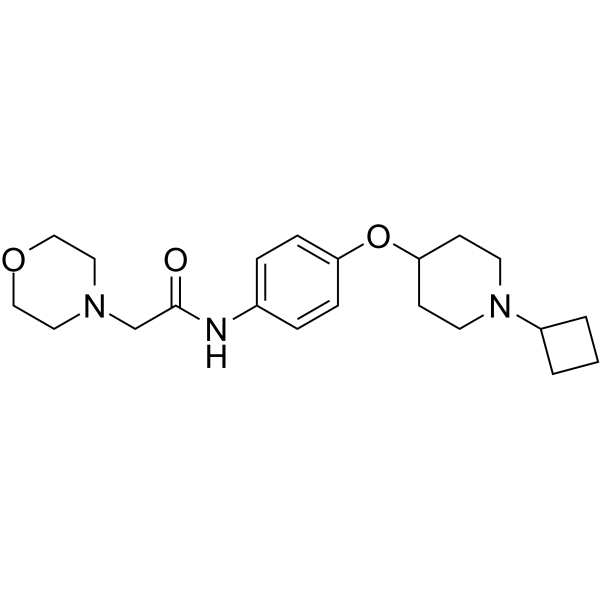
Samelisant (SUVN-G3031) free base is a potent and selective histamine H3 receptor (H3R) inverse agonist with good brain penetration and oral bioavailability. Samelisant free base has a similar binding affinity towards human (hH3R; Ki=8.7 nM) and rat (rH3R;Ki=9.8 nM) H3R indicating no inter-species differences. Samelisant free base can be used for the research of sleep-related disorders .
loading...
    loading...
Cat. No.: HY-123567
CAS No.: 148966-66-9
Target:  

5-HT Receptor

Research Areas:  

Neurological Disease

LY86057 is an ergoline derivative without N1 substituents. It has higher affinity for porcine, squirrel monkey and human 5-HT2 receptors than rats and is an antagonist of 5-HT2 receptors. When studying the differences in recognition of a series of ergolines between species, LY86057 was found to be more selective for 5-HT2 receptors. Compared with LY53857, LY108742 resulted in a higher affinity for rat 5-HT2 receptors even when the N1 substituent was only methyl.
loading...
    loading...
Cat. No.: HY-107081
CAS No.: 172940-14-6
Target:  

Dopamine Receptor UGT

Research Areas:  

Neurological Disease

Berupipam hemifumarate is a selective antagonist of the dopamine D1 receptor (dopamine D1 receptor). Berupipam hemifumarate is a substrate of UDP-glucuronosyltransferase (UGT) and has a high affinity for UGT enzymes but a relatively low conversion rate. The glucuronidation rate of Berupipam hemifumarate varies among different species and genders. Berupipam hemifumarate can be used for the study of psychotic disorders .
loading...
    loading...
Cat. No.: HY-165112
CAS No.: 90318-80-2
Synonyms: 1,2-Olein-3-α-linolenin; 1,2-Olein-3-linolenin; TG(18:1/18:1/18:3)
Target:  

Endogenous Metabolite

Research Areas:  

Others

1,2-Dioleoyl-3-α-linolenoyl-rac-glycerol (1,2-Olein-3-α-linolenin) is a compound that is being studied as a triglyceride in bumblebee fat body. Chromatographic analysis revealed differences in fatty acid composition and triglyceride isomer distribution in different bumblebee species.
loading...
    loading...
Cat. No.: HY-19203
CAS No.: 150705-88-7
Target:  

Neurokinin Receptor

Research Areas:  

Neurological Disease

CGP-49823 is an orally active and highly selective antagonist of the neurokinin 1 receptor (NK1 receptor). CGP-49823‘s potency is significantly higher in isolated spinal cords of hamsters than in those of rats. CGP 49823 exhibits a significant anti-anxiety effect in social interaction experiments of rats, and its tolerance develops slowly, without causing anxiety-like withdrawal reactions after discontinuation. CGP-49823 can be used in anxiety and depression research .
loading...
    loading...
  • 1

