1. Search Result
Search Result
Results for "

sphingosine 1-phosphate receptors

" in MedChemExpress (MCE) Product Catalog:

29

Inhibitors & Agonists

1

Isotope-Labeled Compounds

Targets Recommended:
Cat. No. Product Name Target Research Areas Chemical Structure
  • HY-12288
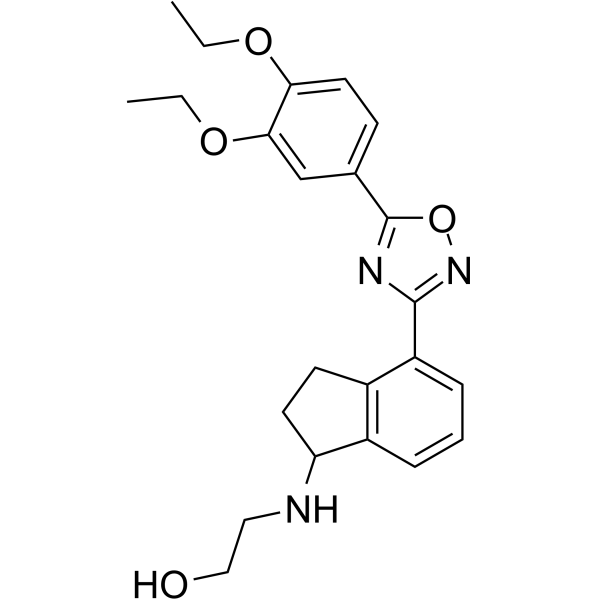
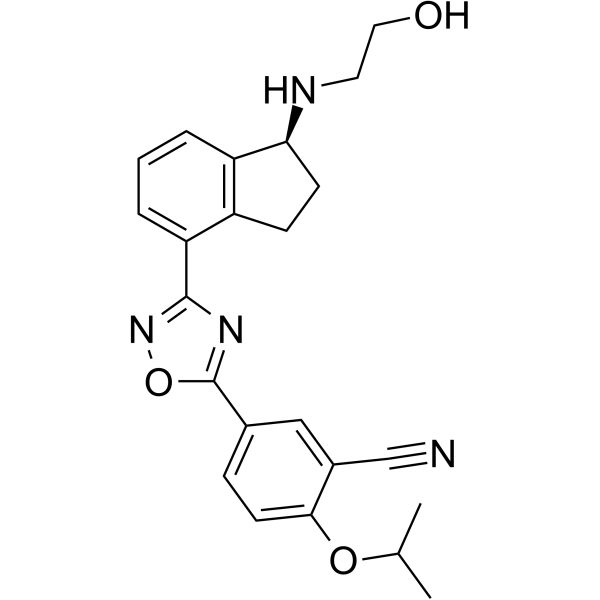
    Ozanimod
    4 Publications Verification

    RPC-1063

    LPL Receptor Neurological Disease Inflammation/Immunology
    Ozanimod (RPC-1063) is a CNS-penetrant sphingosine 1-phosphate (S1P) receptor modulator that binds with high affinity selectively to S1P receptor subtypes 1 (S1P1) and 5 (S1P5). Ozanimod has modulate effect for hS1P1 and hS1P5 receptor with EC50s of 1.03 nM and 8.6 nM, respectively. Ozanimod can be used for the research of relapsing multiple sclerosis (MS) .
    Ozanimod
  • HY-12288A
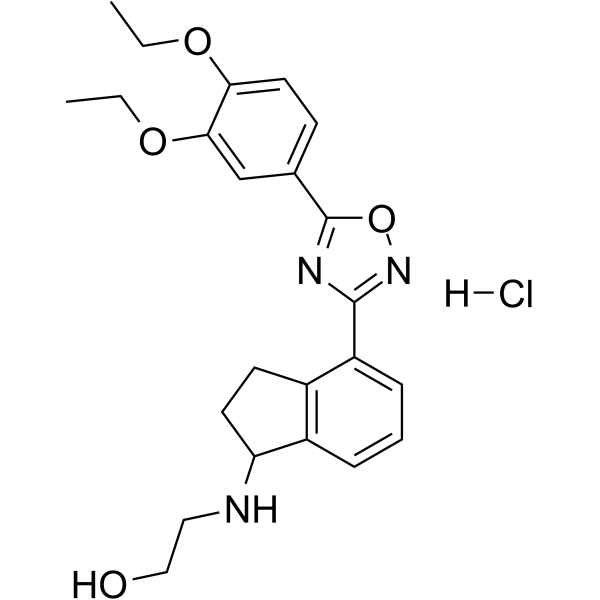
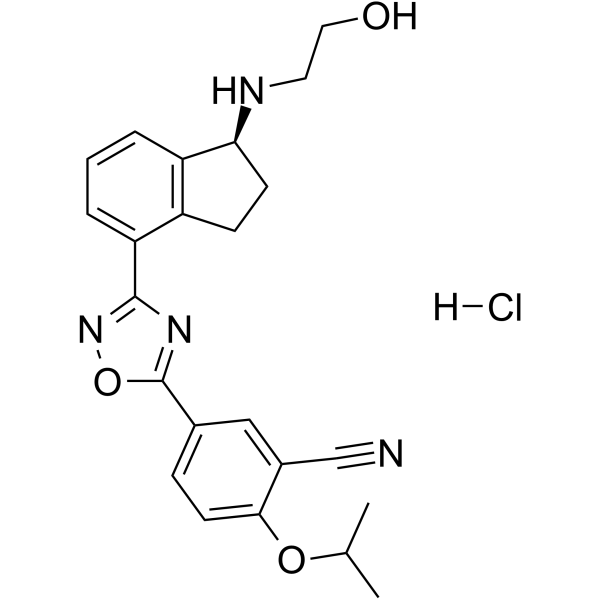
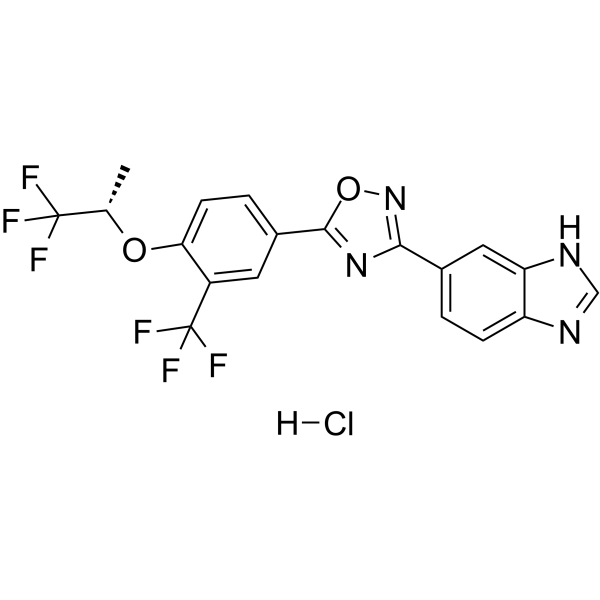
    Ozanimod hydrochloride
    4 Publications Verification

    RPC-1063 hydrochloride

    LPL Receptor Neurological Disease Inflammation/Immunology
    Ozanimod (RPC-1063) hydrochloride, a sphingosine 1-phosphate (S1P) receptor modulator that binds with high affinity selectively to S1P receptor subtypes 1 (S1P1) and 5 (S1P5). Ozanimod hydrochloride has modulate effect for hS1P1 and hS1P5 receptor with EC50s of 1.03 nM and 8.6 nM, respectively. Ozanimod hydrochloride can be used for the research of relapsing multiple sclerosis (MS) .
    Ozanimod hydrochloride
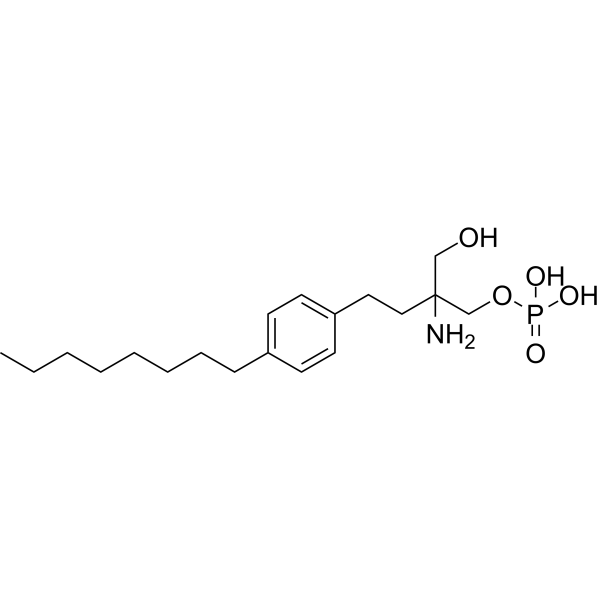
  • HY-15381
    Fingolimod phosphate
    1 Publications Verification

    FTY720 phosphate

    LPL Receptor Infection Neurological Disease Inflammation/Immunology
    Fingolimod phosphate (FTY720 phosphate) is an orally active sphingosine 1-phosphate (S1P) receptor agonist. Fingolimod phosphate can promote the neuroprotective effects of microglia. Fingolimod phosphate can be used for the research of multiple sclerosis and neurologic diseases .
    Fingolimod phosphate
  • HY-16734A

    MT-1303 hydrochloride

    LPL Receptor Cardiovascular Disease Inflammation/Immunology
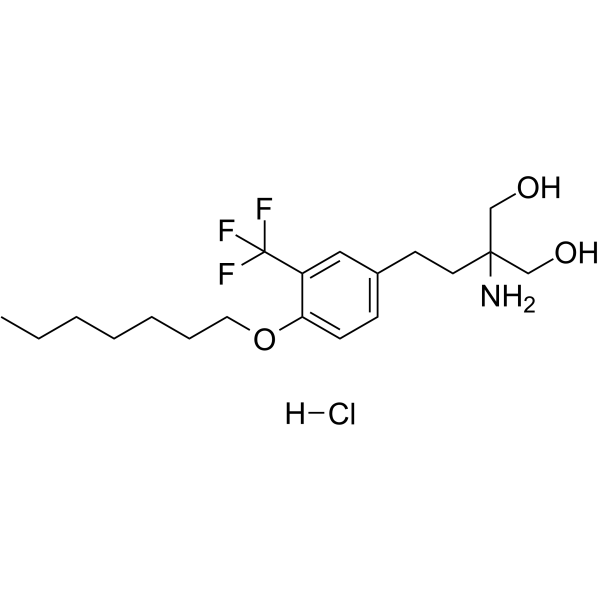
    Amiselimod (MT-1303) hydrochloride is converted to its active metabolite Amiselimod phosphate by sphingosine kinases in vivo. Amiselimod hydrochloride is an orally active and high selectivity sphingosine 1-phosphate receptor-1 (S1P1) agonist, designed to reduce the bradycardia effects associated with fingolimod and other S1P receptor modulators. Amiselimod hydrochloride inhibits chronic colitis via inhibiting infiltration of colitogenic Th1 and Th17 cells into the colon. Amiselimod hydrochloride inhibits lupus nephritis by reducing the infiltration of autoreactive T cells into the kidneys. Amiselimod hydrochloride is promising for research of autoimmune diseases .
    Amiselimod hydrochloride
  • HY-10968
    CYM5442
    3 Publications Verification

    LPL Receptor Neurological Disease
    CYM5442 is a potent, highly-selective and orally active sphingosine 1-phosphate (S1P1) receptor agonist with an EC50 of 1.35 nM. CYM5442 is inactive against S1P2, S1P3, S1P4, and S1P5. CYM5442 activates S1P1-dependent p42/p44-MAPK phosphorylation. CYM5442 exerts retinal neuroprotection. CYM5442 can easily penetrate the central nervous system (CNS) .
    CYM5442
  • HY-117213

    S1P1-IN-Ex26

    LPL Receptor Neurological Disease Metabolic Disease Inflammation/Immunology
    Ex26 (S1P1-IN-Ex26) is a potent and selective sphingosine 1-phosphate receptor 1 (S1P1) antagonist (IC50=0.93 nM). Ex26 shows >3,000-fold selectivity for S1P1 over other Sphingosine 1-phosphate receptors. Ex26 can be used in experimental autoimmune encephalomyelitis reseach .
    Ex26
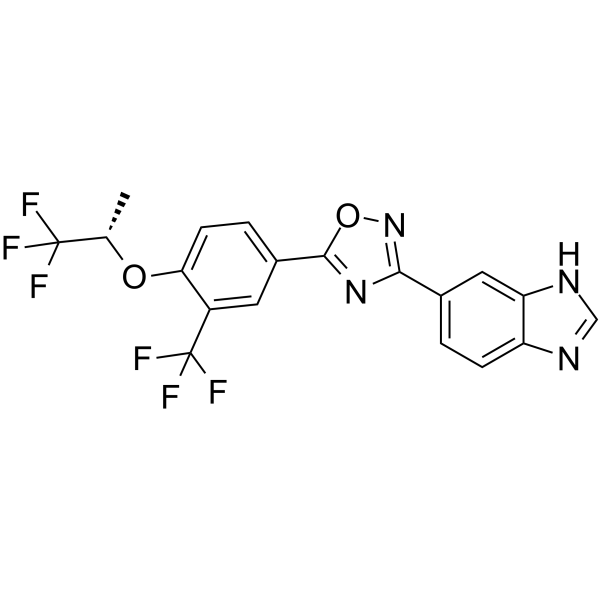
  • HY-12685

    ONO-4641

    LPL Receptor Neurological Disease
    Ceralifimod (ONO-4641) is selective, high potent agonist for sphingosine 1-phosphate receptors 1 and 5, with EC50s of 27.3, 334 pM for human S1P receptor 1 and 5, respectively.
    Ceralifimod
  • HY-108490

    LPL Receptor Inflammation/Immunology
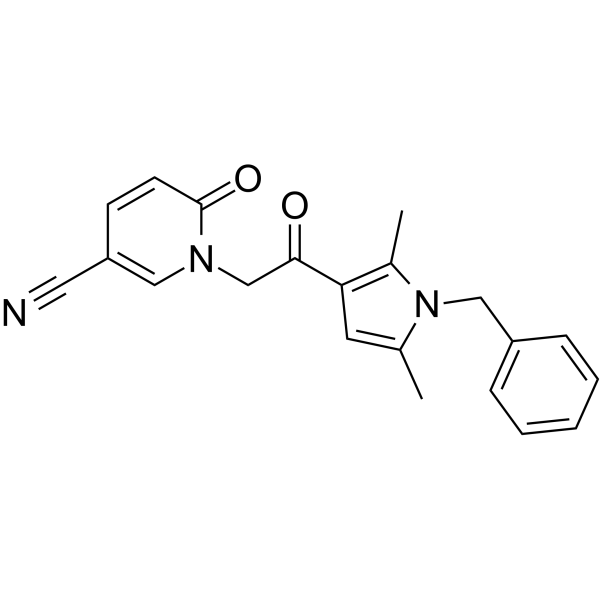
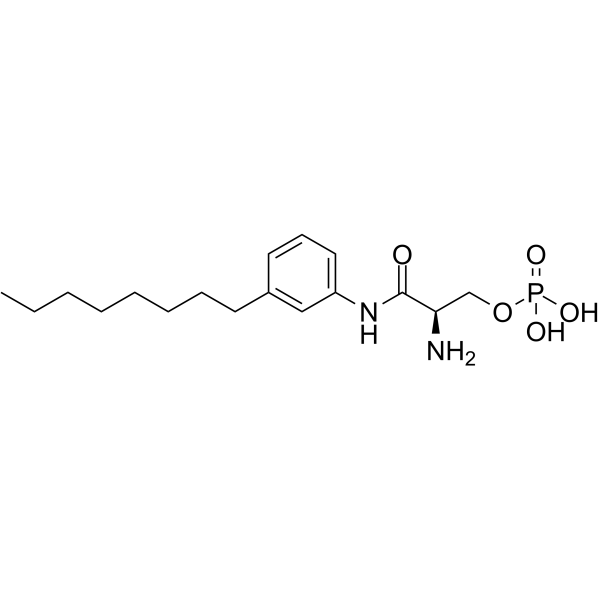
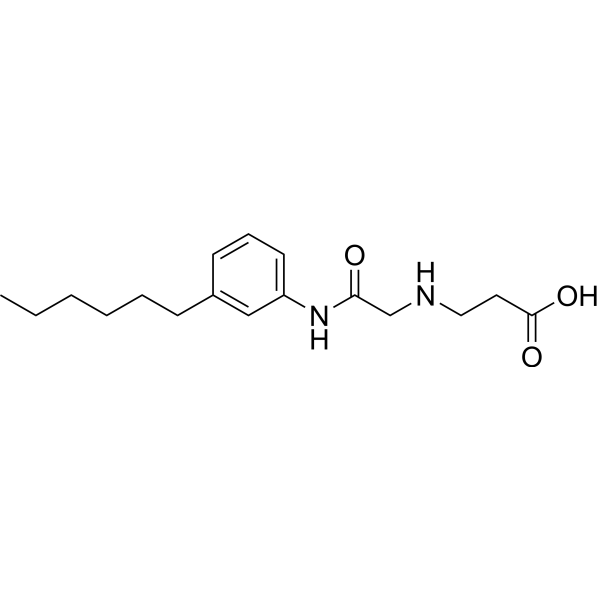
    VPC 23019, an aryl amide-containing Sphingosine 1-phosphate (S1P) analog, is a competitive antagonist at the S1P1 and S1P3 receptors (pKi= 7.86 and 5.93, respectively) and an agonist at the S1P4 and S1P5 receptors (pEC50= 6.58 and 7.07, respectively) .
    VPC 23019
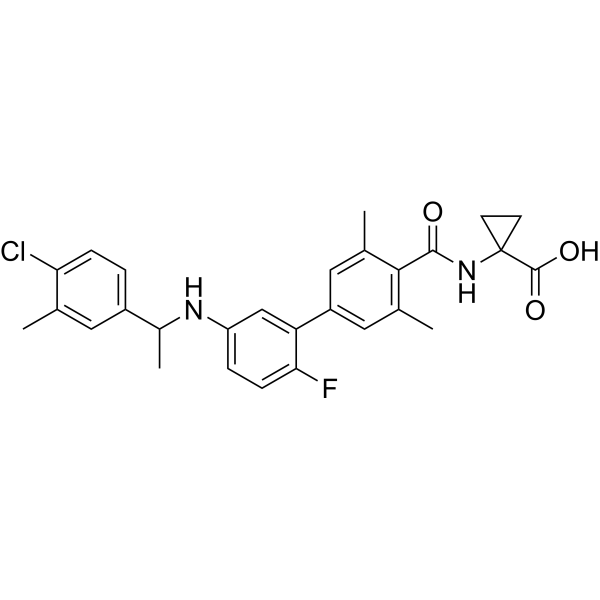
  • HY-158417

    LPL Receptor Inflammation/Immunology
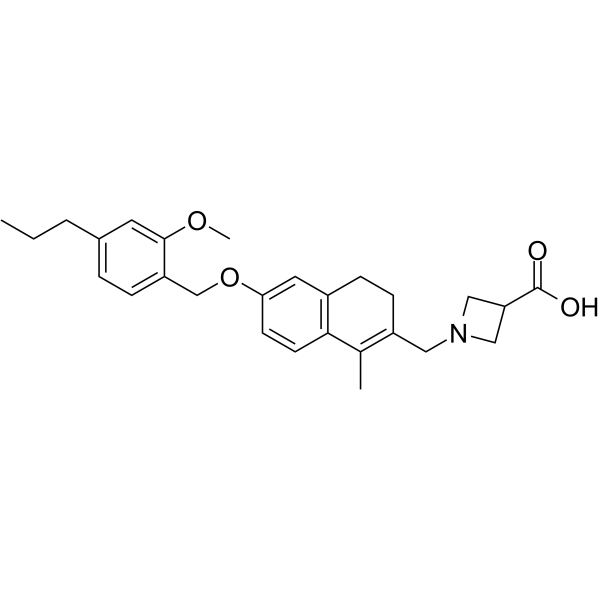
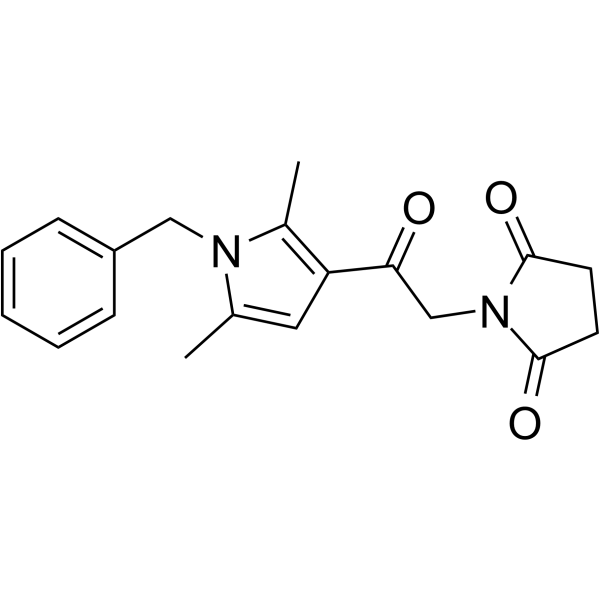
    KSI-6666 is an orally active, competitive antagonist for sphingosine 1-phosphate receptor 1 (S1PR1), with an IC50 of 6.4 nM. KSI-6666 exhibits anti-inflammatory efficacy in autoimmune encephalomyelitis model and T cell transfer colitis model .
    KSI-6666
  • HY-158638

    Fluorescent Dye Others
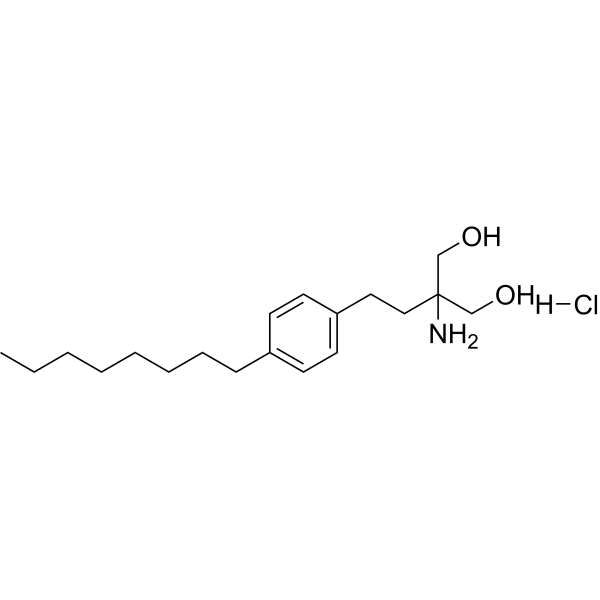
    NBD-FTY720 phenoxy hydrochloride is a fluorescently-labeled analog of FTY720. FTY720 (HY-12005) is a potent sphingosine 1-phosphate (S1P) receptors modulator .
    NBD-FTY720 phenoxy hydrochloride
  • HY-111021
    ASP-4058
    1 Publications Verification

    LPL Receptor Inflammation/Immunology
    ASP-4058 is a next-generation, selective and oral bioactive agonist for Sphingosine 1-Phosphate receptors 1 and 5 (S1P1 and S1P5), ameliorates rodent experimental autoimmune encephalomyelitis with a favorable safety profile .
    ASP-4058
  • HY-100953
    CYM-5520
    1 Publications Verification

    LPL Receptor Metabolic Disease
    CYM-5520 is a selective and allosteric sphingosine 1-phosphate receptor 2 (S1PR2) agonist with an EC50 of 480 nM. CYM-5520 does not activate S1PR1, S1PR3, S1PR4 and S1PR5 receptors. CYM-5520 can co-bind in the S1PR2 receptor with S1P. CYM-5520 can be used for osteoporosis research .
    CYM-5520
  • HY-12288R

    RPC-1063 (Standard)

    Reference Standards LPL Receptor Neurological Disease Inflammation/Immunology
    Ozanimod (Standard) is the analytical standard of Ozanimod. This product is intended for research and analytical applications. Ozanimod (RPC-1063), a sphingosine 1-phosphate (S1P) receptor modulator that binds with high affinity selectively to S1P receptor subtypes 1 (S1P1) and 5 (S1P5). Ozanimod has modulate effect for hS1P1 and hS1P5 receptor with EC50s of 1.03 nM and 8.6 nM, respectively. Ozanimod can be used for the research of relapsing multiple sclerosis (MS) .
    Ozanimod (Standard)
  • HY-14976

    LPL Receptor Inflammation/Immunology
    CS-0777 is a selective, orally active sphingosine 1-phosphate receptor-1 modulator. CS-0777 can be used in the research of autoimmune diseases .
    CS-0777
  • HY-12005R

    FTY720 (Standard)

    Reference Standards LPL Receptor PAK Inflammation/Immunology Cancer
    Fingolimod (hydrochloride) (Standard) is the analytical standard of Fingolimod (hydrochloride). This product is intended for research and analytical applications. Fingolimod hydrochloride (FTY720), an analog of sphingosine, is a potent sphingosine 1-phosphate (S1P) receptors modulator. Fingolimod hydrochloride is phosphorylated by sphingosine kinases, particularly by SK2, and then binds S1PR1, 3, 4, and 5. Fingolimod hydrochloride induces the internalization of S1P1, and consequently, inhibits S1P activity. Fingolimod hydrochloride also is a pak1 activator .
    Fingolimod hydrochloride (Standard)
  • HY-16734

    MT-1303

    LPL Receptor Cardiovascular Disease Inflammation/Immunology
    Amiselimod (MT-1303) is converted to its active metabolite Amiselimod phosphate by sphingosine kinases in vivo. Amiselimod is an orally active and high selectivity sphingosine 1-phosphate receptor-1 (S1P1) agonist, designed to reduce the bradycardia effects associated with fingolimod and other S1P receptor modulators. Amiselimod inhibits chronic colitis via inhibiting infiltration of colitogenic Th1 and Th17 cells into the colon. Amiselimod inhibits lupus nephritis by reducing the infiltration of autoreactive T cells into the kidneys. Amiselimodis promising for research of autoimmune diseases .
    Amiselimod
  • HY-10968A

    LPL Receptor Neurological Disease
    CYM5442 hydrochloride is a potent, highly-selective and orally active sphingosine 1-phosphate (S1P1) receptor agonist with an EC50 of 1.35 nM. CYM5442 hydrochloride is inactive against S1P2, S1P3, S1P4, and S1P5. CYM5442 hydrochloride activates S1P1-dependent p42/p44-MAPK phosphorylation. CYM5442 exerts retinal neuroprotection. CYM5442 hydrochloride can easily penetrate the central nervous system (CNS) .
    CYM5442 hydrochloride
  • HY-116088

    LPL Receptor Inflammation/Immunology
    W123, a FTY720 analog, is a competitive sphingosine 1-phosphate type 1 (S1P1) receptor antagonist. W123 is measured by GTPγS activation, MAPK recruitment, cell migration, and ligand-induced receptor internalization .
    W123
  • HY-111292

    LPL Receptor Cancer
    CYM-5482 is a potent and selective agonist Sphingosine 1-phosphate receptor 2 (S1PR2) with an IC50 and EC50 of 1.0 and 1.03 μM. CYM-5482 has the potential for the research of cancer diseases .
    CYM-5482
  • HY-111021A
    ASP-4058 hydrochloride
    1 Publications Verification

    LPL Receptor Inflammation/Immunology
    ASP-4058 hydrochloride is a next-generation, selective and orally active agonist for Sphingosine 1-Phosphate receptors 1 and 5 (S1P1 and S1P5), ameliorates rodent experimental autoimmune encephalomyelitis with a favorable safety profile .
    ASP-4058 hydrochloride
  • HY-15381R

    FTY720 phosphate (Standard)

    LPL Receptor Reference Standards Infection Neurological Disease Inflammation/Immunology
    Fingolimod phosphate (Standard) is the analytical standard of Fingolimod phosphate. This product is intended for research and analytical applications. Fingolimod phosphate (FTY720 phosphate) is an orally active sphingosine 1-phosphate (S1P) receptor agonist. Fingolimod phosphate can promote the neuroprotective effects of microglia. Fingolimod phosphate can be used for the research of multiple sclerosis and neurologic diseases .
    Fingolimod phosphate (Standard)
  • HY-137973

    LPL Receptor Inflammation/Immunology
    RP-1859 is a sphingosine 1-phosphate receptor (S1P) modulator. RP-1859 exerts anti-inflammatory and immunomodulatory activities. RP-1859 can be used for the research of iatrogenic autoimmune colitis .
    RP-1859
  • HY-10968R

    LPL Receptor Neurological Disease
    CYM5442 (Standard) is the analytical standard of CYM5442. This product is intended for research and analytical applications. CYM5442 is a potent, highly-selective and orally active sphingosine 1-phosphate (S1P1) receptor agonist with an EC50 of 1.35 nM. CYM5442 is inactive against S1P2, S1P3, S1P4, and S1P5. CYM5442 activates S1P1-dependent p42/p44-MAPK phosphorylation. CYM5442 exerts retinal neuroprotection. CYM5442 can easily penetrate the central nervous system (CNS) .
    CYM5442 (Standard)
  • HY-W751034A

    (R)-RPC-1063 hydrochloride

    Drug Isomer Neurological Disease Inflammation/Immunology
    (R)-Ozanimod (hydrochloride) is the R-isomer of Ozanimod hydrochloride (HY-12288A) .
    (R)-Ozanimod hydrochloride
  • HY-182618

    LPL Receptor Others
    XAX-162 is a highly selective sphingosine 1-phosphate receptor 2 (S1PR2) agonist with a human EC50 of 0.55 μM. XAX-162 does not activate other S1P receptors. XAX-162 exhibits noncompetitive inhibition of activity by S1PR2 antagonist JTE-013 (HY-100675) .
    XAX-162
  • HY-164584

    LPL Receptor Neurological Disease
    S1P5 receptor antagonist 1 is a selective, blood-brain barrier-permeable S1P5 receptor antagonist with an EC50 of 0.1 nM and a Ki of 4.4 nM. S1P5 receptor antagonist 1 inhibits the migration of natural killer cells towards sphingosine 1-phosphate in vitro, with no effect on T cell migration. S1P5 receptor antagonist 1 can be used in the research of central nervous system diseases .
    S1P5 receptor antagonist 1
  • HY-108490R

    Reference Standards LPL Receptor Inflammation/Immunology
    VPC 23019 (Standard) is the analytical standard of VPC 23019 (HY-108490). This product is intended for research and analytical applications. VPC 23019, an aryl amide-containing Sphingosine 1-phosphate (S1P) analog, is a competitive antagonist at the S1P1 and S1P3 receptors (pKi= 7.86 and 5.93, respectively) and an agonist at the S1P4 and S1P5 receptors (pEC50= 6.58 and 7.07, respectively) .
    VPC 23019 (Standard)
  • HY-12288S

    RPC-1063-d6

    Isotope-Labeled Compounds LPL Receptor Neurological Disease Inflammation/Immunology
    Ozanimod-d6 (RPC-1063-d6) is the deuterium labeled Ozanimod (HY-12288). Ozanimod (RPC-1063) is a CNS-penetrant sphingosine 1-phosphate (S1P) receptor modulator that binds with high affinity selectively to S1P receptor subtypes 1 (S1P1) and 5 (S1P5). Ozanimod has modulate effect for hS1P1 and hS1P5 receptor with EC50s of 1.03 nM and 8.6 nM, respectively. Ozanimod can be used for the research of relapsing multiple sclerosis (MS) .
    Ozanimod-d6
  • HY-119601

    Phosphodiesterase (PDE) Cancer
    GRI918013 (compound 1) is a selective and competitive autotaxin (ATX/NPP2) inhibitor with anti-invasive and anti-metastatic activity. GRI918013 competitively binds to ATX, blocking lipid substrates such as lysophosphatidylcholine (LPC) from entering the ATX active site, thereby inhibiting ATX-mediated hydrolysis of LPC to lysophosphatidic acid (LPA), and consequently inhibiting ATX-LPA axis-related tumor cell invasion and metastasis. GRI918013 inhibits ATX-mediated hydrolysis of the LPL substrate FS-3 (IC50=31.42 nM, Ki=12.98 nM). GRI918013 can be used in research on cancer invasion and metastasis, such as melanoma, and can also serve as a tool compound for ATX-LPA axis-related diseases such as fibrotic diseases, neuropathic pain, and cholestatic pruritus .
    GRI918013

Inquiry Online

Your information is safe with us. * Required Fields.

Salutation


Country or Region *

Applicant Name *


Organization Name *

Department *


Email Address *


Product Name *

Cat. No.


Requested quantity *

Phone Number *


Remarks

Inquiry Online

Inquiry Information

Product Name:
Cat. No.:
Quantity:
MCE Japan Authorized Agent:

