
1. Search Result
Search Result
Results for "

subcutaneous tumor model

" in MedChemExpress (MCE) Product Catalog:

15

Inhibitors & Agonists

4

Peptides

2

Inhibitory Antibodies

2

Natural
Products

Cat. No. Product Name Target Research Areas Chemical Structure
  • HY-156618

    ABSK011

    FGFR Cancer
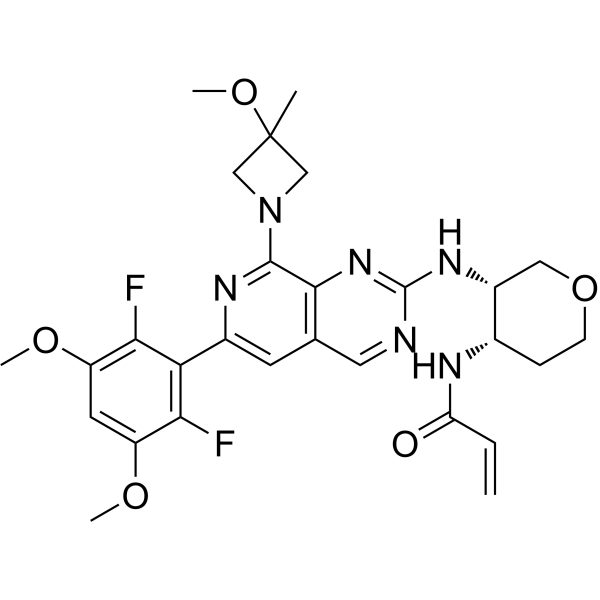
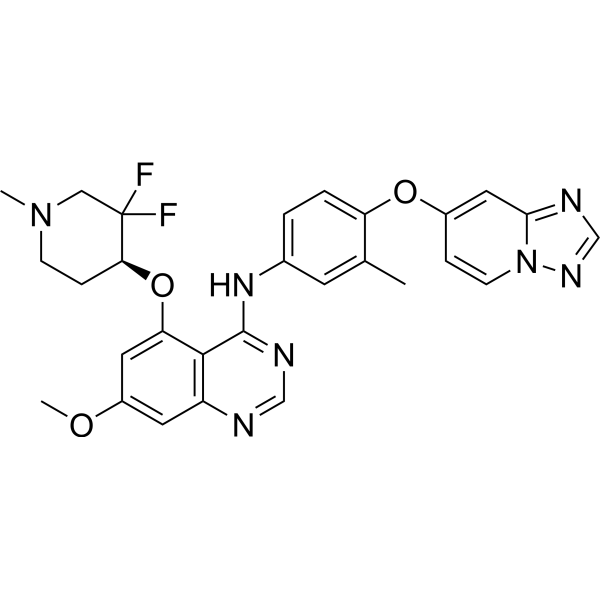
    Irpagratinib (ABSK011) is an orally active FGFR4 inhibitor (IC50<10 nM). Irpagratinib inhibits FGFR4 autophosphorylation and blocks signaling from FGFR4 to downstream pathway activation. Irpagratinib has shown high exposure in PK studies in mice, rats, and dogs, and also demonstrated antitumor activity in a subcutaneous xenograft tumor model .
    Irpagratinib
  • HY-P9992

    BAY-2315497; PSMA-TTC

    PSMA Apoptosis Cancer
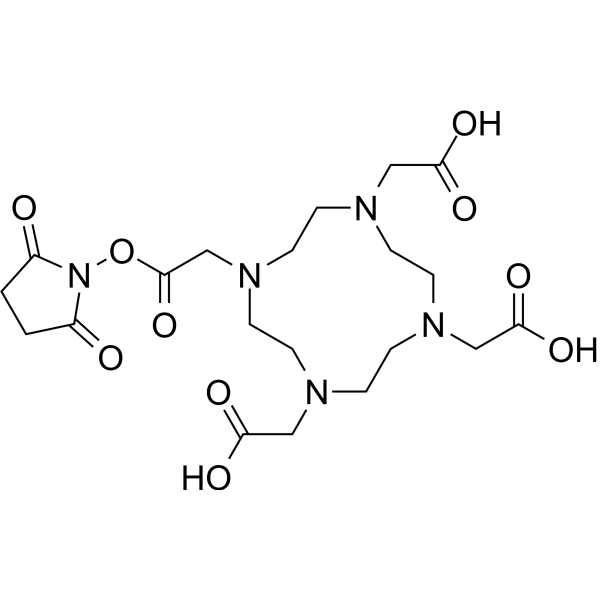
    Peligifatamab is a PSMA-targeted α-radioimmunoconjugate with an EC50 of 1.2 nM against human targets. Peligifatamab induces DNA damage, DNA double-strand breaks, cell cycle arrest and apoptosis (Apoptosis) in PSMA-positive prostate cancer cells. Peligifatamab reduces cell viability in a manner dependent on cellular PSMA expression levels. Peligifatamab inhibits tumor growth and tumor-induced abnormal bone growth in prostate cancer bone metastasis models. Peligifatamab exhibits antitumor efficacy in subcutaneous prostate cancer models and xenograft models. Peligifatamab can be used for the research of metastatic castration-resistant prostate cancer .
    Pelgifatamab
  • HY-120692

    JAK STAT Apoptosis Cancer
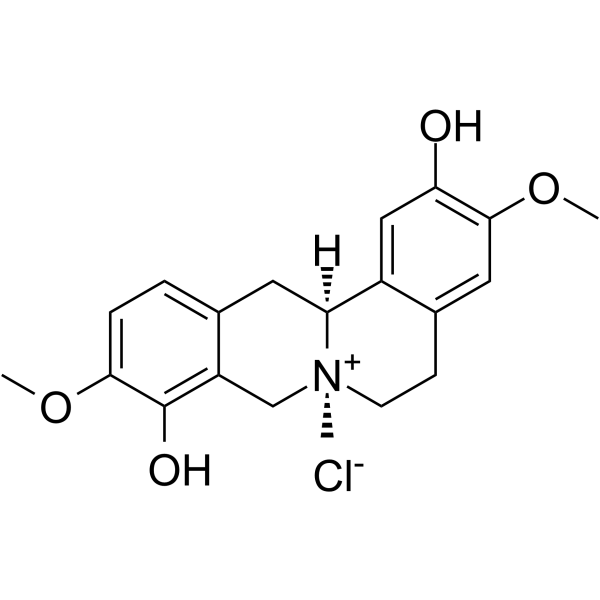
    Cyclanoline chloride is an alkaloid. Cyclanoline chloride can be isolated from Fangji. Cyclanoline (chloride) inhibits the phosphorylation of JAK2 and STAT3, and induces Apoptosis. Cyclanoline chloride suppresses tumor growth in subcutaneous bladder cancer xenograft models of nude mice. Cyclanoline chloride reverses cisplatin resistance in bladder cancer cells and enhances the efficacy of Cisplatin (HY-17394). Cyclanoline chloride can be used for research related to bladder cancer .
    Cyclanoline chloride
  • HY-P99925

    REGN421

    Notch Metabolic Disease Cancer
    Enoticumab (REGN421, SAR153192) is an IgG1κ antibody targeting human Dll4. DLL4 is a ligand of the Notch signaling pathway and regulates fatty acid uptake through non-transcriptional regulation of macropinocytosis-dependent long-chain fatty acid uptake. Specific in vivo activity of Enoticumab in an ovarian xenograft model. EGN421 (2.5 mg/kg once weekly) resulted in 86% and 83% tumor growth inhibition in mouse subcutaneous TOV-112D or intraperitoneal A2780 human tumor xenograft models, respectively .
    Enoticumab
  • HY-163001
    Microcolin H
    1 Publications Verification

    Autophagy p62 Atg8/LC3 Cancer
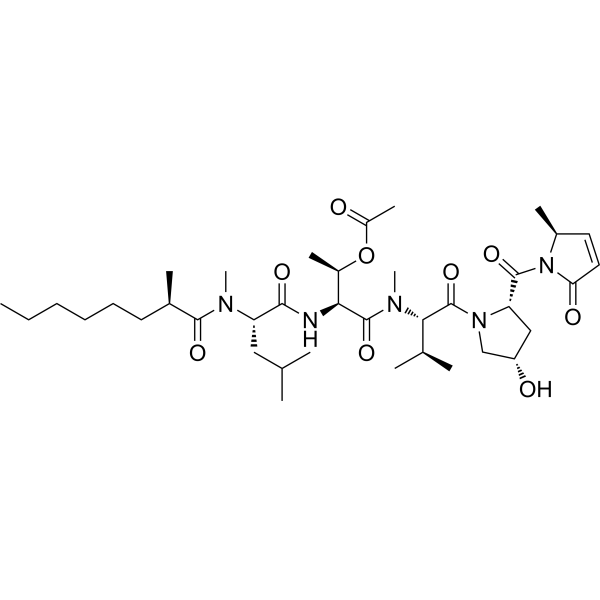
    Microcolin H is a marine lipopeptide and phosphatidylinositol transfer protein ligand that targets PITPα/β. Microcolin H increases the conversion of LC3I to LC3II and reduces p62 levels in cancer cells, leading to autophagy cell death (Autophagy). Microcolin H effectively inhibits tumor development and has anti-proliferative activity in nude mouse subcutaneous tumor models .
    Microcolin H
  • HY-174984

    p97 Caspase p62 Cancer
    VCP/p97 IN-3 is a VCP/p97 allosteric inhibitor. VCP/p97 IN-3 shows the inhibitory activity against the VCP proteins with an IC50 of 9 nM and the mutant VCP proteins with IC50 of 12 nM (N660K) and 19 nM (V474A/D649A). VCP/p97 IN-3 increases K48-linked ubiquitination and the level of cleaved caspase-3. VCP/p97 IN-3 activates ER-stress and the UPR. VCP/p97 IN-3 inhibits tumor growth in RPMI-8226 cell subcutaneous xenograft mouse models. VCP/p97 IN-3 can be used for the study of multiple myeloma .
    VCP/p97 IN-3
  • HY-P5520

    Bombesin Receptor Radionuclide-Drug Conjugates (RDCs) Cancer
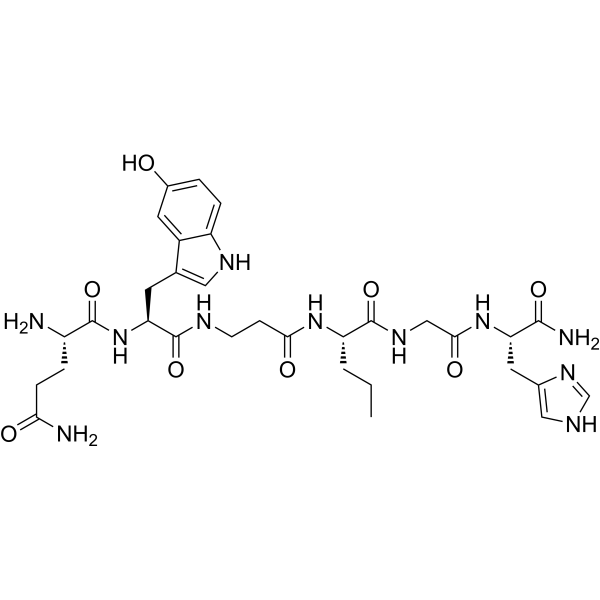
    GB-6 is a short linear peptide that targets the gastrin releasing peptide receptor (GRPR). GRPR is overexpressed in pancreatic cancer. Based on the tumor selectivity and tumor-specific accumulation properties of GB-6, GB-6 labeled with near infrared (NIR) fluorescent dyes or radionuclide netium-99m (99mTc) can be used as a high-contrast imaging probe. GB-6 has excellent in vivo stability, with tumor to pancreatic and intestinal fluorescence signal ratios of 5.2 and 6.3, respectively, in SW199 0 subcutaneous xenograft models. GB-6 can rapidly target tumors and accurately delineate tumor boundaries, which has broad application prospects .
    GB-6
  • HY-172364

    Polo-like Kinase (PLK) Cancer
    PLK1-IN-12 is a highly selective and orally active PLK1 inhibitor with an IC50 of 20 nM. PLK1-IN-12 shows more selective for PLK1 than PLK2 (IC50: >10000 nM) and PLK3 (IC50: 3953 nM). PLK1-IN-12 exhibits anticancer potency across a broad spectrum of cell lines. PLK1-IN-12 can be used in anti-leukemia research .
    PLK1-IN-12
  • HY-174330A

    Trk Receptor Cancer
    TRK-IN-31 hydrochloride is an orally active TRK inhibitor with an IC50 of 1.8 nM. TRK-IN-31 hydrochloride has superior antiproliferative activity in the Ba/F3-MPRIP-TRKA G667C cells, and potently inhibits TRK kinase activity with high selectivity. TRK-IN-31 hydrochloride significantly inhibits tumor growth in Ba/F3-MPRIP-TRKA G667C subcutaneous tumor mice model .
    TRK-IN-31 hydrochloride
  • HY-174330

    Trk Receptor Cancer
    TRK-IN-31 is an orally active TRK inhibitor with an IC50 of 1.8 nM. TRK-IN-31 has superior antiproliferative activity in the Ba/F3-MPRIP-TRKA G667C cells, and potently inhibits TRK kinase activity with high selectivity. TRK-IN-31 significantly inhibits tumor growth in Ba/F3-MPRIP-TRKA G667C subcutaneous tumor mice model .
    TRK-IN-31
  • HY-146615

    TAM Receptor Cancer
    Axl-IN-6 (compound 14) is an orally active and potent AXL inhibitor. Axl-IN-6 is well tolerated and significantly inhibits the tumor growth in MV-4-11 subcutaneous xenograft model .
    Axl-IN-6
  • HY-175542

    STAT Apoptosis Reactive Oxygen Species (ROS) PARP Cancer
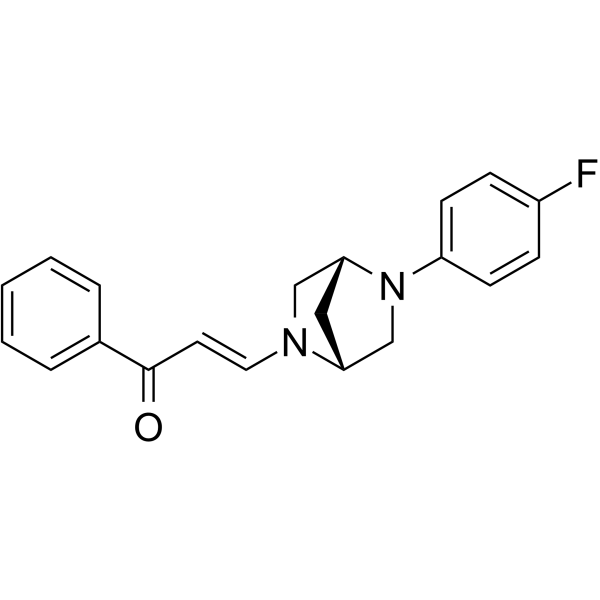
    KB-15 is a STAT3 inhibitor. KB-15 exhibits potent anti-proliferative activity against AGS gastric cancer cells (IC50 = 0.29 μM) and BGC-823 gastric cancer cells (IC50 = 0.65 μM). KB-15 exerts anti-tumor effects by inhibiting STAT3 phosphorylation, downregulating HO-1 expression, and promoting intracellular ROS accumulation. KB-15 induces G0/G1 phase cell cycle arrest and apoptosis, as well as suppresses colony formation and migration of gastric cancer cells. KB-15 demonstrates excellent anti-tumor efficacy in BGC-823 subcutaneous xenograft model. KB-15 can be used for the study of gastric cancer .
    KB-15
  • HY-P11618

    Glycoprotein VI Cancer
    10P3Me is a Glypican-3 (GPC3)-targeting probe with a Ka of 93.8 nM for the human target. 10P3Me exhibits high binding affinity to GPC3, targets GPC3-positive cells, and serves as an agent for PET imaging. 10P3Me selectively accumulates in GPC3-positive tumor tissues, including subcutaneous xenograft models and orthotopic HepG2-LUC liver cancer models, to achieve precise localization of lesions .
    10P3Me
  • HY-181675

    Microtubule/Tubulin Apoptosis Bcl-2 Family Caspase Cancer
    CHNQD-01522 is a microtubule inhibitor targeting the colchicine binding site on β-tubulin. CHNQD-01522 binds to the colchicine binding site on β-tubulin, inhibits microtubule polymerization, and evades P-glycoprotein transport in cancer cells. CHNQD-01522 inhibits proliferation, suppresses tumor cell colony formation, arrests cell cycle in G2/M phases, and induces apoptosis in cancer cells. CHNQD-01522 upregulates of Bax and activation of caspase-9 and caspase-3. CHNQD-01522 shows anti-tumor efficacy in subcutaneous and orthotopic hepatocellular carcinoma xenograft tumor models. CHNQD-01522 can be used for the research of hepatocellular carcinoma .
    CHNQD-01522
  • HY-186045

    Histone Methyltransferase Apoptosis DNA/RNA Synthesis ATP-binding cassette (ABC) transporters Cancer
    SKLB06489 is a selective and orally active inhibitor of type I PRMT enzymes, with IC50 values of 64.55 nM (PRMT1), 4.21 nM (PRMT6), and 51.27 nM (PRMT8). SKLB06489 inhibits cell proliferation, colony formation, DNA replication, and DNA damage repair in cancer cells. SKLB06489 induces G0/G1-phase cell cycle arrest and apoptosis in cancer cells. SKLB06489 enhances intracellular cholesterol efflux via ABCA1 and ABCG1 upregulation, disrupts cholesterol metabolic homeostasis, and suppresses tumor growth in subcutaneous xenograft models. SKLB06489 can be used for the research of triple-negative breast cancer (TNBC) .
    SKLB06489

Inquiry Online

Your information is safe with us. * Required Fields.

Salutation


Country or Region *

Applicant Name *


Organization Name *

Department *


Email Address *


Product Name *

Cat. No.


Requested quantity *

Phone Number *


Remarks

Inquiry Online

Inquiry Information

Product Name:
Cat. No.:
Quantity:
MCE Japan Authorized Agent:

