


1. Search Result
Search Result
Results for "

thyroid tumor

" in MedChemExpress (MCE) Product Catalog:

30

Inhibitors & Agonists

3

Inhibitory Antibodies

5

Natural
Products

4

Antibodies

Cat. No. Product Name Target Research Areas Chemical Structure
  • HY-129046
    RNase A, Bovine pancreas
    5 Publications Verification

    Ribonuclease A; EC 4.6.1.18; RNase A

    Endonuclease DNA/RNA Synthesis Others
    RNase A (Bovine pancreatic RNase) is a widely used Endonuclease in DNA purification by specifically hydrolyzing cytosine or uracil residues of RNA. RNase A degrades the RNA in the RNA/DNA duplex. RNase A catalyses the breakdown of 3',5'-phosphodiester linkages of single stranded RNA. RNase A family members in organisms are tightly involved in various physiological and pathological processes including cell growth and development, proliferation, differentiation and migration. Dysregulation of RNase A activity or expression level is closely related to pancreatic, ovarian, bladder and thyroid cancer. RNase A has tumor cell-killing ability .
    RNase A, Bovine pancreas
  • HY-P99160

    hMN14

    Transmembrane Glycoprotein Cancer
    Labetuzumab is a humanised anti-carcinoembryonic antigen (CEA) monoclonal antibody that inhibits tumour growth and sensitises human medullary thyroid cancer xenografts to Dacarbazine chemotherapy .
    Labetuzumab
  • HY-142870

    Pyruvate Carboxylase (PC) Apoptosis β-catenin ERK Wnt Cancer
    ZY-444 is an anti-cancer agent, targeting pyruvate carboxylase (PC). ZY-444 suppresses the Wnt/β-catenin/Snail signaling pathway by blocking nuclear translocation of β-catenin. ZY-444 selectively inhibits proliferation, migration, and invasion and induces apoptosis in cancer cells. ZY-444 exhibits potent anti-tumor in cancer mouse models. ZY-444 can be used for the study of breast cancer, lung cancer (NSCLC), prostate cancer and iodine-refractory thyroid cancer .
    ZY-444
  • HY-119459
    Fluopyram
    1 Publications Verification

    Environmental Pollutants Constitutive Androstane Receptor Parasite Caspase Fungal NF-κB Succinate Dehydrogenase Pregnane X Receptor (PXR) Infection Cancer
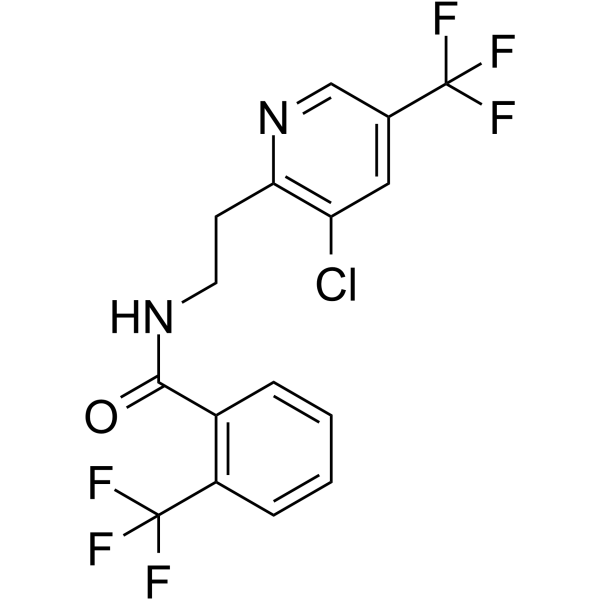
    Fluopyram is an orally active succinate dehydrogenase inhibitor, antifungal and nematicide. Fluopyram inhibits succinate dehydrogenase activity, activates CAR/PXR nuclear receptors, and increases caspase-3, TNF-α and NF-κB. Fluopyram inhibits the growth of F. virguliforme, Botrytis cinerea and Alternaria solani with EC50 values of 3.35, 5.389 and 0.244 µg/mL, respectively. Fluopyram induces liver and thyroid tumor formation. Fluopyram is nephrotoxic and embryotoxic .
    Fluopyram
  • HY-W008859
    Tetrac
    1 Publications Verification

    Tetraiodothyroacetic acid; 3,3',5,5'-Tetraiodothyroacetic acid

    Integrin Endogenous Metabolite Cancer
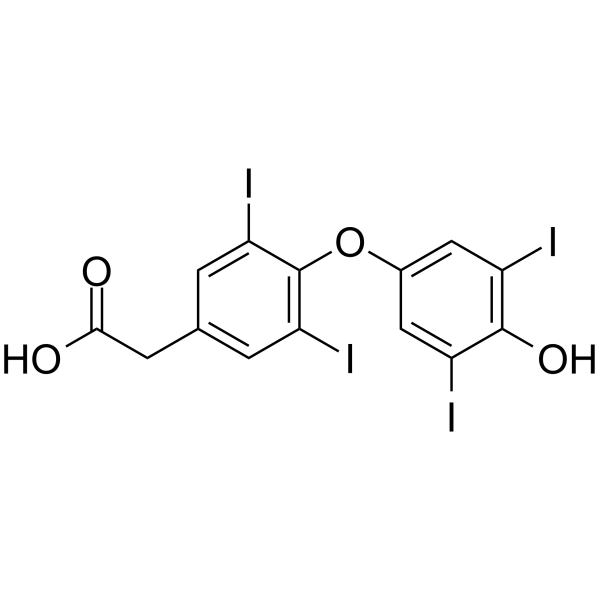
    Tetrac (Tetraiodothyroacetic acid), a derivative of L-thyroxine (T4), is a thyrointegrin receptor antagonist. Tetrac blocks the actions of T4 and 3,5,3'-triiodo-L-thyronine (T3) at the cell surface receptor for thyroid hormone on integrin αvβ3. Tetra has anti-angiogenic and anti-tumor activities .
    Tetrac
  • HY-P99364
    Icrucumab
    1 Publications Verification

    Anti-VEGFR1/FLT1 Reference Antibody; IMC-18F1

    VEGFR Apoptosis p38 MAPK Akt Endocrinology Cancer
    Icrucumab (Anti-VEGFR1/FLT1 Reference Antibody; IMC-18F1) is an IgG1 antibody inhibitor targeting VEGFR-1/FLT1 with anti-tumor activity. By blocking ligand-dependent phosphorylation and downstream signal transduction, Icrucumab reduces the activities of MAPK and Akt in breast cancer xenograft models, inhibits the proliferation and invasion of VEGFR-1-positive tumor cells, and reverses the conversion of M1 macrophages to the pro-tumor M2-like phenotype. Icrucumab also inhibits tumor cell proliferation, promotes apoptosis, and effectively suppresses tumor growth through direct targeting of tumors and host support mechanisms. In addition, Icrucumab exhibits a synergistic effect when combined with chemotherapeutic agents, and it is used in research related to various cancers including advanced solid malignancies, thyroid cancer, melanoma, and lung cancer .
    Icrucumab
  • HY-129046C

    Ribonuclease B, Bovine Pancreas

    Endonuclease DNA/RNA Synthesis Endocrinology Cancer
    RNase A (Bovine pancreatic RNase) is a widely used Endonuclease in DNA purification by specifically hydrolyzing cytosine or uracil residues of RNA. RNase A degrades the RNA in the RNA/DNA duplex. RNase A catalyses the breakdown of 3',5'-phosphodiester linkages of single stranded RNA. RNase A family members in organisms are tightly involved in various physiological and pathological processes including cell growth and development, proliferation, differentiation and migration. Dysregulation of RNase A activity or expression level is closely related to pancreatic, ovarian, bladder and thyroid cancer. RNase A has tumor cell-killing ability. RNase B, Bovine Pancreas (Ribonuclease B, Bovine Pancreas) is the N-glycosylated form of RNase A. RNase B, Bovine Pancreas can promote the folding of polypeptide chains and play a role similar to molecular chaperones .
    RNase B, Bovine Pancreas
  • HY-129046I

    DNA/RNA Synthesis Endonuclease Endocrinology Cancer
    RNase A (Bovine pancreatic RNase) is a widely used Endonuclease in DNA purification by specifically hydrolyzing cytosine or uracil residues of RNA. RNase A degrades the RNA in the RNA/DNA duplex. RNase A catalyses the breakdown of 3',5'-phosphodiester linkages of single stranded RNA. RNase A family members in organisms are tightly involved in various physiological and pathological processes including cell growth and development, proliferation, differentiation and migration. Dysregulation of RNase A activity or expression level is closely related to pancreatic, ovarian, bladder and thyroid cancer. RNase A has tumor cell-killing ability. RNase A, Recombinant (animal free) is recombinant RNase A with no animal-derived components .
    RNase A, Recombinant (animal free)
  • HY-132846

    TAS0953/HM06

    RET Apoptosis Cancer
    Vepafestinib (TAS0953/HM06) is a next-generation brain-penetrant, selective and orally active RET inhibitor with an IC50 value of 0.33 nM. Vepafestinib inhibits the phosphorylation of RET and its downstream signaling pathways, thus blocking the growth and signal transduction of tumor cells and inducing cell cycle arrest and apoptosis. Vepafestinib can be used in the research of various RET-driven cancers, such as non-small cell lung cancer, thyroid cancer and other disease areas .
    Vepafestinib
  • HY-129046D

    Ribonuclease A, Recombinant

    Endonuclease DNA/RNA Synthesis Endocrinology Cancer
    RNase A (Bovine pancreatic RNase) is a widely used Endonuclease in DNA purification by specifically hydrolyzing cytosine or uracil residues of RNA. RNase A degrades the RNA in the RNA/DNA duplex. RNase A catalyses the breakdown of 3',5'-phosphodiester linkages of single stranded RNA. RNase A family members in organisms are tightly involved in various physiological and pathological processes including cell growth and development, proliferation, differentiation and migration. Dysregulation of RNase A activity or expression level is closely related to pancreatic, ovarian, bladder and thyroid cancer. RNase A has tumor cell-killing ability. RNase A, Recombinant (Ribonuclease A, Recombinant) is a recombinant form of RNase A .
    RNase A, Recombinant
  • HY-N6841
    Rhodiolin
    1 Publications Verification

    Glucose-6-Phosphate Isomerase (GPI) Casein Kinase Virus Protease Flavivirus PI3K Akt mTOR Apoptosis Infection Cancer
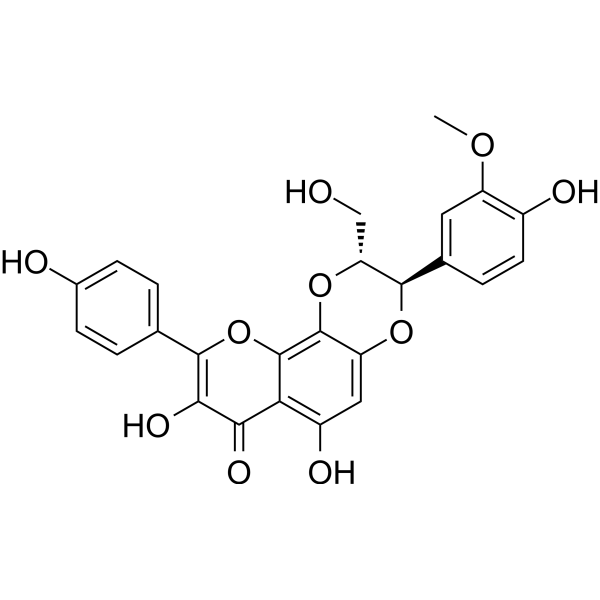
    Rhodiolin, a flavonoid, is an orally active glucose 6-phosphate isomerase (GPI) inhibitor. Rhodiolin inhibits papillary thyroid cancer (PTC) by targeting glycolysis enzyme glucose 6-phosphate isomerase GPI and suppressing PI3K/AKT/mTOR phosphorylation and induce apoptosis. Rhodiolin as a NS2B-NS3 protease inhibitor can disrupt dengue viral replication. Rhodiolin is also a potential candidate for developing anticancer strategies inhibiting CK1ε kinase. Rhodiolin can be used for the study of anti-tumor and anti-viral .
    Rhodiolin
  • HY-N0885
    Telocinobufagin
    1 Publications Verification

    Telobufotoxin; Telocinobufogenin

    JAK STAT mTOR PI3K Akt Polo-like Kinase (PLK) Na+/K+ ATPase Apoptosis Bacterial Infection Cardiovascular Disease Neurological Disease Inflammation/Immunology Cancer
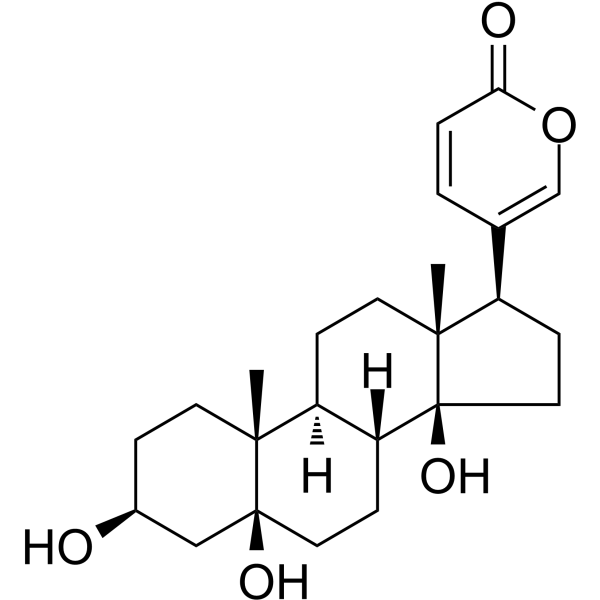
    Telocinobufagin (Telobufotoxin; Telocinobufogenin) is an orally active bufadienolide with potential anti-tumor effects. Telocinobufagin exerts its anti-cancer effects on non-small cell carcinoma, osteosarcoma, thyroid cancer, breast cancer and head and neck squamous cell carcinoma by inhibiting the STAT3, JAK2/STAT3, LARP1-mTOR, PI3K/Akt/Snail and PLK1 pathways, and can also induce tumor cell apoptosis. Telocinobufagin enhances the Th1 immune response and protects against Salmonella typhimurium infection. Telocinobufagin has a strong cardiac-stimulating effect by inhibiting the activity of Na +/K +-ATPase, and it can promote renal fibrosis. Telocinobufagin demonstrates non-opioid analgesic effects in various acute pain models .
    Telocinobufagin
  • HY-P99712

    hz208F2-4

    IGF-1R Apoptosis ADC Antibody Cancer
    Lonigutamab (hz208F2-4) is a humanized anti-IGF-1R monoclonal antibody, serveing as a targeting vector for antibody-drug conjugates (ADCs). Lonigutamab causes G2-M phase cell cycle arrest and increases apoptosis in IGF-1R-overexpressing tumor cells. Lonigutamab demonstrates potent antitumor efficacy in IGF-1R-overexpressing xenograft models. Lonigutamab can be used for the study of Solid tumors with overexpression of IGF-1R and thyroid eye diseases .
    Lonigutamab
  • HY-119459R

    Reference Standards Succinate Dehydrogenase Fungal Parasite Constitutive Androstane Receptor Caspase NF-κB Infection Cancer
    Fluopyram (Standard) is the analytical standard of Fluopyram (HY-119459). This product is intended for research and analytical applications. Fluopyram is an orally active succinate dehydrogenase inhibitor, antifungal and nematicide. Fluopyram inhibits succinate dehydrogenase activity, activates CAR/PXR nuclear receptors, and increases caspase-3, TNF-α and NF-κB. Fluopyram inhibits the growth of F. virguliforme, Botrytis cinerea and Alternaria solani with EC50 values of 3.35, 5.389 and 0.244 µg/mL, respectively. Fluopyram induces liver and thyroid tumor formation. Fluopyram is nephrotoxic and embryotoxic .
    Fluopyram (Standard)
  • HY-129046E

    Ribonuclease A DNase & Protease Free, Recombinant

    Endonuclease DNA/RNA Synthesis Endocrinology Cancer
    RNase A (Bovine pancreatic RNase) is a widely used Endonuclease in DNA purification by specifically hydrolyzing cytosine or uracil residues of RNA. RNase A degrades the RNA in the RNA/DNA duplex. RNase A catalyses the breakdown of 3',5'-phosphodiester linkages of single stranded RNA. RNase A family members in organisms are tightly involved in various physiological and pathological processes including cell growth and development, proliferation, differentiation and migration. Dysregulation of RNase A activity or expression level is closely related to pancreatic, ovarian, bladder and thyroid cancer. RNase A has tumor cell-killing ability. RNase A (DNase & Protease Free), Recombinant is recombinant RNase A, which does not contain DNase and protease .
    RNase A DNase & Protease Free, Recombinant
  • HY-129046B

    Ribonuclease A DNase & Protease Free

    Endonuclease DNA/RNA Synthesis Others Endocrinology Cancer
    RNase A (Bovine pancreatic RNase) is a widely used Endonuclease in DNA purification by specifically hydrolyzing cytosine or uracil residues of RNA. RNase A degrades the RNA in the RNA/DNA duplex. RNase A catalyses the breakdown of 3',5'-phosphodiester linkages of single stranded RNA. RNase A family members in organisms are tightly involved in various physiological and pathological processes including cell growth and development, proliferation, differentiation and migration. Dysregulation of RNase A activity or expression level is closely related to pancreatic, ovarian, bladder and thyroid cancer. RNase A has tumor cell-killing ability. RNase A, Bovine Pancreas (DNase & Protease Free) is RNase A derived from bovine pancreas and does not contain DNase or protease .
    RNase A, Bovine Pancreas DNase & Protease Free
  • HY-129046H

    DNA/RNA Synthesis Endonuclease Endocrinology Cancer
    RNase A (Bovine pancreatic RNase) is a widely used Endonuclease in DNA purification by specifically hydrolyzing cytosine or uracil residues of RNA. RNase A degrades the RNA in the RNA/DNA duplex. RNase A catalyses the breakdown of 3',5'-phosphodiester linkages of single stranded RNA. RNase A family members in organisms are tightly involved in various physiological and pathological processes including cell growth and development, proliferation, differentiation and migration. Dysregulation of RNase A activity or expression level is closely related to pancreatic, ovarian, bladder and thyroid cancer. RNase A has tumor cell-killing ability. RNase A, Recombinant (Protease & DNase free, animal free) is recombinant RNase A that does not contain protease and DNase and does not contain animal components .
    RNase A, Recombinant Protease & DNase free, animal free
  • HY-15855

    Microtubule/Tubulin Cancer
    Fosbretabulin (tromethamine), also known as combretastatin A4 phosphate (CA4P), is a vascular disrupting agent evaluated for its efficacy against anaplastic thyroid carcinoma (ATC). It targets tumor neovasculature, causing acute and reversible reductions in tumor blood flow and central necrosis .
    Fosbretabulin tromethamine
  • HY-B0035B

    Sulfadimidine 100 µg/mL in acetonitrile; Sulfadimerazine 100 µg/mL in acetonitrile

    Antibiotic Bacterial Infection
    Sulfamethazine (Sulfadimidine) 100 µg/mL in acetonitrile is a brain-penetrant sulfonamide antibiotic. Sulfamethazine 100 µg/mL in acetonitrile inhibits bacterial growth by blocking the synthesis of folic acid. Sulfamethazine 100 µg/mL in acetonitrile can be used for research on bacterial infections .
    Sulfamethazine 100 µg/mL in acetonitrile
  • HY-W008859R

    Tetraiodothyroacetic acid (Standard); 3,3',5,5'-Tetraiodothyroacetic acid (Standard)

    Reference Standards Integrin Endogenous Metabolite Cancer
    Tetrac (Tetraiodothyroacetic acid), a derivative of L-thyroxine (T4), is a thyrointegrin receptor antagonist. Tetrac blocks the actions of T4 and 3,5,3'-triiodo-L-thyronine (T3) at the cell surface receptor for thyroid hormone on integrin αvβ3. Tetra has anti-angiogenic and anti-tumor activities .
    Tetrac (Standard)
  • HY-14815

    Combretastatin A4 phosphate

    Apoptosis Microtubule/Tubulin Cancer
    Fosbretabulin (Combretastatin A4 phosphate) is a vascular disruptor with antitumor activity against atypical thyroid carcinoma (ATC) cell lines and xenografts. Fosbretabulin inhibits tumor growth by inhibiting microtubule polymerization, inducing apoptosis, and suppressing angiogenesis in tumors .
    Fosbretabulin
  • HY-13752

    HSP Cancer
    STA-1474 is an orally active and highly selective HSP90 inhibitor. STA-1474 can trigger tumor cell apoptosis. STA-1474 demonstrates significant antitumor efficacy in spontaneous canine cancer models (e.g., osteosarcoma, thyroid carcinoma). STA-1474 is promising for research of solid tumors (e.g., osteosarcoma, breast cancer) and HSP90-driven cancers .
    STA-1474
  • HY-124070

    MDM-2/p53 Cancer
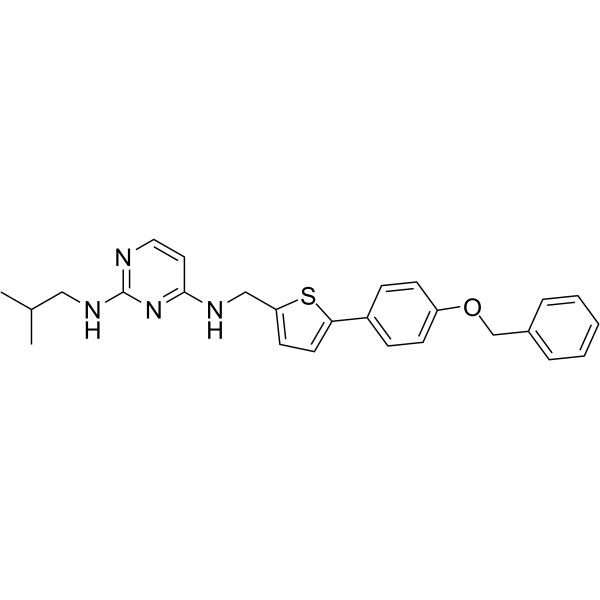
    ISA 27 is a small-molecule MDM2-p53 protein-protein interaction inhibitor. ISA 27 inhibits MDM2-mediated p53 ubiquitination and degradation. ISA 27 is promising for research of p53-mutant solid tumors (e.g., thyroid, breast cancer) .
    ISA 27
  • HY-124944

    Ras Cancer
    APS6-45 is an orally active tumor-calibrated inhibitor (TCI). APS6-45 inhibits RAS/MAPK signaling and exhibits antitumor activity .
    APS6-45
  • HY-125535

    AMPK mTOR Autophagy Atg8/LC3 Cancer
    OSU-53 is an orally active AMPK activator (EC50: 0.3 μM) and a direct mTOR inhibitor. OSU-53 induces autophagy and increases conversion of LC3 I to LC3 II. OSU-53 also modulates energy homeostasis by suppressing fatty acid biosynthesis and shifting the metabolism to oxidation by up-regulating the expression of PGC1α and NRF-1. OSU-53 has antitumor activity in various tumor models, such as breast cancer and thyroid cancer .
    OSU-53
  • HY-N16905

    Others Endocrinology Cancer
    Diosbulbin I is a furan-type nor-diterpenoid compound that can be naturally extracted from the tubers of Dioscorea bulbifera L. Dioscorea bulbifera L. is traditionally used to research thyroid diseases and tumors .
    Diosbulbin I
  • HY-177011

    Estrogen Receptor/ERR Cancer
    ERRγ-IN-1 is a ERRγ inhibitor with an IC50 of 0.040 μM. ERRγ-IN-1 activates MAPK (p44/p42) and inhibits the activity of ERRγ. ERRγ-IN-1 significantly increases iodine uptake in anaplastic thyroid carcinoma xenografts and suppresses tumor growth in nude mice. ERRγ-IN-1 is applicable for the research of anaplastic thyroid carcinoma .
    ERRγ-IN-1
  • HY-183783

    PROTACs RET STAT ERK Apoptosis Endocrinology Cancer
    PROTAC RET Degrader 2 is a RET degrader with a target IC50 of 0.36 nM. PROTAC RET Degrader 2 is mainly composed of RET-IN-34 (HY-183729) and Thalidomide (HY-14658). PROTAC RET Degrader 2 mediates RET degradation via the ubiquitin-proteasome system. PROTAC RET Degrader 2 induces apoptosis, inhibits colony-forming ability, and exhibits antiproliferative activity in cancer cells. PROTAC RET Degrader 2 suppresses tumor growth in xenograft models. PROTAC RET Degrader 2 can be used in research related to medullary thyroid carcinoma, papillary thyroid carcinoma, and RET fusion-positive lung adenocarcinoma .
    PROTAC RET Degrader 2
  • HY-18957C

    BGB-283 hydrochloride

    Endogenous Metabolite Cancer
    Lifirafenib hydrochloride (BGB-283 hydrochloride) is a novel, reversible B-RAFV600E inhibitor with antitumor activity. Lifirafenib has shown potent antitumor activity against solid tumors with B-RAFV600E mutations, such as melanoma, thyroid cancer, and low-grade serous ovarian cancer. Lifirafenib exhibits selective cytotoxicity in vitro, preferentially inhibiting the proliferation of cancer cells with B-RAFV600E and EGFR mutations/amplification. Lifirafenib can achieve dose-dependent inhibition of tumor growth in animal models, accompanied by partial and complete tumor shrinkage .
    Lifirafenib hydrochloride
  • HY-182741

    RET Endocrinology Cancer
    RET-IN-32 is an orally active RET inhibitor with IC50 values of 0.285, 4.602 and 103.5 nM against wild-type, V804M and G810S mutant forms, respectively. RET-IN-32 inhibits the autophosphorylation of Tyr1062. RET-IN-32 completely suppresses tumor growth induced by BAF3-KIF3B-RET-WT xenografts. RET-IN-32 can be used in the research of thyroid cancer and lung cancer .
    RET-IN-32

Inquiry Online

Your information is safe with us. * Required Fields.

Salutation


Country or Region *

Applicant Name *


Organization Name *

Department *


Email Address *


Product Name *

Cat. No.


Requested quantity *

Phone Number *


Remarks

Inquiry Online

Inquiry Information

Product Name:
Cat. No.:
Quantity:
MCE Japan Authorized Agent:

