48 Results for "

tryptamine

" in MedChemExpress (MCE) Product Catalog:
Products (48)

48 Results for "tryptamine" in MCE Product Catalog:

2
2 Cited Publications
Cat. No.: HY-B2132
CAS No.: 61-54-1
Synonyms: 3-(2-Aminoethyl)indole~2-(3-Indolyl)ethylamine
Tryptamine is a selective, blood-brain-penetrating 5-HT4 receptor agonist (EC50=1-3 mM) and an endogenous ligand of the aryl hydrocarbon receptor (AHR) (Kd=10-50 nM). Tryptamine promotes intestinal anion secretion and fluid transport by activating G protein-coupled receptors (GPCRs) and accelerates gastrointestinal motility. Tryptamine regulates Th17/Treg balance to inhibit neuroinflammation, competitively binds to 5-HT receptors to regulate central nervous system activity, and participates in temperature regulation and spinal reflex regulation as a neuromodulator. Tryptamine can be used to study intestinal motility disorders such as functional constipation, and has shown significant efficacy in multiple sclerosis models .
loading...
    loading...
2
2 Cited Publications
Cat. No.: HY-122723
CAS No.: 732973-87-4
Purity:  99.45%
Research Areas:  

Cancer

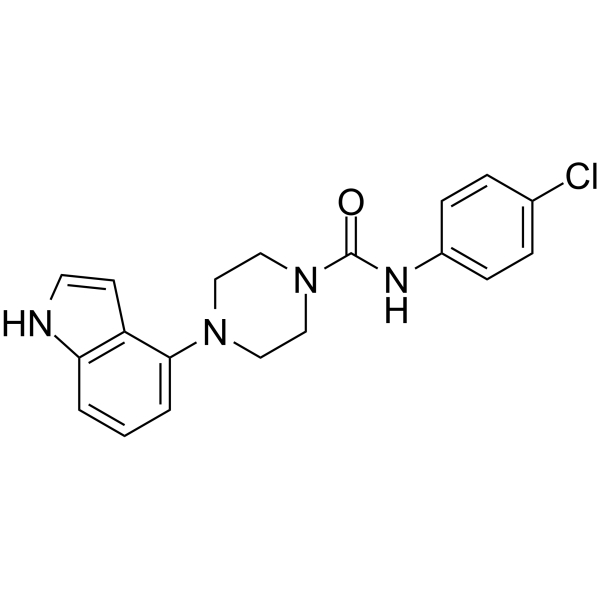
GOT1 inhibitor-1 (compound 2c), a tryptamine-based derivative, acts as a novel, potent and non-covalent inhibitor of glutamate oxaloacetate transaminase 1 (GOT1) with an IC50 of 8.2 uM. GOT1 plays an important role in energy metabolism and Reactive Oxygen Species (ROS) balance. GOT1 inhibitor-1 can be used for the research of pancreatic ductal adenocarcinoma (PDAC) .
loading...
    loading...
2
2 Cited Publications
Cat. No.: HY-W014971
CAS No.: 343-94-2
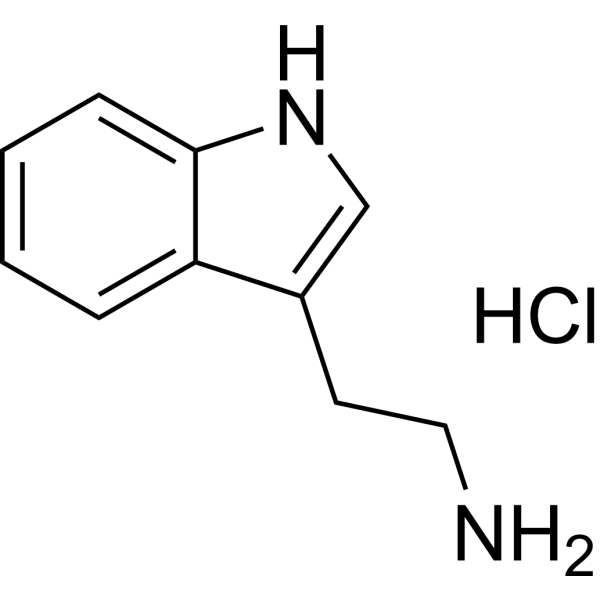
Tryptamine hydrochloride belongs to the class of indole alkaloids and is a derivative of the amino acid tryptophan. Tryptamine hydrochloride is psychoactive and acts as a neurotransmitter in the body, affecting mood, perception and cognition. In its hydrochloride form, Tryptamine hydrochloride hydrochloride, it is commonly used as a research chemical and as a starting material for the synthesis of other organic compounds. It can also occur naturally in certain plants and animals, including fungi and mammals. Due to the psychoactive properties of Tryptamine hydrochloride and its derivatives, its use and possession are controlled substances in many countries.
loading...
    loading...
2
2 Cited Publications
Cat. No.: HY-137500
CAS No.: 2739805-64-0
Purity:  98.43%
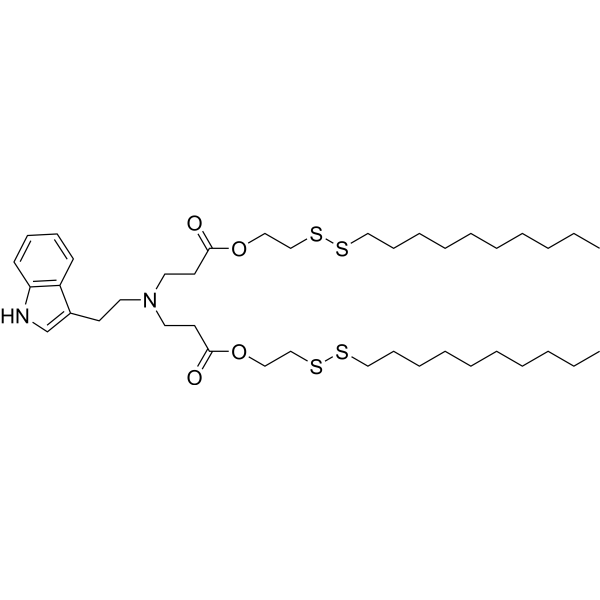
NT1-O14B is a tryptamine-derived lipidoid. NT1-O14B incorporates NT-lipidoid into BBB-impermeable lipid nanoparticles (LNPs), enabling the LNPs to cross the BBB. NT1-O14B enhances brain delivery via intravenous injection. NT1-O14B can be used in ischemic stroke research .
loading...
    loading...
2
2 Cited Publications
Cat. No.: HY-B2132R
CAS No.: 61-54-1
Synonyms: 3-(2-Aminoethyl)indole~2-(3-Indolyl)ethylamine (Standard)
Tryptamine (Standard) is the analytical standard of Tryptamine. This product is intended for research and analytical applications. Tryptamine is a monoamine alkaloid, similar to other trace amines, is believed to play a role as a neuromodulator or neurotransmitter.
loading...
    loading...
Cat. No.: HY-B2132S1
CAS No.: 340257-60-5
Tryptamine-d4 (hydrochloride) is the deuterium labeled Tryptamine hydrochloride. Tryptamine hydrochloride, a monoamine alkaloid, similar to other trace amines, is believed to play a role as a neuromodulator or neurotransmitter .
loading...
    loading...
Cat. No.: HY-20696
CAS No.: 16502-01-5
Synonyms: Tryptoline
Target:  

5-HT Receptor

Research Areas:  

Metabolic Disease

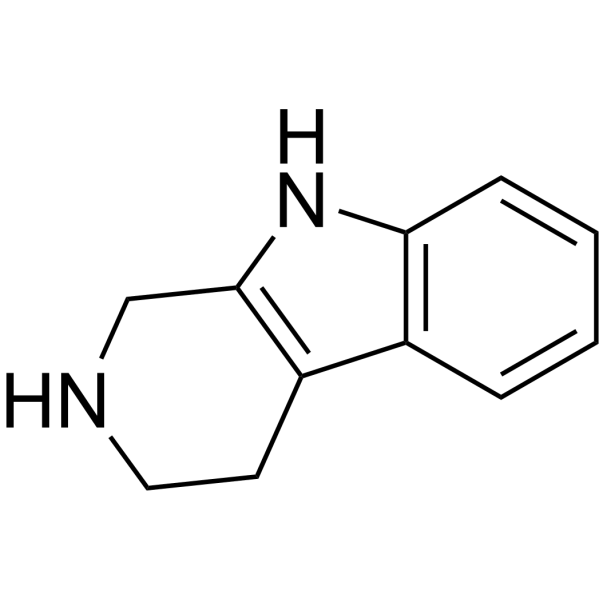
Tetrahydro-β-carboline (Tryptoline) is a metabolite of tryptamine, also is a competitive serotonin reuptake inhibitor with an Ki value of 6.1 µM .
loading...
    loading...
Cat. No.: HY-138885
CAS No.: 1414808-96-0
Purity:  99.79%
Synonyms: TpGc
Research Areas:  

Neurological Disease

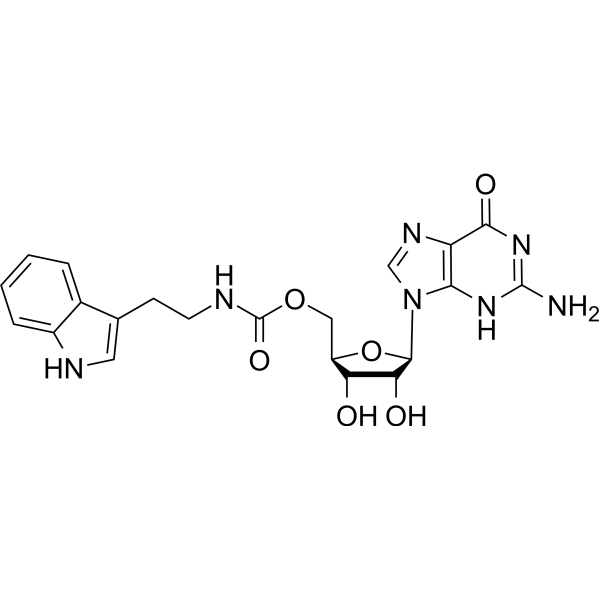
Tryptamine guanosine carbamate (TpGc) is a selective HINT1 (histidine triad nucleotide-binding protein 1) inhibitor (Ki=34 μM, Kd=3.65 μM). Tryptamine guanosine carbamate significantly enhances morphine antinociception while preventing the development of tolerance .
loading...
    loading...
Cat. No.: HY-169457
CAS No.: 114264-95-8
Target:  

5-HT Receptor

Research Areas:  

Neurological Disease

Aeruginascin is an indole derivative and a tryptamine that can be extracted from Inocybe aeruginascens Babos . Aeruginascin may cause an euphoric mood during psychosis with hallucinations .
loading...
    loading...
Cat. No.: HY-118796
CAS No.: 77872-41-4
Synonyms: 4-HO-MET; 4-Hydroxy-N-methyl-N-ethyltryptamine
Research Areas:  

Neurological Disease

4-Hydroxy MET (4-HO-MET; 4-Hydroxy-N-methyl-N-ethyltryptamine) is a synthetic tryptamine psychoactive substance. 4-Hydroxy MET is a partial 5-HT2A receptor agonist, a serotonin transporter inhibitor and weak norepinephrine transporter inhibitor. 4-Hydroxy MET affects emotional, motoric, and cognitive functions via serotonergic hallucinogenic activity .
loading...
    loading...
Cat. No.: HY-168809
CAS No.: 21420-59-7
Research Areas:  

Neurological Disease

Norbaeocystin is an intermediate/minor metabolite naturally present in the psilocybin biosynthetic pathway of hallucinogenic mushrooms (Psilocybe spp.). Norbaeocystin has weak or no affinity for the serotonin 2A (5-HT2A) receptor and does not induce receptor activation. Norbaeocystin is rapidly metabolized by monoamine oxidase, and thus does not participate in centrally mediated psychedelic effects. Norbaeocystin can be used for studies on biological pathways associated with hallucinogenic effects .
loading...
    loading...
Cat. No.: HY-138289
CAS No.: 2173386-55-3
Target:  

Drug Derivative

Research Areas:  

Neurological Disease

4-acetoxy MPT is a tryptamine that induces the head-twitch response (HTR) in mice .
loading...
    loading...
Cat. No.: HY-172339
Synonyms: 4-Acetoxy DALT hydrochloride
4-AcO-DALT hydrochloride is a tryptamine compound with psychoactive effects. 4-AcO-DALT hydrochloride inhibits 5-HT receptors, alpha receptors, dopamine receptors, histamine receptor 1 (H1), muscarinic M2 receptor and Sigma 2 receptor. 4-AcO-DALT hydrochloride shows Ki values of 582 nM, 2689 nM, 2099 nM, 2116 nM, 958 nM, 137 nM, 824 nM, 479 nM, 406 nM, 874 nM, 4190 nM, 482 nM, 214 nM, 803 nM, 4522 nM, 1907 nM for 5-HT1B, 5-HT1D, 5-HT1E, 5-HT2A, 5-HT2B, 5-HT2C, 5-HT6, 5-HT7A, H1, Sigma 2, α2A, α2B, α2C, D2, D3 receptors .
loading...
    loading...
Cat. No.: HY-177101
CAS No.: 2756001-39-3
Synonyms: RE-104; FT-104
Target:  

5-HT Receptor

Research Areas:  

Neurological Disease

Luvesilocin (Example 6) is a tryptamine prodrug. Luvesilocin can convert into an active form, acting as a 5HT2A agonist in vivo upon administration. Luvesilocin can be studied in research for mental diorders .
loading...
    loading...
Cat. No.: HY-169785
CAS No.: 65882-39-5
Synonyms: 7-TMT
Target:  

5-HT Receptor

Research Areas:  

Neurological Disease

7-Methyl DMT (7-TMT) is a 5-HT2 receptor agonist. Structurally, 7-Methyl DMT is a tryptamine derivative. It can be used as an analytical reference standard for the psychoactive substance DOM. 7-Methyl DMT is also used in research in the field of neurological diseases .
loading...
    loading...
Cat. No.: HY-B2132S
CAS No.: 362049-48-7
Tryptamine-d2 (hydrochloride) is a deuterium labeled Tryptamine hydrochloride. Tryptamine hydrochloride is a monoamine alkaloid, similar to other trace amines, is believed to play a role as a neuromodulator or neurotransmitter .
loading...
    loading...
Cat. No.: HY-W741886
CAS No.: 109921-55-3
Target:  

Drug Metabolite

Research Areas:  

Neurological Disease

5-Methoxy-N-isopropyl tryptamine is a tryptamine. 5-Methoxy-N-isopropyl tryptamine is a metabolite of 5-methoxy DiPT.
loading...
    loading...
Cat. No.: HY-117087
CAS No.: 1071544-43-8
Target:  

Phosphatase PANoptosis

Research Areas:  

Cancer

K103 is an inhibitor discovered from the screen that is an analog of the serotonin antagonist benzazocine. K103 exhibited inhibition of SHIP homologues, labelling it a pan-SHIP1/2 inhibitor, but the molecule had no effect on another 5' inositol phosphatase, OCRL. In line with the "two PIPs hypothesis", the molecule exhibited significant anti-tumour effects against a variety of cell lines, particularly breast cancer cells. Additional studies with K103 revealed that inhibition of SHIP1/2 in multiple myeloma cells resulted in G2/M cell cycle arrest followed by extensive apoptosis via activation of the caspase cascade. K103 fits the commonly used small molecule agent property profile, but while this work was being conducted, it was discovered that K103 caused psychoactive effects in mice, which limited the utility of the molecule in vivo. Therefore, certain synthetic studies were conducted on this tryptamine to identify the features that needed to be present in the molecule to maintain pan-SHIP1/2 inhibition in order to design an inhibitor with favourable pharmacodynamic properties and an improved side effect profile.
loading...
    loading...
Cat. No.: HY-101309A
CAS No.: 157798-13-5
Target:  

5-HT Receptor

Research Areas:  

Cancer

5-(Nonyloxy)tryptamine oxalate, a high-affinity agonist for the 5-HTIDβ receptor, with an ED50 value of 68 nM. 5-(Nonyloxy)tryptamine oxalate, exhibits antitumor growth activity in vivo and enhances the ability of T cells to target tumor cells .
loading...
    loading...
Cat. No.: HY-168014
CAS No.: 5102-11-4
Synonyms: 5-OMe DMT
Target:  

Drug Derivative

Research Areas:  

Neurological Disease

5-Methylthio DMT (5-OMe DMT) is a tryptamine with psychoactivity .
loading...
    loading...

