Search Result
Results for "
urinary system
" in MedChemExpress (MCE) Product Catalog:
2
Biochemical Assay Reagents
3
Isotope-Labeled Compounds
| Cat. No. |
Product Name |
Target |
Research Areas |
Chemical Structure |
-
- HY-15435
-
CHAPS
4 Publications Verification
|
Exosomes
Biochemical Assay Reagents
|
Others
|
|
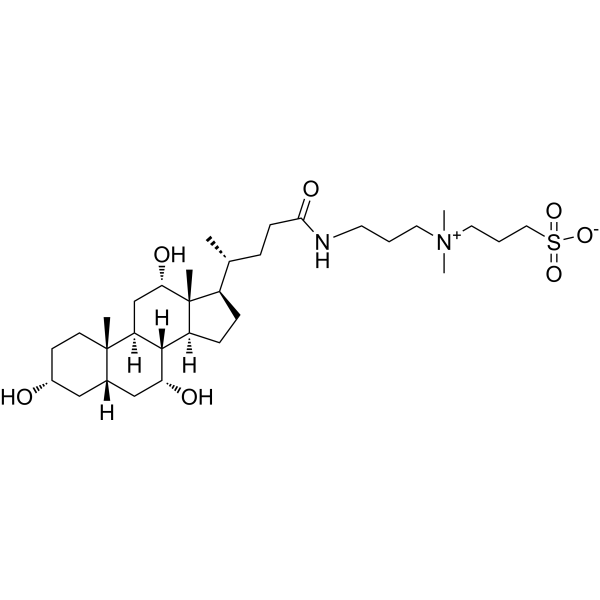
CHAPS is a cholic acid-derived, sulfobetaine-type zwitterionic detergent and micelle-forming agent. CHAPS exhibits properties of weak cationic or nonionic surfactants in different solution systems, undergoes micellization, and forms small, loose hydrophilic aggregates that are temperature-dependent. CHAPS stabilizes mononucleosomes under different ionic strengths, reduces nucleosome sequence specificity, promotes sliding of histone cores along DNA, solubilizes Tamm-Horsfall protein to reduce its interference with urinary exosome isolation, and maintains vesicle structure and the activity of related proteins at the same time. CHAPS is used to recover native folded fusion proteins, enhance the binding capacity of GST fusion proteins, and restore GST enzyme activity. However, CHAPS cannot refold proteins denatured by urea, guanidine hydrochloride or heat, nor can it construct the structure of intrinsically disordered proteins. CHAPS is commonly used in research on the separation and purification of membrane proteins .
|
-
-
- HY-W011910
-
-
-
- HY-15435A
-
|
|
Biochemical Assay Reagents
Exosomes
|
Others
|
|
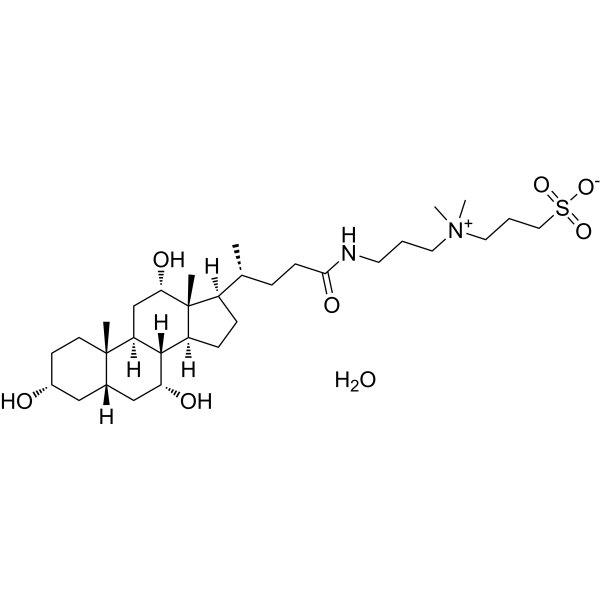
CHAPS hydrate is a cholic acid-derived, sulfobetaine-type zwitterionic detergent and micelle-forming agent. CHAPS hydrate exhibits properties of weak cationic or nonionic surfactants in different solution systems, undergoes micellization, and forms small, loose hydrophilic aggregates that are temperature-dependent. CHAPS hydrate stabilizes mononucleosomes under different ionic strengths, reduces nucleosome sequence specificity, promotes sliding of histone cores along DNA, solubilizes Tamm‑Horsfall protein to reduce its interference with urinary exosome isolation, and maintains vesicle structure and the activity of related proteins at the same time. CHAPS hydrate is used to recover native folded fusion proteins, enhance the binding capacity of GST fusion proteins, and restore GST enzyme activity. However, CHAPS hydrate cannot refold proteins denatured by urea, guanidine hydrochloride or heat, nor can it construct the structure of intrinsically disordered proteins. CHAPS hydrate is commonly used in research on the separation and purification of membrane proteins .
|
-
-
- HY-15574
-
|
SB-207266
|
5-HT Receptor
|
Cardiovascular Disease
|
|
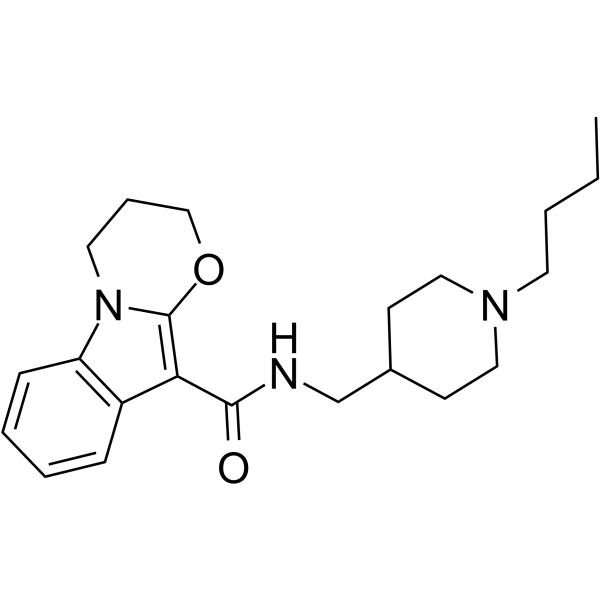
Piboserod is an orally available selective antagonist of the 5-HT4 receptor, with a Ki value of approximately 0.1 nM for human 5-HT4 receptors. Piboserod can competitively bind to the 5-HT4 receptor and block the activation of the 5-HT4 receptor. Piboserod can inhibit the enhancing effect of 5-HT on the nerve-mediated contraction response of the human bladder detrusor muscle. Piboserod is mainly used in the research of urinary system diseases (such as overactive bladder) and cardiovascular diseases (such as chronic heart failure) .
|
-
-
- HY-132429S
-
|
|
Isotope-Labeled Compounds
|
Others
|
|
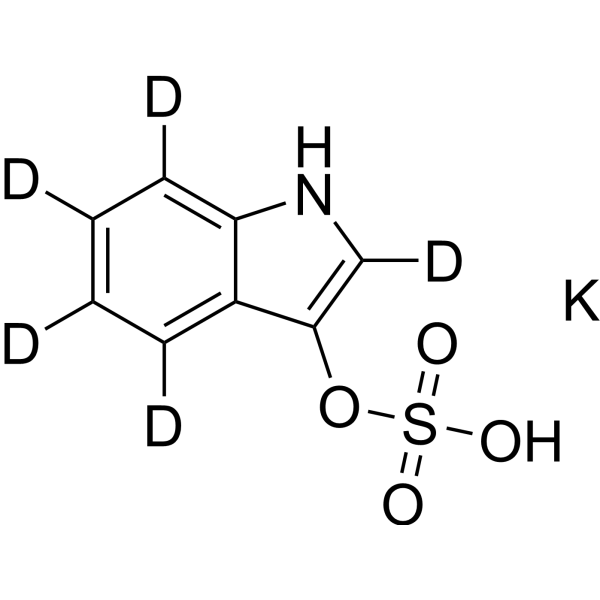
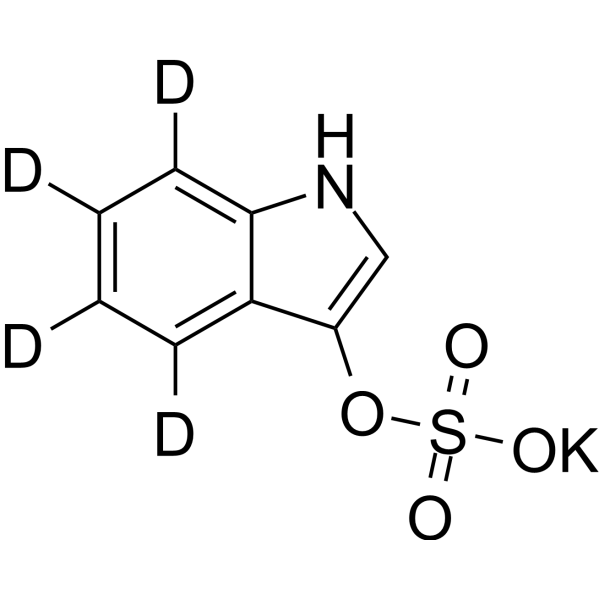
Potassium 1H-indol-3-yl sulfate-d5 is the deuterium labeled 3-Indoxyl Sulfate potassium. Potassium 1H-indol-3-yl sulfate is a metabolite of tryptophan, produced by intestinal microorganisms and combined with sulfate in the liver before entering the circulatory system. Potassium 1H-indol-3-yl sulfate is a potent endogenous agonist of the aryl hydrocarbon receptor (AhR) and a urinary toxin. Potassium 1H-indol-3-yl sulfate can be used for research on kidney diseases.
|
-
-
- HY-W011168
-
|
|
Nucleoside Antimetabolite/Analog
DNA/RNA Synthesis
|
Inflammation/Immunology
Cancer
|
|
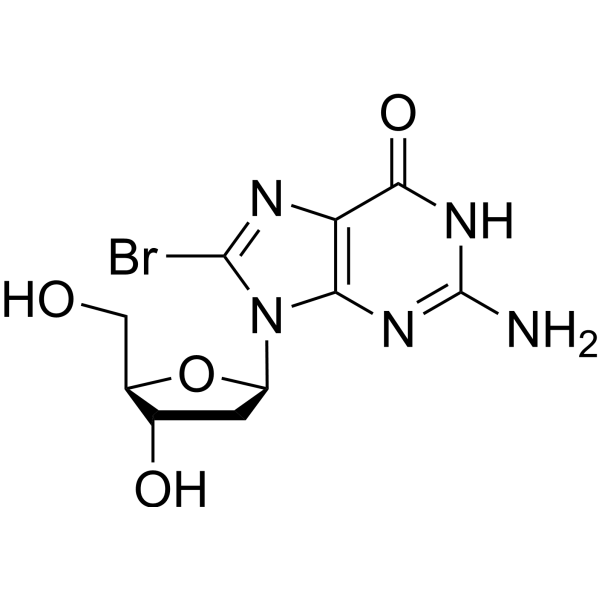
8-Bromo-2'-deoxyguanosine is an inflammation-related DNA halogenated adduct and an early biomarker of inflammation-induced oxidative tissue damage. The formation of 8-Bromo-2'-deoxyguanosine precedes that of oxidative and nitrative products, and it can be generated via the MPO-H2O2-Cl --Br - system. 8-Bromo-2'-deoxyguanosine serves as the immunogen for preparing the monoclonal antibody mAb8B3, which can be used to detect early DNA modifications in preclinical models; its urinary level also increases significantly in inflammatory disease models. 8-Bromo-2'-deoxyguanosine can also be produced in the dermis of UV-B irradiated mice, and the extract of Coprinus comatus significantly reduces its level. 8-Bromo-2'-deoxyguanosine finds applications in studies related to inflammatory diseases, diabetes, hepatocellular carcinoma, and UV-B induced skin inflammation .
|
-
-
- HY-125923
-
|
|
Bacterial
|
Infection
Endocrinology
|
|
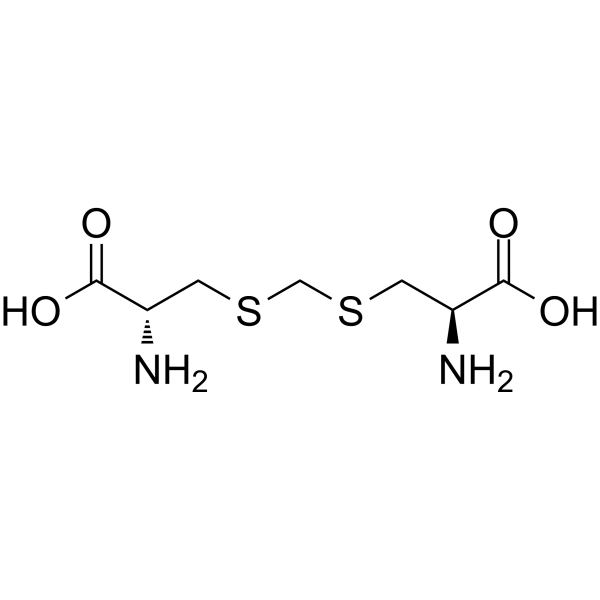
Djenkolic acid is a sulfur-containing amino acid. Djenkolic acid can be isolated from the djenkol beans of the Southeast Asian plant Archidendron jiringa. Djenkolic acid de-inhibits the SO4 2- uptake system in Pseudomonas fluorescens. Djenkolic acid causes supersaturation of the urinary system with djenkolic acid crystals, leading to urinary tract obstruction and acute kidney injury .
|
-
-
- HY-W011910S
-
-
-
- HY-15935
-
|
|
β-glucuronidase
Fluorescent Dye
|
Others
|
|
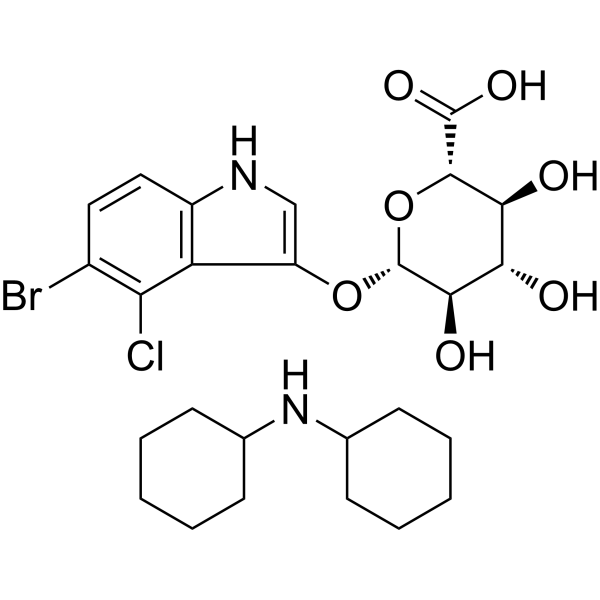
X-Gluc Dicyclohexylamine is a dye reagent for the detection of β-glucuronidase, an enzyme produced by Escherichia coli. X-Gluc sodium can be used to detect E. coli contamination in food, water and the urinary tract. X-Gluc sodium is also widely used in molecular biology experiments to label and detect the expression of target genes (GUS reporter system) .
|
-
-
- HY-14790
-
|
(S,S)-(+)-Reboxetine
|
Adrenergic Receptor
|
Neurological Disease
|
|
Esreboxetine ((S,S)-Reboxetine) is a selective norepinephrine reuptake inhibitor with activity in increasing urethral resistance. Esreboxetine has been reported to be effective in patients with stress urinary incontinence in a Phase IIa clinical study, achieving this effect by increasing urethral closure. The mechanism of action of esreboxetine involves inhibition of norepinephrine transporters in the central and peripheral nervous systems. The peripheral selectivity of esreboxetine helps it significantly increase urethral resistance without penetrating the brain .
|
-
-
- HY-D1056B2
-
|
LPS, from bacterial (Proteus mirabilis)
|
Toll-like Receptor (TLR)
|
Inflammation/Immunology
|
Lipopolysaccharides, from Proteus mirabilis are lipopolysaccharide endotoxins and TLR-4 activators derived from Proteus mirabilis, classified as S-type LPS, which can activate pathogen-associated molecular patterns (PAMP) of the immune system and induce cellular secretion of migrasomes. Lipopolysaccharides, from Proteus mirabilis exhibit a typical three-part structure: O-antigen, core oligosaccharide, and lipid A. Proteus mirabilis is a major pathogen causing urinary tract infections and may also contribute to rheumatoid arthritis. Lipopolysaccharides, from Proteus mirabilis also exhibit potential anti-tumor effects, demonstrating in vivo inhibitory activity against solid tumors such as meningosarcoma and Walker carcinosarcoma .
It is recommended to prepare a solution with concentration ≥2 mg/mL. Vortex thoroughly for more than 10 minutes. Due to the adsorption characteristics of LPS, silanized container or low adsorption centrifuge tubes should be used for aliquoting and storage, and mix thoroughly before use.
|
-
-
- HY-120473
-
|
|
Adrenergic Receptor
|
Metabolic Disease
|
|
TAK-259 is an orally active α1D-adrenergic receptor antagonist with a Ki value of 1.1 nM for human α1D-adrenergic receptors. TAK-259 can inhibit the contraction of isolated bladder strips in rats with bladder outlet obstruction, reduce non-voiding bladder contractions, and improve urinary frequency symptoms. TAK-259 can be used in research related to overactive bladder .
|
-
-
- HY-174808
-
-
-
- HY-125923R
-
|
|
Reference Standards
Bacterial
|
Infection
Endocrinology
|
|
Djenkolic acid (Standard) is the analytical standard of Djenkolic acid (HY-125923). This product is intended for research and analytical applications. Djenkolic acid is a sulfur-containing amino acid. Djenkolic acid can be isolated from the djenkol beans of the Southeast Asian plant Archidendron jiringa. Djenkolic acid de-inhibits the SO4 2- uptake system in Pseudomonas fluorescens. Djenkolic acid causes supersaturation of the urinary system with djenkolic acid crystals, leading to urinary tract obstruction and acute kidney injury .
|
-
-
- HY-177544
-
|
|
Prostaglandin Receptor
|
Endocrinology
|
|
EP1 receptor antagonist-1 (Compound Example 5a freebase) is an EP1 prostaglandin receptor antagonist. EP1 receptor antagonist-1 is promising for research of urinary system-related diseases .
|
-
-
- HY-105854
-
|
|
Apoptosis
Reactive Oxygen Species (ROS)
JNK
p38 MAPK
MMP
|
Cancer
|
|
Pipoxolan hydrochloride is an anti-spasmotic agent. Pipoxolan hydrochloride induces Apoptosis, increases intracellular ROS. Pipoxolan hydrochloride down-regulates phosphorylation JNK and p38, and then, MMP-2 and -9. Pipoxolan hydrochloride relieves smooth muscle spasms in the digestive, urinary, and gynecological systems. Pipoxolan hydrochloride also exhibits anticancer activity against leukemia, oral squamous cell carcinoma, and lung adenocarcinoma .
|
-
-
- HY-B1435A
-
|
Thymoxamine
|
Adrenergic Receptor
|
Neurological Disease
|
|
Moxisylyte (Thymoxamine) is an alpha 1-selective antagonist with activity that improves bladder emptying. Moxisylyte is used to suppress urinary difficulties in patients with multiple system atrophy (MSA) by blocking alpha 1-adrenergic receptors to reduce the amount of residual urine after urination. Moxisylyte is also used to suppress erectile dysfunction and can improve blood circulation problems caused by Raynaud's syndrome in the short term. In addition, Moxisylyte can be applied topically to the eye to reverse the mydriasis caused by phenylephrine and other sympathetic stimulants .
|
-
-
- HY-15574R
-
|
SB-207266 (Standard)
|
5-HT Receptor
Reference Standards
|
Cardiovascular Disease
|
|
Piboserod (Standard) is the analytical standard of Piboserod. This product is intended for research and analytical applications. Piboserod is an orally available selective antagonist of the 5-HT4 receptor, with a Ki value of approximately 0.1 nM for human 5-HT4 receptors. Piboserod can competitively bind to the 5-HT4 receptor and block the activation of the 5-HT4 receptor. Piboserod can inhibit the enhancing effect of 5-HT on the nerve-mediated contraction response of the human bladder detrusor muscle. Piboserod is mainly used in the research of urinary system diseases (such as overactive bladder) and cardiovascular diseases (such as chronic heart failure) .
|
-
-
- HY-137055
-
|
|
Others
|
Others
|
|
PF-3774076 is a highly central nervous system (CNS) penetrant, potent, and selective human α1A-adrenoceptor partial agonist. It exhibits good potency and selectivity in multiple binding and functional assays. PF-3774076 increases peak urethral pressure in anesthetized female dogs in a dose-dependent manner via a central mechanism. PF-3774076 affects both the proximal and distal portions of the urethra in vivo. These properties suggest that PF-3774076 may have significant benefit in the treatment of stress urinary incontinence (SUI) as a CNS-penetrant α1A receptor partial agonist. However, despite its partial agonism and selectivity for α1A receptors, PF-3774076 failed to provide adequate safety differences in in vivo models of cardiovascular function. This may be due to the simultaneous activation of both peripheral and central α1A receptors. These data suggest that while central α1A partial agonists may have significant benefit in the treatment of SUI, this class of agents may have difficulty achieving the desired urethral selectivity without affecting cardiovascular function.
|
-
-
- HY-W767399
-
|
|
Isotope-Labeled Compounds
DNA/RNA Synthesis
Nucleoside Antimetabolite/Analog
|
Cancer
|
|
8-Bromo-2'-deoxyguanosine- 13C, 15N2 is the 13C- and 15N-labeled 8-Bromo-2'-deoxyguanosine (HY-W011168). 8-Bromo-2'-deoxyguanosine is an inflammation-related DNA halogenated adduct and an early biomarker of inflammation-induced oxidative tissue damage. The formation of 8-Bromo-2'-deoxyguanosine precedes that of oxidative and nitrative products, and it can be generated via the MPO-H2O2-Cl --Br - system. 8-Bromo-2'-deoxyguanosine serves as the immunogen for preparing the monoclonal antibody mAb8B3, which can be used to detect early DNA modifications in preclinical models; its urinary level also increases significantly in inflammatory disease models. 8-Bromo-2'-deoxyguanosine can also be produced in the dermis of UV-B irradiated mice, and the extract of Coprinus comatus significantly reduces its level. 8-Bromo-2'-deoxyguanosine finds applications in studies related to inflammatory diseases, diabetes, hepatocellular carcinoma, and UV-B induced skin inflammation .
|
-
-
- HY-123448
-
|
|
Bacterial
Antibiotic
|
Infection
|
|
CCG-120304 is a TonB system inhibitor and bacteriostatic agent. CCG-120304 inhibits TonB-dependent functions. CCG-120304 is applicable to research related to urinary tract infections .
|
-
-
- HY-N16736
-
|
|
Others
|
Inflammation/Immunology
|
|
Alpinenone is a sesquiterpene compound isolated from nootropic fruits. Alpinenone exerts anti-inflammatory activity by inhibiting overproduction of nitric oxide (NO) and has traditionally had antidiarrheal, diuretic properties. Alpinenone can be used to study inflammation-related diseases and digestive and urinary system diseases .
|
-
-
- HY-138983
-
|
|
Potassium Channel
|
Neurological Disease
|
|
A-278637 is a selective KATP channel opening agent with an EC50 of 102 nM. A-278637 does not interact with other ion channels, including L-type calcium channels or other neurotransmitter receptor systems. A-278637 possesses a greater functional selectivity for urinary bladder versus vascular smooth muscle in vivo. A-278637 can be used for the study of overactive bladder .
|
-
-
- HY-W011910R
-
|
|
Endogenous Metabolite
Reference Standards
Aryl Hydrocarbon Receptor
Cytochrome P450
UGT
Interleukin Related
|
Endocrinology
|
|
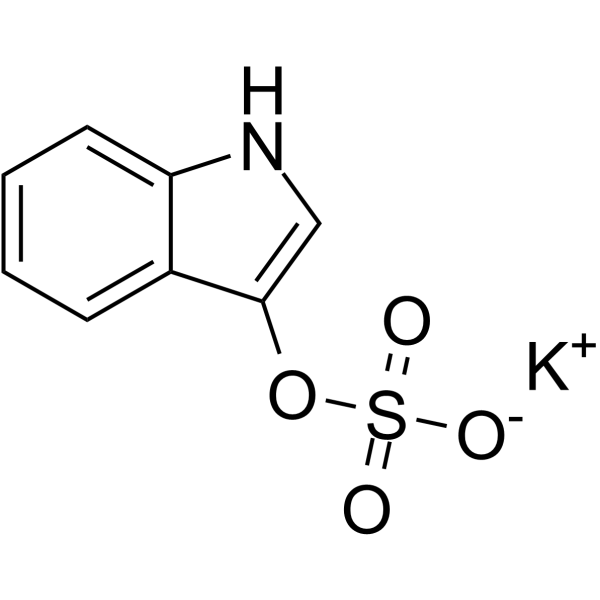
Potassium 1H-indol-3-yl sulfate (Standard) is the analytical standard of Potassium 1H-indol-3-yl sulfate (HY-W011910). This product is intended for research and analytical applications. Potassium 1H-indol-3-yl sulfate is a metabolite of tryptophan, produced by intestinal microorganisms and combined with sulfate in the liver before entering the circulatory system. Potassium 1H-indol-3-yl sulfate is a potent endogenous agonist of the aryl hydrocarbon receptor (AhR) and a urinary toxin. Potassium 1H-indol-3-yl sulfate can be used for research on kidney diseases.
|
-
-
- HY-167246
-
|
|
Insecticide
|
Infection
|
|
Profluthrin is a pyrethroid insecticide. Profluthrin can be used as mothproof repellents for clothes .
|
-
| Cat. No. |
Product Name |
Type |
-
- HY-15935
-
|
|
Fluorescent Dye
|
|
X-Gluc Dicyclohexylamine is a dye reagent for the detection of β-glucuronidase, an enzyme produced by Escherichia coli. X-Gluc sodium can be used to detect E. coli contamination in food, water and the urinary tract. X-Gluc sodium is also widely used in molecular biology experiments to label and detect the expression of target genes (GUS reporter system) .
|
| Cat. No. |
Product Name |
Type |
-
- HY-15435A
-
|
|
Biochemical Assay Reagents
|
|
CHAPS hydrate is a cholic acid-derived, sulfobetaine-type zwitterionic detergent and micelle-forming agent. CHAPS hydrate exhibits properties of weak cationic or nonionic surfactants in different solution systems, undergoes micellization, and forms small, loose hydrophilic aggregates that are temperature-dependent. CHAPS hydrate stabilizes mononucleosomes under different ionic strengths, reduces nucleosome sequence specificity, promotes sliding of histone cores along DNA, solubilizes Tamm‑Horsfall protein to reduce its interference with urinary exosome isolation, and maintains vesicle structure and the activity of related proteins at the same time. CHAPS hydrate is used to recover native folded fusion proteins, enhance the binding capacity of GST fusion proteins, and restore GST enzyme activity. However, CHAPS hydrate cannot refold proteins denatured by urea, guanidine hydrochloride or heat, nor can it construct the structure of intrinsically disordered proteins. CHAPS hydrate is commonly used in research on the separation and purification of membrane proteins .
|
-
- HY-D1056B2
-
|
LPS, from bacterial (Proteus mirabilis)
|
Biochemical Assay Reagents
|
Lipopolysaccharides, from Proteus mirabilis are lipopolysaccharide endotoxins and TLR-4 activators derived from Proteus mirabilis, classified as S-type LPS, which can activate pathogen-associated molecular patterns (PAMP) of the immune system and induce cellular secretion of migrasomes. Lipopolysaccharides, from Proteus mirabilis exhibit a typical three-part structure: O-antigen, core oligosaccharide, and lipid A. Proteus mirabilis is a major pathogen causing urinary tract infections and may also contribute to rheumatoid arthritis. Lipopolysaccharides, from Proteus mirabilis also exhibit potential anti-tumor effects, demonstrating in vivo inhibitory activity against solid tumors such as meningosarcoma and Walker carcinosarcoma .
It is recommended to prepare a solution with concentration ≥2 mg/mL. Vortex thoroughly for more than 10 minutes. Due to the adsorption characteristics of LPS, silanized container or low adsorption centrifuge tubes should be used for aliquoting and storage, and mix thoroughly before use.
|
| Cat. No. |
Product Name |
Category |
Target |
Chemical Structure |
| Cat. No. |
Product Name |
Chemical Structure |
-
- HY-132429S
-
|
|
|
Potassium 1H-indol-3-yl sulfate-d5 is the deuterium labeled 3-Indoxyl Sulfate potassium. Potassium 1H-indol-3-yl sulfate is a metabolite of tryptophan, produced by intestinal microorganisms and combined with sulfate in the liver before entering the circulatory system. Potassium 1H-indol-3-yl sulfate is a potent endogenous agonist of the aryl hydrocarbon receptor (AhR) and a urinary toxin. Potassium 1H-indol-3-yl sulfate can be used for research on kidney diseases.
|
-
-
- HY-W011910S
-
|
|
|
Potassium 1H-indol-3-yl sulfate-d4 potassium is the deuterium labeled Potassium 1H-indol-3-yl sulfate. Potassium 1H-indol-3-yl sulfate is a metabolite of tryptophan, produced by intestinal microorganisms and combined with sulfate in the liver before entering the circulatory system. Potassium 1H-indol-3-yl sulfate is a potent endogenous agonist of the aryl hydrocarbon receptor (AhR) and a urinary toxin. Potassium 1H-indol-3-yl sulfate can be used for research on kidney diseases.
|
-
-
- HY-W767399
-
|
|
|
8-Bromo-2'-deoxyguanosine- 13C, 15N2 is the 13C- and 15N-labeled 8-Bromo-2'-deoxyguanosine (HY-W011168). 8-Bromo-2'-deoxyguanosine is an inflammation-related DNA halogenated adduct and an early biomarker of inflammation-induced oxidative tissue damage. The formation of 8-Bromo-2'-deoxyguanosine precedes that of oxidative and nitrative products, and it can be generated via the MPO-H2O2-Cl --Br - system. 8-Bromo-2'-deoxyguanosine serves as the immunogen for preparing the monoclonal antibody mAb8B3, which can be used to detect early DNA modifications in preclinical models; its urinary level also increases significantly in inflammatory disease models. 8-Bromo-2'-deoxyguanosine can also be produced in the dermis of UV-B irradiated mice, and the extract of Coprinus comatus significantly reduces its level. 8-Bromo-2'-deoxyguanosine finds applications in studies related to inflammatory diseases, diabetes, hepatocellular carcinoma, and UV-B induced skin inflammation .
|
-
| Cat. No. |
Product Name |
|
Classification |
-
- HY-W011168
-
|
|
|
Nucleoside Analogs
Guanosine
|
|
8-Bromo-2'-deoxyguanosine is an inflammation-related DNA halogenated adduct and an early biomarker of inflammation-induced oxidative tissue damage. The formation of 8-Bromo-2'-deoxyguanosine precedes that of oxidative and nitrative products, and it can be generated via the MPO-H2O2-Cl --Br - system. 8-Bromo-2'-deoxyguanosine serves as the immunogen for preparing the monoclonal antibody mAb8B3, which can be used to detect early DNA modifications in preclinical models; its urinary level also increases significantly in inflammatory disease models. 8-Bromo-2'-deoxyguanosine can also be produced in the dermis of UV-B irradiated mice, and the extract of Coprinus comatus significantly reduces its level. 8-Bromo-2'-deoxyguanosine finds applications in studies related to inflammatory diseases, diabetes, hepatocellular carcinoma, and UV-B induced skin inflammation .
|
Your information is safe with us. * Required Fields.
Inquiry Information
- Product Name:
- Cat. No.:
- Quantity:
- MCE Japan Authorized Agent:

