46 Results for "

ventricular fibrillation

" in MedChemExpress (MCE) Product Catalog:
Products (46)

46 Results for "ventricular fibrillation" in MCE Product Catalog:

13
13 Publications Verification
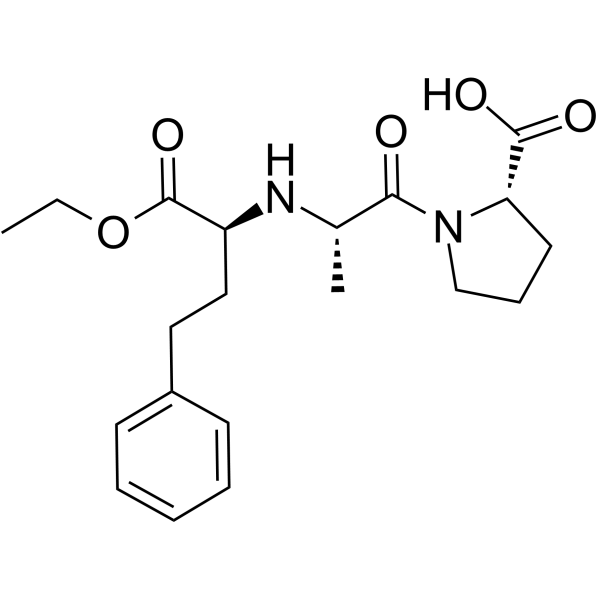
Cat. No.: HY-B0331
CAS No.: 75847-73-3
Synonyms: MK-421
Enalapril (MK-421) is an orally active angiotensin-converting enzyme inhibitor. Enalapril blocks the conversion of angiotensin I to angiotensin II, regulates the renin-angiotensin system, reduces preload and afterload, and decreases plasma angiotensin II levels. Enalapril inhibits apoptosis, reduces nitric oxide metabolite levels, stabilizes endothelial cells, enhances endothelial antioxidant defense, scavenges reactive oxygen species (ROS), and alleviates neuronal damage. Enalapril attenuates glutathione depletion, protein/lipid oxidation, tissue damage, and type III collagen immunolabeling in organs of diabetic rats. Enalapril reduces systolic blood pressure and urinary albumin excretion, and delays the progression of diabetic cardiac/renal injury. Enalapril is used in research related to asymptomatic left ventricular dysfunction, congestive heart failure, Alzheimer's disease, diabetes mellitus, acute myocardial infarction, atrial fibrillation, hypertension, cerebral ischemia, chronic heart failure, and single-ventricle physiology .
loading...
    loading...
13
13 Publications Verification
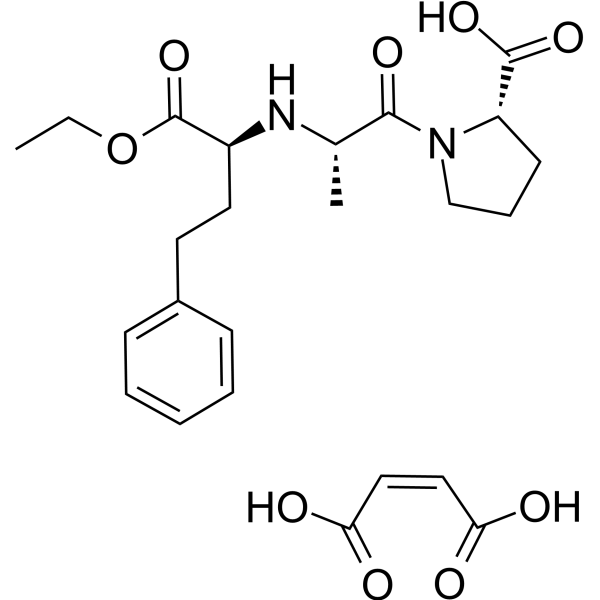
Cat. No.: HY-B0331A
CAS No.: 76095-16-4
Synonyms: MK-421 maleate
Enalapril maleate (MK-421 maleate) is an orally active angiotensin-converting enzyme inhibitor. Enalapril maleate blocks the conversion of angiotensin I to angiotensin II, regulates the renin-angiotensin system, reduces preload and afterload, and decreases plasma angiotensin II levels. Enalapril maleate inhibits apoptosis, reduces nitric oxide metabolite levels, stabilizes endothelial cells, enhances endothelial antioxidant defense, scavenges reactive oxygen species (ROS), and alleviates neuronal damage. Enalapril maleate attenuates glutathione depletion, protein/lipid oxidation, tissue damage, and type III collagen immunolabeling in organs of diabetic rats. Enalapril maleate reduces systolic blood pressure and urinary albumin excretion, and delays the progression of diabetic cardiac/renal injury. Enalapril maleate is used in research related to asymptomatic left ventricular dysfunction, congestive heart failure, Alzheimer's disease, diabetes mellitus, acute myocardial infarction, atrial fibrillation, hypertension, cerebral ischemia, chronic heart failure, and single-ventricle physiology .
loading...
    loading...
2
2 Cited Publications
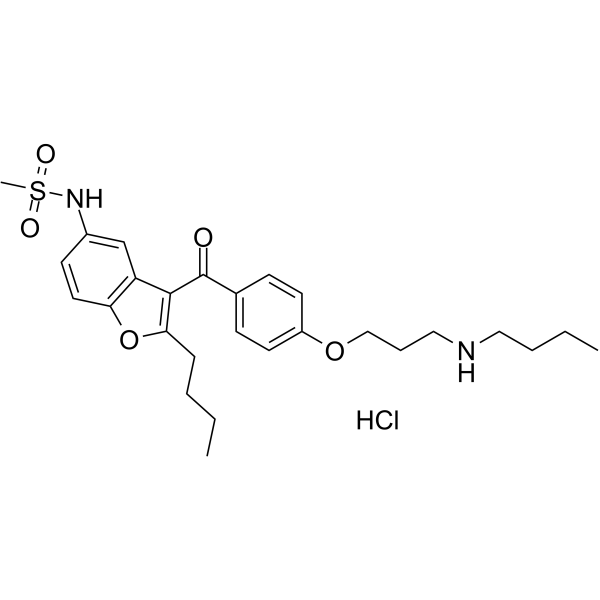
Cat. No.: HY-12753A
CAS No.: 197431-02-0
Purity:  98.73%
Synonyms: SR35021 hydrochloride
Debutyldronedarone hydrochloride (SR35021 hydrochloride) is a Cytochrome P450 enzyme inhibitor and a Thyroid Hormone Receptor inhibitor, and it is a metabolite of Dronedarone (HY-A0016). Debutyldronedarone hydrochloride inhibits the binding of T3 to TRα1 and TRβ1. Debutyldronedarone hydrochloride reduces the incidence of reperfusion-induced ventricular fibrillation in anesthetized rats, while decreasing their heart rate and blood pressure. Debutyldronedarone hydrochloride can be used in studies related to ventricular fibrillation and atrial fibrillation .
loading...
    loading...
2
2 Cited Publications
Cat. No.: HY-18600A
CAS No.: 149888-94-8
Synonyms: NE-10064 dihydrochloride
Azimilide (NE-10064) dihydrochloride is a class III antiarrhythmic agent, which works by blocking potassium channels in the heart. Azimilide dihydrochloride is a dual blocker of IKs (IC50 = 2.6 μM (2mM [K⁺]ₑ)) and IKr (IC50 = 1 μM (4 mM [K⁺])). Azimilide dihydrochloride blocked HERG channel at 0.1 and 1 Hz with IC50s of 1.4 μM and 5.2 μM respectively. Azimilide dihydrochloride also inhibits L-type calcium current (ICa) (IC50 = 17.8 μM) and sodium current (INa) (IC50 = 19 μM). Azimilide dihydrochloride can be used for the study of atrial fibrillation and ventricular fibrillation .
loading...
    loading...
2
2 Cited Publications
Cat. No.: HY-18600
CAS No.: 149908-53-2
Synonyms: NE-10064
Azimilide (NE-10064) is a class III antiarrhythmic agent, which works by blocking potassium channels in the heart. Azimilide is a dual blocker of IKs (IC50 = 2.6 μM (2mM [K⁺]ₑ)) and IKr (IC50 = 1 μM (4 mM [K⁺])). Azimilide blocked HERG channel at 0.1 and 1 Hz with IC50s of 1.4 μM and 5.2 μM respectively. Azimilide also inhibits L-type calcium current (ICa) (IC50 = 17.8 μM) and sodium current (INa) (IC50 = 19 μM). Azimilide can be used for the study of atrial fibrillation and ventricular fibrillation .
loading...
    loading...
Cat. No.: HY-A0154
CAS No.: 17598-65-1
Synonyms: Deacetyllanatoside C; Desacetyllanatoside C
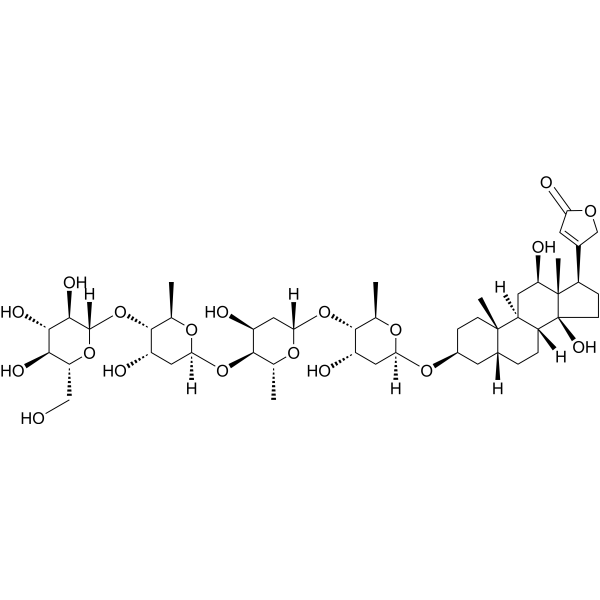
Deslanoside (Desacetyllanatoside C) is a rapidly acting cardiac glycoside used to treat congestive heart failure and supraventricular arrhythmias due to reentry mechanisms, and to control ventricular rate in the treatment of chronic atrial fibrillation. Deslanoside inhibits the Na-K-ATPase membrane pump, resulting in an increase in intracellular sodium and calcium concentrations .
loading...
    loading...
Cat. No.: HY-136661
CAS No.: 38594-96-6
Purity:  99.45%
Synonyms: L-Phenylisopropyladenosine; L-PIA; R-PIA
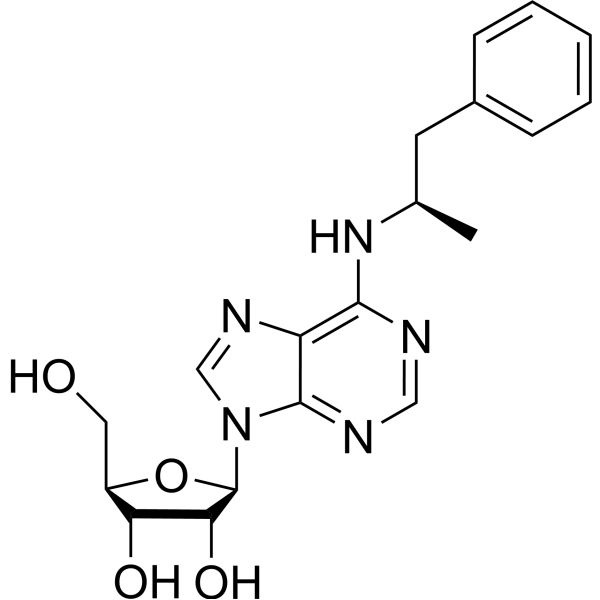
(-)-N6-phenylisopropyl adenosine (L-Phenylisopropyladenosine) is a selective A1 adenosine receptor agonist. (-)-N6-phenylisopropyl adenosine inhibits K +-induced Ca 2+ uptake with an IC50 value of 0.5 µM. (-)-N6-phenylisopropyl adenosine protects against ischemia-induced ventricular arrhythmias and atrial fibrillation, and exacerbates ethanol withdrawal symptoms. (-)-N6-phenylisopropyl adenosine also has analgesic effects .
loading...
    loading...
Cat. No.: HY-124098
CAS No.: 2903-45-9
Purity:  99.92%
Synonyms: Lidocaine N-oxide
Research Areas:  

Cardiovascular Disease

Lignocaine N-oxide (Lidocaine N-oxide) is a hypoxia-activated prodrug of lidocaine (HY-B0185). Lignocaine N-oxide exerts exactly the same sodium current-blocking effect as lidocaine only when it is converted to lidocaine under ischemic conditions. Lignocaine N-oxide possesses antiarrhythmic activity against ischemia-induced ventricular fibrillation. Lignocaine N-oxide can be used in studies related to ischemia-induced ventricular fibrillation .
loading...
    loading...
Cat. No.: HY-B0962
CAS No.: 129-77-1
Target:  

mAChR

Research Areas:  

Cardiovascular Disease

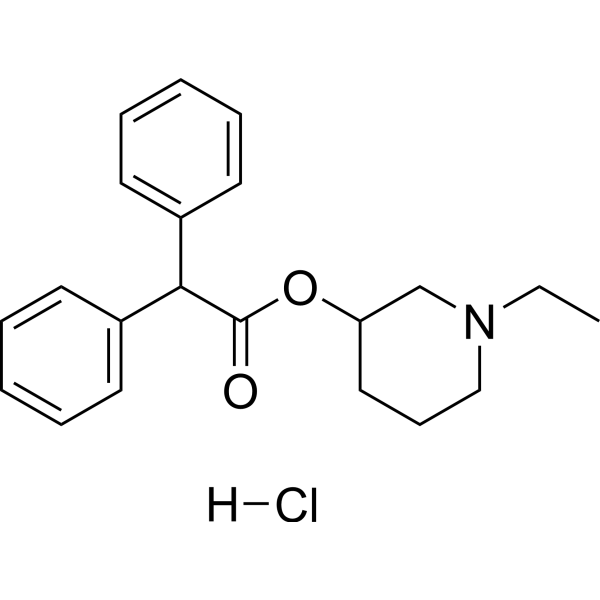
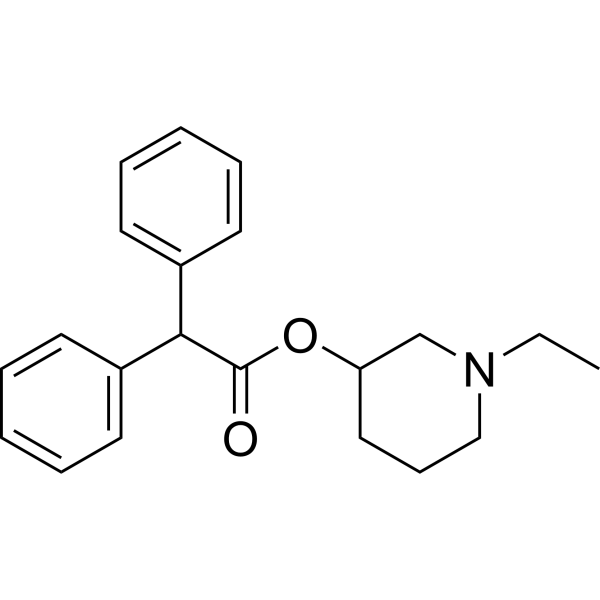
Piperidolate hydrochloride is a cholinergic antagonist. Piperidolate hydrochloride prevents ventricular fibrillation during hypothermic cardiac manipulations to support cardiac procedures post-preoperative defibrillation. Piperidolate hydrochloride causes dose-dependent cardiac depression. Piperidolate hydrochloride can be used for the research of ventricular fibrillation .
loading...
    loading...
Cat. No.: HY-B0962A
CAS No.: 82-98-4
Target:  

mAChR

Research Areas:  

Cardiovascular Disease

Piperidolate is a cholinergic antagonist. Piperidolate prevents ventricular fibrillation during hypothermic cardiac manipulations to support cardiac procedures post-preoperative defibrillation. Piperidolate causes dose-dependent cardiac depression. Piperidolate can be used for the research of ventricular fibrillation .
loading...
    loading...
Cat. No.: HY-B0331AR
CAS No.: 76095-16-4
Synonyms: MK-421 maleate (Standard)
Enalapril maleate (Standard) (MK-421 maleate (Standard)) is the analytical standard of Enalapril maleate (HY-B0331A). This product is intended for research and analytical applications. Enalapril maleate is an orally active angiotensin-converting enzyme inhibitor. Enalapril maleate blocks the conversion of angiotensin I to angiotensin II, regulates the renin-angiotensin system, reduces preload and afterload, and decreases plasma angiotensin II levels. Enalapril maleate inhibits apoptosis, reduces nitric oxide metabolite levels, stabilizes endothelial cells, enhances endothelial antioxidant defense, scavenges reactive oxygen species (ROS), and alleviates neuronal damage. Enalapril maleate attenuates glutathione depletion, protein/lipid oxidation, tissue damage, and type III collagen immunolabeling in organs of diabetic rats. Enalapril maleate reduces systolic blood pressure and urinary albumin excretion, and delays the progression of diabetic cardiac/renal injury. Enalapril maleate is used in research related to asymptomatic left ventricular dysfunction, congestive heart failure, Alzheimer's disease, diabetes mellitus, acute myocardial infarction, atrial fibrillation, hypertension, cerebral ischemia, chronic heart failure, and single-ventricle physiology .
loading...
    loading...
Cat. No.: HY-N1924
CAS No.: 79592-91-9
Synonyms: Crassicaulin A
Crassicauline A (Crassicaulin A) is a diester-type diterpenoid alkaloid. Crassicauline A exhibits feeding deterrent activity against adult Tribolium castaneum, with a EC50 of 1134.5 ppm. Crassicauline A induces arrhythmia at a dose of 0.10 mg/kg .
loading...
    loading...
Cat. No.: HY-B0331AS
CAS No.: 349554-02-5
Synonyms: MK-421-d5maleate
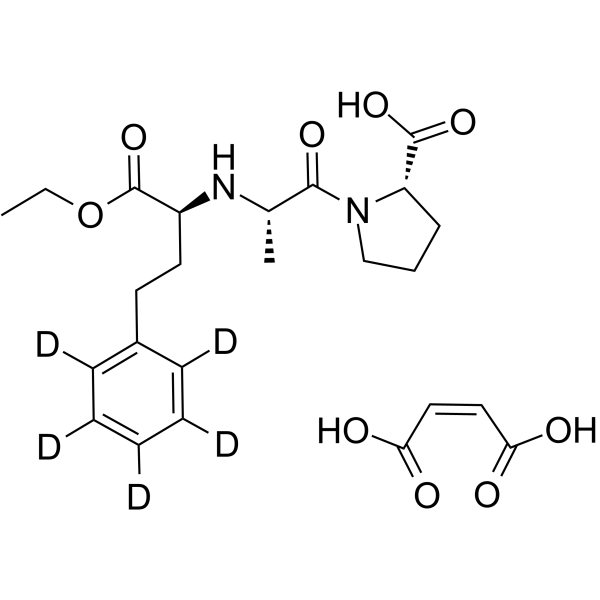
Enalapril-d5 maleate (MK-421 D5 maleate) is the deuterated-labeled Enalapril maleate (HY-B0331A). Enalapril maleate is an orally active angiotensin-converting enzyme inhibitor. Enalapril maleate blocks the conversion of angiotensin I to angiotensin II, regulates the renin-angiotensin system, reduces preload and afterload, and decreases plasma angiotensin II levels. Enalapril maleate inhibits apoptosis, reduces nitric oxide metabolite levels, stabilizes endothelial cells, enhances endothelial antioxidant defense, scavenges reactive oxygen species (ROS), and alleviates neuronal damage. Enalapril maleate attenuates glutathione depletion, protein/lipid oxidation, tissue damage, and type III collagen immunolabeling in organs of diabetic rats. Enalapril maleate reduces systolic blood pressure and urinary albumin excretion, and delays the progression of diabetic cardiac/renal injury. Enalapril maleate is used in research related to asymptomatic left ventricular dysfunction, congestive heart failure, Alzheimer's disease, diabetes mellitus, acute myocardial infarction, atrial fibrillation, hypertension, cerebral ischemia, chronic heart failure, and single-ventricle physiology .
loading...
    loading...
Cat. No.: HY-12753S1
CAS No.: 1346598-70-6
Synonyms: SR35021-dd6 hydrochloride
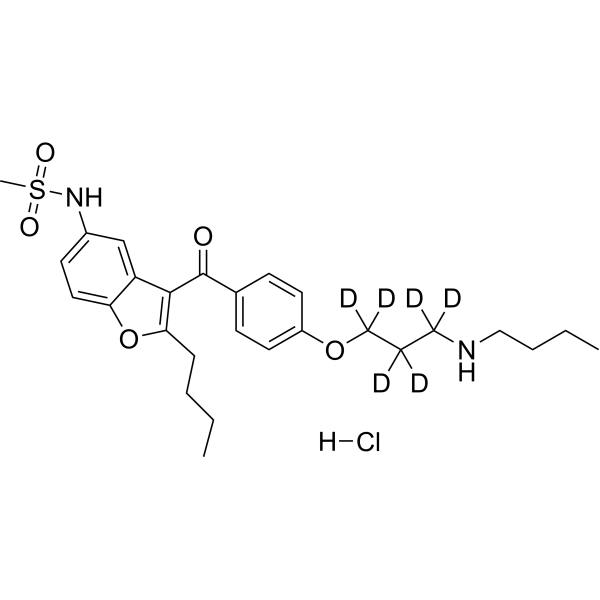
Debutyldronedarone-d6 hydrochloride (SR35021-d6 hydrochloride) is the deuterated-labeled Debutyldronedarone (HY-12753). Debutyldronedarone (SR35021) is a Cytochrome P450 enzyme inhibitor and a Thyroid Hormone Receptor inhibitor, and it is a metabolite of Dronedarone (HY-A0016). Debutyldronedarone inhibits the binding of T3 to TRα1 and TRβ1. Debutyldronedarone reduces the incidence of reperfusion-induced ventricular fibrillation in anesthetized rats, while decreasing their heart rate and blood pressure. Debutyldronedarone can be used in studies related to ventricular fibrillation and atrial fibrillation .
loading...
    loading...
Cat. No.: HY-119747
CAS No.: 137941-92-5
Target:  

Potassium Channel

Research Areas:  

Cardiovascular Disease

WAY-123223 is an orally active potassium channel (Potassium Channel) blocker. WAY-123223 prolongs the transmembrane action potential duration and cardiac refractory period of canine Purkinje fibers. In canine models, WAY-123223 increases the ventricular fibrillation threshold, restores sinus rhythm from ventricular fibrillation, and exerts antiarrhythmic effects. WAY-123223 can be used in research related to cardiovascular diseases such as arrhythmias .
loading...
    loading...
Cat. No.: HY-A0236
CAS No.: 37640-71-4
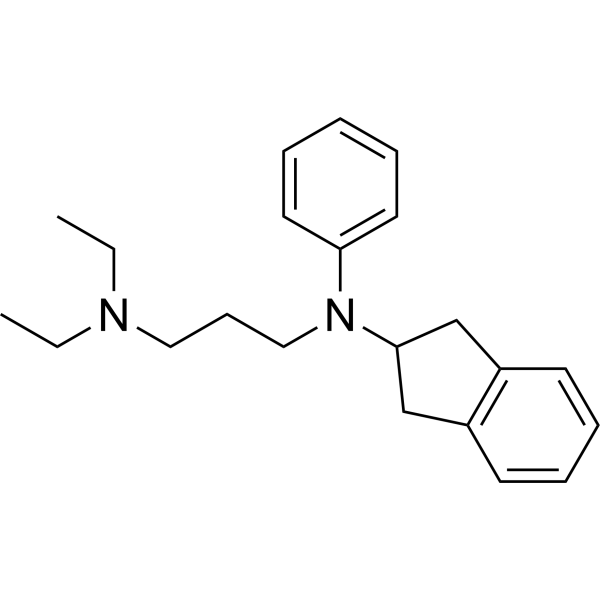
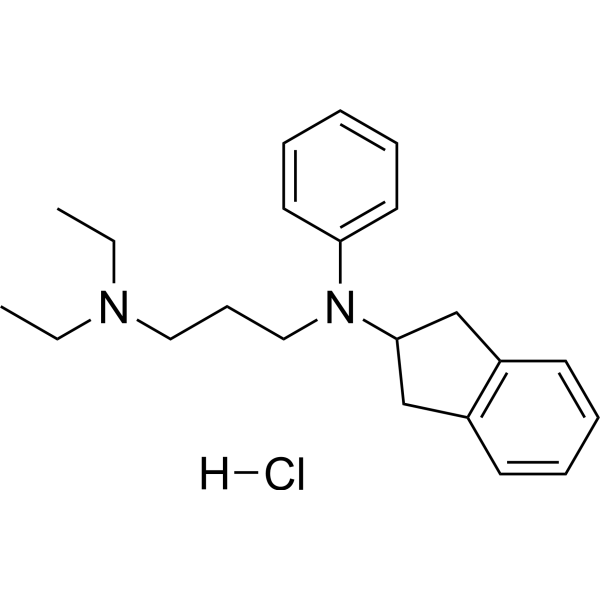
Aprindine is an Ib-class anti-arrhythmic agent. Aprindine mainly exerts its effect by blocking sodium channels (INa), thereby reducing the excitability and conduction velocity of cardiac muscle cells. Aprindine significantly inhibits delayed potassium currents, which helps to prolong the atrial effective refractory period (AERP) and inhibit the occurrence of atrial fibrillation. Aprindine can also regulate intracellular calcium ion concentration by inhibiting Na +/Ca 2+ exchange current (INCX), thereby further stabilizing cardiac electrical activity. Aprindine can be used for the study of atrial fibrillation (AF) and ventricular arrhythmias .
loading...
    loading...
Cat. No.: HY-A0236A
CAS No.: 33237-74-0
Aprindine hydrochloride is an Ib-class anti-arrhythmic agent. Aprindine hydrochloride mainly exerts its effect by blocking sodium channels (INa), thereby reducing the excitability and conduction velocity of cardiac muscle cells. Aprindine hydrochloride significantly inhibits delayed potassium currents, which helps to prolong the atrial effective refractory period (AERP) and inhibit the occurrence of atrial fibrillation. Aprindine hydrochloride can also regulate intracellular calcium ion concentration by inhibiting Na +/Ca 2+ exchange current (INCX), thereby further stabilizing cardiac electrical activity. Aprindine hydrochloride can be used for the study of atrial fibrillation (AF) and ventricular arrhythmias .
loading...
    loading...
Cat. No.: HY-16094
CAS No.: 114-85-2
Synonyms: BW 467C60
Bethanidine sulfate (BW 467C60) is an orally active antihypertensive agent and adrenergic neuron blocker. Bethanidine sulfate exerts its antihypertensive effect by inhibiting the release of norepinephrine from sympathetic nerve terminals. Bethanidine sulfate exhibits anti-ventricular arrhythmic activity. Bethanidine sulfate can be used in research related to hypertension, ventricular tachycardia, and ventricular fibrillation .
loading...
    loading...
Cat. No.: HY-105454
CAS No.: 74738-24-2
Synonyms: Wy-42362
Target:  

Sodium Channel

Research Areas:  

Cardiovascular Disease

Recainam (Wy-42362) is a potent orally active antiarrhythmic agent and a sodium channel inhibitor. Recainam elevates ventricular fibrillation threshold, suppresses induced cardiac dysrhythmias, and may accentuate cardiac tissue refractoriness heterogeneity. Recainam can be used for the research of arrhythmias .
loading...
    loading...
Cat. No.: HY-116478
CAS No.: 1951-26-4
Target:  

Potassium Channel

Research Areas:  

Others

L-3373 is a voltage-dependent potassium channel inhibitor with activity that reduces the effective refractory period and the dispersion of monophasic action potential duration, while significantly reducing susceptibility to ventricular fibrillation in a cat model of left ventricular hypertrophy.
loading...
    loading...

