34 Results for "

zinc ions

" in MedChemExpress (MCE) Product Catalog:
Products (34)

34 Results for "zinc ions" in MCE Product Catalog:

6
6 Publications Verification
Cat. No.: HY-119287
CAS No.: 109628-27-5
Purity:  99.50%
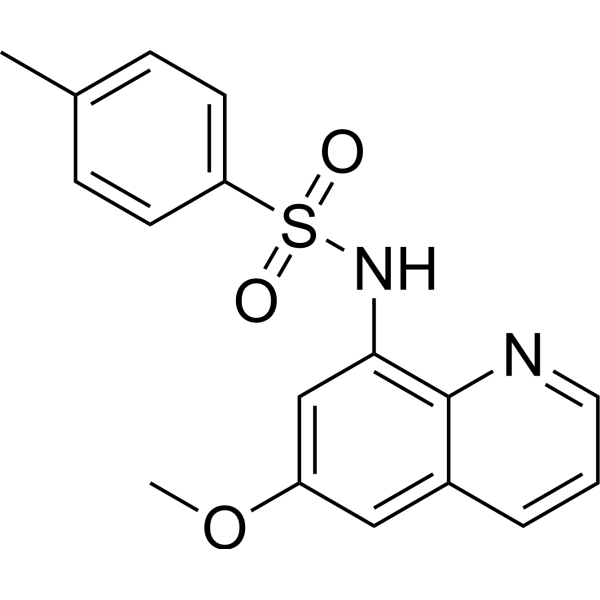
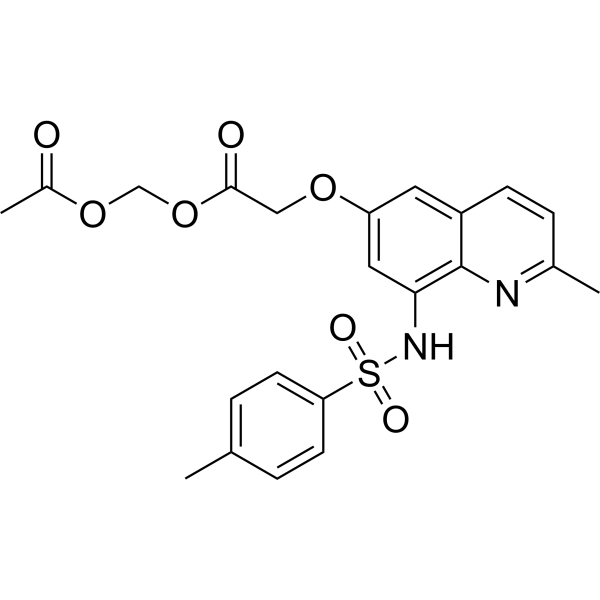
TSQ is a cytosolic zinc ion fluorescence probe that is membrane permeable and can be used for intracellular imaging of zinc proteins (λmax ~470 nm). TSQ can combine with Zn 2+ in the presence of Ca 2+ and Mg 2+ to produce blue fluorescence (Ex/Em = 334/495 nm) .
loading...
    loading...
4
4 Cited Publications
Cat. No.: HY-D0155
CAS No.: 288574-78-7
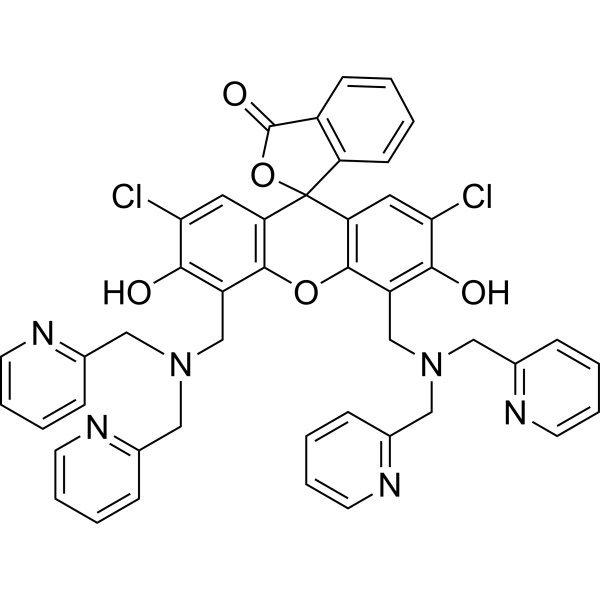
Zinpyr-1 is a zinc-responsive fluorescent indicator and a membrane-permeable metal-binding probe. Zinpyr-1 forms a complex with Mn 2+ ions and generates a fluorescence turn-on signal. Zinpyr-1 binds to free zinc ions in serum, enabling quantitative detection of free zinc concentration. Zinpyr-1 produces fluorescence signals reflecting the relative zinc concentration in plant root cells, localizes to specific layers of plant root cells, and can be used to support analyses related to plant zinc transporter mutations and homeostasis .
loading...
    loading...
1
1 Cited Publications
Cat. No.: HY-B0278
CAS No.: 1405-89-6
Synonyms: zinc bacitracin
Research Areas:  

Infection

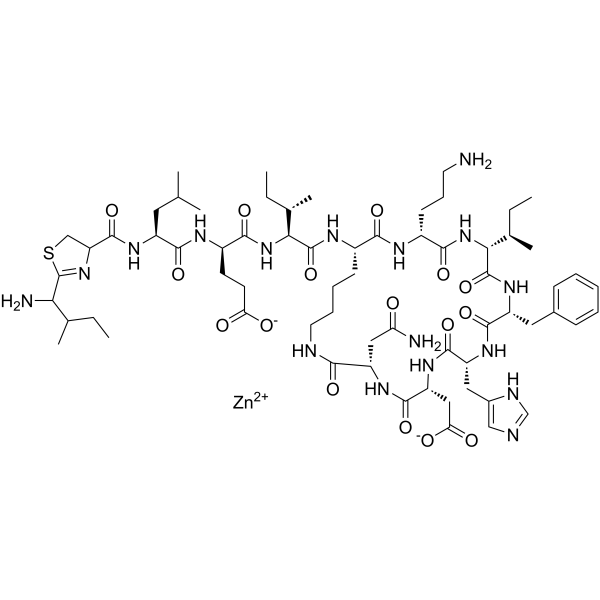
Bacitracin Zinc is a complex formed by the binding of Bacitracin (HY-107193) with zinc ions. Bacitracin Zinc is an orally active polypeptide antibiotic with bactericidal properties. Bacitracin Zinc can cause DNA and deoxyribose damage, as well as improve the gut microbiota of broiler and beef cattle .
loading...
    loading...
1
1 Cited Publications
Cat. No.: HY-N0814A
CAS No.: 123408-98-0
Synonyms: Inositol hexaphosphate dodecasodium hydrate; SNF472 dodecasodium hydrate
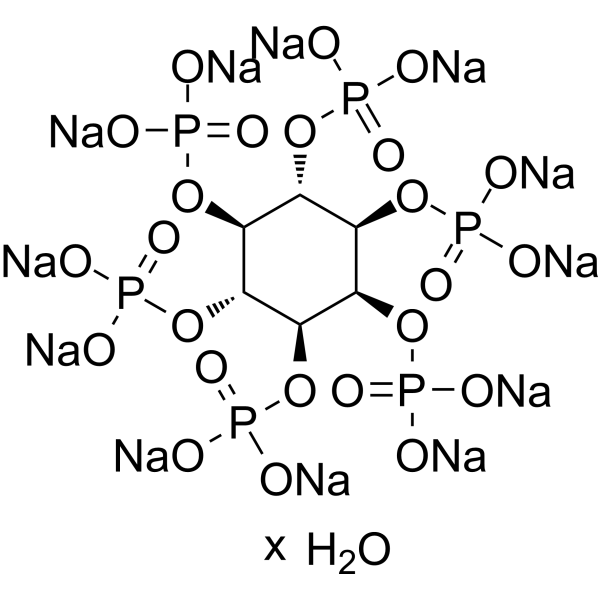
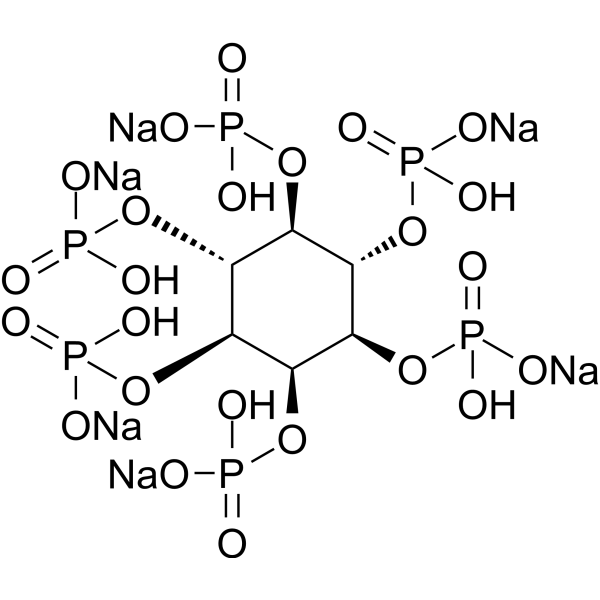
Phytic acid (Inositol hexaphosphate) dodecasodium hydrate is a phosphorus storage compound of seeds and cereal grains. Phytic acid dodecasodium hydrate is known as a food inhibitor, which has a strong ability to chelate multivalent metal ions, specially zinc, calcium, iron and as with protein residue. Phytic acid dodecasodium hydrate inhibits the enzymatic superoxide source xanthine oxidase (XO), and has antioxidative, neuroprotective, anti-inflammatory effects .
loading...
    loading...
Cat. No.: HY-W013178
CAS No.: 125572-95-4
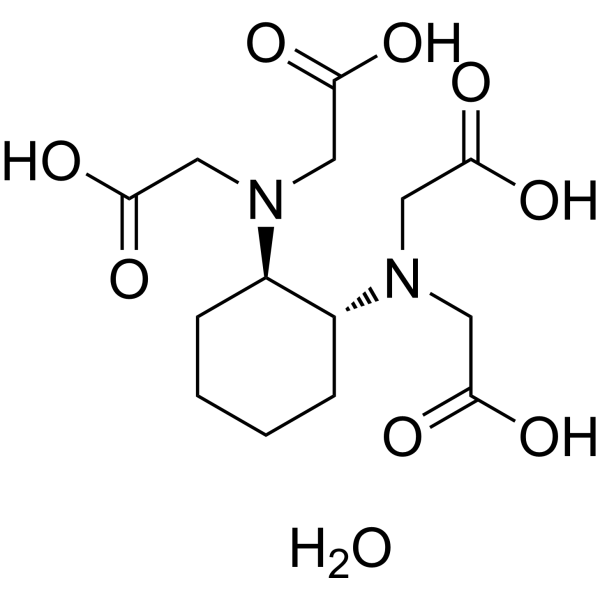
DCTA monohydrate is an organic acid. DCTA refers to N,N,N',N' -tetraacetic acid, which has a strong chelating ability. DCTA monohydrate can be used as a chelating agent and coordination reagent for metal ions. DCTA monohydrate, for example, forms stable complexes with many metal ions, including calcium, magnesium and zinc. DCTA modified with ethylene glycol is selective to calcium ions in the presence of magnesium ions .
loading...
    loading...
Cat. No.: HY-W127776
CAS No.: 176736-49-5
Synonyms: Ethylenediaminetetraacetic acid zinc disodium tetrahydrate
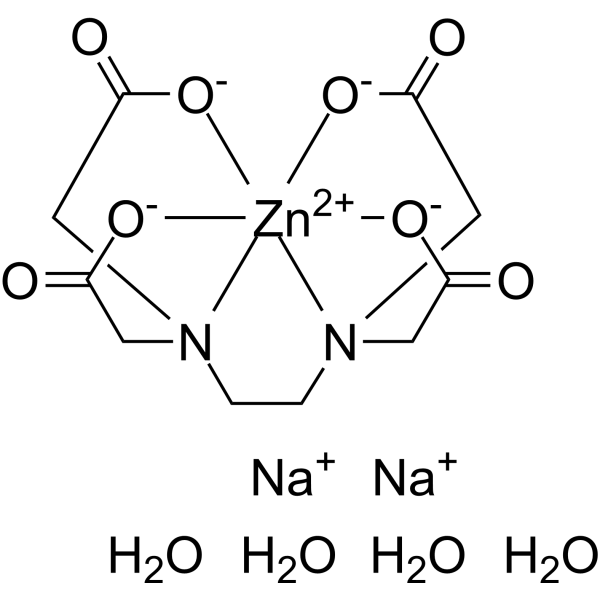
Zn(II)-EDTA (Ethylenediaminetetraacetic acid zinc) disodium tetrahydrate is a coordinating agent. Zn(II)-EDTA disodium tetrahydrate coordinates with Zn 2+ to modify its solvated structure, provides pre-synthesized EDTA-Zn complexes that release Zn 2+ to repair zinc anode defects under interfacial electric field, adsorbs onto zinc anode surface to block oxygen and water molecules, inhibits corrosion and hydrogen evolution reactions, promotes uniform Zn 2+ deposition, suppresses zinc dendrite formation, and modulates the hydrogen bonding network within the electrolyte. Zn(II)-EDTA disodium tetrahydrate acts as an electrolyte additive to enhance reversibility and stability of zinc anodes in aqueous zinc-ion batteries .
loading...
    loading...
Cat. No.: HY-NP009
CAS No.: 9051-29-0
α-Lactalbumin is a globular whey protein that exists in milk. α-Lactalbumin binds Ca 2+, Mg 2+, Mn 2+, Na +, K + and Zn 2+ ions; among these, Ca 2+ binding enhances protein stability, while Zn 2+ binding reduces stability and induces aggregation. α-Lactalbumin forms amyloid fibrils, amorphous aggregates, nanoparticles and nanotubes depending on external conditions. α-Lactalbumin exhibits bactericidal and antiviral activities. α-Lactalbumin has anxiolytic and antidepressant activities, and its effects are enhanced under stress conditions .
loading...
    loading...
Cat. No.: HY-W013851
CAS No.: 150-39-0
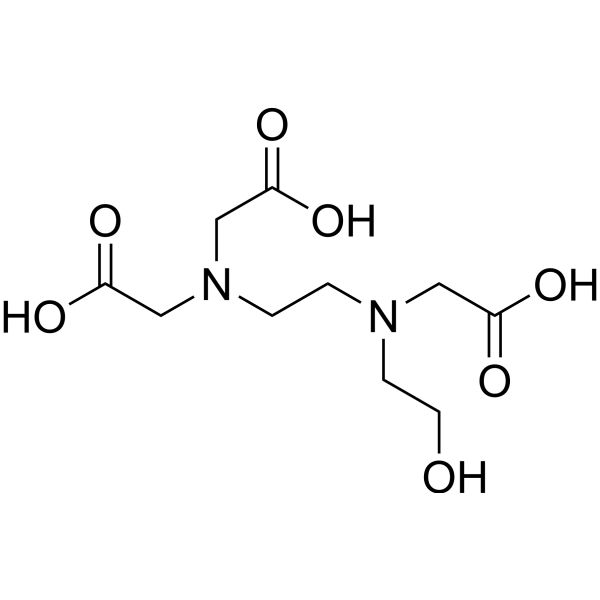
EDTA-OH is a chelating agent, which forms thermodynamically stable chelates with metal ions like calcium, magnesium, iron, zinc and copper . EDTA-OH exhibits ability of phytoremediation in heavy-metal-contaminated soils . EDTA-OH is able to cross brain-blood barrier .
loading...
    loading...
Cat. No.: HY-D0813
CAS No.: 62625-22-3
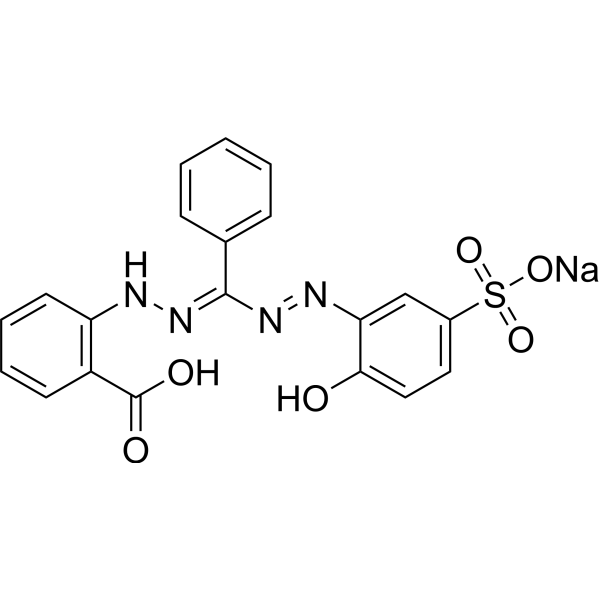
Zincon sodium is an excellent colorimetric reagent for the detection of zinc and copper ions in aqueous solution. Zincon sodium can be used for the determination of zinc, copper, and cobalt ions in metalloproteins .
loading...
    loading...
Cat. No.: HY-109560
CAS No.: 11082-38-5
Synonyms: Zn-DTPA trisodium
Research Areas:  

Others

Pentetate zinc trisodium (Zn-DTPA trisodium) forms stable chelates with metal ions by exchanging zinc for a metal of greater binding capacity .
loading...
    loading...
Cat. No.: HY-W099576
CAS No.: 124-03-8
Synonyms: EHDA bromide
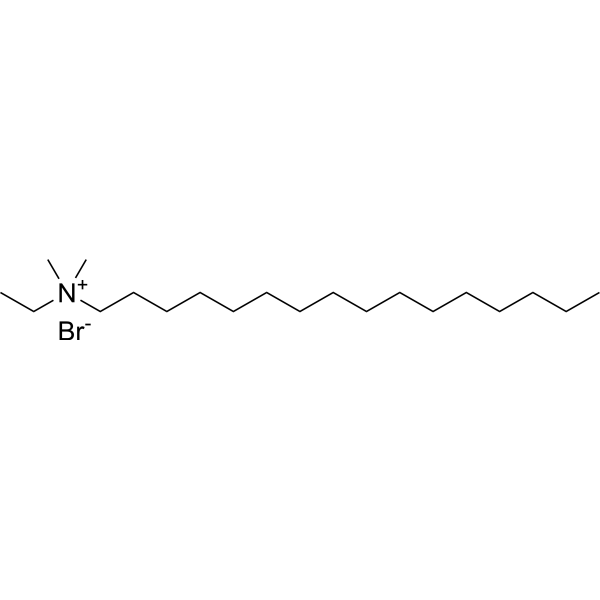
Ethylhexadecyldimethylammonium (EHDA) bromide, a surfactant, has been used in a number of adsorptive separational methods, such as the removal of nickel, zinc and chromium ions. Ethylhexadecyldimethylammonium (EHDA) bromide also can be used to prepare dye of staining intracellular ions .
loading...
    loading...
Cat. No.: HY-DY1055
CAS No.: 109628-27-5
TSQ (solution) is a cytosolic zinc ion fluorescence probe that is membrane permeable and can be used for intracellular imaging of zinc proteins (λmax ~470 nm). TSQ can combine with Zn 2+ in the presence of Ca 2+ and Mg 2+ to produce blue fluorescence (Ex/Em = 334/495 nm) .
Solvent and concentration: DMSO: 10 mM
loading...
    loading...
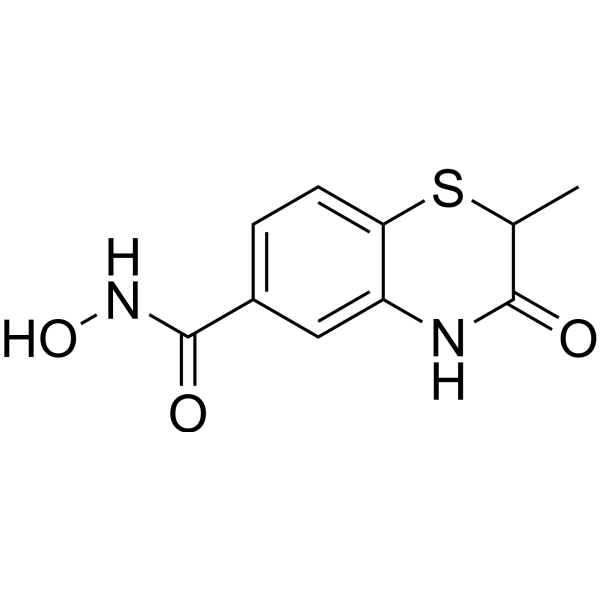
Cat. No.: HY-174221
Target:  

IMPDH HDAC

Research Areas:  

Cancer

IMPDH II/HDAC1-IN-1 (Compound C12) is an orally active, selective dual IMPDH II/HDAC1 inhibitor, with an IC50 of 84.69 nM against hIMPDH II and an IC50 of 81.75 nM against HDAC1. IMPDH II/HDAC1-IN-1 inhibits the proliferation of chronic myeloid leukemia cells. IMPDH II/HDAC1-IN-1 can be used for the research of chronic myeloid leukemia .
loading...
    loading...
Cat. No.: HY-N0814B
CAS No.: 34367-89-0
Synonyms: Inositol hexaphosphate hexasodium; SNF472
Phytic acid (Inositol hexaphosphate) hexasodium is a phosphorus storage compound of seeds and cereal grains. Phytic acid hexasodium has a strong ability to chelate multivalent metal ions, specially zinc, calcium, iron and as with protein residue. Phytic acid hexasodium inhibits the enzymatic superoxide source xanthine oxidase (XO), and has antioxidative, neuroprotective, anti-inflammatory effects.
loading...
    loading...
Cat. No.: HY-B0278R
CAS No.: 1405-89-6
Synonyms: zinc bacitracin (Standard)
Research Areas:  

Infection

Bacitracin Zinc (Standard) is the analytical standard of Bacitracin Zinc (HY-B0278). Bacitracin Zinc (Standard) is a complex formed by the binding of Bacitracin (HY-107193) with zinc ions. Bacitracin Zinc (Standard) is an orally active polypeptide antibiotic with bactericidal properties. Bacitracin Zinc (Standard) can cause DNA and deoxyribose damage, as well as improve the gut microbiota of broiler and beef cattle .
loading...
    loading...
Cat. No.: HY-111028
CAS No.: 949727-86-0
Synonyms: T 5979345
Target:  

HDAC

Research Areas:  

Infection

J1038 (T 5979345) is a selective HDAC8 inhibitor. J1038 binds the catalytic zinc ion of Schistosoma mansoni HDAC8 (smHDAC8) .
loading...
    loading...
Cat. No.: HY-129748
CAS No.: 70873-80-2
Research Areas:  

Others

SQ-24,798 is a compound that inhibits carboxypeptidase B with high affinity and specificity. Its inhibitory effect may be achieved through the binding of the sulfhydryl group to the zinc ion of the enzyme and specific side chains.
loading...
    loading...
Cat. No.: HY-P991145
CAS No.: 3009829-91-5
Synonyms: BRY-812 Antibody

Research Areas:  

Cancer

Laventatug is a humanized monoclonal antibody targeting human SLC39A6. Laventatug specifically binds to SLC39A6, interfering with the intracellular zinc ion transport process and thus exerting antitumor activity. Laventatug is promising for research of cancers .
loading...
    loading...
Cat. No.: HY-W339484
CAS No.: 30652-12-1
Research Areas:  

Others

1-Ethyl-2-methyl-3-hydroxypyrid-4-one is an α-ketohydroxypyridinium iron chelator with high specificity for iron and no specific activity against other metal ions such as copper, zinc, calcium and magnesium. In rabbits with iron overload, 1-Ethyl-2-methyl-3-hydroxypyrid-4-one increased iron excretion after oral or parenteral administration.
loading...
    loading...
Cat. No.: HY-138185
CAS No.: 158792-24-6
Synonyms: SF 2738A
Target:  

Bacterial Apoptosis

Research Areas:  

Cancer

Collismycin A is a bacterial metabolite originally isolated from Streptomyces that has diverse biological activities, including antibacterial, antiproliferative, and neuroprotective properties. It is active against a variety of bacteria (MICs=6.25 and 100 μg/mL) and fungi (MICs=12.5-100 μg/mL). It inhibits proliferation of A549 lung, HCT116 colon, and HeLa cervical cancer cells (IC50s=0.3, 0.6, and 0.3 μM, respectively) and NIH373 fibroblasts (IC50=56.6 μM) but not MDA-MD-231 breast cancer cells (IC50=>100 μM). Collismycin A forms a complex with Fe(II) and Fe(III) at a 2:1 ratio, and the addition of iron ions inhibits the antiproliferative effect of collismycin A on HeLa cells, an effect that does not occur with the addition of zinc, manganese, copper, or magnesium ions.3 Collismycin A (1 μM) prevents apoptosis in the brain region of zebrafish larvae in a model of neuronal cell death induced by all-trans retinoic acid.
loading...
    loading...

