



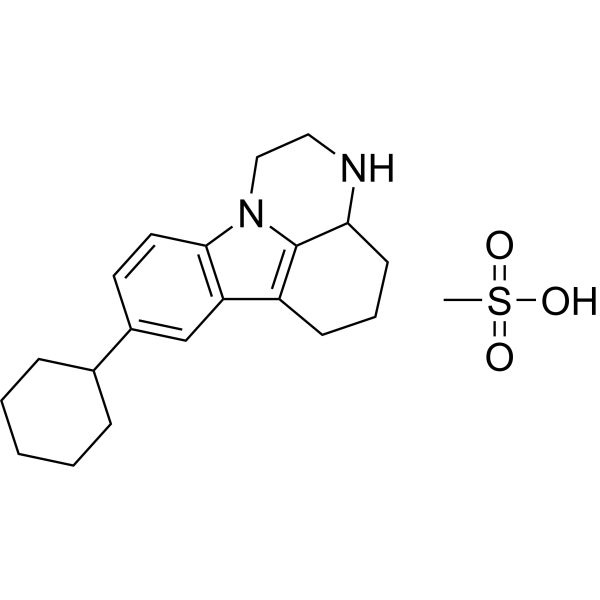
Tetrindole mesylate
Based on 1 publication(s) in Google Scholar
Tetrindole mesylate is a selective inhibitor of monoamine oxidase A (MAO A). Tetrindole mesylate inhibits rat brain mitochondrial MAO A in a competitive manner with a Ki value of 0.4 μM and inhibits MAO B with a Ki of 110 μM. Tetrindole mesylate has antidepressant activity.
For research use only. We do not sell to patients.
- Purity : 99.93%
- CAS No.: 170964-68-8
- Formula: C21H30N2O3S
- Molecular Weight:390.54
-
Storage:
-20°C, sealed storage, away from moisture
* In solvent : -80°C, 6 months; -20°C, 1 month (sealed storage, away from moisture)

To place orders, for customer services and technical support, please contact: MedChemExpress USA
Tel: 609-228-6898 E-mail: [email protected] [email protected]


-
 Biological Activity
-
Chemical Information
- Protocols
- Purity & Documentation
- References
-
 Help & FAQs


-
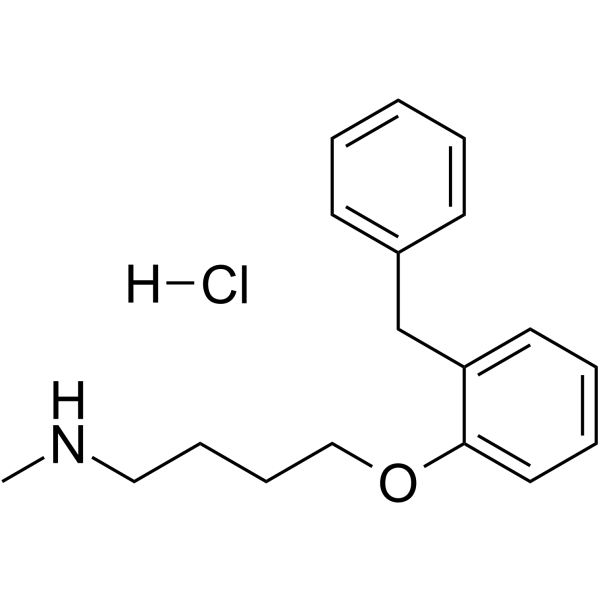
HY-B1558A
Bifemelane hydrochlorideMAO Inhibitor -
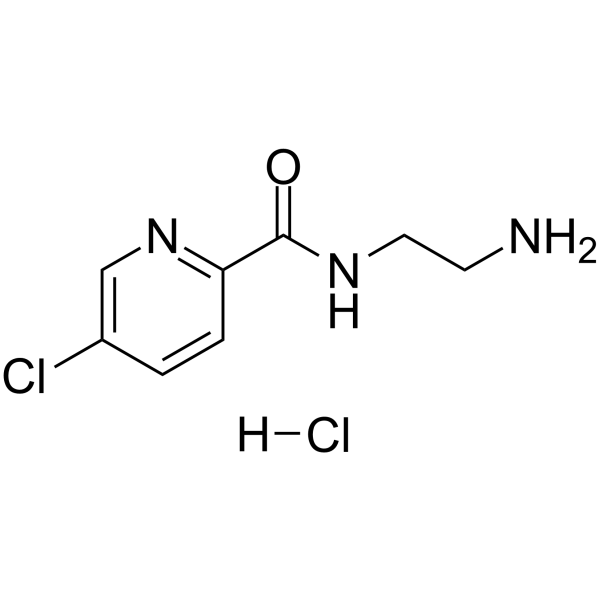
HY-14202
Lazabemide hydrochlorideMAO-B Inhibitor -
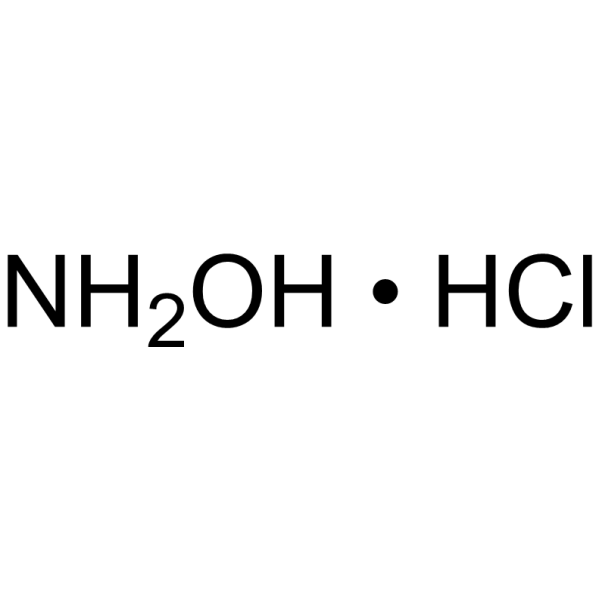
HY-Y0882
Hydroxylamine hydrochlorideMAO Inhibitor -
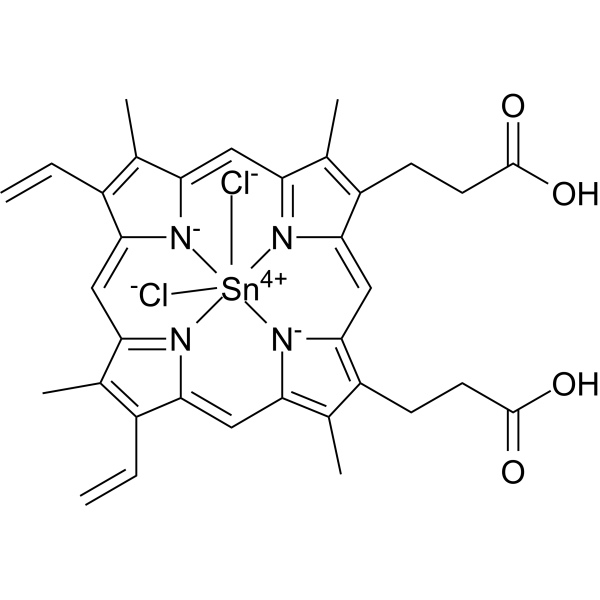
HY-101194
Tin protoporphyrin IX dichlorideHO-1 Inhibitor -
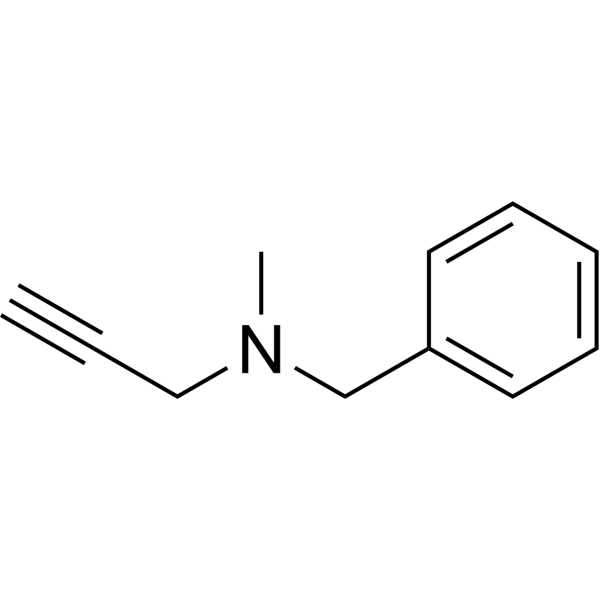
HY-A0091A
PargylineMonoamine Oxidase Inhibitor -
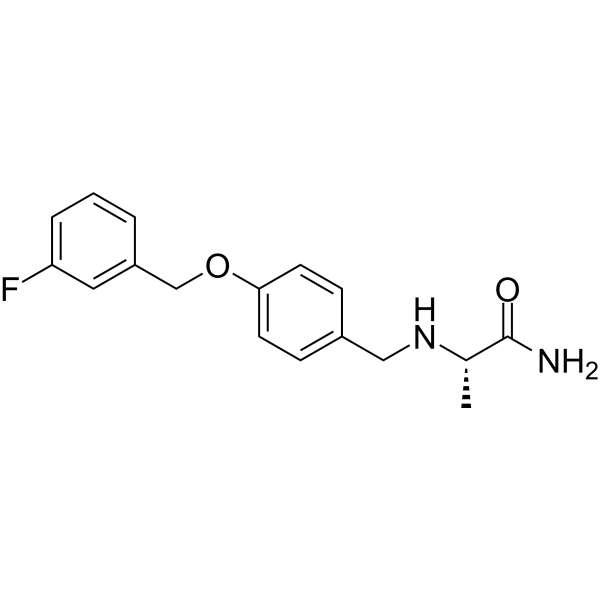
HY-70057
SafinamideMAO-B Inhibitor -
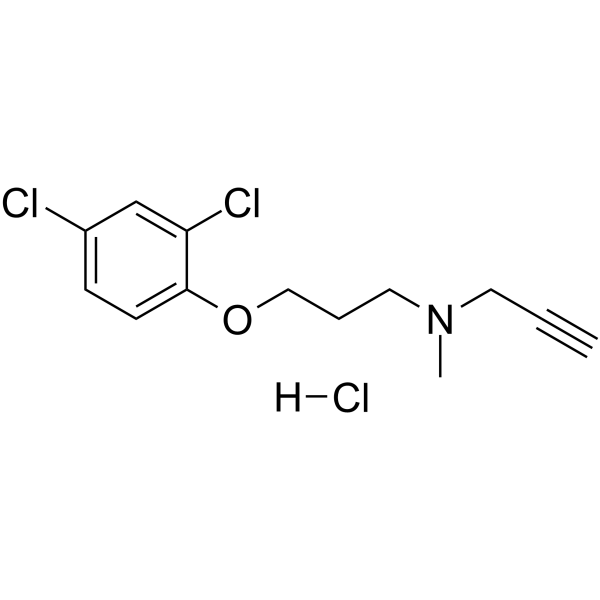
HY-14197A
Clorgyline hydrochlorideMAO-A Inhibitor -
HY-A0091
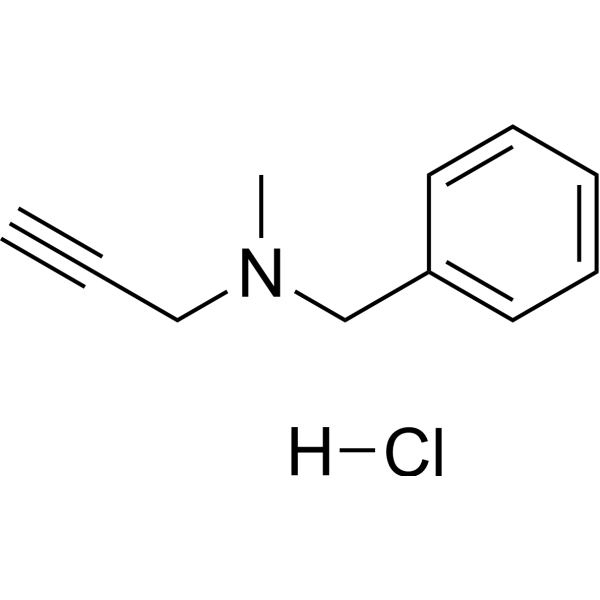
Pargyline hydrochlorideMonoamine Oxidase Inhibitor -
HY-14196
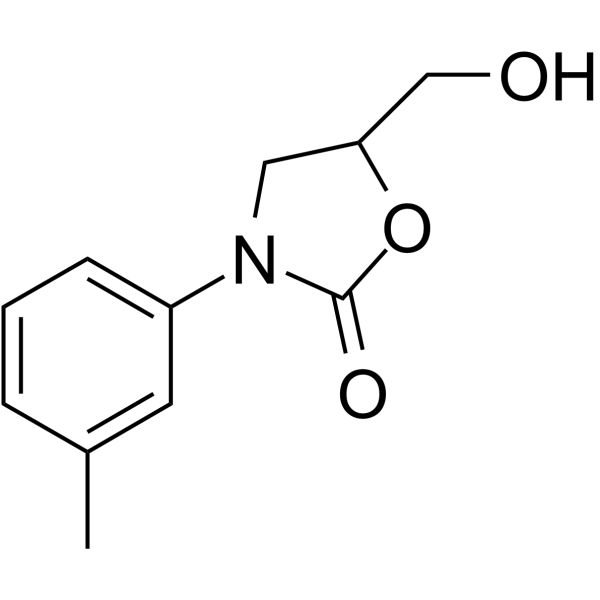
ToloxatoneMAO-A Inhibitor -
HY-70057A
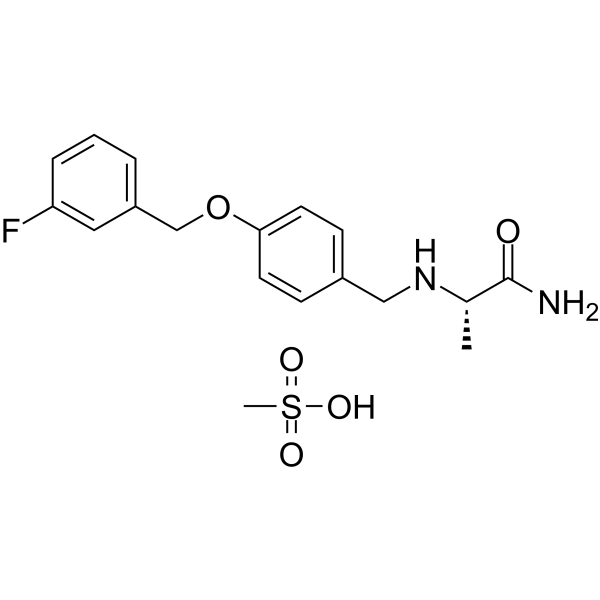
Safinamide mesylateMAO-B Inhibitor -
HY-14201
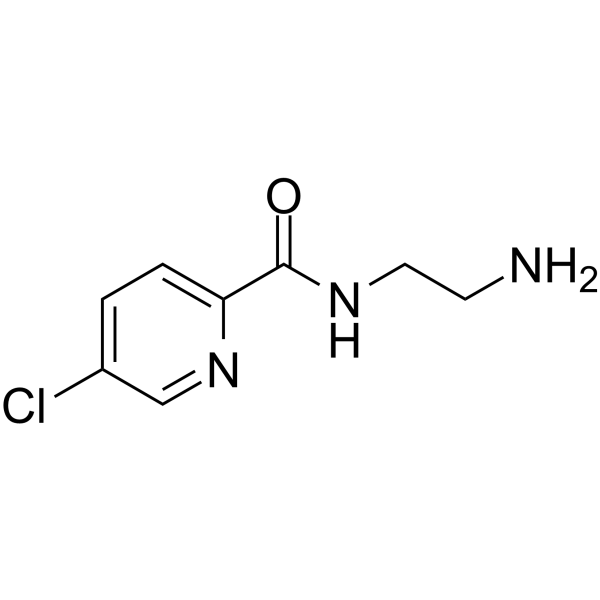
LazabemideMAO-B Inhibitor -
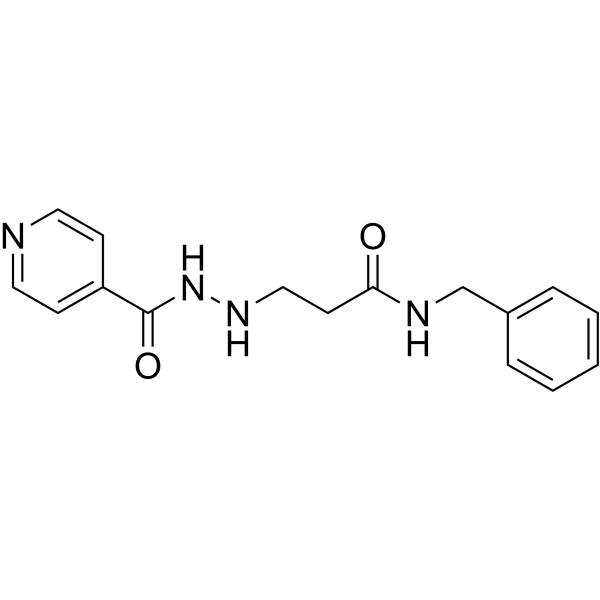
HY-B1199
NialamideMonoamine Oxidase Inhibitor
Publications Citing Use of MedChemExpress (MCE) Tetrindole mesylate
More

Biological Activity
Description
IC50 & Target
[1]|
MAO-A |
In Vitro
Tetrindole mesylate has IC50s of 0.51-1.37 μM for 6 human breast tumor cell lines (MCF-7, HCC1954, T47D, MDA-MB-157, ZR75-1, BT474)[2].
MedChemExpress (MCE) has not independently confirmed the accuracy of these methods. They are for reference only. Further protocols information, click here.
In Vivo
MedChemExpress (MCE) has not independently confirmed the accuracy of these methods. They are for reference only.


Chemical Information
-
CAS No. 170964-68-8
-
Appearance Solid
-
Molecular Weight 390.54
-
Formula C21H30N2O3S
-
Color White to off-white
-
SMILES
CS(=O)(O)=O.N12C3=C(C4=C1C(NCC2)CCC4)C=C(C5CCCCC5)C=C3
-
Shipping
Room temperature in continental US; may vary elsewhere.
-
Storage
-20°C, sealed storage, away from moisture
* In solvent : -80°C, 6 months; -20°C, 1 month (sealed storage, away from moisture)


Publications (1)
-
Journal Impact Factor
-
Most Recent

Protocols
-
Protocol for Tail Suspension Test (TST)
The Tail Suspension Test is a mouse behavioral assay in which an animal is suspended by the tail in an inescapable position, causing alternating escape-directed activity and immobility; the main readout is immobility time, and antidepressant-like treatments generally reduce immobility compared with vehicle controls. The assay detects behavioral response to acute inescapable stress rather than a molecular event; immobility is interpreted as passive stress-coping behavior, while reduced immobility is used as a predictive screen for antidepressant-like activity, with important limitations related to strain, locomotor activity, and tail-climbing behavior.
-
Protocol for Forced Swim Test (FST)
The Forced Swim Test is a rodent behavioral assay in which a mouse or rat is placed in an inescapable cylinder of water, and the main readout is the time spent immobile versus active escape-related behaviors such as swimming or climbing. Reduced immobility after treatment has historically been interpreted as antidepressant-like activity, but the assay should be interpreted as a behavioral response to acute inescapable stress rather than a complete model of human depression.


Purity & Documentation
-
Data Sheet (282 KB)
-
SDS (252 KB)
- English - EN (252 KB)
- Français - FR (252 KB)
- Deutsch - DE (252 KB)
- Norwegian - NO (252 KB)
- Español - ES (252 KB)
- Swedish - SV (252 KB)
- Italian - IT (252 KB)
- Korean - KR (252 KB)
- Portuguese - PT (252 KB)
-
Handling Instructions (2659 KB)
References
[1]. A E Medvedev, et al. Monoamine oxidase inhibition by novel antidepressant tetrindole. Biochem Pharmacol. 1994 Jan 20;47(2):303-8. [Content Brief]
[2]. William D Gwynne, et al. Monoamine oxidase-A activity is required for clonal tumorsphere formation by human breast tumor cells. Cell Mol Biol Lett. 2019 Nov 12;24:59. [Content Brief]

Calculators
Concentration (start) × Volume (start) = Concentration (final) × Volume (final)


Tetrindole mesylate Related Classifications
HY-101169 Related Classifications
 Powered by Bioz