



Trimethoprim-d9

Based on 1 Customer Validation
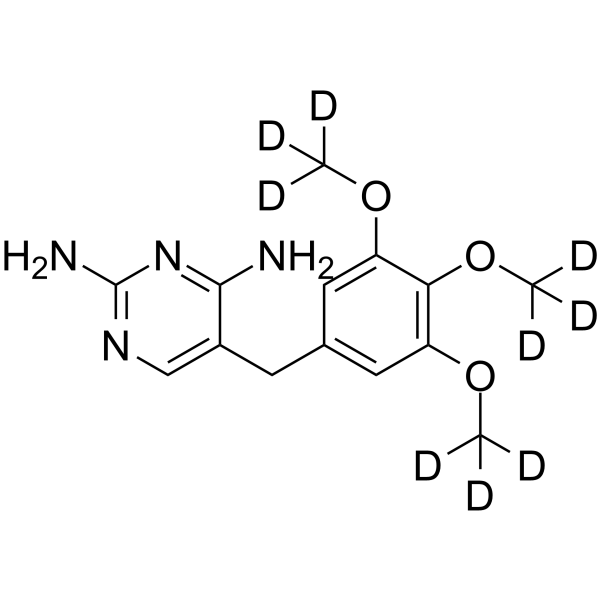
Trimethoprim-d9 is the deuterium labeled Trimethoprim. Trimethoprim is a bacteriostatic antibiotic and an orally active dihydrofolate reductase inhibitor. Trimethoprim is active against a wide range of Gram-positive and Gram-negative aerobic bacteria. Trimethoprim has the potential for urinary tract infections, Shigellosis and Pneumocystis pneumonia treatment.
For research use only. We do not sell to patients.
- Purity : 99.60%
- CAS No.: 1189460-62-5
- Formula: C14H9D9N4O3
- Molecular Weight:299.37
-
Storage:Powder -20°C, 3 years , 4°C, 2 years ; In solvent -80°C, 6 months , -20°C, 1 month

To place orders, for customer services and technical support, please contact: MedChemExpress USA
Tel: 609-228-6898 E-mail: [email protected] [email protected]


-
 Biological Activity
-
Chemical Information
-
Solvent & Solubility
- Protocols
- Purity & Documentation
- References
-
 Help & FAQs


-
HY-B0322S
Sulfamethoxazole-d4Stable Isotope -
HY-13667
Levoleucovorin CalciumAntineoplastic Agent -
HY-B0510S2
Trimethoprim-d3Stable Isotope -
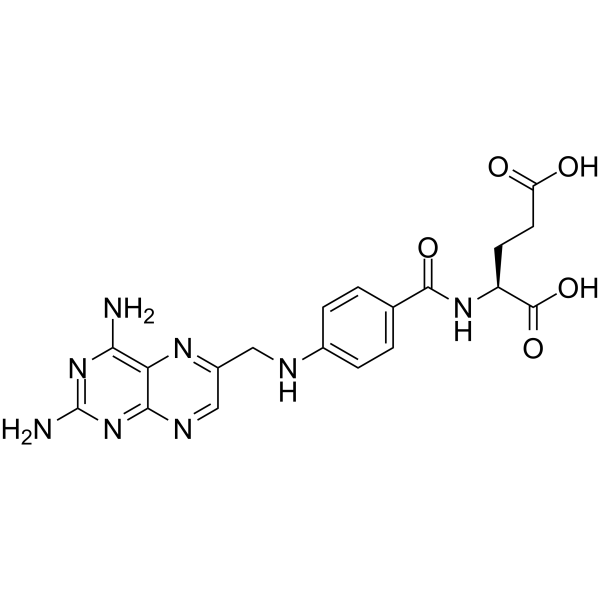
HY-14518
AminopterinFolic Acid/DHFR Antagonist -
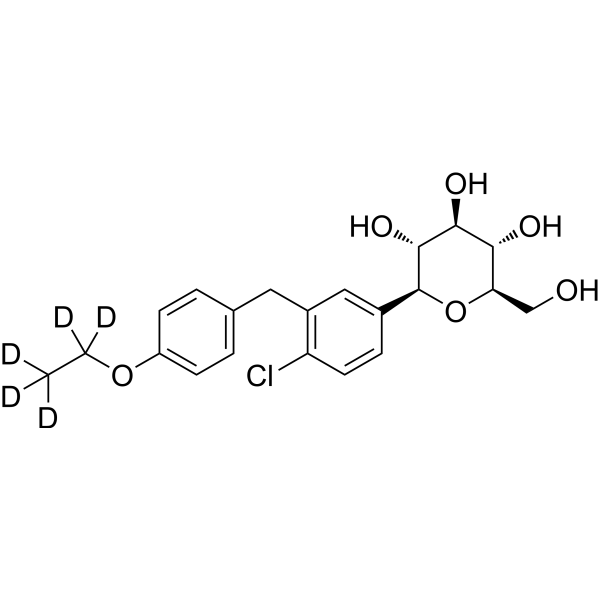
HY-10450S
Dapagliflozin-d5Stable Isotope -
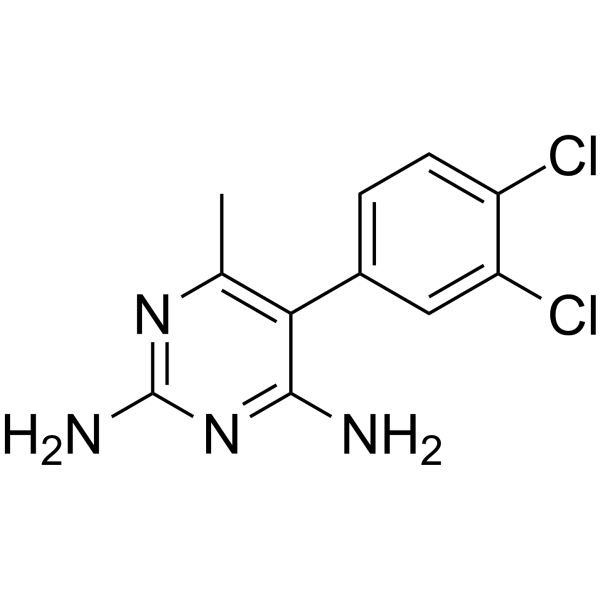
HY-129441
MetoprineHMT Inhibitor -
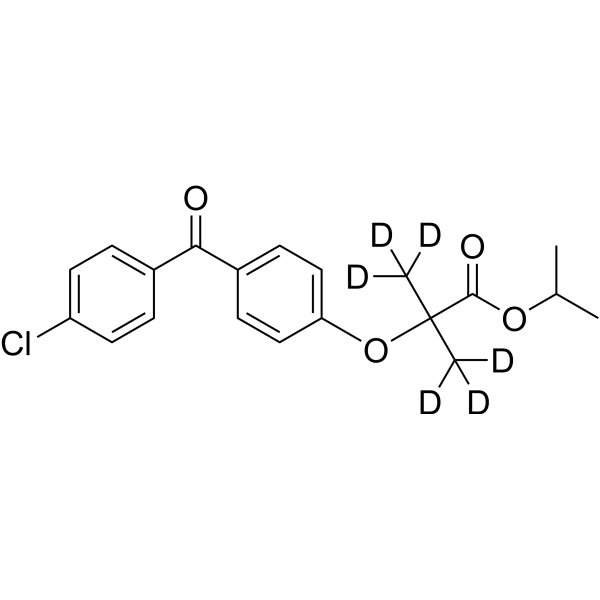
HY-17356S
Fenofibrate-d6Stable Isotope -
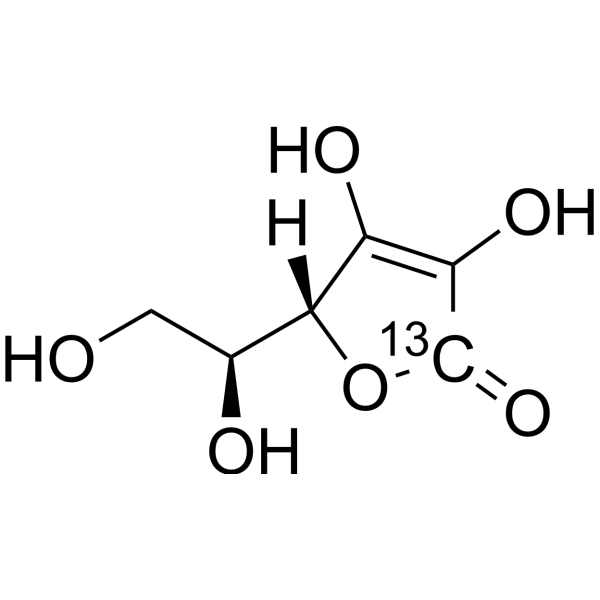
HY-B0166S1
L-Ascorbic acid-13CStable Isotope -
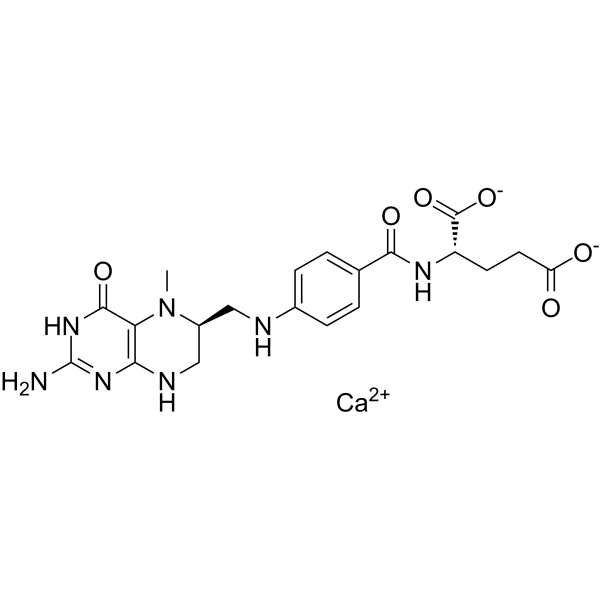
HY-17383
Levomefolate calciumFolate Supplement -

HY-13667R
Levoleucovorin Calcium (Standard)Antineoplastic Agent -
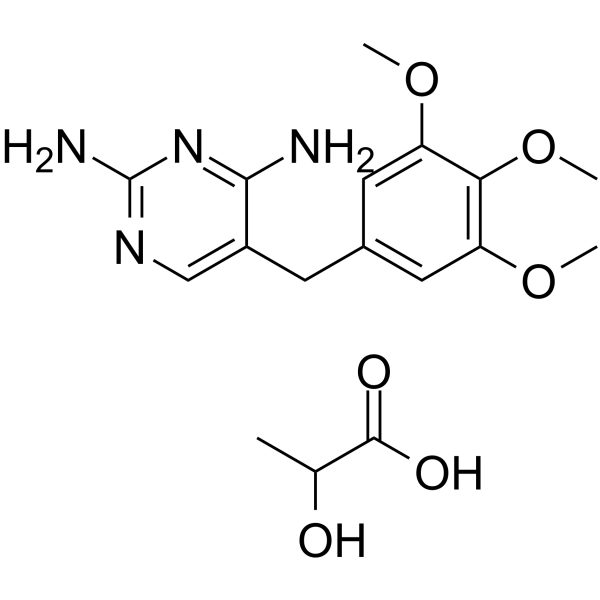
HY-B0510C
Trimethoprim lactateBacteriostatic Antibiotic -
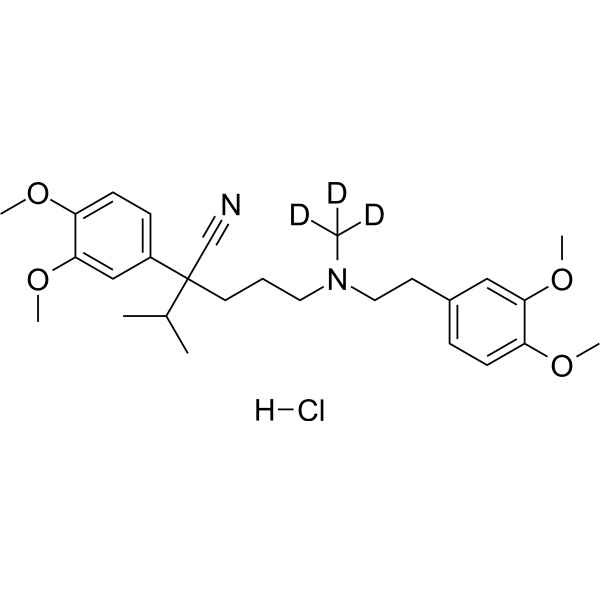
HY-A0064S
Verapamil-d3 hydrochlorideStable Isotope
All Antibiotic Isoforms
More

Biological Activity
Description
In Vitro
Stable heavy isotopes of hydrogen, carbon, and other elements have been incorporated into drug molecules, largely as tracers for quantitation during the drug development process. Deuteration has gained attention because of its potential to affect the pharmacokinetic and metabolic profiles of drugs[1].
MedChemExpress (MCE) has not independently confirmed the accuracy of these methods. They are for reference only. Further protocols information, click here.
Application
1. This compound can be used as a tracer
2. This compound can be used as an internal standard for quantitative analysis by NMR, GC-MS, or LC-MS.


Chemical Information
-
CAS No. 1189460-62-5
-
Unlabeled CAS 738-70-5
-
Appearance Solid
-
Molecular Weight 299.37
-
Formula C14H9D9N4O3
-
Color Off-white to light yellow
-
SMILES
NC1=NC=C(CC2=CC(OC([2H])([2H])[2H])=C(OC([2H])([2H])[2H])C(OC([2H])([2H])[2H])=C2)C(N)=N1
-
Shipping
Room temperature in continental US; may vary elsewhere.
-
Storage
Powder -20°C 3 years 4°C 2 years In solvent -80°C 6 months -20°C 1 month


Solvent & Solubility
In Vitro:
DMSO : 50 mg/mL (167.02 mM; Need ultrasonic; Hygroscopic DMSO has a significant impact on the solubility of product, please use newly opened DMSO)
H2O : 0.67 mg/mL (2.24 mM; Need ultrasonic)
Please refer to the solubility information to select the appropriate solvent. Once prepared, please aliquot and store the solution to prevent product inactivation from repeated freeze-thaw cycles.
Storage method and period of stock solution: -80°C, 6 months; -20°C, 1 month. When stored at -80°C, please use it within 6 months. When stored at -20°C, please use it within 1 month.
* Note: If you choose water as the stock solution, please dilute it to the working solution, then filter and sterilize it with a 0.22 μm filter before use.
Please refer to the solubility information to select the appropriate solvent. Once prepared, please aliquot and store the solution to prevent product inactivation from repeated freeze-thaw cycles.
Storage method and period of stock solution: -80°C, 6 months; -20°C, 1 month. When stored at -80°C, please use it within 6 months. When stored at -20°C, please use it within 1 month.
* Note: If you choose water as the stock solution, please dilute it to the working solution, then filter and sterilize it with a 0.22 μm filter before use.
Concentration (start) × Volume (start) = Concentration (final) × Volume (final)

Protocols
-
Aerobic Bacterial Batch Culture on Broth/Agar
Aerobic bacterial batch culture grows a closed inoculated population in broth or on agar without continuous medium replacement; growth readouts include turbidity/OD for total suspended biomass and colony-forming units for viable cells able to form colonies on agar. OD-based growth curves reflect light scattering by cells, but OD is instrument-, pathlength-, species-, cell-size-, and density-dependent, so OD should be calibrated or interpreted alongside viable counts when quantitative cell density is required.
-
Gram Staining of Tissue Sections
Gram staining of tissue sections is a histochemical technique used to differentiate Gram-positive and Gram-negative bacteria within histological specimens based on differences in bacterial cell wall structure and dye retention, adapted from classical bacteriological Gram staining into tissue-compatible “histological Gram stain” variants. In tissue applications, modifications of the Brown-Hopps and Brown-Brenn methods are commonly used to improve differentiation of microorganisms embedded within host connective tissue and to reduce overstaining or loss of Gram-negative signal, which are known limitations of earlier approaches. The principle relies on crystal violet-iodine complex retention in Gram-positive organisms and subsequent decolorization and counterstaining steps that allow contrast visualization of Gram-negative organisms against tissue background.


Purity & Documentation
-
Data Sheet (275 KB)
-
SDS (643 KB)
- English - EN (643 KB)
- Français - FR (643 KB)
- Deutsch - DE (643 KB)
- Norwegian - NO (643 KB)
- Español - ES (643 KB)
- Swedish - SV (643 KB)
- Italian - IT (643 KB)
- Korean - KR (643 KB)
- Portuguese - PT (643 KB)
-
Handling Instructions (2659 KB)
References
[1]. Russak EM, et al. Impact of Deuterium Substitution on the Pharmacokinetics of Pharmaceuticals. Ann Pharmacother. 2019;53(2):211-216. [Content Brief]
[2]. Laskowska, E., et al., Trimethoprim induces heat shock proteins and protein aggregation in E. coli cells. Curr Microbiol, 2003. 47(4): p. 286-9. [Content Brief]
[3]. Brogden, R.N., et al., Trimethoprim: a review of its antibacterial activity, pharmacokinetics and therapeutic use in urinary tract infections. Drugs, 1982. 23(6): p. 405-30. [Content Brief]
[4]. Xiaojian Wang, et al. A Trimethoprim Conjugate of Thiomaltose Has Enhanced Antibacterial Efficacy In Vivo. Bioconjug Chem. 2018 May 16;29(5):1729-1735. [Content Brief]


Complete Stock Solution Preparation Table
Please refer to the solubility information to select the appropriate solvent. Once prepared, please aliquot and store the solution to prevent product inactivation from repeated freeze-thaw cycles.
Storage method and period of stock solution: -80°C, 6 months; -20°C, 1 month. When stored at -80°C, please use it within 6 months. When stored at -20°C, please use it within 1 month.
| Optional Solvent | Concentration Solvent Mass | 1 mg | 5 mg | 10 mg | 25 mg |
|---|---|---|---|---|---|
| H2O / DMSO | 1 mM | 3.3403 mL | 16.7017 mL | 33.4035 mL | 83.5087 mL |
| DMSO | 5 mM | 0.6681 mL | 3.3403 mL | 6.6807 mL | 16.7017 mL |
| 10 mM | 0.3340 mL | 1.6702 mL | 3.3403 mL | 8.3509 mL | |
| 15 mM | 0.2227 mL | 1.1134 mL | 2.2269 mL | 5.5672 mL | |
| 20 mM | 0.1670 mL | 0.8351 mL | 1.6702 mL | 4.1754 mL | |
| 25 mM | 0.1336 mL | 0.6681 mL | 1.3361 mL | 3.3403 mL | |
| 30 mM | 0.1113 mL | 0.5567 mL | 1.1134 mL | 2.7836 mL | |
| 40 mM | 0.0835 mL | 0.4175 mL | 0.8351 mL | 2.0877 mL | |
| 50 mM | 0.0668 mL | 0.3340 mL | 0.6681 mL | 1.6702 mL | |
| 60 mM | 0.0557 mL | 0.2784 mL | 0.5567 mL | 1.3918 mL | |
| 80 mM | 0.0418 mL | 0.2088 mL | 0.4175 mL | 1.0439 mL | |
| 100 mM | 0.0334 mL | 0.1670 mL | 0.3340 mL | 0.8351 mL |
* Note: If you choose water as the stock solution, please dilute it to the working solution, then filter and sterilize it with a 0.22 μm filter before use.


Trimethoprim-d9 Related Classifications
HY-B0510S Related Classifications
 Powered by Bioz