



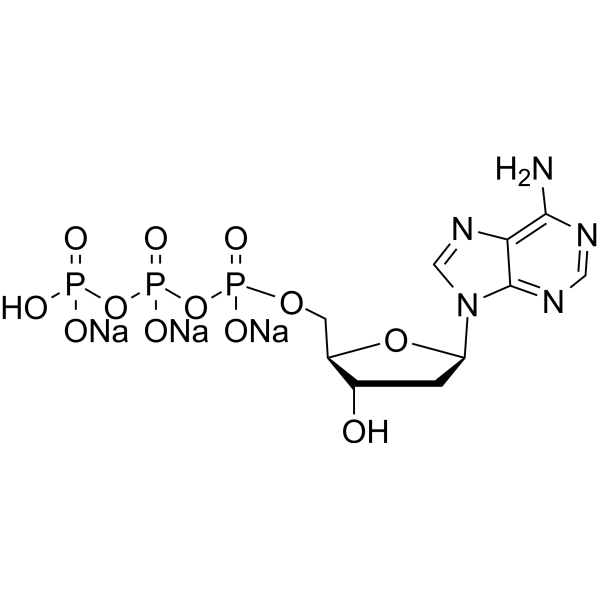
2'-Deoxyadenosine-5'-triphosphate trisodium

Based on 1 Customer Validation
2'-Deoxyadenosine-5'-triphosphate (dATP) trisodium is a nucleotide used in cells for DNA synthesis (or replication), as a substrate of DNA polymerase. 2'-Deoxyadenosine-5'-triphosphate is promising for research of genetic immunodeficiency diseases adenosine deaminase deficiency and purine nucleotide phosphorylase deficiency .
For research use only. We do not sell to patients.
- Purity : 98.0%
- CAS No.: 54680-12-5
- Formula: C10H13N5Na3O12P3
- Molecular Weight:557.13
-
Storage:
4°C, sealed storage, away from moisture and light
* In solvent : -80°C, 6 months; -20°C, 1 month (sealed storage, away from moisture and light)

To place orders, for customer services and technical support, please contact: MedChemExpress USA
Tel: 609-228-6898 E-mail: [email protected] [email protected]


-
 Biological Activity
-
Chemical Information
-
Solvent & Solubility
- Protocols
- Purity & Documentation
- References
-
 Help & FAQs


-
HY-101400A
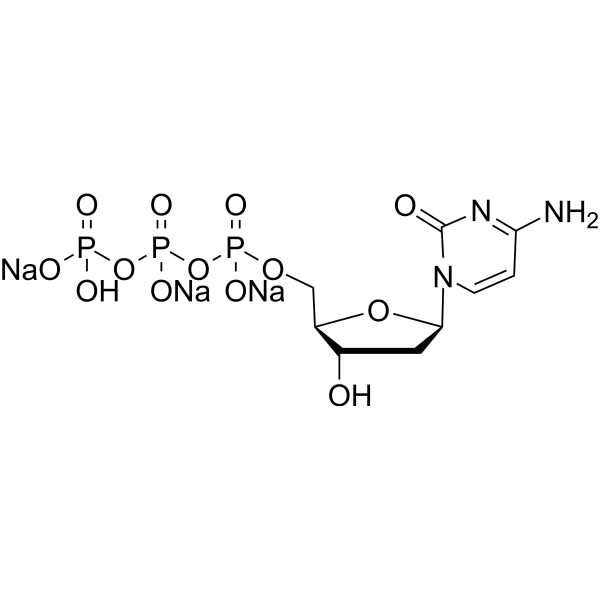
Deoxycytidine triphosphate trisodium solution (100 mM)Nucleoside Triphosphate -
HY-125818
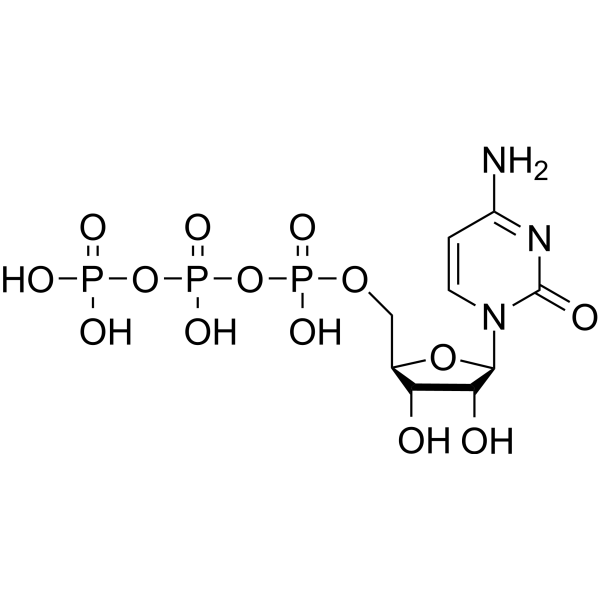
Cytidine-5'-triphosphateNucleoside Triphosphate -
HY-108213
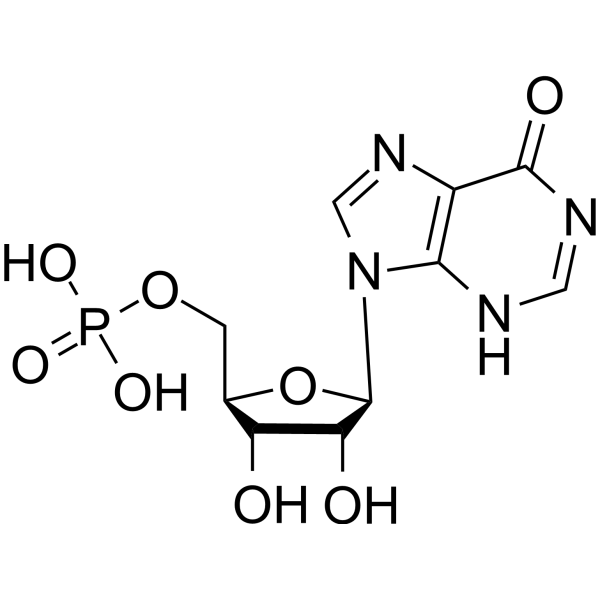
Inosinic acidNatural Product -
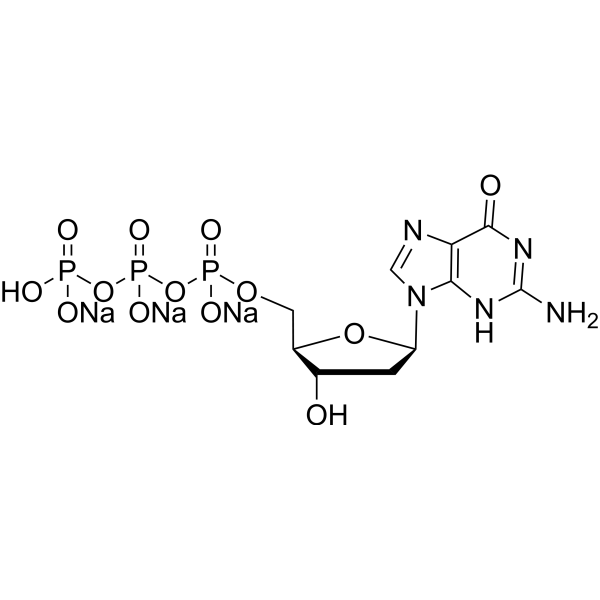
HY-W008661
Deoxyguanosine triphosphate trisodium solution (100 mM)Nucleotide Precursor -
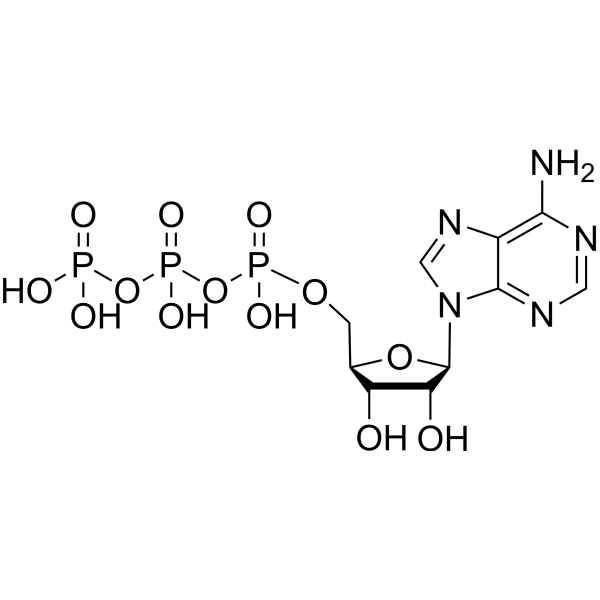
HY-B2176
ATPEndogenous Metabolite -
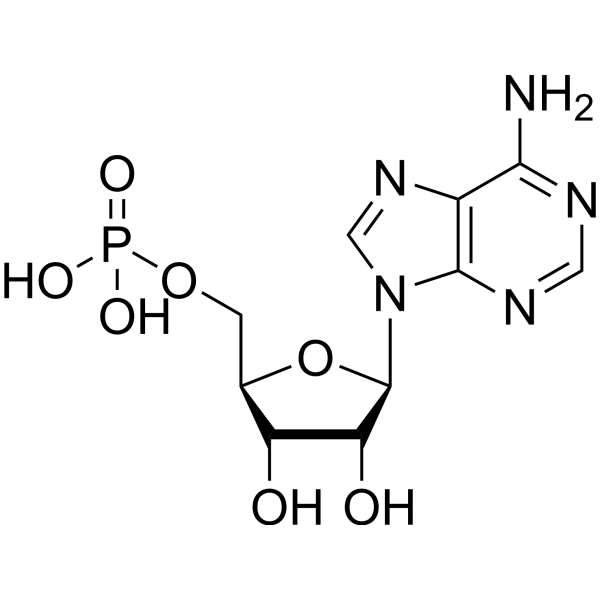
HY-A0181
Adenosine monophosphateAdenosine A1 Receptor Agonist -
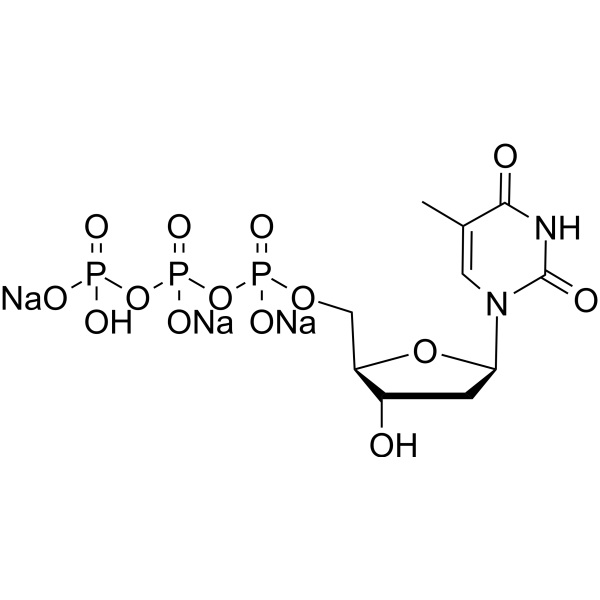
HY-W013715A
Deoxythymidine-5'-triphosphate trisodium solution (100 mM)Deoxyribonucleoside Triphosphate -
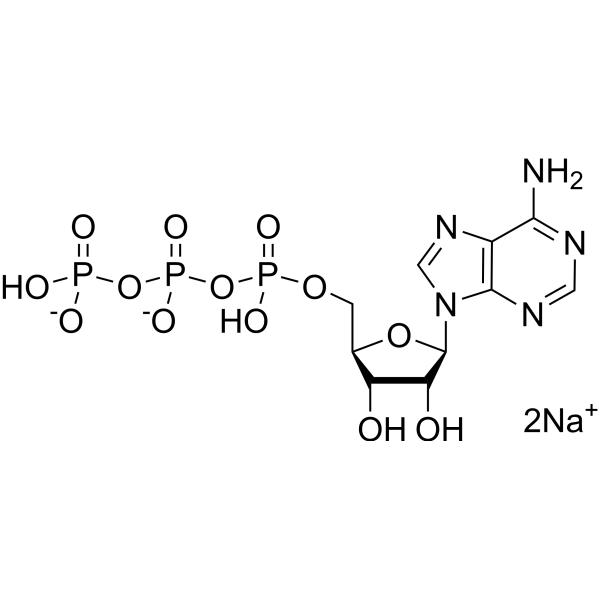
HY-B0345A
ATP disodium saltEndogenous Metabolite -
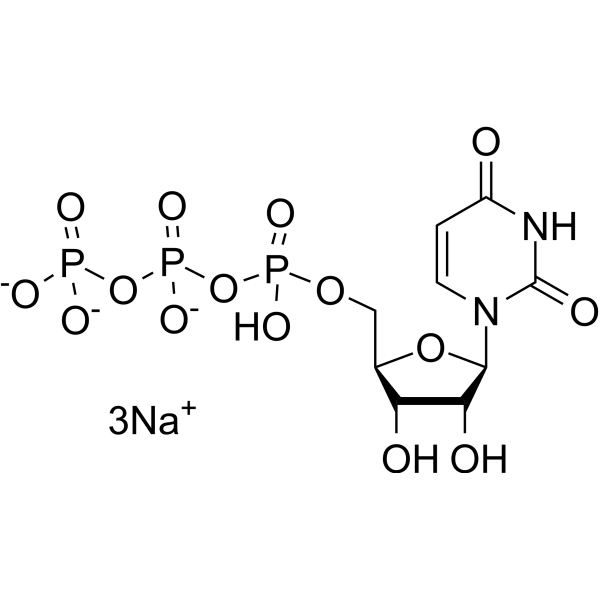
HY-W013093
Uridine triphosphate trisodium saltUTP -
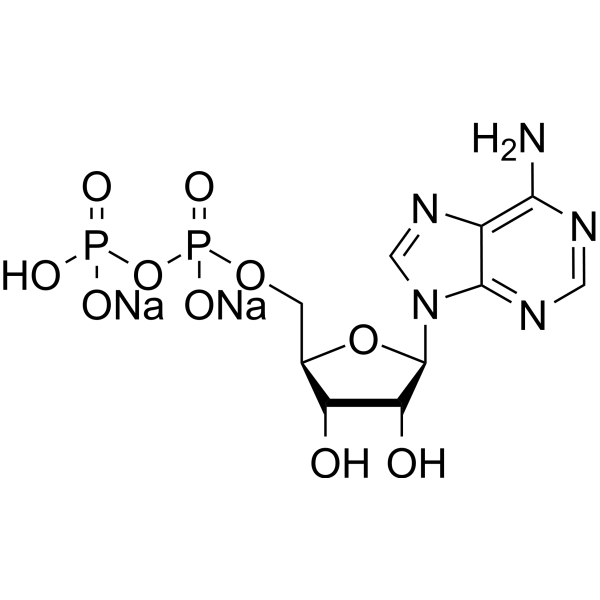
HY-D0199
Adenosine 5'-diphosphate disodiumAggregation Agent -
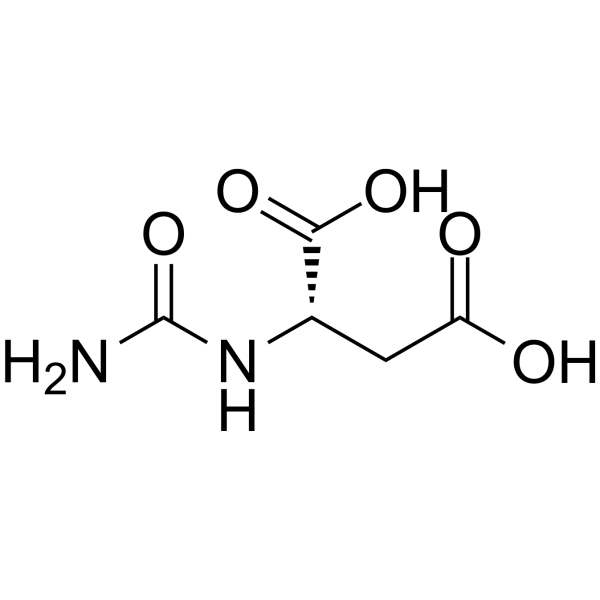
HY-128425A
N-Carbamoyl-L-aspartic acidAnti-fungal Agent -
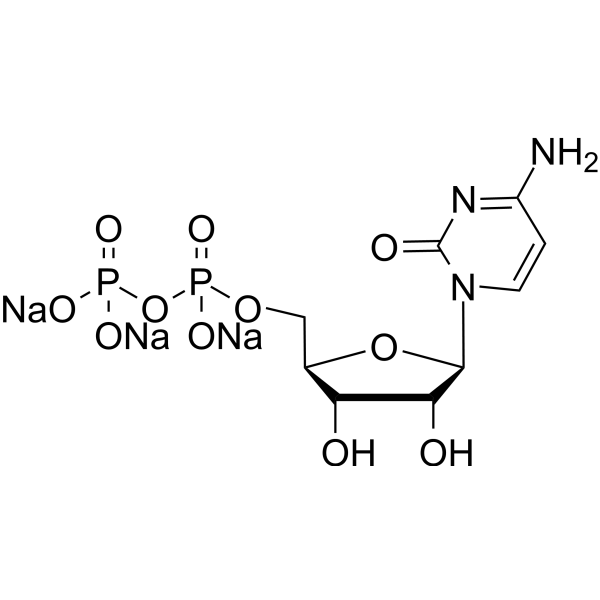
HY-W008915
Cytidine 5'-diphosphate trisodium salt


Biological Activity
Description
IC50 & Target
|
Human Endogenous Metabolite |
DNA Polymerase |
In Vitro
2'-Deoxyadenosine-5'-triphosphate (0.5 mM; 0-10 min) induces cytochrome C release in a swelling-independent manner in mouse liver mitochondria, an effect inhibited by Cyclosporin A (HY-B0579)[2].
2'-Deoxyadenosine-5'-triphosphate (400 μM, 16 h) stimulates bacterial biofilm formation in vitro and stimulates bacterial adherence to human epithelial cells[4].
MedChemExpress (MCE) has not independently confirmed the accuracy of these methods. They are for reference only. Further protocols information, click here.


Chemical Information
-
CAS No. 54680-12-5
-
Appearance Solid
-
Molecular Weight 557.13
-
Formula C10H13N5Na3O12P3
-
Color White to off-white
-
SMILES
O[C@H]([C@H](O1)CO[P](O[P](O[P](O)(O[Na])=O)(O[Na])=O)(O[Na])=O)C[C@@H]1N2C3=NC=NC(N)=C3N=C2
-
Synonyms
dATP trisodium
-
Structure Classification
-
Initial Source
-
Shipping
Room temperature in continental US; may vary elsewhere.
-
Storage
4°C, sealed storage, away from moisture and light
* In solvent : -80°C, 6 months; -20°C, 1 month (sealed storage, away from moisture and light)


Solvent & Solubility
In Vitro:
H2O : 250 mg/mL (448.73 mM; Need ultrasonic)
Please refer to the solubility information to select the appropriate solvent. Once prepared, please aliquot and store the solution to prevent product inactivation from repeated freeze-thaw cycles.
Storage method and period of stock solution: -80°C, 6 months; -20°C, 1 month (sealed storage, away from moisture and light). When stored at -80°C, please use it within 6 months. When stored at -20°C, please use it within 1 month.
* Note: If you choose water as the stock solution, please dilute it to the working solution, then filter and sterilize it with a 0.22 μm filter before use.
Please refer to the solubility information to select the appropriate solvent. Once prepared, please aliquot and store the solution to prevent product inactivation from repeated freeze-thaw cycles.
Storage method and period of stock solution: -80°C, 6 months; -20°C, 1 month (sealed storage, away from moisture and light). When stored at -80°C, please use it within 6 months. When stored at -20°C, please use it within 1 month.
* Note: If you choose water as the stock solution, please dilute it to the working solution, then filter and sterilize it with a 0.22 μm filter before use.
Concentration (start) × Volume (start) = Concentration (final) × Volume (final)

Protocols
-
EdU Incorporation Assay (Click Chemistry-Based DNA Synthesis Measurement)
The EdU incorporation assay measures DNA synthesis by adding the thymidine analog 5-ethynyl-2′-deoxyuridine to cells or tissues, where it is incorporated into newly synthesized DNA during S phase. Incorporated EdU is detected by copper-catalyzed azide-alkyne cycloaddition, in which a fluorescent azide covalently reacts with the ethynyl group on EdU, allowing S-phase cells to be detected by fluorescence microscopy, flow cytometry, or high-content imaging. EdU detection does not require DNA denaturation or anti-BrdU antibody access, which preserves sample structure and improves compatibility with immunostaining and multiparameter cytometry compared with BrdU-based detection. EdU can be cytotoxic in a cell-type- and exposure-dependent manner, so pulse duration, concentration, and continuous-labeling designs should be validated for each cell type.
-
BrdU Incorporation Assay
Bromodeoxyuridine (BrdU) incorporation assay is based on the principle that BrdU, a thymidine analog, is incorporated into newly synthesized DNA during the S phase of the cell cycle, thereby serving as a marker of DNA replication and cellular proliferation. Incorporated BrdU can be detected using anti-BrdU antibodies following DNA denaturation, enabling visualization or quantification of proliferating cells through immunochemical detection methods such as immunofluorescence or immunohistochemistry.


Purity & Documentation
-
Data Sheet (276 KB)
-
SDS (393 KB)
- English - EN (393 KB)
- Français - FR (393 KB)
- Deutsch - DE (393 KB)
- Norwegian - NO (393 KB)
- Español - ES (393 KB)
- Swedish - SV (393 KB)
- Italian - IT (393 KB)
- Korean - KR (393 KB)
- Portuguese - PT (393 KB)
-
Handling Instructions (2659 KB)
References
[1]. P J Romaniuk, A study of the mechanism of T4 DNA polymerase with diastereomeric phosphorothioate analogues of deoxyadenosine triphosphate. J Biol Chem. 1982 Jul 10;257(13):7684-8. [Content Brief]
[2]. Yang JC, Cortopassi GA. dATP causes specific release of cytochrome C from mitochondria. Biochem Biophys Res Commun. 1998 Sep 18;250(2):454-7. [Content Brief]
[3]. Katona K, et al. Deoxy-adenosine-monophosphate (dAMP) di-n-butylester induces apoptosis by increasing the dATP level in HL-60 cells. Cancer Lett. 2006 Apr 28;235(2):281-90. [Content Brief]
[4]. Xi C, Wu J. dATP/ATP, a multifunctional nucleotide, stimulates bacterial cell lysis, extracellular DNA release and biofilm development. PLoS One. 2010 Oct 14;5(10):e13355. [Content Brief]


Complete Stock Solution Preparation Table
Please refer to the solubility information to select the appropriate solvent. Once prepared, please aliquot and store the solution to prevent product inactivation from repeated freeze-thaw cycles.
Storage method and period of stock solution: -80°C, 6 months; -20°C, 1 month (sealed storage, away from moisture and light). When stored at -80°C, please use it within 6 months. When stored at -20°C, please use it within 1 month.
| Optional Solvent | Concentration Solvent Mass | 1 mg | 5 mg | 10 mg | 25 mg |
|---|---|---|---|---|---|
| H2O | 1 mM | 1.7949 mL | 8.9746 mL | 17.9491 mL | 44.8728 mL |
| 5 mM | 0.3590 mL | 1.7949 mL | 3.5898 mL | 8.9746 mL | |
| 10 mM | 0.1795 mL | 0.8975 mL | 1.7949 mL | 4.4873 mL | |
| 15 mM | 0.1197 mL | 0.5983 mL | 1.1966 mL | 2.9915 mL | |
| 20 mM | 0.0897 mL | 0.4487 mL | 0.8975 mL | 2.2436 mL | |
| 25 mM | 0.0718 mL | 0.3590 mL | 0.7180 mL | 1.7949 mL | |
| 30 mM | 0.0598 mL | 0.2992 mL | 0.5983 mL | 1.4958 mL | |
| 40 mM | 0.0449 mL | 0.2244 mL | 0.4487 mL | 1.1218 mL | |
| 50 mM | 0.0359 mL | 0.1795 mL | 0.3590 mL | 0.8975 mL | |
| 60 mM | 0.0299 mL | 0.1496 mL | 0.2992 mL | 0.7479 mL | |
| 80 mM | 0.0224 mL | 0.1122 mL | 0.2244 mL | 0.5609 mL | |
| 100 mM | 0.0179 mL | 0.0897 mL | 0.1795 mL | 0.4487 mL |
* Note: If you choose water as the stock solution, please dilute it to the working solution, then filter and sterilize it with a 0.22 μm filter before use.


2'-Deoxyadenosine-5'-triphosphate trisodium Related Classifications
HY-136648A Related Classifications
 Powered by Bioz