



Arg-Gly-Asp-Ser
Based on 10 publication(s) in Google Scholar
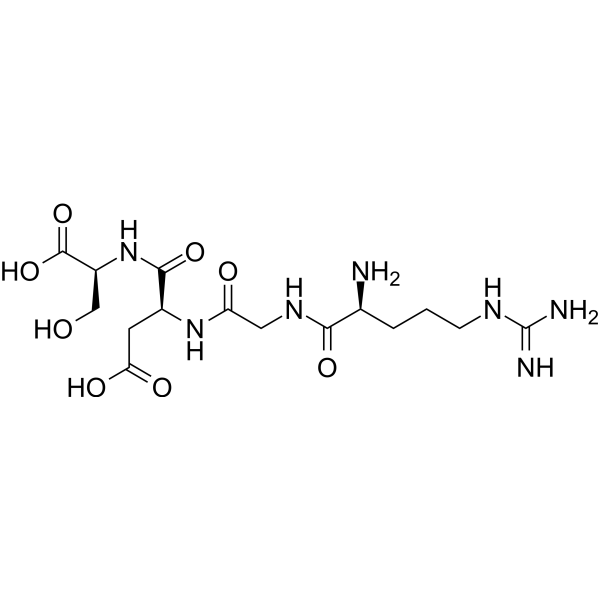
Arg-Gly-Asp-Ser is an integrin binding sequence that inhibits integrin receptor function. Arg-Gly-Asp-Ser directly and specifically bind pro-caspase-8, pro-caspase-9 and pro-caspase-3, while it does not bind pro-caspase-1.
For research use only. We do not sell to patients.
- Purity : 98.70%
- CAS No.: 91037-65-9
- Formula: C15H27N7O8
- Molecular Weight:433.42
-
Storage:
Sealed storage, away from moisture.
Powder -80°C, 2 years , -20°C, 1 year* In solvent : -80°C, 6 months; -20°C, 1 month (sealed storage, away from moisture)

To place orders, for customer services and technical support, please contact: MedChemExpress USA
Tel: 609-228-6898 E-mail: [email protected] [email protected]


-
 Biological Activity
-
Chemical Information
-
Solvent & Solubility
- Protocols
- Purity & Documentation
- References
-
 Help & FAQs


-
HY-P1740
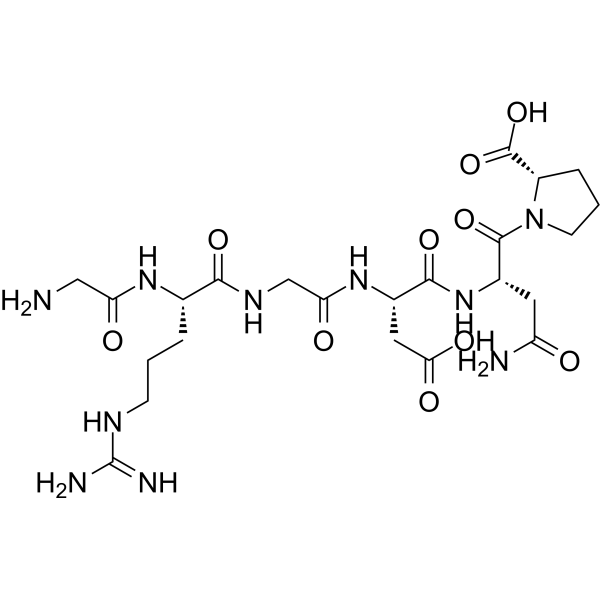
RGD peptide (GRGDNP)Integrin-Iigand Interaction Inhibitor -
HY-16141
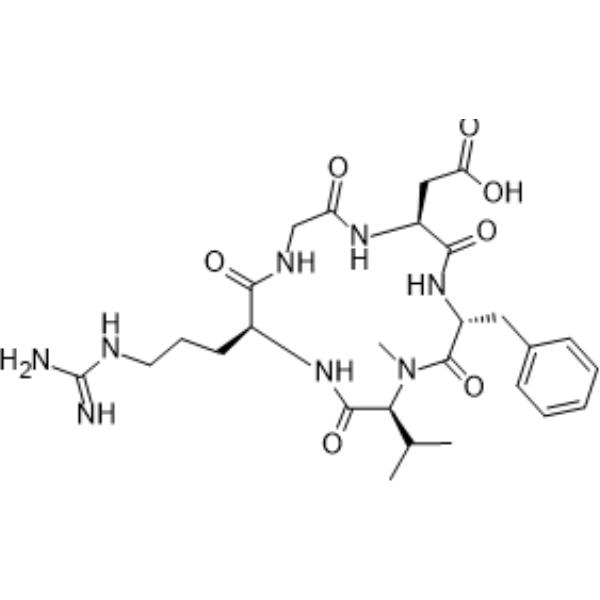
CilengitideIntegrin Inhibitor -
HY-100506
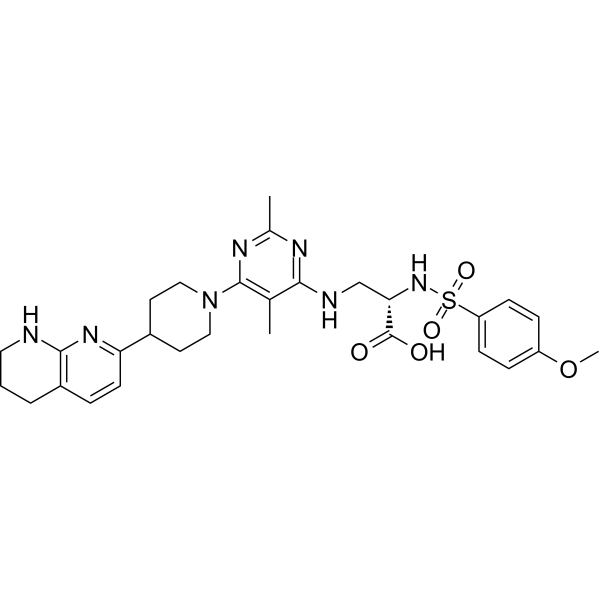
GLPG0187Integrin Receptor Antagonist -
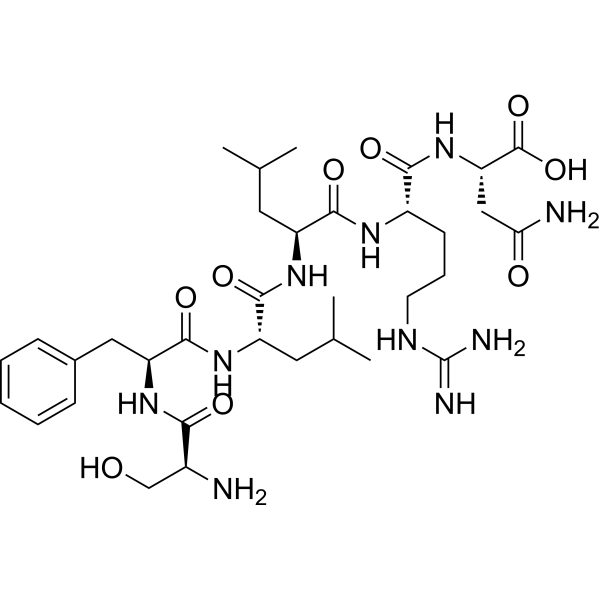
HY-P0078
TRAP-6PAR1 Agonist -
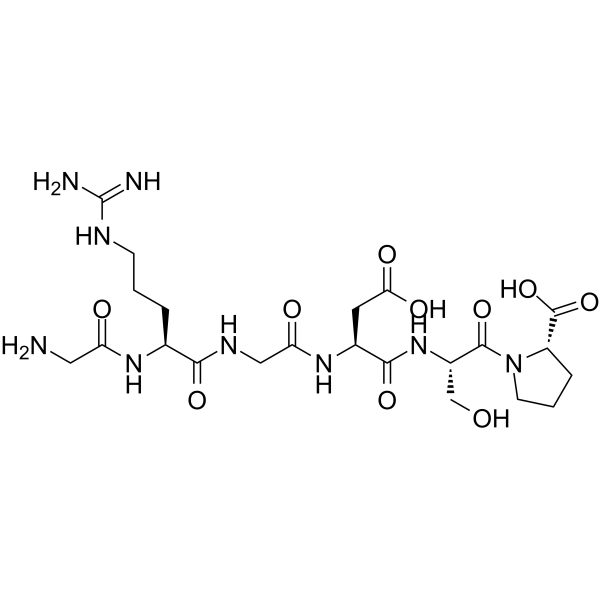
HY-P0290
GRGDSPIntegrin Inhibitor -
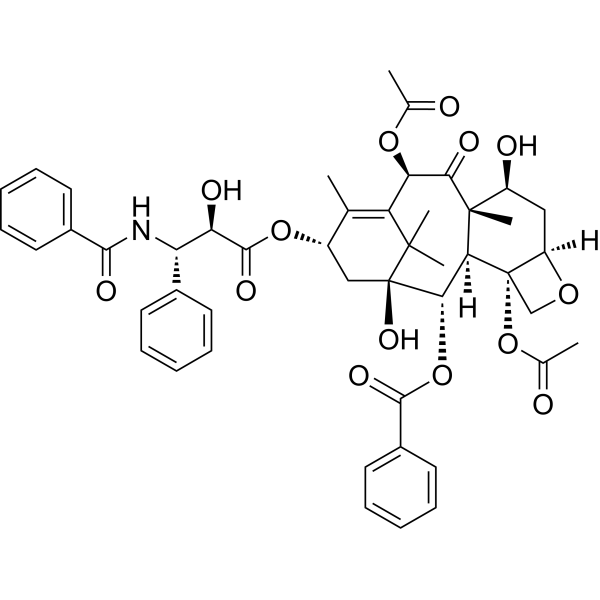
HY-B0015
PaclitaxelAntitumor Agent -
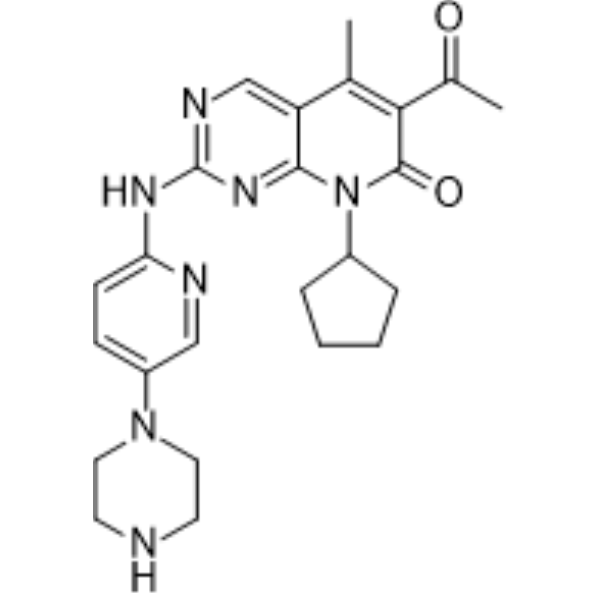
HY-50767
PalbociclibCDK4/6 Inhibitor -
HY-50856
RuxolitinibJAK1/2 Inhibitor -
HY-W010918
Adenosine 5'-diphosphate -
HY-10071
Y-27632ROCK Inhibitor -
HY-138170
ALC-0315Lipid Nanoparticle Component -
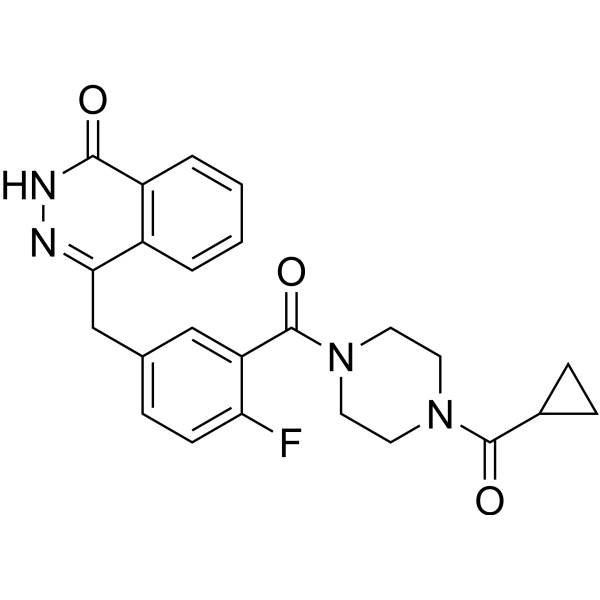
HY-10162
OlaparibPARP Inhibitor
Publications Citing Use of MedChemExpress (MCE) Arg-Gly-Asp-Ser
More- Theranostics. 2020 Oct 26;10(26):12127-12143. [Abstract]
- Adv Sci (Weinh). 2025 Oct 30:e01602. [Abstract]
- Oncogene. 2026 Jul;45(27):2743-2754.
- Sci Rep. 2021 Jan 25;11(1):2141. [Abstract]
- iScience. 2022 Nov 19;25(12):105642. [Abstract]
- Mol Hum Reprod. 2021 Feb 27;27(3):gaab014. [Abstract]
- J Photochem Photobiol B. 2025 Jul:268:113170. [Abstract]
- J Oral Pathol Med. 2016 Nov;45(10):730-739. [Abstract]
- Res Sq. 2026 Jan 11.
- bioRxiv. 2025 Jun 12.
 Customer Validation & Images

-
Flow Cytometry

-
Histological Imaging/Staining


Biological Activity
Description
Cellular Effect
|
Cell Line

|
Type | Value | Description | References |
|---|---|---|---|---|
| Platelet | IC50 |
31 μM
Compound: RGDS
|
Inhibition of ADP-induced platelet aggregation in human platelet rich plasma by Borns method
Inhibition of ADP-induced platelet aggregation in human platelet rich plasma by Borns method
|
[PMID: 21852128] |
| Platelet | IC50 |
31 μM
Compound: RGDS
|
Inhibition of ADP-induced human platelet aggregation in platelet-rich plasma by Born's method
Inhibition of ADP-induced human platelet aggregation in platelet-rich plasma by Born's method
|
[PMID: 23757209] |
In Vitro
The Arg-Gly-Asp-Ser-modified surface causes up-regulation of αvβ3?integrin. Attachment to the Arg-Gly-Asp-Ser-treated membrane completely abolishes apoptosis induced by staurosporine, the Ca2+·Pi ion pair, and sodium nitroprusside. Arg-Gly-Asp-Ser-dependent resistance to apoptosis is eliminated, when the activity of the phosphatidylinositol 3-kinase pathway is inhibited[1].
Arg-Gly-Asp-Ser interacts with survivin, as well as with procaspase-3, -8 and -9. Arg-Gly-Asp-Ser-peptide binding to survivin is found to be specific, at high affinity (Kd 27.5 μM) and locates at the survivin C-terminus. Arg-Gly-Asp-Ser-survivin interaction appears to play a key role, since Arg-Gly-Asp-Ser lost its anti-mitogenic effect in survivin-deprived cells with a specific siRNA[4].
MedChemExpress (MCE) has not independently confirmed the accuracy of these methods. They are for reference only. Further protocols information, click here.
In Vivo
Arg-Gly-Asp-Ser peptide significantly reduces tumor necrosis factor (TNF)-α and macrophage inflammatory protein (MIP)-2 production, and decreases myeloperoxidase (MPO) and NF-κB activity[3].
MedChemExpress (MCE) has not independently confirmed the accuracy of these methods. They are for reference only.


Chemical Information
-
CAS No. 91037-65-9
-
Appearance Solid
-
Molecular Weight 433.42
-
Formula C15H27N7O8
-
Color White to off-white
-
Synonyms
RGDS peptide; Fibronectin tetrapeptide
-
Sequence
Arg-Gly-Asp-Ser
-
Sequence Shortening
RGDS
-
Shipping
Room temperature in continental US; may vary elsewhere.
-
Storage
Sealed storage, away from moisture
Powder -80°C 2 years -20°C 1 year * In solvent : -80°C, 6 months; -20°C, 1 month (sealed storage, away from moisture)


Publications (10)
-
Journal Impact Factor
-
Most Recent
-
Theranostics
2020 Oct 26;10(26):12127-12143. PMID: 33204333 -
Adv Sci (Weinh)
Cancer Immunotherapy via Disruption of Integrin αvβ3 and CD47 Costabilization on Cancer Cell Surface. [Abstract]2025 Oct 30:e01602. PMID: 41168993
Arg-Gly-Asp-Ser purchased from MedChemExpress. Usage Cited in: Adv Sci (Weinh). 2025 Oct 30:e01602. [Abstract]
Flow cytometry analysis of CD47 surface expression on MDA‐MB‐231 cells treated with various concentrations of the integrin αvβ3 inhibitor Arg-Gly-Asp-Ser (RGDS: 0, 1, 2, and 4 µM) for 48 h, including pooled data.
-
-
Sci Rep
2021 Jan 25;11(1):2141. PMID: 33495508 -
iScience
2022 Nov 19;25(12):105642. PMID: 36465134
Arg-Gly-Asp-Ser purchased from MedChemExpress. Usage Cited in: iScience. 2022 Nov 19;25(12):105642. [Abstract]
Representative images of H&E and immunohistochemistry (IHC) staining of Ccm1fl/fl and Ccm1ECKO mice at age P14 treated with vehicle or RGDS peptide (5 mg/kg).
-
Mol Hum Reprod
Angiopoietin 2 stimulates trophoblast invasion via a mechanism associated with JNK signaling. [Abstract]2021 Feb 27;27(3):gaab014. PMID: 33629098 -
J Photochem Photobiol B
Binding of collagen I to integrins alleviates UVB-caused mitochondrial disorders in human keratinocytes HaCaT through enhancement of F-actin polymerization. [Abstract]2025 Jul:268:113170. PMID: 40328195 -
J Oral Pathol Med
THBS1 is induced by TGFB1 in the cancer stroma and promotes invasion of oral squamous cell carcinoma. [Abstract]2016 Nov;45(10):730-739. PMID: 26850833 -
-


Solvent & Solubility
In Vitro:
DMSO : 50 mg/mL (115.36 mM; Need ultrasonic; Hygroscopic DMSO has a significant impact on the solubility of product, please use newly opened DMSO)
H2O : ≥ 25 mg/mL (57.68 mM)
* "≥" means soluble, but saturation unknown.
Please refer to the solubility information to select the appropriate solvent. Once prepared, please aliquot and store the solution to prevent product inactivation from repeated freeze-thaw cycles.
Storage method and period of stock solution: -80°C, 6 months; -20°C, 1 month (sealed storage, away from moisture). When stored at -80°C, please use it within 6 months. When stored at -20°C, please use it within 1 month.
* Note: If you choose water as the stock solution, please dilute it to the working solution, then filter and sterilize it with a 0.22 μm filter before use.
Please refer to the solubility information to select the appropriate solvent. Once prepared, please aliquot and store the solution to prevent product inactivation from repeated freeze-thaw cycles.
Storage method and period of stock solution: -80°C, 6 months; -20°C, 1 month (sealed storage, away from moisture). When stored at -80°C, please use it within 6 months. When stored at -20°C, please use it within 1 month.
* Note: If you choose water as the stock solution, please dilute it to the working solution, then filter and sterilize it with a 0.22 μm filter before use.
Concentration (start) × Volume (start) = Concentration (final) × Volume (final)

Protocols
-
Apoptosis Solutions
Apoptosis is a regulated, generally non-lytic cell-death pathway that removes unwanted, damaged, infected, or abnormal cells through coordinated morphological changes, caspase activation, DNA fragmentation, and membrane remodeling. The intrinsic apoptosis pathway is controlled mainly by mitochondrial outer membrane permeabilization, BCL-2 family proteins, cytochrome c release, apoptosome formation, caspase-9 activation, and downstream executioner caspase-3/7 activation. The extrinsic apoptosis pathway is initiated by death receptors such as Fas, TNFR, and TRAIL receptors, which recruit adaptor proteins and activate caspase-8 before engaging executioner caspases or mitochondrial amplification through BID cleavage. Apoptosis is linked to many phenotypes, including cancer cell killing, tissue homeostasis, immune regulation, neurodegeneration, infection response, and treatment-induced cytotoxicity; unresolved questions include how apoptosis interacts with necroptosis, pyroptosis, ferroptos
-
Pyroptosis Solutions
Pyroptosis is a lytic inflammatory cell-death pathway executed by gasdermin pores, most classically through inflammasome-mediated activation of caspase-1, cleavage of gasdermin D, membrane pore formation, LDH release, and secretion of IL-1β and IL-18. The canonical pathway is commonly modeled by priming cells with an inflammatory signal such as LPS to induce pro-IL-1β and inflammasome components, followed by an activation signal such as ATP or nigericin to activate NLRP3, ASC speck formation, caspase-1 cleavage, GSDMD cleavage, cytokine release, and pyroptotic membrane rupture. The non-canonical pathway is triggered when cytosolic LPS activates mouse caspase-11 or human caspase-4/5, leading to GSDMD cleavage and pyroptosis, and this can secondarily activate NLRP3-dependent IL-1β release. Pyroptosis is linked to inflammatory injury, infection, cancer, liver disease, ocular disease, placental inflammation, and other disease phenotypes, but unresolved questions include which gasdermin fam


Purity & Documentation
-
Data Sheet (278 KB)
-
SDS (396 KB)
- English - EN (396 KB)
- Français - FR (396 KB)
- Deutsch - DE (396 KB)
- Norwegian - NO (396 KB)
- Español - ES (396 KB)
- Swedish - SV (396 KB)
- Italian - IT (396 KB)
- Korean - KR (396 KB)
- Portuguese - PT (396 KB)
-
Handling Instructions (2659 KB)
References
[1]. Grigoriou V, et al. Apoptosis and survival of osteoblast-like cells are regulated by surface attachment. J Biol Chem. 2005 Jan 21;280(3):1733-9. [Content Brief]
[2]. Moon C, et al. Synthetic RGDS peptide attenuates lipopolysaccharide-induced pulmonary inflammation by inhibiting integrin signaled MAP kinase pathways. Respir Res. 2009 Mar 9;10:18. [Content Brief]
[3]. Yin X, et al. Synthetic RGDS peptide attenuated lipopolysaccharide/D-galactosamine-induced fulminant hepatic failure in mice. J Gastroenterol Hepatol. 2014 Jun;29(6):1308-15. [Content Brief]
[4]. Aguzzi MS, et al. Intracellular targets of RGDS peptide in melanoma cells. Mol Cancer. 2010 Apr 22;9:84. [Content Brief]


Complete Stock Solution Preparation Table
Please refer to the solubility information to select the appropriate solvent. Once prepared, please aliquot and store the solution to prevent product inactivation from repeated freeze-thaw cycles.
Storage method and period of stock solution: -80°C, 6 months; -20°C, 1 month (sealed storage, away from moisture). When stored at -80°C, please use it within 6 months. When stored at -20°C, please use it within 1 month.
| Optional Solvent | Concentration Solvent Mass | 1 mg | 5 mg | 10 mg | 25 mg |
|---|---|---|---|---|---|
| H2O / DMSO | 1 mM | 2.3072 mL | 11.5362 mL | 23.0723 mL | 57.6808 mL |
| 5 mM | 0.4614 mL | 2.3072 mL | 4.6145 mL | 11.5362 mL | |
| 10 mM | 0.2307 mL | 1.1536 mL | 2.3072 mL | 5.7681 mL | |
| 15 mM | 0.1538 mL | 0.7691 mL | 1.5382 mL | 3.8454 mL | |
| 20 mM | 0.1154 mL | 0.5768 mL | 1.1536 mL | 2.8840 mL | |
| 25 mM | 0.0923 mL | 0.4614 mL | 0.9229 mL | 2.3072 mL | |
| 30 mM | 0.0769 mL | 0.3845 mL | 0.7691 mL | 1.9227 mL | |
| 40 mM | 0.0577 mL | 0.2884 mL | 0.5768 mL | 1.4420 mL | |
| 50 mM | 0.0461 mL | 0.2307 mL | 0.4614 mL | 1.1536 mL | |
| DMSO | 60 mM | 0.0385 mL | 0.1923 mL | 0.3845 mL | 0.9613 mL |
| 80 mM | 0.0288 mL | 0.1442 mL | 0.2884 mL | 0.7210 mL | |
| 100 mM | 0.0231 mL | 0.1154 mL | 0.2307 mL | 0.5768 mL |
* Note: If you choose water as the stock solution, please dilute it to the working solution, then filter and sterilize it with a 0.22 μm filter before use.


Arg-Gly-Asp-Ser Related Classifications
HY-12290 Related Classifications
 Powered by Bioz