



Azelastine hydrochloride
Based on 3 publication(s) in Google Scholar
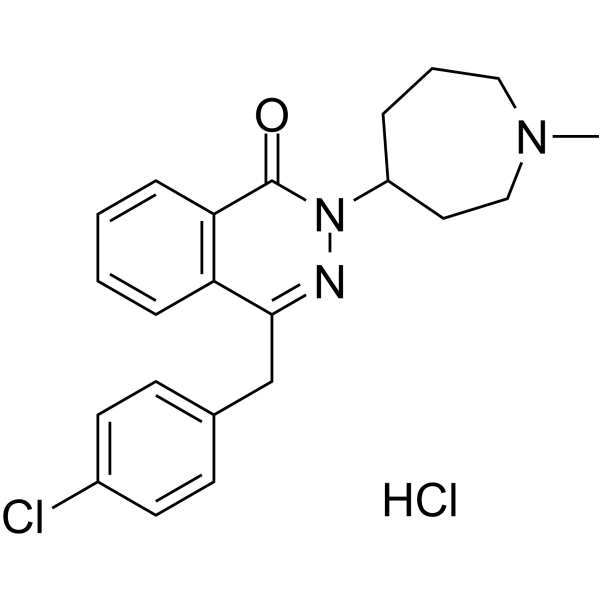
Azelastine hydrochloridem, an antihistamine, is a potent and selective histamine 1 (H1) antagonist. Azelastine hydrochloride can be used for the research of allergic rhinitis, asthma, diabetic hyperlipidemic and SARS-CoV-2.
Nur für Forschungszwecke. Wir verkaufen nicht an Patienten.
- Reinheit : 99.93%
- CAS. Nr.: 79307-93-0
- Formel: C22H25Cl2N3O
- Molecular Weight:418.36
-
Speicherung:
4°C, sealed storage, away from moisture
* In solvent : -80°C, 6 months; -20°C, 1 month (sealed storage, away from moisture)

To place orders, for customer services and technical support, please contact: MedChemExpress USA
Tel: 609-228-6898 E-mail: [email protected] [email protected]


-
 Biologische Aktivität
-
Chemical Information
-
Lösungsmittel & Löslichkeit
- Reinheit & Dokumentation
- Verweise
-
 Help & FAQs


-
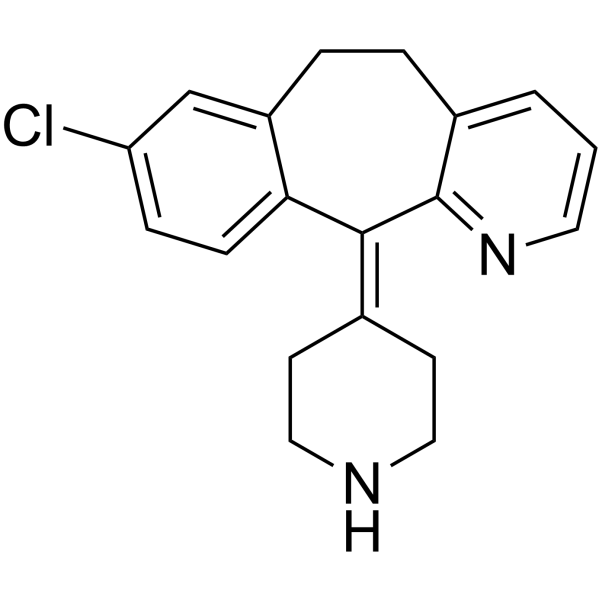
HY-B0539
DesloratadineH1-Receptor Antagonist -
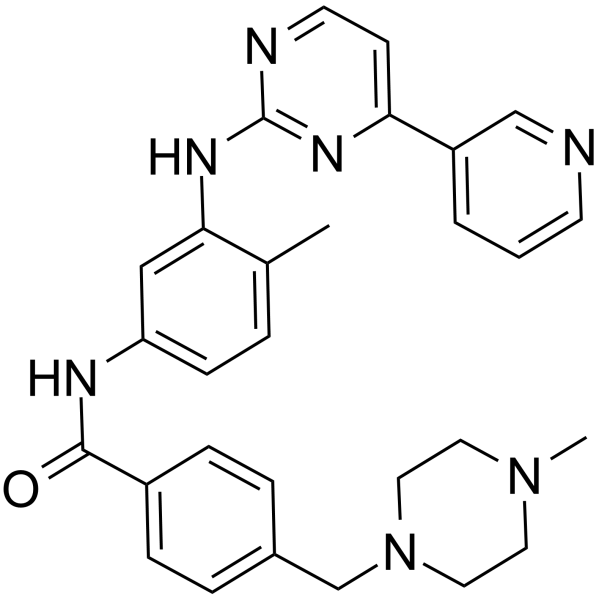
HY-15463
ImatinibTyrosine Kinases Inhibitor -
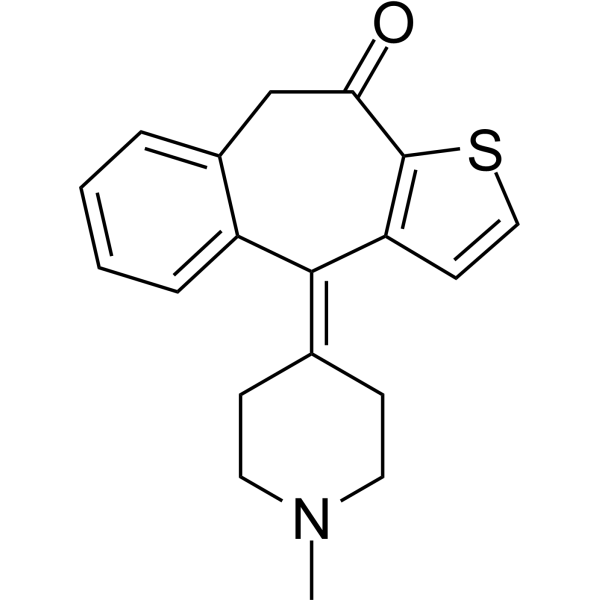
HY-B0157
KetotifenHistamine 1 Receptor Blocker -
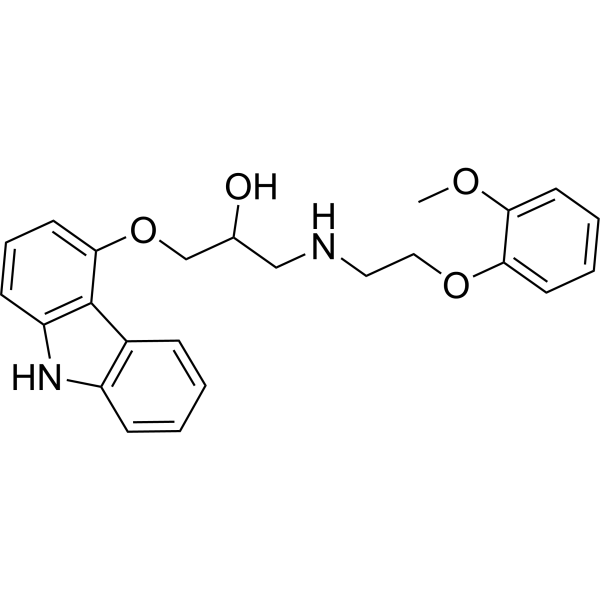
HY-B0006
Carvedilolβ/α-1 Blocker -
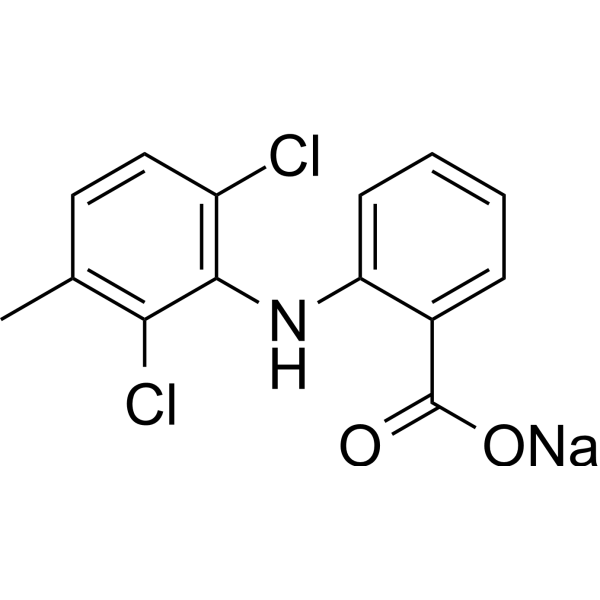
HY-B1320
Meclofenamic acid sodiumFTO Inhibitor -
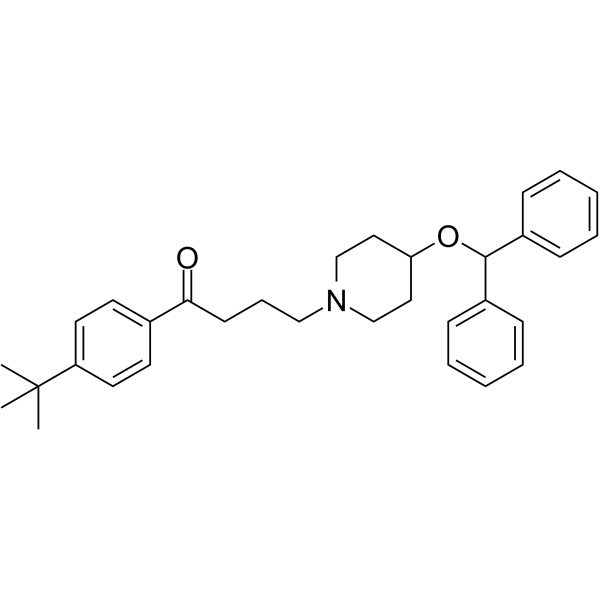
HY-B0674
EbastineHistamine H1 Receptor Antagonist -
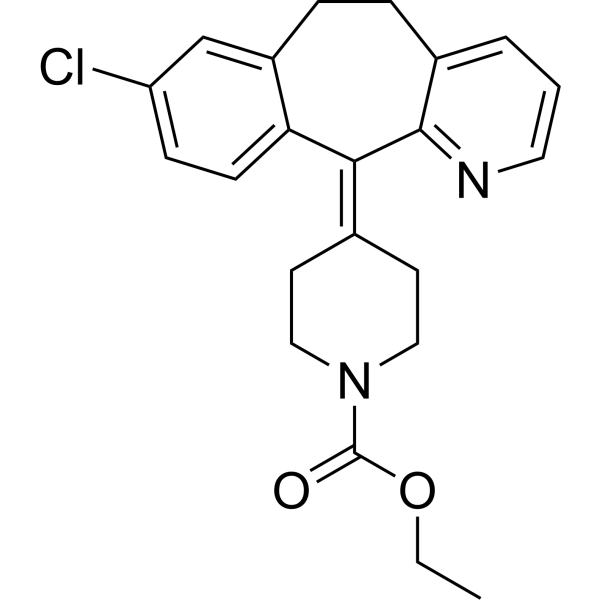
HY-17043
LoratadineInfluenza Virus Inhibitor -
HY-B0901
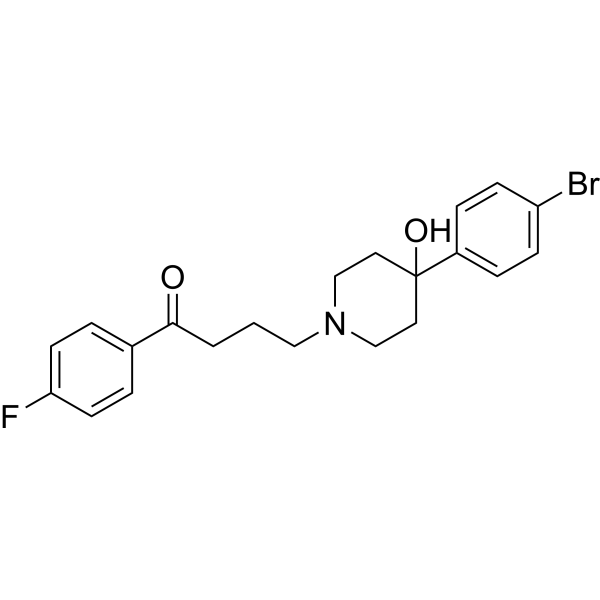
BromperidolAntipsychotic Agent -

HY-B0462R
Azelastine hydrochloride (Standard)Histamine 1 Antagonist -
HY-B0781
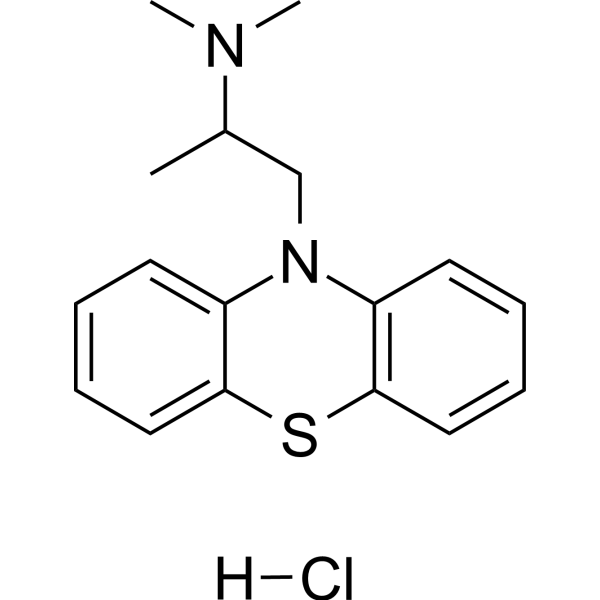
Promethazine hydrochlorideHistamine Receptor Antagonist -

HY-17043R
Loratadine (Standard)Influenza Virus Inhibitor -
HY-17042A
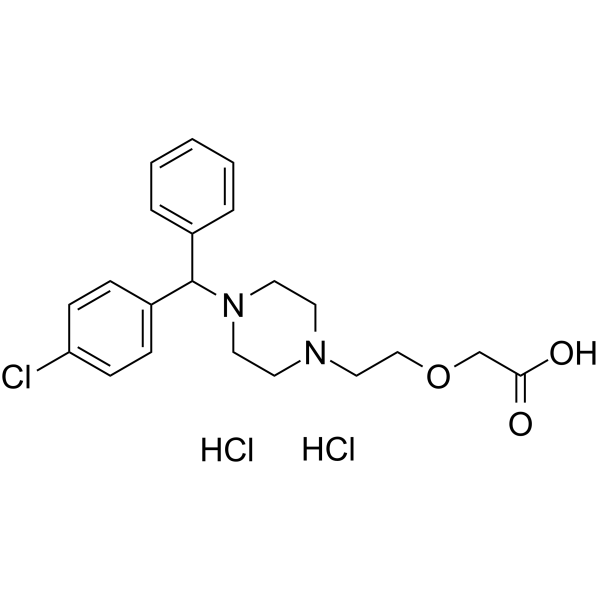
Cetirizine dihydrochlorideH1-receptor Antagonist
Publications Citing Use of MedChemExpress (MCE) Azelastine hydrochloride
MoreAlle Histamine Receptor Isoform-spezifische Produkte anzeigen
More

Biologische Aktivität
Beschreibung
IC50 & Target
[1]|
H1 Receptor |
In Vitro
Azelastine hydrochloride can significantly inhibit HNEpC proliferation, and therefore, be helpful in against airway remodeling[5].
MedChemExpress (MCE) has not independently confirmed the accuracy of these methods. They are for reference only. .
-
Cell Line:Human nasal epithelial cells (HNEpC)
-
Concentration:100 μM, 400 μM
-
Incubation Time:21 days
-
Result:Inhibited HNEpC growth.
-
Cell Line:Human nasal epithelial cells (HNEpC)
-
Concentration:100 μM
-
Incubation Time:7 days
-
Result:Significantly up-regulated the H1R, M1R and M3R levels.
In Vivo
Azelastine hydrochloride (4 mg/kg; p.o.; daily; for 8 weeks) improves the lipid profile (LDL-c decrease and HDL-c increase) in diabetic hyperlipidemic rats model[2].
Azelastine hydrochloride (4 mg/kg; p.o.; daily; for 8 weeks) attenuates calcium deposition and aortic calcification in diabetic hyperlipidemic rats model[2].
MedChemExpress (MCE) has not independently confirmed the accuracy of these methods. They are for reference only.
-
Animal Model:Male albino Wistar rats (150-170 g), diabetic hyperlipidemic rats model[2]
-
Dosage:4 mg/kg
-
Administration:Oral administration, daily, for 8 weeks
-
Result:Ameliorated aortic calcification and increased apolipoprotein A expression along with a decline in apolipoprotein B.
Clinical Trial
| NCT Number | Sponsor | Condition | Start Date |
Phase

|
|---|---|---|---|---|
| NCT01329991 | Plexxikon| | 2011-05 | PHASE1 |


Chemical Information
-
CAS. Nr. 79307-93-0
-
Appearance Solid
-
Molecular Weight 418.36
-
Formel C22H25Cl2N3O
-
Color White to off-white
-
SMILES
O=C1N(C2CCN(C)CCC2)N=C(CC3=CC=C(Cl)C=C3)C4=C1C=CC=C4.Cl
-
Versand
Room temperature in continental US; may vary elsewhere.
-
Speicherung
4°C, sealed storage, away from moisture
* In solvent : -80°C, 6 months; -20°C, 1 month (sealed storage, away from moisture)


Publications (3)
-
Journal Impact Factor
-
Most Recent
-
Phytomedicine
Alpha-linolenic acid improves nasal mucosa epithelial barrier function in allergic rhinitis by arresting CD4+ T cell differentiation via IL-4Rα-JAK2-STAT3 pathway. [Abstract]2023 Jul 25:116:154825. PMID: 37178572 -
Pharm Res
Investigation of the Binding Characteristics of Agonists and Various Antagonists Targeting Histamine 1 Receptor. [Abstract]2025 Aug;42(8):1315-1329. PMID: 40760405 -


Lösungsmittel & Löslichkeit
In Vitro:
DMSO : 50 mg/mL (119.51 mM; Need ultrasonic; Hygroscopic DMSO has a significant impact on the solubility of product, please use newly opened DMSO)
H2O : 6.67 mg/mL (15.94 mM; Need ultrasonic)
Please refer to the solubility information to select the appropriate solvent. Once prepared, please aliquot and store the solution to prevent product inactivation from repeated freeze-thaw cycles.
Storage method and period of stock solution: -80°C, 6 months; -20°C, 1 month (sealed storage, away from moisture). When stored at -80°C, please use it within 6 months. When stored at -20°C, please use it within 1 month.
* Note: If you choose water as the stock solution, please dilute it to the working solution, then filter and sterilize it with a 0.22 μm filter before use.
Please refer to the solubility information to select the appropriate solvent. Once prepared, please aliquot and store the solution to prevent product inactivation from repeated freeze-thaw cycles.
Storage method and period of stock solution: -80°C, 6 months; -20°C, 1 month (sealed storage, away from moisture). When stored at -80°C, please use it within 6 months. When stored at -20°C, please use it within 1 month.
* Note: If you choose water as the stock solution, please dilute it to the working solution, then filter and sterilize it with a 0.22 μm filter before use.
Konzentration (Stammlösung) × Volumen (Stammlösung) = Konzentration (Ziellösung) × Volumen (Ziellösung)
In Vivo:
Select the appropriate dissolution method based on your experimental animal and administration route.
- For the following dissolution methods, please ensure to first prepare a clear stock solution using an In Vitro approach and then sequentially add co-solvents:
- To ensure reliable experimental results, the clarified stock solution can be appropriately stored based on storage conditions. As for the working solution for In Vivo experiments, it is recommended to prepare freshly and use it on the same day.
- The percentages shown for the solvents indicate their volumetric ratio in the final prepared solution. If precipitation or phase separation occurs during preparation, heat and/or sonication can be used to aid dissolution.
Add each solvent one by one: 10% DMSO 40% PEG300 5% Tween-80 45% Saline
Solubility: ≥ 2.5 mg/mL (5.98 mM); Clear solution
This protocol yields a clear solution of ≥ 2.5 mg/mL (saturation unknown).
Taking 1 mL working solution as an example, add 100 μL DMSO stock solution (25.0 mg/mL) to 400 μL PEG300, and mix evenly; then add 50 μL Tween-80 and mix evenly; then add 450 μL Saline to adjust the volume to 1 mL.
Preparation of Saline: Dissolve 0.9 g sodium chloride in ddH₂O and dilute to 100 mL to obtain a clear Saline solution.
Add each solvent one by one: 10% DMSO 90% (20% SBE-β-CD in Saline)
Solubility: ≥ 2.5 mg/mL (5.98 mM); Clear solution
This protocol yields a clear solution of ≥ 2.5 mg/mL (saturation unknown).
Taking 1 mL working solution as an example, add 100 μL DMSO stock solution (25.0 mg/mL) to 900 μL 20% SBE-β-CD in Saline, and mix evenly.
Preparation of 20% SBE-β-CD in Saline (4°C, storage for one week): 2 g SBE-β-CD powder is dissolved in 10 mL Saline, completely dissolve until clear.
In Vivo Dissolution Calculator
Please enter the basic information of animal experiments:
-
-
-
-
Recommended: Prepare an additional quantity of animals to account for potential losses during experiments.
Please enter your animal formula composition:
-
%DMSO +
Recommended: Keep the proportion of DMSO in working solution below 2% if your animal is weak.
-
%+
-
+%Tween-80 + +
-
%Saline +
The co-solvents required include: DMSO, . All of co-solvents are available by MedChemExpress (MCE). , Tween 80. All of co-solvents are available by MedChemExpress (MCE).
Working solution concentration: 0.22 mg/mL
Method for preparing stock solution: mg drug dissolved in μL DMSO. Stock solution concentration: mg/mL. * In solvent : -80°C, 6 months; -20°C, 1 month (sealed storage, away from moisture)
1. Take μL DMSO stock solution;
2. Add μL .
μL , mix evenly;
3. Then add μL Tween 80, mix evenly;
4. Then add μL
Please ensure that the stock solution in the first step is dissolved to a clear state, and add co-solvents in sequence. You can use ultrasonic heating (ultrasonic cleaner, recommended frequency 20-40 kHz), vortexing, etc. to assist dissolution.


Reinheit & Dokumentation
-
Data Sheet (281 KB)
-
SDS (392 KB)
- English - EN (392 KB)
- Français - FR (392 KB)
- Deutsch - DE (392 KB)
- Norwegian - NO (392 KB)
- Español - ES (392 KB)
- Swedish - SV (392 KB)
- Italian - IT (392 KB)
- Korean - KR (392 KB)
- Portuguese - PT (392 KB)
-
Handling Instructions (2659 KB)
Verweise
[1]. Craig La Force. Review of the pharmacology, clinical efficacy, and safety of azelastine hydrochloridel. Expert Rev Clin Immunol. 2005 Jul;1(2):191-201. [Content Brief]
[2]. Mohamed M Elseweidy, et al. Azelastine a potent antihistamine agent, as hypolipidemic and modulator for aortic calcification in diabetic hyperlipidemic rats model. Arch Physiol Biochem. 2020 Jul 2;1-8. [Content Brief]
[3]. Carlos D. Zappia, et al. Azelastine potentiates antiasthmatic dexamethasone effect on a murine asthma model. Pharmacol Res Perspect. 2019 Dec; 7(6): e00531. [Content Brief]
[4]. Li Yang, et al. Identification of SARS-CoV-2 entry inhibitors among already approved drugs. Acta Pharmacol Sin. 2020 Oct 28 : 1–7. [Content Brief]
[5]. Shao-Cheng Liu, et al. Effect of budesonide and azelastine on histamine signaling regulation in human nasal epithelial cells. Eur Arch Otorhinolaryngol. 2017 Feb;274(2):845-853. [Content Brief]


Complete Stock Solution Preparation Table
Please refer to the solubility information to select the appropriate solvent. Once prepared, please aliquot and store the solution to prevent product inactivation from repeated freeze-thaw cycles.
Storage method and period of stock solution: -80°C, 6 months; -20°C, 1 month (sealed storage, away from moisture). When stored at -80°C, please use it within 6 months. When stored at -20°C, please use it within 1 month.
| Optional Solvent | Concentration Solvent Mass | 1 mg | 5 mg | 10 mg | 25 mg |
|---|---|---|---|---|---|
| H2O / DMSO | 1 mM | 2.3903 mL | 11.9514 mL | 23.9029 mL | 59.7571 mL |
| 5 mM | 0.4781 mL | 2.3903 mL | 4.7806 mL | 11.9514 mL | |
| 10 mM | 0.2390 mL | 1.1951 mL | 2.3903 mL | 5.9757 mL | |
| 15 mM | 0.1594 mL | 0.7968 mL | 1.5935 mL | 3.9838 mL | |
| DMSO | 20 mM | 0.1195 mL | 0.5976 mL | 1.1951 mL | 2.9879 mL |
| 25 mM | 0.0956 mL | 0.4781 mL | 0.9561 mL | 2.3903 mL | |
| 30 mM | 0.0797 mL | 0.3984 mL | 0.7968 mL | 1.9919 mL | |
| 40 mM | 0.0598 mL | 0.2988 mL | 0.5976 mL | 1.4939 mL | |
| 50 mM | 0.0478 mL | 0.2390 mL | 0.4781 mL | 1.1951 mL | |
| 60 mM | 0.0398 mL | 0.1992 mL | 0.3984 mL | 0.9960 mL | |
| 80 mM | 0.0299 mL | 0.1494 mL | 0.2988 mL | 0.7470 mL | |
| 100 mM | 0.0239 mL | 0.1195 mL | 0.2390 mL | 0.5976 mL |
* Note: If you choose water as the stock solution, please dilute it to the working solution, then filter and sterilize it with a 0.22 μm filter before use.


Azelastine hydrochloride Related Classifications
HY-B0462 Related Classifications
 Powered by Bioz