



CTEP
Based on 2 publication(s) in Google Scholar
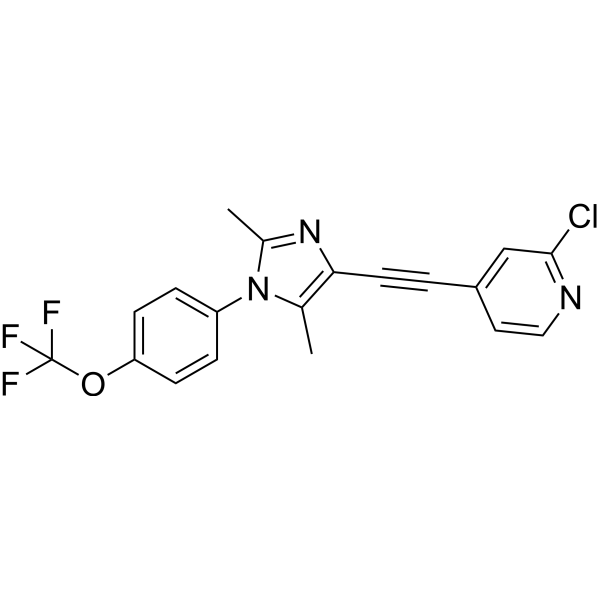
CTEP (RO 4956371) is a novel, long-acting, orally bioavailable allosteric antagonist of mGlu5 receptor with IC50 of 2.2 nM, and shows > 1000-fold selectivity over other mGlu receptors. CTEP is a click chemistry reagent, it contains an Alkyne group and can undergo copper-catalyzed azide-alkyne cycloaddition (CuAAc) with molecules containing Azide groups.
For research use only. We do not sell to patients.
- Purity : 99.59%
- CAS No.: 871362-31-1
- Formula: C19H13ClF3N3O
- Molecular Weight:391.77
-
Storage:
4°C, sealed storage, away from moisture and light
* In solvent : -80°C, 6 months; -20°C, 1 month (sealed storage, away from moisture and light)

To place orders, for customer services and technical support, please contact: MedChemExpress USA
Tel: 609-228-6898 E-mail: [email protected] [email protected]


-
 Biological Activity
-
Chemical Information
-
Solvent & Solubility
- Protocols
- Purity & Documentation
- References
-
 Help & FAQs


-
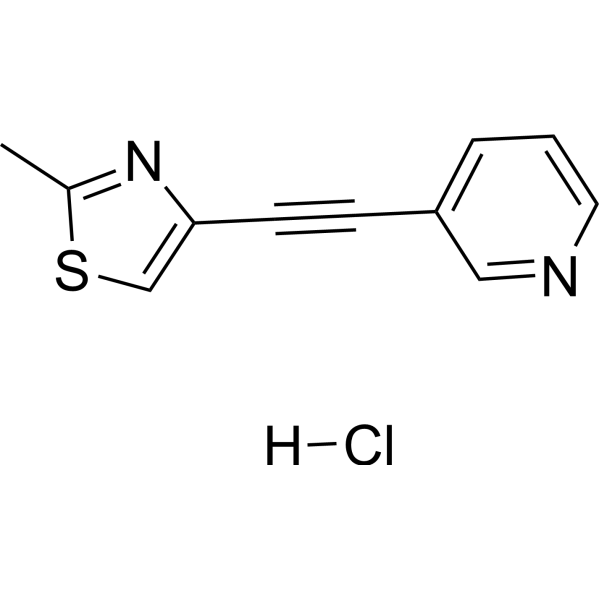
HY-13206
MTEP hydrochloridemGlu5 Antagonist -
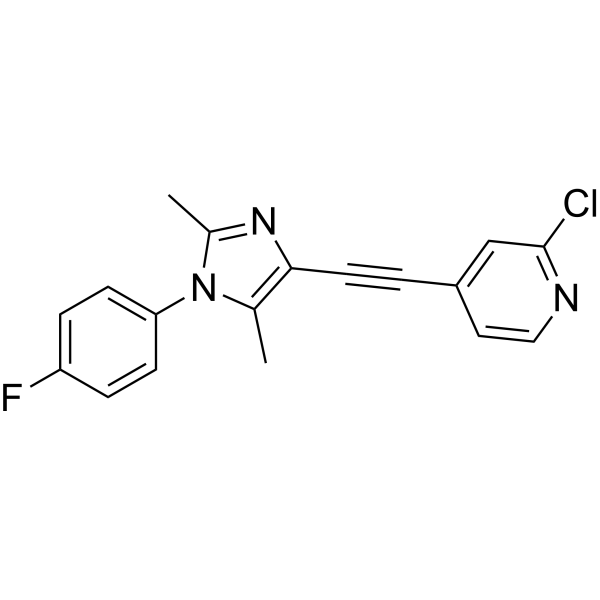
HY-15446
BasimglurantmGlu5 Negative Allosteric Modulator -

HY-Y0320C
Dimethyl sulfoxideAprotic Solvent -
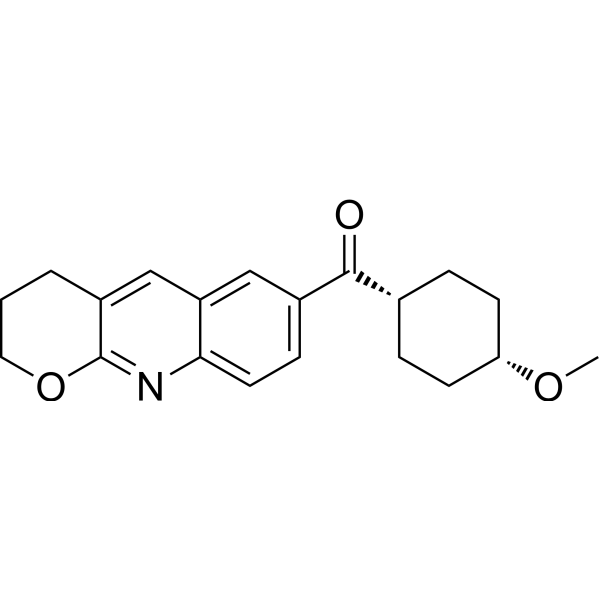
HY-100407
JNJ16259685mGlu1 Receptor Antagonist -

HY-14609A
MPEPmGlu5 Receptor Antagonist -
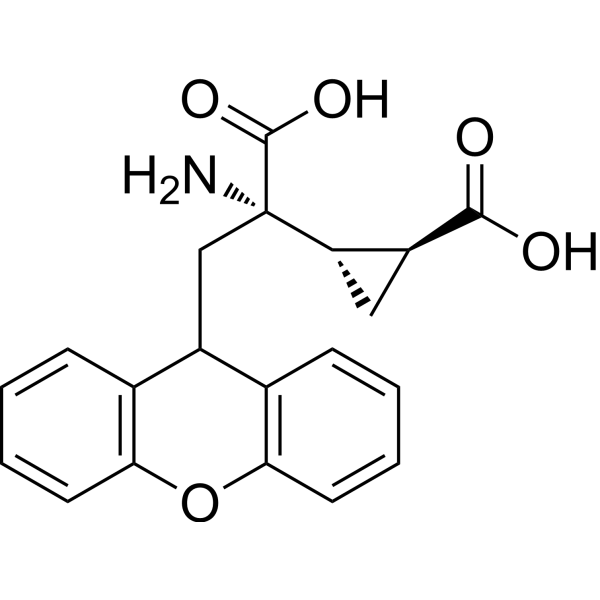
HY-70059
LY341495mGluR Antagonist -
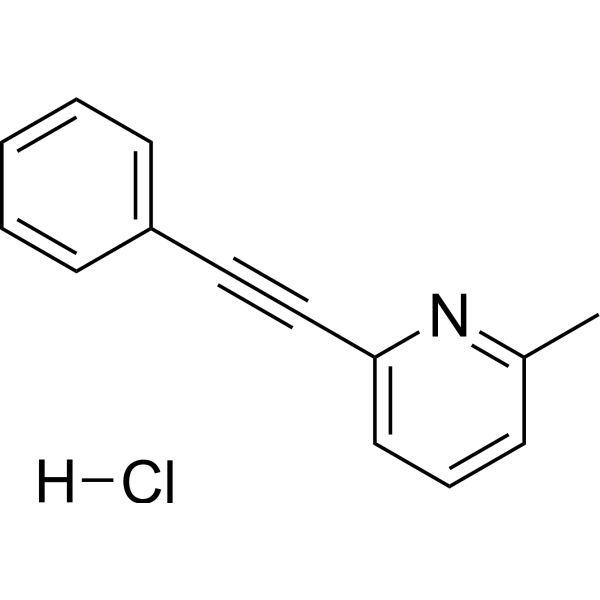
HY-14609
MPEP HydrochloridemGlu5 Receptor Antagonist -
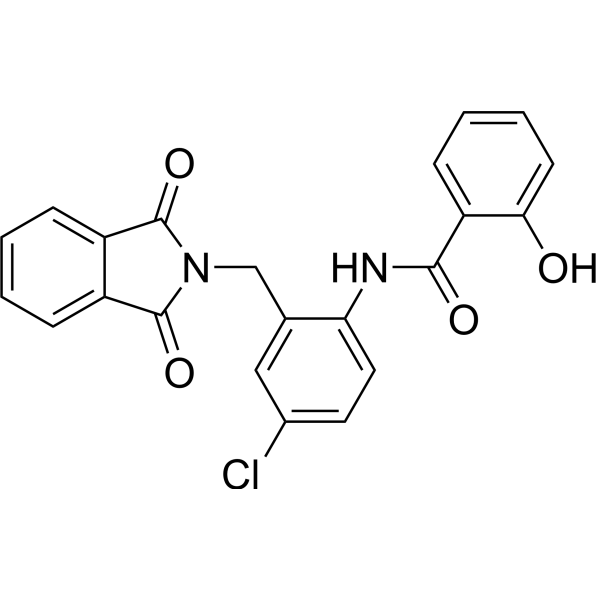
HY-14612
CPPHAmGluR5/mGluR1 Modulator -
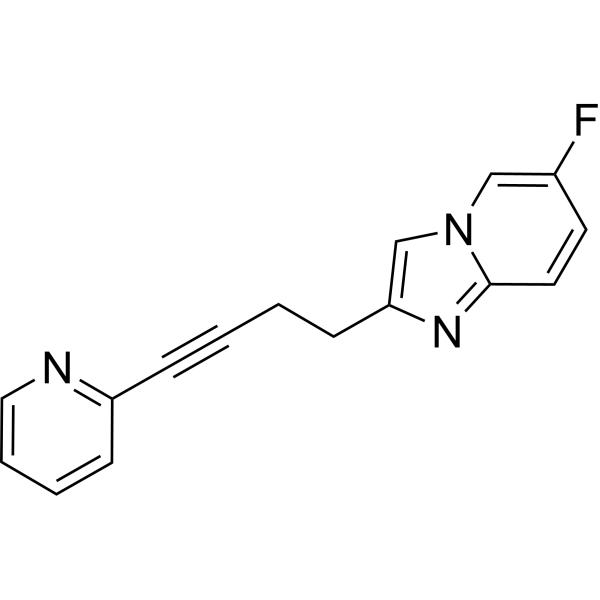
HY-14859
DipraglurantmGluR5 NAM -
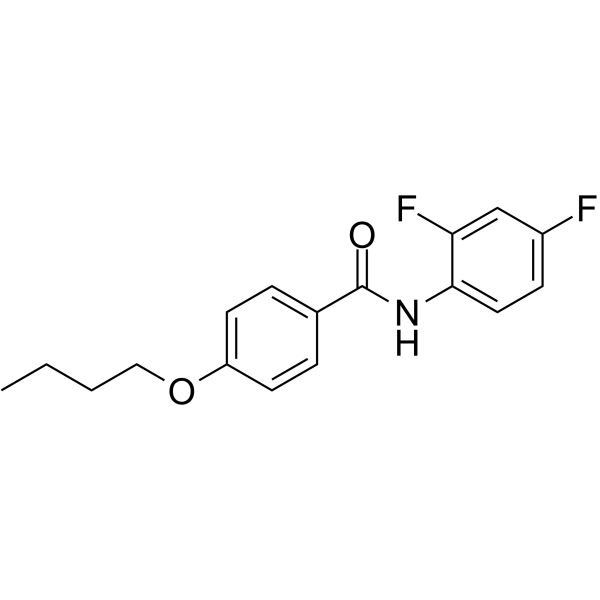
HY-15393
VU 0357121mGlu5R Activator -
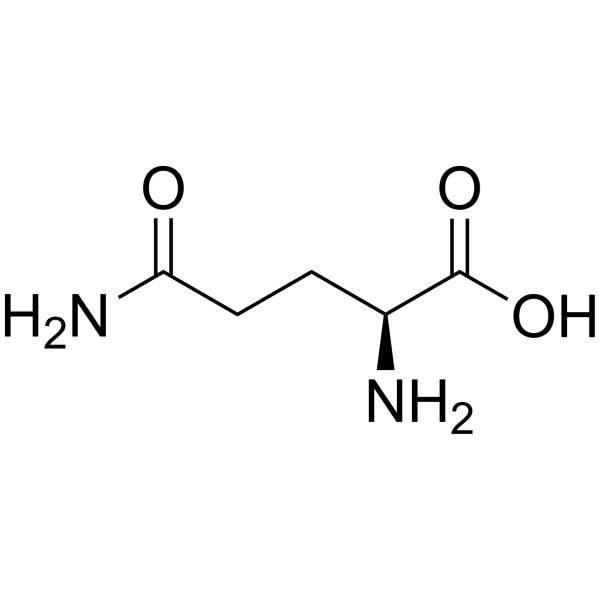
HY-N0390
L-GlutamineEndogenous Metabolite -
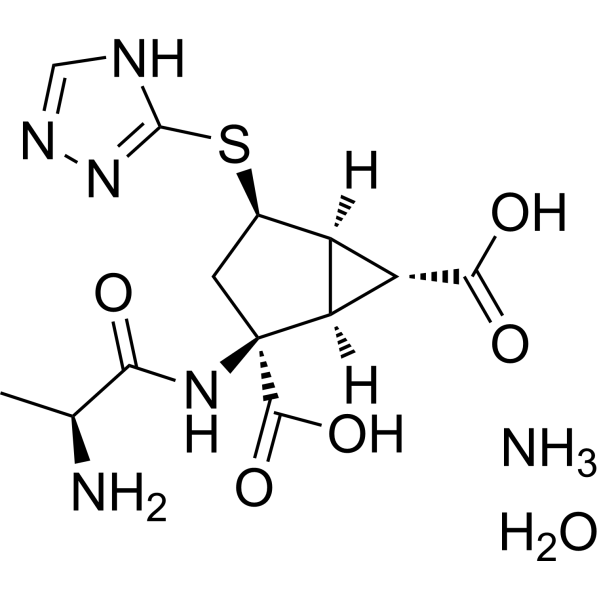
HY-13239
LY2979165mGluR Receptor Agonist
Publications Citing Use of MedChemExpress (MCE) CTEP
More

Biological Activity
Description
IC50 & Target
[1]|
mGlu5 Receptor 2.2 nM (IC50) |
Cellular Effect
|
Cell Line

|
Type | Value | Description | References |
|---|---|---|---|---|
| HEK293 | IC50 |
10 nM
Compound: 3
|
Negative allosteric modulation of mGlu5 (unknown origin) expressed in HEK293 cells assessed as inhibition of L-AP4-induced calcium mobilization incubated for 30 mins prior to L-AP4 induction by Fluo-4 AM staining-based fluorescence assay
Negative allosteric modulation of mGlu5 (unknown origin) expressed in HEK293 cells assessed as inhibition of L-AP4-induced calcium mobilization incubated for 30 mins prior to L-AP4 induction by Fluo-4 AM staining-based fluorescence assay
|
[PMID: 25565255] |
In Vitro
CTEP (RO 4956371) inhibits quisqualate-induced Ca2+?mobilization with an IC50 of 11.4 nM and [3H]IP accumulation with an IC50 of 6.4 nM in HEK293 cells stably expressing human mGlu5. CTEP (RO 4956371) inhibits the constitutive activity of human mGlu5 by approximately 50% with an IC50 of 40.1 nM in HEK293 cells stably expressing human mGlu5[1].
MedChemExpress (MCE) has not independently confirmed the accuracy of these methods. They are for reference only. Further protocols information, click here.
In Vivo
MedChemExpress (MCE) has not independently confirmed the accuracy of these methods. They are for reference only.
Clinical Trial
| NCT Number | Sponsor | Condition | Start Date |
Phase
|
|---|---|---|---|---|
| NCT01329991 | Plexxikon| | 2011-05 | PHASE1 |


Chemical Information
-
CAS No. 871362-31-1
-
Appearance Solid
-
Molecular Weight 391.77
-
Formula C19H13ClF3N3O
-
Color Light yellow to yellow
-
SMILES
FC(F)(F)OC1=CC=C(N2C(C)=C(C#CC3=CC(Cl)=NC=C3)N=C2C)C=C1
-
Synonyms
RO 4956371; mGluR5 inhibitor
-
Shipping
Room temperature in continental US; may vary elsewhere.
-
Storage
4°C, sealed storage, away from moisture and light
* In solvent : -80°C, 6 months; -20°C, 1 month (sealed storage, away from moisture and light)


Publications (2)
-
Journal Impact Factor
-
Most Recent
-
Sleep
Sleep and diurnal rest-activity rhythm disturbances in a mouse model of Alzheimer's disease. [Abstract]2020 Nov 12;43(11):zsaa087. PMID: 32369586 -


Solvent & Solubility
In Vitro:
DMSO : ≥ 100 mg/mL (255.25 mM; Hygroscopic DMSO has a significant impact on the solubility of product, please use newly opened DMSO)
* "≥" means soluble, but saturation unknown.
Please refer to the solubility information to select the appropriate solvent. Once prepared, please aliquot and store the solution to prevent product inactivation from repeated freeze-thaw cycles.
Storage method and period of stock solution: -80°C, 6 months; -20°C, 1 month (sealed storage, away from moisture and light). When stored at -80°C, please use it within 6 months. When stored at -20°C, please use it within 1 month.
Please refer to the solubility information to select the appropriate solvent. Once prepared, please aliquot and store the solution to prevent product inactivation from repeated freeze-thaw cycles.
Storage method and period of stock solution: -80°C, 6 months; -20°C, 1 month (sealed storage, away from moisture and light). When stored at -80°C, please use it within 6 months. When stored at -20°C, please use it within 1 month.
Concentration (start) × Volume (start) = Concentration (final) × Volume (final)
In Vivo:
Select the appropriate dissolution method based on your experimental animal and administration route.
- For the following dissolution methods, please ensure to first prepare a clear stock solution using an In Vitro approach and then sequentially add co-solvents:
- To ensure reliable experimental results, the clarified stock solution can be appropriately stored based on storage conditions. As for the working solution for In Vivo experiments, it is recommended to prepare freshly and use it on the same day.
- The percentages shown for the solvents indicate their volumetric ratio in the final prepared solution. If precipitation or phase separation occurs during preparation, heat and/or sonication can be used to aid dissolution.
Add each solvent one by one: 10% DMSO 40% PEG300 5% Tween-80 45% Saline
Solubility: ≥ 2.5 mg/mL (6.38 mM); Clear solution
This protocol yields a clear solution of ≥ 2.5 mg/mL (saturation unknown).
Taking 1 mL working solution as an example, add 100 μL DMSO stock solution (25.0 mg/mL) to 400 μL PEG300, and mix evenly; then add 50 μL Tween-80 and mix evenly; then add 450 μL Saline to adjust the volume to 1 mL.
Preparation of Saline: Dissolve 0.9 g sodium chloride in ddH₂O and dilute to 100 mL to obtain a clear Saline solution.
Add each solvent one by one: 10% DMSO 90% (20% SBE-β-CD in Saline)
Solubility: 2.5 mg/mL (6.38 mM); Suspended solution; Need ultrasonic
This protocol yields a suspended solution of 2.5 mg/mL. Suspended solution can be used for oral and intraperitoneal injection.
Taking 1 mL working solution as an example, add 100 μL DMSO stock solution (25.0 mg/mL) to 900 μL 20% SBE-β-CD in Saline, and mix evenly.
Preparation of 20% SBE-β-CD in Saline (4°C, storage for one week): 2 g SBE-β-CD powder is dissolved in 10 mL Saline, completely dissolve until clear.
In Vivo Dissolution Calculator
Please enter the basic information of animal experiments:
-
-
-
-
Recommended: Prepare an additional quantity of animals to account for potential losses during experiments.
Please enter your animal formula composition:
-
%DMSO +
Recommended: Keep the proportion of DMSO in working solution below 2% if your animal is weak.
-
%+
-
+%Tween-80 + +
-
%Saline +
The co-solvents required include: DMSO, . All of co-solvents are available by MedChemExpress (MCE). , Tween 80. All of co-solvents are available by MedChemExpress (MCE).
Working solution concentration: 0.22 mg/mL
Method for preparing stock solution: mg drug dissolved in μL DMSO. Stock solution concentration: mg/mL. * In solvent : -80°C, 6 months; -20°C, 1 month (sealed storage, away from moisture and light)
1. Take μL DMSO stock solution;
2. Add μL .
μL , mix evenly;
3. Then add μL Tween 80, mix evenly;
4. Then add μL
Please ensure that the stock solution in the first step is dissolved to a clear state, and add co-solvents in sequence. You can use ultrasonic heating (ultrasonic cleaner, recommended frequency 20-40 kHz), vortexing, etc. to assist dissolution.

Protocols
-
EdU Incorporation Assay (Click Chemistry-Based DNA Synthesis Measurement)
The EdU incorporation assay measures DNA synthesis by adding the thymidine analog 5-ethynyl-2′-deoxyuridine to cells or tissues, where it is incorporated into newly synthesized DNA during S phase. Incorporated EdU is detected by copper-catalyzed azide-alkyne cycloaddition, in which a fluorescent azide covalently reacts with the ethynyl group on EdU, allowing S-phase cells to be detected by fluorescence microscopy, flow cytometry, or high-content imaging. EdU detection does not require DNA denaturation or anti-BrdU antibody access, which preserves sample structure and improves compatibility with immunostaining and multiparameter cytometry compared with BrdU-based detection. EdU can be cytotoxic in a cell-type- and exposure-dependent manner, so pulse duration, concentration, and continuous-labeling designs should be validated for each cell type.
-
Cell Cytotoxicity Assay
Cytotoxicity assays are usually based on the assessment of cell membrane damage, which can also be indirectly detected by measuring cell viability. Detection methods include MTT assay, CKK-8 assay, LDH assay and ATP assay, etc.


Purity & Documentation
-
Data Sheet (278 KB)
-
SDS (393 KB)
- English - EN (393 KB)
- Français - FR (393 KB)
- Deutsch - DE (393 KB)
- Norwegian - NO (393 KB)
- Español - ES (393 KB)
- Swedish - SV (393 KB)
- Italian - IT (393 KB)
- Korean - KR (393 KB)
- Portuguese - PT (393 KB)
-
Handling Instructions (2659 KB)
References
[1]. Lindemann L, et al. CTEP: a novel, potent, long-acting, and orally bioavailable metabotropic glutamate receptor 5 inhibitor. J Pharmacol Exp Ther. 2011 Nov;339(2):474-86. [Content Brief]
[2]. Michalon A, et al. Chronic pharmacological mGlu5 inhibition corrects fragile X in adult mice. Neuron. 2012 Apr 12;74(1):49-56. [Content Brief]


Complete Stock Solution Preparation Table
Please refer to the solubility information to select the appropriate solvent. Once prepared, please aliquot and store the solution to prevent product inactivation from repeated freeze-thaw cycles.
Storage method and period of stock solution: -80°C, 6 months; -20°C, 1 month (sealed storage, away from moisture and light). When stored at -80°C, please use it within 6 months. When stored at -20°C, please use it within 1 month.
| Optional Solvent | Concentration Solvent Mass | 1 mg | 5 mg | 10 mg | 25 mg |
|---|---|---|---|---|---|
| DMSO | 1 mM | 2.5525 mL | 12.7626 mL | 25.5252 mL | 63.8130 mL |
| 5 mM | 0.5105 mL | 2.5525 mL | 5.1050 mL | 12.7626 mL | |
| 10 mM | 0.2553 mL | 1.2763 mL | 2.5525 mL | 6.3813 mL | |
| 15 mM | 0.1702 mL | 0.8508 mL | 1.7017 mL | 4.2542 mL | |
| 20 mM | 0.1276 mL | 0.6381 mL | 1.2763 mL | 3.1906 mL | |
| 25 mM | 0.1021 mL | 0.5105 mL | 1.0210 mL | 2.5525 mL | |
| 30 mM | 0.0851 mL | 0.4254 mL | 0.8508 mL | 2.1271 mL | |
| 40 mM | 0.0638 mL | 0.3191 mL | 0.6381 mL | 1.5953 mL | |
| 50 mM | 0.0511 mL | 0.2553 mL | 0.5105 mL | 1.2763 mL | |
| 60 mM | 0.0425 mL | 0.2127 mL | 0.4254 mL | 1.0635 mL | |
| 80 mM | 0.0319 mL | 0.1595 mL | 0.3191 mL | 0.7977 mL | |
| 100 mM | 0.0255 mL | 0.1276 mL | 0.2553 mL | 0.6381 mL |


CTEP Related Classifications
HY-15445 Related Classifications
 Powered by Bioz