



Cephalexin
Based on 10 publication(s) in Google Scholar
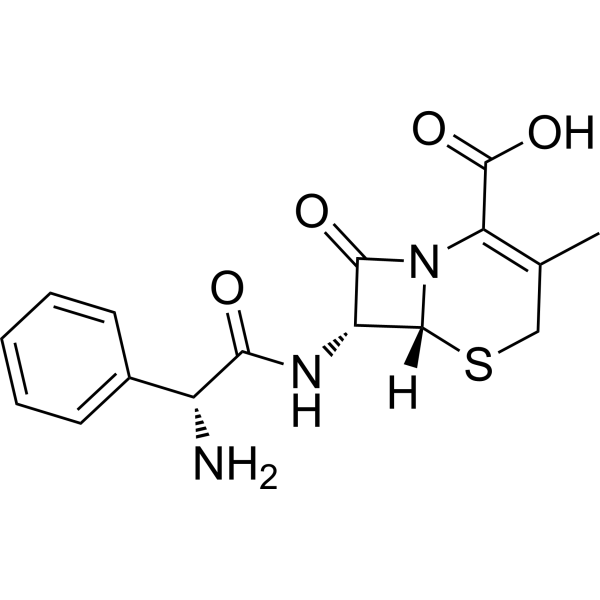
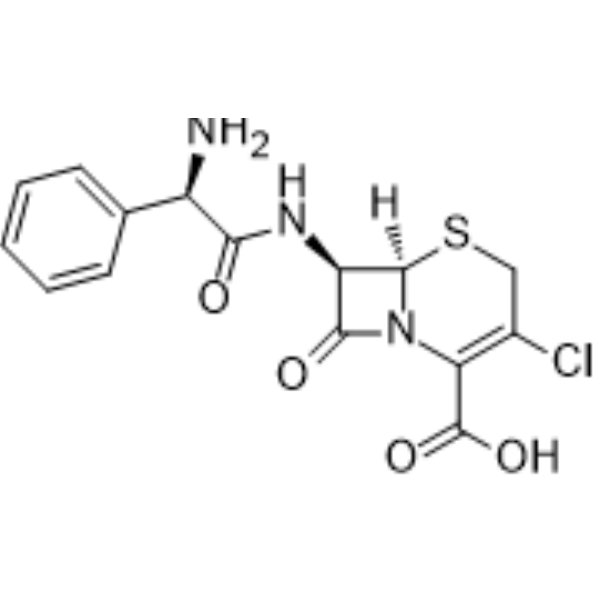
Cephalexin (Cefalexin) is a potent, orally active semisynthetic cephalosporin antibiotic with a broad antibacterial spectrum. Cephalexin has antibacterial activity against a wide variety of gram-positive and gram-negative bacteria. Cephalexin targets penicillin-binding proteins (PBPs) to inhibit bacterial cell wall assembly. Cephalexin is used for the research of pneumonia, strep throat, and bacterial endocarditis, et al.
For research use only. We do not sell to patients.
- Purity : 99.91%
- CAS No.: 15686-71-2
- Formula: C16H17N3O4S
- Molecular Weight:347.39
-
Storage:Powder -20°C, 3 years , 4°C, 2 years ; In solvent -80°C, 2 years , -20°C, 1 year

To place orders, for customer services and technical support, please contact: MedChemExpress USA
Tel: 609-228-6898 E-mail: [email protected] [email protected]


-
 Biological Activity
-
Chemical Information
-
Solvent & Solubility
- Protocols
- Purity & Documentation
- References
-
 Help & FAQs


-
HY-B0593
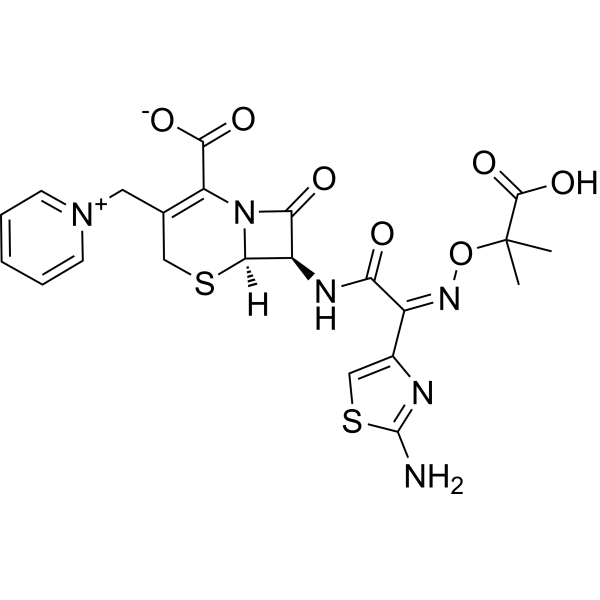
CeftazidimeAntibiotic -
HY-B0356
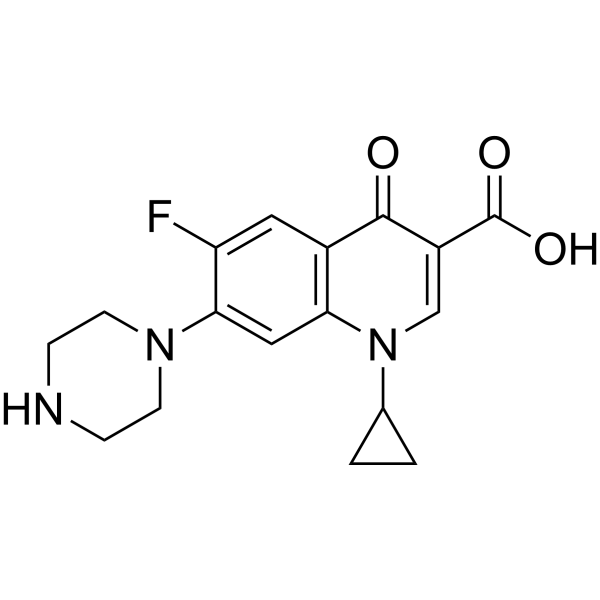
CiprofloxacinTopoisomerase IV Inhibitor -
HY-B0510
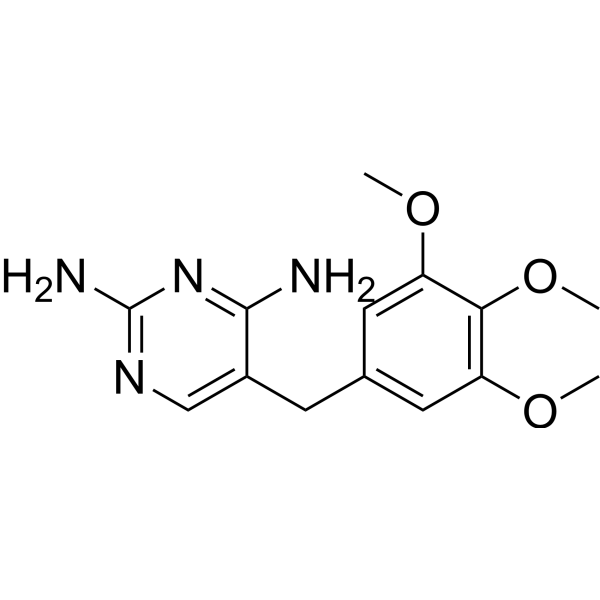
TrimethoprimBacteriostatic Antibiotic -
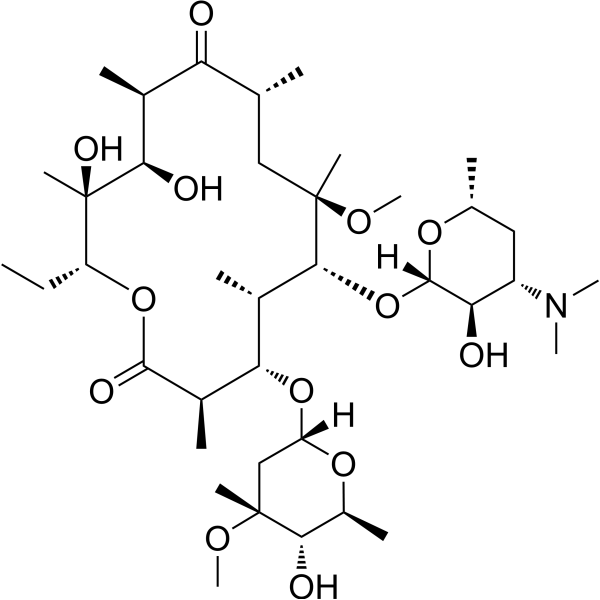
HY-17508
ClarithromycinAntimicrobial Agent -
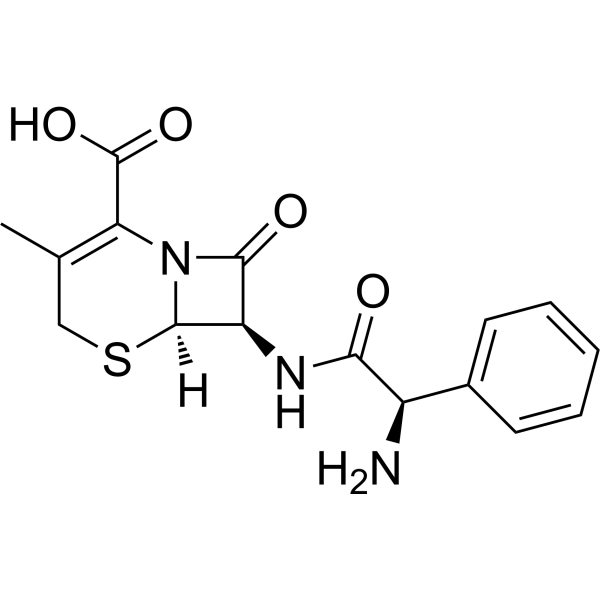
HY-B0200R
Cephalexin (Standard)Cephalosporin Antibiotic -
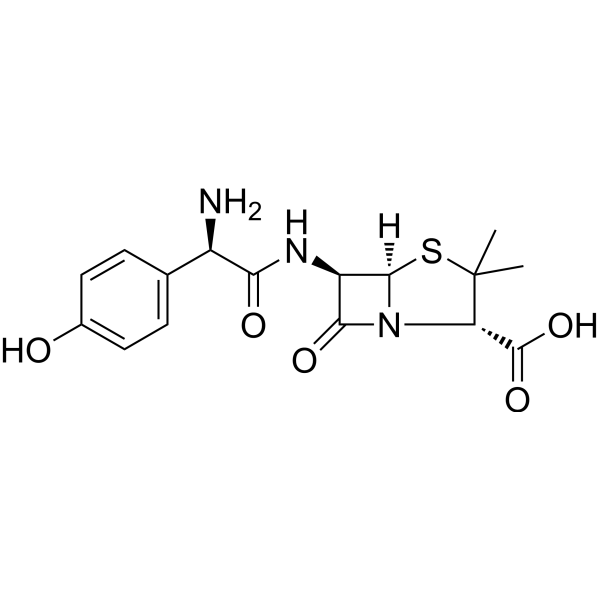
HY-B0467A
AmoxicillinAntibiotic -
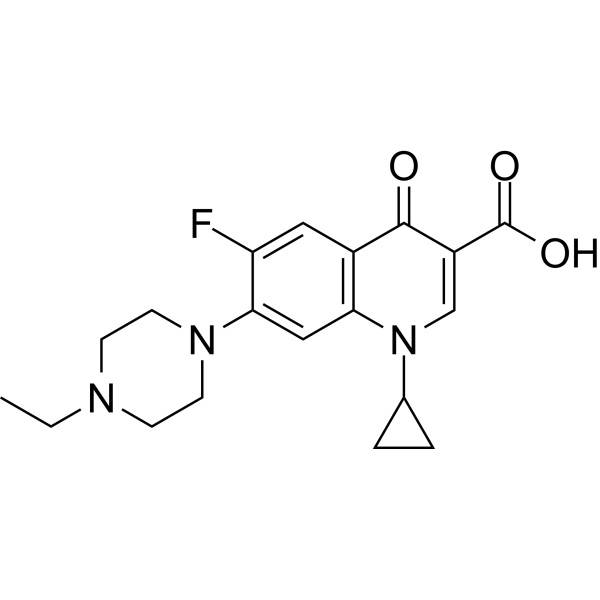
HY-B0502
EnrofloxacinBacterial Inhibitor -
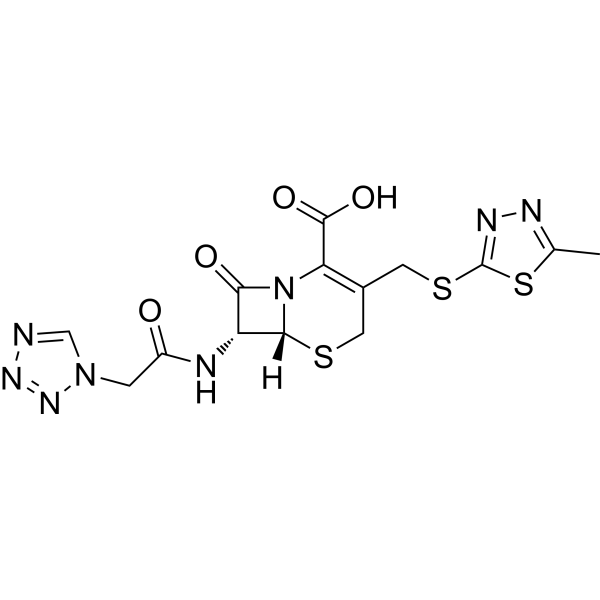
HY-B1892
CefazolinCephalosporin Antibiotic -
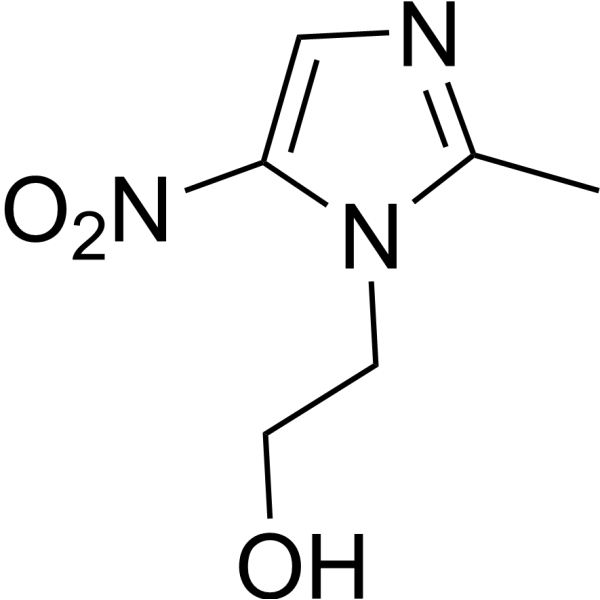
HY-B0318
MetronidazoleAntibiotic -
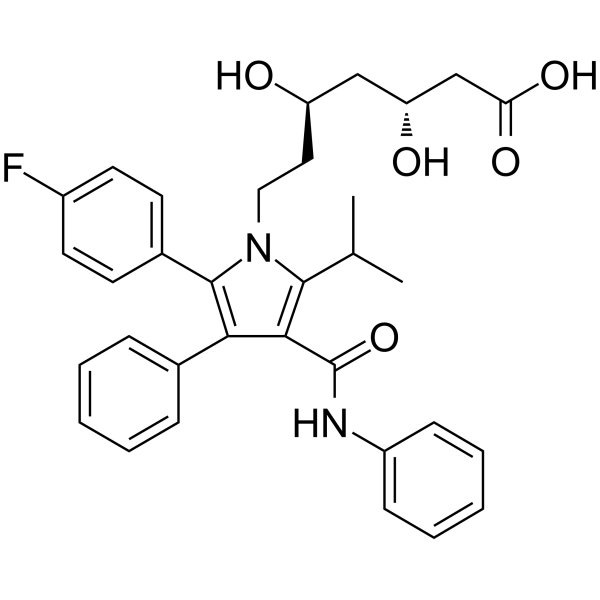
HY-B0589
AtorvastatinHMG-CoA Reductase Inhibitor -
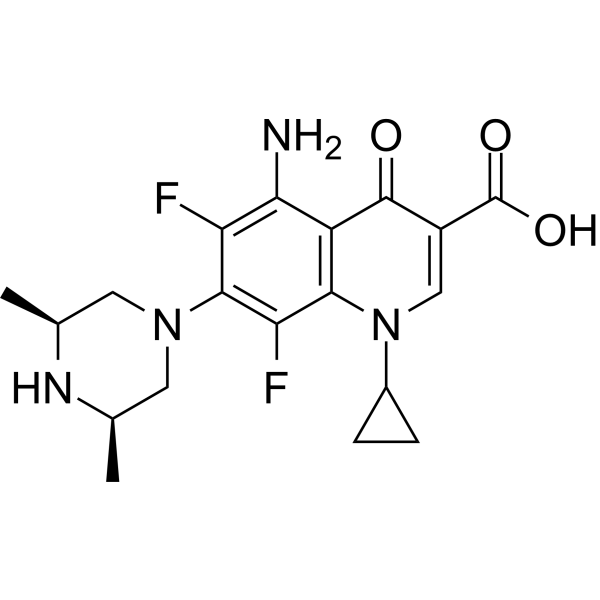
HY-B0308
SparfloxacinBacterial Inhibitor -
HY-B0198
CefaclorAntibiotic
Publications Citing Use of MedChemExpress (MCE) Cephalexin
More- Theranostics. 2022 Jan 1;12(3):1187-1203. [Abstract]
- J Exp Med. 2026 Mar 2;223(3):e20241287. [Abstract]
- J Med Chem. 2021 Oct 14;64(19):14344-14357. [Abstract]
- PLoS Pathog. 2026 Jul 16;22(7):e1014242.
- Infect Immun. 2018 May 22;86(6):e00090-18. [Abstract]
- Biomed Res Int. 2018 Jul 2:2018:3579832. [Abstract]
- University of Texas. 2025.
- bioRxiv. 2024 May 10.
- Chemosphere. 2021 Dec:285:131417. [Abstract]
- Chemosphere. 2019 Jun:225:378-387. [Abstract]
All Antibiotic Isoforms
More

Biological Activity
Description
IC50 & Target
|
β-lactam |
Cellular Effect
|
Cell Line

|
Type | Value | Description | References |
|---|---|---|---|---|
| CHO | IC50 |
13700 μM
Compound: Cephalexin
|
TP_TRANSPORTER: inhibition of Gly-Sar uptake (Gly-Sar: 20 uM) in PEPT1-expressing CHO cells
TP_TRANSPORTER: inhibition of Gly-Sar uptake (Gly-Sar: 20 uM) in PEPT1-expressing CHO cells
|
[PMID: 10052994] |
| CHO | IC50 |
5200 μM
Compound: Cephalexin
|
TP_TRANSPORTER: inhibition of Gly-Sar uptake (Gly-Sar: 25000 uM) in PEPT1-expressing CHO cells
TP_TRANSPORTER: inhibition of Gly-Sar uptake (Gly-Sar: 25000 uM) in PEPT1-expressing CHO cells
|
[PMID: 8956326] |
| S2 | IC50 |
630 μM
Compound: Cephalexin
|
TP_TRANSPORTER: inhibition of Estrone sulfate uptake in OAT3-expressing S2 cells
TP_TRANSPORTER: inhibition of Estrone sulfate uptake in OAT3-expressing S2 cells
|
[PMID: 12005172] |
| S2 | IC50 |
>2000 μM
Compound: Cephalexin
|
TP_TRANSPORTER: inhibition of PAH uptake in OAT1-expressing S2 cells
TP_TRANSPORTER: inhibition of PAH uptake in OAT1-expressing S2 cells
|
[PMID: 12005172] |
In Vitro
Cephalexin (10 μg/mL) disrupts polymer peptidoglycan (PG) biogenesis by inactivating enzymes called penicillin-binding proteins (PBPs)[1]. Cephalexin inhibits a broad spectrum of grampositive and gram-negative organisms with MIC values of 2, 2, 2, 2, 4, 4.4 and 5.7 μg/mL for Bacillus anthracis, Edwardsiella taFda, Vibrio cholera, Pasteurella multocida, Edwardsiella tarda, Alcaligenes sp and Proteus rettgeri, respectively[2].
MedChemExpress (MCE) has not independently confirmed the accuracy of these methods. They are for reference only. Further protocols information, click here.
In Vivo
MedChemExpress (MCE) has not independently confirmed the accuracy of these methods. They are for reference only.
-
Animal Model:Male Swiss-Webster mice with infected bacterial[2]
-
Dosage:0-50 mg/kg
-
Administration:Oral administration; for 3.5 hours
-
Result:Had antibacterial activity against Streptococcus pyogenes, Streptococcus pneumoniae, Staphylococcus aureus and several gram-negative species mice.


Chemical Information
-
CAS No. 15686-71-2
-
Appearance Solid
-
Molecular Weight 347.39
-
Formula C16H17N3O4S
-
Color White to light yellow
-
SMILES
O=C(C(N12)=C(C)CS[C@]2([H])[C@H](NC([C@H](N)C3=CC=CC=C3)=O)C1=O)O
-
Synonyms
Cefalexin; Cephacillin
-
Shipping
Room temperature in continental US; may vary elsewhere.
-
Storage
Powder -20°C 3 years 4°C 2 years In solvent -80°C 2 years -20°C 1 year


Publications (10)
-
Journal Impact Factor
-
Most Recent
-
Theranostics
Antibiotic Azithromycin inhibits brown/beige fat functionality and promotes obesity in human and rodents. [Abstract]2022 Jan 1;12(3):1187-1203. PMID: 35154482 -
J Exp Med
2026 Mar 2;223(3):e20241287. PMID: 41400657 -
J Med Chem
Repositioning of the Anthelmintic Drugs Bithionol and Triclabendazole as Transthyretin Amyloidogenesis Inhibitors. [Abstract]2021 Oct 14;64(19):14344-14357. PMID: 34547896 -
-
Infect Immun
Identification and Characterization of the Neisseria gonorrhoeae MscS-Like Mechanosensitive Channel. [Abstract]2018 May 22;86(6):e00090-18. PMID: 29581189 -
Biomed Res Int
In Vitro Activity of β-Lactams in Combination with β-Lactamase Inhibitors against Mycobacterium tuberculosis Clinical Isolates. [Abstract]2018 Jul 2:2018:3579832. PMID: 30065936 -
-
-
Chemosphere
Insights into the degradation mechanisms and pathways of cephalexin during homogeneous and heterogeneous photo-Fenton processes. [Abstract]2021 Dec:285:131417. PMID: 34246101 -
Chemosphere
Mass-balance-model-based evaluation of sewage treatment plant contribution to residual pharmaceuticals in environmental waters. [Abstract]2019 Jun:225:378-387. PMID: 30884299


Solvent & Solubility
In Vitro:
H2O : 5 mg/mL (14.39 mM; ultrasonic and warming and heat to 60°C)
DMSO : 4 mg/mL (11.51 mM; ultrasonic and warming and heat to 60°C; Hygroscopic DMSO has a significant impact on the solubility of product, please use newly opened DMSO)
Please refer to the solubility information to select the appropriate solvent. Once prepared, please aliquot and store the solution to prevent product inactivation from repeated freeze-thaw cycles.
Storage method and period of stock solution: -80°C, 2 years; -20°C, 1 year. When stored at -80°C, please use it within 2 years. When stored at -20°C, please use it within 1 year.
* Note: If you choose water as the stock solution, please dilute it to the working solution, then filter and sterilize it with a 0.22 μm filter before use.
Please refer to the solubility information to select the appropriate solvent. Once prepared, please aliquot and store the solution to prevent product inactivation from repeated freeze-thaw cycles.
Storage method and period of stock solution: -80°C, 2 years; -20°C, 1 year. When stored at -80°C, please use it within 2 years. When stored at -20°C, please use it within 1 year.
* Note: If you choose water as the stock solution, please dilute it to the working solution, then filter and sterilize it with a 0.22 μm filter before use.
Concentration (start) × Volume (start) = Concentration (final) × Volume (final)
In Vivo:
For the following dissolution methods, please prepare the working solution directly:
It is recommended to prepare fresh solutions and use them promptly within a short period of time.
The percentages shown for the solvents indicate their volumetric ratio in the final prepared solution. If precipitation or phase separation occurs during preparation, heat and/or sonication can be used to aid dissolution.
Add each solvent one by one: PBS
Solubility: 25 mg/mL (71.97 mM); Clear solution; Need ultrasonic and warming

Protocols
-
Research Protocol for Infectious Diseases
Infectious-disease experiments test how pathogens interact with host barriers, innate immune receptors, inflammatory signaling, pathogen replication, and tissue injury; pattern-recognition receptors such as TLRs, RIG-I-like receptors, NOD-like receptors, and inflammasomes detect microbial molecules and activate NF-κB, interferon, and cytokine responses. The central hypothesis is that infection severity reflects the balance between pathogen burden and host response: protective inflammation restricts pathogen growth, whereas excessive or mislocalized inflammation contributes to tissue damage and disease phenotype. Unresolved questions include which host pathways are protective versus pathogenic, why some infection models fail to translate to human disease, and which combined readouts best predict clinically relevant infection outcomes.
-
Gram Staining of Tissue Sections
Gram staining of tissue sections is a histochemical technique used to differentiate Gram-positive and Gram-negative bacteria within histological specimens based on differences in bacterial cell wall structure and dye retention, adapted from classical bacteriological Gram staining into tissue-compatible “histological Gram stain” variants. In tissue applications, modifications of the Brown-Hopps and Brown-Brenn methods are commonly used to improve differentiation of microorganisms embedded within host connective tissue and to reduce overstaining or loss of Gram-negative signal, which are known limitations of earlier approaches. The principle relies on crystal violet-iodine complex retention in Gram-positive organisms and subsequent decolorization and counterstaining steps that allow contrast visualization of Gram-negative organisms against tissue background.
-
Bacterial live/dead nucleic-acid viability staining
The LIVE/DEAD bacterial viability staining method is based on differential permeability of nucleic-acid-binding fluorescent dyes, most commonly SYTO 9 and propidium iodide (PI), which enables discrimination of bacterial populations with intact versus compromised cytoplasmic membranes. SYTO 9 penetrates both intact and damaged bacterial membranes and binds nucleic acids to produce green fluorescence, whereas propidium iodide penetrates only cells with compromised membranes and fluoresces red while also reducing SYTO 9 signal through competitive binding and fluorescence interactions. The resulting fluorescence pattern is interpreted as a proxy for membrane integrity, which is widely used as an indicator of bacterial viability in microscopy, flow cytometry, and spectroscopic platforms. However, mechanistic studies show that SYTO 9 and PI interactions involve displacement and fluorescence resonance energy transfer effects, which can influence signal interpretation depending on dye ratios a


Purity & Documentation
-
Data Sheet (279 KB)
-
SDS (420 KB)
- English - EN (420 KB)
- Français - FR (420 KB)
- Deutsch - DE (420 KB)
- Norwegian - NO (420 KB)
- Español - ES (420 KB)
- Swedish - SV (420 KB)
- Italian - IT (420 KB)
- Korean - KR (420 KB)
- Portuguese - PT (420 KB)
-
Handling Instructions (2659 KB)
References
[1]. Cho H, et, al. Beta-lactam antibiotics induce a lethal malfunctioning of the bacterial cell wall synthesis machinery. Cell. 2014 Dec 4;159(6):1300-11. [Content Brief]
[2]. Buck RE, et, al. Cefadroxil, a new broad-spectrum cephalosporin. Antimicrob Agents Chemother. 1977 Feb;11(2):324-30. [Content Brief]


Complete Stock Solution Preparation Table
Please refer to the solubility information to select the appropriate solvent. Once prepared, please aliquot and store the solution to prevent product inactivation from repeated freeze-thaw cycles.
Storage method and period of stock solution: -80°C, 2 years; -20°C, 1 year. When stored at -80°C, please use it within 2 years. When stored at -20°C, please use it within 1 year.
| Optional Solvent | Concentration Solvent Mass | 1 mg | 5 mg | 10 mg | 25 mg |
|---|---|---|---|---|---|
| DMSO / H2O | 1 mM | 2.8786 mL | 14.3930 mL | 28.7861 mL | 71.9652 mL |
| 5 mM | 0.5757 mL | 2.8786 mL | 5.7572 mL | 14.3930 mL | |
| 10 mM | 0.2879 mL | 1.4393 mL | 2.8786 mL | 7.1965 mL |
* Note: If you choose water as the stock solution, please dilute it to the working solution, then filter and sterilize it with a 0.22 μm filter before use.


Cephalexin Related Classifications
HY-B0200 Related Classifications
 Powered by Bioz