



Quinagolide hydrochloride

Based on 1 Customer Validation
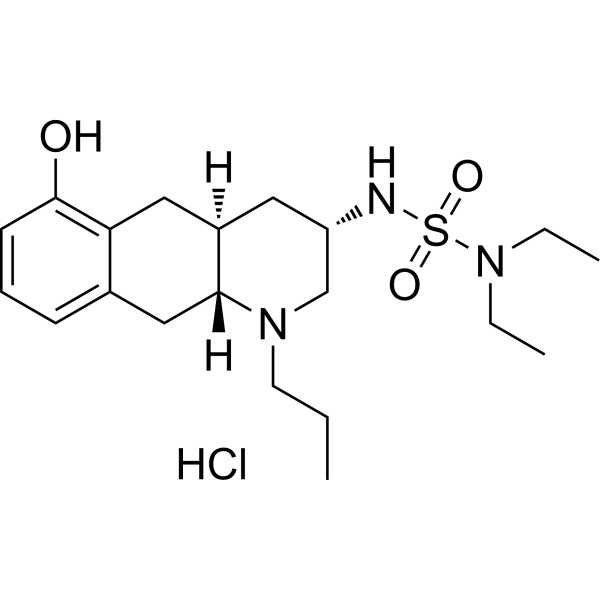
Quinagolide hydrochloride (CV205-502 hydrochloride) is a selective and orally active dopamine D2 receptor agonist. Quinagolide hydrochloride is an inhibitor of prolactin. Quinagolide hydrochloride down-regulates AKT levels and its phosphorylation. Quinagolide hydrochloride shows antitumor effects, it can be used for the research of cancer.
For research use only. We do not sell to patients.
- Purity : 99.55%
- CAS No.: 94424-50-7
- Formula: C20H34ClN3O3S
- Molecular Weight:432.02
-
Storage:
4°C, sealed storage, away from moisture
* In solvent : -80°C, 6 months; -20°C, 1 month (sealed storage, away from moisture)

To place orders, for customer services and technical support, please contact: MedChemExpress USA
Tel: 609-228-6898 E-mail: [email protected] [email protected]


-
 Biological Activity
-
Chemical Information
-
Solvent & Solubility
- Protocols
- Purity & Documentation
- References
-
 Help & FAQs


-
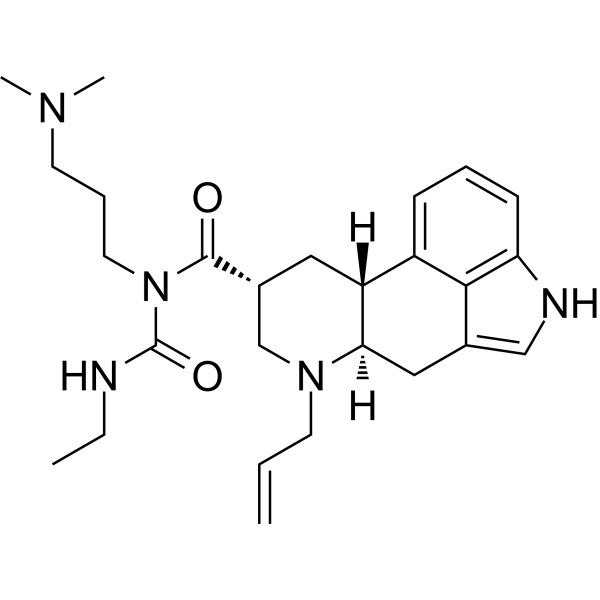
HY-15296
CabergolineAutophagy Inducer -
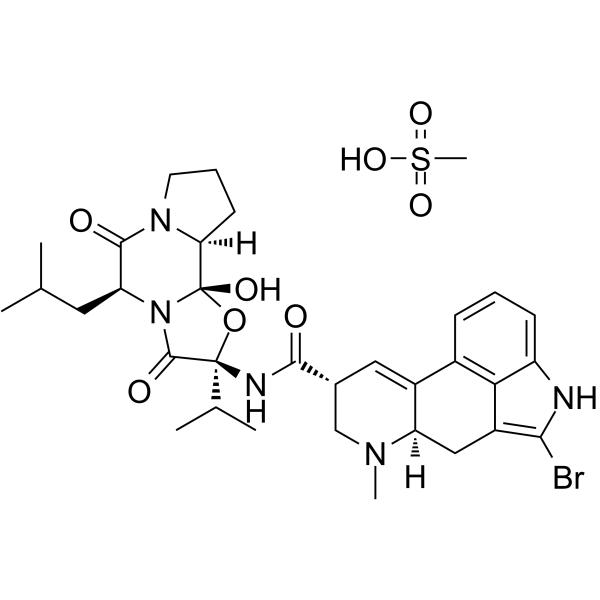
HY-12705A
Bromocriptine mesylate -
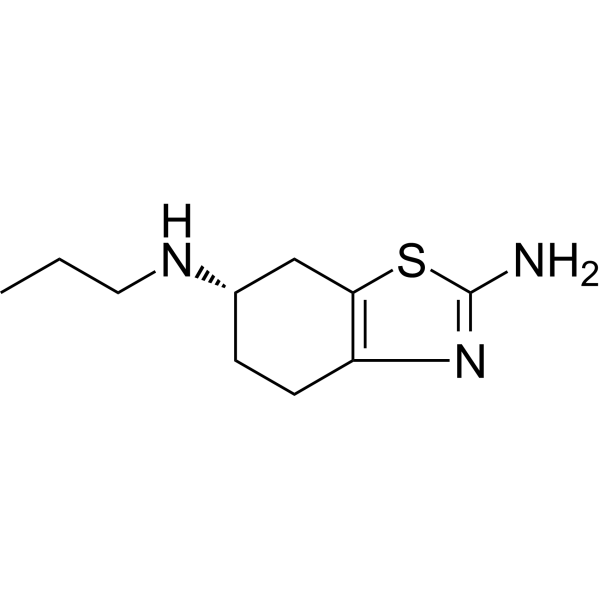
HY-B0410
PramipexoleDopamine Receptor Agonist -
HY-70081A
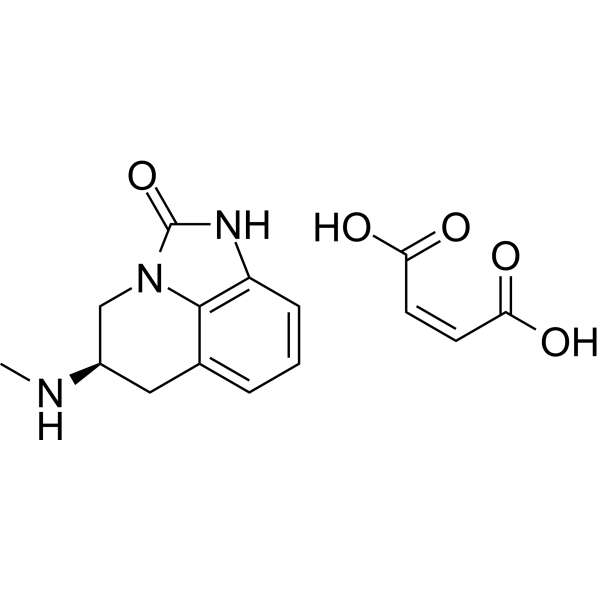
Sumanirole maleateD2 Receptor Agonist -
HY-B0232
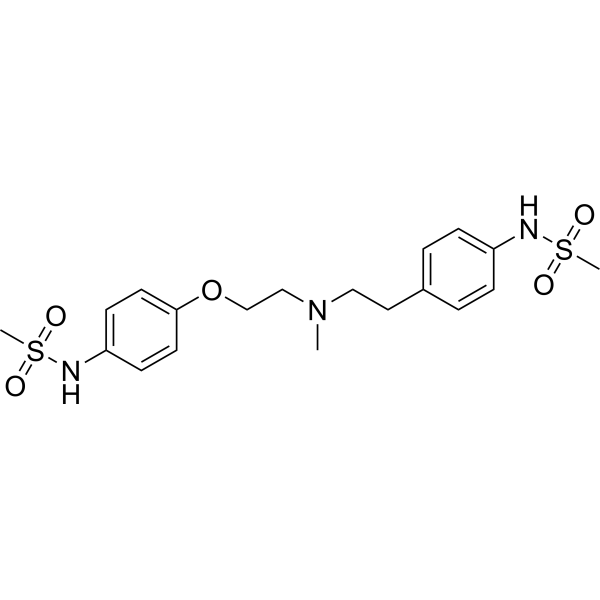
DofetilideIKr Blocker -
HY-10200
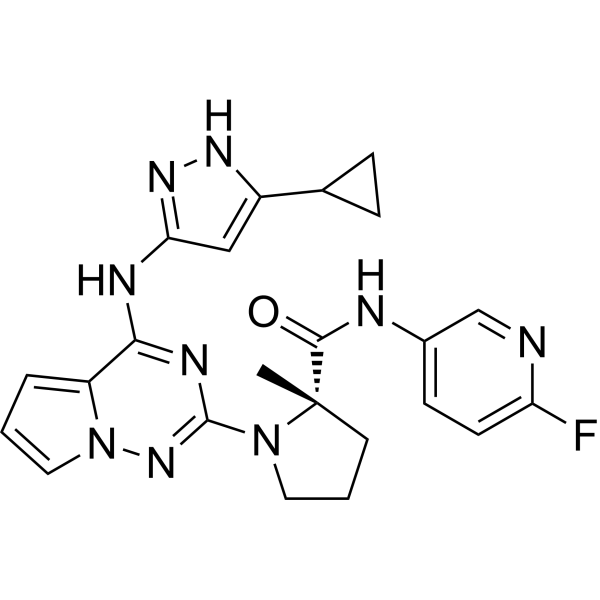
BMS-754807IGF-1R/IR Inhibitor -
HY-17360
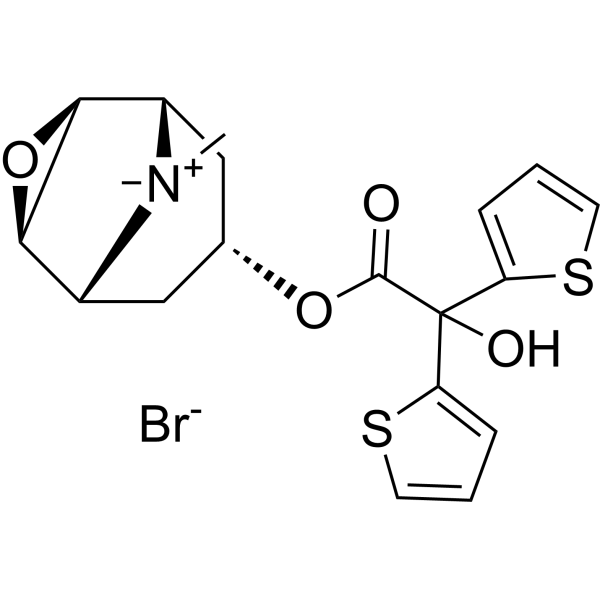
Tiotropium BromidemAChR Antagonist -
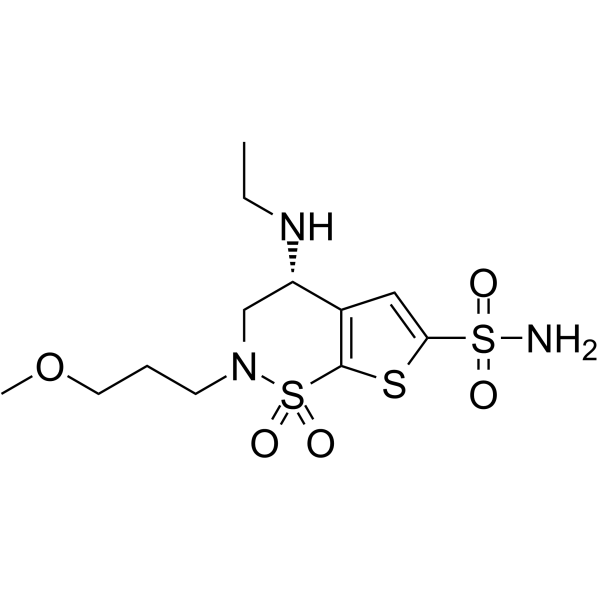
HY-B0588
BrinzolamideCarbonic Anhydrase II Inhibitor -
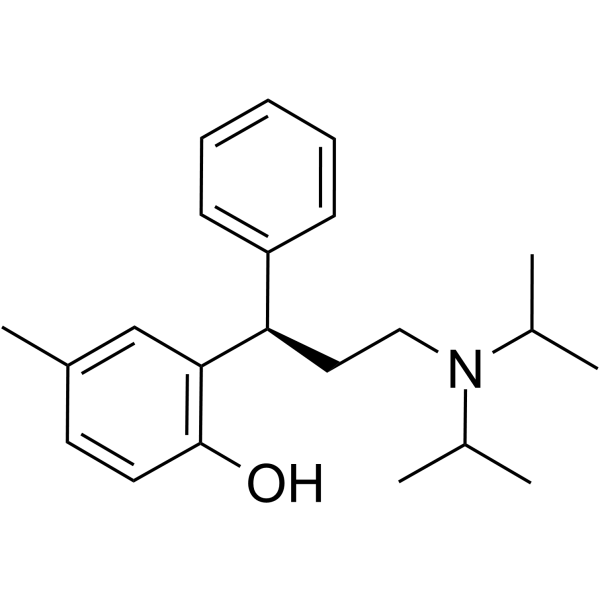
HY-A0024
TolterodinemAChR Inhibitor -
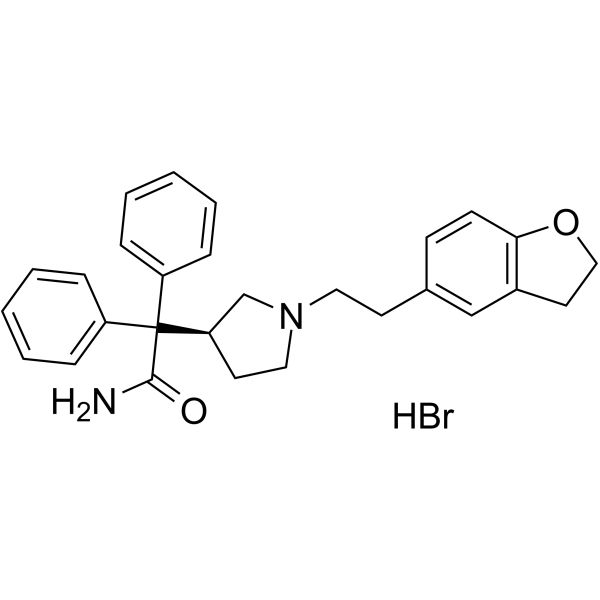
HY-A0012
Darifenacin hydrobromideM3 Muscarinic Receptor Antagonist -
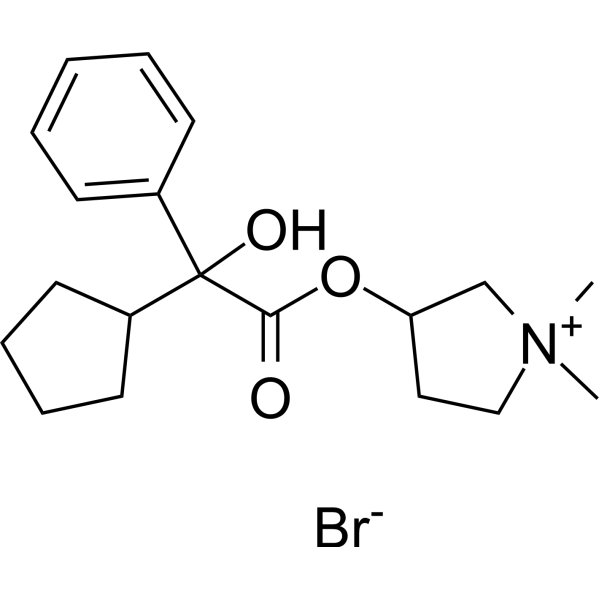
HY-17465
GlycopyrrolateMuscarinic Receptor Antagonist -
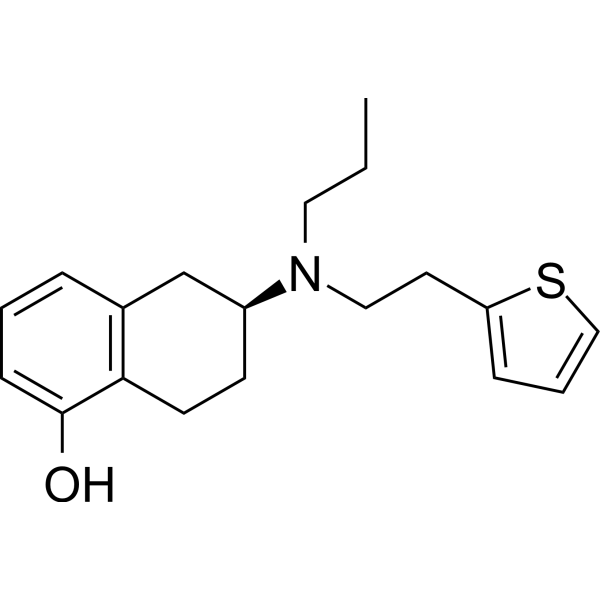
HY-75502
RotigotineDopamine Receptor Agonist
All Dopamine Receptor Isoforms
More

Biological Activity
Description
In Vitro
Quinagolide hydrochloride (100 nM; 48 h) reduces non-ergot dopamine receptor 2 (DRD2) mRNA expression in ectopic lines[2]. Quinagolide hydrochloride (100 nM; 48 h) inhibits the invasive properties of endometrial mesenchymal stromal cells (E-MSCs)[2]. Quinagolide hydrochloride (100 nM; 24 h) significantly reduces the endothelial differentiation of E-MSCs[2].
MedChemExpress (MCE) has not independently confirmed the accuracy of these methods. They are for reference only. Further protocols information, click here.
-
Cell Line:Eutopic and ectopic E-MSCs
-
Concentration:100 nM
-
Incubation Time:24 h
-
Result:Reduced total AKT levels in ectopic E-MSCs and significantly decreased AKT phosphorylation in both eutopic and ectopic cell lines.
In Vivo
MedChemExpress (MCE) has not independently confirmed the accuracy of these methods. They are for reference only.
-
Animal Model:Female Wistar-Furth rats bearing SMtTW tumors[1]
-
Dosage:0.03-0.6 mg/kg
-
Administration:Subcutaneous injection; 0.03-0.6 mg/kg once daily for 2 month
-
Result:Induced normalization of plasma PRL levels in all animals, reduced the tumor size compared with the control group at a dose of 0.3 mg/kg. Showed maximal inhibitory effects on PRL secretion and tumor growth at a dose of 0.3 mg/kg.


Chemical Information
-
CAS No. 94424-50-7
-
Appearance Solid
-
Molecular Weight 432.02
-
Formula C20H34ClN3O3S
-
Color White to off-white
-
SMILES
OC1=C2C(C[C@](N(CCC)C[C@@H](NS(N(CC)CC)(=O)=O)C3)([H])[C@@]3([H])C2)=CC=C1.Cl
-
Synonyms
CV205-502 hydrochloride
-
Shipping
Room temperature in continental US; may vary elsewhere.
-
Storage
4°C, sealed storage, away from moisture
* In solvent : -80°C, 6 months; -20°C, 1 month (sealed storage, away from moisture)


Solvent & Solubility
In Vitro:
DMSO : 3.85 mg/mL (8.91 mM; Need ultrasonic; Hygroscopic DMSO has a significant impact on the solubility of product, please use newly opened DMSO)
Please refer to the solubility information to select the appropriate solvent. Once prepared, please aliquot and store the solution to prevent product inactivation from repeated freeze-thaw cycles.
Storage method and period of stock solution: -80°C, 6 months; -20°C, 1 month (sealed storage, away from moisture). When stored at -80°C, please use it within 6 months. When stored at -20°C, please use it within 1 month.
Please refer to the solubility information to select the appropriate solvent. Once prepared, please aliquot and store the solution to prevent product inactivation from repeated freeze-thaw cycles.
Storage method and period of stock solution: -80°C, 6 months; -20°C, 1 month (sealed storage, away from moisture). When stored at -80°C, please use it within 6 months. When stored at -20°C, please use it within 1 month.
Concentration (start) × Volume (start) = Concentration (final) × Volume (final)

Protocols
-
Kinase activity and phosphorylation assays
Kinase activity assays measure the ability of kinases to transfer phosphate groups from ATP to specific substrates, while phosphorylation assays detect the presence and levels of phosphorylated proteins. Common methods include radiolabeled ATP incorporation (e. g. ,), ADP release detection via bioluminescence (e. g. ,[3]), enzyme-linked immunosorbent assays (ELISA) for phospho-specific epitopes (e. g. ,[6]), and microtiter-based formats for high-throughput screening (e. g. ,[8]). The ADP-Glo assay quantifies kinase activity by measuring ADP produced during phosphorylation using a luciferase-based system. Radiometric assays involve autoradiography or scintillation counting after incorporation of 32P-labeled ATP into substrate proteins. ELISA-based approaches rely on phospho-specific antibodies to detect activated kinases in cell lysates or purified samples.
-
Western Blot
Western blotting (WB) is a commonly used experimental method in molecular biology, biochemistry, and immunogenetics for identifying and quantifying target proteins. It combines gel electrophoresis with immunoassay, enabling researchers to analyze protein expression, post-translational modifications, and molecular weight.
-
Protocol for Kinase activity and phosphorylation assays
Kinase activity assays measure transfer of phosphate from ATP to a protein or peptide substrate, generating phosphorylated substrate, ADP, or incorporated radiolabeled phosphate as the readout; phosphorylation assays measure site-specific phosphorylation in cells or tissues as a proxy for kinase-pathway activation, inhibition, or substrate regulation. Phosphorylation can be detected by phospho-specific Western blot, immunoprecipitation kinase assay, phospho-immunofluorescence, phospho-flow cytometry, luminescent ADP detection, radiolabeled ATP incorporation, or reporter-based pathway assays, and these readouts can be applied to cancer cells, primary neurons, mouse tumors, organoids, inflammatory macrophages, ferroptosis studies, and mitophagy studies when the kinase target is biologically relevant.


Purity & Documentation
-
Data Sheet (275 KB)
-
SDS (252 KB)
- English - EN (252 KB)
- Français - FR (252 KB)
- Deutsch - DE (252 KB)
- Norwegian - NO (252 KB)
- Español - ES (252 KB)
- Swedish - SV (252 KB)
- Italian - IT (252 KB)
- Korean - KR (252 KB)
- Portuguese - PT (252 KB)
-
Handling Instructions (2659 KB)
References
[1]. Trouillas J, et al. Inhibitory effects of the dopamine agonists quinagolide (CV 205-502) and bromocriptine on prolactin secretion and growth of SMtTW pituitary tumors in the rat. Endocrinology. 1994 Jan;134(1):401-10. [Content Brief]
[2]. Iampietro C, et al. Quinagolide Treatment Reduces Invasive and Angiogenic Properties of Endometrial Mesenchymal Stromal Cells. Int J Mol Sci. 2022 Feb 4;23(3):1775. [Content Brief]


Complete Stock Solution Preparation Table
Please refer to the solubility information to select the appropriate solvent. Once prepared, please aliquot and store the solution to prevent product inactivation from repeated freeze-thaw cycles.
Storage method and period of stock solution: -80°C, 6 months; -20°C, 1 month (sealed storage, away from moisture). When stored at -80°C, please use it within 6 months. When stored at -20°C, please use it within 1 month.
| Optional Solvent | Concentration Solvent Mass | 1 mg | 5 mg | 10 mg | 25 mg |
|---|---|---|---|---|---|
| DMSO | 1 mM | 2.3147 mL | 11.5735 mL | 23.1471 mL | 57.8677 mL |
| 5 mM | 0.4629 mL | 2.3147 mL | 4.6294 mL | 11.5735 mL |


Quinagolide hydrochloride Related Classifications
HY-13736A Related Classifications
 Powered by Bioz