



Cancer Targeted Therapy
Cancer targeted therapy is the foundation of precision medicine; it uses drugs or other substances to target specific genes and proteins that control cancer cells’ growth, division and spreading. Compared to traditional chemotherapy drugs, targeted-drugs can specifically act on cancer cells with high efficacy without damaging normal cells. Drugs used in cancer targeted therapy mainly includes small molecules and macromolecules (e.g., monoclonal antibodies), which can target cancer cells and constituents in the tumor microenvironment to activate the immune system. Anti-angiogenesis drugs, such as those targeting vascular endothelial growth factor (VEGF), epidermal growth factor receptor (EGFR), transforming growth factor (TGF)-α, TGF-β, Tumor necrosis factor (TNF)-α, and platelet-derived endothelial growth factor (PDGFR) inhibit the proliferation and metastasis of cancer cells. In recent years, the proportion of antibody drugs in cancer treatment has gradually become prominent. Antibody-drug conjugates (ADCs) are a new type of targeted drugs that are composed of monoclonal antibody, cytotoxic drug and linker. ADCs can deliver drugs to tumor cells and minimize the toxicity to normal tissues. Proteolysis-targeting chimera (PROTAC) is a useful technology for targeted protein degradation. PROTAC exploits the ubiquitin-proteasome system and forms a ternary complex with a hijacked E3 ubiquitin ligase and target protein, leading to polyubiquitination and degradation of the target protein.
Targeted therapy is a useful strategy in treatment of cancer either alone or in combination with standard chemotherapy. At present, targeted therapy has proved significant clinical success in the treatment of many types of cancer, including breast cancer, colorectal cancer, leukemia, ovarian cancer and lung cancer.
-
TCO-PEG4-TCO
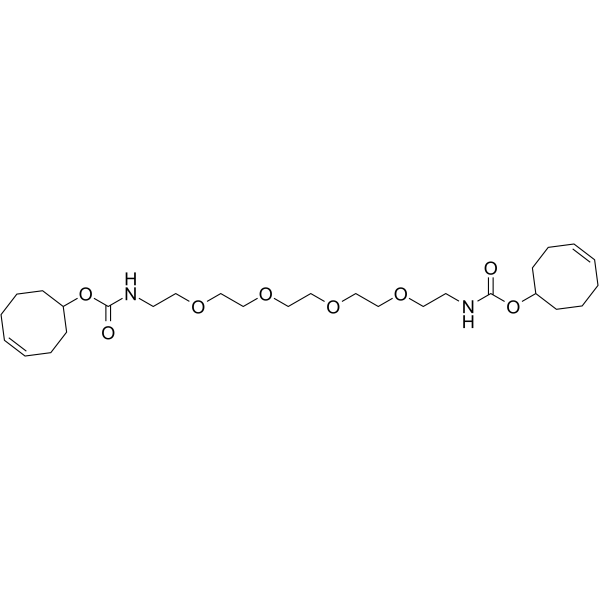 0 ImagesCat. No.: HY-141188CAS No.: 2243569-23-3
-
hsa-miR-2114-5p inhibitor
 0 ImagesCat. No.: HY-RI00435
hsa-miR-2114-5p inhibitors are chemically-modified oligonucleotides that hybridize with mature miRNAs. The miRNA inhibitors have full-length nucleotide 2'-methoxy modification. The miRNA inhibitors strongly compete with mature miRNAs to prevent the complementary pairing of miRNAs and their target genes, thereby inhibiting miRNAs from functioning.
-
hsa-miR-4450 inhibitor
 0 ImagesCat. No.: HY-RI01056
hsa-miR-4450 inhibitors are chemically-modified oligonucleotides that hybridize with mature miRNAs. The miRNA inhibitors have full-length nucleotide 2'-methoxy modification. The miRNA inhibitors strongly compete with mature miRNAs to prevent the complementary pairing of miRNAs and their target genes, thereby inhibiting miRNAs from functioning.
-
hsa-miR-548bb-5p antagomir
 0 ImagesCat. No.: HY-RI01676A
hsa-miR-548bb-5p antagomirs are chemically-modified oligonucleotides that hybridize with mature miRNAs. The miRNA antagomirs have 2 phosphorothioates at the 5' end, 4 phosphorothioates at the 3' end, 1 cholesterol group at the 3' end, and full-length nucleotide 2'-methoxy modification. The miRNA antagomirs strongly compete with mature miRNAs to prevent the complementary pairing of miRNAs and their target genes, thereby inhibiting miRNAs from functioning. Stability of miRNA antagomirs appears to be significantly higher than miRNA inhibitors, they exhibits enhanced cellular uptake, stability and regulatory activity in vivo.
-
Mefatinib-d6
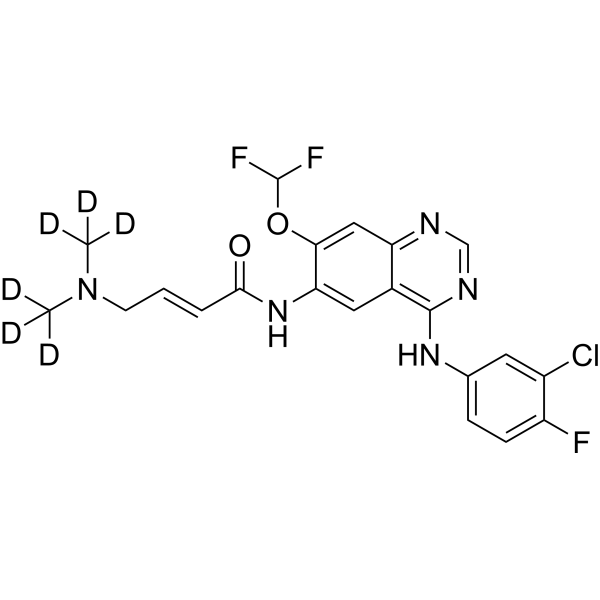 0 ImagesCat. No.: HY-152852SSynonyms: Mifanertinib-d6
Mefatinib-d6 free base (Mifanertinib-d6) is the 6-labeled Mefatinib free base (HY-152852). Mefatinib free base is an orally active EGFR and HER2 kinase inhibitor with IC50 values of 0.4 nM and 11.7 nM, respectively. Mefatinib free base inhibits tumor growth in mouse models of lung cancer xenografts that overexpress EGFR/HER2, carry EGFR mutations, or carry Erlotinib (HY-50896)-resistant EGFR double mutations. Mefatinib free base can be used for the research of advanced EGFR-mutant non-small cell lung cancer.
-
h-NTPDase8-IN-1
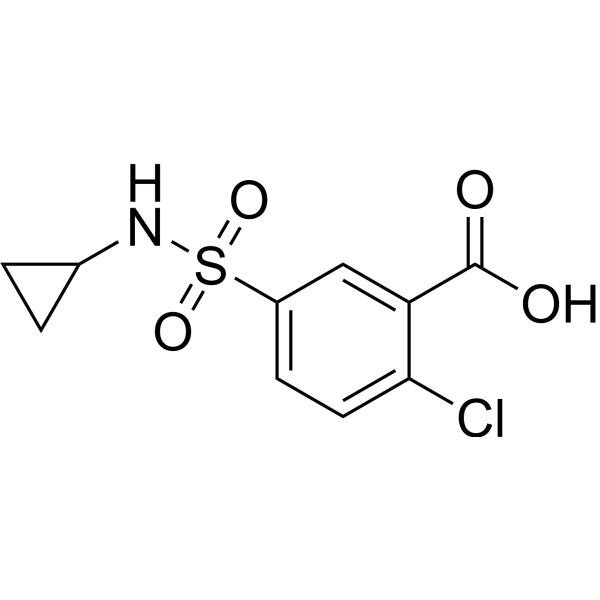 0 ImagesCat. No.: HY-155597CAS No.: 716358-51-9
h-NTPDase8-IN-1 (compound 2d) is a sulfamoyl-benzamides based and selective inhibitor for h-NTPDases8 (IC50=0.28 μM). h-NTPDases8 is involved in a variety of physiological and pathological functions,such as thrombosis,diabetes,inflammation,and cancer.
-
QI-18
 0 ImagesCat. No.: HY-159934CAS No.: 3093894-38-0
-
KRAS inhibitor-36
 0 ImagesCat. No.: HY-162983CAS No.: 332373-49-6
KRAS inhibitor-36 (compund Abd2) directly inhibits KRAS Q61H.
-
AR ligand-37
 0 ImagesCat. No.: HY-168697
AR ligand-37 is a PROTAC target protein ligand that can be used to synthesize BMS-986365 (HY-158101).
-
S1427
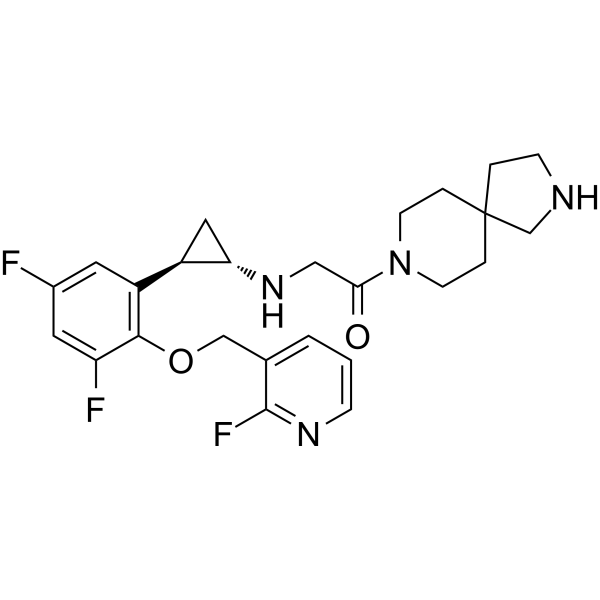 0 ImagesCat. No.: HY-146380CAS No.: 2447061-40-5
S1427 is a tranylcypromine-derived LSD1 inhibitor with the IC50 of 390 nM and Ki of 80 nM. S1427 exhibits desirable hERG channel inhibition and microsomal stability profiles. Inhibition of LSD1 partially reduces the proliferation of cancer cells.
-
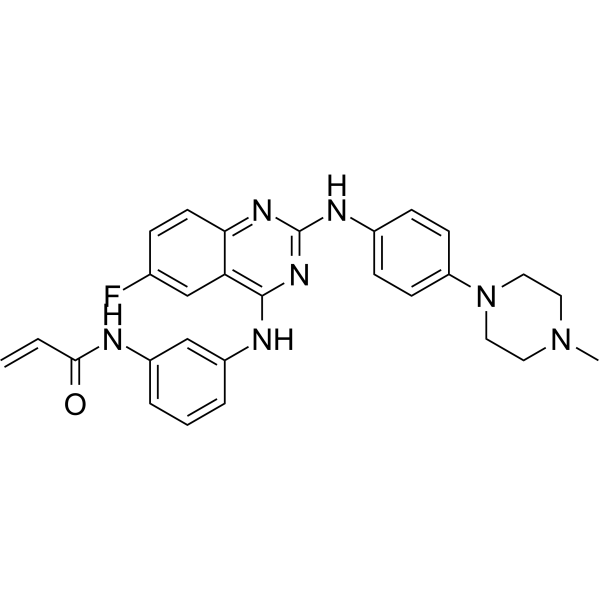
EGFR T790M/L858R-IN-2
 0 Images
EGFR T790M/L858R-IN-2 is a potent and selective EGFRT790M/L858R inhibitor with IC50 values of 3.5, 1290 nM for EGFRT790M/L858R, EGFR WT, respectively. EGFR T790M/L858R-IN-2 decreases the expression of p-EGFR, P-AKT, P-ERK1/2. EGFR T790M/L858R-IN-2 induces Apoptosis and cell cycle arrest in the G1 phase. EGFR T790M/L858R-IN-2 shows anti-cancer activity.
-
hsa-miR-8073 inhibitor
 0 ImagesCat. No.: HY-RI02465
hsa-miR-8073 inhibitors are chemically-modified oligonucleotides that hybridize with mature miRNAs. The miRNA inhibitors have full-length nucleotide 2'-methoxy modification. The miRNA inhibitors strongly compete with mature miRNAs to prevent the complementary pairing of miRNAs and their target genes, thereby inhibiting miRNAs from functioning.
-
mmu-miR-3552 inhibitor
 0 ImagesCat. No.: HY-RI03087
mmu-miR-3552 inhibitors are chemically-modified oligonucleotides that hybridize with mature miRNAs. The miRNA inhibitors have full-length nucleotide 2'-methoxy modification. The miRNA inhibitors strongly compete with mature miRNAs to prevent the complementary pairing of miRNAs and their target genes, thereby inhibiting miRNAs from functioning.
-
mmu-miR-6990-3p inhibitor
 0 ImagesCat. No.: HY-RI03712
mmu-miR-6990-3p inhibitors are chemically-modified oligonucleotides that hybridize with mature miRNAs. The miRNA inhibitors have full-length nucleotide 2'-methoxy modification. The miRNA inhibitors strongly compete with mature miRNAs to prevent the complementary pairing of miRNAs and their target genes, thereby inhibiting miRNAs from functioning.
-
rno-miR-301a-5p inhibitor
 0 ImagesCat. No.: HY-RI04333
rno-miR-301a-5p inhibitors are chemically-modified oligonucleotides that hybridize with mature miRNAs. The miRNA inhibitors have full-length nucleotide 2'-methoxy modification. The miRNA inhibitors strongly compete with mature miRNAs to prevent the complementary pairing of miRNAs and their target genes, thereby inhibiting miRNAs from functioning.
-
Callistephin chloride (Standard)
 0 ImagesCat. No.: HY-W040045RCAS No.: 18466-51-8Synonyms: Pelargonidin-3-O-glucoside chloride (Standard)
Callistephin (Pelargonidin 3-O-glucoside) chloride (Standard) is the analytical standard of Callistephin chloride (HY-W040045). This product is intended for research and analytical applications. Callistephin chloride is an anthocyanin. Callistephin chloride regulates the expression of inflammatory (reducing iNOS/TNF-α/COX-2) and apoptosis-related proteins by inhibiting p38 phosphorylation, and enhances the protective effect of Isoflurane (HY-A0134) on microglial cell damage. Callistephin chloride significantly reduces ROS levels, eliminates DPPH free radicals, protects retinal pigment epithelial cells, and inhibits lipid peroxidation. Callistephin chloride can alleviate glutamate excitotoxicity, reduce neuronal apoptosis, and protect cerebellar granule neurons. Callistephin chloride can inhibit the proliferation and metastasis of breast cancer cells by inducing apoptosis.
-
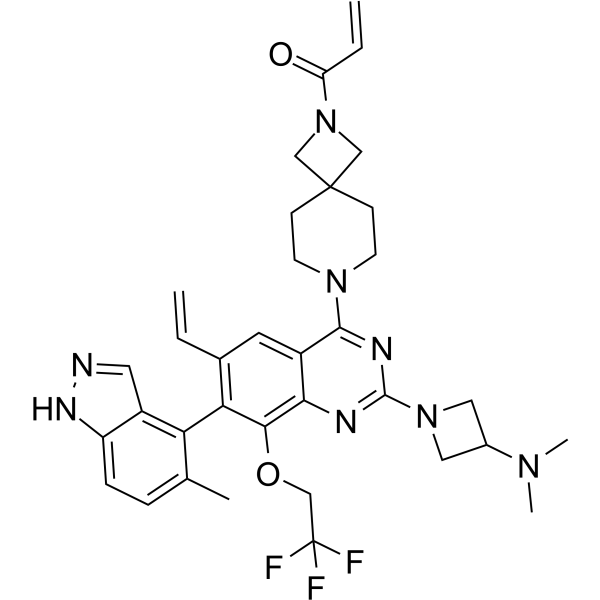
KRAS G12C inhibitor 37
 0 ImagesCat. No.: HY-143590CAS No.: 2241720-04-5
KRAS G12C inhibitor 37 is a potent inhibitor of KRAS G12C. The Ras family of proteins is an important intracellular signaling molecule that plays an important role in growth and development. KRAS G12C inhibitor 37 has the potential for the research of KRAS G12C-mediated cancer (extracted from patent WO2018143315A1, compound 65).
-
DSPE-PEG1000-K237
 0 ImagesCat. No.: HY-172487
DSPE-PEG1000-K237 is a PEG compound which composed of DSPE and a KDR targeting peptide (K237). K237 can functionally disrupt the interaction between VEGF and the KDR receptor and cause potent biological effects that include the inhibition of angiogenesis and tumor growth. DSPE-PEG1000-K237 can be used for drug delivery.
-
IRAK1/4/pan-FLT3 Kinase-IN-2
 0 ImagesCat. No.: HY-176410CAS No.: 2760329-44-8
IRAK1/4/pan-FLT3 Kinase-IN-2 (compound 27) is a potent IRAK1/4 and FLT3 dual inhibitor with IC50s of 10, 0.7, and <0.5 nM. IRAK1/4/pan-FLT3 Kinase-IN-2 extends acute myeloid leukemia model mouse survival.
-
CBX2-IN-1
 0 ImagesCat. No.: HY-181089CAS No.: 3124602-03-2
CBX2-IN-1 is a CBX2 inhibitor with an IC50 of 9.6 μM. CBX2-IN-1 binds the CBX2 chromodomain’s H3K27me3 binding channel, blocks interaction between CBX2 and H3K27me3, and exhibits selective affinity toward CBX2, CBX4, CBX6, CBX7, and CBX8 over CBX1, CBX3, and CBX5. CBX2-IN-1 can be used for the research of prostate cancers.



