



Cancer Targeted Therapy
Cancer targeted therapy is the foundation of precision medicine; it uses drugs or other substances to target specific genes and proteins that control cancer cells’ growth, division and spreading. Compared to traditional chemotherapy drugs, targeted-drugs can specifically act on cancer cells with high efficacy without damaging normal cells. Drugs used in cancer targeted therapy mainly includes small molecules and macromolecules (e.g., monoclonal antibodies), which can target cancer cells and constituents in the tumor microenvironment to activate the immune system. Anti-angiogenesis drugs, such as those targeting vascular endothelial growth factor (VEGF), epidermal growth factor receptor (EGFR), transforming growth factor (TGF)-α, TGF-β, Tumor necrosis factor (TNF)-α, and platelet-derived endothelial growth factor (PDGFR) inhibit the proliferation and metastasis of cancer cells. In recent years, the proportion of antibody drugs in cancer treatment has gradually become prominent. Antibody-drug conjugates (ADCs) are a new type of targeted drugs that are composed of monoclonal antibody, cytotoxic drug and linker. ADCs can deliver drugs to tumor cells and minimize the toxicity to normal tissues. Proteolysis-targeting chimera (PROTAC) is a useful technology for targeted protein degradation. PROTAC exploits the ubiquitin-proteasome system and forms a ternary complex with a hijacked E3 ubiquitin ligase and target protein, leading to polyubiquitination and degradation of the target protein.
Targeted therapy is a useful strategy in treatment of cancer either alone or in combination with standard chemotherapy. At present, targeted therapy has proved significant clinical success in the treatment of many types of cancer, including breast cancer, colorectal cancer, leukemia, ovarian cancer and lung cancer.

-
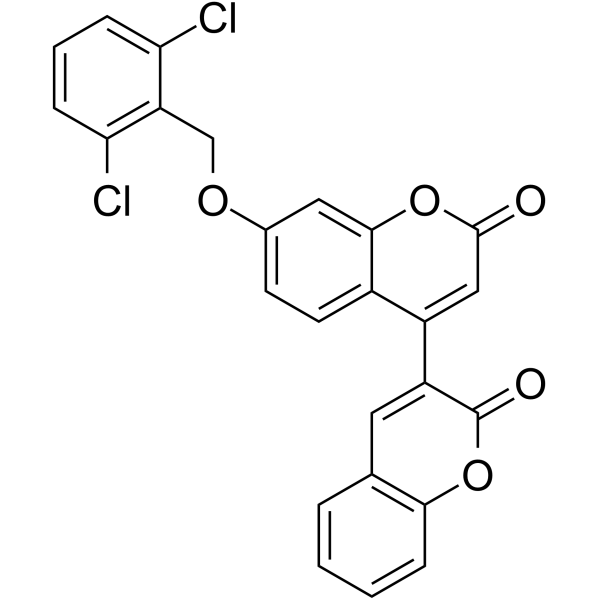
TDP1 Inhibitor-2
 0 Images
TDP1 Inhibitor-2 (compound 5) is a potent inhibitor for TDP1 (tyrosyl-DNA phosphodiesterase 1), with an IC50 of 99 nM. TDP1 Inhibitor-2 also can inhibit SCAN1 (spinocerebellar ataxia syndrome with axonal neuropathy), with an IC50 of 3.5 μM.

-
hsa-miR-150-5p antagomir
 0 ImagesCat. No.: HY-RI00301A
hsa-miR-150-5p antagomirs are chemically-modified oligonucleotides that hybridize with mature miRNAs. The miRNA antagomirs have 2 phosphorothioates at the 5' end, 4 phosphorothioates at the 3' end, 1 cholesterol group at the 3' end, and full-length nucleotide 2'-methoxy modification. The miRNA antagomirs strongly compete with mature miRNAs to prevent the complementary pairing of miRNAs and their target genes, thereby inhibiting miRNAs from functioning. Stability of miRNA antagomirs appears to be significantly higher than miRNA inhibitors, they exhibits enhanced cellular uptake, stability and regulatory activity in vivo.

-
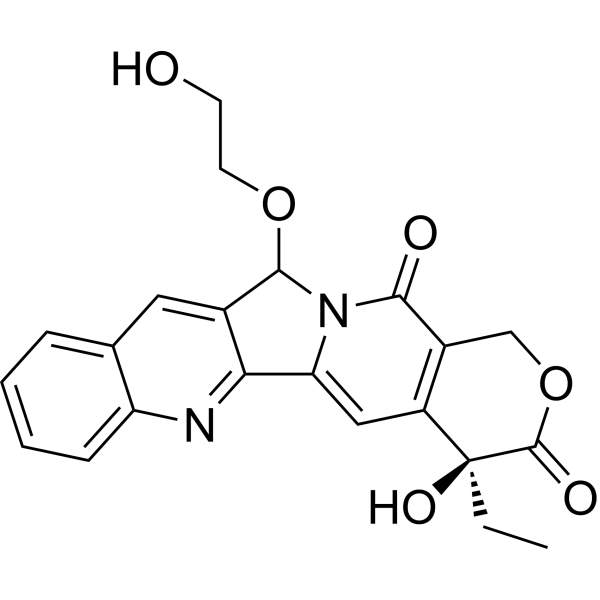
DRF-1042
 0 Images
DRF-1042 is an orally active derivative of Camptothecin. DRF-1042 acts to inhibit DNA topoisomerase I. DRF-1042 shows good anticancer activity against a panel of human cancer cell lines including multi-agent resistance (MDR) phenotype.
-
G-631
 0 Images
G-631 is an orally active tankyrase(TNKS1/TNKS2) inhibitor. G-631 stabilizes AXIN and inhibits the Wnt/β-catenin signaling pathway. G-631 can be used in studies related to cancers such as colorectal cancer.
-
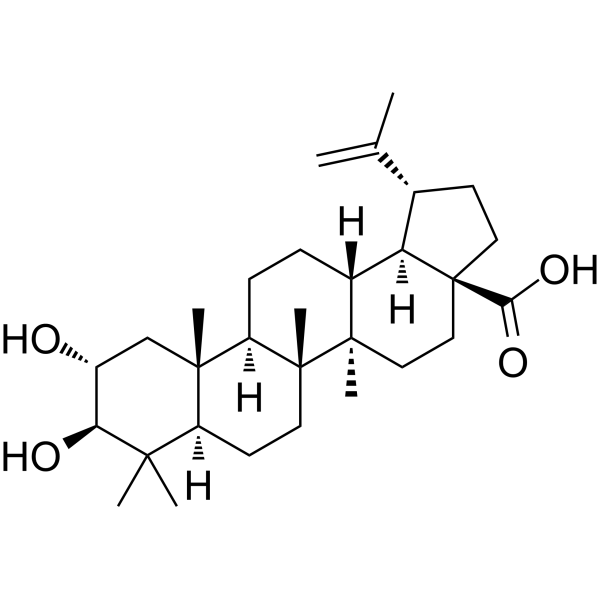
Alphitolic acid
 0 ImagesCat. No.: HY-N2855CAS No.: 19533-92-7Synonyms: Aophitolic acid
Alphitolic acid (Aophitolic acid) is an anti-inflammatory triterpene could found in quercus aliena. Alphitolic acid blocks Akt–NF-κB signaling to induce apoptosis. Alphitolic acid induces autophagy. Alphitolic acid has anti-inflammatory activity and down-regulates the NO and TNF-α production. Alphitolic acid can be used for cancer and inflammation research.
-
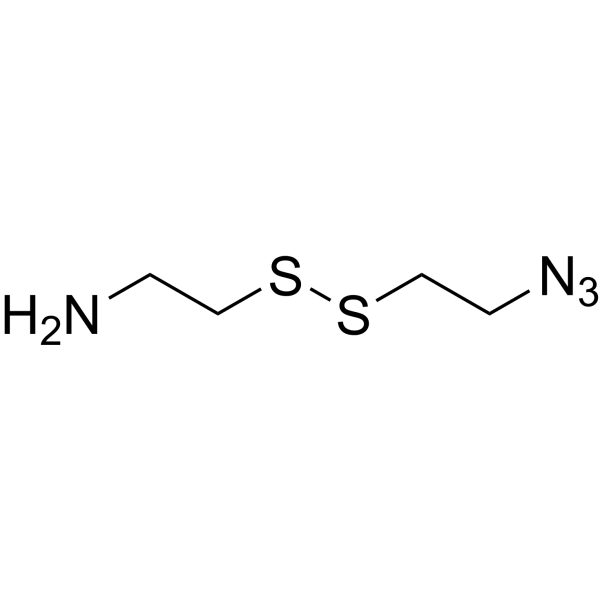
Azidoethyl-SS-ethylamine
 0 Images
Azidoethyl-SS-ethylamine is a cleavable ADC linker used in the synthesis of antibody-drug conjugates (ADCs). Azidoethyl-SS-ethylamine is a click chemistry reagent, it contains an Azide group and can undergo copper-catalyzed azide-alkyne cycloaddition reaction (CuAAc) with molecules containing Alkyne groups. It can also undergo strain-promoted alkyne-azide cycloaddition (SPAAC) reactions with molecules containing DBCO or BCN groups.
-
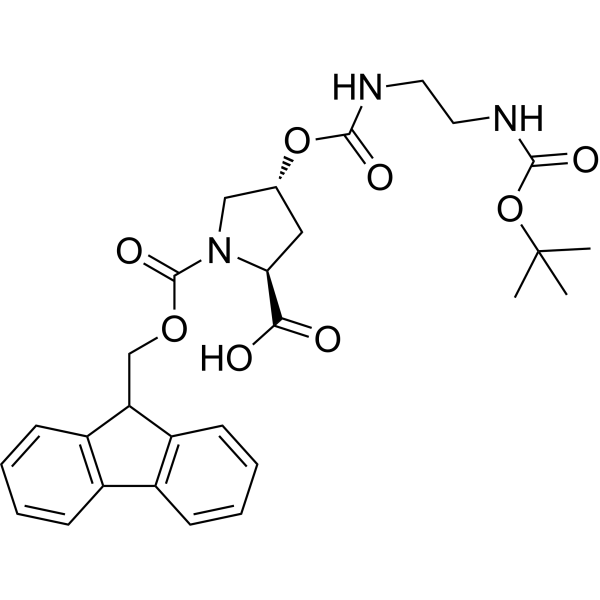
Fmoc-Hyp(Bom)-OH
 0 Images
Fmoc-Hyp(Bom)-OH is a non-cleavable ADC linker used in the synthesis of antibody-drug conjugates (ADCs). Fmoc-Hyp(Bom)-OH is also a alkyl chain-based PROTAC linker that can be used in the synthesis of PROTACs<
-
hsa-miR-629-5p inhibitor
 0 ImagesCat. No.: HY-RI01903
hsa-miR-629-5p inhibitors are chemically-modified oligonucleotides that hybridize with mature miRNAs. The miRNA inhibitors have full-length nucleotide 2'-methoxy modification. The miRNA inhibitors strongly compete with mature miRNAs to prevent the complementary pairing of miRNAs and their target genes, thereby inhibiting miRNAs from functioning.
-
CDDO-biotin
 0 ImagesCat. No.: HY-186167CAS No.: 3110422-01-7
CDDO-biotin is an IKKβ inhibitor with cancer cell inhibitory activity. CDDO-biotin directly interacts with and oxidizes Cys-179 in the activation loop of IKKβ, forming an adduct with wild-type IKKβ. CDDO-biotin can be used in the research of myeloid leukemia, osteosarcoma, multiple myeloma, lung cancer, breast cancer and pancreatic cancer.
-
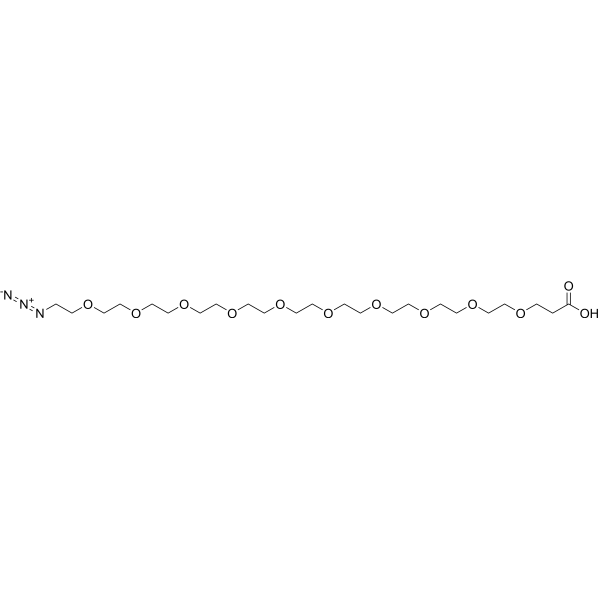
Azido-PEG10-acid
 0 Images
Azido-PEG10-acid is a PEG-based PROTAC linker that can be used in the synthesis of PROTACs. Azido-PEG10-acid is a click chemistry reagent, it contains an Azide group and can undergo copper-catalyzed azide-alkyne cycloaddition reaction (CuAAc) with molecules containing Alkyne groups. It can also undergo strain-promoted alkyne-azide cycloaddition (SPAAC) reactions with molecules containing DBCO or BCN groups.
-
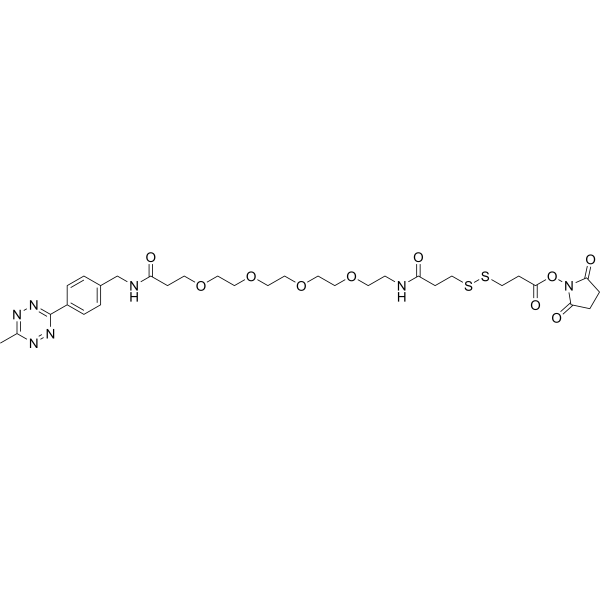
Methyltetrazine-PEG4-SS-NHS ester
 0 ImagesCat. No.: HY-133466CAS No.: 2656478-52-1
Methyltetrazine-PEG4-SS-NHS ester is a cleavable 4 unit PEG ADC linker used in the synthesis of antibody-drug conjugates (ADCs). Methyltetrazine-PEG4-SS-NHS ester is a click chemistry reagent, it contains a Tetrazine group that can undergo an inverse electron demand Diels-Alder reaction (iEDDA) with molecules containing TCO groups.

-
NH2-MPAA-NODA TFA
 0 ImagesCat. No.: HY-135859A
NH2-MPAA-NODA TFA is a nitroveratryl-based photocleavable linker, it has a NODA motif and a methyl phenyl acetic acid (MPAA) backbone. NH2-MPAA-NODA can be used as a radiolabel by labeling with 18F-fluoride.
-
BJG-05-039
 0 Images
BJG-05-039 is an inhibitor targeting PAK1, with an IC50 of 233 nM against human PAK1. BJG-05-039 induces the selective degradation of PAK1 and inhibits its kinase activity by conjugating NVS-PAK1-1 (HY-100519) with Lenalidomide (HY-A0003) to recruit Cereblon. BJG-05-039 can be used in research related to breast cancer and ovarian cancer.
-
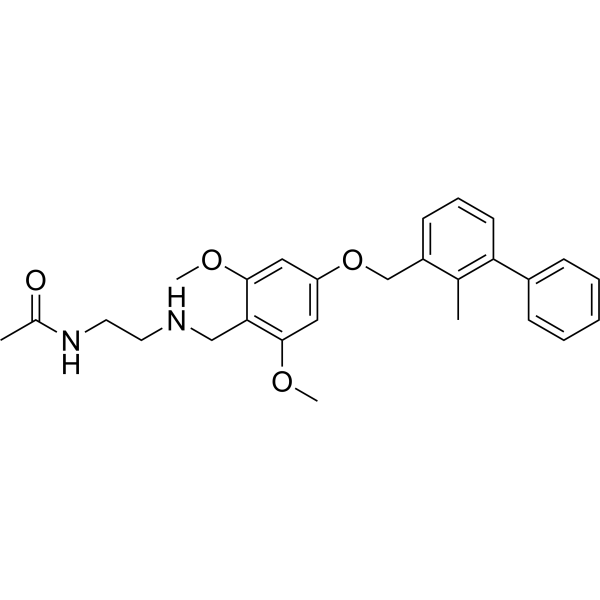
BMS-37
 0 Images
BMS-37 is a PD-1/PD-L1 immune checkpoint inhibitor with an IC50 towards the PD-L1/PD-1 complex in the range of 18 to 200 nM. BMS-37 shows unspecific toxicity against modified Jurkat T cells with an EC50 between 3 and 6 µM. BMS-37 can be used for the study of the PD-L1-induced exhaustion of T-cells or as PD-L1 ligand to synthesize PROTAC molecules.



