Infection
-
Infection Related Products (18904)
Related Products (18904)

-
Antibodies (22)
-
SPSB2-iNOS inhibitory cyclic peptide-3
 0 ImagesCat. No.: HY-P10385CAS No.: 2244164-71-2
-
BDGR-651
 0 ImagesCat. No.: HY-179251
BDGR-651 is an efficient and selective inhibitor of the Chikungunya virus (CHIKV) with an EC50 in NHDF cells of 0.86 μM, and the therapeutic index (SI) of 22.1. BDGR-651 exhibits dose-dependent protective effects when infecting Vero E6 cells, with its EC50 being 6 μM. BDGR-651 can be used for research on CHIKV infection.
-
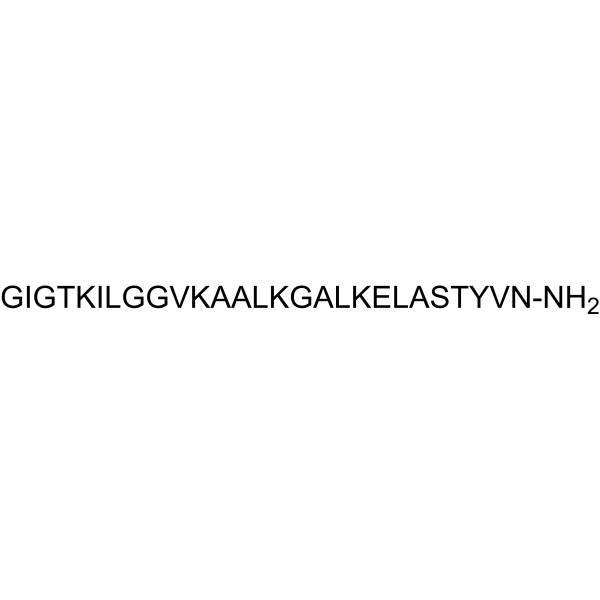
HIV-1 integrase inhibitor 11
 0 ImagesCat. No.: HY-W507252CAS No.: 54030-51-2
-
Tetrahydroamentoflavone
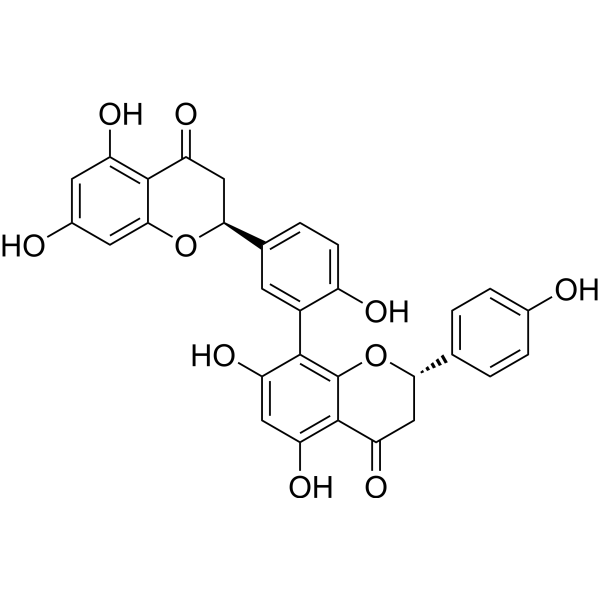 0 ImagesCat. No.: HY-N1162CAS No.: 48236-96-0Synonyms: Amentoflavanone
Tetrahydroamentoflavone (Amentoflavanone) is a potent xanthine oxidase (XO) inhibitor. Tetrahydroamentoflavone has inhibitory activity for XO with IC50 and Ki values of 92 nM and 0.982 μM, respectively. Tetrahydroamentoflavone can be used for the research of inflammatory disorders and gout.
-
Antiviral agent 41
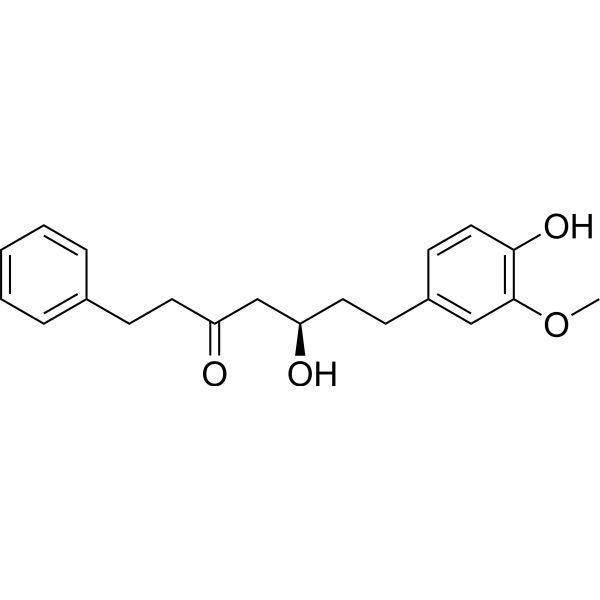 0 ImagesCat. No.: HY-N12362CAS No.: 68622-73-1
Antiviral agent 41 (compound 5) is a diarylheptanoid isolated from Alpinia officinarum. Antiviral agent 41 exhibits potential antiviral activity against influenza virus in vitro.
-
SARS-CoV-2-IN-29 disodium
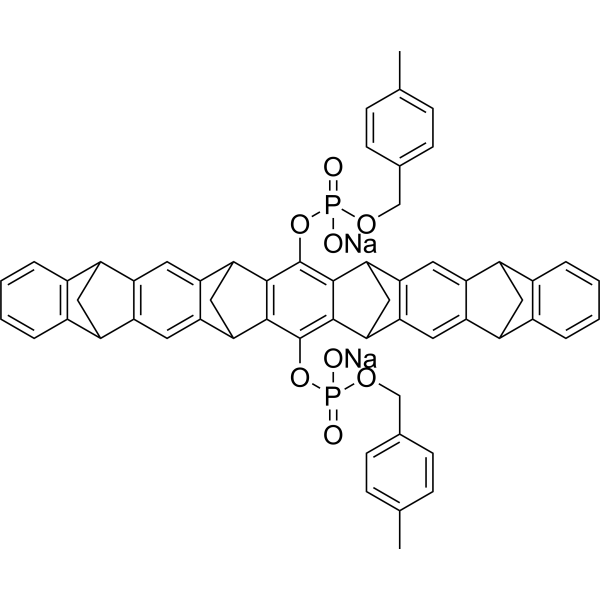 0 ImagesCat. No.: HY-151276A
SARS-CoV-2-IN-29 disodium is a two-armed diphosphate ester with benzene system and molecular tweezers. SARS-CoV-2-IN-29 disodium exhibits antiviral activity with IC50s of 1.5 μM and 1.6 μM against SARS-CoV-2 activity and the spike pseudoparticle transduction, respectively. SARS-CoV-2-IN-29 disodium induces liposomal membrane disruption with an EC50 value of 3.0 μM.
-
Kanosamine hydrochloride (Standard)
 0 ImagesCat. No.: HY-112176RCAS No.: 57649-10-2
6-Hydroxytropinone (Standard) is the analytical standard of 6-Hydroxytropinone. This product is intended for research and analytical applications. 6-Hydroxytropinone is a Alkaloids product that can be isolated from the roots of Atropa belladonna.
-
4-epi-Chlortetracycline hydrochloride
 0 ImagesCat. No.: HY-18999CAS No.: 101342-45-4
4-epi-Chlortetracycline hydrochloride is an epimetabolite of Chlortetracycline hydrochloride. Chlortetracycline hydrochloride is an orally active, potent and selective inhibitor of methanogenic bacteria with bactericidal effect.
-
Procyanidin A2 (Standard)
 0 ImagesCat. No.: HY-N2343RCAS No.: 41743-41-3
Procyanidin A2 (Standard) is the analytical standard of Procyanidin A2. This product is intended for research and analytical applications. Procyanidin A2 is a flavonoid found in grapes, with anti-cancer, antioxidant, antimicrobial and anti-inflammation activity.
-
Anti-MRSA agent 5
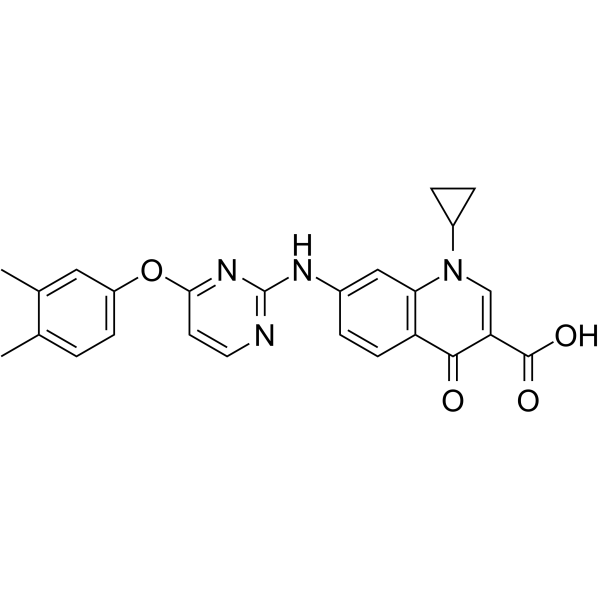 0 ImagesCat. No.: HY-149013CAS No.: 2490154-44-2
Anti-MRSA agent 5 (B14) is a potent MRSAagent with MIC50 values of 0.38 μg/mL and has low hERG activity with an IC50 values of >40 μM. Anti-MRSA agent 5 (B14) also has low cytotoxicity to mammal cells and unlikely to acquire bacterial resistance.
-
Garvicin KS, GakC
 0 ImagesCat. No.: HY-P5207CAS No.: 2098351-26-7
Garvicin KS, GakC is a peptide at sizes of 32 amino acids to form bacteriocin garvicin KS (GarKS), with other 2 peptides, GakA, and GakB. Garvicin KS, GakC inhibits fibroblast viability and proliferation. Garvicin KS peptides inhibit MSSA with MIC values in the order GakB >GakC >GakA.
-
HBV-IN-17
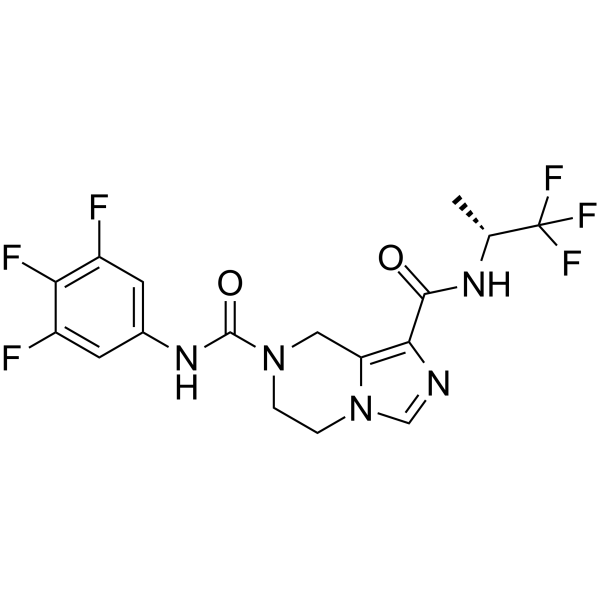 0 ImagesCat. No.: HY-144320CAS No.: 2270943-13-8
HBV-IN-17 (compound 8) is a potent HBV capsid assembly modulator with an EC50 of 511 nM.
-
Dihydro-N-caffeoyltyramine
 0 ImagesCat. No.: HY-169751CAS No.: 501939-19-1
Dihydro-N-caffeoyltyramine is a new phenolic amide that can be isolated from the root bark of wolfberry and has strong antioxidant activity and antifungal effects. Dihydro-N-caffeoyltyramine downregulates the expression of cyclooxygenase-2 by inhibiting the activity of C/EBP and AP-1 transcription factors.
-
SARS-CoV-2 Mpro-IN-50
 0 ImagesCat. No.: HY-178772CAS No.: 3038701-72-0
SARS-CoV-2 Mpro-IN-50 (Compound 30) is a noncovalent SARS-CoV-2 Mpro inhibitor with an IC50 of 14 nM. SARS-CoV-2 Mpro-IN-50 is also a pan-CoV Mpro inhibitor with IC50 s of 20-190 nM for SARS-CoV-1 Mpro, 229E Mpro, HKU1 Mpro, MERS Mpro, NL63 Mpro and OC43 Mpro. SARS-CoV-2 Mpro-IN-50 has significant antiviral activity against the SARS-CoV-2 omicron variant (EC50 : 22 nM). SARS-CoV-2 Mpro-IN-50 can be used for coronavirus infections research.
-
Drechslerine A
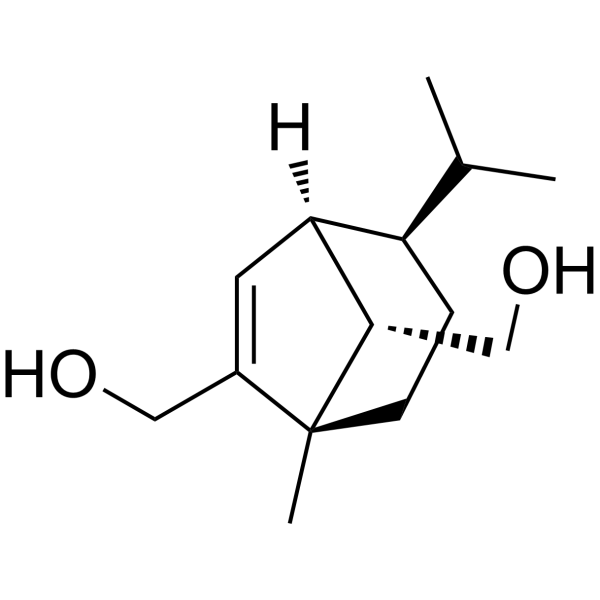 0 ImagesCat. No.: HY-N9036CAS No.: 405157-84-8
Drechslerine A has neuraminidase inhibitory activity (IC50: 0.79 μM). Drechslerine A is a terpene that can be isolated from endophytic Cochliobolus. Drechslerine A can be used for research of Influenza Virus.

-
Antibacterial agent 362
 0 ImagesCat. No.: HY-187128CAS No.: 562817-22-5
Antibacterial agent 362 is a broad-spectrum antibacterial agent. Antibacterial agent 362 exhibits broad-spectrum inhibitory activity against a variety of mycobacteria and Staphylococcus aureus, with a MIC50 of 235 μM against M. tuberculosis, while it shows no activity against Escherichia coli. Antibacterial agent 362 can be used in research related to tuberculosis and mycobacterial infections.
-
Artemisinin-13C,d4
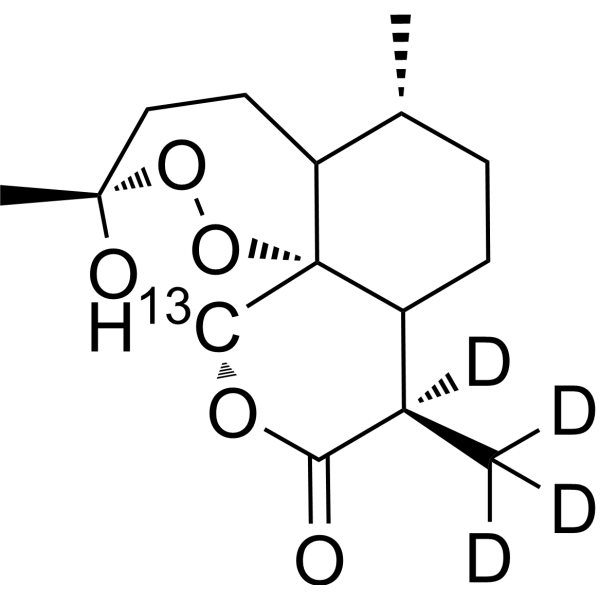 0 ImagesCat. No.: HY-B0094S3Synonyms: Qinghaosu-13C,d4; NSC 369397-13C,d4
Artemisinin-13C,d4 is 13C and deuterated labeled Artemisinin (HY-B0094). Artemisinin (Qinghaosu), a sesquiterpene lactone, is an anti-malarial agent isolated from the aerial parts of Artemisia annua L. plants. Artemisinin inhibits AKT signaling pathway by decreasing pAKT in a dose-dependent manner. Artemisinin reduces cancer cell proliferation, migration, invasion, tumorigenesis and metastasis and has neuroprotective effects.