



Amyloid-β
β-amyloid peptide; Aβ; Abeta
Amyloid-β (Aβ) denotes peptides of 36–43 amino acids that are crucially involved in Alzheimer's disease as the main component of theamyloid plaques found in the brains of Alzheimer patients. The peptides result from the amyloid precursor protein (APP), which is being cut by certain enzymes to yield Aβ. Amyloid-β molecules can aggregate to form flexible soluble oligomers which may exist in several forms. Amyloid-β peptide is due to overproduction of Aβ and/or the failure of clearance mechanisms. Amyloid-β self-aggregates into oligomers, which can be of various sizes, and forms diffuse and neuritic plaques in the parenchyma and blood vessels. Amyloid-β oligomers and plaques are potent synaptotoxins, block proteasome function, inhibit mitochondrial activity, alter intracellular Ca2+levels and stimulate inflammatory processes. Loss of the normal physiological functions of Aβ is also thought to contribute to neuronal dysfunction.
All Product Categories
-
Amyloid-β Inhibitors
(494)
View all products
-
Amyloid-β Agonists
(2)
View all products
-
Amyloid-β Antagonists
(5)
View all products
-
Amyloid-β Activators
(5)
View all products
-
Amyloid-β Modulators
(4)
View all products
-
Amyloid-β Chemicals
(7)
View all products
-
Amyloid-β Inducers
(5)
View all products
-
Amyloid-β Degraders
(6)
View all products
-
Amyloid-β Controls
(3)
View all products
-
Amyloid-β Substrate
(1)
View all products
-
Amyloid-β Ligands
(11)
View all products
-
Amyloid-β Related Products (773)
Related Products (773)

-
Antibodies (9)
-
TFEB activator 3
 0 ImagesTFEB activator 3 (compound 45) exhibits TFEB activation and lysosome biogenesis capabilities. TFEB activator 3 has effect on TFEB nuclear translocation with 44% (10μM 3h) and 97 % (30 μM 3h). TFEB activator 3 plays an important role in Alzheimer’s disease (AD). TFEB activator 3 can pass blodd brain barrier.
-
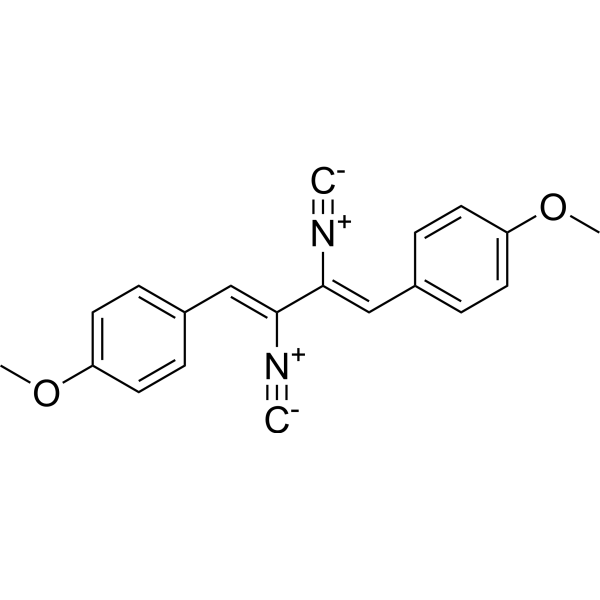
Amyloid-β-IN-3
 0 ImagesAmyloid-β-IN-3 (EX.113) is a selective γ-secretase inhibitor. Amyloid-β-IN-3 inhibits Aβ42 secretion in H4 cells with an EC50 value of 148 nM. Amyloid-β-IN-3 regulates the γ-secretase catalytic activity to decrease Aβ42 production, thereby alleviating neurotoxicity caused by Aβ deposition. Amyloid-β-IN-3 is promising for research of Alzheimer's disease (AD).
-
GSM III
 0 ImagesGSM III is a γ-Secretase complexe (GSEC) modulator. GSM III significantly regulates amyloid-β (Aβ) length at the extracellular interface between the protease (NCT, PSEN) and the substrate APPC99. GSM III can be used for Alzheimer's disease (AD) research.
-
Bepridil
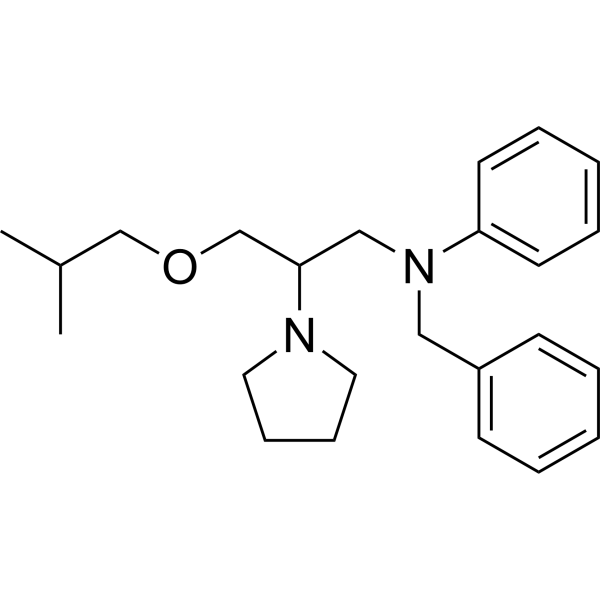 0 ImagesSynonyms: CERM 1978 free base; Org 5730Bepridil (CERM 1978 (free base); Org 5730) is an orally active non-selective calcium channel antagonist with multi-ion channel blocking activity. Bepridil modulates Calmodulin, the 20S proteasome, T-type/L-type calcium channels, cardiac sodium channels, multiple potassium channels, γ-secretase, β-secretase, and mitoKATP/sarcKATP channels. Bepridil acts as a hydroxyl radical scavenger, regulates mitochondrial and intracellular calcium handling, and exerts antiarrhythmic, antianginal, and cardioprotective effects. Bepridil alters amyloid precursor protein processing, reduces β-amyloid and thalamic calcium levels, restores seladin-1/DHCR24 expression, and improves sensorimotor recovery after cerebral ischemia. Bepridil also exhibits potent inhibitory effects on SARS-CoV-2 replication. Bepridil is used in studies related to stable angina, arrhythmias, cerebral ischemia, Alzheimer's disease, and SARS-CoV-2 infection.
-
CCKBR agonist-1
 0 ImagesCCKBR agonist-1 (Compound 3r1) is a Gq-protein-preferring cholecystokinin B receptor (CCKBR) agonist with an EC50 of 35 pM. CCKBR agonist-1 significantly increases the survival rate of neurons, with an EC50 of 37 pM. CCKBR agonist-1 can improve the cognitive decline in mice by upregulating α-secretase (ADAM10) and calcium signaling molecule PLCB4, reduce the number of amyloid β (Aβ) plaques, and promote long-term potentiation (LTP). CCKBR agonist-1 can be used for the study of Alzheimer's disease.
-
PBD-150
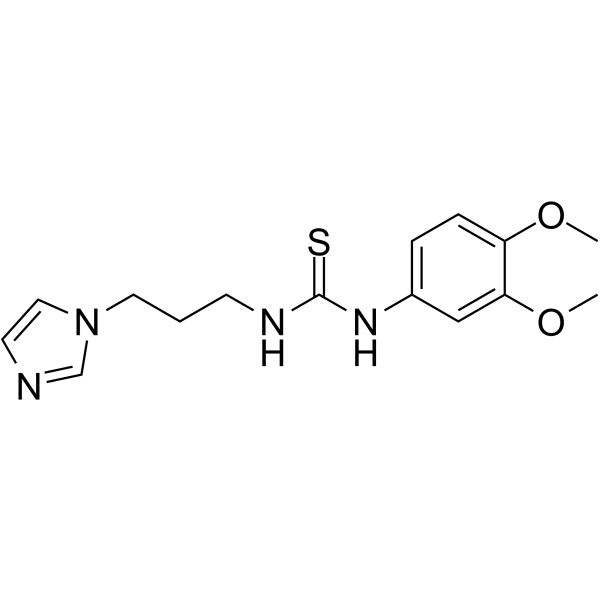 0 ImagesPBD-150 is a human glutaminyl cyclase (hQC) Y115E-Y117E variant inhibitor, with a Ki value of 490 nM.
-
L803-mts
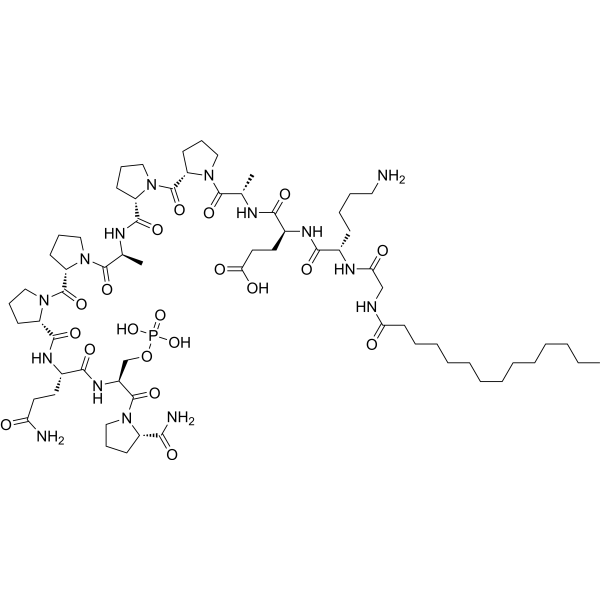 0 ImagesSynonyms: Myristoylated L 803; GSK-3β Inhibitor XIIIL803-mts (Myristoylated L 803) is a selective and substrate-competitive GSK-3 peptide inhibitor (IC50: 40 μM). L803-mts also reduces Aβ deposits and ameliorates cognitive deficits in 5XFAD mice. L803-mts shows antidepressive effect in the forced swimming test.
-
MS1262
 0 ImagesCat. No.: HY-176036CAS No.: 3070323-06-4MS1262 is a blood-brain barrier-permeable, selective inhibitor of histone methyltransferases G9a (EHMT2) and GLP (EHMT1), with an IC50 of 19 nM and a Kd of 74 nM against G9a, and an IC50 of 6 nM and a Kd of 19 nM against GLP. MS1262 reduces the dimethylation level of histone H3 lysine 9 and decreases the size of Aβ plaques. MS1262 restores hippocampal long-term potentiation (LTP) and miniature excitatory postsynaptic current (sEPSC) frequency, ameliorates spatial memory deficits, and reverses anxiety-like and depression-like behaviors in AD model mice. MS1262 reverses the expression/phosphorylation levels of early AD biomarkers, providing support for stage-specific diagnosis of AD. MS1262 reduces the risk of thrombus rupture. MS1262 can be used in research related to Alzheimer's disease, colorectal cancer, and triple-negative breast cancer.
-
QM-FN-SO3 ammonium
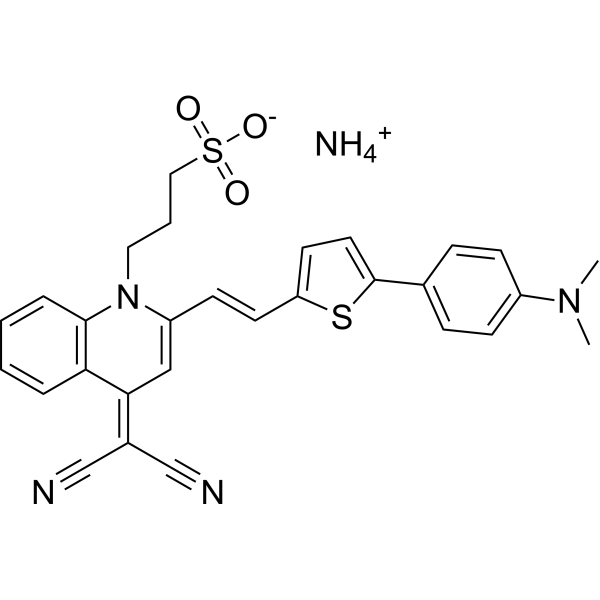 0 ImagesCat. No.: HY-D2268AQM-FN-SO3 ammonium is a BBB-penetrable near-infrared (NIR) aggregation-induced emission (AIE)-active probe for Aβ plaques. QM-FN-SO3 ammonium can be used for in vivo detection of Aβ plaques. QM-FN-SO3 ammonium has ultra-high S/N ratio, binding affinity, and high-performance NIR emission.
-
3-Hydroxyindole
 0 ImagesCat. No.: HY-W277951CAS No.: 480-93-33-Hydroxyindole is a hydroxyindole compound. 3-Hydroxyindole can be isolated from the fruits of Aristotelia chilensis. 3-Hydroxyindole inhibits Ferroptosis and scavenges DPPH free radicals. 3-Hydroxyindole protects against β-amyloid-induced toxicity. 3-Hydroxyindole exhibits antioxidant activity. 3-Hydroxyindole can be used in research related to neurodegenerative diseases.
-
DN5355
 0 ImagesDN5355 is a small molecule compound that targets amyloid β protein (Aβ) and hyperphosphorylated tau protein. DN5355 can inhibit the aggregation of Aβ and tau protein and disaggregate the formed Aβ and tau protein fibers. DN5355 can be used in the study of Alzheimer's disease.
-
Dehydroevodiamine
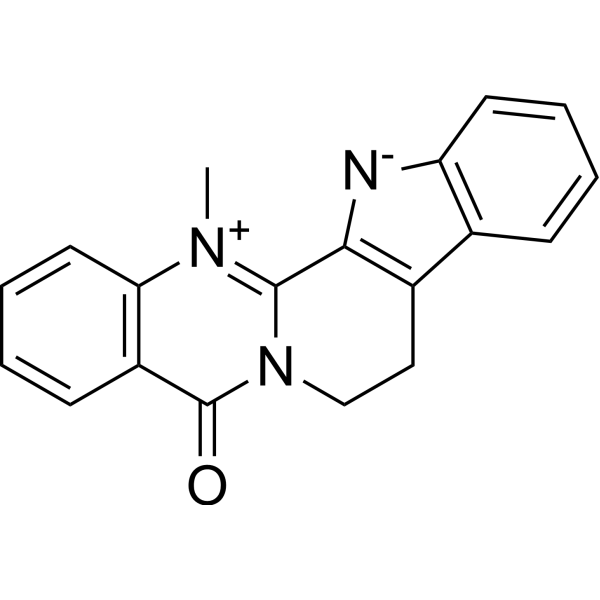 0 ImagesDehydroevodiamine is a blood-brain barrier-permeable, orally effective AChE and BACE1 inhibitor (IC50 = 40.96 μM). Dehydroevodiamine is isolated and extracted from Evodia rutaecarpa. Dehydroevodiamine attenuates neurotoxicity through multiple targets by inhibiting BACE1 to block Aβ production, inhibiting AChE activity, scavenging ROS, and suppressing calcium influx. Dehydroevodiamine can be used for research on Alzheimer's disease, cerebral ischemia, vascular dementia, and other cognitive disorder-related diseases.
-
Hoechst 34580
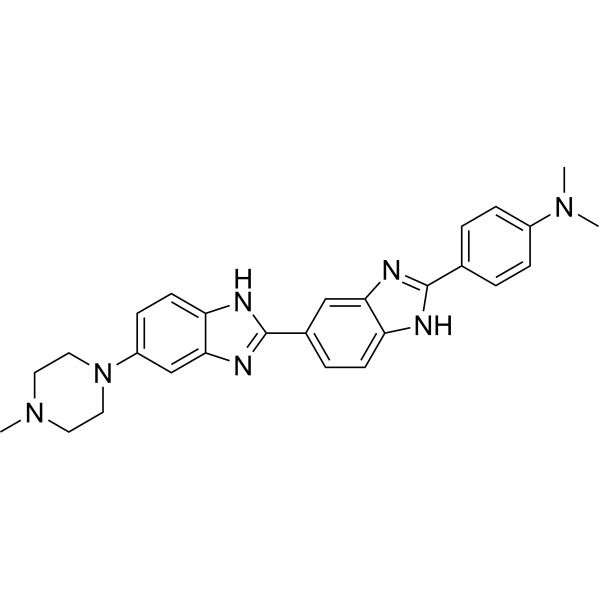 0 ImagesSynonyms: HOE 34580Hoechst 34580 is a marker dye in Hoechst series. Hoechst is A live nuclear marker dye. Hoechst binds to the grooves in the DNA double strand, which tends to be A/ T-rich DNA strand. Although it binds to all nucleic acids, the A/ T-rich double strand DNA significantly enhances fluorescence intensity Therefore,Hoechst dye can be used for living cell labeling. The fluorescence intensity of Hoechst dye increases with the increase of pH of solution.
-
Eprodisate disodium
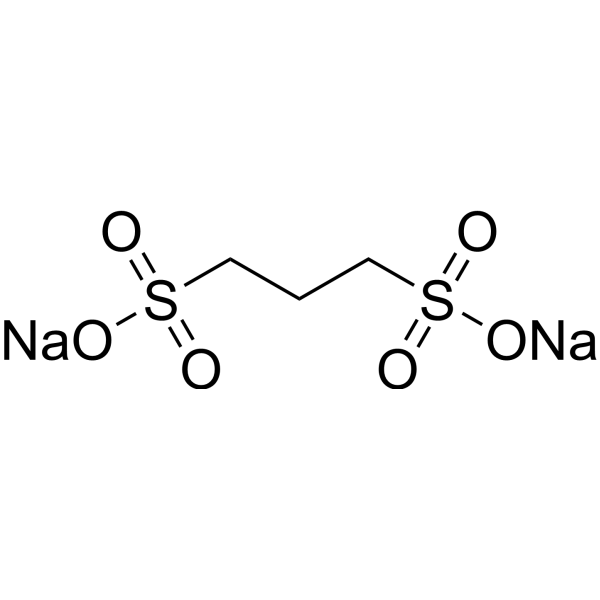 0 ImagesSynonyms: NC-503Eprodisate disodium (NC-503) is the orally available disodium salt form of Eprodisate, a negatively charged sulfonated inhibitor of fibrillogenesis, that can be used in the treatment of amyloid A (AA) amyloidosis.
-
Ile-Phe
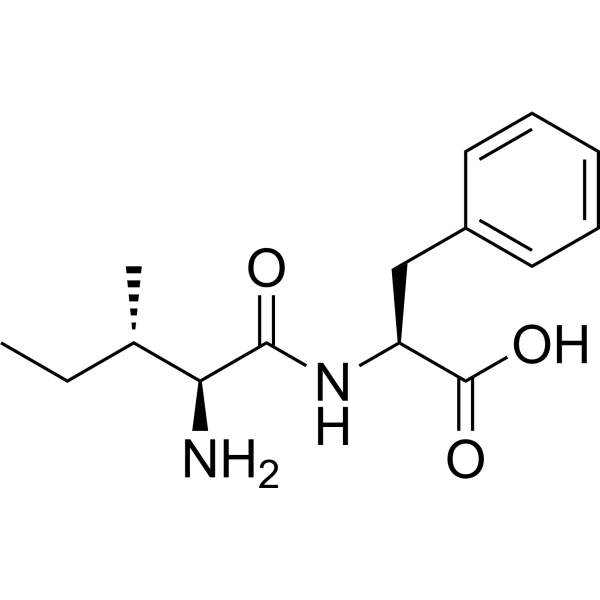 0 ImagesCat. No.: HY-P4637CAS No.: 22951-98-0Synonyms: H-Ile-Phe-OHIle-Phe is a dipeptide that self-associates in aqueous solution to form a transparent thermoreversible gel formed by a network of fibrillar nanostructures. It may be involved in triggering self-assembly processes such as amyloid formation.
-
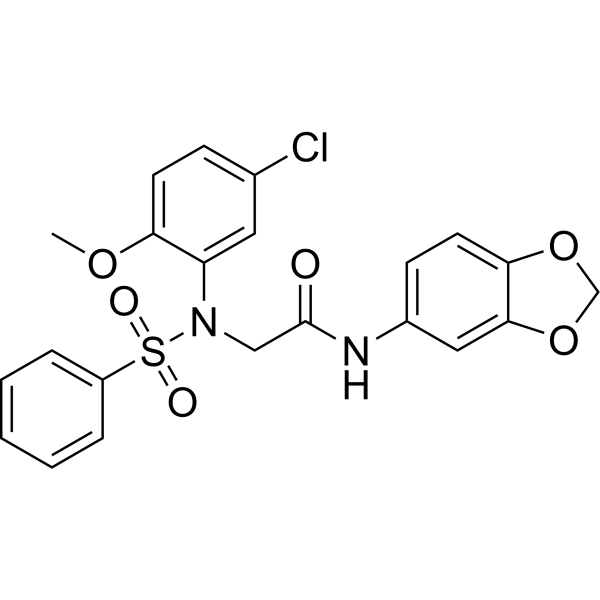
(R)-JNJ-40418677
 0 Images(R)-JNJ-40418677 is the R-enantiomer of JNJ-40418677 (HY-100604).
-
Lithium orotate
 0 ImagesLithium orotate is an orally active lithium supplement with reduced binding that can bypass amyloid sequestration in AD mice models. Lithium orotate can prevent Aβ plaque deposition and phospho-tau accumulation and reverse AD pathology, neuroinflammatory changes and memory loss in AD mice models and ageing wild-type mice. Lithium orotate can be used for the research of alcoholism and Alzheimer’s disease.
-
Azeliragon-d9
 0 ImagesCat. No.: HY-50682SPurity: 98.83%Synonyms: TTP488-d9; PF-04494700-d9Azeliragon-d9 (TTP488-d9) is the deuterium labeled Azeliragon (HY-50682). Azeliragon (TTP488) is an orally bioavailable inhibitor of the receptor for advanced glycation end products (RAGE) in development as a potential treatment to slow disease progression with mild Alzheimer’s disease (AD). Azeliragon also can cross the blood-brain barrier (BBB).




