



Apoptosis Inducer
-
PROTAC PARP2 degrader-1
 0 ImagesCat. No.: HY-183013CAS No.: 2925182-32-5
PROTAC PARP2 degrader-1 is an orally active PARP2 PROTAC degrader with a DC50 of 2 μM. PROTAC PARP2 degrader-1 potently inhibits the enzymatic activities of PARP1 (IC50 = 2.74 nM) and PARP2 (IC50 = 0.32 nM), with approximately 10-fold higher selectivity for PARP2. PROTAC PARP2 degrader-1 induces cell cycle arrest and apoptosis, and exhibits significant anti-tumor efficacy in mouse models. PROTAC PARP2 degrader-1 can be used for the research of triple-negative breast cancer.
-
Arachidonoyl ethanolamide phosphate
 0 ImagesCat. No.: HY-134173CAS No.: 183323-26-4
-
Psalmotoxin 1 TFA
 0 ImagesCat. No.: HY-P1411APurity: 99.22%Synonyms: PcTx1 TFA; Psalmopoeus cambridgei toxin-1 TFA
Psalmotoxin 1 (PcTx1) TFA is a protein toxin that can bind at subunit-subunit interfaces of acid-sensing ion channel 1a (ASIC1a). Psalmotoxin 1 TFA is a potent and slective ASIC1a inhibitor (IC50: 0.9 nM) by increasing the apparent affinity for H+ of ASIC1a. Psalmotoxin 1 TFA can induce cell apoptosis, also inhibits cell migration, proferliration and invasion of cancer cells. Psalmotoxin 1 TFA can be used in the research of cancers, or neurological disease.
-
FD274
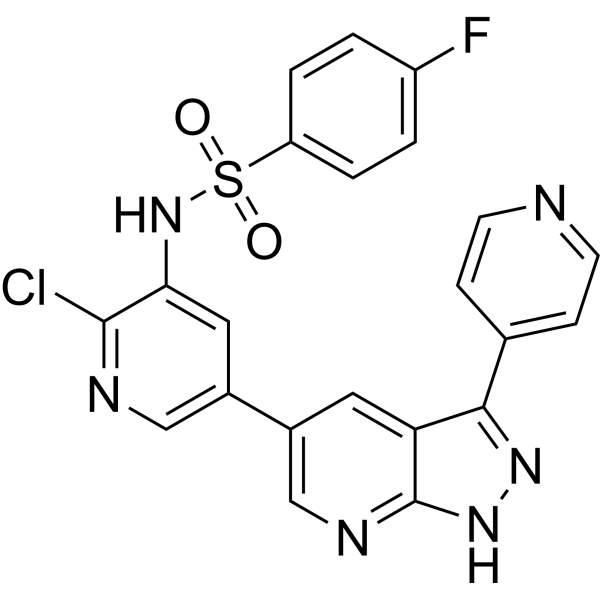 0 Images
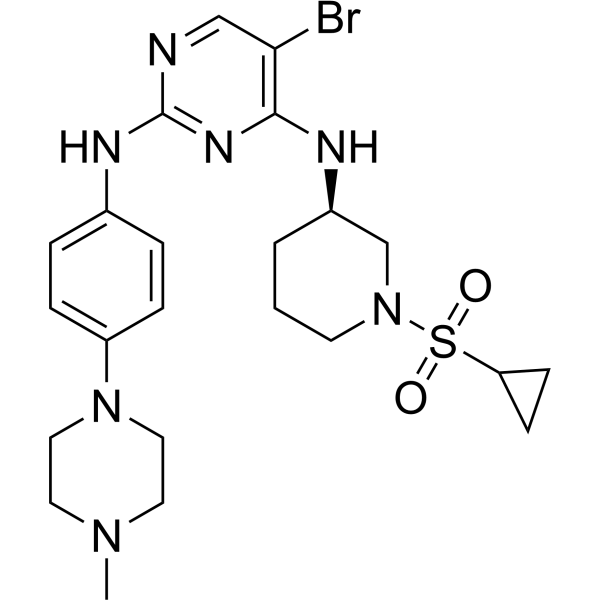
FD274 is a highly potent PI3K/mTOR dual inhibitor with IC50s of 0.65 nM, 1.57 nM, 0.65 nM, 0.42 nM, and 2.03 nM against PI3Kα/β/γ/δ and mTOR, respectively. FD274 exhibits significant anti-proliferation of AML cell lines (HL-60 and MOLM-16). FD274 arrests HL-60 cell cycle at G1 phase and increases apoptosis. FD274 demonstrates dose-dependent inhibition of tumor growth in the HL-60 xenograft model. FD274 has the potential for acute myeloid leukemia research.
-
Bizaxofusp
 0 ImagesCat. No.: HY-P990708CAS No.: 1236019-35-4Synonyms: MDNA55; NBI-3001; PRX-321
Bizaxofusp (MDNA55) is a fusion protein formed by the linkage of IL-4 and a truncated Pseudomonas exotoxin. Bizaxofusp can bind to IL-4 receptors on the surface of tumor cells and be internalized, and its exotoxin moiety can inhibit protein synthesis and induce tumor cell apoptosis. Bizaxofusp can be used in the study of cancer.
-
Thalidomide-piperazine hydrochloride
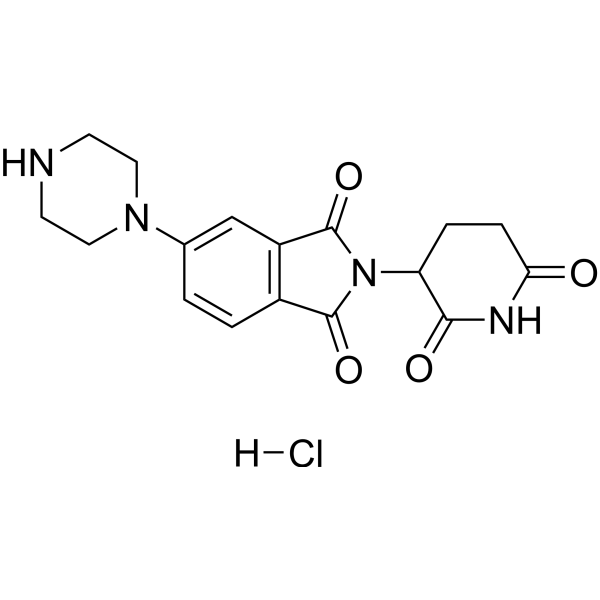 0 Images
Thalidomide-piperazine hydrochloride is a synthetic E3 ligase ligand-linker conjugate, comprising a cereblon ligand based on Thalidomide (HY-14658) and one linker. Thalidomide-piperazine hydrochloride can be used in studies related to PROTAC synthesis.

-
Floxuridine (Standard)
 0 ImagesSynonyms: 5-Fluorouracil 2'-deoxyriboside (Standard)
Floxuridine (Standard) is the analytical standard of Floxuridine. This product is intended for research and analytical applications. Floxuridine (5-Fluorouracil 2'-deoxyriboside) is a pyrimidine analog and known as an oncology antimetabolite. Floxuridine inhibits Poly(ADP-Ribose) polymerase and induces DNA damage by activating the ATM and ATR checkpoint signaling pathways in vitro. Floxuridine is a extreamly potent inhibitor for S. aureus infection and induces cell apoptosis. Floxuridine has antiviral effects against HSV and CMV.
-
Bortezomib-d8
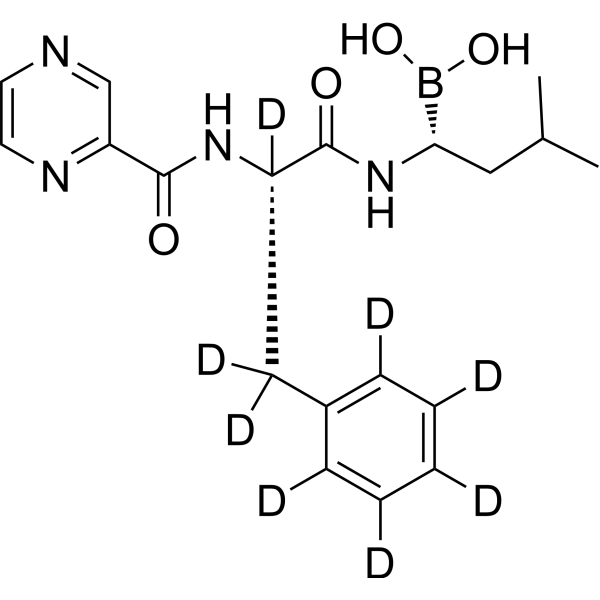 0 ImagesCat. No.: HY-10227SSynonyms: PS-341-d8; LDP-341-d8; NSC 681239-d8
Bortezomib-d8 is the deuterium labeled Bortezomib. Bortezomib (PS-341) is a reversible and selective proteasome inhibitor, and potently inhibits 20S proteasome (Ki=0.6 nM) by targeting a threonine residue. Bortezomib disrupts the cell cycle, induces apoptosis, and inhibits NF-κB. Bortezomib is the first proteasome inhibitor anticancer agent. Bortezomib can be used for the study of multiple myeloma (MM). Bortezomib effectively inhibits TREM2 expression in tumor-associated macrophages (TAMs).
-
Thalidomide-O-amido-C6-NH2 hydrochloride
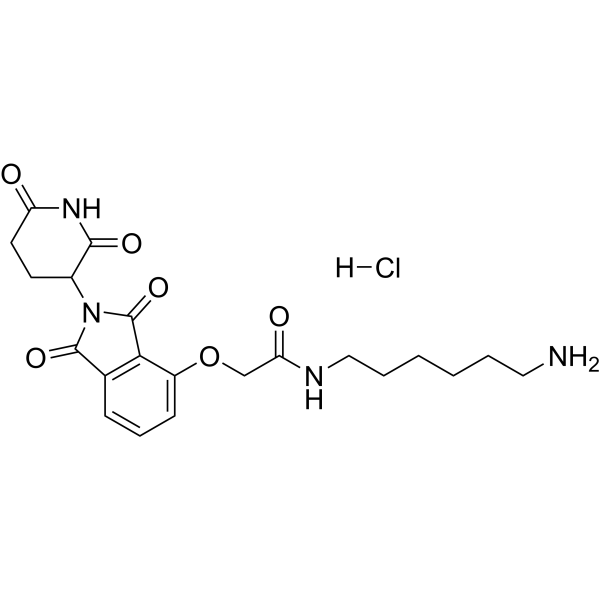 0 Images
Thalidomide-O-amido-C6-NH2 hydrochloride, a synthesized E3 ligase ligand-linker conjugate that incorporates the Thalidomide based cereblon ligand and a linker, can be used in the synthesis of PROTACs.
-
Hypericin-d10
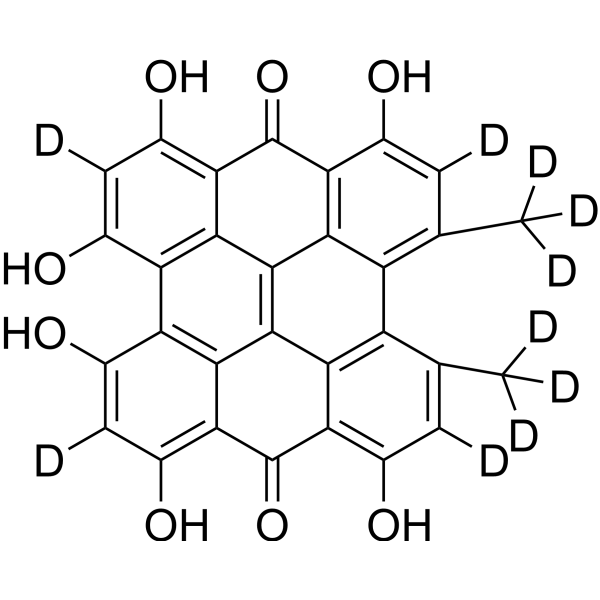 0 ImagesCat. No.: HY-N0453S
Hypericin-d10 is the deuterium labeled Hypericin. Hypericin is a photosensitive antiviral with anticancer and antidepressant agent derived from Hypericum perforatum. It can inhibit tyrosine kinases with IC50 of 7.5 μM.
-
Topoisomerase II inhibitor 20 TFA
 0 ImagesCat. No.: HY-158061A
Topoisomerase II inhibitor 20 TFA is a potent topoisomerase II inhibitor with IC50 of 0.98 µM. Topoisomerase II inhibitor 20 TFA can induce apoptosis and has broad-spectrum anticancer activity.
-
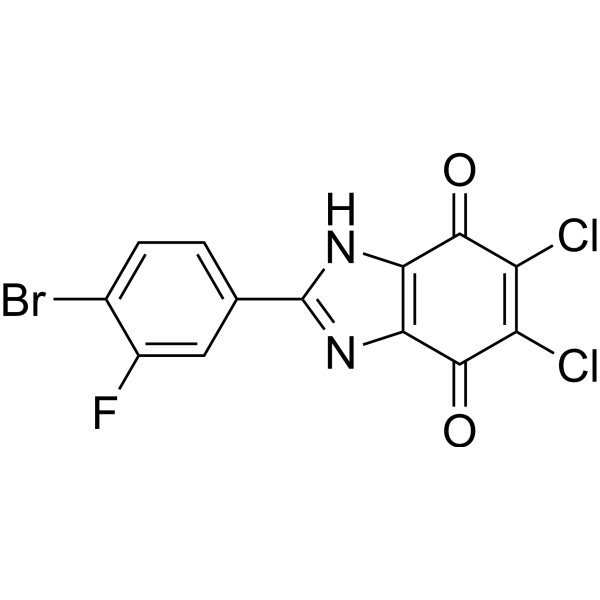
MD102
 0 Images
MD102 is an orally active transglutaminase 2 (TG2) inhibitor with an IC50 of 0.35 μM. MD102 binds to the β-sandwich domain of TG2, disrupts the interaction between TG2 and p53, stabilizes p53, and reduces the activity of p-AKT and p-mTOR signaling pathways. MD102 induces cell apoptosis and inhibits tumor growth. MD102 can be used for the research of renal cell carcinoma.
-
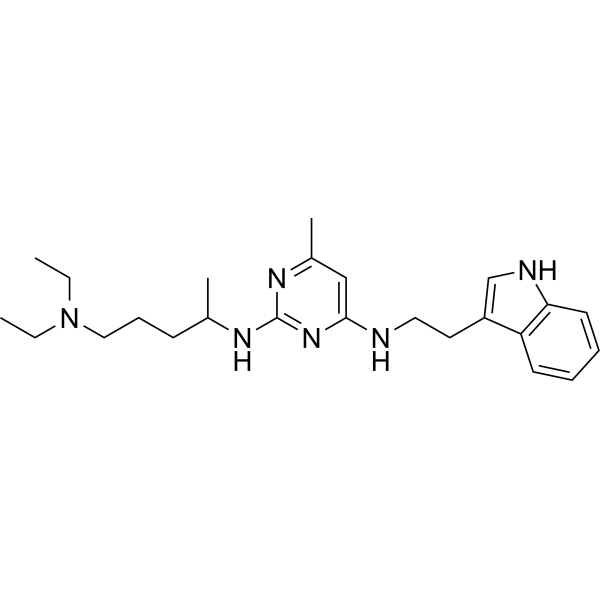
AZA197
 0 Images
AZA197 is a selective small molecule inhibitor of Cdc42.AZA197 suppresses colon cancer cell proliferation, cell migration, invasion and increases apoptosis by down-regulating the PAK1 and ERK signaling pathways in vitro. AZA197 reduces tumor growth and significantly increases mouse survival in SW620 tumor xenografts. AZA197 can be used for the study of colon cancer.

-
(S)-Edelfosine
 0 ImagesSynonyms: (S)-ET-18-OCH3
(S)-Edelfosine ((S)-ET-18-OCH3) is the (S)-enantiomer of Edelfosine (ET-18-OCH3) (HY-108610C). Edelfosine is a selective antitumour lipid targeting apoptosis through intracellular activation of Fas/CD95 Death receptor.
-
GEA 3162
 0 Images
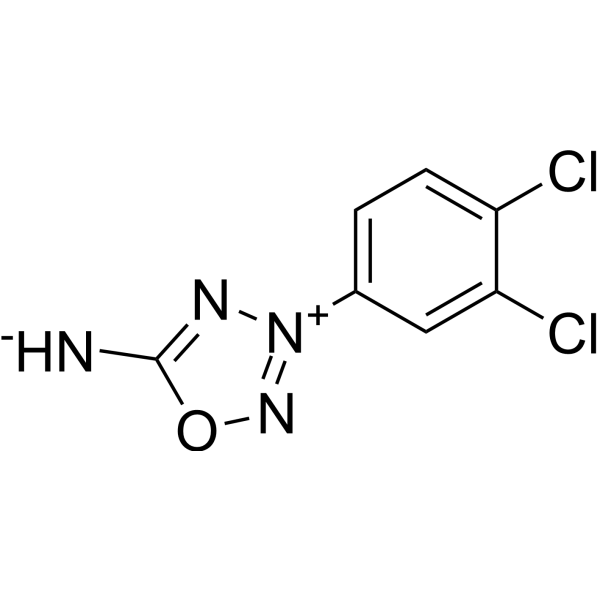
GEA 3162 is an orally active compound that acts as a NO/ONOO⁻ donor. GEA 3162 significantly inhibits the activation of human polymorphonuclear leukocytes (PMNs) through the cGMP pathway, inhibits the release of inflammatory mediators, and exerts anti-inflammatory and protective effects. GEA 3162 induces apoptosis of neutrophils and bone marrow cells by activating caspase-2/3/8/9 through the ONOO⁻ pathway. GEA 3162 has a bidirectional effect in the rat gastric ulcer model: at low doses, it significantly reduces gastric mucosal damage, while at high doses, it aggravates the ulcer area. GEA 3162 can be used for research on inflammatory conditions such as gastric ulcers.
-
DHQZ-17
 0 Images
DHQZ-17 is a HNF4A inhibitor. DHQZ-17 triggers apoptosis in head and neck squamous cell carcinoma cells. DHQZ-17 can be used for the research of head & neck squamous cell carcinoma.



