



Caspase 3 Agonist
- 1
- 2
-
ASX-173
 0 Images
ASX-173 is an orally active inhibitor of asparagine synthetase (ASNS) (IC50 = 0.113 μM, Ki = 0.4 nM). ASX-173 enhances the anticancer activity of L-asparaginase (ASNase) (HY-P1923). ASX-173 disrupts nucleotide synthesis and induces leukemia cell cycle arrest, apoptosis and autophagy in leukemia cells in combination with ASNase. ASX-173 slows the growth of OCI-AML2 xenografts in combination with ASNase. ASX-173 is indicated for the study of acute lymphoblastic leukemia, acute myeloid leukemia, colorectal cancer, and other cancers.
-
Eftozanermin alfa
 0 ImagesSynonyms: ABBV-621
Eftozanermin alfa (ABBV-621) is a tumor necrosis factor-related apoptosis-inducing ligand receptor (TRAIL-R) agonist. Eftozanermin alfa is a fusion protein consisting of a mutant immunoglobulin G1-Fc linked to 2 single-chain trimers of TRAIL. Eftozanermin alfa induces apoptosis in tumor cells by activation of death receptors (DR4 receptor and DR5 receptor) with Kds of 780 nM and 635 nM. Eftozanermin alfa can be used for the research of multiple solid and heme malignancies.
-
MCB-36
 0 Images
MCB-36 is a pan-KRAS PROTAC degrader that recruits VHL, with a Kd value of approximately 1 pM against KRAS, and it does not affect KRAS transcription. MCB-36 continuously degrades various KRAS mutants, inhibits oncogenic KRAS signaling pathways, reduces p-ERK levels, and induces apoptosis, thereby suppressing the growth of KRAS-dependent cancer cells. In vivo, MCB-36 inhibits tumor growth, overcomes resistance to KRAS G12C inhibitors, remodels the tumor immune microenvironment and enhances immune cell infiltration. MCB-36 can be used in research related to colorectal cancer and lung cancer.
-
IGN523
 0 ImagesCat. No.: HY-P991669Synonyms: AML-01
IGN523 is an anti-CD98 antibody (hCD98, KD = 0.55 nM). IGN523 induces antibody-dependent cell-mediated cytotoxicity (ADCC) activity, lysosomal membrane permeabilization, and inhibition of essential amino acid transport, ultimately leading to caspase-3 and caspase-7-mediated apoptosis of tumor cells. IGN523 inhibits tumor growth in multiple tumor xenograft models. IGN523 is useful in the research of non-small cell lung cancer (NSCLC), acute myeloid leukemia (AML), and other cancers..
-
Berubicin
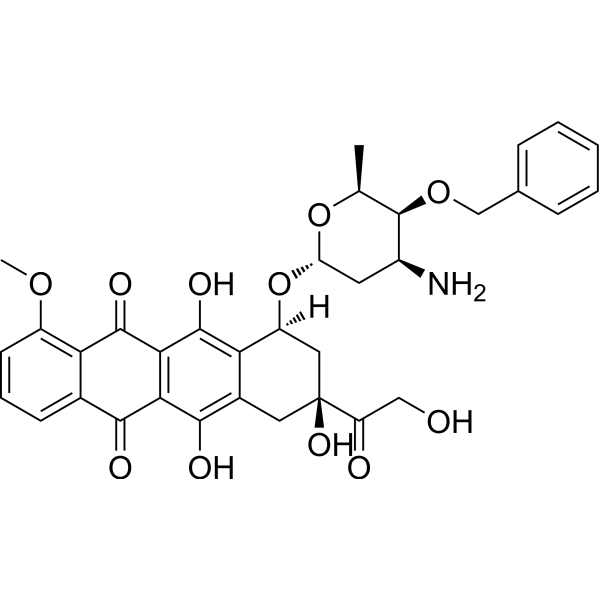 0 ImagesCat. No.: HY-14942CAS No.: 677017-23-1Synonyms: RTA 744 free base; WP 744 free base; WP 769
Berubicin (RTA 744 free base) is a Doxorubicin (HY-15142A) analog that can cross the blood-brain barrier. Berubicin inhibits P-gp and MRP1-mediated efflux and suppresses glioblastoma multiforme (GBM). Berubicin exerts toxic effects on leukemia cells by activating nuclear factor κB (NF-κB) and induces apoptosis in neuroblastoma cells. Berubicin can be used in the study of tumors related to the nervous system.
-
BRD-810
 0 Images
BRD-810 is a potent and selective MCL1 inhibitor with a Kd of 0.3 nM. BRD-810 can specifically block the BH3 binding groove of MCL1, while having little effect on other anti-apoptotic proteins (such as Bcl-2, Bcl-xL). BRD-810 effectively destroys the MCL1-BAK complex (IC50 = 1.2 nM) in cancer cells, rapidly activates Caspase and induces cell apoptosis. BRD-810 can be used in the research of various cancers such as hematological tumors and solid tumors.
-
Salvianolic acid F
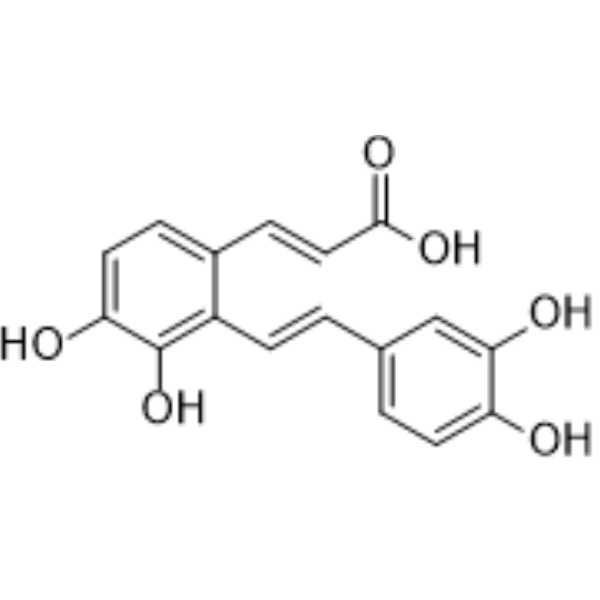 0 Images
Salvianolic acid F is a KRAS inhibitor, especially for KRAS G12D. Salvianolic acid F inhibits NF-kB, MMP-9, and NO simultaneously. Salvianolic acid F inhibits cancer cell growth, invasion, and migration and induces apoptosis via the EP300/PI3K/AKT pathway in vitro. Salvianolic acid F inhibits the growth of KRAS-dependent lung cancer cells via the PI3K/AKT signaling pathway in vivo. Salvianolic acid F can be used in the research of various cancers, including KRAS G12D-driven non-small cell lung cancer (NSCLC) and ovarian cancer.
-
CD00509
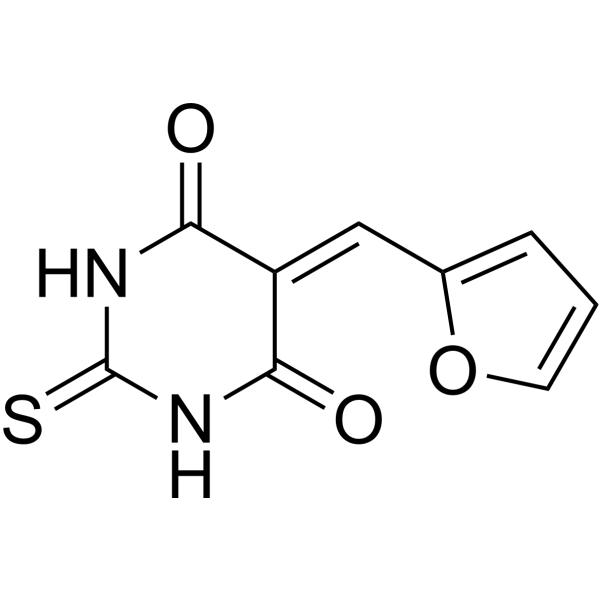 0 Images
CD00509 is a tyrosyl-DNA phosphodiesterase (PDE) Tdp1 inhibitor with an IC50 of 0.71 μM. CD00509 increases DNA damage and promotes apoptosis of MCF-7 cells. CD00509 can sensitize breast cancer cells and wild-type murine embryonic fibroblasts (MEFs) to Camptothecin (CPT) (HY-16560). CD00509 can be used for the study of cancers such as breast cancer.
-
trans-Trimethoxyresveratrol
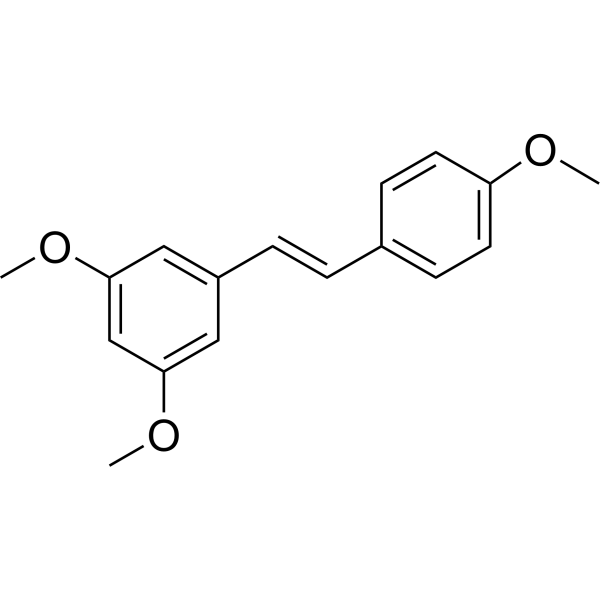 0 ImagesSynonyms: trans-trismethoxy Resveratrol; (E)-Resveratrol trimethyl ether; trans-3,5,4'-Trimethoxystilbene
Trans-Trimethoxyresveratrol (trans-trismethoxy Resveratrol; (E)-Resveratrol trimethyl ether; trans-3,5,4'-Trimethoxystilbene) is an orally active natural derivative of Resveratrol (HY-16561). Trans-Trimethoxyresveratrol has an enhanced anticancer profile compared to Resveratrol, exhibiting higher potency than resveratrol, with improved cancer cell proliferation inhibition, induction of cell cycle arrest, decreased metastasis, and increased apoptosis. Trans-Trimethoxyresveratrol causes microtubule disassembling and tubulin depolymerization and exerts anti-angiogenic effects through VEGFR2. Trans-Trimethoxyresveratrol can be used for the studies of anti-angiogenic and anti-cancer (such as non-small cell lung cancer and osteosarcoma).
-
MCB-294
 0 ImagesCat. No.: HY-176785SPurity: 98.04%
MCB-294 is a dual-state pan-KRAS inhibitor that selectively inhibits KRAS over NRAS and HRAS. MCB-294 capable of binding both the active (GTP-bound) and inactive (GDP-bound) forms of KRAS with Kds of approximately 1 pM and 10 nM, respectively. MCB-294 broadly impairs the growth of hTERT-HPNE cells expressing G12D, G12C, G12V, G12S, G13D, and wild-type KRAS, with IC50s of approximately 700 nM. MCB-294 induces irreversible apoptosis in KRAS-mutated tumors. MCB-294 effectively suppress KRASG12C inhibitor-resistant cancer cells and remodel the tumor immune microenvironment. MCB-294 can be used for the study of pancreatic cancer, colorectal cancer and lung cancer.
-
DeFer-2
 0 Images
DeFer-2 is a Ferritin PROTAC degrader with a Kd value of 17.1 μM. DeFer-2 recruits the VHL E3 ligase to induce targeted degradation of ferritin via the ubiquitin-proteasome system, triggers iron overload stress in cancer cells, and further activates caspase 3-GSDME-mediated pyroptosis through massive ROS production. DeFer-2 can be used for research related to melanoma.
-
CIDD-8633
 0 ImagesCat. No.: HY-175202CAS No.: 1428356-95-9
CIDD-8633 is a potent DDR2 inhibitor with an IC50 of 6.105 μM. CIDD-8633 inhibits cell migration and halts the cell cycle and induces apoptosis, significantly suppressing pancreatic ductal adenocarcinoma (PDAC) tumor growth. CIDD-8633 can be used for the study of pancreatic cancer such as PDAC.
-
SF-9-2
 0 ImagesCat. No.: HY-175236CAS No.: 3053768-78-5
SF-9-2 is a PD-L1/PD-1 binding inhibitor (IC50 = 24.9 nM). SF-9-2 inhibits epithelial-mesenchymal transition, migration, invasion, and proliferation of SK-N-SH cells, and also induces apoptosis and cell cycle arrest. SF-9-2 blocks PD-L1-induced SK-N-SH cell growth through the MAPK signaling pathway. SF-9-2 restores GSK-3β activity and enhances PD-L1 degradation through the ubiquitin-proteasome pathway. SF-9-2 inhibits tumor growth in the SK-N-SH NOG mouse model without significant toxicity. SF-9-2 also acts as an immune checkpoint inhibitor, blocking PD-L1 to restore T cell function. SF-9-2 can be used in neuroblastoma research.
-
Apoptosis inducer 44
 0 ImagesCat. No.: HY-175815
Apoptosis inducer 44 is an apoptosis inducer. Apoptosis inducer 44 triggers apoptosis in MDA-MB-231 cells by increasing the levels of Bax and Cyt C, reducing Bcl-2, and initiating caspase-3 cleavage. Apoptosis inducer 44 suppresses the invasion and migration of MDA-MB-231 cells by down-regulating MMP-2 and MMP-9 expression and up-regulating E-cadherin protein levels. Apoptosis inducer 44 can be used for the study of breast cancer.
-
DNH28
 0 ImagesCat. No.: HY-175037
DNH28 is a potent NF-κB and MAPK inhibitor with an IC50 of 0.93 μM against HepG2 cells. DNH28 promotes apoptosis by down-regulating the expression of Bcl-2, up-regulating the expression of BAX and Cleaved-caspase-3. DNH28 blocks the cell cycle and inhibits migration. DNH28 can be used for the study of hepatocellular carcinoma (HCC).
-
VEGFR-2-IN-70
 0 ImagesCat. No.: HY-175019
VEGFR-2-IN-70 is a potent VEGFR-2 inhibitor with an IC50 of 18.04 nM. VEGFR-2-IN-70 exhibits cytotoxicity against A549 and MCF-7 cancer cells with IC50 values of 0.43 μM and 3.8 μM, respectively. VEGFR-2-IN-70 induces G1 cell cycle arrest and apoptosis in lung cancer cells. VEGFR-2-IN-70 is useful in cancer research.
-
TP-110
 0 ImagesCat. No.: HY-118522CAS No.: 688737-95-3
TP-110 is a proteasome inhibitor. TP-110 specifically inhibits the protease-like activity of the 20S proteasome, but does not affect the trypsin-like or peptidyl-glutamyl peptide hydrolysis activity. TP-110 inhibits the NF-κB pathway, activates caspase-8, -9, and -3, and causes PARP cleavage, significantly reducing the levels of cIAP-1 and XIAP. TP-110 causes cell cycle arrest at the G2/M phase and promotes apoptosis of cancer cells. TP-110 can be used in cancer research of prostate cancer and multiple myeloma, etc.
-
STAT3/NF-κB-IN-1
 0 ImagesCat. No.: HY-175227
STAT3/NF-κB-IN-1 is a potentSTAT3 and NF-κB inhibitor with IC50s of 5.86 (STAT3) and 4.22 μM (NF-κB) in 4T1 cells. STAT3/NF-κB-IN-1 is able to induce apoptosis via its upregulation on key apoptotic regulators; caspases-3/9, Bax and downregulation of Bcl-2. STAT3/NF-κB-IN-1 exerts considerable anticancer activity against breast cancer cell lines and reduces tumor volume in vivo. STAT3/NF-κB-IN-1 can be used for the study of breast cancer.
-
FAK-IN-28
 0 ImagesCat. No.: HY-175039
FAK-IN-28 is an orally active FAK inhibitor (IC50 = 0.4 nM). FAK-IN-28 exhibits dual antiproliferative and anti-metastatic properties. FAK-IN-28 triggers caspase-3-dependent apoptosis via ROS elevation. FAK-IN-28 inhibits tumor growth without causing weight loss or hepatotoxicity. FAK-IN-28 is useful in the study of FAK-driven malignancies, such as colon cancer, cervical cancer, triple-negative breast cancer, and melanoma.
-
Topoisomerase I/II-IN-1
 0 ImagesCat. No.: HY-175034
Topoisomerase I/II-IN-1 is a dual inhibitor of topoisomerase I/II. Topoisomerase I/II-IN-1 induces G2/M arrest and apoptosis in cancer cells by upregulating p53, p21, and Bax mRNA levels, caspase-3 protein levels, and the Bax/Bcl-2 ratio, while downregulating Bcl-2. Topoisomerase I/II-IN-1 is useful in the study of various cancers, including melanoma, renal cancer, colorectal cancer, and breast cancer.
- 1
- 2



