HBV
Hepatitis B virus
HBV (Hepatitis B virus), abbreviated HBV, is a species of the genus Orthohepadnavirus, which is likewise a part of the Hepadnaviridae family of viruses. HBV causes the disease hepatitis B. The hepatitis B virus is classified as the type species of the Orthohepadnavirus, which contains three other species: the Ground squirrel hepatitis virus, Woodchuck hepatitis virus, and theWoolly monkey hepatitis B virus. The genus is classified as part of the Hepadnaviridae family. HBV is divided into four major serotypes (adr, adw, ayr, ayw) based on antigenic epitopes present on its envelope proteins, and into eight genotypes (A–H) according to overall nucleotide sequence variation of the genome. The genotypes have a distinct geographical distribution and are used in tracing the evolution and transmission of the virus. Differences between genotypes affect the disease severity, course and likelihood of complications, and response to treatment and possibly vaccination.
All Product Categories
-
HBV Related Products (383)
Related Products (383)

-
Antibodies (2)
-
Besifovir Dipivoxil maleate
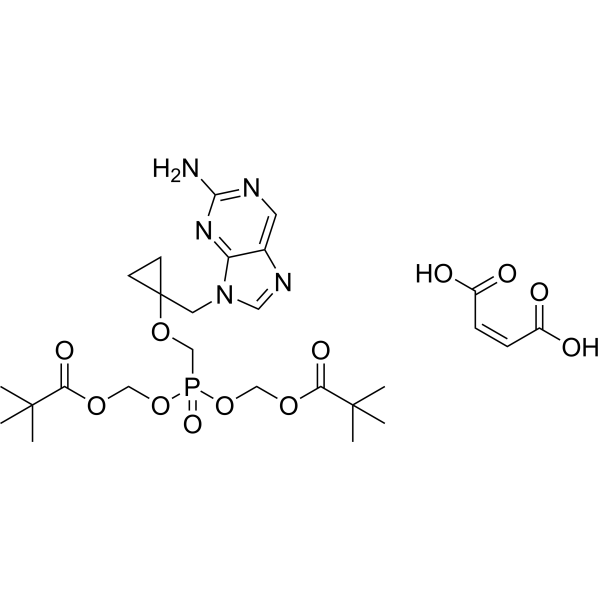 0 ImagesCat. No.: HY-19447ACAS No.: 1039623-01-2Synonyms: LB80380 maleateBesifovir Dipivoxil maleate (LB80380 maleate) is an oral proagent of LB80317. Besifovir Dipivoxil maleate (LB80380 maleate) is effective in hepatitis B virus (HBV) DNA suppression for both treatment-naive and lamivudine-resistant chronic hepatitis B (CHB) patients in preliminary studies[2]
-
SHR5133
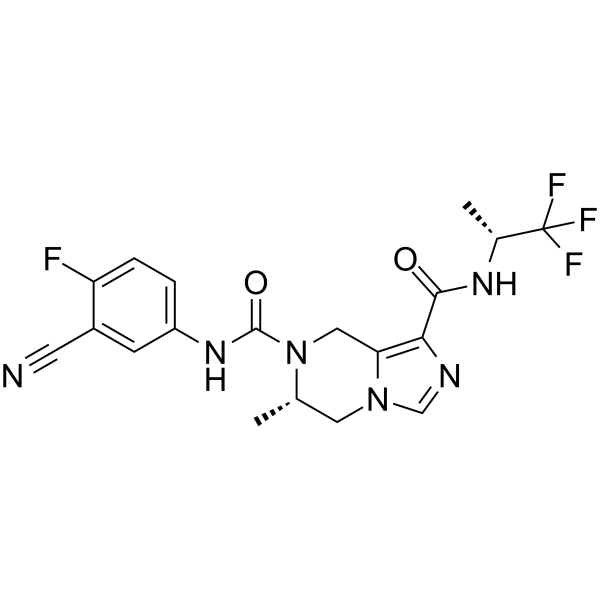 0 ImagesCat. No.: HY-144319CAS No.: 2270943-23-0
-
Bepirovirsen sodium scrambled negative control
 0 ImagesCat. No.: HY-147217CBepirovirsen sodium scrambled negative control is the sequence scrambled negative control of Bepirovirsen sodium.
-
Firzacorvir
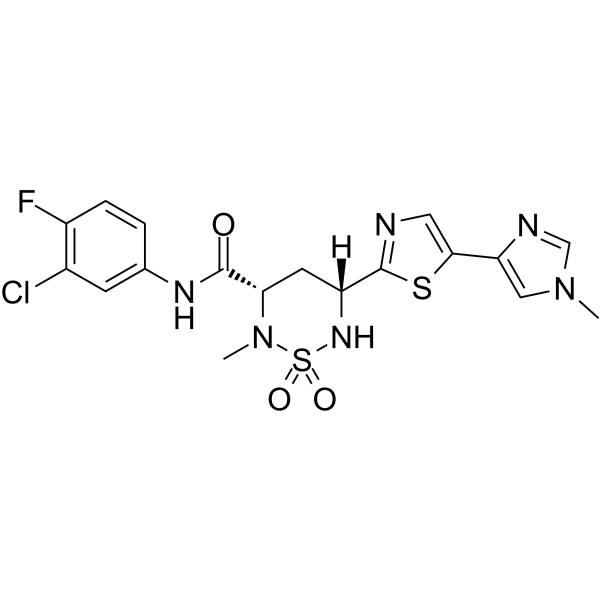 0 ImagesCat. No.: HY-139574CAS No.: 2243747-96-6Firzacorvir is a cyclic sulfamide compound and modulates HBV core protein. Firzacorvir has anti-HBV activity with EC50 < 1 μΜ.
-
Lamivudine salicylate
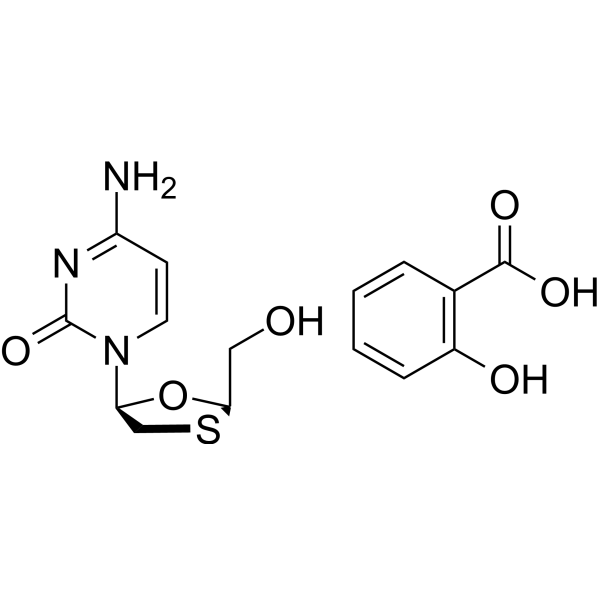 0 ImagesCat. No.: HY-B0250ACAS No.: 173522-96-8Synonyms: BCH-189 salicylateLamivudine (BCH-189) salicylate is an orally active nucleoside reverse transcriptase inhibitor (NRTI). Lamivudine salicylate can inhibit HIV reverse transcriptase 1/2 and also the reverse transcriptase of hepatitis B virus. Lamivudine salicylate can penetrate the CNS.
-
HBV-IN-46
 0 ImagesCat. No.: HY-159160CAS No.: 3034992-40-7HBV-IN-46 (compound 1.6) is an active metabolite. HBV-IN-46 is a HBV S-antigen inhibitor, with an EC50 of 2.6 nM.
-
HBV-IN-9
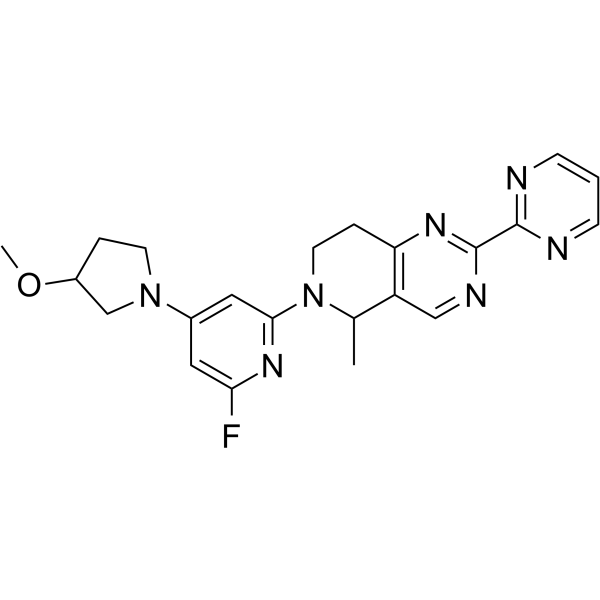 0 ImagesCat. No.: HY-145052CAS No.: 2170998-69-1
-
BA38017
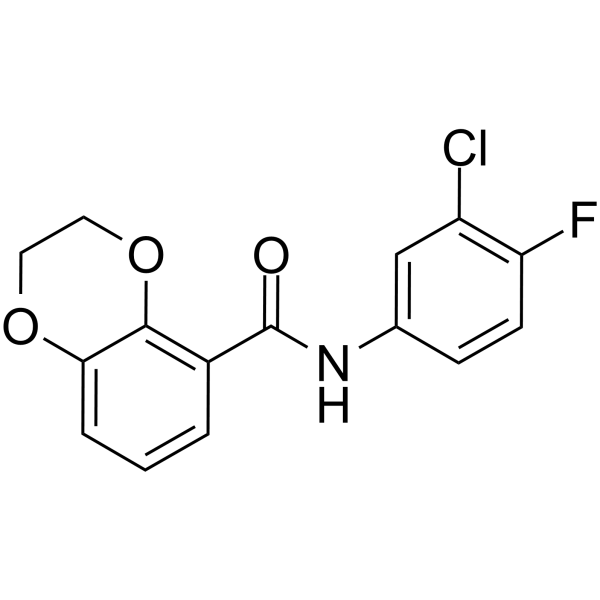 0 ImagesCat. No.: HY-145871CAS No.: 1333905-67-1
-
Elebsiran
 0 ImagesCat. No.: HY-147266ACAS No.: 2648009-64-5Synonyms: VIR-2218Elebsiran (VIR-2218) is a siRNA that targets and degrades hepatitis B virus (HBV) and hepatitis D virus (HDV) RNA transcripts. Elebsiran leads to a significant decrease in HBV surface antigen (HBsAg) and a reduction in viral load. Elebsiran binds to the sialic acid-depleted glycoprotein receptor (ASGPR) on the surface of liver cells through the GalNAc ligand, achieving liver-targeted delivery and demonstrating improved liver safety. Elebsiran can be used for the study of chronic HBV/HDV infections.
-
Daplusiran sodium scrambled negative control
 0 ImagesCat. No.: HY-177625BDaplusiran sodium scrambled negative control is the sequence scrambled negative control of Daplusiran sodium.
-
Ozisiran
 0 ImagesCat. No.: HY-177654CAS No.: 3061406-96-7
-
MK-1220
 0 ImagesCat. No.: HY-14404CAS No.: 924270-31-5MK-1220 is a covalently reversible inhibitor of the hepatitis C virus (HCV) NS3/4A protease (NS3/4A protease) with a Ki of 0.02 nM. MK-1220 in cell models simulating viral replication exhibits EC50s of 4 (with 10% fetal bovine serum) and 11 nM (50% normal human serum). MK-1220 can be used for the study of chronic hepatitis C virus infection.
-
Pseudolaric Acid B (Standard)
 0 ImagesPseudolaric Acid B (Standard) is the analytical standard of Pseudolaric Acid B. This product is intended for research and analytical applications. Pseudolaric Acid B is an orally active diterpene acid. Pseudolaric Acid B has anti-fungal, anti-fertility, anti-angiogenesis and anticancer activity, and can induce tumor cell apoptosis and autophagy. In addition, Pseudolaric Acid B can inhibit the secretion of hepatitis B virus (HBV) and has immunosuppressive effect, selectively inhibiting the proliferation of T lymphocytes and the production of IL-2.
-
4-Hydroxyacetophenone (Standard)
 0 Images4-Hydroxyacetophenone (Standard) is the analytical standard of 4-Hydroxyacetophenone. This product is intended for research and analytical applications. 4-Hydroxyacetophenone (P-hydroxyacetophenone) is a major hepatoprotective and choleretic compound found in Artemisia and Illicium plants, exhibiting antiviral and anti-inflammatory effects against hepatitis B virus. Additionally, 4-Hydroxyacetophenone inhibits cancer cell adhesion, invasion, and migration by remodeling actin. 4-Hydroxyacetophenone holds promise for research in the fields of inflammatory diseases and cancer.
-
HBV-IN-41
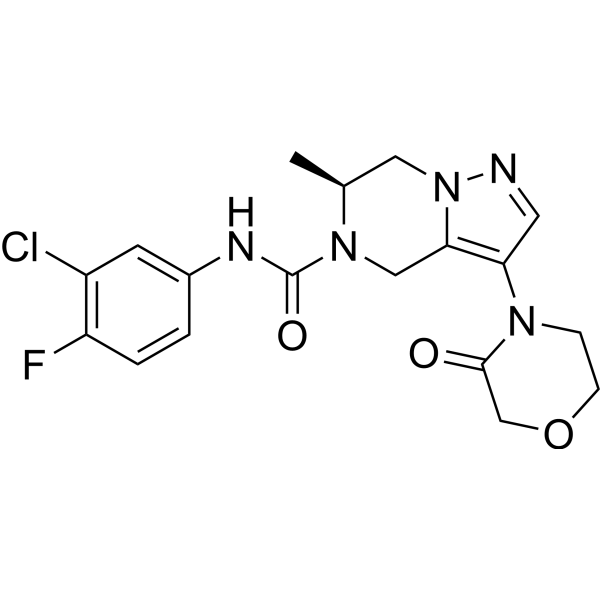 0 ImagesCat. No.: HY-156272CAS No.: 1967002-25-0HBV-IN-41 (compound 45) is a potent and orally active Hepatitis B Virus (HBV) inhibitor, with an EC50 of 0.027μM.
-
Z060228
 0 ImagesCat. No.: HY-109969CAS No.: 1005459-82-4