



MDM-2/p53
The p53 tumor suppressor is a principal mediator of growth arrest, senescence, and apoptosis in response to a broad array of cellular damage. p53 is a short-lived protein that is maintained at low, often undetectable, levels in normal cells. Under stress conditions, the p53 protein accumulates in the cell, binds in its tetrameric form to p53-response elements and induces the transcription of various genes.
MDM-2 is transcriptionally activated by p53 and MDM-2, in turn, inhibits p53 activity in several ways. MDM-2 binds to the p53 transactivation domain and thereby inhibits p53-mediated transactivation. MDM-2 also contains a signal sequence that is similar to the nuclear export signal of various viral proteins and, after binding to p53, it induces its nuclear export. As p53 is a transcription factor, it needs to be in the nucleus to be able to access the DNA; its transport to the cytoplasm by MDM-2 prevents this. Finally, MDM-2 is a ubiquitin ligase, so is able to target p53 for degradation by the proteasome.
In many tumors p53 is inactivated by the overexpression of the negative regulators MDM2 and MDM4 or by the loss of activity of the MDM2 inhibitor ARF. The pathway can be reactivated in these tumors by small molecules that inhibit the interaction of MDM2 and/or MDM4 with p53. Such molecules are now in clinical trials.
All Product Categories
-
MDM-2/p53 Inhibitors
(112)
View all products
-
MDM-2/p53 Agonists
(8)
View all products
-
MDM-2/p53 Antagonists
(4)
View all products
-
MDM-2/p53 Activators
(154)
View all products
-
MDM-2/p53 Modulators
(29)
View all products
-
MDM-2/p53 MDM2 Inhibitors
(65)
View all products
-
MDM-2/p53 p53 Activators
(114)
View all products
-
MDM-2/p53 p53 Inhibitors
(16)
View all products
-
MDM-2/p53 Inducers
(17)
View all products
-
MDM-2/p53 Degraders
(8)
View all products
-
MDM-2/p53 Controls
(6)
View all products
-
MDM-2/p53 Ligands
(8)
View all products
-
MDM-2/p53 Related Products (621)
Related Products (621)

-
Antibodies (17)
-
MDM-2/p53 Signaling Pathway
-
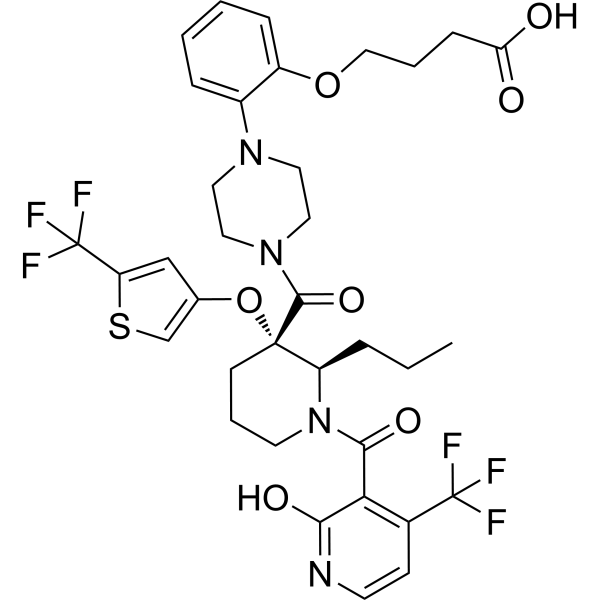
MI-888
 0 ImagesCat. No.: HY-133760CAS No.: 1303607-59-1MI-888 is an orally active MDM2 inhibitor with a Ki of 0.44 nM. MI-888 can inhibit the MDM2-p53 interaction. MI-888 has favorable pharmacokinetic properties and anti-tumor activity.
-
TH-407a
 0 ImagesTH-407a is an orally active and selective USP15 inhibitor with an IC50 of 0.76 μM. As an allosteric modulator, TH-407a binds to a non-catalytic site to block deubiquitinating activity. TH-407a inhibits cell growth, proliferation, clonogenicity and migration, regulates the p53 signaling pathway, and reduces the stability of PARP1. TH-407a exhibits anti-tumor activity in breast cancer xenograft mouse models. TH-407a can be used for the research of breast cancer.
-
PROTAC LZK degrader 1
 0 ImagesCat. No.: HY-170595CAS No.: 2763268-64-8PROTAC LZK degrader 1 is an LZK (MAP3K13) PROTAC degrader. PROTAC LZK degrader 1 binds LZK with a Kd of 35 nM and recruits VHL E3 ubiquitin ligase to induce ubiquitin-proteasome dependent degradation of LZK in MAP3K13-amplified HNSCC cells. PROTAC LZK degrader 1 eliminates both kinase-dependent c-MYC stabilization and kinase-independent GOF p53 accumulation downstream of LZK, suppresses colony formation of LZK-amplified head and neck squamous cell carcinoma (HNSCC) cells. PROTAC LZK degrader 1 can be used for research on LZK-driven HNSCC.
-
XRF-1021
 0 ImagesCat. No.: HY-179378CAS No.: 2968523-32-0XRF-1021 is an orally active HIPK2 inhibitor (IC50 = 0.18 μM). XRF-1021 reduces the expression of fibrotic markers in TGF-β1 stimulated NRK-49F and HK-2 cells, including Fibronectin, Collagen I and α-SMA. XRF-1021 blocks TGF-β, NF-κB, p53, Wnt/β-catenin, and Notch signaling. XRF-1021 reduces renal injury and fibrosis in vivo. XRF-1021 can be used for the research of chronic kidney disease.
-
SP-141 hydrochloride
 0 ImagesCat. No.: HY-12430CAS No.: 56501-26-9SP-141 (hydrochloride) is a specific inhibitor of MDM2. SP-141 (hydrochloride) promotes MDM2 auto-ubiquitination and degradation. SP-141 (hydrochloride) might be used for the research of pancreatic cancer and breast cancer cells.
-
YL93
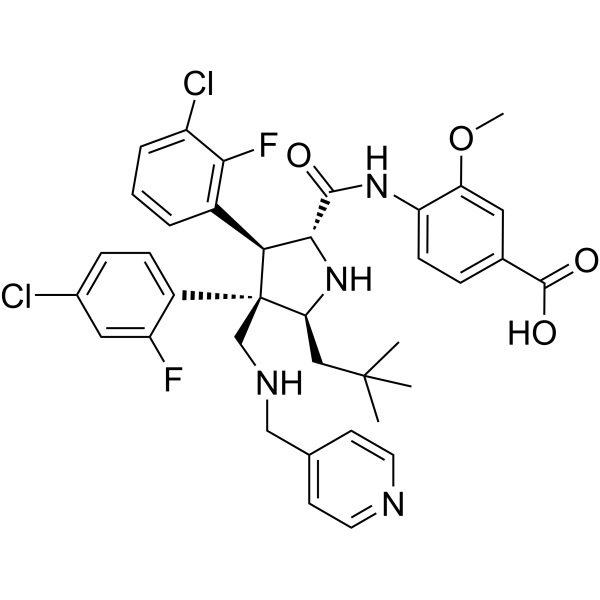 0 ImagesCat. No.: HY-146806CAS No.: 2771313-42-7
-
CK2-TN03
 0 ImagesCK2-TN03 is an ATP-competitive casein kinase 2 (CK2) inhibitor, with an IC50 of 165 nM and a Ki of 20 nM. CK2-TN03 inhibits CK2-mediated survivin activation and reduces CK2-dependent phosphorylation levels of BRD4/MYCN and AKT1. CK2-TN03 exerts anti-neuroblastoma effects by inhibiting survivin, leading to mitotic catastrophe and apoptosis of cancer cells. CK2-TN03 can be used in studies related to neuroblastoma.
-
MDM2/XIAP-IN-2
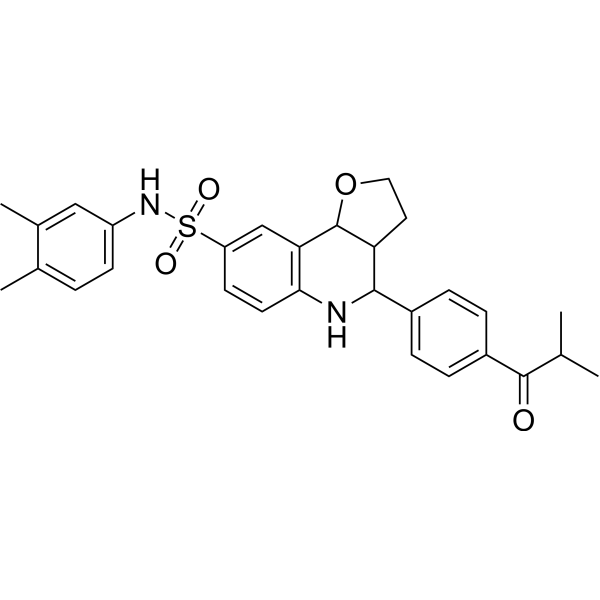 0 ImagesCat. No.: HY-153200CAS No.: 2761969-85-9MDM2/XIAP-IN-2 is a dual inhibitor of murine double minute 2 (MDM2) and X-linked inhibitor of apoptosis protein (XIAP). MDM2/XIAP-IN-2 degrades MDM2, and inhibits XIAP mRNA translation to inhibits cancer cells. Particularly, MDM2/XIAP-IN-2 inhibits acute lymphoblastic leukemia cell line EU-1 with an IC50 value of 0.3 μM.
-
MDM2-p53-IN-19
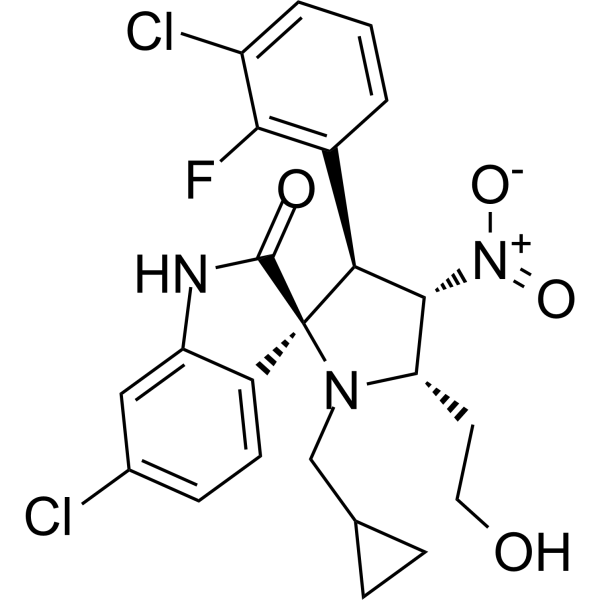 0 ImagesCat. No.: HY-161040CAS No.: 1818292-01-1MDM2-p53-IN-19 (Compound A-8d) is a chemical intermediate that can be used to synthesize inhibitors of the MDM2-p53 interaction with anticancer activity.

-
MDM2/XIAP-IN-1
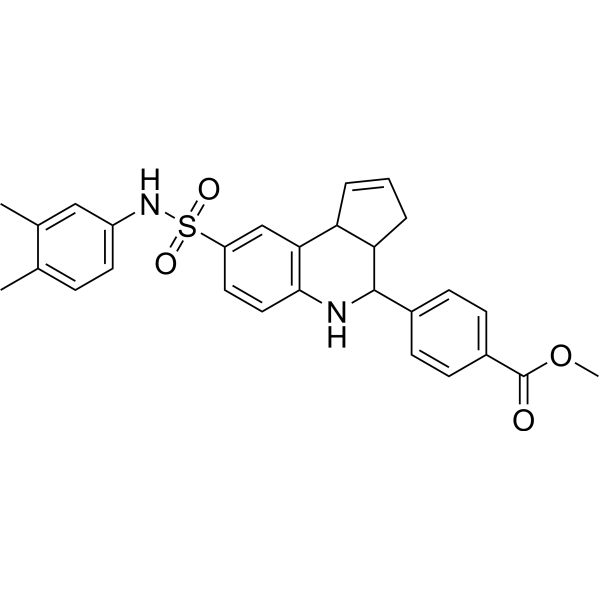 0 ImagesCat. No.: HY-153199CAS No.: 359595-95-2MDM2/XIAP-IN-1 (compound 14) is an orally active inhibitor of dual MDM2/XIAP. MDM2/XIAP-IN-1 has anti-cancer activity with an IC50 value of 0.3 μM, which can be used in cance rescrch.

-
MMRi6
 0 ImagesMMRi6 is a Mdm2-MdmX RING domain inhibitor that can disrupt Mdm2-MdmX RING-RING interaction in vitro. MMRi6 inhibits MdmX-stimulated Mdm2 autoubiquitination and Mdm2-MdmX-mediated p53 polyubiquitination in vitro without affecting NEDD4-1 autoubiquitination. MMRi6 induces p53 stabilization and accumulation and induces PARP cleavage in wt-p53 Emu-myc lymphoma cells. MMRi6 inhibits the growth of wt-p53 and p53-null Emu-myc lymphoma cells with IC50s of approximately 0.5 μM and 3 μM, respectively. MMRi6 can be used for the study of leukemia/lymphoma.
-
HIPK2-IN-2
 0 ImagesCat. No.: HY-189141HIPK2-IN-2 is an orally active and selective HIPK2 inhibitor with an IC50 of 0.36 μM against HIPK2. HIPK2-IN-2 reduces HIPK2 protein expression levels. HIPK2-IN-2 inhibits the proliferation and migration of renal interstitial fibroblasts, alleviates renal tubular injury and collagen deposition, and suppresses TGF-β/Smad3-mediated profibrotic signaling pathways as well as TNF-α/NF-κB-mediated inflammatory signaling pathways in renal cells. HIPK2-IN-2 is used for the study of chronic kidney disease-associated renal fibrosis.
-
NMC-001
 0 ImagesCat. No.: HY-P991314NMC-001 is a human IgG1 monoclonal antibody (mAb) targeting MDM2. NMC-001 can be used in pancreatic cancer research. Recommended isotype control: Human IgG1 kappa, Isotype Control (HY-P99001).
-
Caylin-1
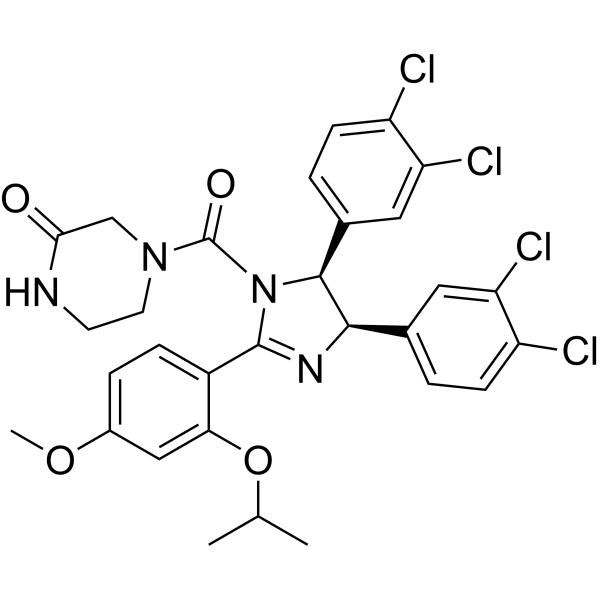 0 ImagesCat. No.: HY-120520CAS No.: 1207480-88-3Caylin-1 is an inhibitor of MDM2 and an analog of Nutlin-3. Caylin-1 can bind to Bcl-XL and is used in multi-target anticancer research.
-
NU-8231
 0 ImagesCat. No.: HY-119014CAS No.: 878022-36-7NU-8231 (Compound 2) is a p53-MDM2 binding inhibitor with an IC50 of 5.3-200 μM for inhibiting the p53-MDM2 interaction. NU-8231 is applicable for cancer research.
-
GY1-22
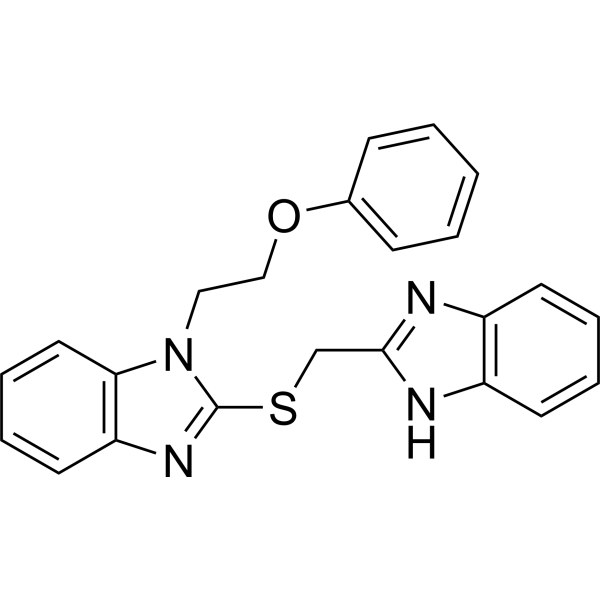 0 ImagesCat. No.: HY-149911CAS No.: 326903-84-8GY1-22 is an inhibitor of DNAJA1-mutP53R175H interacting pocket. GY1-22 can be used for the research of cancer.
-
HIPK2-IN-1
 0 ImagesCat. No.: HY-189140HIPK2-IN-1 is an orally active and selective HIPK2 inhibitor with an IC50 of 0.56 μM. HIPK2-IN-1 exerts antifibrotic and anti-inflammatory activities. HIPK2-IN-1 binds to HIPK2, inhibits the downstream TGF‑β/Smad3, p53, and TNF‑α/NF‑κB signaling pathways, reduces the expression of fibrotic markers, suppresses cell proliferation and migration, and alleviates renal tubular injury and collagen deposition. HIPK2-IN-1 is used for the study of renal fibrosis associated with chronic kidney disease.




