



NF-κB
Nuclear factor-κB; Nuclear factor-kappaB
NF-κB (Nuclear factor kappa-light-chain-enhancer of activated B cells) is a protein complex that controls transcription of DNA. NF-κB is found in almost all animal cell types and is involved in cellular responses to stimuli such as stress, cytokines, free radicals, ultraviolet irradiation, oxidized LDL, and bacterial or viral antigens. NF-κB plays a key role in regulating the immune response to infection. Incorrect regulation of NF-κB has been linked to cancer, inflammatory, and autoimmune diseases, septic shock, viral infection, and improper immune development. NF-κB has also been implicated in processes of synaptic plasticity and memory. There are five proteins in the mammalian NF-κB family: NF-κB1, NF-κB2, RelA, RelB, c-Rel.
NF-κB Isoform Specific Products
All Product Categories
-
NF-κB Inhibitors
(1599)
View all products
-
NF-κB Agonists
(6)
View all products
-
NF-κB Antagonist
(1)
View all products
-
NF-κB Activators
(141)
View all products
-
NF-κB Modulators
(34)
View all products
-
NF-κB Inducers
(3)
View all products
-
NF-κB Degraders
(4)
View all products
-
NF-κB Controls
(7)
View all products
-
NF-κB Ligands
(2)
View all products
-
NF-κB Related Products (1934)
Related Products (1934)

-
Antibodies (32)
-
NF-κB Signaling Pathway
-
NF-κB Isoform Comparison
-
TriDAP
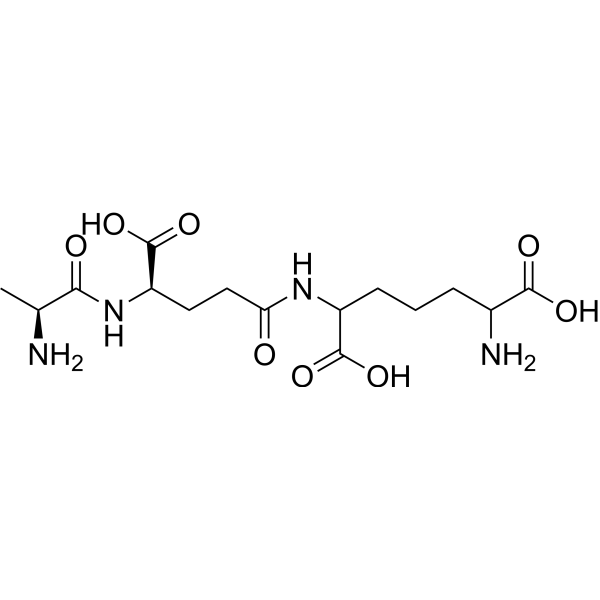 0 ImagesCat. No.: HY-P5522CAS No.: 877462-71-0Synonyms: L-Ala-γ-D-Glu-meso-diaminopimelic acidTriDAP (L-Ala-γ-D-Glu-meso-diaminopimelic acid) is a NOD1 agonist with a Kd value of 34.5 μM. TriDAP enhances the binding of NOD1-RICK, promotes RICK phosphorylation, and activates the NF-κB, TAK1, MEK/ERK, p38 and interferon response pathways. TriDAP downregulates Runx2 via increasing ubiquitination and reduces trabecular bone parameters. TriDAP decreases IκBα levels and increases p65 levels. TriDAP induces the secretion of proinflammatory mediators IL-8 and prostaglandins, triggers tissue inflammation and innate immune activation, and inhibits SARS-CoV-2 replication in lung epithelial cells. TriDAP increases the RANKL/OPG ratio in mice, reduces bone mass and enhances osteoclast activity, and inhibits new bone formation by decreasing the mineralization deposition rate in mice. TriDAP can be used in research related to pulpitis, chronic ulcerative colitis, Crohn's disease and SARS-CoV-2 infection.
-
Cinnamtannin B-1 (Standard)
 0 ImagesCat. No.: HY-130237RCAS No.: 88082-60-4Cinnamtannin B-1 (Standard) is the analytical standard of Cinnamtannin B-1. This product is intended for research and analytical applications. Cinnamtannin B-1 is a anthocyanidin. Cinnamtannin B-1 inhibits the osteoclast formation by inhibiting NF-kB signaling pathway and ROS generation. Cinnamtannin B-1 exhibits antioxidant, anti-inflammatory, antitumor and anti-platelet aggregation activities. Cinnamtannin B-1 is orally active.
-
K-14585
 0 ImagesCat. No.: HY-111214CAS No.: 880546-17-8K-14585 is a peptide competitive PAR2 antagonist. K-14585 inhibits PAR2-dependent IL-8 production, NF-κB phosphorylation, and p38 signaling. K-14585 reduces SLIGKV (PAR2 agonist peptide)-induced Ca2+ mobilisation in primary human keratinocytes.
-
Heveadride
 0 ImagesCat. No.: HY-N15653CAS No.: 39595-41-0Heveadride is a fungal metabolite and an antifungal agent. Heveadride is active against various filamentous fungi and some human pathogenic yeasts. Heaveadride induces down-regulation of TNFα-induced NF-κB activity in human chronic myeloid leukemia cells with an IC50 of 82.7 μM.
-
COX-2-IN-32
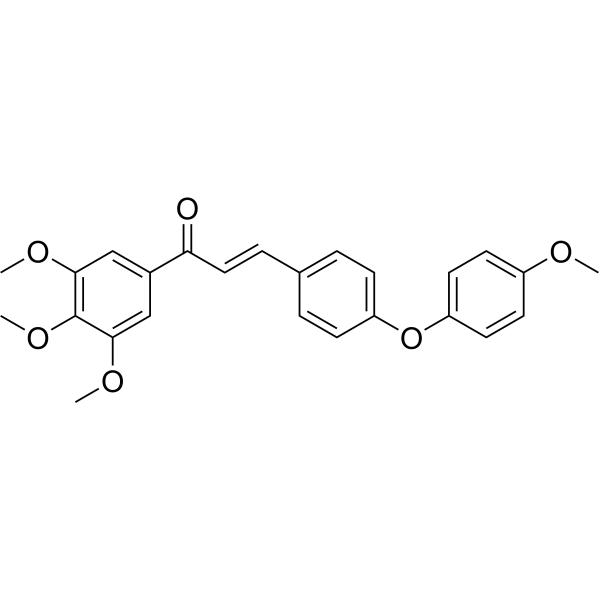 0 ImagesCat. No.: HY-153762CAS No.: 2725863-08-9COX-2-IN-32 (Compound 2f) is an iNOS and COX-2 inhibitor. COX-2-IN-32 decreases the expression of NF-κB. COX-2-IN-32 has anti-inflammatory activity by inhibits NO production in LPS-induced RAW264.7 macrophages (IC50: 11.2 μM).
-
Cannabitwinol
 0 ImagesCat. No.: HY-179432CAS No.: 2699950-81-5Synonyms: CBDDCannabitwinol is a selective thermosensitive TRP modulator and NF-κB inhibitor. Cannabitwinol inhibits TNFα-induced NF-κB-driven transcription and TNFα-induced IL-8 release, and exhibits anti-inflammatory and antioxidant activities. Cannabitwinol shows selectivity for cold-activated TRP channels, activating TRPA1 (EC50 = 3.0 μM) and antagonizing TRPM8 (IC50 = 3.9 μM), but has no significant affinity for heat-activated TRP channels such as TRPV1 and TRPV2. Cannabitwinol can be used in research related to inflammatory skin diseases, cold allodynia, and hyperalgesia.
-
3-Hydroxybenzaldehyde (Standard)
 0 Images3-Hydroxybenzaldehyde (Standard) is the analytical standard of 3-Hydroxybenzaldehyde. This product is intended for research and analytical applications. 3-Hydroxybenzaldehyde (3-HBA) is a precursor compound for phenolic compounds like Protocatechuic aldehyde (PCA) (HY-N0295). 3-Hydroxybenzaldehyde, produced by 3-hydroxybenzyl-alcohol dehydrogenase, is a substrate of aldehyde dehydrogenase (ALDH) in rats and humans. 3-Hydroxybenzaldehyde has vasculoprotective effects in vitro and in vivo. 3-Hydroxybenzaldehyde is proming for research of atherosclerosis[1][2][3][4].
-
Dauricinoline
 0 ImagesCat. No.: HY-N1928CAS No.: 30984-80-6
-
BMS-986126
 0 ImagesCat. No.: HY-124995CAS No.: 1610017-20-3BMS-986126 is a potent, selective, and orally active IRAK4 inhibitor (IC50 = 5.3 nM). BMS-986126 broadly inhibits MyD88-dependent signaling pathways. BMS-986126 demonstrates robust activity in the MRL/lpr and NZB/NZW murine models of lupus, inhibiting multiple pathogenic responses. BMS-986126 can be used for autoimmune diseases research, such as lupus erythematosus (SLE).
-
Quinoclamine (Standard)
 0 ImagesQuinoclamine (Standard) is the analytical standard of Quinoclamine. This product is intended for research and analytical applications. Quinoclamine, a naphthoquinone derivative, is a NF-κB inhibitor. Quinoclamine exhibits anti-cancer activity.
-
iNOS/TopoI-IN-1
 0 ImagesCat. No.: HY-162805iNOS/TopoI-IN-1 (compound AuL9) is a multi-target hybrid molecule with anti-tumor, anti-inflammatory and antioxidant activities. iNOS/TopoI-IN-1 inhibits the growth of breast cancer cells MCF-7 and MDA MB-231 in vitro with IC50 of 3.5 μM and 6.3 μM, respectively, and induces DNA damage and apoptosis of breast cancer cells by inhibiting human topoisomerase I (TopoI) (Ki=2.72 μM). In addition, NOS/TopoI-IN-1 inhibits the expression of iNOS by inhibiting the activation of NF-kB (Ki=1.49 μM).
-
(+)-Rocaglamide
 0 ImagesCat. No.: HY-19356BCAS No.: 1699754-37-4(+)-Rocaglamide is the dextrorotatory enantiomer of Rocaglamide (HY-19356). Rocaglamide (Roc-A) is isolated from the genus Aglaia and can be used for coughs, injuries, asthma and inflammatory skin diseases. Rocaglamide is a potent inhibitor of NF-κB activation in T-cells. Rocaglamide is a potent and selective heat shock factor 1 (HSF1) activation inhibitor with an IC50 of 50 nM. Rocaglamide inhibits the function of the translation initiation factor eIF4A. Rocaglamide also has anticancer properties in leukemia.
-
NIK-IN-1
 0 ImagesCat. No.: HY-149043CAS No.: 1451079-18-7NIK-IN-1 (Compound 2) is an inhibitor of NF-κB-inducing kinase (NIK). NIK-IN-1 is used for research on hepatic inflammatory diseases and acute liver injury.
-
HIF-1α-IN-8
 0 ImagesCat. No.: HY-175521HIF-1α-IN-8 is an orally active HIF-1α inhibitor, with an IC50 of 2.02 μM. HIF-1α-IN-8 significantly suppresses the expression of inflammation factors of IL-6 and NO, reduces hypoxia-induced ROS production and apoptosis in C8-D1A cells. HIF-1α-IN-8 inhibits HIF-1α/IKKα/NF-κB signaling pathway and reduces the expression of blood-brain barrier permeability-related proteins. HIF-1α-IN-8 reduces brain water content and oxidative stress level in mice with high altitude cerebral edema (HACE) model. HIF-1α-IN-8 can be used for the study of high altitude cerebral edema (HACE).
-
IMD-biphenylB
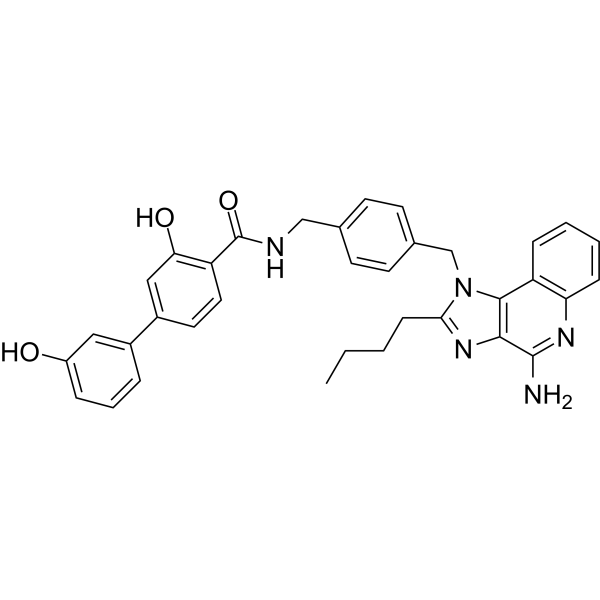 0 ImagesCat. No.: HY-139718CAS No.: 2928463-41-4
-
Pterocenoid C
 0 ImagesCat. No.: HY-N17600CAS No.: 1799931-75-1
-
Inotilone
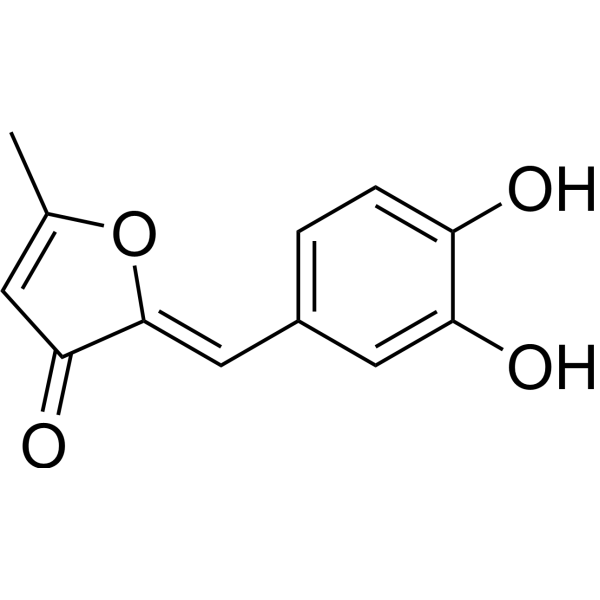 0 ImagesCat. No.: HY-111172CAS No.: 906366-79-8Inotilone is an inhibitor of matrix metalloproteinase MMP-2 and MMP-9, to against metastatic in lung cancer cells. Inotilone enhances the activity of the antioxidant enzymes to support its anti-metastatic activity. Inotilone also inhibits IκBα phosphorylation and NFκB p65 nuclear translocation, involving in FAK, PI3K/AKT, MAPKs and NFκB pathways.
-
Flavanone (Standard)
 0 ImagesFlavanone (Standard) is the analytical standard of Flavanone. This product is intended for research and analytical applications. Flavanone is a naturally occurring flavone. Flavanone has inhibitory activity for human estrogen synthetase (aromatase). lavanone is the inhibitor for ERK/p38/NF-κB signaling pathway. Flavanone exhibits oral activity and antitumor efficacy.

-
Allyl methyl sulfide (Standard)
 0 ImagesCat. No.: HY-128447RCAS No.: 10152-76-8Allyl methyl sulfide (Standard) is the analytical standard of Allyl methyl sulfide (HY-128447). This product is intended for research and analytical applications. Allyl methyl sulfide is an orally active organic sulfide. Allyl methyl sulfide is one of the main active ingredients in garlic volatile metabolites. Allyl methyl sulfide can be extracted from garlic. Allyl methyl sulfide enhances SOD activity, inhibits NF-κB signaling pathway, and upregulates pancreatic GLUT2 expression. Allyl methyl sulfide has significant antioxidant, anti-inflammatory and hypoglycemic activities. Allyl methyl sulfide can be used in the research of diabetes and its complications.




