



NF-κB
Nuclear factor-κB; Nuclear factor-kappaB
NF-κB (Nuclear factor kappa-light-chain-enhancer of activated B cells) is a protein complex that controls transcription of DNA. NF-κB is found in almost all animal cell types and is involved in cellular responses to stimuli such as stress, cytokines, free radicals, ultraviolet irradiation, oxidized LDL, and bacterial or viral antigens. NF-κB plays a key role in regulating the immune response to infection. Incorrect regulation of NF-κB has been linked to cancer, inflammatory, and autoimmune diseases, septic shock, viral infection, and improper immune development. NF-κB has also been implicated in processes of synaptic plasticity and memory. There are five proteins in the mammalian NF-κB family: NF-κB1, NF-κB2, RelA, RelB, c-Rel.
NF-κB Isoform Specific Products
All Product Categories
-
NF-κB Inhibitors
(1631)
View all products
-
NF-κB Agonists
(6)
View all products
-
NF-κB Antagonist
(1)
View all products
-
NF-κB Activators
(145)
View all products
-
NF-κB Modulators
(34)
View all products
-
NF-κB Inducers
(3)
View all products
-
NF-κB Degraders
(4)
View all products
-
NF-κB Controls
(7)
View all products
-
NF-κB Ligands
(2)
View all products
-
NF-κB Related Products (1967)
Related Products (1967)

-
Antibodies (32)
-
NF-κB Signaling Pathway
-
NF-κB Isoform Comparison
-
Centaurein
 0 ImagesCat. No.: HY-N13614CAS No.: 35595-03-0Centaurein, a flavonoid, is an IFN-γ promoter enhancer. Centaurein up-regulates the activity of NFAT and NF-κB enhancers. Centaurein increases the IFN-γ expression in T and NK cells and the serum IFN-γ level in mice. Centaureidin completely relaxes the contractions in intact rat aortic rings. Centaurein effectively protects mice against Listeria infection[1][2][3][4].
-
Paeonolsilate sodium
 0 ImagesCat. No.: HY-W791754CAS No.: 827610-11-7Paeonolsilate (sodium) can inhibit ox-LDL-induced macrophage foam cell formation and inflammation in atherosclerosis. Paeonolsilate (sodium) inhibits NF-κB activation and oxidative stress response induced by ox-LDL. Paeonolsilate (sodium) can be studied in anti-atherosclerosis research.
-
Ciwujianoside B (Standard)
 0 ImagesCat. No.: HY-N0307RCAS No.: 114902-16-8Ciwujianoside B (Standard) is the analytical standard of Ciwujianoside B. This product is intended for research and analytical applications. Ciwujianoside B is an orally active, blood-brain barrier penetrable radioprotective agent and memory enhancer. Ciwujianoside B reduces radiation-induced DNA damage, cell cycle arrest and apoptosis, downregulates NF-κB and the Bax/Bcl-2 ratio, and enhances the proliferative capacity of bone marrow cells. Ciwujianoside B enhances object recognition memory in normal mice and induces dendritic extension in primary cultured cortical neurons. Ciwujianoside B can be used in studies related to hematopoietic system radiation injury and memory enhancement.
-
CX-Se13
 0 ImagesCat. No.: HY-187219CX-Se13 is an orally active pulmonary fibrosis inhibitor with anti-inflammatory and antioxidant activities. CX-Se13 regulates the Keap1/Nrf2/HO-1/NQO1, YAP/TAZ-TEAD, NF-κB p65 and TGF-β/Smads signaling pathways. CX-Se13 activates the cellular antioxidant defense system, restores redox balance, alleviates inflammatory responses, reduces collagen deposition, decreases pro-inflammatory cytokine levels and inhibits pathological progression. CX-Se13 can be used in studies related to pulmonary fibrosis.
-
Laurotetanine
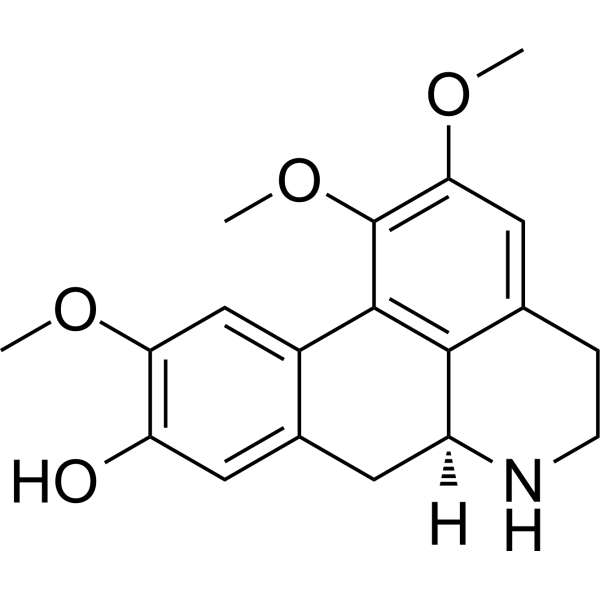 0 ImagesLaurotetanine ((+)-Laurotetanine) is an potent and orally active isoquinoline alkaloid and could be extracted from the roots of Litsea cubeba (Lour.) Pers. Laurotetanine exerts an anti-asthmatic effect by inhibition of IgE, histamine, and inflammatory reactions via down-regulating MUC5AC and NF-κB signaling pathways.
-
TLR4/NF-κB-IN-2
 0 ImagesCat. No.: HY-181765TLR4/NF-κB-IN-2 is an orally active TLR4/NF-κB inhibitor and Nrf2/HO-1 activator. TLR4/NF-κB-IN-2 combats oxidative stress and exerts anti-inflammatory effects by regulating the Nrf2/HO-1 and TLR4/NF-κB pathways. TLR4/NF-κB-IN-2 reduces Aβ aggregation and protects neurons. TLR4/NF-κB-IN-2 can be used in the research of Alzheimer's disease.
-
Palmitoyl tripeptide-8
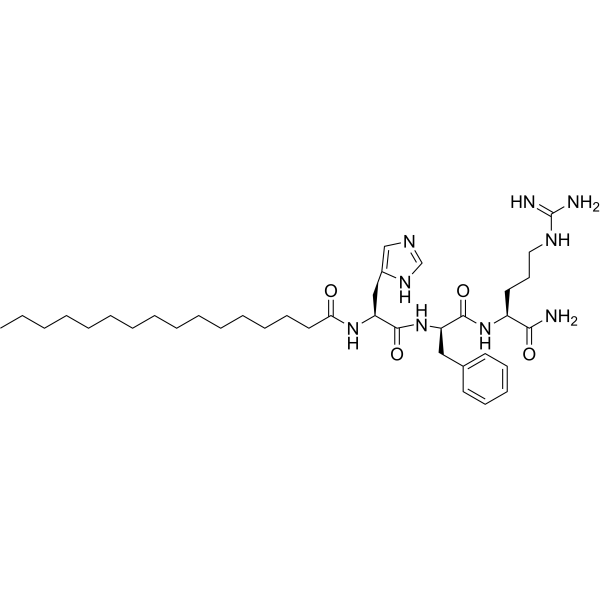 0 ImagesPalmitoyl tripeptide-8 is an immunomodulatory peptide and neurotransmitter inhibitory peptide. Palmitoyl tripeptide-8 inhibits the activation of the NF-κB pathway and the production of pro-inflammatory cytokines (IL-8, IL-6, and TNF-α). Palmitoyl tripeptide-8 activates the cutaneous opioid system and reduces CGRP release. Palmitoyl tripeptide-8 decreases the number of dilated capillaries, the size of dilated vessels, and the degree of edema in skin explants treated with Substance P (HY-P0201). Palmitoyl tripeptide-8 is used as an active ingredient in cosmetics for sensitive skin. Palmitoyl tripeptide-8 is utilized in research related to sensitive skin.
-
CBLC100
 0 ImagesCat. No.: HY-124922CAS No.: 1197996-83-0CBLC100 is an anticancer compound that targets FACT, while inhibiting NF-κB and activating p53. CBLC100 induces cytotoxicity through p53-dependent apoptotic and non-apoptotic pathways. CBLC100 is applicable to the research of cancers such as fibrosarcoma.
-
MEDI-5083
 0 ImagesCat. No.: HY-P992408MEDI-5083 is an Fc fusion protein that targets CD40 and is a CD40 agonist. MEDI-5083 stimulates CD40 signaling via NF-κB activation. MEDI-5083 upregulates MHCII, CD80, and CD86 expression, induces pro-inflammatory cytokine secretion, and enhances IFN-γ secretion by memory CD8+ T cells. MEDI-5083 can be used for the research of melanoma, colon carcinoma, and advanced solid tumors[1][2].
-
N-Desmethyldauricine
 0 ImagesCat. No.: HY-N18190CAS No.: 146763-55-5N-Desmethyldauricine is a NF-κB p65 inhibitor and apoptosis inducer. N-Desmethyldauricine reduces the protein expression level of p65, induces apoptosis, arrests the cell cycle at the G0/G1 phase, attenuates intercellular adhesion, and inhibits the growth of 3D spheroids of triple-negative breast cancer. N-Desmethyldauricine can be used in studies related to triple-negative breast cancer.
-
Bartogenic acid
 0 ImagesCat. No.: HY-N19717CAS No.: 79355-89-8Bartogenic acid is an orally active NF-κB inhibitor, found in Barringtonia racemosa fruits. Bartogenic acid increases catalase, superoxide dismutase (SOD), and glutathione levels. Bartogenic acid inhibits lipid peroxidation and suppresses inflammation markers. Bartogenic acid can be used for the research of ovarian cancer, skin cancer, and inflammatory conditions.

-
β-Curcumene
 0 Imagesβ-Curcumene is a sesquiterpene compound. β-Curcumene has the potential to act as a SIRT1 activator and a NF-κB inhibitor. β-Curcumene possesses a spicy and ginger-like aroma, and can serve as a raw material for flavors, fragrances and cosmetics. β-Curcumene can be used in the research of type 2 diabetes.
-
(E)-Tadehaginoside
 0 ImagesCat. No.: HY-N15691ACAS No.: 283176-41-0(E)-Tadehaginoside is the E-isomer of Tadehaginoside (HY-N15691). Tadehaginoside, a phenylpropanoid glycoside, is a regulator of lipogenesis and glucose consumption. Tadehaginoside has antioxygenic property. Tadehaginoside mediates liver protection against oxidative stress injury and inflammation by regulating Nrf2 and NF-κB signaling pathways in hepatocytes. Tadehaginoside can be used for the study of obesity and diabetes.
-
Orazipone
 0 ImagesCat. No.: HY-106981CAS No.: 137109-78-5Synonyms: OR 1384Orazipone (OR 1384) is a small molecule immunomodulator with strong anti-inflammatory properties. Orazipone exerts its immunomodulatory effect by forming reversible thiol complexes, which bind to intracellular signaling proteins and the thiol groups of glutathione. Orazipone exhibits potent anti-eosinophilic activity by inducing apoptosis. Orazipone inhibits activation of inflammatory transcription factors NF-kB and STAT 1 and decreases inducible iNOS expression and NO production in response to inflammatory stimuli. Orazipone reduces NADPH oxidase activity and thereby decreases ROS production. Orazipone has a protective effect in intestinal radiation injury.
-
5-Amino-8-hydroxyquinoline dihydrochloride
 0 ImagesCat. No.: HY-W001023ACAS No.: 21302-43-2Synonyms: 5A8HQ dihydrochloride; 5AHQ dihydrochloride5-Amino-8-hydroxyquinoline (5A8HQ; 5AHQ) dihydrochloride is an orally active non-competitive 20S proteasome inhibitor. 5-Amino-8-hydroxyquinoline dihydrochloride can inhibit NF-κB activity and induce cancer cells death and shows low cytotoxicity towards normal hematopoietic cells. 5-Amino-8-hydroxyquinoline dihydrochloride can be used for the research of cancer, such as leukemia.
-
Phellodendrine chloride (Standard)
 0 ImagesCat. No.: HY-N0735RCAS No.: 104112-82-5Phellodendrine chloride (Standard) is the analytical standard of Phellodendrine chloride (HY-N0735). Phellodendrine chloride is an orally active plant alkaloid. Phellodendrine chloride inhibits the proliferation of KRAS-mutated pancreatic cancer cells by suppressing macropinocytosis and glutamine metabolism, inducing ROS accumulation and mitochondrial apoptosis. Phellodendrine chloride promotes autophagy by activating the AMPK/mTOR pathway, alleviating intestinal damage in ulcerative colitis. Phellodendrine chloride can alleviate gouty arthritis by inhibiting the IL-6/STAT3 signaling pathway. Phellodendrine chloride suppresses allergic reactions by altering the conformation of MRGPRB3/MRGPRX2 protein, thereby inhibiting the activation of PKC and subsequent downstream MAPK and NF-κB signaling. Phellodendrine chloride inhibits the AKT/NF-κB pathway and down-regulates the expression of COX-2, thereby protecting zebrafish embryos from oxidative stress. Phellodendrine chloride has an anti-major depressive disorder (MDD) effect by down-regulating CHRM1, HTR1A, and the PI3K/Akt signaling pathway.
-
CB1R antagonist 2
 0 ImagesCat. No.: HY-172409CB1R antagonist 2 (Compound 11g) is the antagonist for cannabinoid receptor 1 (CB1R), that inhibits MAPK/NF-κB signaling pathway and exhibits anti-inflammatory activity. CB1R antagonist 2 inhibits LPS (HY-D1056)-induced IL-6, IL-1β and TNF-α expressions in RAW264.7. CB1R antagonist 2 ameliorates OVA-induced allergic rhinitis in mouse models.
-
Anti-inflammatory agent 116
 0 ImagesCat. No.: HY-184324CAS No.: 2975573-18-1Anti-inflammatory agent 116 is an anti-inflammatory agent. Anti-inflammatory agent 116 inhibits the abnormal activation of the NF-κB/MAPK signaling pathway. Anti-inflammatory agent 116 binds to the p50 subunit and impairs the DNA-binding ability of the p65-p50 heterodimer. Anti-inflammatory agent 116 inhibits LPS-induced production of NO and MtROS, secretion of IL-1β and TNF-α, expression of iNOS and COX-2, phosphorylation of IKK, IκB, p65, p38, ERK and JNK, as well as nuclear translocation of p65. Anti-inflammatory agent 116 alleviates sepsis-associated acute liver injury in mice. Anti-inflammatory agent 116 can be used for the research of sepsis-associated acute liver injury.
-
NF-κB-IN-16
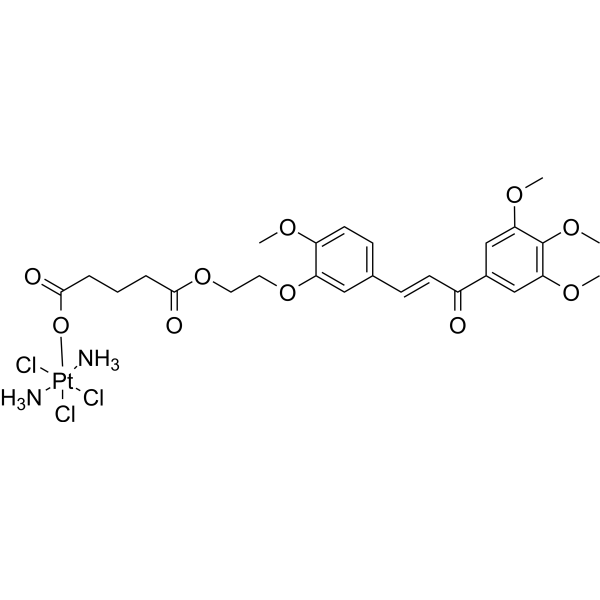 0 ImagesCat. No.: HY-158156NF-κB-IN-16 (compound 9) is a complex (Pt(IV) complex) of NF-κB inhibitor and Cisplatin (HY-17394), which has high efficacy and low toxicity in anti-tumor activity. active. NF-κB-IN-16 can cause DNA damage, induce mitochondrial dysfunction, produce reactive oxygen species, and induce apoptosis through the mitochondrial pathway and endoplasmic reticulum stress. NF-κB-IN-16 potently inhibits the NF-κB/MAPK signaling pathway and disrupts PI3K/AKT signaling. NF-κB-IN-16 also exhibits excellent in vivo antitumor efficiency and low toxicity in A549 or A549/CDDP xenograft models.




