



NF-κB
Nuclear factor-κB; Nuclear factor-kappaB
NF-κB (Nuclear factor kappa-light-chain-enhancer of activated B cells) is a protein complex that controls transcription of DNA. NF-κB is found in almost all animal cell types and is involved in cellular responses to stimuli such as stress, cytokines, free radicals, ultraviolet irradiation, oxidized LDL, and bacterial or viral antigens. NF-κB plays a key role in regulating the immune response to infection. Incorrect regulation of NF-κB has been linked to cancer, inflammatory, and autoimmune diseases, septic shock, viral infection, and improper immune development. NF-κB has also been implicated in processes of synaptic plasticity and memory. There are five proteins in the mammalian NF-κB family: NF-κB1, NF-κB2, RelA, RelB, c-Rel.
NF-κB Isoform Specific Products
All Product Categories
-
NF-κB Inhibitors
(1636)
View all products
-
NF-κB Agonists
(6)
View all products
-
NF-κB Antagonist
(1)
View all products
-
NF-κB Activators
(146)
View all products
-
NF-κB Modulators
(34)
View all products
-
NF-κB Inducers
(3)
View all products
-
NF-κB Degraders
(4)
View all products
-
NF-κB Controls
(7)
View all products
-
NF-κB Ligands
(2)
View all products
-
NF-κB Related Products (1973)
Related Products (1973)

-
Antibodies (32)
-
NF-κB Signaling Pathway
-
NF-κB Isoform Comparison
-
Fosfenopril (Standard)
 0 ImagesSynonyms: Fosinoprilat (Standard); Fosinoprilic acid (Standard); SQ 27519 (Standard)Fosfenopril (Standard) is the analytical standard of Fosfenopril. This product is intended for research and analytical applications. Fosfenopril (Fosinoprilat) is a potent angiotensin converting enzyme (ACE) inhibitor. Fosfenopril alleviates lipopolysaccharide (LPS)-induced inflammation by inhibiting TLR4/NF-κB signaling in monocytes.
-
Anti-neuroinflammation agent-4
 0 ImagesCat. No.: HY-189271CAS No.: 3113312-38-9Anti-neuroinflammation agent-4 is a blood-brain barrier-penetrating inhibitor of IκBα, NLRP3, and NF-κB p65. Anti-neuroinflammation agent-4 exerts anti-neuroinflammatory effects by inhibiting IκBα phosphorylation, reducing NLRP3 and caspase-1 expression, and suppressing p65 phosphorylation and its nuclear translocation, thereby decreasing the release of inflammatory mediators such as ROS, NO, IL-1β, IL-6, TNF-α, and IL-18 in microglia. Anti-neuroinflammation agent-4 can be used for research on neuroinflammation.
-
PPARγ agonist 20
 0 ImagesCat. No.: HY-178447PPARγ agonist 20 is a potent, orally active PPAR-γ agonist. PPARγ agonist 20 effectively increases antioxidant defenses (SOD, GSH) and reduces lipid peroxidation. PPARγ agonist 20 can upregulate of Pparg, Glut4, and AdipoQ, suppresses of TNF-α, IL-6, and NF-κB p65. PPARγ agonist 20 significantly lowers fasting blood glucose, improving glucose tolerance, and restoring metabolic balance in Streptozotocin (HY-13753)-Nicotinamide (HY-B0150)-induced diabetic rats. PPARγ agonist 20 can be used for the study of type 2 diabetes.
-
A2073
 0 ImagesCat. No.: HY-174321CAS No.: 2834742-70-8A2073 is a flavagline derivative that potently inhibits the proliferation of erythroleukemia cells by causing cell cycle arrest and suppressing the MAPK, NF-κB, and PI3K signaling pathways. A2073 formes stable interactions with cell cycle-related proteins (CDK1, CCNA2, PRIM1). A2073 exhibits significant anti-proliferative activity against tumor cells while maintaining a favorable toxicity profile in a zebrafish xenograft tumor model. A2073 can be used for the study of acute erythroleukemia.
-
IMD-biphenylA
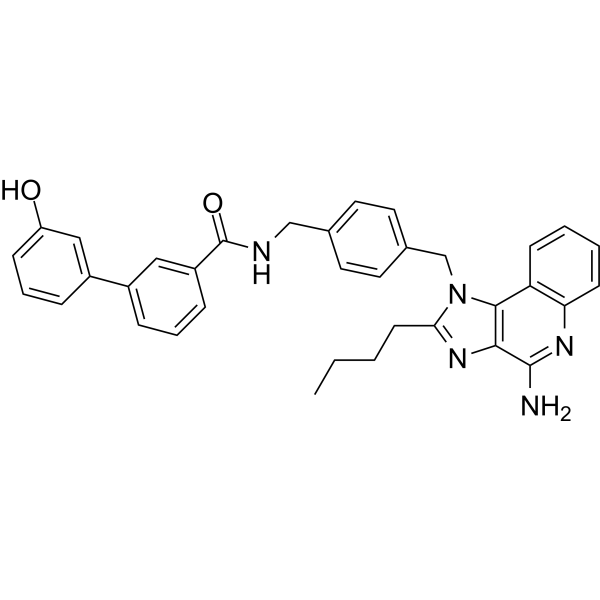 0 ImagesCat. No.: HY-139717CAS No.: 2928463-40-3IMD-biphenylA is a novel imidazoquinolinone-NF-κB immunomodulator dimer that improves the adjuvanticity of small molecule immune potentiators.
-
Nitidine chloride (Standard)
 0 ImagesCat. No.: HY-N0498RCAS No.: 13063-04-2Nitidine (chloride) (Standard) is the analytical standard of Nitidine (chloride). This product is intended for research and analytical applications. Nitidine chloride, a potential anti-malarial lead compound derived from Zanthoxylum nitidum (Roxb) DC, exerts potent anticancer activity through diverse pathways, including inducing apoptosis, inhibiting STAT3 signaling cascade, DNA topoisomerase 1 and 2A, ERK and c-Src/FAK associated signaling pathway. Nitidine chloride inhibits LPS-induced inflammatory cytokines production via MAPK and NF-kB pathway.
-
COG449
 0 ImagesCat. No.: HY-P12219Synonyms: OP449COG449 (OP449) is a cell-penetrating peptide that binds to SET, prevents the formation of the SET-PP2A complex, and restores PP2A phosphatase activity. COG449 decreases the phosphorylation levels of AKT308, ERK1/2, NFkB p65, and c-MYC S62, and reduces c-MYC stability and target gene expression. COG449 induces apoptosis, autophagy, and histone H3 hyperacetylation, and decreases the levels of SET, CIP2A, SETBP1, and Mcl-1. COG449 reduces cancer cell viability and decreases tumor mass in xenograft models. COG449 can be used for research on various cancers such as oral squamous cell carcinoma, T-cell acute lymphoblastic leukemia, B-CLL, non-Hodgkin lymphoma, and breast cancer.
-
BPD
 0 ImagesCat. No.: HY-W995241CAS No.: 213481-12-0
-
Undecane-d24
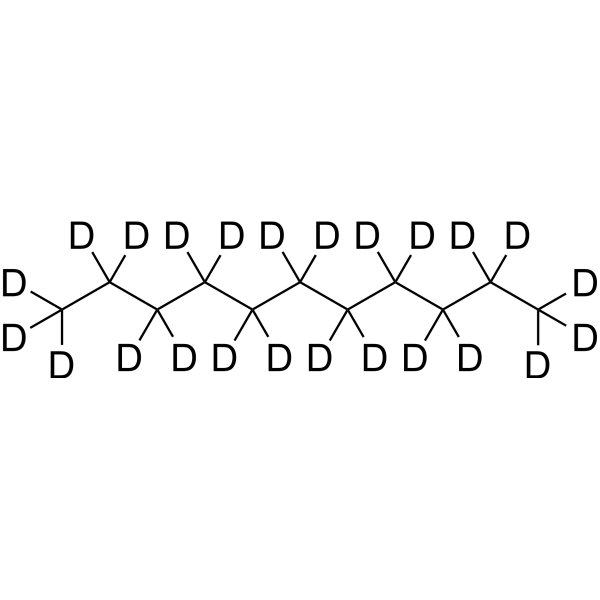 0 ImagesCat. No.: HY-N8593SCAS No.: 164858-54-2Undecane-d24 is the deuterium labeled Undecane (HY-N8593).Undecane is a potent cAMP agonist with anti-allergic and anti-inflammatory activities. Undecane inhibits degranulation and the secretion of histamine and TNF-α. Undecane reverses the increased levels of p38 phosphorylation, NF-κB transcriptional activity and target cytokine/chemokine genes, including thymus and activation-regulated chemokine (TARC), macrophage-derived chemokine (MDC) and interleukin-8 (IL-8). Undecane can be used for the study of skin inflammatory disorders, such as atopic dermatitis.
-
5-Hydroxy-6,7-dimethoxyflavone
 0 Images5-Hydroxy-6,7-dimethoxyflavone is an orally active inhibitor of ferroptosis (Ferroptosis). 5-Hydroxy-6,7-dimethoxyflavone inhibits H1N1 virus-induced ferroptosis by upregulating the expression of SLC7A11 and GPX4. 5-Hydroxy-6,7-dimethoxyflavone alleviates inflammatory responses and inhibits apoptosis by suppressing the activation of the NF-κB and p38 MAPK signaling pathways. 5-Hydroxy-6,7-dimethoxyflavone can be used in studies related to H1N1 influenza virus infection.
-
Guaiacol-13C6
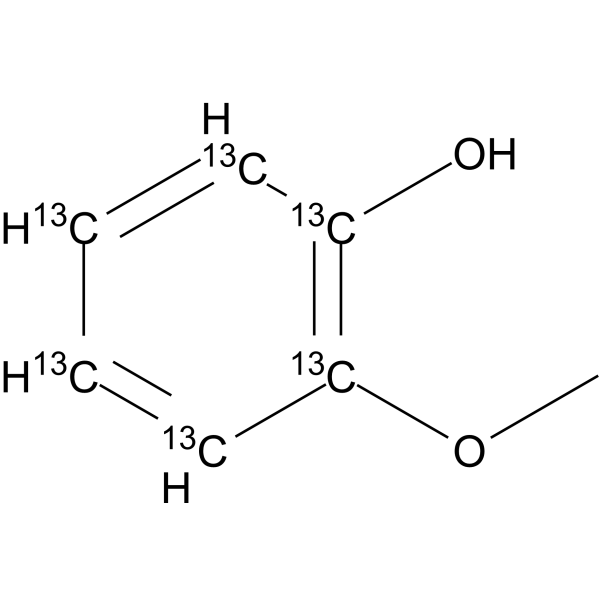 0 ImagesCat. No.: HY-N1380S2CAS No.: 202326-52-1Synonyms: 2-Methoxyphenol-13C6
-
δ-Tocotrienol (Standard)
 0 ImagesCat. No.: HY-122778RCAS No.: 25612-59-3δ-Tocotrienol (Standard) is the analytical standard of δ-Tocotrienol. This product is intended for research and analytical applications. δ-Tocotrienol is a Vitamin E in vegetables, fruits, seeds, nuts, grains and oils. Vitamin E has become well known for its role as an antioxidant, in lowering cholesterol and other lipids, as a neuroprotective and anticancer agent, and in cardiovascular disease protection.


-
PSMα3 TFA
 0 ImagesCat. No.: HY-P2358APSMα3 TFA is an inhibitor of NF-κB p65 and p38 MAPK. PSMα3 TFA forms membrane pores and binds to residues of human insulin B chain to inhibit insulin aggregation. PSMα3 TFA forms α-type amyloid-like fibrils to exert cytotoxic effects, and acts as a functional amyloid virulence determinant of Staphylococcus aureus. PSMα3 TFA is applicable to research related to spondyloarthritis, rheumatoid arthritis, insulin-derived amyloidosis, and Staphylococcus aureus infection.
-
RIPK2-IN-9
 0 ImagesCat. No.: HY-210247CAS No.: 3066447-73-9RIPK2-IN-9 is a RIPK2 inhibitor with an IC50 < 2.5 nM. RIPK2-IN-9 inhibits NOD2-mediated NF-κB signaling and the protein-protein interaction between RIPK2 and XIAP, and inhibits NOD2 ligand-induced TNF-α secretion in human whole blood. RIPK2-IN-9 exhibits low inhibitory activity against the hERG channel. RIPK2-IN-9 can be used for research on RIPK2-related inflammatory diseases such as inflammatory bowel disease and rheumatoid arthritis.
-
12-Nitrolinoleate
 0 ImagesCat. No.: HY-171895CAS No.: 774603-05-3Synonyms: 12-Nitro-9-cis,12-cis-octadecadienoic acid12-Nitrolinoleate (12-Nitro-9-cis,12-cis-octadecadienoic acid) is an activator for peroxisome proliferator-activated receptor γ (PPARγ). 12-Nitrolinoleate is a nitrated form of linoleic acid. 12-Nitrolinoleate can be formed upon exposure to acidified nitrate and found in human red blood cells and plasma. 12-Nitrolinoleate can activate PPARγ-dependent gene expression in MCF-7 cells expressing PPARγ with an EC50 = 0.045 μM. 12-Nitrolinoleate is able to inhibit LPS (HY-D1056)-induced NF-κB transcription in RAW 264.7 cells. 12-Nitrolinoleate can inhibit IL-6, TNF-α and CCL2 induced by LPS.
-
Meliatoosenin O
 0 ImagesCat. No.: HY-N21586CAS No.: 1239945-87-9Meliatoosenin O is a limonoid found in the fruits of Melia toosendan. Meliatoosenin O inhibits TNF-α-induced NF-κB luciferase activation in HepG2-NF-κB-Luc cells.
-
Ratutrelvir
 0 ImagesCat. No.: HY-185344CAS No.: 2929236-94-0Synonyms: TRX01Ratutrelvir is a NF-κB p65 inhibitor. Ratutrelvir blocks the translocation of NF-κB p65 from the cytoplasm to the nucleus, reduces the phosphorylation levels of NF-κB p65 and IκBα, and inhibits the DNA-binding activity of NF-κB p65. Ratutrelvir inhibits the migration and invasion abilities of breast cancer cells, and reduces their viability and colony-forming capacity. Ratutrelvir can be used for the research of luminal A breast cancer.
-
Leupeptin Ac-LL
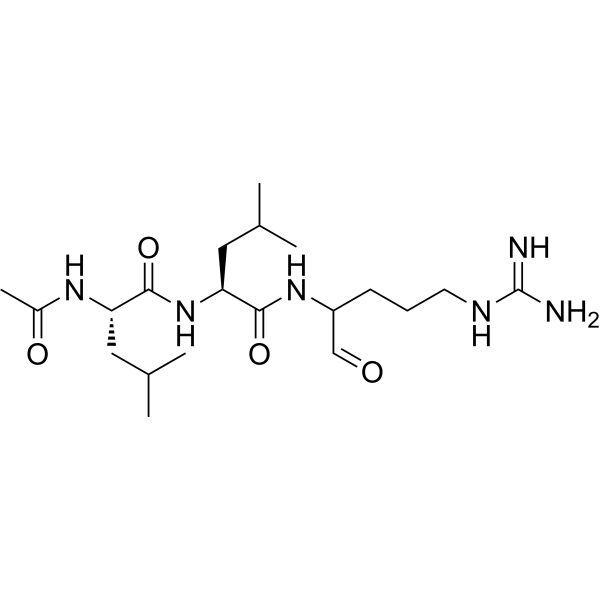 0 ImagesCat. No.: HY-18234BCAS No.: 24365-47-7Leupeptin Ac-LL is a broad-spectrum protease inhibitor. By inhibiting the activation of the PTEN/PI3K/Akt/NF-κB/ERK1/2/p38 signaling pathway, Leupeptin Ac-LL significantly reduces LPS-induced NO and ROS production, mitochondrial membrane potential hyperpolarization, phagocytic activity, pro-inflammatory cytokine release, and M1 polarization in mouse peritoneal macrophages, and reverses autophagic flux impairment. It also decreases Concanavalin A (HY-P2149)-induced proliferation index of mouse splenic lymphocytes and the Th1/IL-10 and Th2/IL-10 cytokine ratios, thereby modulating innate and adaptive immune responses. Leupeptin Ac-LL inhibits blood coagulation and tumorigenesis in mouse skin. Leupeptin Ac-LL can be used in research on chronic inflammatory diseases and skin tumorigenesis.




