



NF-κB
Nuclear factor-κB; Nuclear factor-kappaB
NF-κB (Nuclear factor kappa-light-chain-enhancer of activated B cells) is a protein complex that controls transcription of DNA. NF-κB is found in almost all animal cell types and is involved in cellular responses to stimuli such as stress, cytokines, free radicals, ultraviolet irradiation, oxidized LDL, and bacterial or viral antigens. NF-κB plays a key role in regulating the immune response to infection. Incorrect regulation of NF-κB has been linked to cancer, inflammatory, and autoimmune diseases, septic shock, viral infection, and improper immune development. NF-κB has also been implicated in processes of synaptic plasticity and memory. There are five proteins in the mammalian NF-κB family: NF-κB1, NF-κB2, RelA, RelB, c-Rel.
NF-κB Isoform Specific Products
All Product Categories
-
NF-κB Inhibitors
(1636)
View all products
-
NF-κB Agonists
(6)
View all products
-
NF-κB Antagonist
(1)
View all products
-
NF-κB Activators
(146)
View all products
-
NF-κB Modulators
(34)
View all products
-
NF-κB Inducers
(3)
View all products
-
NF-κB Degraders
(4)
View all products
-
NF-κB Controls
(7)
View all products
-
NF-κB Ligands
(2)
View all products
-
NF-κB Related Products (1973)
Related Products (1973)

-
Antibodies (32)
-
NF-κB Signaling Pathway
-
NF-κB Isoform Comparison
-
IKKβ-IN-5
 0 ImagesCat. No.: HY-180119IKKβ-IN-5 is an orally active and selective IKKβ inhibitor with an IC50 of 7.5 nM. IKKβ-IN-5 directly inhibits IKKβ phosphorylation and attenuates NF κB mediated inflammatory and survival signals while promoting autophagy flux. IKKβ-IN-5 exhibits a 6-fold selectivity forIKKβ over the homologous kinase IKKα. IKKβ-IN-5 exerts robust antiproliferative effects through a dual mechanism involving G₂/M phase cell cycle arrest and autophagy activation, even under inflammatory stimulation in vitro. IKKβ-IN-5 demonstrates favorable pharmacokinetics and suppresses tumor growth in vivo. IKKβ-IN-5 can be used for colorectal cancer and potentially other inflammation driven malignancies research.
-
Lumichrome-d8
 0 ImagesCat. No.: HY-W708917Lumichrome-d8 is the deuterium labeled Lumichrome (HY-115385). Lumichrome, a photodegradation product of Riboflavin, is an endogenous compound in humans. Lumichrome inhibits human lung cancer cell growth and induces apoptosis via a p53-dependent mechanism. Lumichrom is the inhibitor for AKT/β-catenin signaling pathway.
-
Pyridoxine-d3
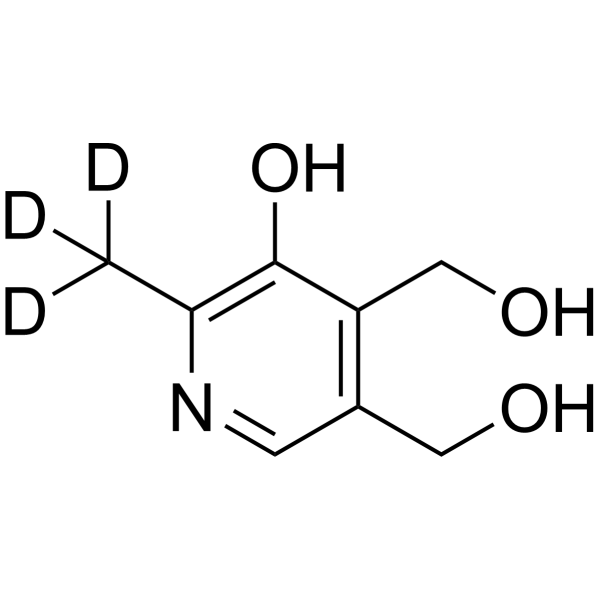 0 ImagesCat. No.: HY-B1328S1CAS No.: 1190043-14-1Synonyms: Pyridoxol-d3Pyridoxine-d3 is a deuterium labeled Pyridoxine. Pyridoxine (Pyridoxol) is a pyridine derivative. Pyridoxine exerts antioxidant effects in cell model of Alzheimer's disease via the Nrf-2/HO-1 pathway.
-
TAT-N24
 0 ImagesCat. No.: HY-P10797Purity: 99.83%TAT-N24 is a cell-penetrating peptide and also an inhibitor of p55PIK. TAT-N24 disrupts the interactions between p55PIK and p53, PCNA or Rb, blocks the p53-dependent ubiquitin-mediated degradation process, and inhibits the nuclear translocation and phosphorylation of NF-κB p65. TAT-N24 enhances MMS-induced p53-dependent cell apoptosis, inhibits DNA synthesis, reduces the expression of Cyclin D1, and induces cell cycle arrest at the G0/G1 or S phase. TAT-N24 inhibits the activation of NLRP3 and NLRC4 inflammasomes, reduces the expression of ZBP1-PANoptosome components, and suppresses PANoptosis. TAT-N24 can be used in research related to leukemia, colon cancer, cervical cancer, liver cancer, corneal neovascularization, restenosis and acute glaucoma.
-
Antimicrobial Peptide YD
 0 ImagesCat. No.: HY-P11913CAS No.: 2124174-65-6Antimicrobial Peptide YD is an Antimicrobial peptide. Antimicrobial Peptide YD attenuates the TLR4/MYD88/NF-κB signaling pathway, inhibits ROS production, upregulates the expression of antioxidant enzymes, reduces the levels of inflammation-related factors, and prevents the downregulation of E-cadherin and upregulation of Vimentin. Antimicrobial Peptide YD exhibits activity against Gram-positive bacteria, Gram-negative bacteria, and multidrug-resistant bacteria. Antimicrobial Peptide YD possesses anti-inflammatory, antifibrotic, and antioxidant effects. Antimicrobial Peptide YD can be used in pulmonary fibrosis research.
-
Aspirin calcium
 0 ImagesAspirin calcium is an orally active, potent and irreversible inhibitor of cyclooxygenase COX-1 and COX-2, with IC50 values of 5 and 210 μg/mL, respectively. Aspirin calcium induces apoptosis. Aspirin calcium inhibits the activation of NF-κB. Aspirin calcium also inhibits platelet prostaglandin synthetase, and can prevent coronary artery and cerebrovascular thrombosis.
-
SAR113945
 0 ImagesCat. No.: HY-111970CAS No.: 869796-50-9SAR113945 is a highly selective IKK-β inhibitor with an IC50 value of 0.4 nM. SAR113945 blocks the canonical NFκB signaling pathway. SAR113945 alleviates hyperalgesia to heat and mechanical stimuli, and exerts effects in a zymosan-induced knee joint inflammation model. SAR113945 is applicable to research related to symptomatic knee osteoarthritis.
-
Narasin sodium
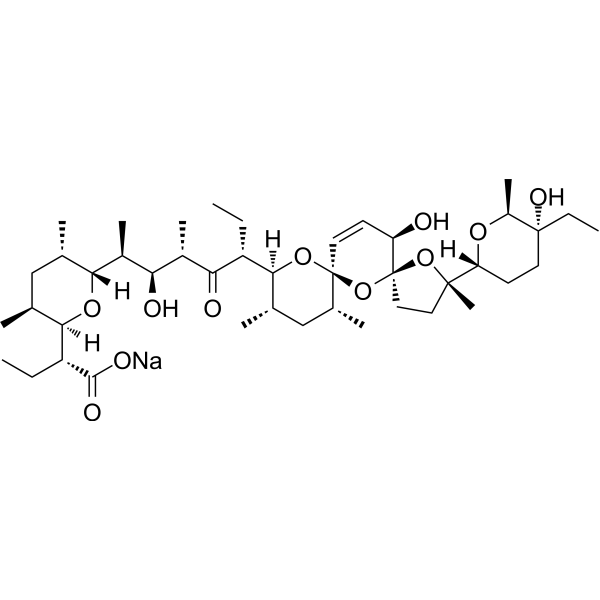 0 ImagesCat. No.: HY-112225CAS No.: 58331-17-2Narasin sodium is a cationic ionophore and coccidiostat agent. Narasin inhibits NF-κB signaling and induces tumor cells apoptosis. Narasin sodium has antimicrobial and anticancer activity.
-
TP-110
 0 ImagesCat. No.: HY-118522CAS No.: 688737-95-3TP-110 is a proteasome inhibitor. TP-110 specifically inhibits the protease-like activity of the 20S proteasome, but does not affect the trypsin-like or peptidyl-glutamyl peptide hydrolysis activity. TP-110 inhibits the NF-κB pathway, activates caspase-8, -9, and -3, and causes PARP cleavage, significantly reducing the levels of cIAP-1 and XIAP. TP-110 causes cell cycle arrest at the G2/M phase and promotes apoptosis of cancer cells. TP-110 can be used in cancer research of prostate cancer and multiple myeloma, etc.
-
Anti-inflammatory agent 55
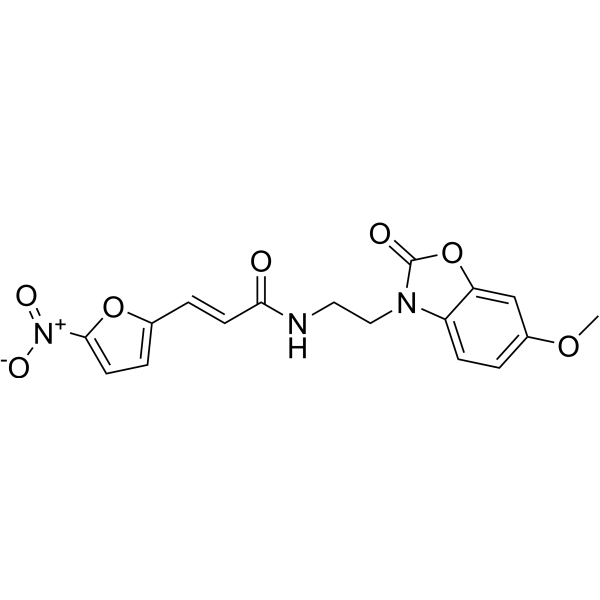 0 ImagesCat. No.: HY-155821CAS No.: 2924156-51-2Anti-inflammatory agent 55 (compound 9j) is a derivative of Coixol and has anti-inflammatory activity. Anti-inflammatory agent 54 inhibits the NF-κB pathway and downregulates the expression of iNOS, TNF-α, IL-6 and IL-1β. Anti-inflammatory agent 54 inhibits LPS-induced nitric oxide (NO) production in RAW264.7 macrophages (IC50: 0.8 μM) and exerts in vivo anti-inflammatory activity in a mouse auricular edema model.
-
AM-0216
 0 ImagesCat. No.: HY-117222CAS No.: 1202764-61-1AM-0216 is a highly selective NF-κB-inducing kinase (NIK) inhibitor with a Ki value of 2 nM. AM-0216 is promising for research of NF-κB-dependent hematologic malignancies (e.g., multiple myeloma) and autoimmune diseases.
-
NF-κB-IN-8
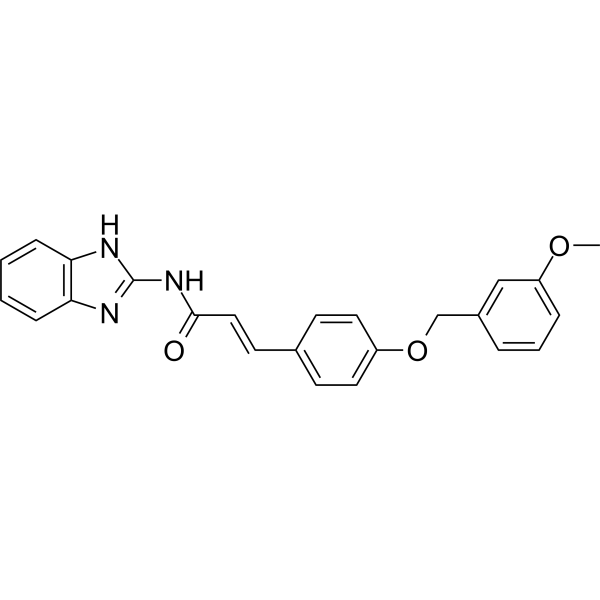 0 ImagesCat. No.: HY-149248CAS No.: 2924565-59-1NF-κB-IN-8 competitively antagonizes LPS binding to MD-2. NF-κB-IN-8 reduces the expression of inflammatory factors by binding to MD-2. NF-κB-IN-8 also inhibits ALP activity. NF-κB-IN-8 can be used for the research of inflammation such as acute lung injury (ALI).
-
Anti-inflammatory agent 66
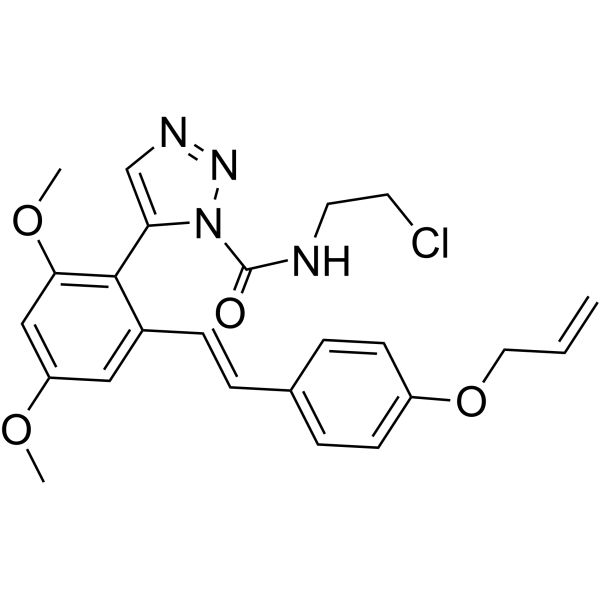 0 ImagesCat. No.: HY-157211Anti-inflammatory agent 66 (compound 8) is a pterostilbene derivative with anti-inflammatory activity. Anti-inflammatory agent 66 inhibits pro-inflammatory cytokines by blocking the LPS-induced NF-κB/MAPK signaling pathway and effectively alleviates DSS-induced acute colitis in mice.
-
Calebin A
 0 ImagesCalebin A is a PI3K/Akt/mTOR, MAPK, and NF-κB inhibitor with oral effectiveness. Calebin A can block the autophagy-repressive, inhibiting apoptosis. Calebin A has anti-tumor activity by epigenetic regulation. Calebin A suppresses adipogenesis, modulates thermogenesis, and enriches gut probiotics. Calebin A can be used in research on osteoarthritis, Alzheimer's disease, type 2 diabetes, malignant peripheral nerve sheath tumors, and colorectal cancer.
-
AF-45
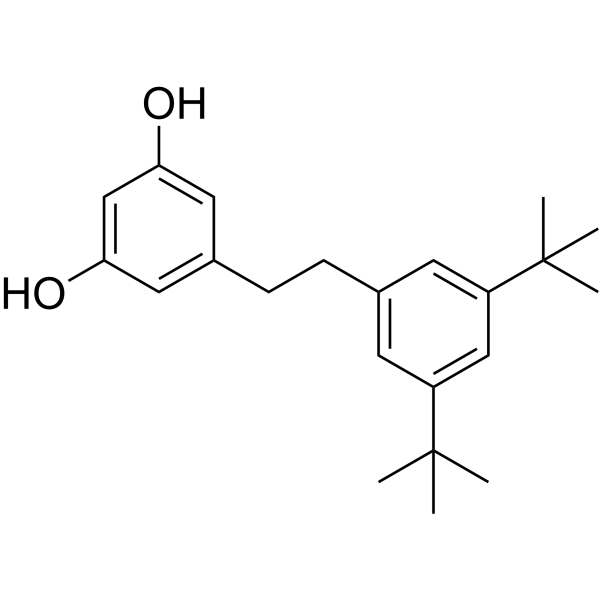
 0 ImagesCat. No.: HY-162641AF-45 inhibits IRAK4 and IRAK1, with IC50s of 128 nM and 1765 nM. AF-45 inhibits the release of IL-6 and TNF-α in macrophages, with IC50s of 0.53-1.54 μM and 0.6-2.75 μM. AF-45 is also an inhibitor for NF-κB/MAPK signaling pathway. AF-45 exhibits anti-inflammatory activities against DSS-induced ulcerative colitis and Lipopolysaccharide (HY-D1056)-induced acute lung injury in mouse model. AF-45 exhibits good pharmacokinetic characteristics in rat models.
-
Gossypin (Standard)
 0 ImagesCat. No.: HY-125911RCAS No.: 652-78-8Gossypin (Standard) is the analytical standard of Gossypin. This product is intended for research and analytical applications. Gossypin is an orally active flavone isolated from Hibiscus vitifolius. Gossypin has antioxidant, antiinflammatory, anticancer, anticataract, antidiabetic, and hepatoprotective activities. Gossypin inhibits NF-κB and NF-κB-regulated gene expression. Gossypin inhibits AURKA and RSK2. Gossypin inhibits invasion and induces apoptosis. Gossypin can be used for gastric cancer study.
-
STAT3/NF-κB-IN-1
 0 ImagesCat. No.: HY-175227STAT3/NF-κB-IN-1 is a potentSTAT3 and NF-κB inhibitor with IC50s of 5.86 (STAT3) and 4.22 μM (NF-κB) in 4T1 cells. STAT3/NF-κB-IN-1 is able to induce apoptosis via its upregulation on key apoptotic regulators; caspases-3/9, Bax and downregulation of Bcl-2. STAT3/NF-κB-IN-1 exerts considerable anticancer activity against breast cancer cell lines and reduces tumor volume in vivo. STAT3/NF-κB-IN-1 can be used for the study of breast cancer.

-
Polygalasaponin F (Standard)
 0 ImagesCat. No.: HY-N0392RCAS No.: 882664-74-6Polygalasaponin F (Standard) is the analytical standard of Polygalasaponin F. This product is intended for research and analytical applications. Polygalasaponin F is an orally active triterpenoid saponin monomer. Polygalasaponin F downregulates the expression of Bax, p53, caspase-3, NF-κB p65 and MEK1; restores and upregulates the expression of Bcl-2; activates the PI3K/Akt signaling pathway; inhibits the phosphorylation of p38 MAPK, nuclear translocation of NF-κB, TLR4-mediated signaling pathway, mitophagy (Mitophagy) and ROS production; enhances cell viability and suppresses apoptosis (Apoptosis). Polygalasaponin F maintains mitochondrial function, alleviates Ca2+ overload, upregulates pCREB and BDNF, preserves cell viability and inhibits the release of inflammatory cytokines. Polygalasaponin F alleviates lung injury induced by influenza A H1N1 and cerebral ischemia-reperfusion injury. Polygalasaponin F is applicable to researches related to Parkinson's disease, cerebral ischemia, pneumonia induced by influenza A H1N1, stroke and Alzheimer's disease.




