



NF-κB
Nuclear factor-κB; Nuclear factor-kappaB
NF-κB (Nuclear factor kappa-light-chain-enhancer of activated B cells) is a protein complex that controls transcription of DNA. NF-κB is found in almost all animal cell types and is involved in cellular responses to stimuli such as stress, cytokines, free radicals, ultraviolet irradiation, oxidized LDL, and bacterial or viral antigens. NF-κB plays a key role in regulating the immune response to infection. Incorrect regulation of NF-κB has been linked to cancer, inflammatory, and autoimmune diseases, septic shock, viral infection, and improper immune development. NF-κB has also been implicated in processes of synaptic plasticity and memory. There are five proteins in the mammalian NF-κB family: NF-κB1, NF-κB2, RelA, RelB, c-Rel.
NF-κB Isoform Specific Products
All Product Categories
-
NF-κB Inhibitors
(1636)
View all products
-
NF-κB Agonists
(6)
View all products
-
NF-κB Antagonist
(1)
View all products
-
NF-κB Activators
(146)
View all products
-
NF-κB Modulators
(34)
View all products
-
NF-κB Inducers
(3)
View all products
-
NF-κB Degraders
(4)
View all products
-
NF-κB Controls
(7)
View all products
-
NF-κB Ligands
(2)
View all products
-
NF-κB Related Products (1973)
Related Products (1973)

-
Antibodies (32)
-
NF-κB Signaling Pathway
-
NF-κB Isoform Comparison
-
Antcin K
 0 ImagesCat. No.: HY-N9980CAS No.: 741268-13-3Antcin K is a selective inhibitor targeting the PI3K/Akt, NF-κB, MEK1/2-ERK, p38 and AP-1 pathways. Antcin K upregulates IL-10 expression, thereby inhibiting the production of pro-inflammatory factors, blocking monocyte adhesion, reducing tissue damage, and promoting myogenesis. Antcin K has significant anti-inflammatory, anti-damage and tissue protective activities. Antcin K is mainly used in the research of inflammation-related diseases such as periodontitis, rheumatoid arthritis, and skeletal muscle injury.
-
BAY-356
 0 ImagesCat. No.: HY-P992321BAY-356, a potent TWEAK receptor agonist, is an aglycosylated anti-TWEAK receptor antibody. BAY-356 triggers TWEAKR hyperactivation, activates NFκB and STAT1 pathways, and undergoes TWEAKR-dependent internalization. BAY-356 can be used for the research of colorectal cancer, bladder cancer, non-small cell lung cancer and pancreatic cancer[1][2].
-
APH003
 0 ImagesCat. No.: HY-184915CAS No.: 3065495-08-8APH003 is an orally active IRAK4 PROTAC degrader with a DC50 of 0.74 nM in human peripheral blood mononuclear cells (hPBMCs). APH003 recruits IRAK4 to CRBN to form a ternary complex, mediates the ubiquitination and degradation of IRAK4 via the ubiquitin-proteasome pathway, and inhibits the kinase activity of IRAK4. APH003 inhibits LPS- or IL-1β/LPS-induced phosphorylation of ERK, JNK and NF-κB. APH003 inhibits the secretion of TNF-α, IL-6, IL-8 and IL-13 by stimulated hPBMCs. APH003 exhibits anti-inflammatory activity in rat TNBS-induced intestinal inflammation models and mouse IL-33-induced skin inflammation models. APH003 can be used in research related to inflammatory bowel disease and skin inflammation.
-
G721-0377
 0 ImagesCat. No.: HY-183586CAS No.: 946336-44-3G721-0377 is a CHI3L1 modulator with a human Kd value of 45 μM. G721-0377 binds to CHI3L1 and modulates downstream signaling pathways. G721-0377 suppresses CHI3L1-induced NF-κB activation, decreases secretion of CHI3L1 and IL-6. G721-0377 can be used for the research of Alzheimer's disease.
-
LBL-019
 0 ImagesCat. No.: HY-P992399LBL-019 is a humanized IgG1 monoclonal antibody targeting TNFR2. LBL-019 costimulates TNFR2 and activates the NF-κB signaling pathway in an Fc crosslinking-dependent manner. LBL-019 can be used for the research of advanced malignant tumors, including hepatocellular carcinoma and melanoma. The recommended isotype control is human IgG1 kappa (HY-P99001).
-
dCASP1-55
 0 ImagesCat. No.: HY-181132dCASP1-55 is a cereblon-dependent caspase-1 (CASP1) PROTAC degrader. dCASP1-55 induces excessive NF-κB activation, apoptosis, and moderate S-phase arrest in leukemic cells. dCASP1-55 suppresses colony formation of leukemic cells. dCASP1-55 can be used for the research of cancer, such as myeloid malignancies and acute myeloid leukemia.
-
UM-203
 0 ImagesCat. No.: HY-180120UM-203 is a reversible covalent STING antagonist. UM-203 is effective against both mouse and human STING, and in particular, it inhibits the most common human STING R232 variant. UM-203 can inhibit STING oligomerization and reduce phosphorylation of downstream TBK1 and IRF3, thereby blocking the IRF3 and NF-κB-mediated signaling pathways and inhibiting IFNβ and IL-6 secretion. UM-203 can be used for the research of inflammation and immunology, such as systemic lupus erythematosus.
-
IB15C
 0 ImagesCat. No.: HY-184157IB15C is an ILT3 (LILRB4) inhibitor with a human Kd of 0.92 μM. IB15C binds to a specific ILT3 pocket, disrupts ApoE interaction, and interferes with downstream inhibitory signaling pathways. IB15C reduces SHP1 and SHP2 phosphorylation, suppresses pro-inflammatory cytokine secretion, enhances amyloid uptake, and attenuates NF-κB activation. IB15C can be used for the research of alzheimer's disease.
-
Tubulin/MMP-IN-3
 0 ImagesCat. No.: HY-172088Tubulin/MMP-IN-3 (Compound 15j) is the dual inhibitor for tubulin polymerization and MMP, and inhibits MMP-2 and MMP-9 with IC50 of 21.13 μM and 19.24 μM. Tubulin/MMP-IN-3 inhibits NF-κB signaling pathway, causes mitochondrial dysfunction and the apoptosis through a mitochondrial-dependent pathway. Tubulin/MMP-IN-3 exhibits antiproliferative activity in a variety of cancer cells, arrests the cell cycle at G2/M phase, and exhibits antitumor efficacy in mouse models.
-
ETI60
 0 ImagesETI60 is an orally active, selective TLR inhibitor that targets the nucleoside-binding Site I on TLR7 (IC50 = 0.68 μM) and TLR9 (IC50 = 0.12 μM), sparing surface TLRs (including TLR1/TLR2, TLR2/TLR6, TLR4 and TLR5). ETI60 potently inhibits endosomal TLR-mediated pro-inflammatory signaling with nanomolar activity in cellular, biophysical and in vivo assays. ETI60 modulates the expression of genes associated with inflammation. ETI60 effectively ameliorates symptoms in mouse models of psoriasis, and systemic lupus erythematosus (SLE). ETI60 can be used for autoimmune and inflammatory diseases research.
-
NF-κB-IN-14
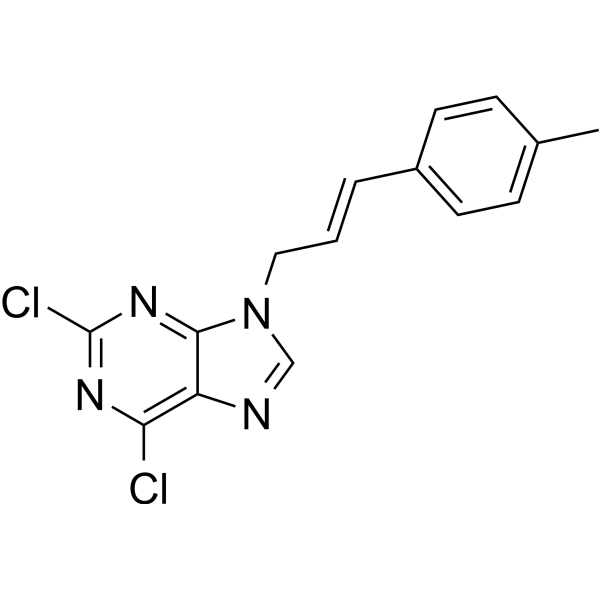 0 ImagesCat. No.: HY-162004CAS No.: 3019972-01-8NF-κB-IN-14 (compound 5e) significantly inhibits nitric oxide production in LPS-induced macrophages (IC50: 6.4 μM). NF-κB-IN-14 disrupts the TLR4-MyD88 protein interaction, leading to the suppression of the NF-κB signaling pathway suppression. NF-κB-IN-14 reduces ear edema and inflammation in an atopic dermatitis mouse model.
-
TU-100
 0 ImagesCat. No.: HY-165386CAS No.: 1310907-71-1TU-100 is a Japanese herbal medicine. TU-100 exhibits anti-cancer effects by regulating cancer-associated fibroblasts (CAFs) in the TME. TU-100 can antagonize the M2 polarization phenotype of macrophages in the tumor microenvironment by suppressing the TLR4/NF-κB/STAT3 axis. TU-100 can inhibit the high expression of MMP-2, COX-2, and VEGF in TAMs.
-
NOSH-aspirin
 0 ImagesCat. No.: HY-150038CAS No.: 1357362-67-4Synonyms: NBS-1120NOSH-aspirin (NBS-1120) is an orally active hybrid molecule that releases nitric oxide and hydrogen sulfide. NOSH-aspirin inhibits pancreatic cancer cell proliferation and induces apoptosis. NOSH-aspirin inhibits cancer cell growth and suppresses NF-κB and FoxM1 in a mouse model of pancreatic cancer. NOSH-aspirin also alleviates motor deficits and dopaminergic neuron degeneration in a rat model of Parkinson's disease. NOSH-aspirin reduces neuroinflammation caused by microglial and astrocytic activation. NOSH-aspirin can be used in research on cancers such as pancreatic cancer and neurological diseases such as Parkinson's disease.
-
LJ-2698
 0 ImagesCat. No.: HY-153149CAS No.: 945457-84-1Synonyms: FM101LJ-2698 (FM101) is an orally active adenosine A3 receptor (Adenosine A3 Receptor) antagonist. LJ-2698 blocks adenosine A3 receptor-dependent pro-inflammatory JNK, ERK, and NF-κB signaling pathways. LJ-2698 prevents alveolar cavity enlargement, restores pulmonary function, and inhibits matrix metalloproteinase activity and pulmonary cell apoptosis (apoptosis) in mice. LJ-2698 induces mitochondrial dysfunction, necroptosis, and intrinsic apoptosis. LJ-2698 ameliorates renal injury in mice with diabetic nephropathy, and alleviates diet-induced hepatic inflammation and fibrosis. LJ-2698 can be used in the research of emphysema, diabetic nephropathy, and metabolic dysfunction-associated steatotic liver disease.
-
Articaine hydrochloride (Standard)
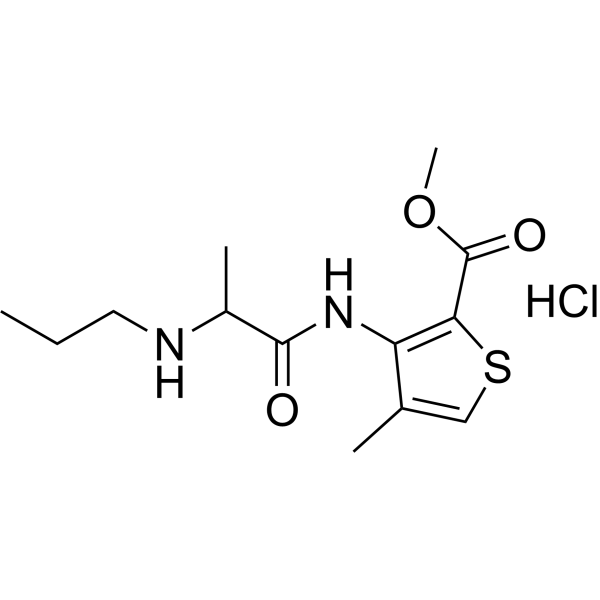 0 ImagesSynonyms: Hoe-045 (Standard)Articaine (Hoe-045) hydrochloride (Standard) is the analytical standard of Articaine hydrochloride (HY-B0516). This product is intended for research and analytical applications. Articaine (Hoe-045) hydrochloride is a selective inhibitor of voltage-gated sodium channels (such as rNav1.4, hNav1.7, and rNav1.8), with an IC50 of 15.8 μM for open-state Na+ channels, and IC50 of 40.6 μM and 378 μM for inactivated and resting-state Na+ channels, respectively. Articaine hydrochloride exerts local anesthetic activity by inhibiting Na+ influx to block nerve impulse conduction, and can also inhibit NF-κB activation and NLRP3 inflammasome pathways, exhibiting anti-inflammatory function. Articaine hydrochloride can be used in the study of dental local anesthesia and inflammatory-related diseases (such as acute kidney injury).
-
7,8-Didehydrocimigenol
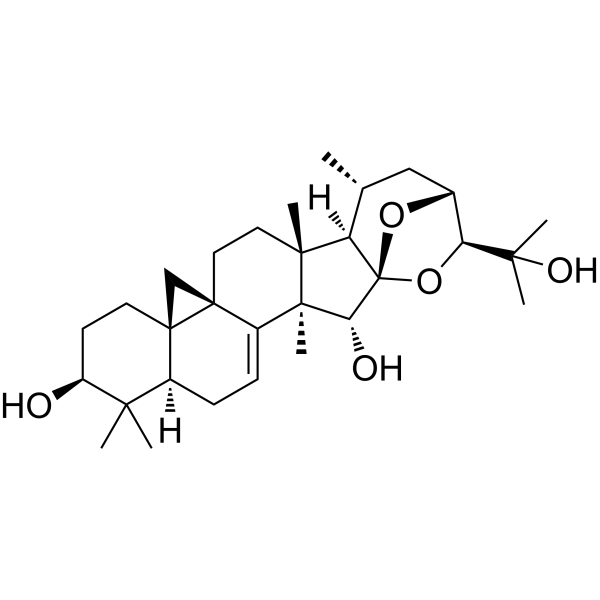 0 ImagesCat. No.: HY-N10047CAS No.: 150972-72-87,8-Didehydrocimigenol is an active triterpenoid that can be isolated from Cimicifugae rhizoma. 7,8-Didehydrocimigenol inhibits TNF-α-induced VCAM-1 expression, inhibits NF-kB activity and phosphorylation of ERK1/2 and Akt, increases PPAR-γ expression. 7,8-Didehydrocimigenol can be used for the research of cardiovascular disorders such as atherosclerosis.
-
Ciapavir
 0 ImagesCat. No.: HY-134844CAS No.: 2433895-70-4Synonyms: SBI-0953294Ciapavir (SBI-0953294) is a HIV-1 latency-reversing agent. Ciapavir reverses latent HIV-1 reservoir in vitro and in vivo without inducing systemic T cell activation or broad cytokine release. Ciapavir degrades cIAP1 and activates non-canonical NF-κB pathway. Ciapavir can be used for the research of HIV-1 infection.
-
Esculentoside B
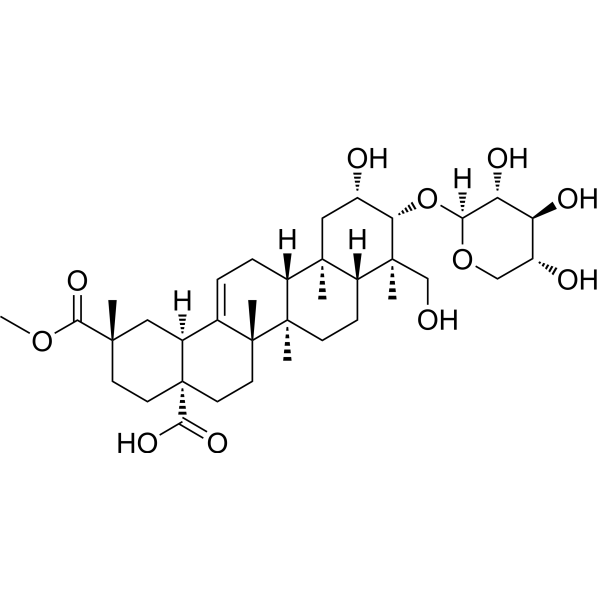 0 ImagesSynonyms: Phytolaccoside BEsculentoside B (Phytolaccoside B) is a natural product from the roots of Phytolacca acinosa Roxb. Esculentoside B is neurotoxic to zebrafish larvae, and impairs their central nervous system development. Esculentoside B inhibits inflammatory response and has antifungal activity.

-
Dehydrocostus Lactone (Standard)
 0 ImagesSynonyms: (-)-Dehydrocostus lactone (Standard); Epiligulyl oxide (Standard)Dehydrocostus Lactone (Standard) ((-)-Dehydrocostus lactone (Standard)) is the analytical standard of Dehydrocostus Lactone (HY-N0591). This product is intended for research and analytical applications. Dehydrocostus Lactone is a natural sesquiterpene that can be isolated from Saussurea lappa. Dehydrocostus Lactone has multiple activities such as anti-inflammatory, antibacterial, anti-tumor, and immunomodulatory effects. Dehydrocostus Lactone has an MIC of 2 µg/mL against Mycobacterium tuberculosis. Dehydrocostus Lactone can also inhibit the killing activity of cytotoxic T lymphocytes and induce apoptosis in tumor cells.




