



Potassium Channel
KcsA
Potassium channels are the most widely distributed type of ion channel and are found in virtually all living organisms. They form potassium-selective pores that span cell membranes. Potassium channels are found in most cell types and control a wide variety of cell functions. Potassium channels function to conduct potassium ions down their electrochemical gradient, doing so both rapidly and selectively. Biologically, these channels act to set or reset the resting potential in many cells. In excitable cells, such asneurons, the delayed counterflow of potassium ions shapes the action potential. By contributing to the regulation of the action potential duration in cardiac muscle, malfunction of potassium channels may cause life-threatening arrhythmias. Potassium channels may also be involved in maintaining vascular tone.
All Product Categories
-
Potassium Channel Inhibitors
(686)
View all products
-
Potassium Channel Agonists
(31)
View all products
-
Potassium Channel Antagonists
(39)
View all products
-
Potassium Channel Activators
(243)
View all products
-
Potassium Channel Modulators
(44)
View all products
-
Potassium Channel Chemical
(1)
View all products
-
Potassium Channel Controls
(11)
View all products
-
Potassium Channel Related Products (1149)
Related Products (1149)

-
Antibodies (6)
-
Related Compound Screening Libraries (1)
-
NS6180
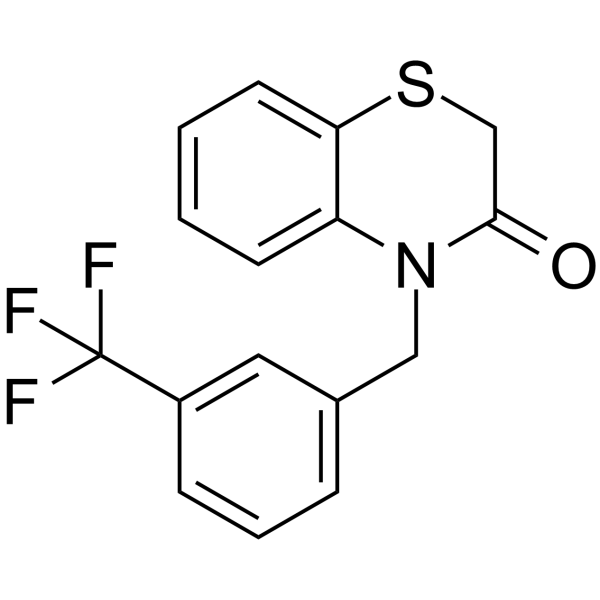 0 ImagesNS6180 is a new orally active KCa3.1 channel inhibitor. NS6180 inhibits cloned human KCa3.1 channels with an IC50value of 9 nM. NS6180 can be used for the research of inflammatory bowel disease (IBD) .
-
Tipepidine hydrochloride
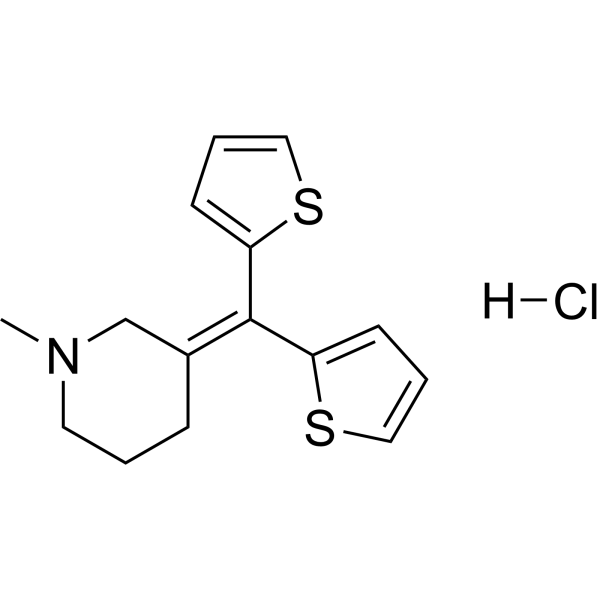 0 ImagesTipepidine hydrochloride reversibly inhibits dopamine (DA) D2 receptor-mediated GIRK currents (IDA(GIRK)) with an IC50 of 7.0 μM. Tipepidine hydrochloride subsequently activates VTA dopamine neuron. Tipepidine hydrochloride, a non-narcotic antitussive, exerts an antidepressant-like effect.
-
Eicosatetraynoic acid
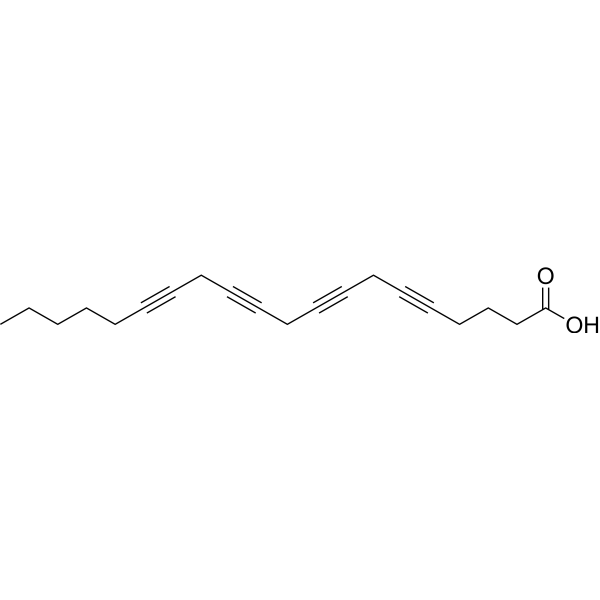 0 ImagesEicosatetraynoic acid (ETYA) is a non-metabolizable analog of Arachidonic acid (HY-109590) and also an inhibitor of the lipoxygenase (LOX)/cyclooxygenase (COX) pathway (ID50 = 8 μM and 4 μM). Eicosatetraynoic acid acts as a suicide substrate to inhibit the production of inflammatory mediators such as leukotrienes and prostaglandins. Eicosatetraynoic acid acts directly on cell membranes and membrane proteins to exert a wide range of effects, including blocking potassium channels, increasing cell membrane fluidity, elevating intracellular calcium levels, inhibiting DNA synthesis in tumor cells, inducing differentiation of certain cells, and specifically inhibiting the assembly and replication of orthopoxviruses. Eicosatetraynoic acid alleviates acute lung injury induced by chemicals such as phosgene.
-
Sodium α-ketoisocaproate-d3
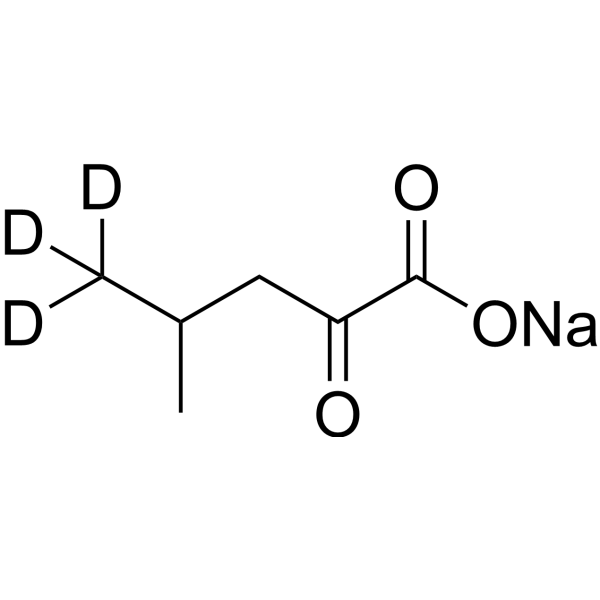 0 ImagesSynonyms: Sodium 4-methyl-2-oxopentanoate-d3; 2-Ketoisocaproic acid-d3 sodium saltSodium α-ketoisocaproate-d3 (Sodium 4-methyl-2-oxopentanoate-d3; 2-Ketoisocaproic acid-d3 (sodium salt)) is the deuterated-labeled Sodium α-ketoisocaproate (HY-W017387). Sodium α-ketoisocaproate (Sodium 4-methyl-2-oxopentanoate) is an insulin secretagogue. Sodium α-ketoisocaproate undergoes transamination catalyzed by BCAT and BCATm to produce α-ketoglutarate and leucine; it also binds to the SUR1 site to inhibit KATP channel activity, but does not directly affect the Kir6.2 subunit. Sodium α-ketoisocaproate regulates Ca2+ influx. Sodium α-ketoisocaproate exerts insulinotropic activity in pancreatic islets and intact mouse pancreata with sufficient BCATm expression. Sodium α-ketoisocaproate can be used in research related to type 2 diabetes.
-
Mesoridazine
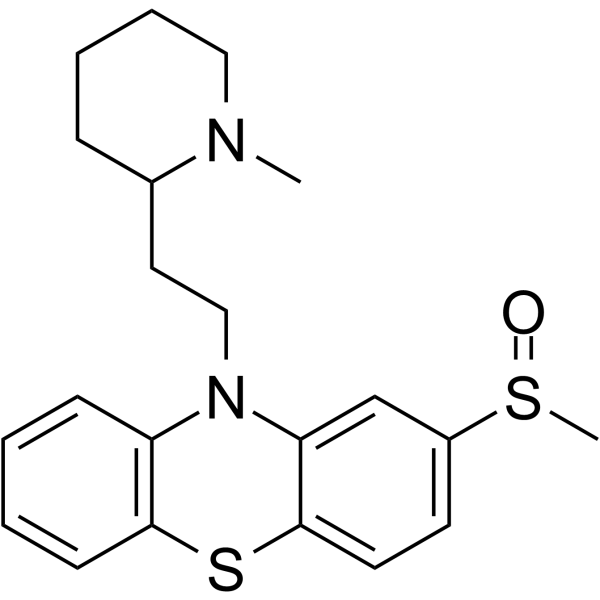 0 ImagesMesoridazine (TPS-23) , a metabolite of Thioridazine (HY-B0965A), acts as an orally active phenothiazine antipsychotic agent. Mesoridazine is a potent and rapid open-channel blocker of human ether-a-go-go related gene (hERG) channels and blocks hERG currents with an IC50 of 550 nM (at 0 mV) in human embryonic kidney 293 cells.Mesoridazine can be used for the research of schizophrenia, as well as certain other psychiatric disorders.
-
Psora-4
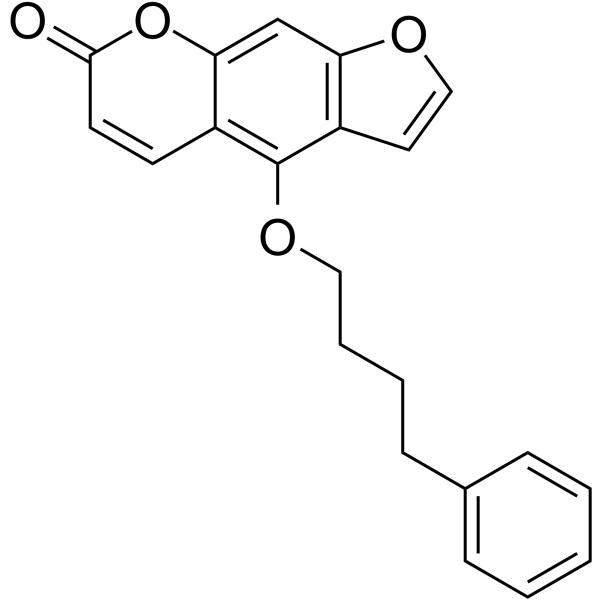 0 ImagesSynonyms: 5-(4-Phenylbutoxy)psoralenPsora-4 is a potent and selective inhibitor of Kv1.3 (voltage-gated potassium channels) with an EC50 of 3 nM. Psora-4 has immunosuppressive activity and inhibits proliferation of human and rat myelin-specific effector memory T cells in vitro.
-
Brompheniramine maleate
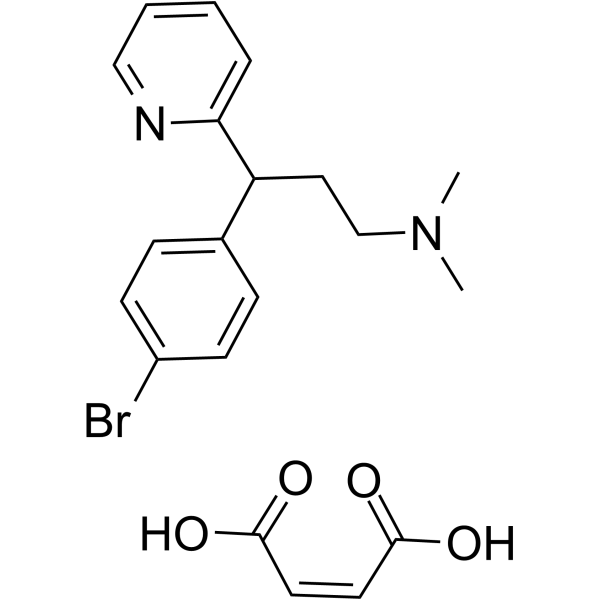 0 ImagesBrompheniramine ((±)-Brompheniramine) maleate is a potent and orally active antihistamine of the alkylamine class. Brompheniramine maleate is a selective histamine H1 receptor antagonist with a Kd of 6.06 nM. Brompheniramine maleate can block the hERG channels, calcium channels, and sodium channels with IC50s of 0.90 μM, 16.12 μM and 21.26 μM, respectively. Brompheniramine maleate has anticholinergic, antidepressant and anesthetic properties and can be used for allergic rhinitis research.
-
Acetohexamide
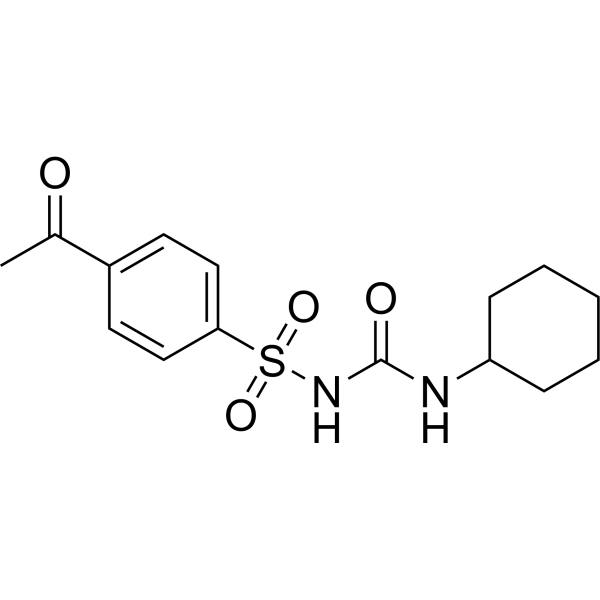 0 ImagesAcetohexamide is an orally active first-generation sulfonylurea agent used in research related to type 2 diabetes and cancer. Acetohexamide exerts reductase activity in human erythrocytes. Acetohexamide stimulates the pancreas to secrete insulin. Acetohexamide inhibits ATP-sensitive potassium channels in the β cells of the pancreas. Acetohexamide can inhibit the formation of circular chemorepellent induced defects (CCIDs) in lymphendothelial cell (LEC) monolayers. Acetohexamide inhibits markers of epithelial-to-mesenchymal-transition and migration. Acetohexamide suppresses the synthesis of 12(S)-HETE. Acetohexamide can potentiate hypoglycaemic action.
-
Glimepiride (Standard)
 0 ImagesSynonyms: Glimperide (Standard); HOE-490 (Standard)Glimepiride (Standard) is the analytical standard of Glimepiride. This product is intended for research and analytical applications. Glimepiride (Glimperide) is a medium-to-long acting sulfonylurea anti-diabetic compound with an ED50 of 182 μg/kg.
-
Terfenadine (Standard)
 0 ImagesSynonyms: (±)-Terfenadine (Standard); MDL-991 (Standard)Terfenadine (Standard) is the analytical standard of Terfenadine. This product is intended for research and analytical applications. Terfenadine ((±)-Terfenadine) is a potent open-channel blocker of hERG with an IC50 of 204 nM. Terfenadine, an H1 histamine receptor antagonist, acts as a potent apoptosis inducer in melanoma cells through modulation of Ca2+ homeostasis. Terfenadine induces ROS-dependent apoptosis, simultaneously activates Caspase-4, -2, -9.
-
Minoxidil (Standard)
 0 ImagesSynonyms: U10858 (Standard)Minoxidil (Standard) is the analytical standard of Minoxidil. This product is intended for research and analytical applications. Minoxidil (U10858) is an ATP-sensitive potassium (KATP) channel opener, a potent oral antihypertensive agent and a peripheral vasodilator that promotes vasodilation also affects hair growth. Minoxidil is also a potent inhibitor of soybean lipoxygenaseare with an IC50 of 20 μM.
-
DCEBIO
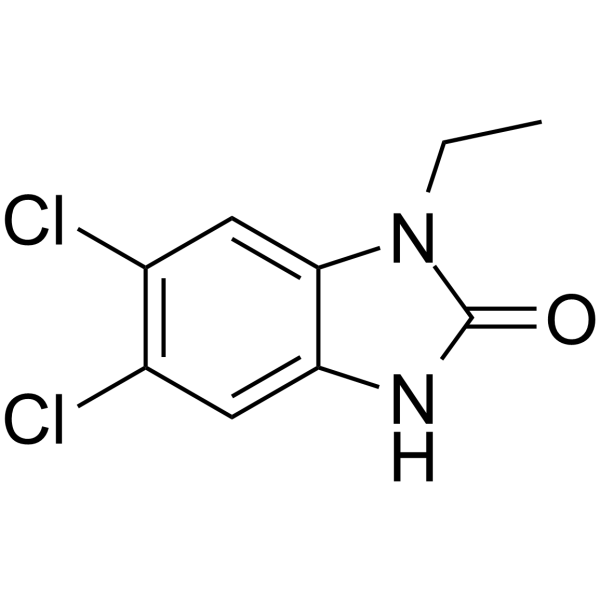 0 ImagesDCEBIO is a small/medium conductance calcium-activated potassium (SKCa/IKCa) channel opener and primary neuron signal blocker. It hyperpolarizes the membrane potential of C2C12 myoblasts by activating IKCa channels, thereby promoting myogenic differentiation. The specific biological activity of DCEBIO is manifested in increased myotube formation, enhanced myosin heavy chain II protein levels and myogenin mRNA levels. DCEBIO can be applied in the field of muscle research, especially in muscle-related degenerative diseases such as sarcopenia.
-
Cibenzoline
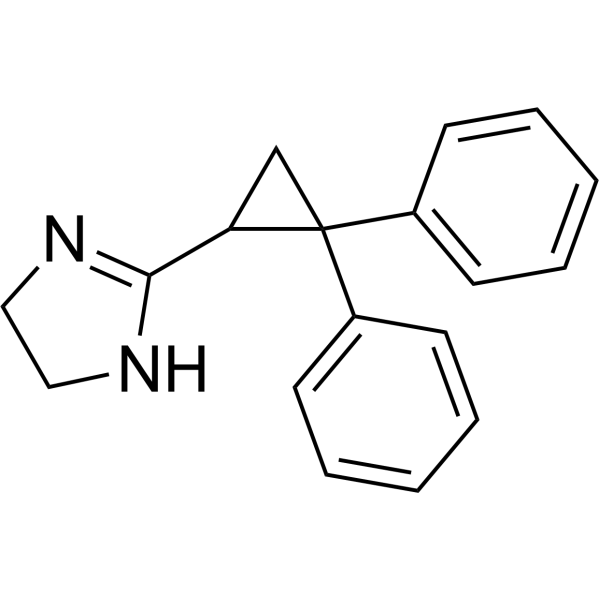 0 ImagesCat. No.: HY-106577CAS No.: 53267-01-9Synonyms: Cifenline; Ro 22-7796Cibenzoline is a class Ia antiarrhythmic active molecule with low anticholinergic activity. Cibenzoline is a KATP channel inhibitor, acting through the pore forming subunit Kir6.2, with an IC50 of 22.2 μM. Cibenzoline inhibits IKr and IKs currents with IC50 values of 8.8 μM and 12.3 μM, respectively. Cibenzoline is used in the study of cardiac diseases. In addition, Cibenzoline can induce hypoglycemia.
-
VU0546110
 0 ImagesVU0546110 is a selective inhibitor of the sperm-specific potassium channel SLO3, with IC50s of 1.287 μM (SLO3) and 59.80 μM (SLO1) in HEK293 cells, respectively. VU0546110 blocks heterologous SLO3 currents and endogenous K+ currents in human sperm. VU0546110 halts sperm hyperpolarization, induced acrosome reaction, and hyper-activated motility. VU0546110 has contraceptive potential.
-
UCL 2077
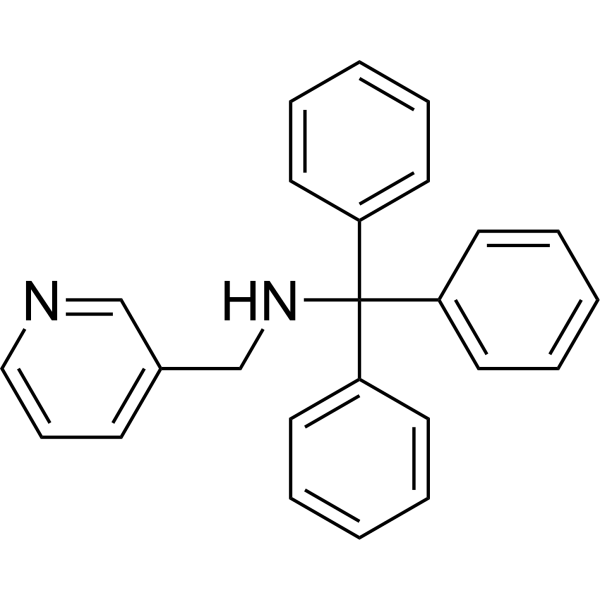 0 ImagesUCL 2077 is a potassium channel and slow afterhyperpolarization (sAHP) inhibitor. UCL 2077 selectively blocks sAHP channels without affecting L-type Ca2+ currents. UCL 2077 blocks KCNQ1- and KCNQ2-containing K+ channels, decreases erg current amplitude, increases erg deactivation rate. UCL 2077 can be used for the research of hippocampus-dependent memory retrieval deficit and cardiac arrhythmias.
-
N-Acetylprocainamide
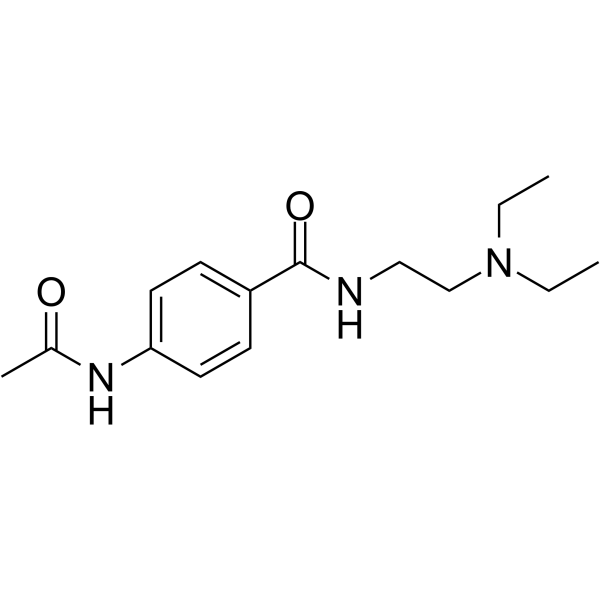 0 ImagesSynonyms: Acecainide; NAPAN-Acetylprocainamide is a class III antiarrhythmic, which blocks K+ channels.
-
Chlorpromazine-d6 hydrochloride
 0 ImagesChlorpromazine-d6 (hydrochloride) is the deuterium labeled Chlorpromazine. Chlorpromazine is an inhibitor of dopamine receptor, 5-HT receptor, potassium channel, sodium channel.
-
VU0071063
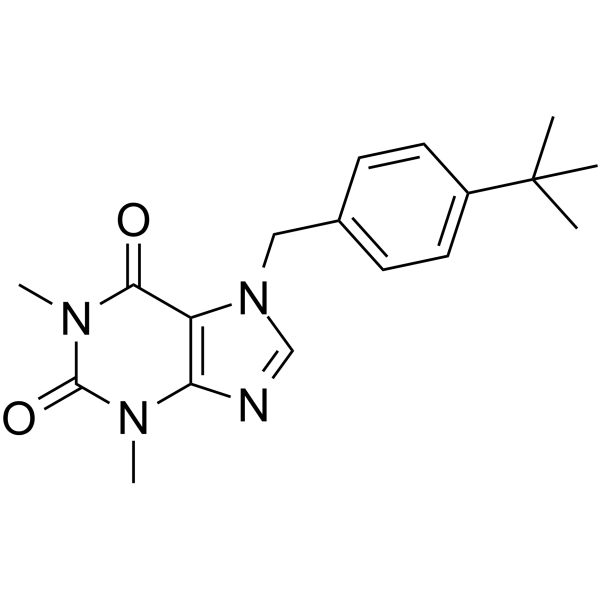 0 ImagesVU0071063 is a potent and specific Kir6.2/SUR1 opener (EC50=7.44 μM) and can be used for investigating Kir6.2/SUR1 expressed in the pancreas and brain. VU0071063 inhibits insulin secretion by inducing hyperpolarization of β-cell membrane potential. VU0071063 chemotype has a very steep structure-activity relationships.
-
Iptakalim hydrochloride
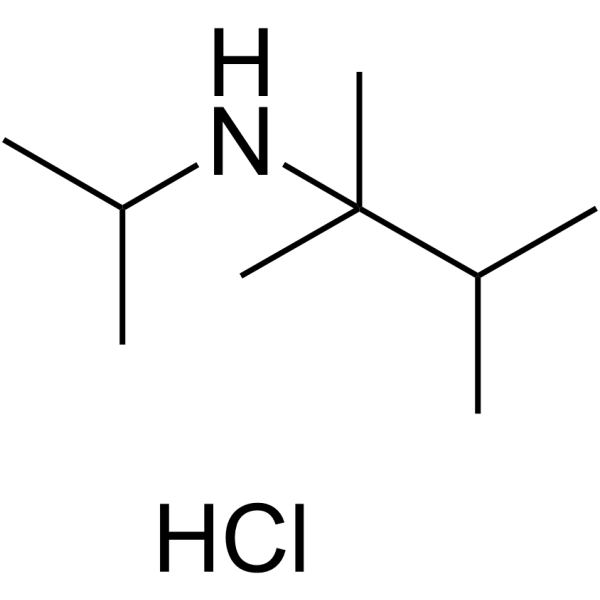 0 ImagesIptakalim hydrochloride, a lipophilic para-amino compound, is a novel ATP-sensitive potassium channel (KATP) opener, as well as an α4β2-containing nicotinic acetylcholine receptor (nAChR) antagonist.




