



TNF Receptor
Tumor Necrosis Factor Receptor; TNFR
Tumor necrosis factor (TNF) is a major mediator of apoptosis as well as inflammation and immunity, and it has been implicated in the pathogenesis of a wide spectrum of human diseases, including sepsis, diabetes, cancer, osteoporosis, multiple sclerosis, rheumatoid arthritis, and inflammatory bowel diseases.
TNF-α is a 17-kDa protein consisting of 157 amino acids that is a homotrimer in solution. In humans, the gene is mapped to chromosome 6. Its bioactivity is mainly regulated by soluble TNF-α–binding receptors. TNF-α is mainly produced by activated macrophages, T lymphocytes, and natural killer cells. Lower expression is known for a variety of other cells, including fibroblasts, smooth muscle cells, and tumor cells. In cells, TNF-α is synthesized as pro-TNF (26 kDa), which is membrane-bound and is released upon cleavage of its pro domain by TNF-converting enzyme (TACE).
Many of the TNF-induced cellular responses are mediated by either one of the two TNF receptors, TNF-R1 and TNF-R2, both of which belong to the TNF receptor super-family. In response to TNF treatment, the transcription factor NF-κB and MAP kinases, including ERK, p38 and JNK, are activated in most types of cells and, in some cases, apoptosis or necrosis could also be induced. However, induction of apoptosis or necrosis is mainly achieved through TNFR1, which is also known as a death receptor. Activation of the NF-κB and MAPKs plays an important role in the induction of many cytokines and immune-regulatory proteins and is pivotal for many inflammatory responses.
TNF Receptor Isoform Specific Products
-
TNF Receptor
(688)
View all products
-
TNFRSF1A/
CD120a (8)View all products
-
TNFRSF3/
CD18 (1)View all products
-
TNFRSF4
(5)
View all products
-
TNFRSF5/
CD40 (126)View all products
-
TNFRSF6/
Fas/ (2)CD95 View all products
-
TNFRSF7/
CD27 (2)View all products
-
TNFRSF8/
CD30 (3)View all products
-
TNFRSF9/
4-1BB/ (3)CD137 View all products
-
TNFRSF10B/
DR5/ (1)CD262 View all products
-
TNFRSF12A/
TWEAK (5)View all products
-
TNFRSF16/
NGF Receptor/ (1)CD271 View all products
-
TNFRSF18/
GITR/ (6)CD357 View all products
All Product Categories
-
TNF Receptor Inhibitors
(877)
View all products
-
TNF Receptor Agonists
(35)
View all products
-
TNF Receptor Antagonists
(25)
View all products
-
TNF Receptor Activators
(75)
View all products
-
TNF Receptor Modulators
(8)
View all products
-
TNF Receptor Inducers
(10)
View all products
-
TNF Receptor Controls
(4)
View all products
-
TNF Receptor Ligands
(2)
View all products
-
TNF Receptor Superfamily Proteins
(282)
View all products
-
TNF Receptor Related Products (1232)
Related Products (1232)

-
Recombinant Proteins (282)
-
Antibodies (23)
-
TNF Receptor Signaling Pathway
-
TNF Receptor Isoform Comparison
-
Sabialimon P
 0 ImagesCat. No.: HY-159516CAS No.: 2267333-96-8
-
Orientin (Standard)
 0 ImagesOrientin (Standard) is the analytical standard of Orientin. This product is intended for research and analytical applications. Orientin is a neuroprotective agentinhibits which has anti-inflammation, anti-oxidative, anti-tumor, and cardio protection properties. Orientin inhibits the levels of IL-6, IL-1β and TNF-α. Orientin increases IL-10 level. Orientin exhibits neuroprotective effect by inhibits TLR4 and NF-kappa B signaling pathway. Orientin can used in study neuropathic pain.
-
BMAP-27 acetate
 0 ImagesCat. No.: HY-P5286APurity: 99.72%BMAP-27 acetate is a cationic amphipathic α-helical antimicrobial peptide with anticancer activity. BMAP-27 acetate disrupts the integrity and permeability of cell membranes, leading to the leakage of intracellular DNA, proteins and alkaline phosphatase. BMAP-27 acetate increases intracellular ROS levels and reduces plasma endotoxin and TNF-α concentrations. BMAP-27 acetate can be used in studies related to Salmonella infection, breast cancer, lung cancer and obstructive jaundice.
-
Anti-inflammatory agent 20
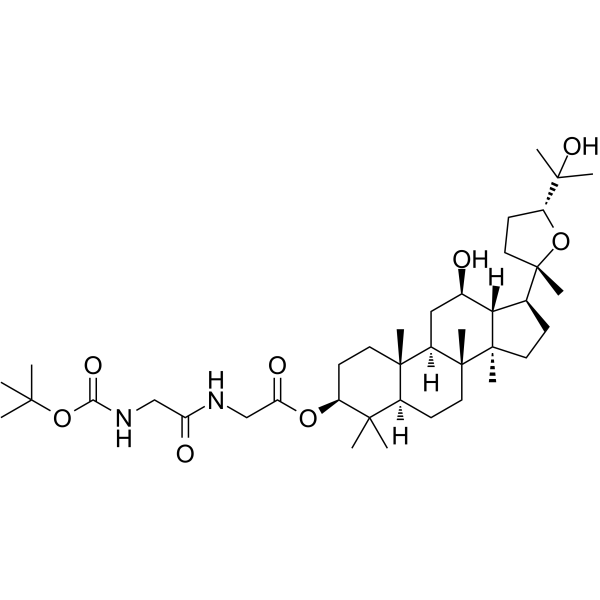 0 ImagesCat. No.: HY-146419CAS No.: 2127403-65-8Anti-inflammatory agent 20 (compound 5a) is a potent inhibitor of NO activity. Anti-inflammatory agent 20 shows anti-inflammatory activity. Anti-inflammatory agent 20 suppresses LPS-induced inflammation via inhibiting the activation of NF-κB and MAPK signaling and thereby reducing IL-6, TNF-α, iNOS, and COX-2 upregulation.
-
2-Hydroxy Imiquimod
 0 ImagesCat. No.: HY-W744192CAS No.: 112668-45-8Synonyms: R-8422-Hydroxy Imiquimod (R-842), a hydroxylated metabolite of Imiquimod (HY-B0180), is an immunomodulating agent. 2-Hydroxy Imiquimod can induce IFN-α, TNF-α, IL-1, IL-6 and IL-8 in human blood cells. 2-Hydroxy Imiquimod exhibits antivirus and antitumor activities. 2-Hydroxy Imiquimod can be used for the researches of cancer, infection and immunology.
-
CD28-IN-1
 0 ImagesCat. No.: HY-175780CAS No.: 1465291-19-3CD28-IN-1 (Compound 19MS-5) is a CD28 inhibitor with a KD of 12.48 μM. CD28-IN-1 has a superior binding capacity to CD28 and potently inhibits CD28-B7 interactions. CD28-IN-1 inhibits CD28-driven immune activation and suppresses cytokine (IFN-γ, IL-2 and TNF-α) production in primary human T cells co-cultured with tumor spheroids and human epithelial tissues. CD28-IN-1 can be used for tumor immunity research.


-
CH-100
 0 ImagesCat. No.: HY-131675CAS No.: 51346-20-4CH-100 is an immunomodulatory agent targeting T-cell activation and inflammatory mediator production. CH-100 demonstrates anti-inflammatory and hepatoprotective effects by reducing TNF-α secretion, suppressing CD4+ T-cell proliferation, and lowering endotoxin levels in alcohol-fed rats. CH-100 is promising for research of alcoholic liver disease and T-cell-mediated hepatitis.
-
PDE4D inhibitor 1
 0 ImagesCat. No.: HY-173290PDE4-IN-1 is a PDE4 inhibitor with high potency (IC50 : 8.6 nM) and selectivity over other PDE subtypes. PDE4-IN-1 inhibits the release of inflammatory cytokines and chemokines. PDE4-IN-1 greatly restores impaired cAMP-CREB signaling pathway. PDE4-IN-1 inhibits proliferation and promotes differentiation to reverse the formation of psoriasis.
-
IDO1-IN-27
 0 ImagesCat. No.: HY-175182IDO1-IN-27 (Compound I-1) is a Indoleamine 2,3-Dioxygenase 1 (IDO1) inhibitor with an IC50 of 0.3951 μM for recombinant hIDO1. IDO1-IN-27 also inhibits hIDO1 expression in HeLa cells (EC50: 62 nM). IDO1-IN-27 effectively stimulates T cell proliferation by reducing the mRNA expression of pro-inflammatory factors (TNF-α, IL-6, and IL-1β) while concurrently inhibiting LLC cells growth.
-
Gnetucleistol F
 0 ImagesCat. No.: HY-N16620CAS No.: 913529-99-4Gnetucleistol F is a stilbenolignan isolated from Gnetum cleistostachyum with anti-inflammatory activity. Gnetucleistol F exhibits potent inhibitory activities on TNF-α and malondialdehyde (MDA) with IC50 values of 10.3 and 6.36 μM, respectively. Gnetucleistol F can be used for anti-inflammatory research.
-
Sym029
 0 ImagesCat. No.: HY-P991460Sym029 is a human IgG monoclonal antibody (mAb) targeting TNFRSF5/CD40. Sym029 can be used in cancer research. Recommended isotype control: Human IgG1 kappa, Isotype Control (HY-P99001).

-
F 991
 0 ImagesCat. No.: HY-P0071CAS No.: 188193-59-1F 991 is an immunoglobulin free light chain antagonist. F 991 can significantly reduce the levels of pro-inflammatory cytokines (TNF-α and IL-6). F 991 can be used for research on allergic conditions.
-
Dichotomine C
 0 ImagesCat. No.: HY-N15708CAS No.: 755036-45-4Synonyms: (R)-(-)-Dichotomine CDichotomine C ((R)-(-)-Dichotomine C) is a β-carboline-type alkaloid with antiallergic effects. Dichotomine C inhibits the release of β-hexosaminidase in RBL-2H3 cells with an IC50 of 62 μM. Dichotomine C inhibits the releases of antigen-IgE-mediated TNF-α and IL-4 in RBL-2H3 cells with IC50s of 19 μM and 15 μM, respectively. Dichotomine C can be used for the study of type I allergic reactions.
-
ONO-4007
 0 ImagesCat. No.: HY-105188ACAS No.: 152646-95-2ONO-4007 is an antitumor lipid A analogue. ONO-4007 exhibits strong antitumor activity in several animal models via intratumoral production of tumor necrosis factor-alpha production (TNF-α). ONO-4007 can be used for the research of cancer.
-
Trifolirhizin (Standard)
 0 ImagesTrifolirhizin (Standard) is the analytical standard of Trifolirhizin. This product is intended for research and analytical applications. Trifolirhizin is a pterocarpan flavonoid isolated from the roots of Sophora flavescens. Trifolirhizin possesses potent tyrosinase inhibitory activity with an IC50 of 506 μM. Trifolirhizin exhibits potential anti-inflammatory and anticancer activities.
-
DN203316
 0 ImagesCat. No.: HY-162963CAS No.: 2982696-04-6Synonyms: PPARδ agonist 11DN203316 (PPARδ agonist 11) is a potent, selective, orally active PPARδ agonist (EC50 = 20 nM) with high selectivity over PPARα and PPARγ. DN203316 suppresses NF-κB-mediated inflammatory signaling, inhibits ferroptosis by upregulating xCT and GPX4, and attenuates STING-TBK1-IRF3-driven fibrogenic responses. DN203316 is useful for research on inflammatory disorders, metabolic dysfunction-associated steatohepatitis (MASH), and liver fibrosis.
-
2-O-Methylatromentin
 0 ImagesCat. No.: HY-N15570CAS No.: 121254-55-52-O-Methylatromentin is an anti-neuroinflammatory agent. 2-O-Methylatromentin shows inhibitory activity on the production of pro-inflammatory cytokines TNF-α, IL-6 and IL-1β in Lipopolysaccharides (HY-D1056) (LPS) -induced BV-2 microglial cells. 2-O-Methylatromentin can be used for the study of neuroinflammatory related diseases.




