



Tau Protein
Tau is well established as a microtubule-associated protein in neurons. They have roles primarily in maintaining the stability of microtubules in axons and are abundant in the neurons of the central nervous system (CNS). However, under pathological conditions, aberrant assembly of tau into insoluble aggregates is accompanied by synaptic dysfunction and neural cell death in a range of neurodegenerative disorders, collectively referred to as tauopathies.
All Product Categories
-
Tau Protein Related Products (217)
Related Products (217)

-
Antibodies (5)
-
AADvac 1 TFA
 0 ImagesCat. No.: HY-P5334AAADvac 1 TFA is an active tau peptide vaccine for Alzheimer's disease research. AADvac 1 TFA is composed of a regulatory peptide 294KDNIKHVPGGGS305 that drives tau oligomerization conjugated to Aplysia hemocyanin (KLH) and formulated with aluminum hydroxide.
-
JG-23
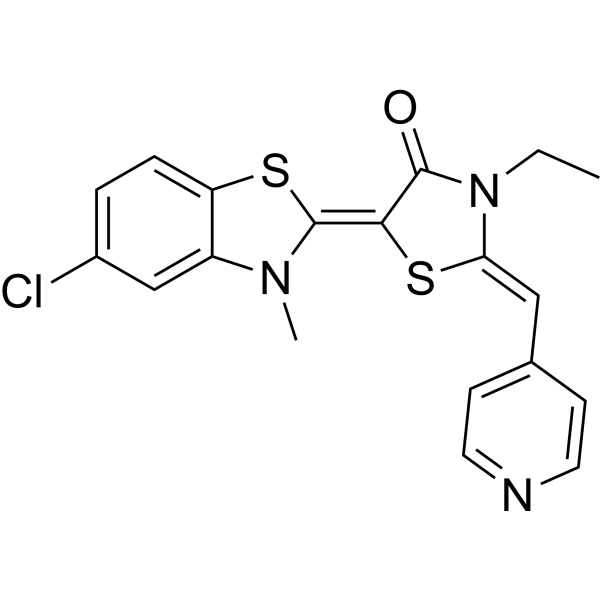 0 ImagesJG-23 is a 4-chloro modified analog with ability to promote t-tau degradation. JG-23 exhibits good metabolic stability with a long T1/2 value (36 min) in mouse liver microsome assays.
-
Tau Peptide (255-314) (Repeat 2 Domain) (human)
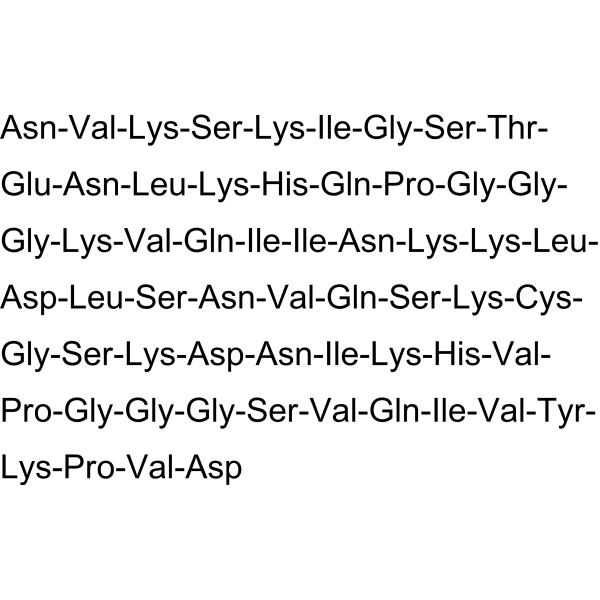 0 ImagesCat. No.: HY-P4933CAS No.: 2022995-68-0Synonyms: Tau-F protein (255-314)Tau Peptide (255-314) (Repeat 2 Domain) (human) (Tau-F protein (255-314)) is a polypeptide. Tau Peptide (255-314) (human) is the 255-314 fragment of Tau-F (also known as Tau-4, the 2N4 isoform), a major isoform of the Tau protein. Tau Peptide (255-314) (human) contains two core driving sequences for Tau aggregation, namely PHF6* (275-280, VQIINK) and PHF6 (306-311, VQIVYK), and spans the C-terminal half of repeat domain R1, the entire repeat domain R2, and the N-terminal half of repeat domain R3 within the microtubule-binding region (MTBR).
-
(R)-TTBK1-IN-1
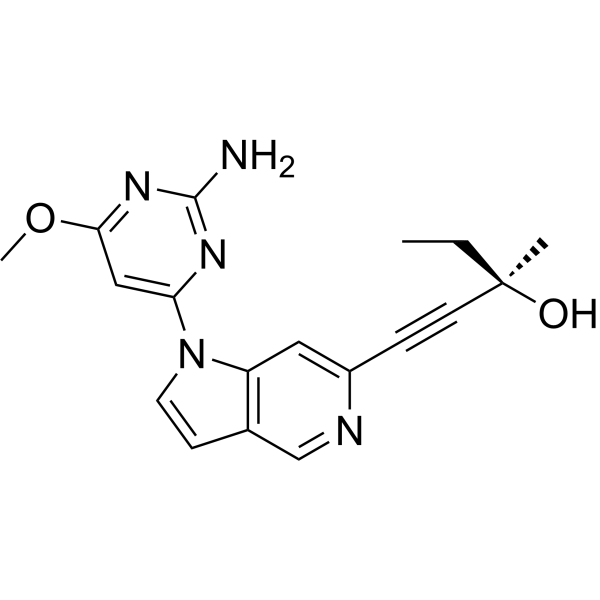 0 Images(R)-TTBK1-IN-1 is a potent, selective and brain-penetrant tau tubulin kinase 1 (TTBK1) inhibitor. (R)-TTBK1-IN-1 is an enantiomer of TTBK1-IN-1 (HY-134968). (R)-TTBK1-IN-1 can be used in the research of alzheimer’s disease and related tauopathies. (R)-TTBK1-IN-1 is a click chemistry reagent, it contains an Alkyne group and can undergo copper-catalyzed azide-alkyne cycloaddition (CuAAc) with molecules containing Azide groups.
-
MRL828
 0 ImagesCat. No.: HY-176130CAS No.: 3115333-82-6MRL828 is a heterobifunctional molecule that targets aggregated tau protein. As an autophagy-targeting chimera (ATTEC), MRL828 selectively labels aggregated tau protein for clearance via the autophagy (autophagy)-lysosome pathway. The activity of MRL828 depends on autophagosomes rather than lysosomes, and it induces autophagosome-dependent secretion. MRL828 acts as an intracellular aggregate inhibitor and a secretory autophagy inducer, reducing intracellular levels of aggregated tau protein through autophagosome-dependent secretory autophagy instead of lysosomal degradation. MRL828 can be used in the research of neurodegenerative diseases such as Alzheimer's disease.
-
DYRK2-IN-2 hydrochloride
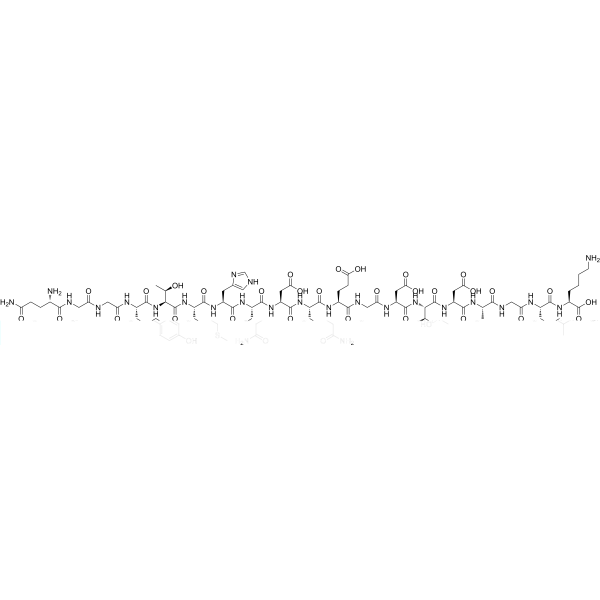
 0 ImagesCat. No.: HY-402805ADYRK2-IN-2 hydrochloride is a selective DYRK2 inhibitor with an IC50 of 40.3 nM. DYRK2-IN-2 hydrochloride shows weaker inhibitory activity against DYRK1A (IC50 = 1842 nM), DYRK1B (IC50 = 1335 nM), DYRK4 (IC50 = 1931 nM), DYRK3 (IC50 = 112 nM) and CLK (IC50 = 540-6496 nM). DYRK2-IN-2 hydrochloride inhibits the phosphorylation of Thr212 in Tau protein. DYRK2-IN-2 hydrochloride is applicable for neuronal research.
-
MSX3
 0 ImagesCat. No.: HY-102086CAS No.: 261717-23-1MSX3 is an orally active, selective A2a adenosine receptor antagonist and a prodrug of MSX2 (HY-117184). MSX3 reduces hyperphosphorylation of Tau at specific epitopes in mice without altering total Tau levels, Tau fragments, or Tau aggregation in these animals. MSX3 enhances spatial memory. MSX3 regulates effort-related decision-making behaviors. MSX3 reverses D2 antagonist-induced suppression of lever pressing, increased Chow feed intake, reduced selection of high-barrier arms, and prolonged response latency, and also slightly attenuates effects induced by D1 antagonists. MSX3 can be used in the research of Tauopathies (Alzheimer's disease-related), depression, and Parkinsonism.
-
AO-365/43472821
 0 ImagesAO-365/43472821 is a selective, brain-penetrant Dual-specificity tyrosine phosphorylation-regulated kinase 1A (DYRK1A) inhibitor (IC50 = 0.29 μM) and shows a significant inhibitory effect on (CDC-like kinase 1) CLK1 (IC50 = 0.08 μM). AO-365/43472821 could protect the human neuroblastoma cell line SH-SY5Y from Okadaic acid (HY-N6785) (OA)-induced injury. AO-365/43472821 decreased tau (pSer396)/tau and Aβ1-42 protein expression. AO-365/43472821 can be used for the study of Alzheimer's disease.
-
(-)Clausenamide
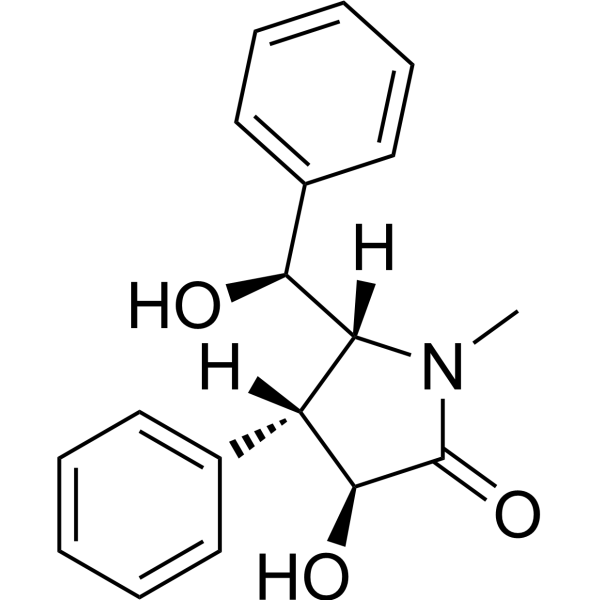 0 Images(-)Clausenamide is an active alkaloid isolated from the leaves of Clausena lansium (Lour.) Skeels, and improves cognitive function in both normal physiological and pathological conditions. (-)Clausenamide inhibits β-amyloid (Aβ) toxicity, blocking neurofibrillary tangle formation by inhibiting the phosphorylation of tau protein. (-)Clausenamide exerts a significant neuroprotective activity against Aβ25-35. (-)Clausenamide can be used for researching Alzheimer's disease (AD).
-
Sabeluzole
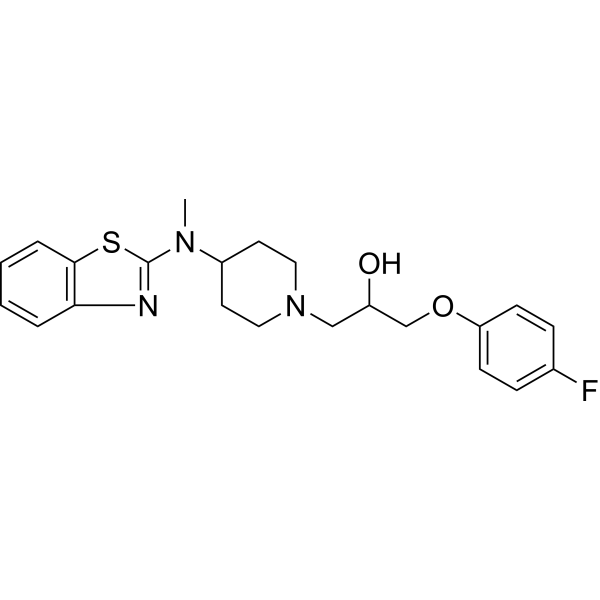 0 ImagesSynonyms: R 58735Sabeluzole (R 58735), a benzothiazol derivative, has antiischemic, antiepileptic, and cognitive-enhancing properties. Sabeluzole protects rat hippocampal neurons against NMDA- and glutamate-induced neurotoxicity via preventing tau expression. Sabeluzole enhances memory in rats, and prevents the amnesic effect of Chlordiazepoxide. Sabeluzole can be used fro research of Alzheimer's disease.
-
TAU-IN-1
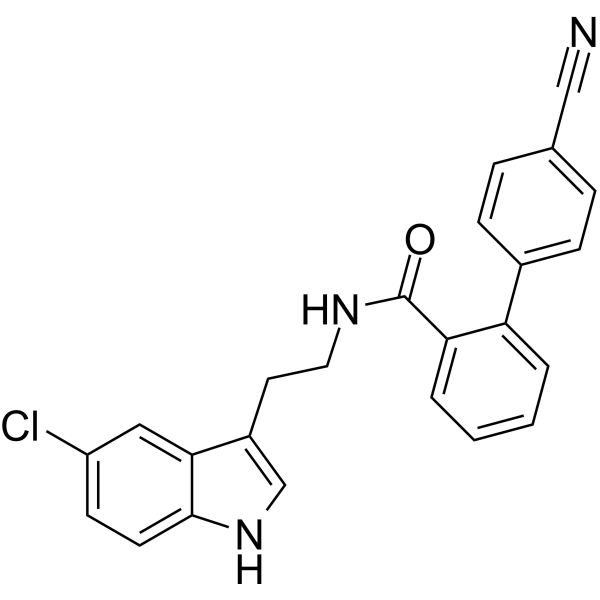 0 ImagesTAU-IN-1 (compound 051) is a TAU protein inhibitor with an EC50 value of 325 nM. TAU-IN-1 can be used in the study of neurodegenerative diseases.
-
PNT001
 0 ImagesCat. No.: HY-P991374Purity: 98.32%
-
BTA-1_b
 0 ImagesCat. No.: HY-151035CAS No.: 95856-73-8Synonyms: BTA-1-CH3BTA-1_b (BTA-1-CH3) is a structural analog of BTA-1 (HY-W278021). BTA-1 is an uncharged derivative of Thioflavin-T. It exhibits high affinity for Aβ fibrils and demonstrates excellent brain penetration and clearance capabilities.
-
Tau Peptide (306-336) (Repeat 3 Domain)
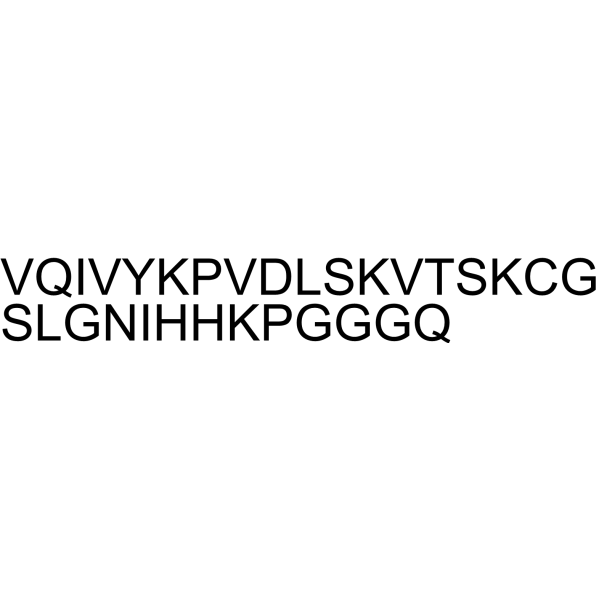 0 ImagesCat. No.: HY-P4966CAS No.: 330456-26-3Tau Peptide (306-336) (Repeat 3 Domain) is aTau fragment.
-
BF-170
 0 ImagesBF-170 is a selective tau fibril binding agent with an EC50 of 221 nM. It exhibits good blood-brain barrier permeability, and after intravenous injection in mice, the concentration in brain tissue reaches 9.1% ID/g within 2 minutes (with a brain clearance rate of 0.25% ID/g after 30 minutes). BF-170 can be used as a probe for tau protein pathology imaging in Alzheimer's disease (AD). It plays an important role in early-stage AD research and holds potential for imaging studies of tau-related neurodegenerative diseases.
-
Tau Peptide (337-368) (Repeat 4 Domain)
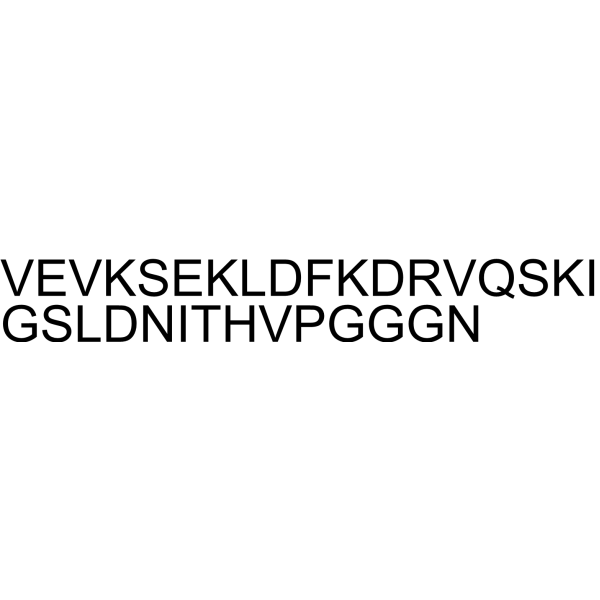 0 ImagesTau Peptide (337-368) (Repeat 4 Domain) is a 32-amino acid peptide derived from the fourth microtubule-binding repeat sequence (R4) of the tau protein. Tau Peptide (337-368) (Repeat 4 Domain) can be used in research on neurodegenerative diseases.
-
Simufilam dihydrochloride
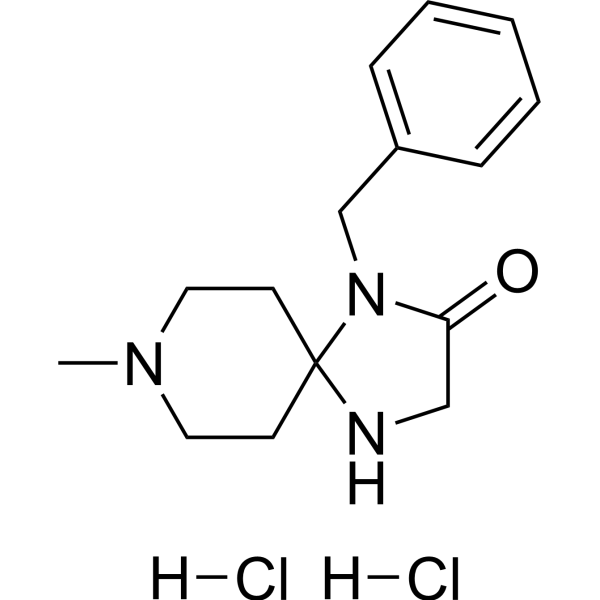 0 ImagesCat. No.: HY-139142ACAS No.: 2480226-06-8Synonyms: PTI-125 dihydrochlorideSimufilam dihydrochloride (PTI-125 dihydrochloride) is an orally active FLNA modulator. Simufilam dihydrochloride restores NMDAR signaling and Arc expression. Simufilam dihydrochloride inhibits overactive mTOR signaling by restoring the normal conformation of FLNA, improves insulin sensitivity, reduces Aβ42-induced neuroinflammation and tau protein hyperphosphorylation. Simufilam dihydrochloride can be used for research of Alzheimer's disease.
-
Multitarget AD-IN-7
 0 ImagesCat. No.: HY-182788CAS No.: 3113741-59-3Multitarget AD-IN-7 is an orally active multi-target anti-AD compound. Multitarget AD-IN-7 exhibits inhibitory activity against GSK-3β and GSK-3α (IC50 = 0.66, 0.83 nM). Multitarget AD-IN-7 upregulates the expression of p-GSK-3β-Ser9, inhibits the phosphorylation of tau-Ser396, targets Aβ1-42, chelates pathogenic metal ions, scavenges ABTS•+, upregulates the expression of β-catenin and neurogenesis biomarkers, and promotes neurite outgrowth. Multitarget AD-IN-7 improves motor ability in Alzheimer's disease zebrafish. Multitarget AD-IN-7 is applicable to research related to Alzheimer's disease.
-
OX-201
 0 ImagesCat. No.: HY-162712CAS No.: 2460722-03-4OX-201 is an orally active, blood-brain barrier-permeable OX2R agonist with an EC50 of 8.0 nM. OX-201 activates OX2R to induce wakefulness and neuronal activation. OX-201 promotes the release of neuron activity-dependent tau protein from neurons into the interstitial fluid of hippocampal tissues. OX-201 is applicable to research related to Alzheimer's disease and tauopathies.




