



Biochemical Assay Reagents
Biochemical agents refers to the life science research related to biological material or organic compounds. Due to a wide range of life sciences, rapid development, and therefore a wide variety of such agents, complex in nature. There are electrophoresis reagents, chromatography reagents, centrifuged reagents, immunological reagent, labeled reagent, staining agents, penetration agents and carcinogens variable, insecticides, culture, buffering agents, electron microscopy reagents, protein and nucleic acid precipitating agent, condensing agent ultrafiltration membrane, clinical diagnostic reagents, dyes, antioxidants, preservatives, detergents and surfactants, standard biochemical reagents, biochemical reagents quality control materials, separation material, etc..
All Product Categories
-
Biochemical Assay Reagents Inhibitors
(10)
View all products
-
Biochemical Assay Reagents Modulator
(1)
View all products
-
Biochemical Assay Reagents Chemicals
(7)
View all products
-
Biochemical Assay Reagents Inducer
(1)
View all products
-
Biochemical Assay Reagents Controls
(59)
View all products
-
Biochemical Assay Reagents Substrates
(4)
View all products
-
Biochemical Assay Reagents Ligands
(2)
View all products
-
Biochemical Assay Reagents Related Products (16056)
Related Products (16056)

-
Antibodies (44)
-
Poloxamer 188
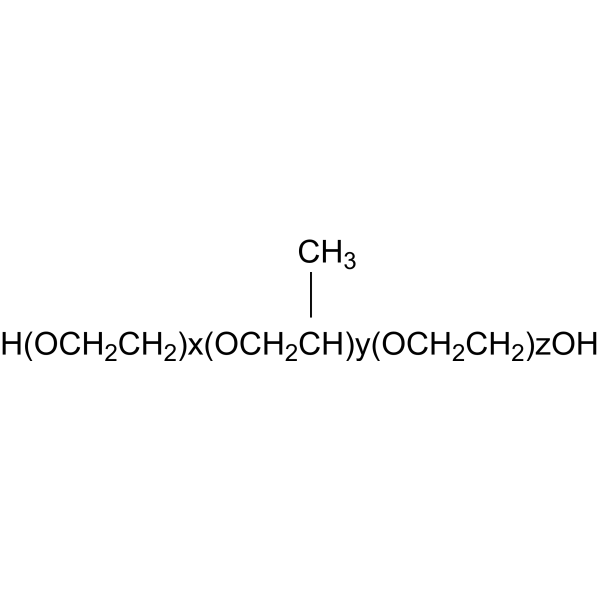 0 ImagesPoloxamer 188 is a nonionic linear copolymer with surfactant properties. Poloxamer 188 exhibits anti-thrombotic, anti-inflammatory, and cytoprotective activities in various tissue injury models. Poloxamer 188 can be used for drug delivery.
-
Palladium (II) acetate
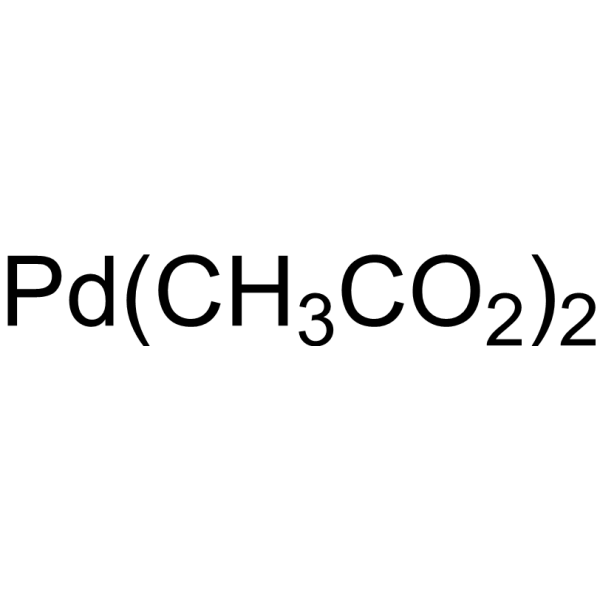 0 ImagesPalladium (II) acetate is a catalyst that catalyzes aromatic substitution reactions. Palladium(II) acetate catalyzes the reaction of stoichiometric palladium acetate with arylboronic acid to form C-phenyl glycosides.
-
Fetuin,Bovine
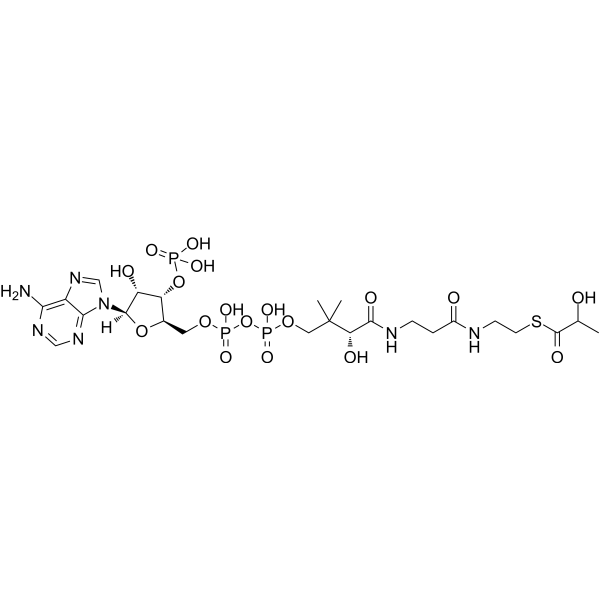
 0 ImagesFetuin,Bovine (Fetuin, Fetal Bovine Serum) is a liver-secreted 64 kDa plasma glycoprotein isolated from fetal bovine serum. Fetuin,Bovine inhibits trypsin activity and promote cellular attachment, growth, and differentiation.
-
Pimonidazole hydrochloride
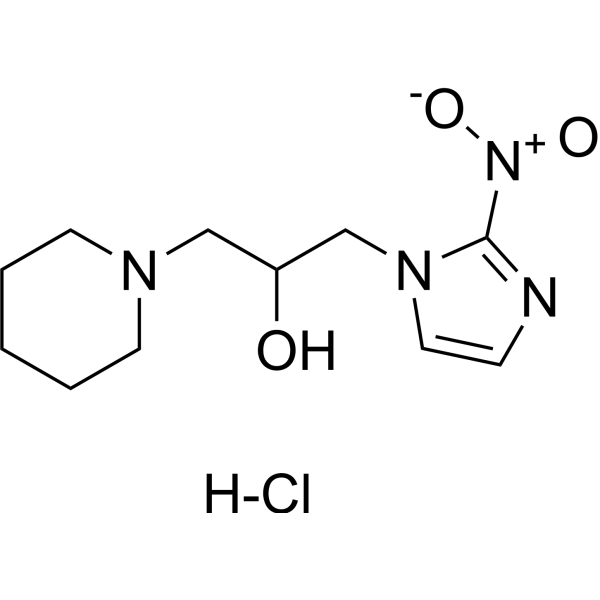 0 ImagesPimonidazole is a novel hypoxia marker for complementary study of tumor hypoxia and cell proliferation in tumor. Pimonidazole accumulates in hypoxic cells via covalent binding with macromolecules or by forming reductive metabolites after reduction of its nitro group, it can be used for qualitative and quantitative assessment of tumor hypoxia .
-
Copper(Ⅱ) sulfate
 0 ImagesCopper(Ⅱ) sulfate (Cupric sulfate) is an inorganic compound that is a source of copper ions. Copper(Ⅱ) sulfate forms coordination compounds through the coordination of copper ions with ligands. Copper(Ⅱ) sulfate can be used for various enzymatic studies and material synthesis.
-
XTT sodium
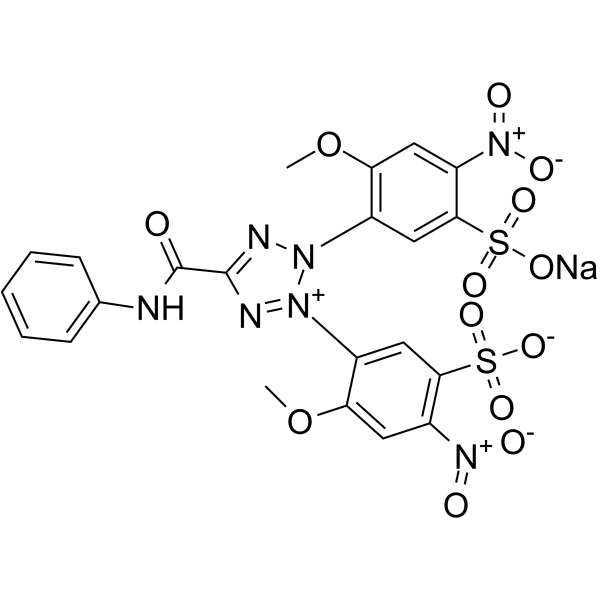 0 ImagesXTT (sodium) is used to assess cell viability as a function of redox potential. Actively respiring cells convert the water-soluble XTT to a water-soluble, orange colored formazan product.
-
Alkyne-phenol
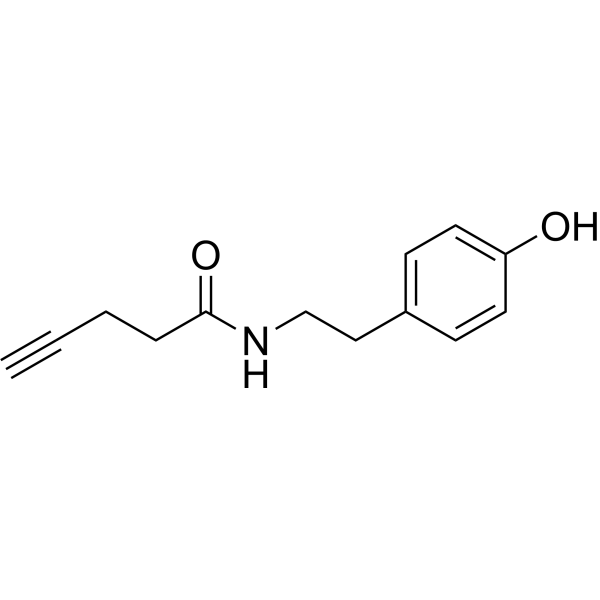 0 ImagesSynonyms: Alkyne tyramide; Alk-PhAlkyne-phenol (Alk-Ph) is a clickable ascorbate peroxidase 2 (APEX2) probe. Alkyne-phenol substantially improves APEX-labeling efficiency in intact yeast cells, as it is more cell wall-permeant than APEX2 substrate biotin-phenol (BP). Alkyne-phenol also facilitates the identification of APEX-labeling sites, allowing the unambiguous assignment of membrane topology of mitochondrial proteins. Alkyne-phenol is a click chemistry reagent, it contains an Alkyne group and can undergo copper-catalyzed azide-alkyne cycloaddition (CuAAc) with molecules containing Azide groups.
-
DBCO-PEG4-Biotin
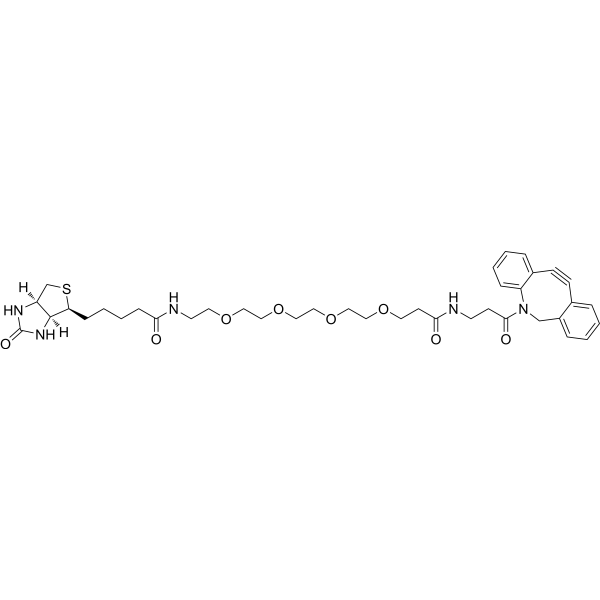 0 ImagesDBCO-PEG4-Biotin is an azadibenzocyclooctyne-biotin derivative containing a biotin group and 4 PEGs. DBCO-PEG4-Biotin is a versatile biotinylation reagent used for the introduction of a biotin moiety to azide-labeled biomolecules via copper-free strain-promoted alkyne-azide click chemistry (SPAAC) reaction. DBCO-PEG4-Biotin is a click chemistry reagent, it contains a DBCO group that can undergo strain-promoted alkyne-azide cycloaddition (SPAAC) with molecules containing Azide groups.
-
Xantphos
 0 ImagesSynonyms: 9,9-Dimethyl-4,5-bis(diphenylphosphino)xantheneXantphos (9,9-Dimethyl-4,5-bis(diphenylphosphino)xanthene) is a bisphosphine ligand. Xantphos coordinates to metals in either cis or trans chelation mode. Xantphos acts as a key ligand in palladium or platinum catalyzed reactions. Xantphos can be used in the construction of heterocyclic compounds in organic synthesis.
-
Bis(tri-tert-butylphosphine)palladium(0)
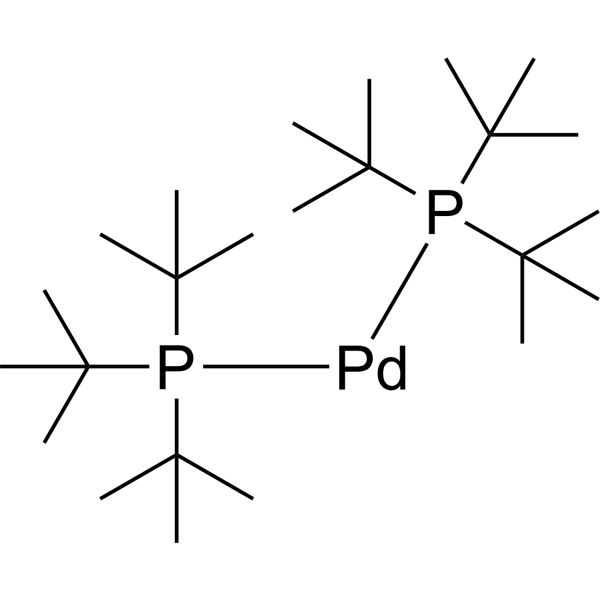 0 ImagesBis(tri-tert-butylphosphine)palladium(0) is a biochemical reagent that can be used as a biological material or organic compound for life science related research.
-
Tricaine methanesulfonate
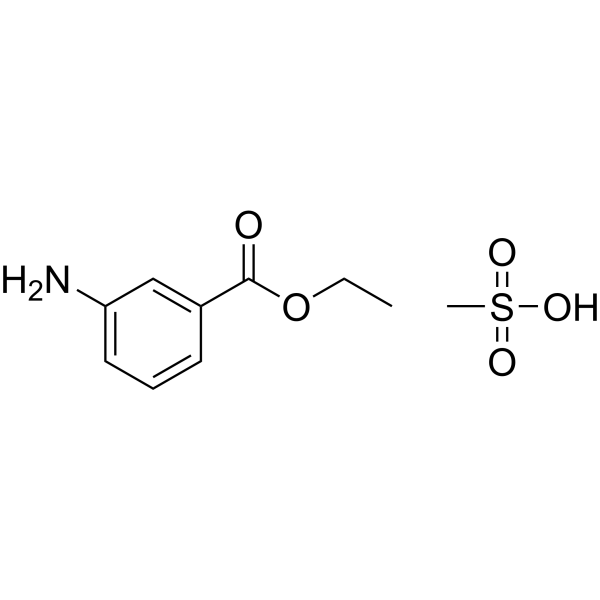 0 ImagesSynonyms: MS-222Tricaine methanesulfonate (MS-222) is common used to immobilize fish for marking or transport and to suppress sensory systems during invasive procedures.
-
DBCO-amine
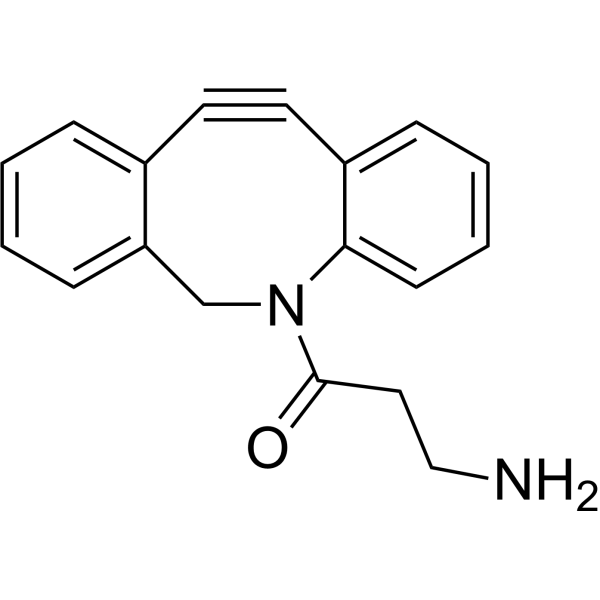 0 ImagesDBCO-amine is a click chemistry reagent, it contains a DBCO group that can undergo strain-promoted alkyne-azide cycloaddition (SPAAC) with molecules containing Azide groups. DBCO-amine is used in the synthesis of antibody-drug conjugates (ADCs).
-
Acetobromo-α-D-glucuronic acid methyl ester, 98%
 0 ImagesSynonyms: Acetobromo-alpha-D-glucuronic acid methyl ester, 98%Acetobromo-α-D-glucuronic acid methyl ester, 98% is a glucuronosyl donor. Acetobromo-α-D-glucuronic acid methyl ester, 98% is applicable to the synthesis of other compounds.
-
Rhodamine B isothiocyanate
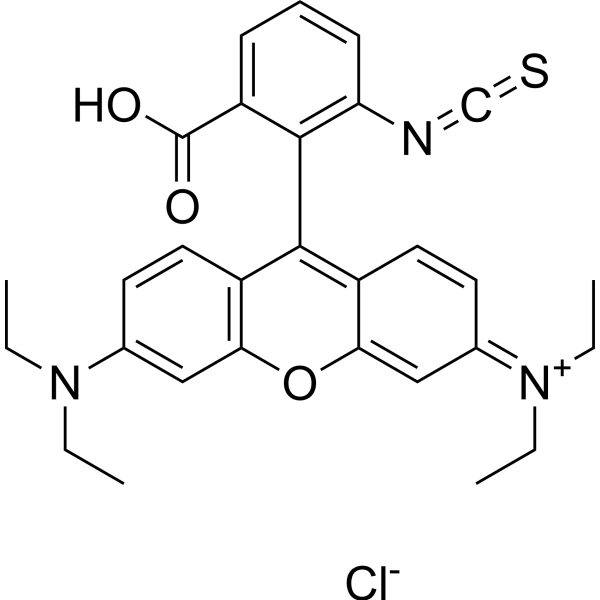 0 ImagesCat. No.: HY-112697CAS No.: 36877-69-7Rhodamine B isothiocyanate (RBITC) is a fluorescent dye commonly used in biological imaging and labeling applications. It has an isothiocyanate functional group that can be covalently attached to amino groups on proteins and other biomolecules, making it useful for fluorescent labeling of cells and tissues. RBITC fluoresces bright orange-red under green light excitation, which makes it easy to detect and track labeled molecules in complex samples. Due to its stability and sensitivity, RBITC has been widely used in various research fields, including cell biology, immunology, and neurobiology.
-
Gold(III) chloride trihydrate
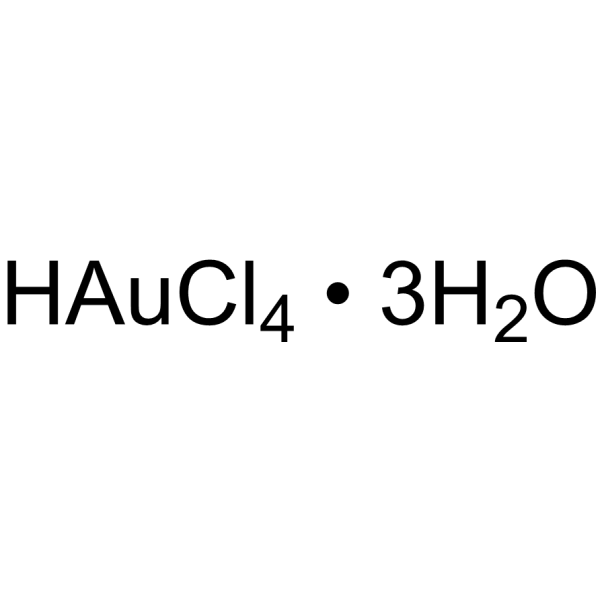 0 ImagesSynonyms: Chloroauric acid trihydrateGold (III) chloride trihydrate is a reducing agent. Gold (III) chromium trihydrate can be used for chemical synthesis of gold nanoparticles (NP) and spirochromene derivatives.
-
Dextran T500 (MW 500,000)
 0 ImagesCat. No.: HY-112624PCAS No.: 9004-54-0Synonyms: Dextran 500; Dextran D500; Dextran T500(MW 440000-560000)Dextran T500 MW 500,000 (Dextran 500; Dextran D500; Dextran T500 MW 440000-560000) is a polymer of anhydroglucose with the average molecular weight of 500,000. Dextran T500 MW 500,000 exhibits good biodegradability and good biocompatibility, that is utilized in food, pharmaceutics, cosmetics, and research area.
-
Poly-D-lysine hydrobromide (MW 70000-150000)
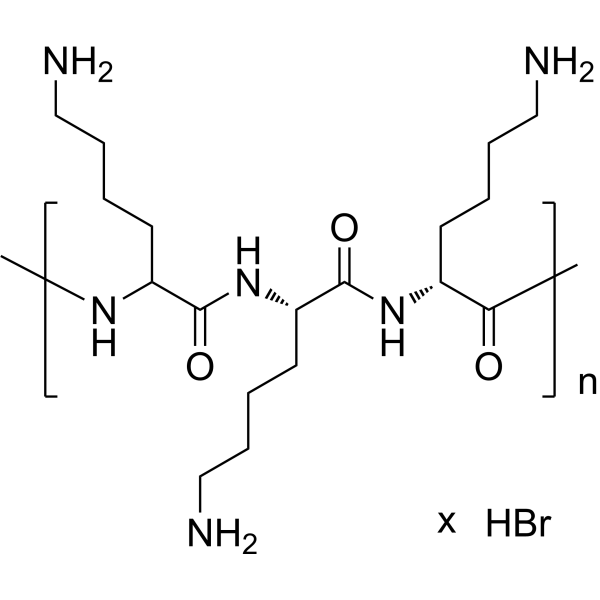 0 ImagesCat. No.: HY-139201ACAS No.: 27964-99-4Synonyms: PDLHB (MW 70000-150000)Poly-D-lysine hydrobromide (MW 70000-150000) is a synthetic polymeric substrate and is one of the most widely used substrate in neural cell culture. Poly-D-lysine hydrobromide is a CaSR agonist peptide.
-
Disuccinimidyl sulfoxide
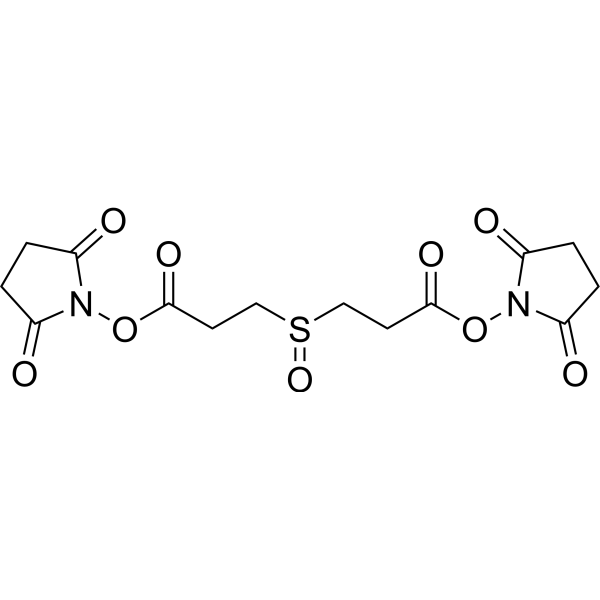 0 ImagesSynonyms: DSSODisuccinimidyl sulfoxide (DSSO) is a sulfoxide-containing crosslinker targeting amino groups that can be cleaved by MS, and it is suitable for model peptides, proteins, and multisubunit protein complexes. Disuccinimidyl sulfoxide contains two symmetric collision-induced dissociation (CID)-cleavable sites, enabling the identification of DSSO-crosslinked peptides based on different fragmentation patterns.
-
Calcium chloride dihydrate, for cell culture, 99%
 0 ImagesCalcium chloride dihydrate, for cell culture, 99% is a biochemical reagent. Calcium chloride dihydrate, for cell culture, 99% enhances the dentinogenic differentiation potential of WMTA on cells. Calcium chloride dihydrate, for cell culture, 99% can be used as a biological material or organic compound for life science related research[2.




