



Collagen
Collagen
Collagens are the most abundant proteins in mammals. The collagen family comprises 28 members that contain at least one triple-helical domain. Beyond the existence of 28 collagen types, further diversity occurs in the collagen family because of the existence of several molecular isoforms for the same collagen type (e.g., collagens IV and VI) and of hybrid isoforms comprised of a chains belonging to two different collagen types (type V/XI molecules). Collagens are deposited in the extracellular matrix where most of them form supramolecular assemblies. Four collagens are type II membrane proteins that also exist in a soluble form released from the cell surface by shedding. Collagens play structural roles and contribute to mechanical properties, organization, and shape of tissues. They interact with cells via several receptor families and regulate their proliferation, migration, and differentiation[1].
All Product Categories
-
Collagen Related Products (93)
Related Products (93)


-
αvβ5 integrin-IN-3
 0 ImagesCat. No.: HY-189093CAS No.: 2226557-15-7αvβ5 integrin-IN-3 is an orally active, selective αVβ5 integrin inhibitor with an IC50 value of 0.61 nM. αvβ5 integrin-IN-3 inhibits αVβ1, αVβ3 and αVβ6 integrins with IC50 values of 21 nM, 5.5 nM and 18 nM, respectively. αvβ5 integrin-IN-3 reduces total Collagen content in a mouse unilateral ureteral obstruction model. αvβ5 integrin-IN-3 can be used for the research of renal fibrosis.
-
SB772077B
 0 ImagesCat. No.: HY-123958CAS No.: 785774-34-7SB772077B is a ROCK inhibitor. SB772077B has an anti-inflammatory activity and enhances aqueous outflow facility (OF) by inactivating RhoA/ROCK signal pathway. SB772077B significantly reduces the mRNA level of β-catenin and protein level of fibrotic markers, such as vinculin, fibronectin, collagen 1 A and vimentin. SB772077B also has vasodialatory activity and decreases pulmonary and systemic blood pressure. SB772077B can be used for glaucoma research and pulmonary hypertensive disorder research.
-
HIPK2-IN-2
 0 ImagesCat. No.: HY-189141HIPK2-IN-2 is an orally active and selective HIPK2 inhibitor with an IC50 of 0.36 μM against HIPK2. HIPK2-IN-2 reduces HIPK2 protein expression levels. HIPK2-IN-2 inhibits the proliferation and migration of renal interstitial fibroblasts, alleviates renal tubular injury and collagen deposition, and suppresses TGF-β/Smad3-mediated profibrotic signaling pathways as well as TNF-α/NF-κB-mediated inflammatory signaling pathways in renal cells. HIPK2-IN-2 is used for the study of chronic kidney disease-associated renal fibrosis.
-
WYRGRLC
 0 ImagesCat. No.: HY-P10739CCAS No.: 1027630-05-2WYRGRLC is a type II collagen-targeting peptide. WYRGRLC specifically binds to type II collagen α1 in articular cartilage in a sequence-dependent manner. WYRGRLC inhibits the binding of WYRGRL-displaying phage (C1-3) to articular cartilage in a sequence-specific manner. WYRGRLC can act as a retention enhancer to improve the cartilage-targeting ability of polymeric nanoparticles and liposomal nanoplatforms, facilitating the delivery of Rapamycin (HY-10219) to chondrocytes. WYRGRLC can be used in studies related to osteoarthritis.
-
Methyl cholate-d5
 0 ImagesCat. No.: HY-W746556CAS No.: 52886-39-2Methyl cholate-d5 is the deuterium labeled Methyl cholate. Methyl cholate is a bile acid analog and a specific inhibitor of TcdB toxin from Clostridioides difficile. Methyl cholate exerts a stronger selective inhibitory effect on TcdB than on TcdA. Methyl cholate induces conformational stabilization by binding to a unique site of TcdB, thereby blocking the binding of the toxin to host receptors and its self-processing process. Methyl cholate effectively protects human fibroblasts from TcdB-induced cytopathic effects. Methyl cholate exhibits dose-dependent anti-hepatic fibrosis activity in both cellular and zebrafish models, and significantly reduces the expression levels of α-SMA and COL-I. Methyl cholate is suitable for in-depth research in the fields of Clostridioides difficile infection and hepatic fibrosis.
-
TGF-β1/Smad3-IN-2
 0 ImagesCat. No.: HY-182038TGF-β1/Smad3-IN-2 is an orally active antifibrotic agent. TGF-β1/Smad3-IN-2 has high affinity for VDR and can inhibit the TGFβ/SMAD3 signaling pathway. TGF-β1/Smad3-IN-2 inhibits hepatic stellate cell activation, reduces extracellular matrix deposition, and alleviates liver fibrosis in a bile duct ligation mouse model. TGF-β1/Smad3-IN-2 can be used for the research of liver fibrosis.
-
HIPK2-IN-1
 0 ImagesCat. No.: HY-189140HIPK2-IN-1 is an orally active and selective HIPK2 inhibitor with an IC50 of 0.56 μM. HIPK2-IN-1 exerts antifibrotic and anti-inflammatory activities. HIPK2-IN-1 binds to HIPK2, inhibits the downstream TGF‑β/Smad3, p53, and TNF‑α/NF‑κB signaling pathways, reduces the expression of fibrotic markers, suppresses cell proliferation and migration, and alleviates renal tubular injury and collagen deposition. HIPK2-IN-1 is used for the study of renal fibrosis associated with chronic kidney disease.
-
NSC 90469 (Standard)
 0 ImagesCat. No.: HY-114557RCAS No.: 1041-01-6Synonyms: 3,5-Diiodo-L-thyronine (Standard)NSC 90469 (Standard) is the analytical standard of NSC 90469. This product is intended for research and analytical applications. NSC 90469 (3,5-Diiodo-L-thyronine) is an orally active thyroid hormone derivative. NSC 90469 inhibits JNK phosphorylation and NF-κB acetylation, blocks SIRT1 protein expression, induces elevated PGC-1α levels, and stimulates COX activity. NSC 90469 enhances UCP1-mediated thermogenesis, increases hepatic Dio1 activity, inhibits TSH levels and hypothalamic-pituitary-thyroid axis function, enhances lipid metabolism, and regulates energy metabolism via the mitochondrial pathway. NSC 90469 prevents blood glucose reduction, reduces urinary albumin excretion, inhibits renal matrix expansion, decreases TGF-β1 expression, and reduces renal fibronectin and type Ⅳ collagen deposition. NSC 90469 also increases energy expenditure and prevents diet-induced overweight. NSC 90469 can be used in studies related to diabetic nephropathy, hypothyroidism, non-alcoholic fatty liver disease, and diet-induced obesity.
-
LM9
 0 ImagesCat. No.: HY-180336CAS No.: 2249864-11-5LM9 is a potent, orally active MyD88 inhibitor. LM9 blocks TLR4/MyD88 binding, MyD88 homodimer formation, and TLR4/MyD88/NF-κB signaling pathway activation. LM9 prevents atherosclerosis by regulating inflammatory responses and oxidative stress in macrophages. LM9 efficiently mitigates inflammatory responses and fibrosis in obesity-induced cardiomyopathy. LM9 can be used for fibrosis and atherosclerosis research.
-
2ccPA sodium
 0 ImagesCat. No.: HY-160823CAS No.: 927880-40-8Synonyms: 2ccPA18:1 sodium2ccPA (2ccPA18:1) sodium is a chemically stable cyclic phosphatidic acid derivative and antifibrotic inhibitor-inducer. 2ccPA sodium increases intracellular cAMP levels in skin fibroblasts, downregulates the expression of extracellular matrix (ECM) components, and promotes the production of antifibrotic factors HGF and PGE2. 2ccPA sodium ameliorates Bleomycin hydrochloride (HY-17565A)-induced skin fibrosis in mice and can be used for research on systemic sclerosis (SSc) and other fibrotic disorders.
-
LOXL2/sGC modulator-2
 0 ImagesCat. No.: HY-180585LOXL2/sGC modulator-2 (Compound 9k) is a selective and orally active lysyl oxidase-like 2 (LOXL2) and soluble guanylate cyclase (sGC) dual-target regulator. LOXL2/sGC modulator-2 shows inhibitory activity for LOXL2 with an IC50 of 0.1 μM and can activate sGC. LOXL2/sGC modulator-2 can ameliorate vascular remodeling and reduce pulmonary artery pressure. LOXL2/sGC modulator-2 can downregulate PKG1, PCNA, α-SMA, collagen I and fibronectin levels. LOXL2/sGC modulator-2 can be used for the research of pulmonary arterial hypertension .
-
1-Hydroxypyrene (Standard)
 0 Images1-Hydroxypyrene (Standard) is the analytical standard of 1-Hydroxypyrene (HY-W014075). This product is intended for research and analytical applications. 1-Hydroxypyrene, a biomarker of exposure to polycyclic aromatic hydrocarbons (PAHs), is analyzed in urine samples. 1-Hydroxypyrene is the major biomarker of exposure to pyrenes. 1-Hydroxypyrene is the orally active agonist for aryl hydrocarbon receptor (AhR) and can lead to renal fibrosis.
-
Type IV collagen peptide
 0 ImagesCat. No.: HY-P11794CAS No.: 119975-51-8
-
Antifibrotic agent 2
 0 ImagesCat. No.: HY-177739CAS No.: 1590409-23-6Antifibrotic agent 2 (Compound 636) is a polycyclic pyridinone derivative with antifibrotic activity. Antifibrotic agent 2 reduces the pathological accumulation of fibrosis-related proteins such as fibronectin and collagen, prevents excessive fibrous connective tissue from depositing in organs or tissues, and reverses or delays the remodeling of tissue fibrosisby regulating the abnormal proliferation and activation of fibroblasts. Antifibrotic agent 2 can be used for research on pulmonary fibrosis.
-
Antifibrotic agent 1
 0 ImagesCat. No.: HY-176194Antifibrotic agent 1 is an orally active anti-idiopathic pulmonary fibrosis (IPF) agent. Antifibrotic agent 1 effectively attenuates IPF-related processes, including TGF-β induced EMT and FMT processes, as well as pro-fibrotic M2 polarization. Antifibrotic agent 1 selectively inhibits CSF-1R, PDGFR-α and Src family kinases (SFKs), while sparing VEGFRs, FGFRs and Abl to minimize off-target toxicity. Antifibrotic agent 1 has potent anti-fibrotic activity in Bleomycin (BLM) (HY-108345)-induced pulmonary fibrosis mice model.
-
C11 peptide-1
 0 ImagesCat. No.: HY-P11827C11 peptide-1 is an antifibrotic agent that binds directly to Collagen I. C11 peptide-1 physically disrupts Collagen I interaction with Lumican. C11 peptide-1 reduces inflammatory infiltration and inhibits the ERK1/2 and Smad2/3 signaling pathways. C11 peptide-1 can be used for the research of liver fibrosis.
-
12-O-Tiglyl-phorbol 13-dodecanoate
 0 ImagesCat. No.: HY-N11736CAS No.: 37394-32-412-O-Tiglyl-phorbol 13-dodecanoate (TD13) is a potential inhibitor with anti-hepatic fibrosis activity, and it belongs to a series of derivatives of oral APOL2 inhibitors and anti-hepatic fibrosis agents. It shows no obvious toxicity in preclinical models. Compounds of the 12-O-Tiglyl-phorbol 13-dodecanoate series inhibit the expression of fibronectin, type I collagen and α-smooth muscle actin in hepatic stellate cells. 12-O-Tiglyl-phorbol 13-dodecanoate can be isolated from the Euphorbiaceae plant Euphorbia fischeriana, and it is applicable to the research of hepatic fibrosis.
-
α-Neoendorphin (porcine)
 0 ImagesCat. No.: HY-P11656CAS No.: 77739-20-9α-Neoendorphin porcine is a peptide. α-Neoendorphin porcine effectively alleviates UVB-induced skin photoaging via activating mTOR-Beclin-1-mediated autophagy, reducing UVB-triggered ROS production, inhibiting the MAPK pathway and MMP activity, and promoting type I procollagen synthesis. α-Neoendorphin porcine exerts anti-aging and anti-wrinkle effects on skin cells. α-Neoendorphin porcine can be used in studies related to skin photoaging.
-
Porphyra 334
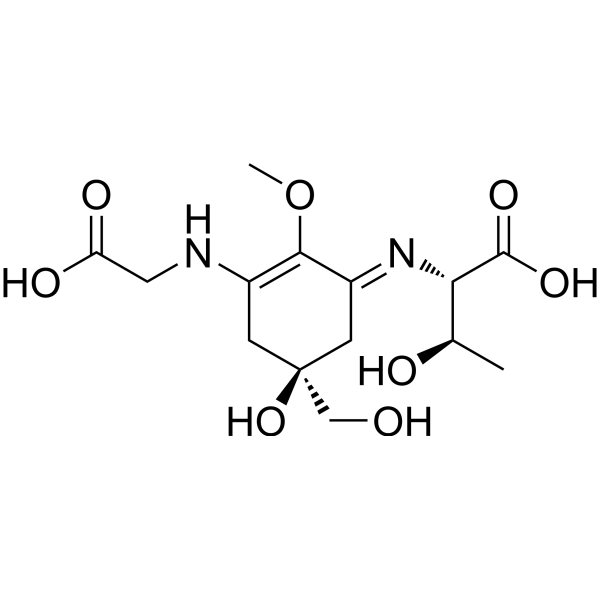 0 ImagesPorphyra 334 is a carnosine-like amino acid and a natural photoprotective agent and antioxidant. Porphyra-334 exerts its photoprotective effects by scavenging ROS, inhibiting the expression and activity of MMP-1/8, and promoting the synthesis of collagen and elastin. Porphyra 334 effectively inhibits linoleic acid oxidation induced by alkyl radicals (AAPH) and singlet oxygen. Porphyra 334 has anti-obesity potential by inhibiting the expression of PPARγ2 and C/EBPα. Porphyra 334 protects cells against UV-induced DNA damage and apoptosis by inhibiting the activation of caspase-3.



