



Fluorescent Dye
Fluorescence is a phenomenon of photoluminescence in luminescence. When an atom is irradiated by light, some electrons around the nucleus jump from their original orbitals to higher energy orbitals under the influence of light energy, i.e., from the ground state to the first or second excited single-line state, etc. Due to the instability of the first or second excited singlet state, the electron returns from the excited singlet state to the ground state accompanied by released energy, resulting in fluorescence.
Fluorescent dyes can be covalently bound or physically adsorbed in the structure of the substance. The fluorescence properties allow for the characterization, localization and quantitative analysis of the labeled object. Fluorescent dyes have shown great potential for the detection of proteins, nucleic acids, cells, and immunoassays, attributed to the advantages in non-radioactive contamination, simple experimental operation and easy observation.
Fluorescent dyes have penetrated many fields such as pharmacology, physiology, environmental science, and information science, as well as functional studies of proteins and drug screening.
All Product Categories
-
Fluorescent Dye Related Products (4914)
Related Products (4914)

-
Antibodies (4)
-
Fluorescent brightener 220
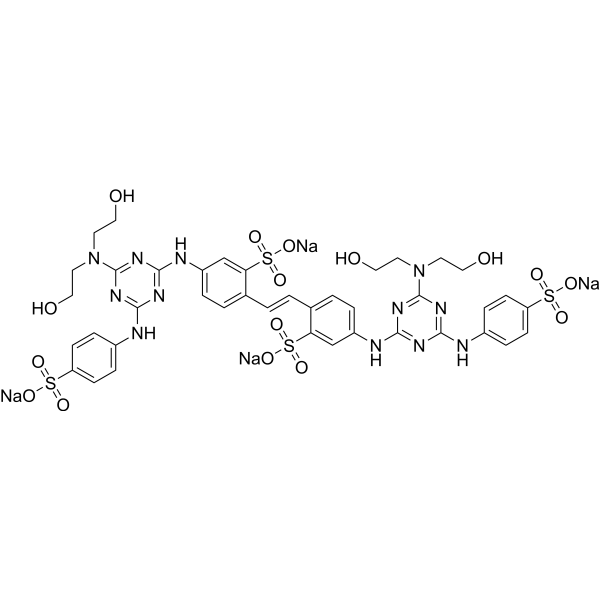 0 ImagesFluorescent brightener 220 is an optical brightener dye.
-
800CW acid
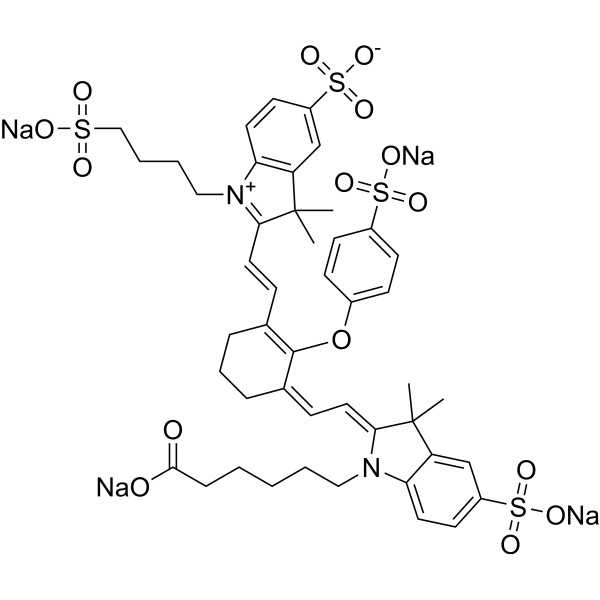 0 Images800CW acid is an orally active near-infrared (NIR) dye (excitation/emission 774/789 nm). 800CW acid can be used for intestinal permeability testing. 800CW acid can be used for in vivo imaging studies.
-
9-Aminophenanthrene
 0 Images9-Aminophenanthrene is a type of polycyclic aromatic amine compound, which can be used as a fluorescent labeling reagent for free fatty acids (FFA).
-
Eosin Y disodium
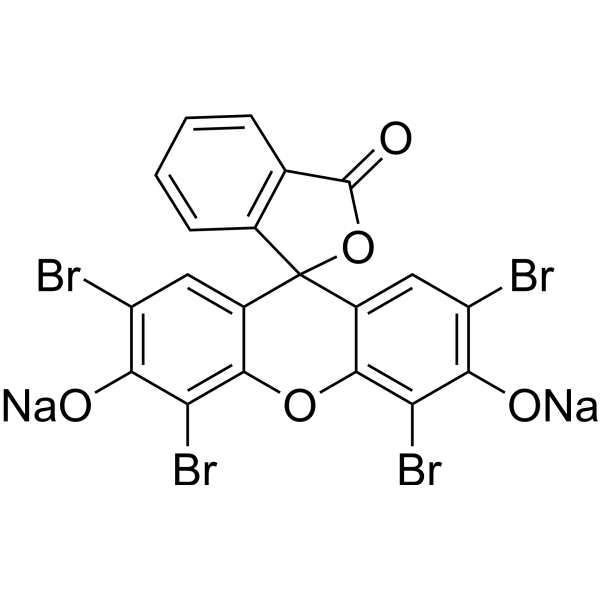 0 ImagesSynonyms: Acid Red 87Eosin Y disodium (Acid Red 87) is a soluble acid red dye molecule. Eosin Y disodium has a wide application in organic synthesis as a photoredox catalyst. Eosin Y disodium can be used as a component of Eosin-Nigrosin Sperm Viability Staining Solution (HY-DY2022) to assess sperm viability and identify the integrity of the membrane structure and function of inactive sperm.
-
GFP11
 0 ImagesGFP11 is a protein fusion tag consisting of 16 amino acids. When GFP11 and GFP1-10 are sufficiently close in physical space, they undergo spontaneous, irreversible complementation to reassemble into an intact, functional GFP protein that emits green fluorescence. GFP11 can be used to form a split GFP system for high-throughput biotechnology and flow cytometry applications.
-
Cy 5 amine hydrochloride
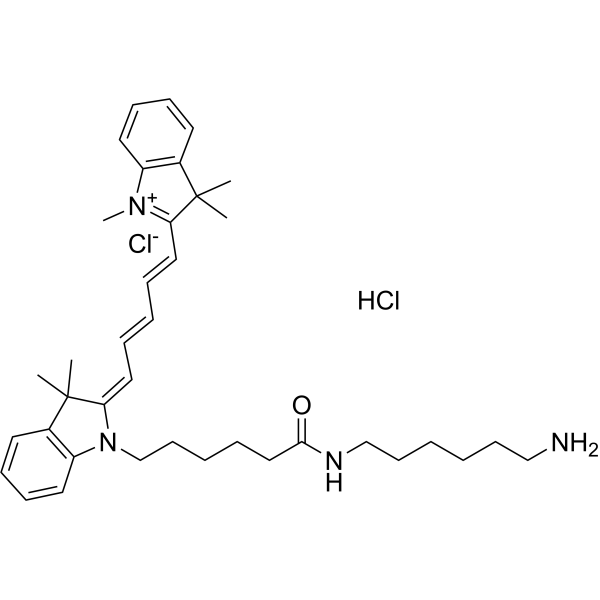 0 ImagesCat. No.: HY-D1321CAS No.: 1807529-70-9Synonyms: Cyanine5 amine hydrochlorideCyanine5 amine hydrochloride is a potent fluorescent dye. Cyanine5 amine hydrochloride can be reacted with terminal alkynes via a copper-catalyzed click reaction (CuAAC). (λex=646 nm, λem=662 nm).
-
Zincon sodium
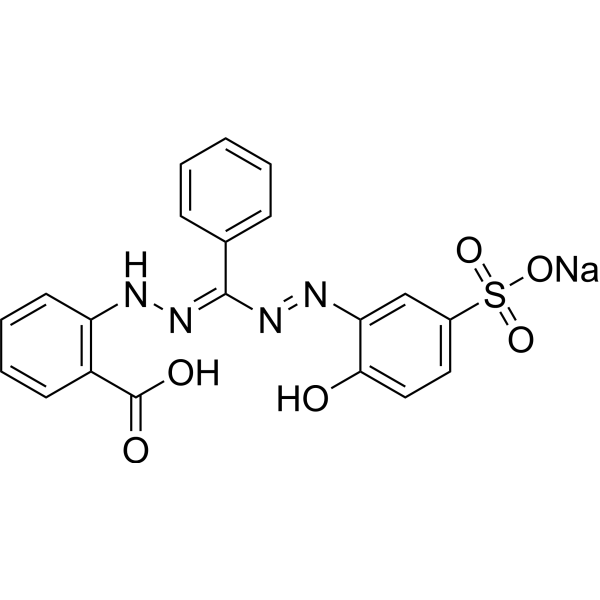 0 ImagesCat. No.: HY-D0813CAS No.: 62625-22-3Zincon sodium is an excellent colorimetric reagent for the detection of zinc and copper ions in aqueous solution. Zincon sodium can be used for the determination of zinc, copper, and cobalt ions in metalloproteins.
-
4-Methylumbelliferyl-β-D-galactopyranoside 6-sulfate sodium
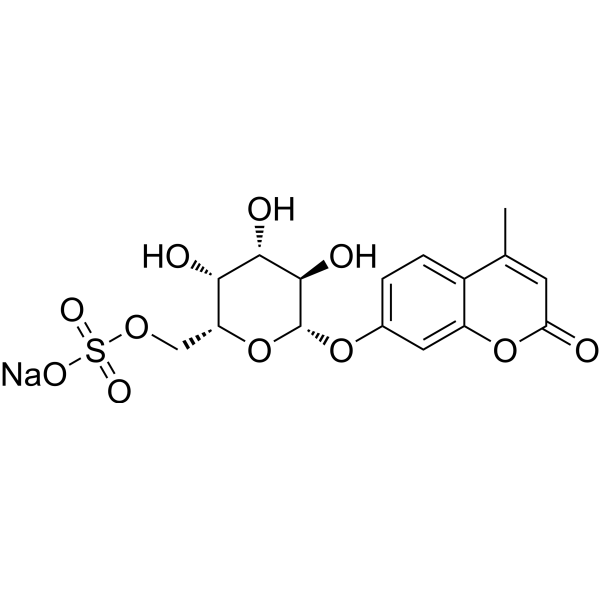 0 Images4-Methylumbelliferyl-β-D-galactopyranoside 6-sulfate sodium is a fluorescent dye. 4-Methylumbelliferyl-β-D-galactopyranoside 6-sulfate sodium undergoes desulphation by galactose-6-sulphate sulphatase to form 4-methylumbelliferyl-β-D-galactopyranoside, which is cleaved by β-galactosidase to release fluorescent 4-methylumbelliferone. 4-Methylumbelliferyl-β-D-galactopyranoside 6-sulfate sodium interacts with N-acetylgalactosamine-6-sulfate sulfatase (GALNS) via hydrogen bonds, electrostatic interactions, and steric interactions. 4-Methylumbelliferyl-β-D-galactopyranoside 6-sulfate sodium serves as a substrate in assays measuring galactose-6-sulphate sulphatase and GALNS activity. 4-Methylumbelliferyl-β-D-galactopyranoside 6-sulfate sodium can be used for the research of Morquio disease type A (mucopolysaccharidosis IV A).
-
Cyanine 5 NHS ester tetrafluoroborate
 0 ImagesCyanine 5 NHS ester tetrafluoroborate (Compound Cy5) is a cyanine dye that is used to in fluorescence detection of macromolecules. Cyanine 5 NHS ester tetrafluoroborate exhibits an excitation wavelength of 638 nm.
-
DHBS
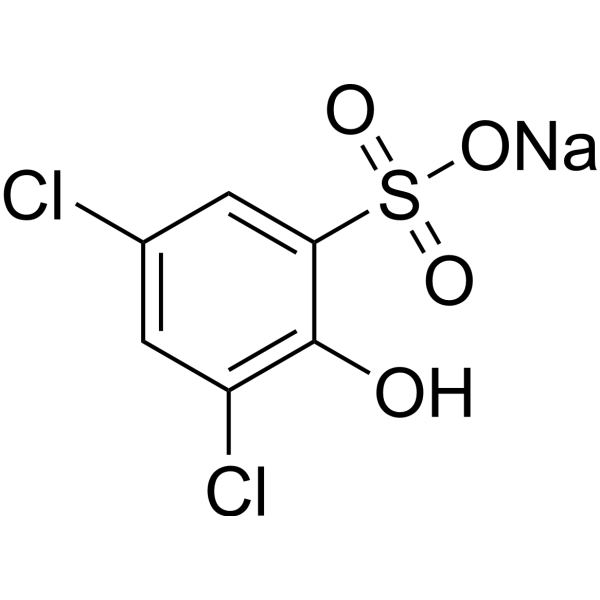 0 ImagesSynonyms: DCHBSDHBS (3, 5-dichloro-2-hydroxybenzenesulfonate) is used in conjunction with 4-aminoantipyrine (4-AAP) (HY-W100990) and hydrogen peroxide (H2O2) for chromogenic quantitation of peroxidase in coupled enzymatic reactions. Component of Trinder reagent for use with peroxidase to measure generation of hydrogen peroxide in automated systems.
-
(E)-4-(4-(Dimethylamino)styryl)-1-methylpyridin-1-ium iodide
 0 Images(E)-4-(4-(Dimethylamino)styryl)-1-methylpyridin-1-ium (iodide) (Py-NMe2) is a styryl-based dye for fluorescence and CD-based sensing of various ds-DNA/RNA sequence. (maxλAbs = 450 nm, maxλEm = 615 nm).
-
Meldola blue
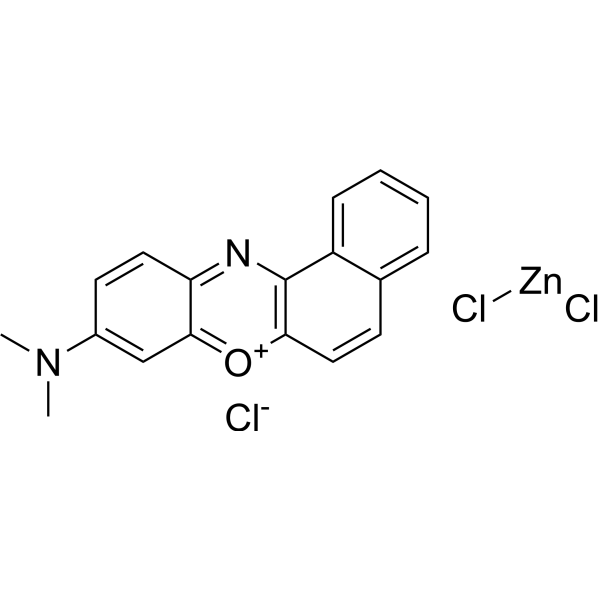 0 ImagesMeldola blue is a biosensor for measuring lactate in serum based on screen-printed carbon electrodes modified with Meldola's Blue-Reinecke salt (MBRS-SPCE) coated with lactate dehydrogenase NAD+-dependent enzyme (from pig heart) and NAD+.
-
D-Val-Leu-Lys-pNA
 0 ImagesSynonyms: S-2251D-Val-Leu-Lys-pNA (S-2251) is a chromogenic peptide substrate that serves as a characteristic substrate for plasmin and plasminogen. D-Val-Leu-Lys-pNA acts as a sensitive substrate for the DFE27 serine protease derived from Bacillus subtilis DC27. Catalyzed by plasmin, D-Val-Leu-Lys-pNA binds and hydrolyzes to release p-nitroaniline (pNA), which can be detected colorimetrically at 405 nm as a measure of fibrinolytic activity.
-
Quinacrine mustard dihydrochloride
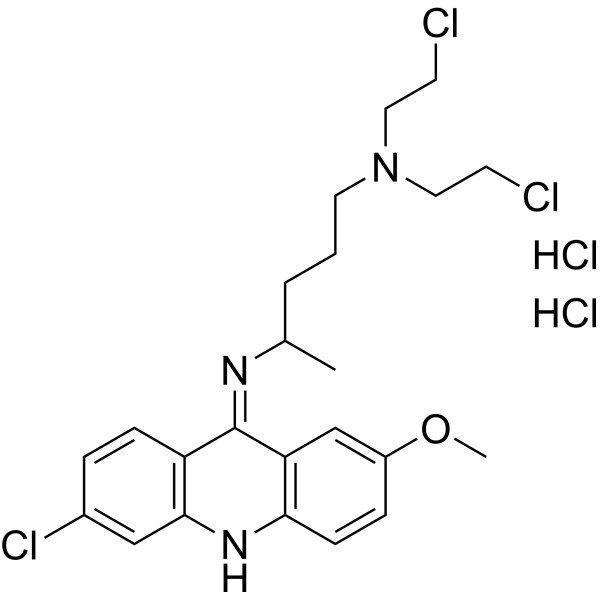 0 ImagesCat. No.: HY-W127705CAS No.: 4213-45-0Quinacrine mustard dihydrochloride is a fluorochrome. Quinacrine mustard dihydrochloride as a polycyclic aromatic agent can be used as mutagenic agent induces the mutants of bacteria. Quinacrine mustard dihydrochloride induces cell cycle arrest at G2/M-phase. Quinacrine mustard dihydrochloride has the potential for the research of plant, animal, or human chromosomes.
-
8-Hydroxyjulolidine
 0 Images8-Hydroxyjulolidine is a chromophore moiety of a fluorescent probe for the detection of weak acid ions. 8-Hydroxyjulolidine can be used to synthesize the salicylaldehyde derivative 9-formyl-8-hydroxyjulolidine, which exhibits sensitive detection ability to pH changes of hydrogen sulfide and silicate in aqueous solution.
-
Maackia amurensis Lectin (MAA/MAL II)-Biotinylated
 0 ImagesCat. No.: HY-N12931FMaackia amurensis Lectin (MAA/MAL II)-Biotinylated is a plant lectin modified by biotin. Maackia amurensis Lectin (MAA/MAL II)-Biotinylated has the activity to recognize specific sugar structures, specifically the alpha-2, 3-linked sialic acid (HY-I0400). Maackia amurensis Lectin (MAA/MAL II)-Biotinylated has a very high affinity with avidin or streptavidin and this interaction can be used to fix it to solid surfaces or bind it to other molecules. Maackia amurensis Lectin (MAA/MAL II)-Biotinylated can be used to isolate and purify proteins or other molecules with specific sugar chain structures in affinity chromatography as well as for disease marker discovery and cancer research.
-
Disulfo-ICG carboxylic acid
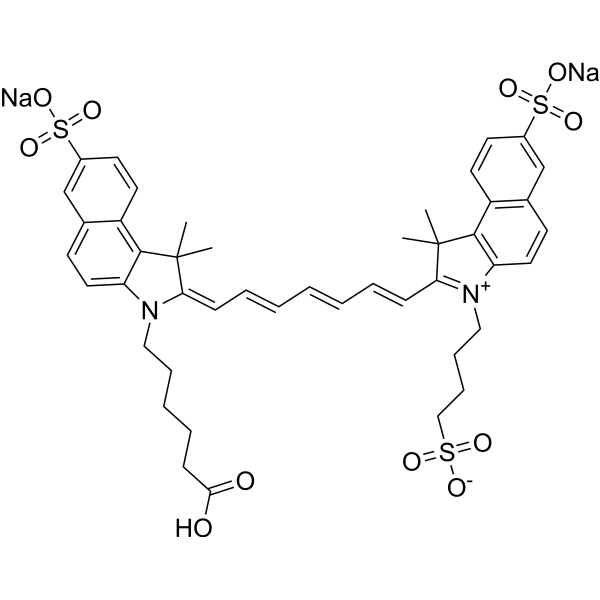 0 ImagesCat. No.: HY-D2250CAS No.: 2757507-18-7Disulfo-ICG carboxylic acid is a derivative of ICG dye. ICG (Indocyanine Green) is a NIR fluorescent dye.
-
MBD
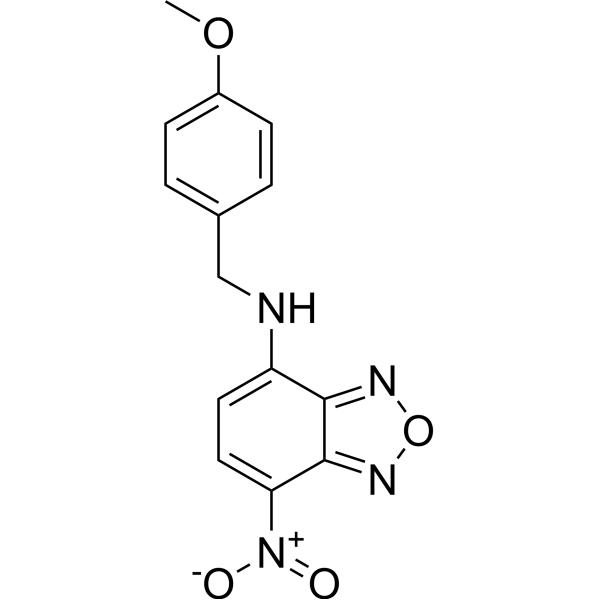 0 ImagesSynonyms: 7-(p-Methoxybenzylamino)-4-nitrobenz-2,1,3-oxadiazoleMBD (7-(p-Methoxybenzylamino)-4-nitrobenz-2,1,3-oxadiazole) is a hydrophobic fluorescent probe that is used to detect conformational changes of the complement subcomponent C1r during its autoactivation process. MBD acts by selectively binding to exposed hydrophobic regions on the C1r macromolecule. The detection wavelength of MBD in the free unbound state is Ex/Em = 490/560 nm, whereas the maximum emission wavelength of MBD upon binding to C1r exhibits a blue shift of approximately 20 nm relative to 560 nm.
-
ADAM-17 Substrate TFA
 0 ImagesCat. No.: HY-P10174APurity: 98.19%ADAM-17 Substrate is a fluorescent substrate of ADAM.
-
C11 BODIPY 505/515 MG
 0 ImagesC11 BODIPY 505/515 MG is a fluorescently labeled monoglyceride (Ex/Em = 495/503 nm) and can be used as a fluorescent probe.




