



Fluorescent Dye
Fluorescence is a phenomenon of photoluminescence in luminescence. When an atom is irradiated by light, some electrons around the nucleus jump from their original orbitals to higher energy orbitals under the influence of light energy, i.e., from the ground state to the first or second excited single-line state, etc. Due to the instability of the first or second excited singlet state, the electron returns from the excited singlet state to the ground state accompanied by released energy, resulting in fluorescence.
Fluorescent dyes can be covalently bound or physically adsorbed in the structure of the substance. The fluorescence properties allow for the characterization, localization and quantitative analysis of the labeled object. Fluorescent dyes have shown great potential for the detection of proteins, nucleic acids, cells, and immunoassays, attributed to the advantages in non-radioactive contamination, simple experimental operation and easy observation.
Fluorescent dyes have penetrated many fields such as pharmacology, physiology, environmental science, and information science, as well as functional studies of proteins and drug screening.
All Product Categories
-
Fluorescent Dye Related Products (4914)
Related Products (4914)

-
Antibodies (4)
-
DSPE-PEG10000-FITC
 0 ImagesCat. No.: HY-W440914BCAS No.: 1000788-53-3DSPE-PEG10000-FITC is an amphiphile PEG polymer which has unsaturated lipid tails. DSPE-PEG10000-FITC can form micelles in an aqueous solution and can be used to prepare liposome/nano particles for drug nanocarriers.
-
CFDA-SE (solution)
 0 ImagesCat. No.: HY-DY1009CAS No.: 150347-59-4CFDA-SE (solution) is a fluorescent dye that can penetrate the cell membrane. It can react with the free amine group in the cytoskeleton protein inside the cell, and finally form a protein complex with fluorescence. After entering the cell, CFDA-SE locates in the cell membrane, cytoplasm and nucleus, and the fluorescence staining is strongest in the nucleus. CFDA-SE dye can be uniformly inherited by the cells with cell division and proliferation, and its attenuation is proportional to the number of cell divisions. This phenomenon can be detected and analyzed by flow cytometry under the excitation light of 488 nm, and can be used to detect the proliferation of cells.
Solvent and concentration: DMSO: 5 mM
-
Cy 5 amine TFA
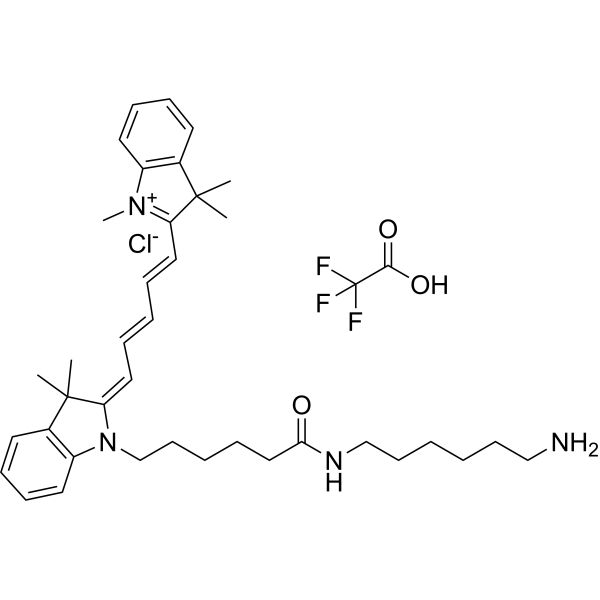 0 ImagesCat. No.: HY-D1321APurity: 99.68%Synonyms: Cyanine5 amine TFACy 5 amine (Cyanine5 amine) TFA is a fluorescent dye. Cy 5 amine TFA can be used in the preparation of Cy5.5-labeled compound or polymers, which can be used for imaging cellular process and trafficking.
-
BODIPY FL-C16 (solution)
 0 ImagesCat. No.: HY-DY1102CAS No.: 158757-82-5BODIPY FL-C16 (solution) is a BODIPY-labeled analog of Palmitic acid (HY-N0830), which serves as a fluorescent lipid tracer. BODIPY FL-C16 (solution) also acts as a ligand for liver fatty acid-binding protein (L-FABP)
Solvent and concentration: DMSO: 5 mM
-
Rose-β-D-Gal
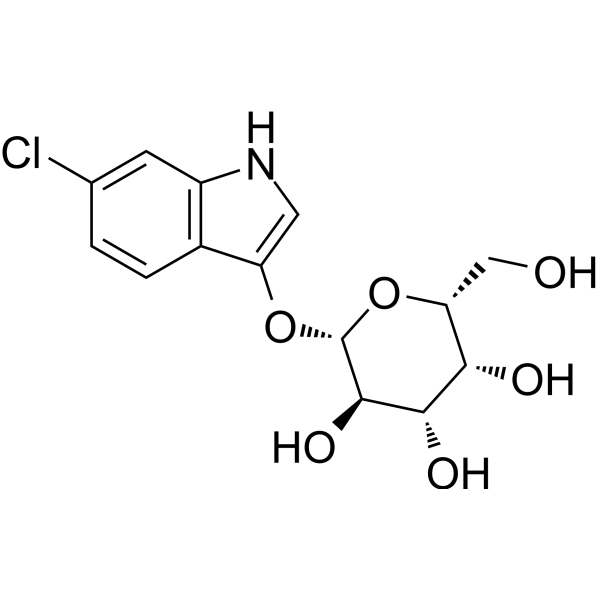 0 ImagesSynonyms: Salmon-GalRose-β-D-Gal is a chromogenic substrate, is also a β-galactosidase substrate. Rose-β-D-Gal creates a pink/magenta color after the reaction and has been used for detection of β-gal activity.
-
TOTO-3
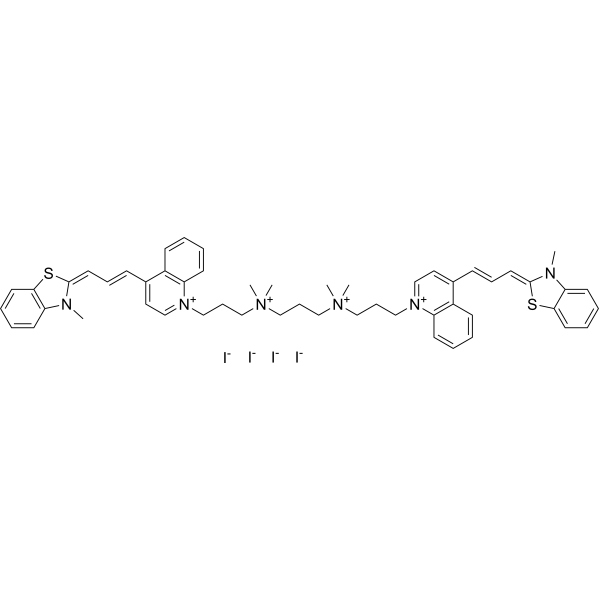 0 ImagesCat. No.: HY-D0920CAS No.: 166196-17-4TOTO-3 is a cyanine nucleic acid intercalating fluorescent probe that binds to both RNA and DNA (Ex=642 nm, Em=660 nm). TOTO-3 cannot enter intact cells, but can penetrate cells with permeabilized plasma membranes, staining cytoplasmic RNA and nucleoli to distinguish intact cells from damaged ones. TOTO-3 is taken up by macrophages in an ultrasound-independent manner. TOTO-3 accumulates in tumor cells via ultrasound-mediated enhancement of plasma membrane permeability. TOTO-3 supports optical imaging for real-time assessment of plasma membrane integrity, nucleic acid detection, and monitoring of ultrasound-mediated intracellular delivery processes. TOTO-3 is applicable to studies related to rectal cancer.
-
Sulfo-Cy3 maleimide potassium
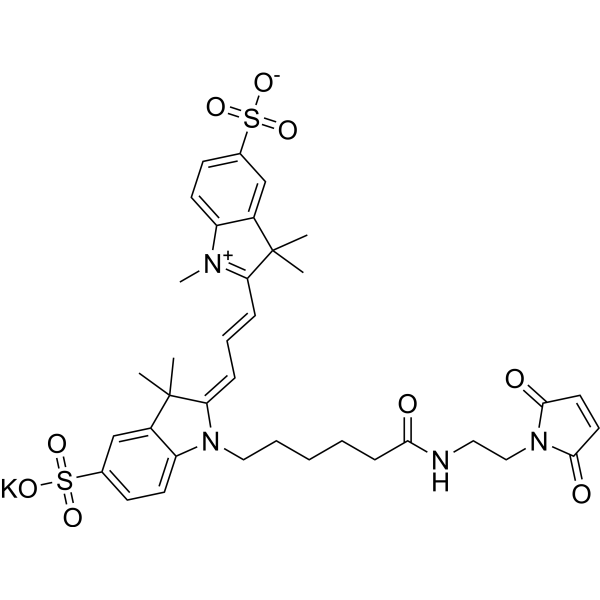 0 ImagesCat. No.: HY-137098CAS No.: 1656990-68-9Sulfo-Cy3 maleimide potassium is a fluorescent dye with a maleimide functionality at the end a short alkyl linker. Sulfo-Cy3 maleimide potassium can be used for the labeling of antibodies and other labile proteins.
-
TRITC-dextran, MW 500000
 0 ImagesCat. No.: HY-158082ESynonyms: Tetramethyl rhodamine isothiocyanate glucan, MW 500000TRITC-dextran, MW 500000 (Tetramethyl rhodamine isothiocyanate glucan, MW 500000) is a fluorescent dye, with the molecular weight of 500 kD. TRITC-dextran, MW 500000 exhibits an excitation wavelength of 555 nm. TRITC-dextran, MW 500000 is follicular and vessel penetrate, which is dependent on the molecular weight. TRITC-dextran, MW 500000 is utilized in drug delivery for the stability of TRITC over a wide pH range (i.e. pH 2–11) and resistance to photo-bleaching.
-
[Ir(ppy)2(bpy)]PF6
![[Ir(ppy)2(bpy)]PF6](https://file.medchemexpress.com/product_pic/hy-w072530.gif "Click to View [Ir(ppy)2(bpy)]PF6 Product Detail") 0 ImagesCat. No.: HY-W072530CAS No.: 106294-60-4[Ir (ppy)2 (bpy)]PF6 is a cyclometalated iridium (III) photosensitizer. [Ir (ppy)2 (bpy)]PF6 can be used in homogeneous photocatalytic systems to achieve visible light-induced water splitting for hydrogen production. [Ir (ppy)2 (bpy)]PF6 functions in homogeneous photocatalytic systems for visible light-driven water splitting to produce hydrogen.
0 ImagesCat. No.: HY-W072530CAS No.: 106294-60-4[Ir (ppy)2 (bpy)]PF6 is a cyclometalated iridium (III) photosensitizer. [Ir (ppy)2 (bpy)]PF6 can be used in homogeneous photocatalytic systems to achieve visible light-induced water splitting for hydrogen production. [Ir (ppy)2 (bpy)]PF6 functions in homogeneous photocatalytic systems for visible light-driven water splitting to produce hydrogen.
-
Substance P, FAM-labeled TFA
 0 ImagesCat. No.: HY-P0201AFPurity: 98.31%Substance P, FAM-labeled (TFA) is Substance P TFA (HY-P02101A) labeled with FAM fluorophore. Substance P TFA (Neurokinin P TFA) is a neuropeptide that acts as a neurotransmitter and neuromodulator in the central nervous system. The endogenous receptor of Substance P is neurokinin 1 receptor (NK1R).
-
10-(4-(Bis(2-acetoxyethyl)amino)phenyl)-BODIPY 505/515
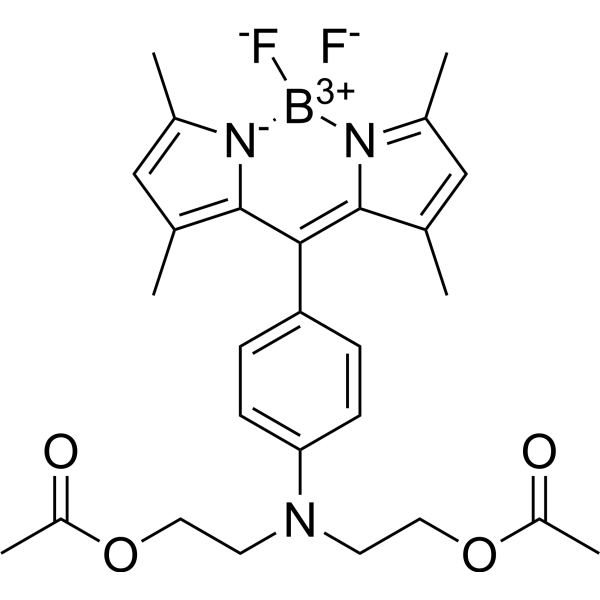 0 Images10-(4-(Bis(2-acetoxyethyl)amino)phenyl)-BODIPY 505/515 is a fluorescent dye for Cu2+ ion.
-
BODIPY-TS
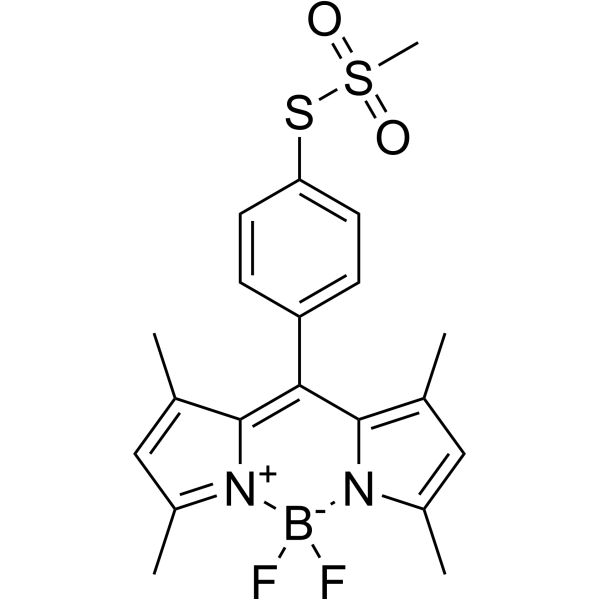 0 ImagesCat. No.: HY-D1262CAS No.: 1808174-52-8Synonyms: Thiol-green 2BODIPY-TS (Thiol-green 2) is a fast response and thiol-specific turn-on probe. BODIPY-TS utilizes the thiosulfonate scaffold as a thiol recognition unit. BODIPY-TS has low toxicity, and features high selectivity, low detection limit, and quantitative reaction to thiols. Ex: 490 nM; Em: 515 nM.
-
X-Gluc sodium
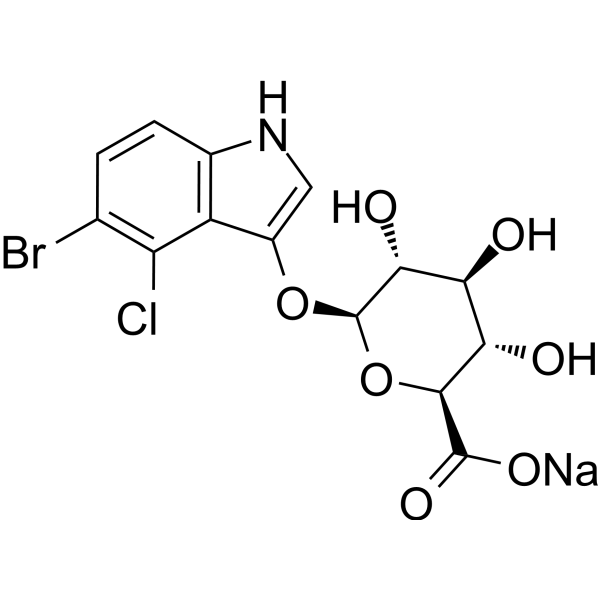 0 ImagesX-Gluc sodium is a dye reagent for the detection of β-glucuronidase (GUS), an enzyme produced by E. coli. X-Gluc sodium can be used to detect E. coli contamination in food, water and the urinary tract (GUS as a specific detection indicator). X-Gluc sodium is also widely used in molecular biology experiments to label and detect the expression of target genes (reacts with the GUS gene, appears blue).

-
AMCA,SE
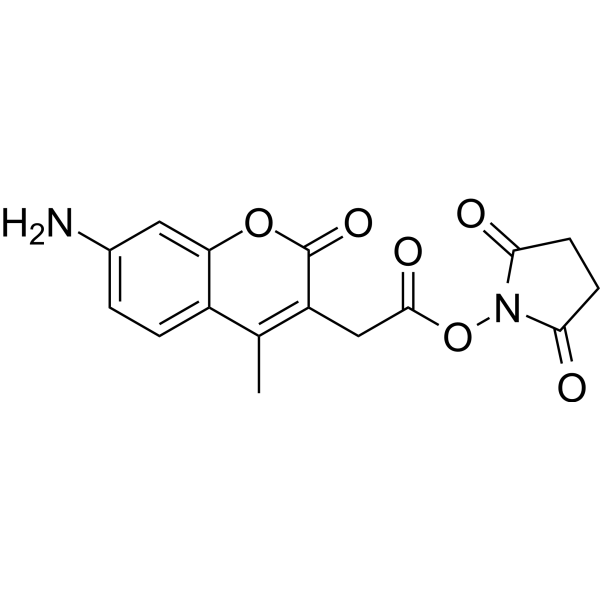 0 ImagesCat. No.: HY-D0026CAS No.: 113721-87-2Synonyms: 7-Amino-4-methyl-3-coumarinacetic acid N-succinimidyl esterAMCA,SE (7-Amino-4-methyl-3-coumarinacetic acid N-succinimidyl ester) is a bright blue fluorescent dye. AMCA,SE reacts with amino groups and is excited by ultraviolet light. AMCA,SE can be used for amine reactive labeling (Ex/Em = 354/440 nm).
-
Dihydroethidium (solution)
 0 ImagesCat. No.: HY-DY1015CAS No.: 104821-25-2Dihydroethidium (solution) , also known as DHE, is a peroxide indicator. Dihydroethidium penetrates cell membranes to form a fluorescent protein complex with blue fluoresces. After entering the cells, Dihydroethidium is mainly localized in the cell membrane, cytoplasm and nucleus, and the staining effect is the strongest in the nucleus. Dihydroethidium produces inherent blue fluorescence with a maximum excitation wavelength of 370 nm and a maximum emission wavelength of 420 nm; after dehydrogenation, Dihydroethidium combines with RNA or DNA to produce red fluorescence with a maximum excitation wavelength of 300 nm and a maximum emission wavelength of 610 nm. 535 nm can also be used as the excitation wavelength for actual observation.
Solvent and concentration: DMSO: 5 mM
-
Sulfo-Cy5 hydrazide
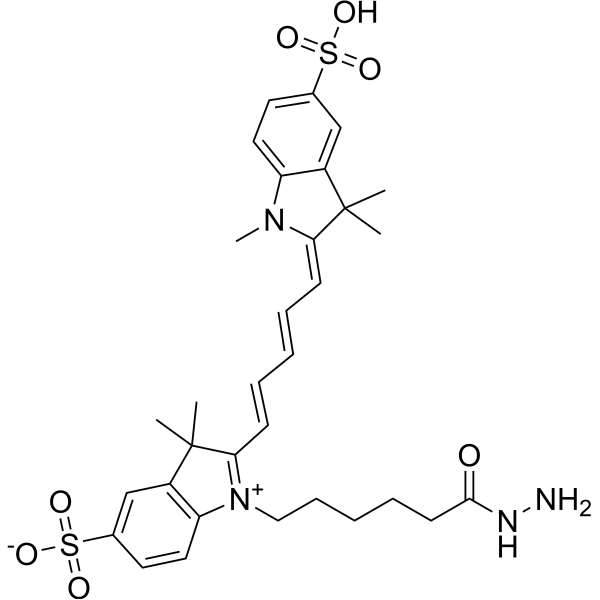 0 ImagesCat. No.: HY-D1880CAS No.: 2055138-61-7Sulfo-Cy5 hydrazide is a fluorescent dye containing a hydrazide functionality (Ex/Em=646/662 nm).
-
eGFP circRNA-LNP
 0 ImagesCat. No.: HY-153232eGFP circRNA-LNP is a lipid nanoparticle (LNP) containing eGFP circRNA, suitable for assays of RNA delivery, translation efficiency, cell viability, etc. eGFP circRNA carries Enhanced Green Fluorescent Protein (Enhanced Green Fluorescent Protein) eGFP, which will express green fluorescent protein after entering the cell. eGFP is commonly used as a reporter gene detectable by fluorescence microscopy or flow cytometry.
-
Toluidine Blue (purity 36%)
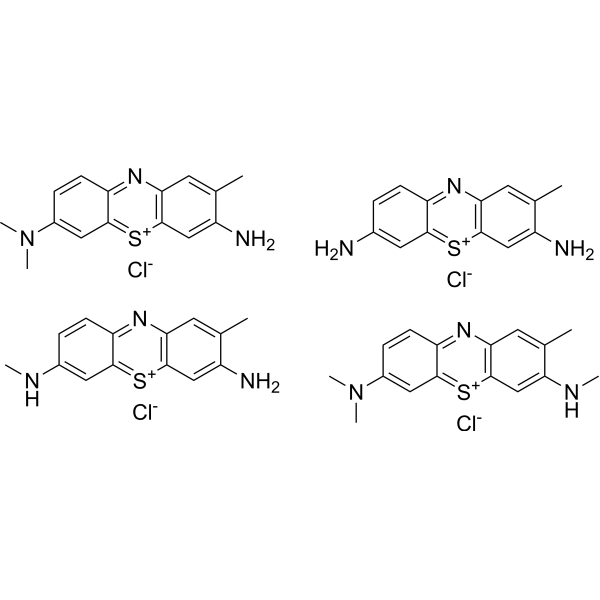 0 ImagesCat. No.: HY-D0220ASynonyms: Toluidine Blue O (purity 36%)Toluidine Blue (Toluidine Blue O) purity 36% is an alkaline quinonimine dye (vivo dye) with high affinity for acidic tissue components, staining nuclei blue and polysaccharides purple. Toluidine Blue purity 36% shows heterostaining properties for mast cells, mucins and chondrocytes. Toluidine Blue purity 36% can stain different components of plant tissues and cells in different colours. Toluidine Blue purity 36% is also used as a diagnostic aid to identify malignant lesions, such as cancer.
-
ETZ
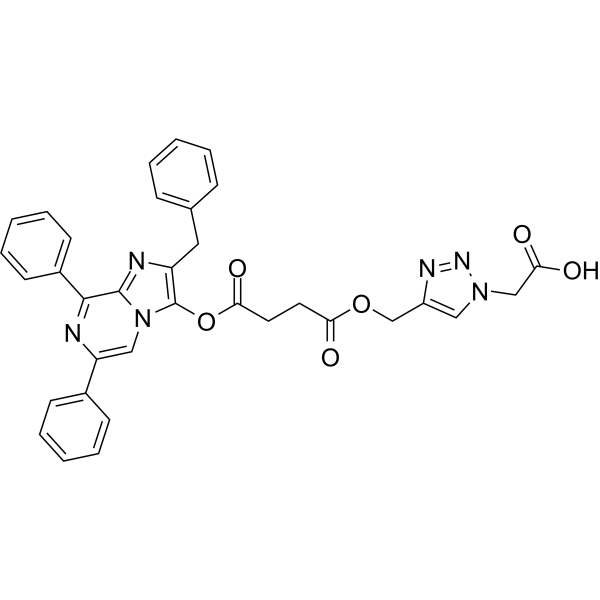 0 ImagesSynonyms: C3-CA-DTZETZ (C3-CA-DTZ) is a promising luciferase substrate (prosubstrate) activatable in vivo by nonspecific esterase to enhance the brain delivery of the luciferin.




