



Molecular Glues
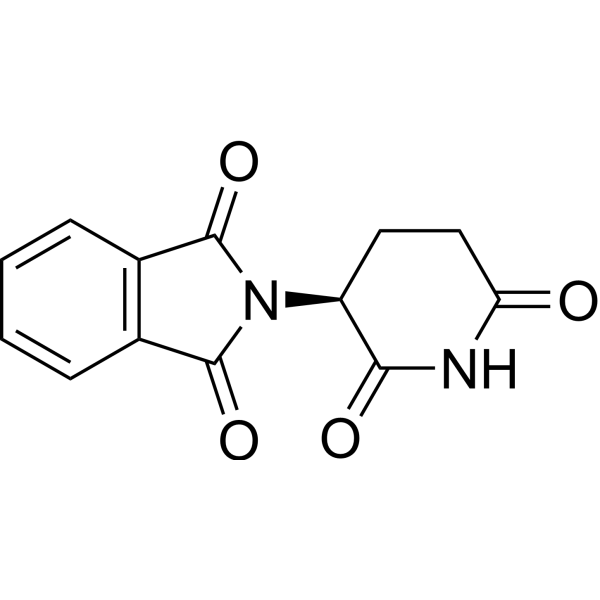
Protein degradation agents based on the ubiquitin-proteasome pathway include a part of molecular glues. Molecular glues are a class of small molecule compounds that can induce or stabilize the interaction between proteins. If one of the protein is ubiquitin ligase, molecular glue can cause another protein to undergo ubiquitin modification and degradation through the proteasome pathway, which is similar to PROTAC. However, these molecules are classified as ligand for E3 ligase as functional molecules in subsequent classification. Older drugs, thalidomide, lenalidomide, and pomalidomide, together with CC-90009 and CC-92480 reported later all belong to this category.
All Product Categories
-
Molecular Glues Related Products (372)
Related Products (372)

-
Related Compound Screening Libraries (1)
-
(R,R)-dWIZ-1 TFA
 0 ImagesCat. No.: HY-169761BPurity: 98.96%(R,R)-dWIZ-1 TFA is the (R,R) enantiomer of dWIZ-1 (HY-159098). dWIZ-1 is a potent WIZ molecular glue degrader. (R,R)-dWIZ-1 TFA can be used in studies related to sickle cell disease and β-thalassemia.
-
CDK2 degrader 6
 0 ImagesCDK2 degrader 6 is an orally active and potent CDK2 molecular glue degrader with a DC50 of 46.5 nM. CDK2 degrader 6 binds to cereblon and CDK2 to induce ubiquitination and subsequent proteasomal degradation of CDK2. CDK2 degrader 6 modulates cell cycle in breast cancer cells. CDK2 degrader 6 reduces proliferation of breast cancer cells. CDK2 degrader 6 exhibits in vivo antitumor activity in gastric cancer mouse models. CDK2 degrader 6 can be used for the research of breast cancer, gastric cancer.
-
CCT373566
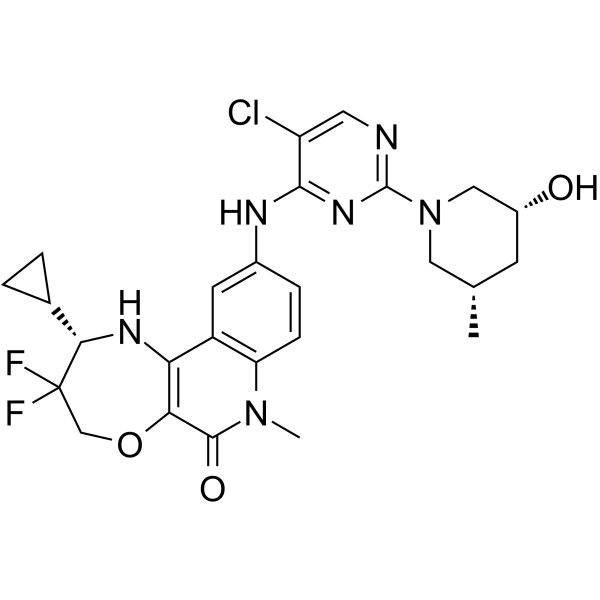 0 ImagesCCT373566 is an orally active BCL6 Molecular glue degrader with a DC50 of 0.7 nM. CCT373566 induces proteasomal degradation of BCL6 by promoting the formation of higher-order BCL6 complexes recognizable by E3 ligases. CCT373566 reduces tumor growth in lymphoma xenograft models. CCT373566 can be used in research related to diffuse large B-cell lymphoma.
-
PF-07328948
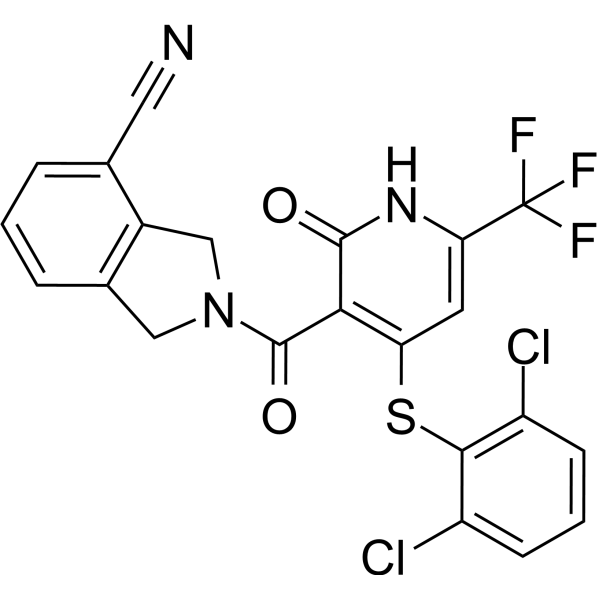
 0 ImagesPF-07328948 is an orally effective BDK (branch chain ketoacid dehydrogenase kinase) inhibitor, with IC50 of 110 nM. PF-07328948 acts as a BCKDH (branch chain ketoacid dehydrogenase) enzyme complex degrader to enhance BCAA (branch chain amino acid) catabolism. PF-07328948 improves metabolic and heart failure end points in rats.
-
HB007
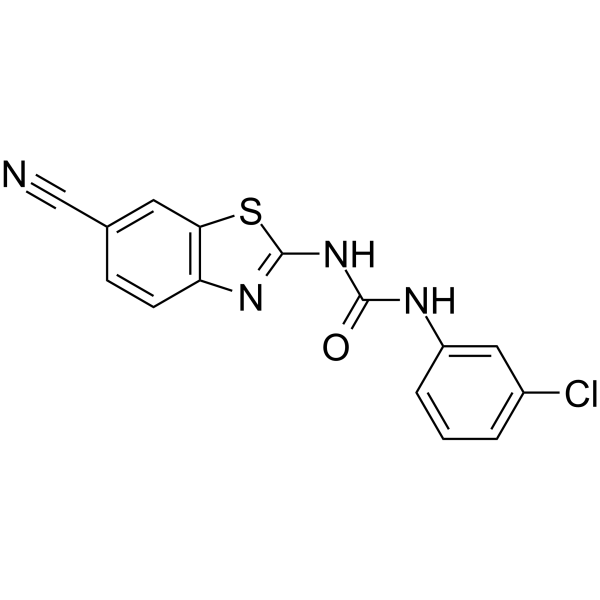 0 ImagesHB007 is a SUMO1 molecular glue degrader targeting CAPRIN1 and FBXO42. HB007 selectively binds CAPRIN1 to induce CAPRIN1-FBXO42 interaction, recruits SUMO1 to the CAPRIN1-CUL1-FBXO42 E3 ligase complex, and drives SUMO1 ubiquitination and degradation without affecting SUMO2/3. HB007 induces TCF4 deSUMOylation and proteasomal degradation to inhibit StarD7 transcriptional activity, reduces StarD7 mRNA and protein levels, and triggers ER stress and ROS production. HB007 can be used for the research of brain cancer, breast cancer, colon cancer, lung cancer.
-
REM127
 0 ImagesREM127 is an orally active, blood-brain barrier-penetrant septin 6/7 molecular glue degrader. REM127 binds to SEPT6 with high affinity and promotes the assembly of SEPT2/6/7 cortical filaments, thereby normalizing cytoplasmic calcium levels, cerebrospinal fluid hyperphosphorylated tau protein levels, synaptic function and cognitive function. REM127 can be used in research related to Alzheimer's disease.
-
PRLX-93936 dihydrochloride
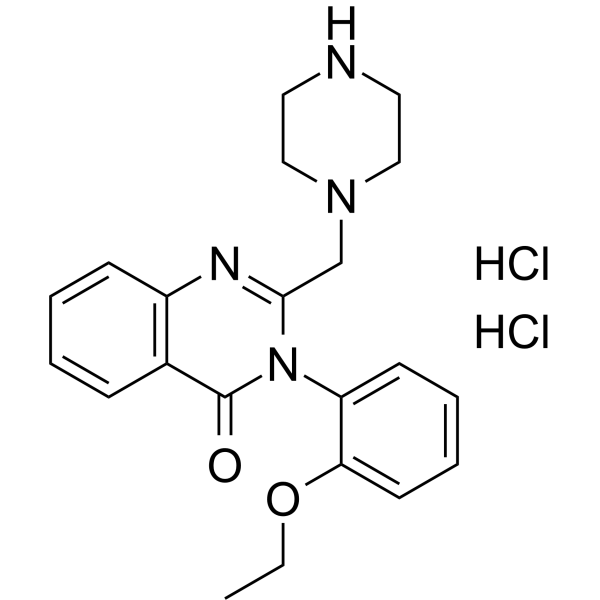 0 ImagesPRLX-93936 dihydrochloride is a molecular Glues that binds to and reprograms the TRIM21 ubiquitin ligase to degrade nuclear pore complexes. PRLX-93936 dihydrochloride binds to TRIM21, forms a ternary complex with TRIM21 and NUP98, and mediates the ubiquitination and proteasomal degradation of NUP98 and other nuclear pore complex proteins. PRLX-93936 dihydrochloride induces the loss of short-lived cytoplasmic mRNA transcripts, triggers cancer cell apoptosis (Apoptosis), and inhibits the activated Ras pathway. PRLX-93936 dihydrochloride inhibits HIF-1 under hypoxic conditions (IC50 = 0.09 μM in cell-based reporter gene assay). PRLX-93936 dihydrochloride suppresses tumor growth in mouse models and improves survival rates in mouse models of multiple myeloma. PRLX-93936 dihydrochloride is applicable to research related to pancreatic cancer and multiple myeloma.
-
IBG3
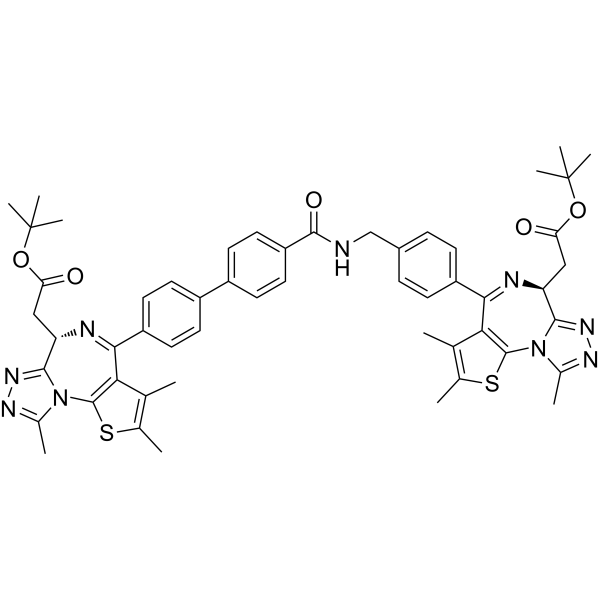 0 ImagesCat. No.: HY-160528Purity: 98.53%IBG3 is a bivalent molecular glue degrader that targets BRD2 and BRD4, with an EC50 of 32 nM and a Kd of 0.6 µM against human BRD4. IBG3 exhibits selectivity for BRD2 and BRD4 over BRD3. By recruiting the DCAF16 E3 ligase, IBG3 cis-binds to the tandem bromodomains of BRD2 and BRD4, enhances BRD-DCAF16 binding affinity, promotes ubiquitination and proteasomal degradation, and does not degrade isolated bromodomains. IBG3 lacks degradation selectivity for PSMA-positive and PSMA-negative prostate cancer cells, but shows lower in vivo antitumor efficacy than the PSMA-targeting conjugate IBG-P3, and can be used in prostate cancer-related research.
-
TMX1
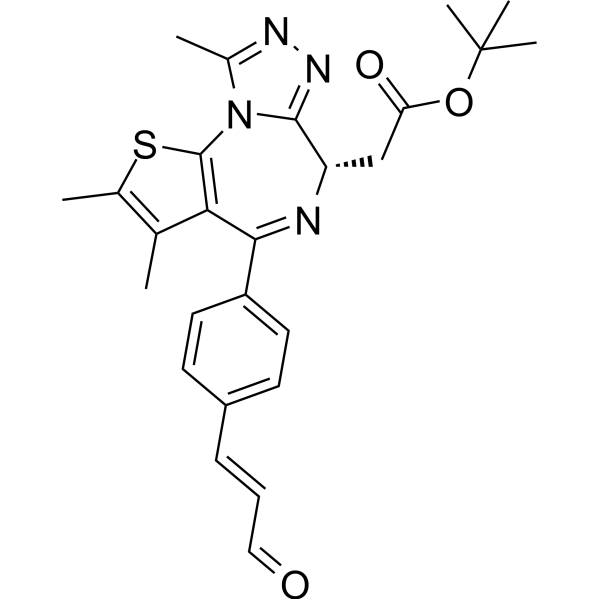 0 ImagesTMX1 is a covalent, selective BRD4 molecular glue degrader. TMX1 binds to the JQ1-binding site of BRD4BD2, forms covalent bonds with Cys58 of DCAF16 and Cys87 of GAK in a BRD4BD2-dependent template-assisted manner, stabilizes the BRD4-TMX1-DCAF16 ternary complex, and promotes the ubiquitination of BRD4 via the CRL4DCAF16 ubiquitin ligase complex. TMX1 induces selective degradation of BRD4, mild degradation of BRD2 and BRD3, as well as DCAF16-dependent cytotoxicity.
-
TMX-4100
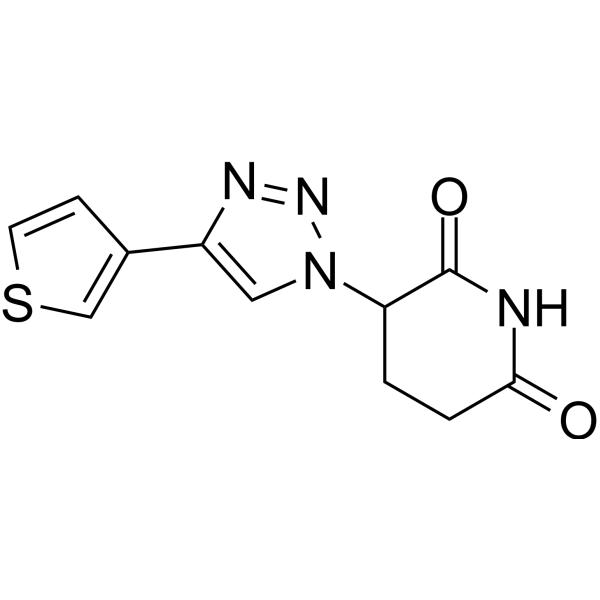 0 ImagesTMX-4100 is a selective phosphodiesterase 6D (PDE6D) degrader. TMX-4100 shows a high degradation preference for PDE6D with the DC50 values less than 200 nM in MOLT4, Jurkat, and MM.1S cells. TMX-4100 can be used for the research of multiple myeloma.
-
TCIP3
 0 ImagesSynonyms: KAT-TCIPTCIP3 is a bivalent molecular glue degrader that binds dually to p300/CBP and BCL6. TCIP3 redirects p300 and CBP, thereby activating programmed cell death genes that are normally repressed by the oncogenic driver gene BCL6. TCIP3 induces acetylation of BCL6 and histone tails, inhibits c-MYC transcription. TCIP3 can be used for the research of diffuse large B-cell lymphoma (DLBCL).
-
Cyclosporin A-d4
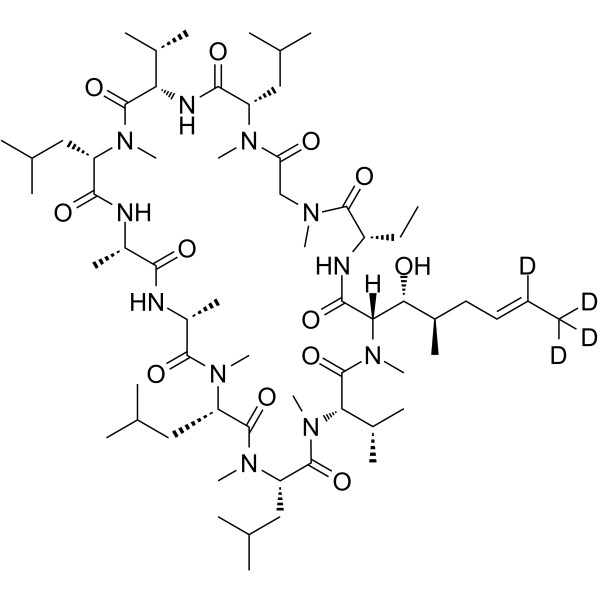 0 ImagesCat. No.: HY-B0579SPurity: 99.88%Synonyms: Cyclosporine A-d4; Ciclosporin A-d4; CsA-d4Cyclosporin A-d4 (Cyclosporine A-d4) is the deuterated-labeled Cyclosporin A (HY-B0579). Cyclosporin A (Cyclosporine A) is an immunosuppressant which binds to the cyclophilin and inhibits phosphatase activity of protein phosphatase 2B (PP2B/calcineurin) with an IC50 of 5 nM. Cyclosporin A is a molecular glue, binds to cyclophilin and calcineurin, leading to inactivation of nuclear Factor of activated T Cells (NFAT) and a subsequent decrease in the immune response. Cyclosporin A also inhibits CD11a/CD18 adhesion.
-
Methyl (S)-2-(4-(4'-((4-(N-(3-cyano-4-methyl-1H-indol-7-yl)sulfamoyl)benzyl)carbamoyl)-[1,1'-biphenyl]-4-yl)-2,3,9-trimethyl-6H-thieno[3,2-f][1,2,4]triazolo[4,3-a][1,4]diazepin-6-yl)acetate
![Methyl (S)-2-(4-(4'-((4-(N-(3-cyano-4-methyl-1H-indol-7-yl)sulfamoyl)benzyl)carbamoyl)-[1,1'-biphenyl]-4-yl)-2,3,9-trimethyl-6H-thieno[3,2-f][1,2,4]triazolo[4,3-a][1,4]diazepin-6-yl)acetate](https://file.medchemexpress.com/product_pic/hy-153459.gif "Click to View Methyl (S)-2-(4-(4'-((4-(N-(3-cyano-4-methyl-1H-indol-7-yl)sulfamoyl)benzyl)carbamoyl)-[1,1'-biphenyl]-4-yl)-2,3,9-trimethyl-6H-thieno[3,2-f][1,2,4]triazolo[4,3-a][1,4]diazepin-6-yl)acetate Product Detail") 0 ImagesIBG1 is a bivalent molecular glue degrader targeting BRD2/BRD4, with IC50 values of 12.8 nM and 462 nM, respectively, and an EC50 of 44 nM. By binding to the adjacent BD1 and BD2 bromodomains of BRD2 and BRD4, IBG1 stabilizes the ternary complex formed with DCAF16, thereby driving CRL-mediated ubiquitination and proteasomal degradation. IBG1 induces cancer cell apoptosis and inhibits cancer cell growth in a DCAF16-dependent manner, and downregulates MYC expression through DCAF16-independent BET bromodomain inhibition. IBG1 can be used in research of various cancers including prostate cancer.
0 ImagesIBG1 is a bivalent molecular glue degrader targeting BRD2/BRD4, with IC50 values of 12.8 nM and 462 nM, respectively, and an EC50 of 44 nM. By binding to the adjacent BD1 and BD2 bromodomains of BRD2 and BRD4, IBG1 stabilizes the ternary complex formed with DCAF16, thereby driving CRL-mediated ubiquitination and proteasomal degradation. IBG1 induces cancer cell apoptosis and inhibits cancer cell growth in a DCAF16-dependent manner, and downregulates MYC expression through DCAF16-independent BET bromodomain inhibition. IBG1 can be used in research of various cancers including prostate cancer.

-
(S)-ACE-OH
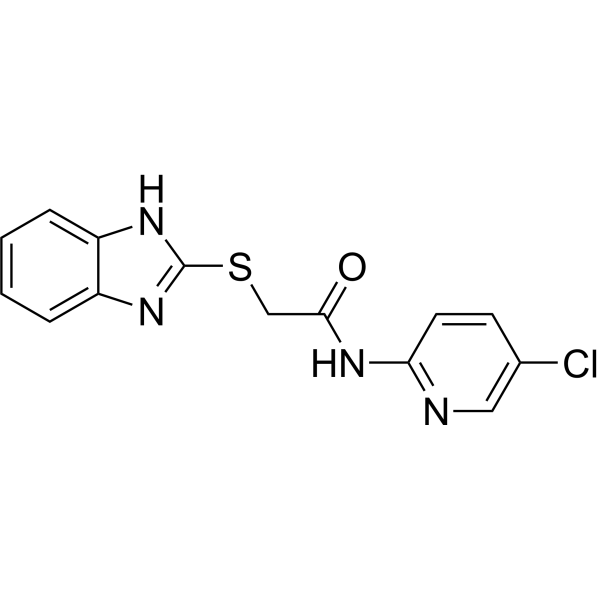
 0 ImagesCat. No.: HY-169325Purity: 99.17%(S)-ACE‑OH is the active metabolite of Acepromazine (HY-B1506), acting as a molecular glue degrader. (S)-ACE-OH induces functional interaction between TRIM21 and NUP98, promoting protein ubiquitination and degradation of TRIM21 at the nuclear pore complex. (S)-ACE-OH triggers nucleocytoplasmic transport disorder and exerts interferon-potentiated cytotoxic effects on certain cancer cells. (S)-ACE-OH can be used in cancer-related research.
-
PLX-4545
 0 ImagesCat. No.: HY-159647CAS No.: 2892065-45-9PLX-4545 is an orally active, selective molecular glue degrader targeting IKZF2. Through a molecular glue mechanism, PLX-4545 binds to CRBN, recruits IKZF2 to form a ternary complex, and promotes its ubiquitination and proteasomal degradation. This further converts inhibitory regulatory T cells (Treg) into effector-like T cells, enhances CD8+ T cell responses, and modulates the Teff:Treg balance. PLX-4545 also increases the production of the inflammatory cytokine IL-2 and reduces the suppressive activity of Treg. PLX-4545 can be used in cancer immunotherapy research, and exhibits a synergistic effect when combined with immune checkpoint inhibitors such as anti-PD1.
-
Lenalidomide (Standard)
 0 ImagesSynonyms: CC-5013 (Standard)Lenalidomide (Standard) (CC-5013 (Standard)) is the analytical standard of Lenalidomide (HY-A0003). This product is intended for research and analytical applications. Lenalidomide (CC-5013) is an orally active immunomodulatory agent that binds CRBN as a molecular glue to alter substrate specificity, inducing ubiquitination and proteasome-dependent degradation of IKZF1, IKZF3 and CK1α. Lenalidomide induces apoptosis by degrading IKZF1/3, and activates p53 by degrading CK1α. Lenalidomide promotes IL-2 release and effector functions of CD8+ T/NK cells, while inhibiting TNF-α secretion and M1-type pyroptosis. Lenalidomide can be used in research related to hematological malignancies, acute liver failure and acute kidney injury.



