



Molecular Glues
Protein degradation agents based on the ubiquitin-proteasome pathway include a part of molecular glues. Molecular glues are a class of small molecule compounds that can induce or stabilize the interaction between proteins. If one of the protein is ubiquitin ligase, molecular glue can cause another protein to undergo ubiquitin modification and degradation through the proteasome pathway, which is similar to PROTAC. However, these molecules are classified as ligand for E3 ligase as functional molecules in subsequent classification. Older drugs, thalidomide, lenalidomide, and pomalidomide, together with CC-90009 and CC-92480 reported later all belong to this category.
All Product Categories
-
Molecular Glues Related Products (381)
Related Products (381)

-
Related Compound Screening Libraries (1)
-
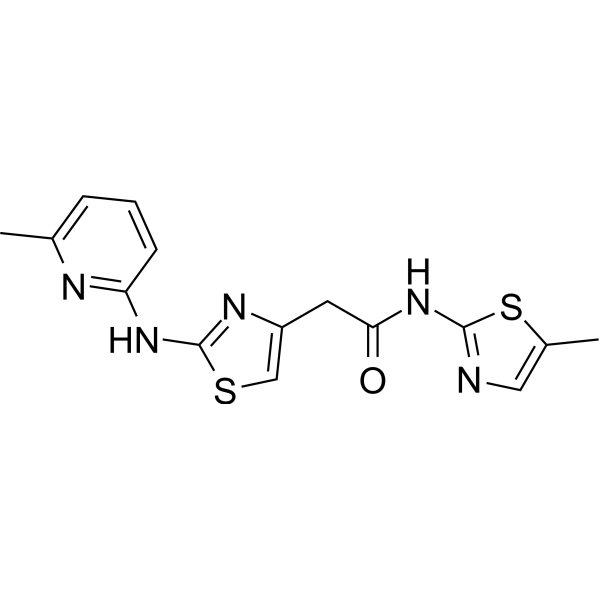
WIZ degrader 9
 0 ImagesWIZ degrader 9 is an orally active molecular glue degrader of the WIZ transcription factor. As a molecular glue, WIZ degrader 9 recruits WIZ to the cereblon E3 ubiquitin ligase complex via its ZF7 domain, driving proteasome-dependent degradation of WIZ. WIZ degrader 9 induces hemoglobin production, reduces the level of H3K9 dimethylation across the whole genome and at the β-globin locus, upregulates the transcription of γ-globin and BGLT3, and increases the level of histone H3K9 acetylation in the promoter region of HBG1/2. WIZ degrader 9 effectively induces fetal hemoglobin production in both mice and cynomolgus monkeys. WIZ degrader 9 can be used for research on sickle cell disease.
-
CDK2 degrader 1
 0 ImagesCDK2 degrader 1 is a selective CDK2 molecular glue degrader. CDK2 degrader 1 binds to cereblon, induces ubiquitination of CDK2 and subsequent degradation via the proteasomal pathway. CDK2 degrader 1 is applicable for cancer-related research.
-
HGC652
 0 ImagesHGC652 is a molecular glue degrader targeting TRIM21 with a TRIM21-dependent nuclear membrane disruption effect. HGC652 binds to the PRY-SPRY domain of TRIM21 with high affinity (Ka=0.061 μM), mediates the interaction between TRIM21 and NUP98, and redirects E3 ligase activity. By triggering the polyubiquitination and proteasomal degradation of nucleoporins (such as NUP155 and GLE1), HGC652 disrupts nuclear membrane integrity, alters nuclear morphology, induces genomic instability, and thereby induces cancer cell death.
-
Cyclosporin A (Standard)
 0 ImagesSynonyms: Cyclosporine A (Standard); Ciclosporin A (Standard); CsA (Standard)Cyclosporin A (Standard) (Cyclosporine A (Standard)) is the analytical standard of Cyclosporin A (HY-B0579). This product is intended for research and analytical applications. Cyclosporin A (Cyclosporine A) is an immunosuppressant which binds to the cyclophilin and inhibits phosphatase activity of protein phosphatase 2B (PP2B/calcineurin) with an IC50 of 5 nM. Cyclosporin A is a molecular glue, binds to cyclophilin and calcineurin, leading to inactivation of nuclear Factor of activated T Cells (NFAT) and a subsequent decrease in the immune response. Cyclosporin A also inhibits CD11a/CD18 adhesion.
-
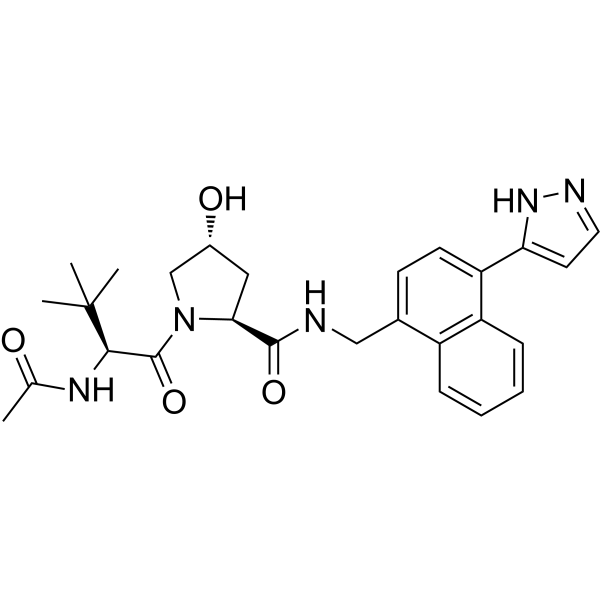
NP3-253
 0 ImagesNP3-253 is an orally active and brain-penetranted NLRP3 inflammasome inhibitor. NP3-253 functions as a molecular glue that prevents NACHT-subdomain rearrangements, locking NLRP3 in an inactive conformation. NP3-253 inhibits production of pro-inflammatory cytokines IL-1β and IL-18. NP3-253 can be used for the research of inflammation and neurological disease, suah as peritonitis.
-
NK7-902 diTFA
 0 ImagesCat. No.: HY-173154BPurity: 99.88%NK7-902 diTFA is a selective and orally active CRBN-dependent NEK7 molecular glue degrader with Kd values of 1.5 and 2.6 μM for hNEK7 and mNEK7. NK7-902 diTFA fully degrades NEK7 in human primary monocytes and whole blood but only partially inhibits NLRP3-dependent IL-1β production. NK7-902 diTFA shows activity in murine systems and induces a profound and long-lasting NEK7 degradation but only transiently blocks NLRP3 inflammasome activation. NK7-902 diTFA can be used for the research of inflammation, such as cryopyrin-associated periodic syndromes.
-
Pan-RAS-IN-2
 0 ImagesPan-rasin-2 (compound 6A) is an orally active molecular glues that targets RAS. Pan-RAS-IN-2 inhibits pERK (IC50 in AsPC-1 cells: 0.3 nM). Pan-rasin-2 has significant inhibitory activity on cell proliferation of RAS mutant cell lines. Pan-rasin-2 can form ternary complexes with cyclophilin A (CYPA) and RAS (ON) proteins and the formation of ternary complexes can block the binding of RAF downstream of RAS, which has anti-tumor (such as colorectal cancer, pancreatic cancer) effects.
-
BMS-986470
 0 ImagesBMS-986470, a HbF-activating CRBN E3 ligase modulator (CELMoD), is an orally active dual molecular glue degrader targeting ZBTB7A and WIZ. BMS-986470 has potent γ-globin induction activity. BMS-986470 can be used for sickle cell disease (SCD) research.
-
TMX-4116
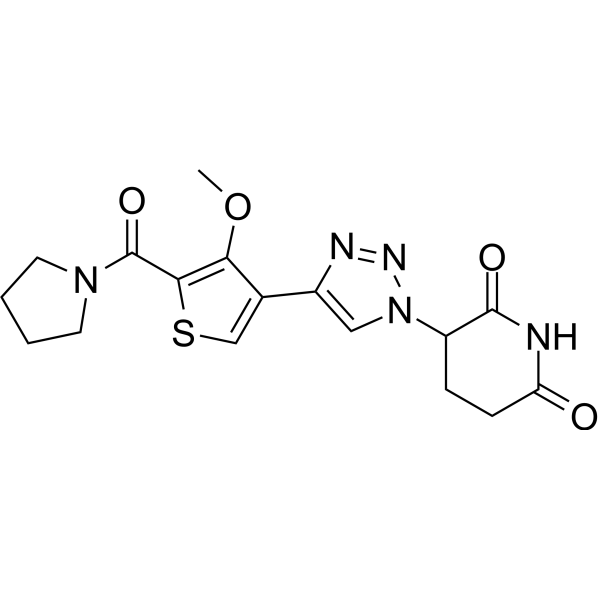 0 ImagesTMX-4116 is a casein kinase 1α (CK1α) degrader. TMX-4116 shows the degradation preference for CK1α with DC50s less than 200 nM in MOLT4, Jurkat, and MM.1S cells. TMX-4116 can be used for the research of multiple myeloma.
-
Zomiradomide
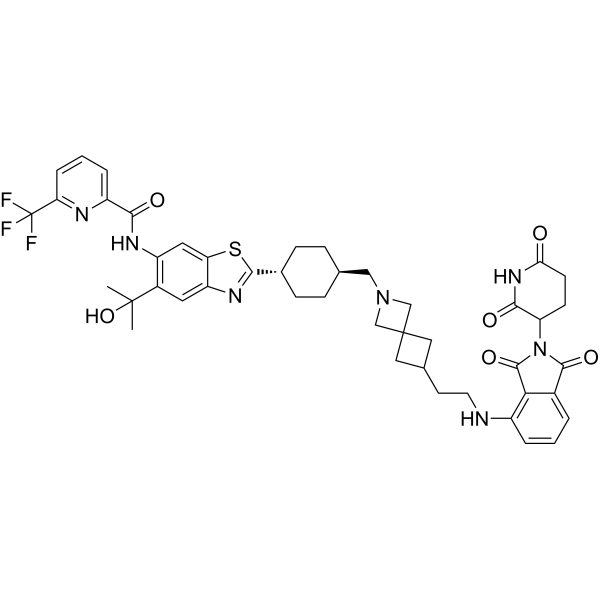 0 ImagesSynonyms: KT-413Zomiradomide (KT-413) is an orally active IRAK4 PROTAC degrader with a DC50 of 6 nM. Zomiradomide inhibits the NF-κB signaling pathway, while its molecular glue function mediates the degradation of Ikaros and Aiolos (with a DC50 of 1 nM for both), activates the IFN-I signaling pathway, and selectively degrades IMiD substrates. Zomiradomide inhibits cancer cell proliferation and tumor growth. Zomiradomide can be used in research related to B-cell non-Hodgkin's lymphoma and diffuse large B-cell lymphoma.
-
Tasisulam
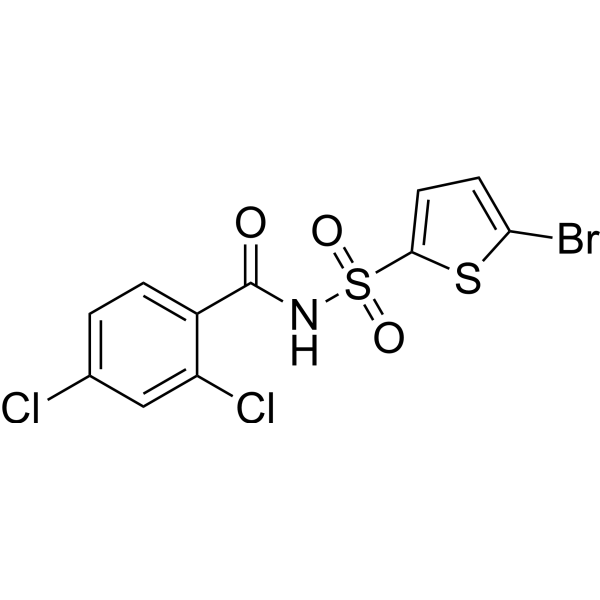 0 ImagesSynonyms: LY 573636Tasisulam is a anticancer agent and induces apoptosis via the intrinsic pathway, resulting in cytochrome c release and caspase-dependent cell death. Tasisulam inhibits mitotic progression and induces vascular normalization.
-
CC-3060
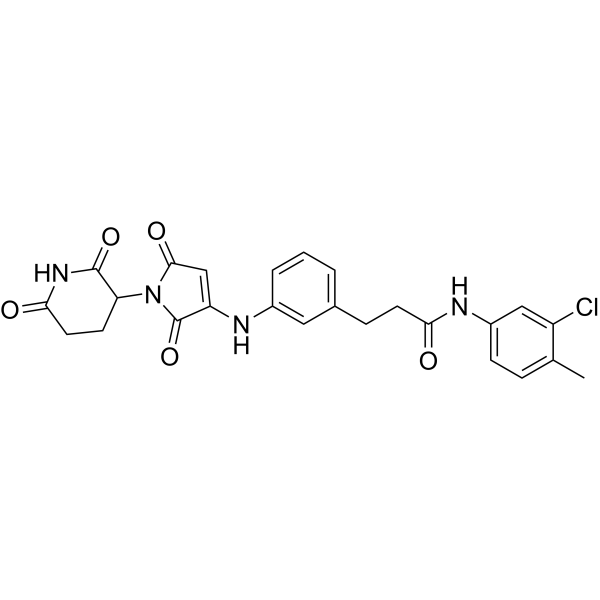
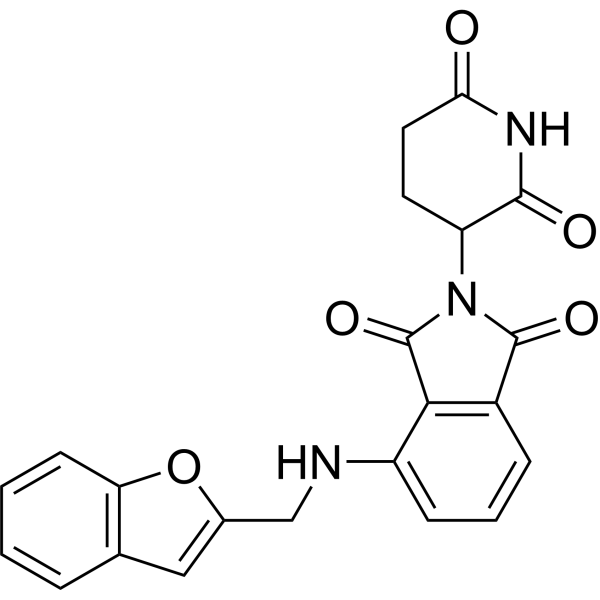 0 ImagesCC-3060 is a molecular glue modulator targeting Cereblon (CRBN) E3 ubiquitin ligase and ZBTB16 degrader with a DC50 of 0.47 nM in HT-1080 cells. CC-3060 engages structural degrons on ZBTB16’s ZnF1 or ZnF3 domains for fusion protein substrates. CC-3060 can be used for the research of acute promyelocytic leukemia.
-
ALV2
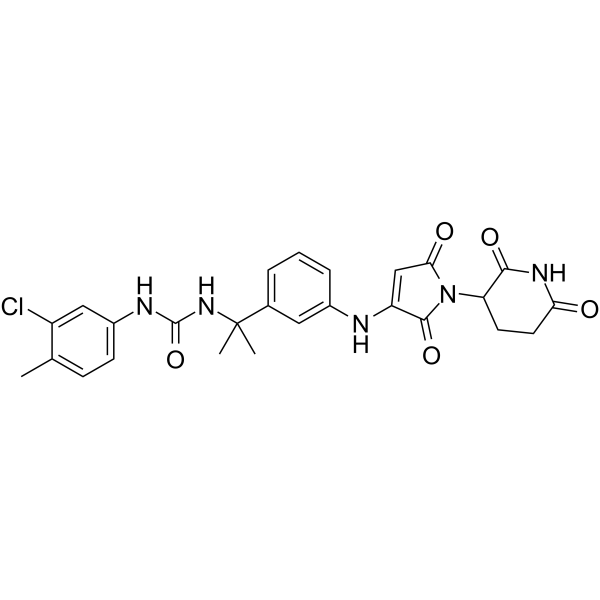 0 ImagesALV2 is a potent and selective Helios molecular glue degrader. ALV2 binds CRBN, with an IC50 of 0.57 μM. Helios is the zinc-finger transcription factor that can maintain a stable Treg cell phenotype in the inflammatory tumor microenvironment.
-
PLX-3618
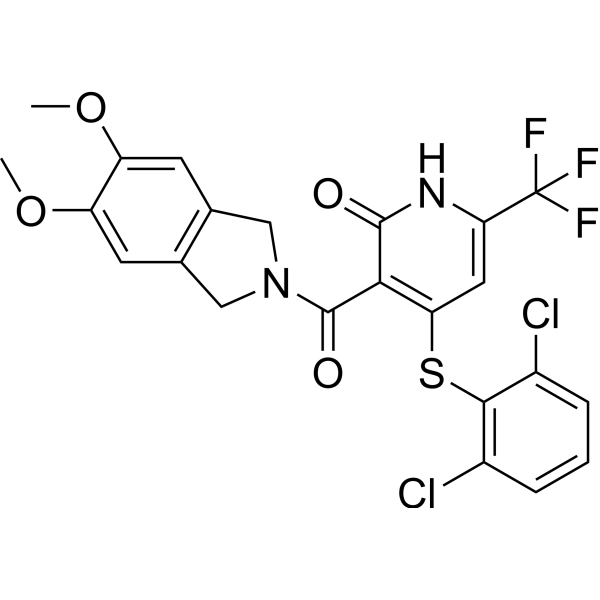
 0 ImagesPLX-3618 is a molecular glue, that degrades BRD4 with DC50 of 12.2 nM. PLX-3618 promotes polyubiquitination and subsequent proteasomal degradation of BRD4 by recruiting of the E3 ligase substrate receptor, DCAF11. PLX-3618 inhibits the proliferation of various cancer cells, induces apoptosis in AML cells. PLX-3618 exhibits antitumor activity against AML in mouse models.
-
(R)-CR8 trihydrochloride
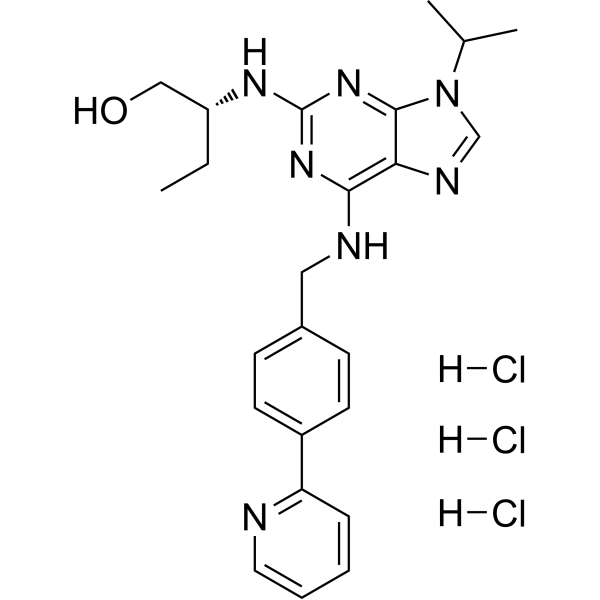 0 ImagesSynonyms: CR8, (R)-Isomer trihydrochloride(R)-CR8 (CR8) trihydrochloride, a second-generation analog of Roscovitine, is a potent CDK1/2/5/7/9 inhibitor. (R)-CR8 trihydrochloride inhibits CDK1/cyclin B (IC50=0.09 μM), CDK2/cyclin A (0.072 μM), CDK2/cyclin E (0.041 μM), CDK5/p25 (0.11 μM), CDK7/cyclin H (1.1 μM), CDK9/cyclin T (0.18 μM) and CK1δ/ε (0.4 μM). (R)-CR8 trihydrochloride induces apoptosis and has neuroprotective effect. (R)-CR8 trihydrochloride acts as a molecular glue degrader that depletes cyclin K.
-
Galeterone
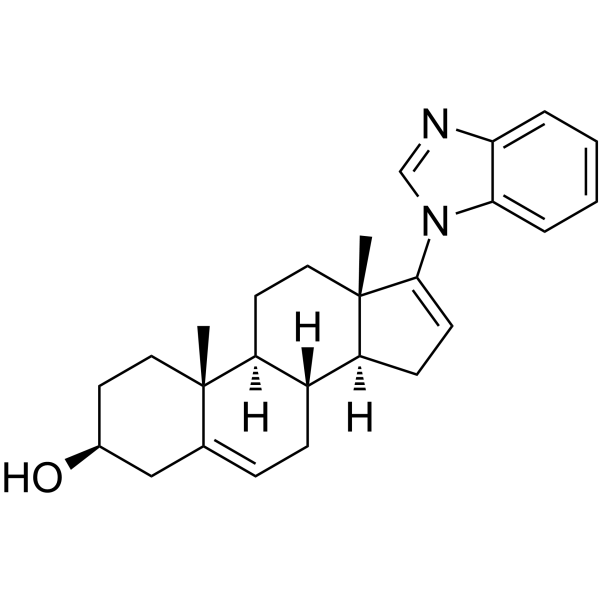 0 ImagesSynonyms: TOK-001; VN-124-1Galeterone (TOK-001) is a potent, orally active molecular glue degrader, which degrades androgen receptor (AR) and its splice variants (AR-Vs) and MAP kinase-interacting serine/threonine protein kinase Mnk1/2. Galeterone also functions as a CYP17 inhibitor (IC50 = 47 nM). Galeterone induces cell apoptosis. Galeterone inhibits tumor growth in human prostate cancer xenograft mouse models. Galeterone can be used for castration resistant prostate cancer (CRPC) and pancreatic ductal adenocarcinoma (PDAC) research[1][2].



