Reactive Oxygen Species (ROS) Inducer
-
Obtusaquinone
 0 ImagesCat. No.: HY-N19738CAS No.: 21105-15-7
Obtusaquinone is a blood-brain barrier-permeable Keap1 inhibitor with anticancer activity. Obtusaquinone covalently binds to cysteine residues of Keap1, promotes its ubiquitination and proteasomal degradation, and activates the Nrf2 pathway. Obtusaquinone induces endoplasmic reticulum stress and DNA damage through abnormal accumulation of ROS, and triggers apoptosis of cancer cells. Obtusaquinone prolongs survival in orthotopic xenograft models of pediatric high-grade glioma, and exhibits antitumor activity in glioblastoma and breast cancer models. Obtusaquinone can be used in studies related to glioma and breast cancer.
-
Daphnetin (Standard)
 0 Images
Daphnetin (Standard) is the analytical standard of Daphnetin. This product is intended for research and analytical applications. Daphnetin (7,8-dihydroxycoumarin), one coumarin derivative can be found in plants of the Genus Daphne, is a potent, oral active protein kinase inhibitor, with IC50s of 7.67 μM, 9.33 μM and 25.01 μM for EGFR, PKA and PKC in vitro, respectively. Daphnetin triggers ROS-induced cell apoptosis and induces cytoprotective autophagy by modulating the AMPK/Akt/mTOR pathway. Daphnetin has anti-inflammation activitity and inhibits TNF-α, IL-1 , ROS, and MDA production. Daphnetin has schizontocidal activity against malaria parasites. Daphnetin can be used for rheumatoid arthritis , cancer and anti-malarian research.
-
Tetrachlorohydroquinone
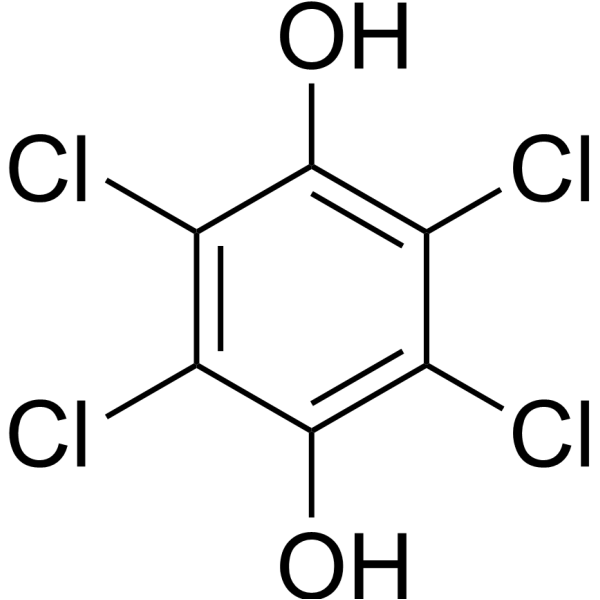 0 ImagesSynonyms: TCHQ; Tetrachloroquinol
Tetrachlorohydroquinone (TCHQ) is a metabolite of Pentachlorophenol. Tetrachlorohydroquinone induces reactive oxidant stress (ROS), inhibits apoptosis and induces necrosis in primary mouse splenocytes. Tetrachlorohydroquinone increases DNA lesions and induces oxidative stress in rodents.
-
Chlorido[N,N'-disalicylidene-1,2-phenylenediamine]iron(III)
![Chlorido[N,N'-disalicylidene-1,2-phenylenediamine]iron(III)](https://file.medchemexpress.com/product_pic/hy-w698255.gif "Click to View Chlorido[N,N'-disalicylidene-1,2-phenylenediamine]iron(III) Product Detail") 0 ImagesCat. No.: HY-W698255CAS No.: 39916-28-4
0 ImagesCat. No.: HY-W698255CAS No.: 39916-28-4Chlorido[N,N'-disalicylidene-1,2-phenylenediamine]iron(III) generates lipid-based ROS and induce ferroptosis
-
hCAIX-IN-12
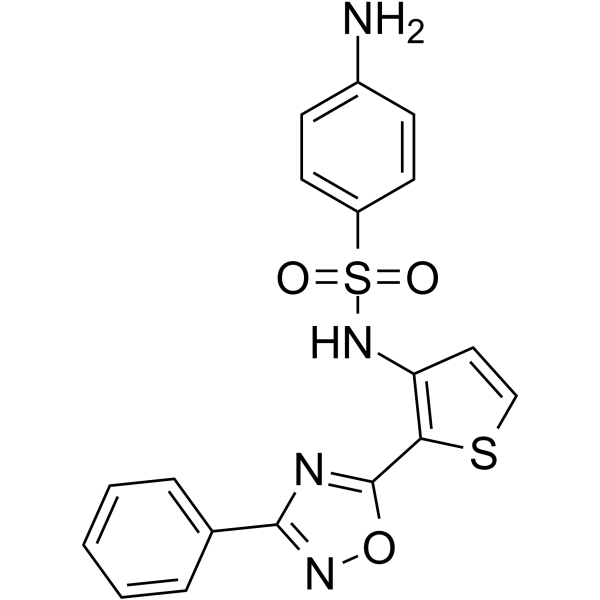 0 ImagesCat. No.: HY-146254CAS No.: 2414598-85-7
hCAIX-IN-12 is a potent hCAIX inhibitor with IC50 values of 0.74, 10.78 μM for CAIX and CAII, respectively. hCAIX-IN-12 shows antiproliferative effect and induces apoptosis. hCAIX-IN-12 increases ROS production. hCAIX-IN-12 has the potential for the research of colorectal cancer (CRC) .
-
Methyl N-methylanthranilate-d3
 0 ImagesCat. No.: HY-76705SCAS No.: 2562378-12-3
Methyl N-methylanthranilate-d3 is the deuterated-labeled Methyl N-methylanthranilate (HY-76705). Methyl N-methylanthranilate is an N-alkylated anthranilate with a sweet citrus aroma, which is commonly used in perfume manufacturing. Methyl N-methylanthranilate is the dominant component in the defensive secretion of the millipede Typhloiulus orpheus. Methyl N-methylanthranilate exhibits quorum sensing inhibition and anti-biofilm activity against P. aeruginosa; it interferes with PQS synthesis via competitive inhibition of PqsA, but lacks bactericidal activity. Methyl N-methylanthranilate is sensitive to UVA/sunlight in human skin cells, and generates O2•- through type I photodynamic reactions, leading to lysosomal/mitochondrial damage, double-strand DNA breaks and apoptosis, with potential phototoxicity.
-
Perfluorobutanesulfonic acid-13C3 sodium
 0 ImagesCat. No.: HY-21191SCAS No.: 2708218-84-0Synonyms: PFBS-13C3 sodium
Perfluorobutanesulfonic acid-13C3 sodium (PFBS-13C3 sodium) is the 13C-labeled Perfluorobutanesulfonic acid (HY-21191). Perfluorobutanesulfonic acid (PFBS) is a short-chain perfluoroalkyl substance and the main replacement for perfluorooctanesulfonic acid. Perfluorobutanesulfonic acid induces fat accumulation in human HepG2 hepatoma cells. Perfluorobutanesulfonic acid promotes lipid accumulation by activating PPARγ pathway and triggering oxidative stress, endoplasmic reticulum stress and calcium dyshomeostasis. Perfluorobutanesulfonic acid impairs reproduction and causes developmental disorders in offspring of Caenorhabditis elegans. Perfluorobutanesulfonic acid disrupts pancreatic organogenesis and lipid homeostasis in zebrafish embryos. Perfluorobutanesulfonic acid can be used in environmental toxicology, lipid metabolism and developmental toxicity studies.

-
GPX4-IN-24
 0 ImagesCat. No.: HY-183294CAS No.: 2834106-56-6
GPX4-IN-24 is an orally active glutathione peroxidase 4 (GPX4) inhibitor with a human IC50 of 10.90 μM, human Kd of 10.04 μM. GPX4-IN-24 suppresses GPX4 enzymatic activity, disrupts redox homeostasis, drives lipid peroxidation, promotes lipid peroxidation, and induces ferroptosis. GPX4-IN-24 can be used for the research of triple-negative breast cancer.
-
RSK2/TOP2-IN-1
 0 ImagesCat. No.: HY-178029
RSK2/TOP2-IN-1 is a RSK2/TOP2 dual inhibitor. RSK2/TOP2-IN-1 targets key tumor progression enzymes including ribosomal S6 kinase 2 and topoisomerases IIα/IIβ. RSK2/TOP2-IN-1 shows selectivity index > 2 against all squamous cell carcinoma (SCC) cell lines. RSK2/TOP2-IN-1 can induce cell apoptosis, autophagy and ROS production. RSK2/TOP2-IN-1 can be used for the research of cancer, such as squamous cell carcinoma.
-
Anticancer agent 16
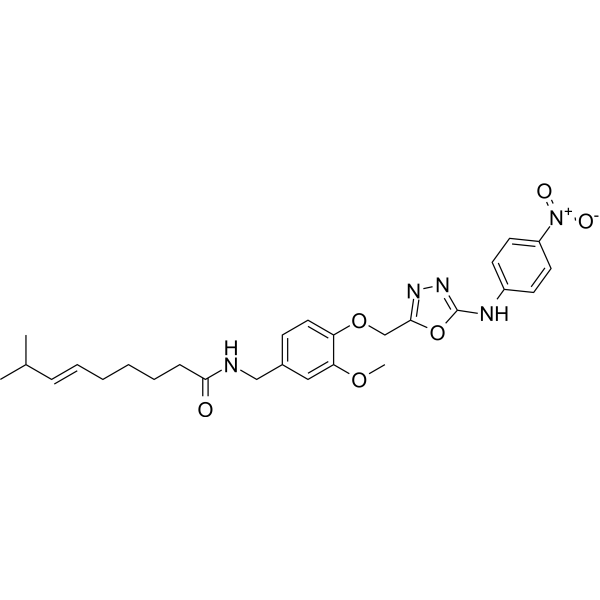 0 ImagesCat. No.: HY-139882CAS No.: 2761205-38-1
Anticancer agent 16 exhibits good cytotoxic activity against HCT-116, NCI-H460, and SKOV3 cell lines with IC50 8.55 μΜ, 5.41 μΜ, and 6.4 μΜ, respectively.
-
Ganoderic acid Mk
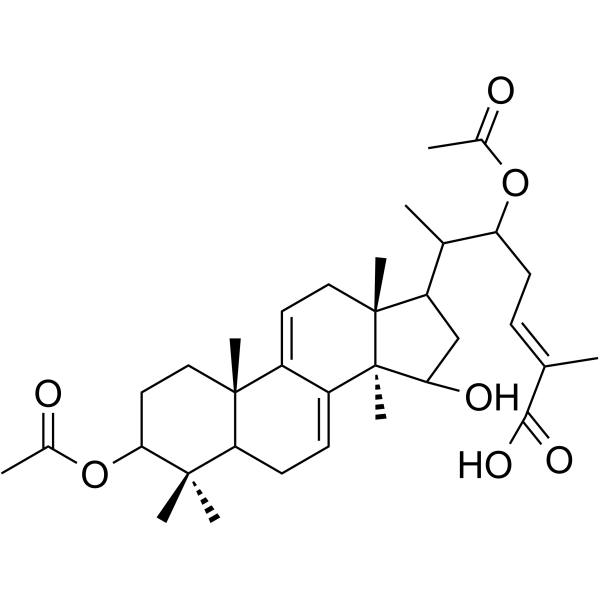 0 ImagesCat. No.: HY-N11643CAS No.: 110024-14-1Synonyms: GA-Mk
Ganoderic acid Mk (GA-Mk) is a triterpenoid acid, that can be isolated from the mycelia of Ganoderma lucidum. Ganoderic acid Mk is efficiently anti-proliferative and can induce apoptosis of HeLa cells by mitochondria-mediated pathway. Ganoderic acid Mk can be used for cervical cancer research.
-
GPX4-IN-18
 0 ImagesCat. No.: HY-175041CAS No.: 3016433-00-1
GPX4-IN-18 (Compound 17) is a ferrocene-containing inhibitor of glutathione peroxidase 4 (GPX4). GPX4-IN-18 is also an inducer of ferroptosis. GPX4-IN-18 can increase the production of ROS and malondialdehyde (MDA) levels in OS-RC-2 clear cell renal cell carcinoma cells. GPX4-IN-18 induces ferroptosis in HT-1080 cells with IC50s of 0.007 μM (absence of ferrostatin-1) and 1.486 μM (presence of ferrostatin-1). GPX4-IN-18 reduces in vivo tumor volume and intratumoral GPX4 levels in OS-RC-2 xenograft murine model.
-
PDIC-NN
 0 ImagesCat. No.: HY-169225CAS No.: 932740-48-2Synonyms: PDIC-NS free base
PDIC-NN (PDIC-NS free base) is a STING activator with anticancer activity. PDIC-NN promotes the content and biostability of endogenous cyclic dinucleotides (CDNs). PDIC-NN triggers ROS burst and causes serious damage to mitochondria. PDIC-NN induces cell apoptosis and inhibits DNA replication. PDIC-NN activates cGAS-STING signaling pathway, enhances the immunogenicity of tumor cells and activates a robust innate immune response.
-
Ferroptosis inducer-15
 0 ImagesCat. No.: HY-182802CAS No.: 3097756-33-4
Ferroptosis inducer-15 is a ferroptosis inducer. Ferroptosis inducer-15 downregulates GPX4 expression, triggers lipid peroxidation via ROS accumulation, and disrupts mitochondrial membrane potential to drive ferroptosis. Ferroptosis inducer-15 increases splenic CD4+ T cell proportion, promotes CD8+ cytotoxic T cell tumor infiltration, and activates antitumor immune responses. Ferroptosis inducer-15 exerts antiproliferative activity against colorectal cancer cells and inhibits tumor growth in xenograft mice models without significant body weight loss. Ferroptosis inducer-15 can be used for the research of cancer, such as colorectal cancer.
-
Buspirone-d8 dihydrochloride
 0 ImagesCat. No.: HY-B1115S1
Buspirone-d8 dihydrochloride is the deuterium labeled Buspirone hydrochloride (HY-B1115). Buspirone hydrochloride is a 5-HT1A receptor agonist. Buspirone hydrochloride can be used for anxiety and depression research.
-
TrxR-IN-8
 0 ImagesCat. No.: HY-173403CAS No.: 2857180-28-8
TrxR-IN-8 (Compound 6f) is a selective TrxR inhibitor (IC50: 10.2 μM). TrxR-IN-8 induces apoptosis through oxidative stress by stimulating the production of reactive oxygen species (ROS), reducing intracellular thiols, and lowering the glutathione/glutathione ratio. TrxR-IN-8 exhibits significant cytotoxicity against non-small cell lung cancer (NSCLC) cells.
-
Tubulin polymerization-IN-67
 0 ImagesCat. No.: HY-161863
Tubulin polymerization-IN-67 (Compound 5h) is an inhibitor for tubulin polymerization on colchicine binding site with an IC50 of 2.92 μM. Tubulin polymerization-IN-67 inhibits the proliferation of cancer cells HT29, A549, U2OS, MG-63 and HeLa with IC50s of 0.12-4.13 μM. Tubulin polymerization-IN-67 arrests the cell cycle at G2/M phase, induces apoptosis in cell U2OS, inhibits the cell migration of A549. Tubulin polymerization-IN-67 reduces the mitochondrial membrane potential (MMP) and increase intracellular ROS, inhibits the angiogenesis in HUVECs. Tubulin polymerization-IN-67 exhibits antitumor efficacy in mice
-
rel-Levormeloxifene
 0 ImagesCat. No.: HY-122359ACAS No.: 31477-60-8Synonyms: rel-L-Centchroman; Ormeloxifene
rel-Levormeloxifene (rel-L-Centchroman) is the relative configuration of Levormeloxifene (HY-122359). rel-Levormeloxifene is a selective estrogen receptor modulator (SERM). rel-Levormeloxifene inhibits proliferation of leukemia cells with IC50 about 7 μM, arrests cell cycle at G0/G1 phase, and induces apoptosis. rel-Levormeloxifene induces differentation of myelogenesis leukemia, and enhances ROS production in K562 cells.