



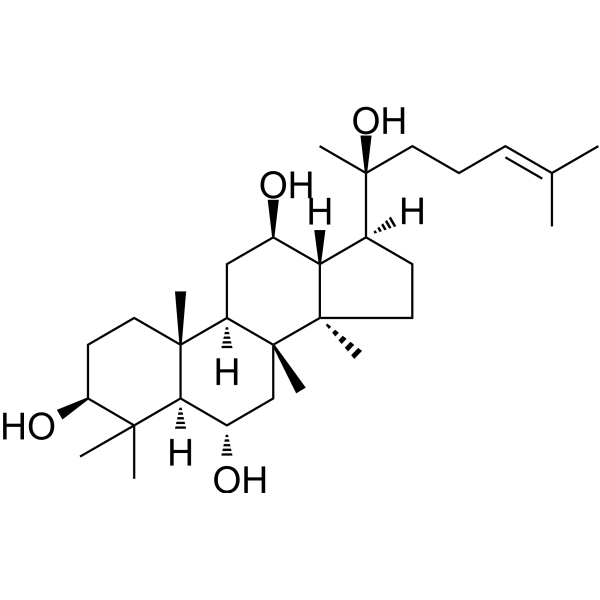
(20S)-Protopanaxatriol
Based on 1 publication(s) in Google Scholar
(20S)-Protopanaxatriol is a metabolite of ginsenoside. (20S)-Protopanaxatriol works through the glucocorticoid receptor (GR) and estrogen receptor (ER), and is also a LXRα inhibitor. (20S)-Protopanaxatriol shows a broad spectrum of antitumor effects.
For research use only. We do not sell to patients.
- Purity : 99.93%
- CAS No.: 34080-08-5
- Formula: C30H52O4
- Molecular Weight:476.73
-
Storage:Powder -20°C, 3 years , 4°C, 2 years ; In solvent -80°C, 6 months , -20°C, 1 month

To place orders, for customer services and technical support, please contact: MedChemExpress USA
Tel: 609-228-6898 E-mail: [email protected] [email protected]


-
 Biological Activity
-
Chemical Information
-
Solvent & Solubility
- Protocols
- Purity & Documentation
- References
-
 Help & FAQs


-
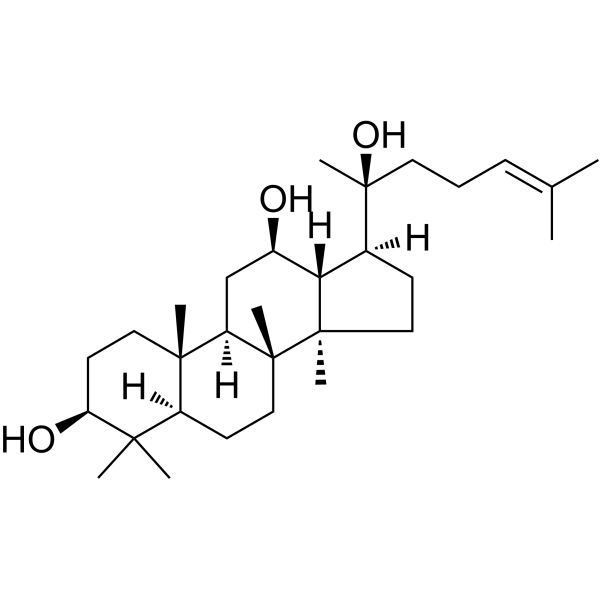
HY-N0797
(20S)-ProtopanaxadiolAkt activity inhibitor -
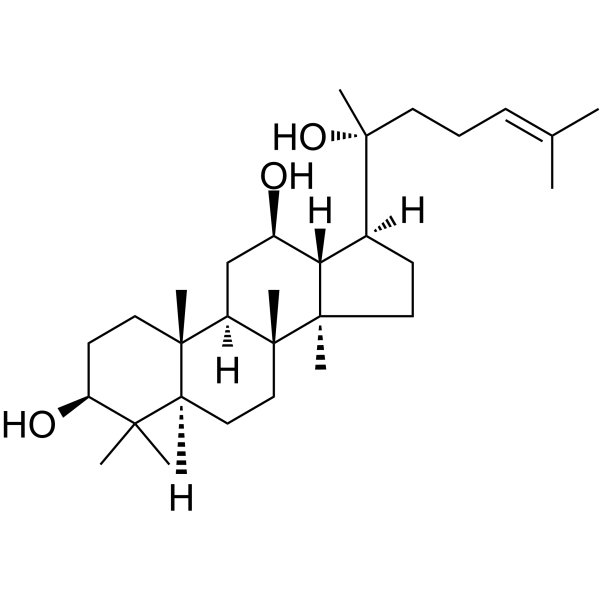
HY-N2040
(20R)-ProtopanaxadiolAnti-Inflammatory/Antibacterial Agent -
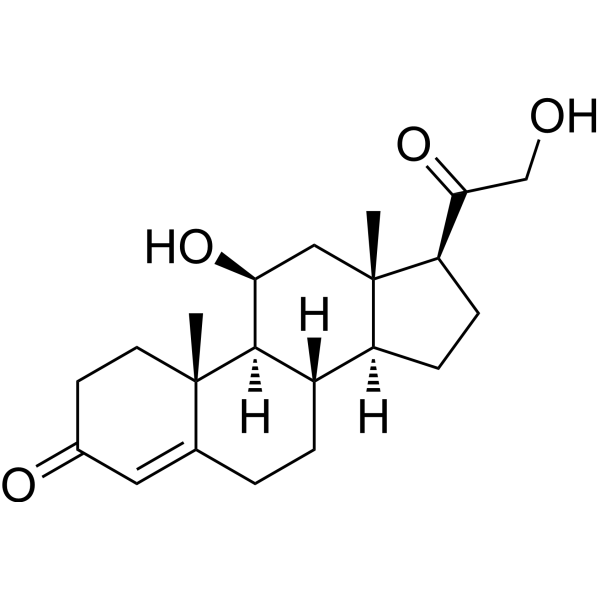
HY-B1618
CorticosteroneEndogenous Glucocorticoids -
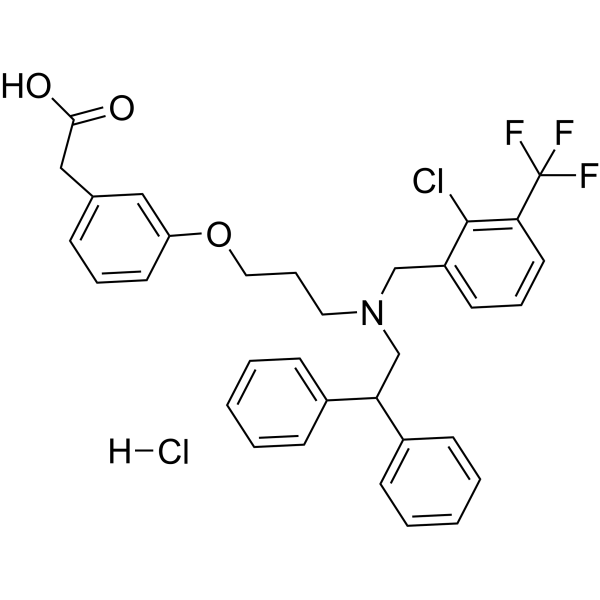
HY-10627A
GW3965 hydrochlorideLXR Agonist -
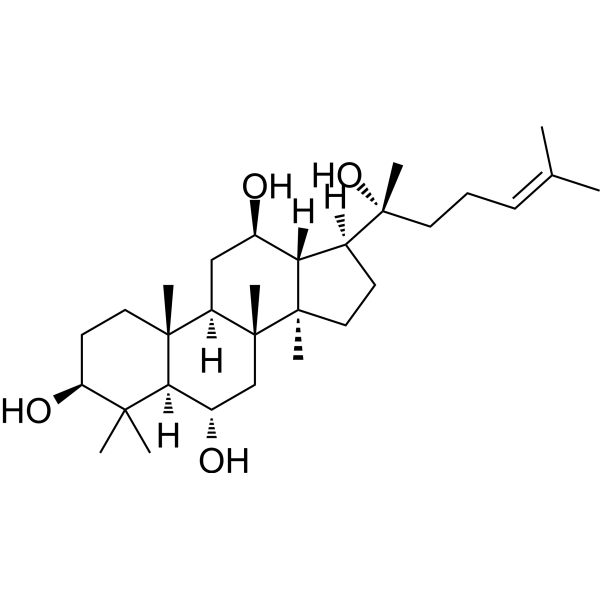
HY-N0798
20(R)-ProtopanaxatriolNatural Compound -
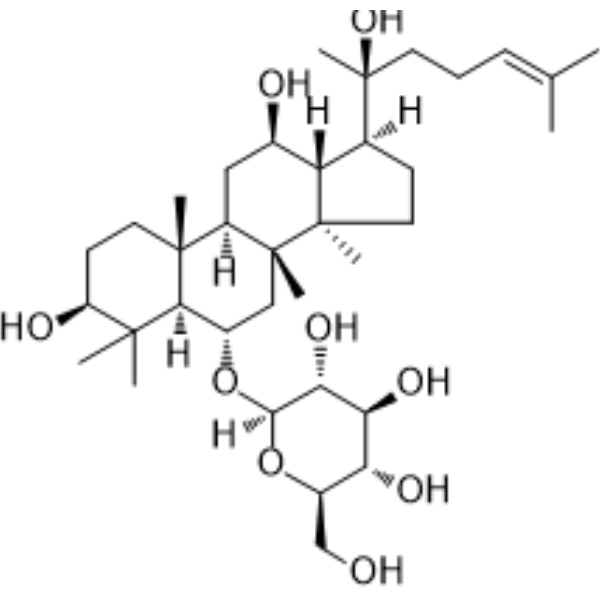
HY-N0604
Ginsenoside Rh1Endogenous Metabolite -
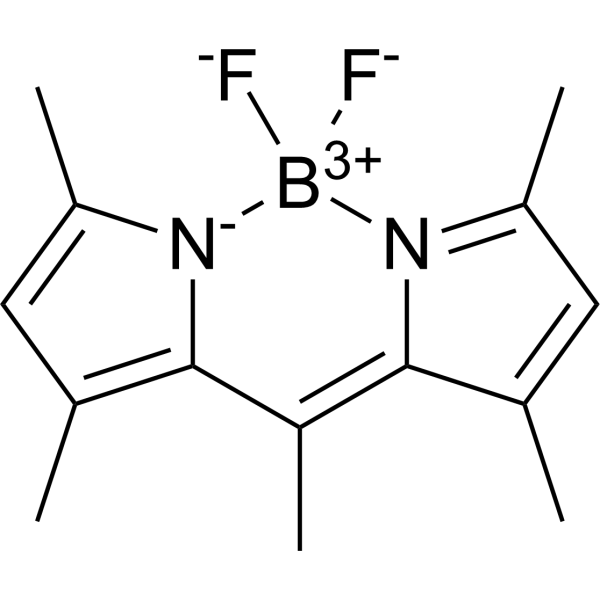
HY-W090090
BODIPY 493/503Neutral Lipid Dye -
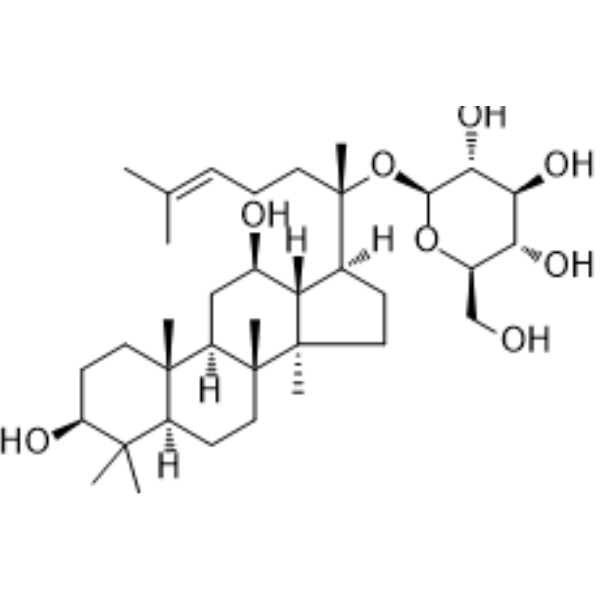
HY-N0904
Ginsenoside C-KNO Synthase/COX Inhibitor -
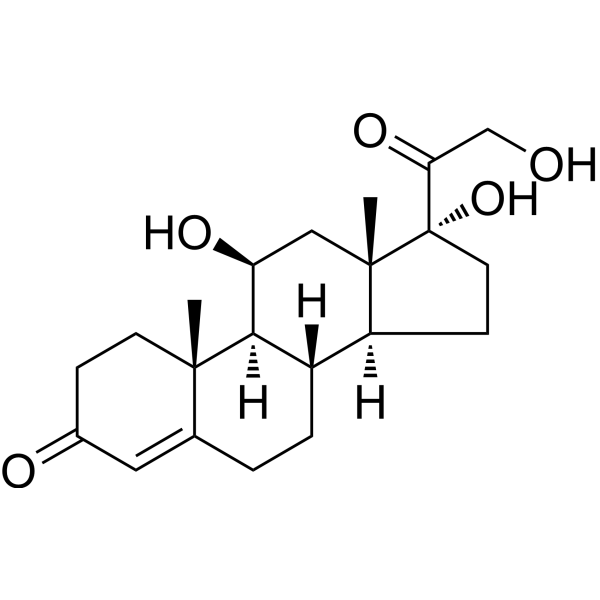
HY-N0583
HydrocortisoneGlucocorticoid Receptor Agonist -
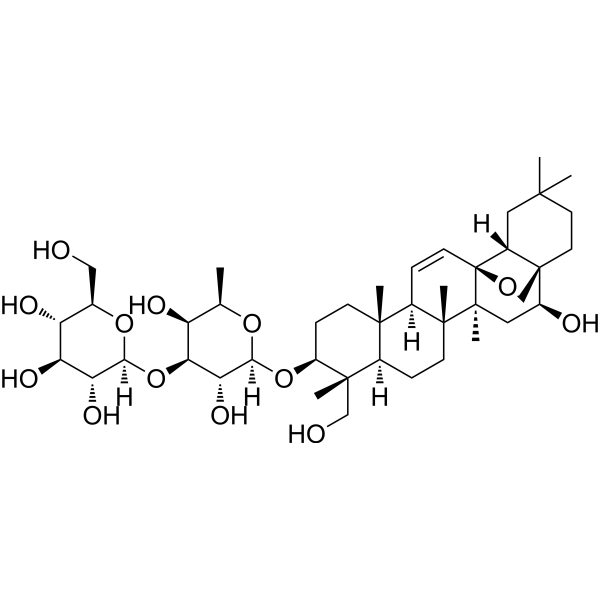
HY-N0246
Saikosaponin AAnti-inflammatory Agent -
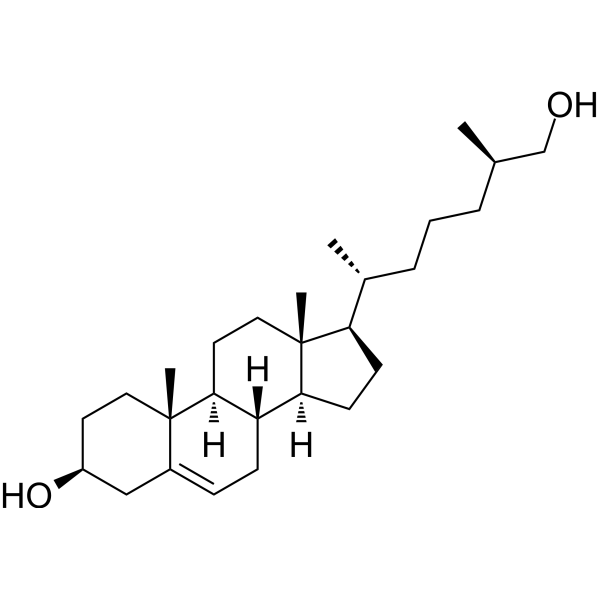
HY-N2371
27-HydroxycholesterolLXR Agonist -

HY-N0835R
(20S)-Protopanaxatriol (Standard)LXRα Inhibitor
Publications Citing Use of MedChemExpress (MCE) (20S)-Protopanaxatriol
More

Biological Activity
Description
IC50 & Target
Cellular Effect
|
Cell Line

|
Type | Value | Description | References |
|---|---|---|---|---|
| BGC-823 | IC50 |
16 μM
Compound: 1, PT
|
Cytotoxicity against human BGC823 cells after 48 hrs by MTT assay
Cytotoxicity against human BGC823 cells after 48 hrs by MTT assay
|
[PMID: 15921408] |
| HepG2 | IC50 |
43.44 μM
Compound: 7
|
Cytotoxicity against human HepG2 cells after 48 hrs by MTT assay
Cytotoxicity against human HepG2 cells after 48 hrs by MTT assay
|
[PMID: 26420067] |
| HL-60 | IC50 |
22.79 μM
Compound: 7
|
Cytotoxicity against human HL60 cells after 48 hrs by MTT assay
Cytotoxicity against human HL60 cells after 48 hrs by MTT assay
|
[PMID: 26420067] |
| HUVEC | EC50 |
6.64 μg/mL
Compound: 2
|
Antiproliferative activity against HUVEC cells after 72 hrs
Antiproliferative activity against HUVEC cells after 72 hrs
|
[PMID: 18271556] |
| MDA-MB-231 | IC50 |
12.2 μM
Compound: PPT
|
Antiproliferative activity against human MDA-MB-231 cells after 4 hrs by MTT assay
Antiproliferative activity against human MDA-MB-231 cells after 4 hrs by MTT assay
|
[PMID: 25453798] |
In Vitro
(20S)-Protopanaxatriol works through the glucocorticoid receptor (GR) and oestrogen receptor (ER) in human umbilical vein endothelial cells (HUVECs). (20S)-Protopanaxatriol (PPT) increases [Ca2+]i with an EC50 of 482 nM in HUVECs. ((20S)-Protopanaxatriol (1 μM) elevates NO production via ERβ[1]. (20S)-Protopanaxatriol inhibits the autonomous transactivation of Gal4-LXRα LBD, the T0901317-dependent transcription of SREBP-1c and its promoter. (20S)-Protopanaxatriol (10 μg/mL) blocks the recruitment of RNA polymerase II to the LXRE region of SREBP-1c. (20S)-Protopanaxatriol also inhibits T0901317-dependent transcription of LXRα target genes related to lipogenesis, and reduces T0901317-induced cellular triglyceride (TG) accumulation in primary hepatocytes, but does not alter transcription of ABCA1, also an LXRα target gene[2].
Both In HCC827GR and H1975 cell lines, g-PPT (100 nM, 1 μM, 10 μM, 20 μM; 48 hours) results in SCD1 expression decreased[3].
MedChemExpress (MCE) has not independently confirmed the accuracy of these methods. They are for reference only. Further protocols information, click here.
In Vivo
(20S)-Protopanaxatriol (50-100 mg/kg; p.o.; 25 days; female BALB/c nude mice bearing breast cancer MCF-7 cell) inhibits the growth of MCF-7 breast cancer cells in a nude mice xenograft assay[4].
MedChemExpress (MCE) has not independently confirmed the accuracy of these methods. They are for reference only.
-
Animal Model:H1975 murine xenograft tumor model
-
Dosage:10 mg/kg
-
Administration:I.p.; daily for four weeks
-
Result:The combined g-PPT and Gefitinib (50 mg/kg/day) treatment clearly reduced p-EGFR and KI67 expression and increased c-Caspase3 expression compared to Gefitinib or g-PPT treatment alone.


Chemical Information
-
CAS No. 34080-08-5
-
Appearance Solid
-
Molecular Weight 476.73
-
Formula C30H52O4
-
Color White to off-white
-
SMILES
C[C@]([C@@](C[C@H]1O)([H])[C@]2(CC[C@@H]3O)C)(C[C@H](O)[C@@]2([H])C3(C)C)[C@]4([C@@]1([H])[C@]([C@@](C)(O)CC/C=C(C)/C)([H])CC4)C
-
Synonyms
20(S)-APPT; g-PPT
-
Structure Classification
-
Initial Source
-
Shipping
Room temperature in continental US; may vary elsewhere.
-
Storage
Powder -20°C 3 years 4°C 2 years In solvent -80°C 6 months -20°C 1 month


Publications (1)
-
Journal Impact Factor
-
Most Recent
-
Acta Pharmacol Sin
Ginsenoside (20)S-APPT induces ferroptosis in hepatocellular carcinoma and cholangiocarcinoma by targeting FSP1. [Abstract]2025 Jun 23. PMID: 40550962


Solvent & Solubility
In Vitro:
DMSO : 100 mg/mL (209.76 mM; Need ultrasonic; Hygroscopic DMSO has a significant impact on the solubility of product, please use newly opened DMSO)
Please refer to the solubility information to select the appropriate solvent. Once prepared, please aliquot and store the solution to prevent product inactivation from repeated freeze-thaw cycles.
Storage method and period of stock solution: -80°C, 6 months; -20°C, 1 month. When stored at -80°C, please use it within 6 months. When stored at -20°C, please use it within 1 month.
Please refer to the solubility information to select the appropriate solvent. Once prepared, please aliquot and store the solution to prevent product inactivation from repeated freeze-thaw cycles.
Storage method and period of stock solution: -80°C, 6 months; -20°C, 1 month. When stored at -80°C, please use it within 6 months. When stored at -20°C, please use it within 1 month.
Concentration (start) × Volume (start) = Concentration (final) × Volume (final)
In Vivo:
Select the appropriate dissolution method based on your experimental animal and administration route.
- For the following dissolution methods, please ensure to first prepare a clear stock solution using an In Vitro approach and then sequentially add co-solvents:
- To ensure reliable experimental results, the clarified stock solution can be appropriately stored based on storage conditions. As for the working solution for In Vivo experiments, it is recommended to prepare freshly and use it on the same day.
- The percentages shown for the solvents indicate their volumetric ratio in the final prepared solution. If precipitation or phase separation occurs during preparation, heat and/or sonication can be used to aid dissolution.
Add each solvent one by one: 10% DMSO 40% PEG300 5% Tween-80 45% Saline
Solubility: ≥ 2.08 mg/mL (4.36 mM); Clear solution
This protocol yields a clear solution of ≥ 2.08 mg/mL (saturation unknown).
Taking 1 mL working solution as an example, add 100 μL DMSO stock solution (20.8 mg/mL) to 400 μL PEG300, and mix evenly; then add 50 μL Tween-80 and mix evenly; then add 450 μL Saline to adjust the volume to 1 mL.
Preparation of Saline: Dissolve 0.9 g sodium chloride in ddH₂O and dilute to 100 mL to obtain a clear Saline solution.
Add each solvent one by one: 10% DMSO 90% (20% SBE-β-CD in Saline)
Solubility: ≥ 2.08 mg/mL (4.36 mM); Clear solution
This protocol yields a clear solution of ≥ 2.08 mg/mL (saturation unknown).
Taking 1 mL working solution as an example, add 100 μL DMSO stock solution (20.8 mg/mL) to 900 μL 20% SBE-β-CD in Saline, and mix evenly.
Preparation of 20% SBE-β-CD in Saline (4°C, storage for one week): 2 g SBE-β-CD powder is dissolved in 10 mL Saline, completely dissolve until clear.
In Vivo Dissolution Calculator
Please enter the basic information of animal experiments:
-
-
-
-
Recommended: Prepare an additional quantity of animals to account for potential losses during experiments.
Please enter your animal formula composition:
-
%DMSO +
Recommended: Keep the proportion of DMSO in working solution below 2% if your animal is weak.
-
%+
-
+%Tween-80 + +
-
%Saline +
The co-solvents required include: DMSO, . All of co-solvents are available by MedChemExpress (MCE). , Tween 80. All of co-solvents are available by MedChemExpress (MCE).
Working solution concentration: 0.22 mg/mL
Method for preparing stock solution: mg drug dissolved in μL DMSO. Stock solution concentration: mg/mL.
1. Take μL DMSO stock solution;
2. Add μL .
μL , mix evenly;
3. Then add μL Tween 80, mix evenly;
4. Then add μL
Please ensure that the stock solution in the first step is dissolved to a clear state, and add co-solvents in sequence. You can use ultrasonic heating (ultrasonic cleaner, recommended frequency 20-40 kHz), vortexing, etc. to assist dissolution.

Protocols
-
Research Protocol for Endocrine Diseases
Endocrine diseases often arise from disrupted hormone production, hormone signaling, or target-tissue responsiveness; for diabetes-focused endocrine disease models, insulin signaling regulates glucose uptake, hepatic glucose output, lipid metabolism, and β-cell compensation. Type 2 diabetes develops through interacting defects in insulin resistance, β-cell dysfunction, adipose inflammation, hepatic glucose overproduction, altered incretin signaling, and ectopic lipid metabolism. A major unresolved question is whether endocrine dysfunction is driven primarily by target-tissue insulin resistance, intrinsic β-cell failure, immune/inflammatory stress, or combined multi-organ failure that differs by disease stage.


Purity & Documentation
-
Data Sheet (278 KB)
-
SDS (252 KB)
- English - EN (252 KB)
- Français - FR (252 KB)
- Deutsch - DE (252 KB)
- Norwegian - NO (252 KB)
- Español - ES (252 KB)
- Swedish - SV (252 KB)
- Italian - IT (252 KB)
- Korean - KR (252 KB)
- Portuguese - PT (252 KB)
-
Handling Instructions (2659 KB)
References
[1]. Leung KW, et al. Protopanaxadiol and protopanaxatriol bind to glucocorticoid and oestrogen receptors in endothelial cells. Br J Pharmacol. 2009 Feb;156(4):626-37. [Content Brief]
[2]. Oh GS, et al. 20(S)-protopanaxatriol inhibits liver X receptor α-mediated expression of lipogenic genes in hepatocytes. J Pharmacol Sci. 2015 Jun;128(2):71-7. [Content Brief]
[3]. Huang Q, et al. Co-administration of 20(S)-protopanaxatriol (g-PPT) and EGFR-TKI overcomes EGFR-TKI resistance by decreasing SCD1 induced lipid accumulation in non-small cell lung cancer. J Exp Clin Cancer Res. 2019;38(1):129. Published 2019 Mar 15. [Content Brief]
[4]. Zhang H, et al. 20(S)-Protopanaxadiol-Induced Apoptosis in MCF-7 Breast Cancer Cell Line through the Inhibition of PI3K/AKT/mTOR Signaling Pathway. Int J Mol Sci. 2018;19(4):1053. Published 2018 Apr 2. [Content Brief]


Complete Stock Solution Preparation Table
Please refer to the solubility information to select the appropriate solvent. Once prepared, please aliquot and store the solution to prevent product inactivation from repeated freeze-thaw cycles.
Storage method and period of stock solution: -80°C, 6 months; -20°C, 1 month. When stored at -80°C, please use it within 6 months. When stored at -20°C, please use it within 1 month.
| Optional Solvent | Concentration Solvent Mass | 1 mg | 5 mg | 10 mg | 25 mg |
|---|---|---|---|---|---|
| DMSO | 1 mM | 2.0976 mL | 10.4881 mL | 20.9762 mL | 52.4406 mL |
| 5 mM | 0.4195 mL | 2.0976 mL | 4.1952 mL | 10.4881 mL | |
| 10 mM | 0.2098 mL | 1.0488 mL | 2.0976 mL | 5.2441 mL | |
| 15 mM | 0.1398 mL | 0.6992 mL | 1.3984 mL | 3.4960 mL | |
| 20 mM | 0.1049 mL | 0.5244 mL | 1.0488 mL | 2.6220 mL | |
| 25 mM | 0.0839 mL | 0.4195 mL | 0.8390 mL | 2.0976 mL | |
| 30 mM | 0.0699 mL | 0.3496 mL | 0.6992 mL | 1.7480 mL | |
| 40 mM | 0.0524 mL | 0.2622 mL | 0.5244 mL | 1.3110 mL | |
| 50 mM | 0.0420 mL | 0.2098 mL | 0.4195 mL | 1.0488 mL | |
| 60 mM | 0.0350 mL | 0.1748 mL | 0.3496 mL | 0.8740 mL | |
| 80 mM | 0.0262 mL | 0.1311 mL | 0.2622 mL | 0.6555 mL | |
| 100 mM | 0.0210 mL | 0.1049 mL | 0.2098 mL | 0.5244 mL |


(20S)-Protopanaxatriol Related Classifications
HY-N0835 Related Classifications
 Powered by Bioz