



Anti-Mouse CCR3/CD193 Antibody (6S2-19-4)

Based on 1 Customer Validation
Anti-Mouse CCR3/CD193 Antibody (6S2-19-4) is a rat-derived IgG2b λ type antibody inhibitor, targeting to mouse CCR3/CD193. Anti-Mouse CCR3/CD193 Antibody (6S2-19-4) can deplete eosinophils. Anti-Mouse CCR3/CD193 Antibody (6S2-19-4) can be used for the researches of cancer, infection, inflammation and immunology, such as lymphoma, ileitis and strongyloides stercoralis infection.
For research use only. We do not sell to patients.
- Purity : 99.13%
- Molecular Weight:150 kDa
-
Storage:
Please store the product under the recommended conditions in the Certificate of Analysis.

To place orders, for customer services and technical support, please contact: MedChemExpress USA
Tel: 609-228-6898 E-mail: [email protected] [email protected]


-
 Biological Activity
-
Chemical Information
- Protocols
- Purity & Documentation
- References
-
 Help & FAQs




Biological Activity
Description
Isotype
Rat IgG2b
Recommend Isotype Controls
Species Reactivity
Mouse
IC50 & Target
CCR3/CD193
In Vitro
The antibody framework is stable, specific and adaptable, and has the ability to bind both antigens and endogenous immune receptors. Monoclonal antibodies have several derivatives, including bispecific antibodies, antibody-drug conjugates, and antibody fragments, and have significant effects in fields such as immunology and oncology. When designing inhibitory antibodies, considerations include identification of antigen-specific variable regions, choice of expression system, use of multispecific formats, and antibody derivatives based on fragmentation, oligomerization, or conjugation with other functional moieties[1].
MedChemExpress (MCE) has not independently confirmed the accuracy of these methods. They are for reference only. Further protocols information, click here.
In Vivo
Anti-Mouse CCR3/CD193) Antibody (6S2-19-4) (200 μg i.p. once a week from 20 to 30 weeks of age) depletes eosinophils and attenuates ileitis in chronic ileitis mice [2].
Anti-Mouse CCR3/CD193) Antibody (6S2-19-4) (100 μg i.p. at days 13 and 15) impedes anti-CD19 chimeric antigen receptor T cell antitumor efficacy in A20 lymphoma mice[3].
Anti-Mouse CCR3/CD193) Antibody (6S2-19-4) (1 mg i.p. 1 day before IL-5 injection) abolishes eotaxin-2-induced airway hyperreactivity and inhibits IL-13 production in BALB/c wild-type mice[4].
MedChemExpress (MCE) has not independently confirmed the accuracy of these methods. They are for reference only.
-
Animal Model:Chronic ileitis mice models[2]
-
Dosage:200 μg
-
Administration:Intraperitoneally injection, once a week from 20 to 30 weeks of age
-
Result:Decreased eosinophils and MLN cellularity.
Reduced CD4+ and CD8+ effector T cells.
Reduced lymphocyte chemokines CCL17, CCCL22 and CCR4.
Gene ID
12711 [NCBI]
Accession
Conjugated
Unconjugated
Reconsititution
The product can be reconstituted/diluted with sterile PBS or saline.
Format
-
Product Image
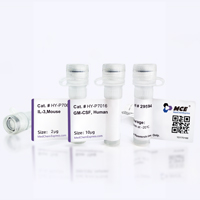
Application
in vivo eosinophil depletion


Chemical Information
-
Appearance Liquid
-
Molecular Weight 150 kDa
-
Color Colorless to light yellow
-
SMILES
[Anti-Mouse CCR3/CD193 Antibody (6S2-19-4)]
-
Formulation
Please refer to the lot-specific COA for specific buffer information.
-
Storage
Please store the product under the recommended conditions in the Certificate of Analysis.

Protocols
-
Research Protocol for Infectious Diseases
Infectious-disease experiments test how pathogens interact with host barriers, innate immune receptors, inflammatory signaling, pathogen replication, and tissue injury; pattern-recognition receptors such as TLRs, RIG-I-like receptors, NOD-like receptors, and inflammasomes detect microbial molecules and activate NF-κB, interferon, and cytokine responses. The central hypothesis is that infection severity reflects the balance between pathogen burden and host response: protective inflammation restricts pathogen growth, whereas excessive or mislocalized inflammation contributes to tissue damage and disease phenotype. Unresolved questions include which host pathways are protective versus pathogenic, why some infection models fail to translate to human disease, and which combined readouts best predict clinically relevant infection outcomes.
-
Research Protocol for Inflammation-related Diseases
The NLRP3 inflammasome is a cytosolic innate immune signaling platform that integrates priming signals and danger-signal activation to promote caspase-1 activation, maturation of IL-1β and IL-18, and gasdermin D-mediated pyroptotic cell death. The core experimental logic is to determine whether inflammatory disease phenotypes are driven by increased NLRP3 expression, ASC-containing inflammasome assembly, caspase-1 cleavage, GSDMD cleavage, and extracellular release of IL-1β/IL-18 rather than by nonspecific cell injury alone. The pathway is strongly linked to inflammation-related disease phenotypes because monosodium urate crystals activate NALP3/NLRP3 inflammasome signaling in gout-like crystal inflammation, cholesterol crystals activate NLRP3 inflammasomes in atherogenesis models, and DSS-induced intestinal inflammation has been reported to involve NLRP3 inflammasome activity. However, experimental colitis studies also show context-dependent protective effects of NLRP3 inflammasome co


Purity & Documentation
-
Data Sheet (262 KB)
-
SDS (251 KB)
- English - EN (251 KB)
- Français - FR (251 KB)
- Deutsch - DE (251 KB)
- Norwegian - NO (251 KB)
- Español - ES (251 KB)
- Swedish - SV (251 KB)
- Italian - IT (251 KB)
- Korean - KR (251 KB)
- Portuguese - PT (251 KB)
-
Inhibitory Antibodies User Guide (603 KB)
References
[1]. Galioto AM, et al. Role of eosinophils and neutrophils in innate and adaptive protective immunity to larval strongyloides stercoralis in mice. Infect Immun. 2006 Oct;74(10):5730-8. [Content Brief]
[2]. Masterson JC, et al. CCR3 Blockade Attenuates Eosinophilic Ileitis and Associated Remodeling. Am J Pathol. 2011 Nov;179(5):2302-14. [Content Brief]
[3]. Jia Q, et al. Peripheral eosinophil counts predict efficacy of anti-CD19 CAR-T cell therapy against B-lineage non-Hodgkin lymphoma. Theranostics. 2021 Mar 4;11(10):4699-4709. [Content Brief]
[4]. Yang M, et al. Eotaxin-2 and IL-5 cooperate in the lung to regulate IL-13 production and airway eosinophilia and hyperreactivity. J Allergy Clin Immunol. 2003 Nov;112(5):935-43. [Content Brief]

Calculators
Concentration (start) × Volume (start) = Concentration (final) × Volume (final)


Anti-Mouse CCR3/CD193 Antibody (6S2-19-4) Related Classifications
HY-P990296 Related Classifications
 Powered by Bioz