



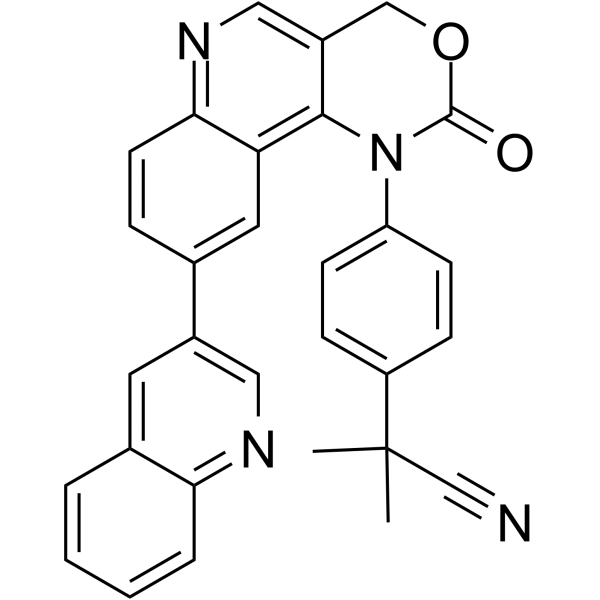
ETP-46464
Based on 3 publication(s) in Google Scholar
ETP-46464 is an effective mTOR and ATR inhibitor with IC50s of 0.6 and 14 nM, respectively.
Nur für Forschungszwecke. Wir verkaufen nicht an Patienten.
- Reinheit : 99.54%
- CAS. Nr.: 1345675-02-6
- Formel: C30H22N4O2
- Molecular Weight:470.52
-
Speicherung:Powder -20°C, 3 years , 4°C, 2 years ; In solvent -80°C, 2 years , -20°C, 1 year

To place orders, for customer services and technical support, please contact: MedChemExpress USA
Tel: 609-228-6898 E-mail: [email protected] [email protected]


-
 Biologische Aktivität
-
Chemical Information
-
Lösungsmittel & Löslichkeit
- Reinheit & Dokumentation
- Verweise
-
 Help & FAQs


-
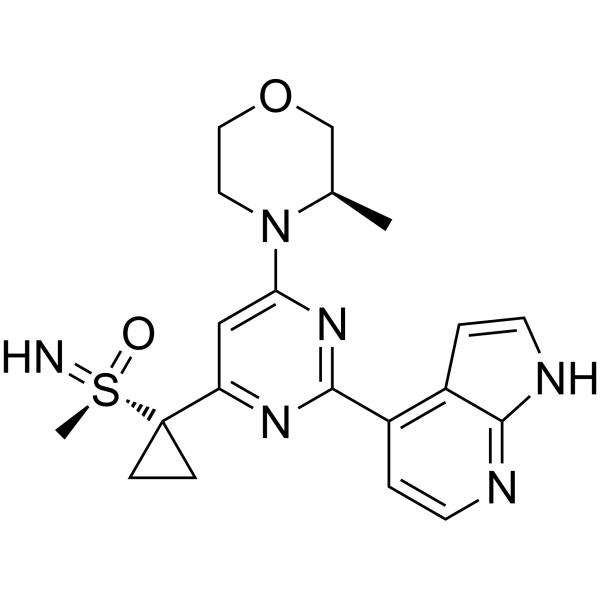
HY-19323
CeralasertibATR Inhibitor -
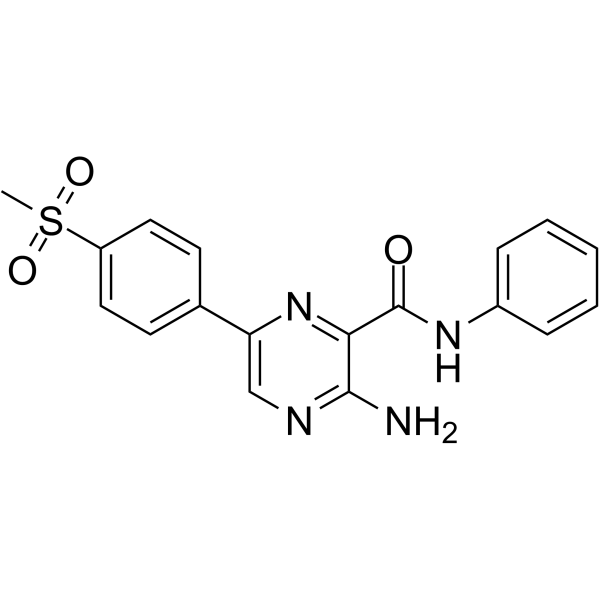
HY-14731
VE-821ATR Inhibitor -
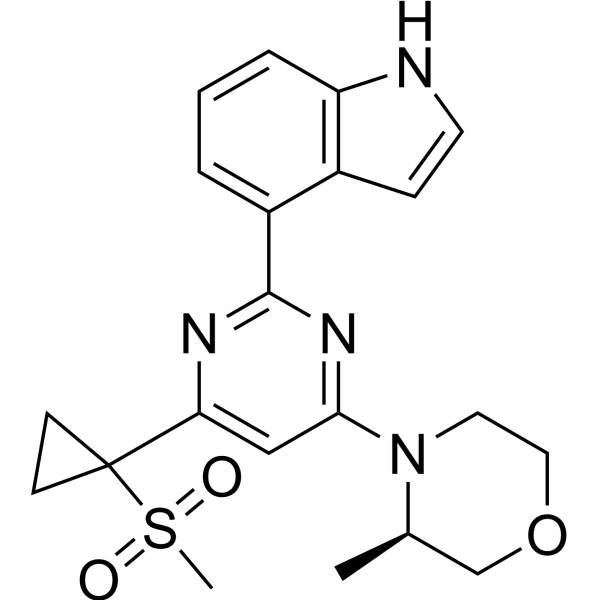
HY-15557
AZ20ATR Inhibitor -
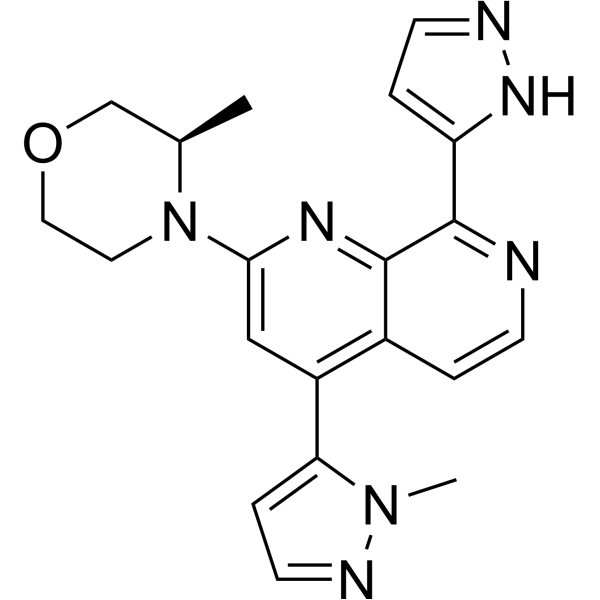
HY-101566
ElimusertibATR Inhibitor -
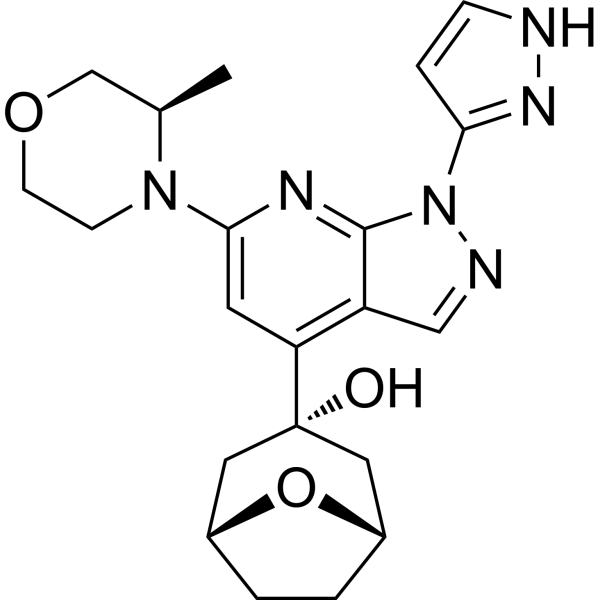
HY-139609
CamonsertibATR Inhibitor -
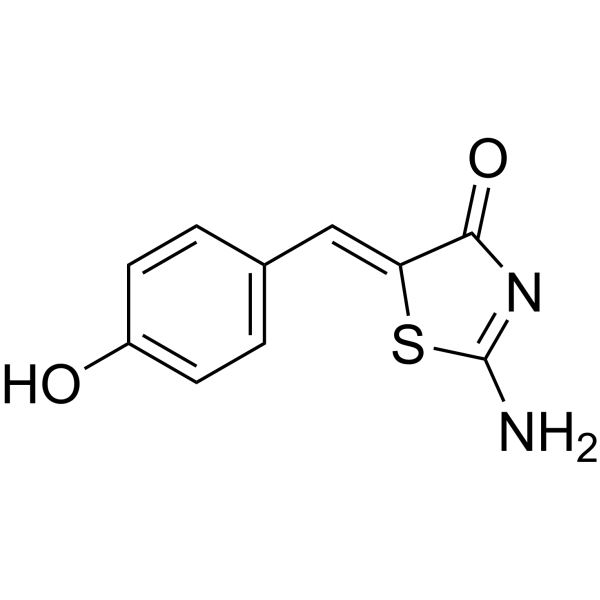
HY-19959
MirinMre11-Rad50-Nbs1 Complex Inhibitor -
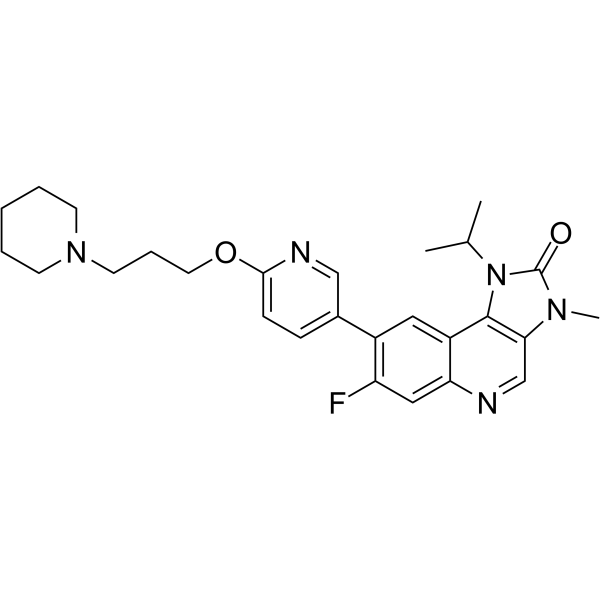
HY-109566
ElrelesertibATM Kinase Inhibitor -
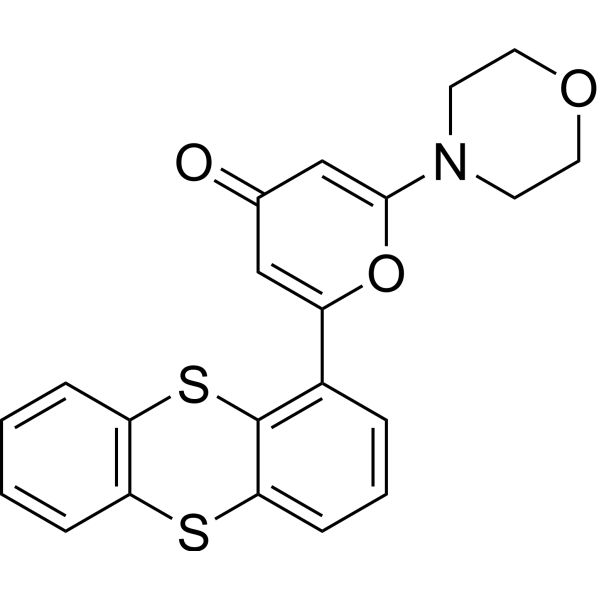
HY-12016
KU-55933ATM Inhibitor -
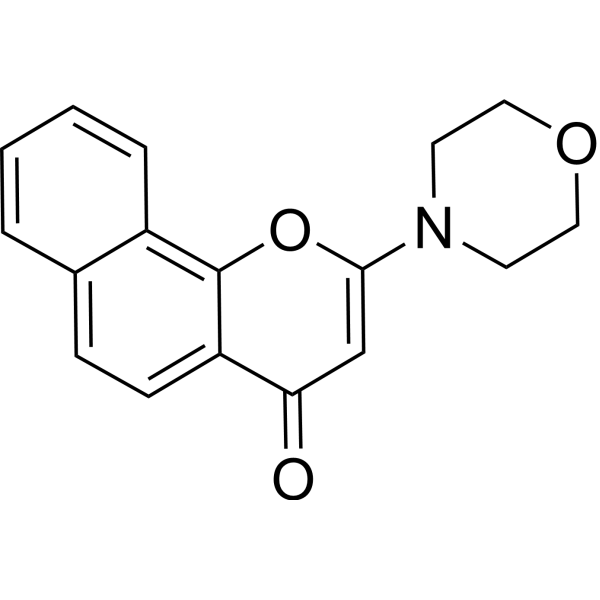
HY-15719
NU 7026DNA-PK Inhibitor -
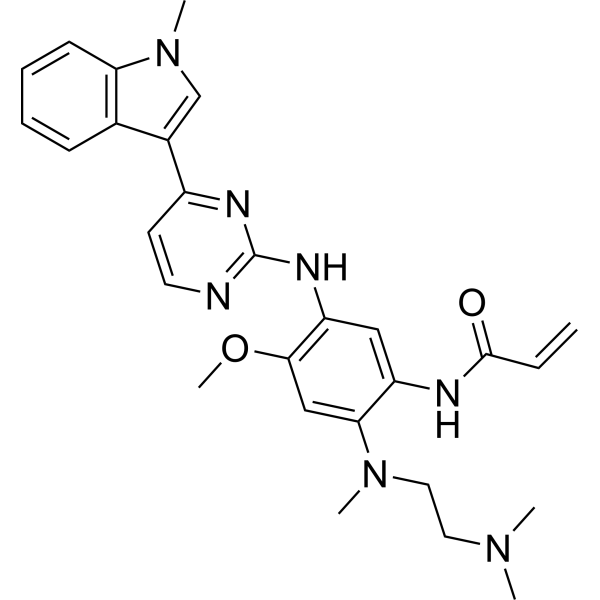
HY-15772
OsimertinibMutant-Selective EGFR Inhibitor -
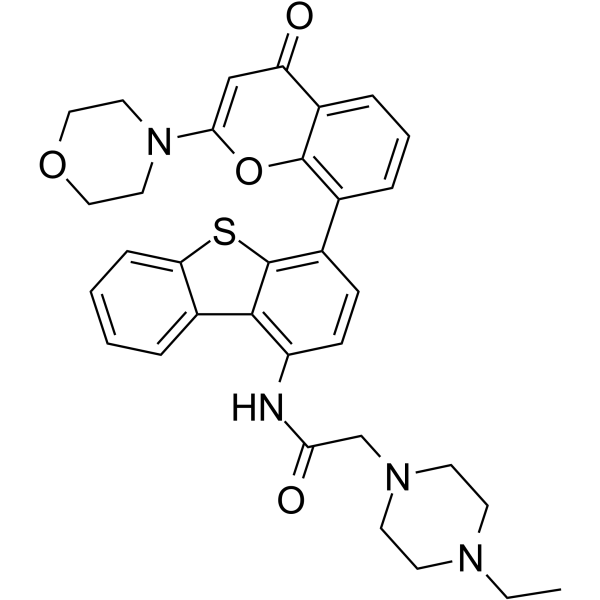
HY-13431
KU-0060648DNA-PK/PI3K Inhibitor -
HY-11006
KU-57788DNA-PK Inhibitor
Publications Citing Use of MedChemExpress (MCE) ETP-46464
More

Biologische Aktivität
Beschreibung
IC50 & Target
[1]|
mTOR 0.6 nM (IC50) |
ATR 14 nM (IC50) |
ATM 545 nM (IC50) |
DNA-PK 36 nM (IC50) |
PI3Kα 170 nM (IC50) |
In Vitro
ETP-46464 (ATRi) also inhibits DNA-PK, PI3Kα and ATM with IC50s of 36 nM, 170 nM and 545 nM, respectively[1]. Platinum-sensitive and -resistant ovarian, endometrial and cervical cancer cell lines are treated with varying levels of Cisplatin (0-50 μM) with or without the ETP-46464 (5.0 μM) and/or the KU55933 (10.0 μM) for 72 h. Single-agent dose response analyses of ETP-46464 and KU55933 in a subset of cell lines reveal a wide LD50 range of 10.0±8.7 and 38.3±7.6 μM respectively. Co-treatment doses are chosen based on these studies and previously published evidence of phospho-Chk1 (Ser345) and phospho-ATM (Ser1981) inhibition following ionizing radiation exposure and dose response treatments with ETP-46464 and KU55933. Treatment with ETP-46464 significantly increases the response of Cisplatin in all cell lines tested, resulting in 52-89% enhancement in activity and are synergistic. The combined inhibition of ATR and ATM enhances the response of Cisplatin to a level equivalent to that observed using ETP-46464 alone. These effects are independent of p53 status, and are observed in all gynecologic (GYN) cancer cells tested. Treatment with ETP-46464, but not KU55933, not only sensitizes these GYN cancer cell lines to Cisplatin, but also enhances the response of Carboplatin[2].
MedChemExpress (MCE) has not independently confirmed the accuracy of these methods. They are for reference only. .


Chemical Information
-
CAS. Nr. 1345675-02-6
-
Appearance Solid
-
Molecular Weight 470.52
-
Formel C30H22N4O2
-
Color Light yellow to yellow
-
SMILES
O=C1N(C2=CC=C(C(C)(C#N)C)C=C2)C3=C4C(C=CC(C5=CN=C(C=CC=C6)C6=C5)=C4)=NC=C3CO1
-
Versand
Room temperature in continental US; may vary elsewhere.
-
Speicherung
Powder -20°C 3 years 4°C 2 years In solvent -80°C 2 years -20°C 1 year


Publications (3)
-
Journal Impact Factor
-
Most Recent
-
Front Pharmacol
CC-223, NSC781406, and BGT226 Exerts a Cytotoxic Effect Against Pancreatic Cancer Cells via mTOR Signaling. [Abstract]2020 Nov 11:11:580407. PMID: 33343350 -
J Mol Med (Berl)
2019 Aug;97(8):1183-1193. PMID: 31201471 -
bioRxiv
Stage-Specific Regulation of DNA Damage Repair by the Circadian Regulator, CRY1, in Prostate Cancer. [Abstract]2026 May 21:2026.05.19.726303. PMID: 42239372


Lösungsmittel & Löslichkeit
In Vitro:
DMSO : 5 mg/mL (10.63 mM; Need ultrasonic; Hygroscopic DMSO has a significant impact on the solubility of product, please use newly opened DMSO)
Please refer to the solubility information to select the appropriate solvent. Once prepared, please aliquot and store the solution to prevent product inactivation from repeated freeze-thaw cycles.
Storage method and period of stock solution: -80°C, 2 years; -20°C, 1 year. When stored at -80°C, please use it within 2 years. When stored at -20°C, please use it within 1 year.
Please refer to the solubility information to select the appropriate solvent. Once prepared, please aliquot and store the solution to prevent product inactivation from repeated freeze-thaw cycles.
Storage method and period of stock solution: -80°C, 2 years; -20°C, 1 year. When stored at -80°C, please use it within 2 years. When stored at -20°C, please use it within 1 year.
Konzentration (Stammlösung) × Volumen (Stammlösung) = Konzentration (Ziellösung) × Volumen (Ziellösung)
In Vivo:
Select the appropriate dissolution method based on your experimental animal and administration route.
- For the following dissolution methods, please ensure to first prepare a clear stock solution using an In Vitro approach and then sequentially add co-solvents:
- To ensure reliable experimental results, the clarified stock solution can be appropriately stored based on storage conditions. As for the working solution for In Vivo experiments, it is recommended to prepare freshly and use it on the same day.
- The percentages shown for the solvents indicate their volumetric ratio in the final prepared solution. If precipitation or phase separation occurs during preparation, heat and/or sonication can be used to aid dissolution.
Add each solvent one by one: 10% DMSO 40% PEG300 5% Tween-80 45% Saline
Solubility: ≥ 0.5 mg/mL (1.06 mM); Clear solution
This protocol yields a clear solution of ≥ 0.5 mg/mL (saturation unknown).
Taking 1 mL working solution as an example, add 100 μL DMSO stock solution (5.0 mg/mL) to 400 μL PEG300, and mix evenly; then add 50 μL Tween-80 and mix evenly; then add 450 μL Saline to adjust the volume to 1 mL.
Preparation of Saline: Dissolve 0.9 g sodium chloride in ddH₂O and dilute to 100 mL to obtain a clear Saline solution.
In Vivo Dissolution Calculator
Please enter the basic information of animal experiments:
-
-
-
-
Recommended: Prepare an additional quantity of animals to account for potential losses during experiments.
Please enter your animal formula composition:
-
%DMSO +
Recommended: Keep the proportion of DMSO in working solution below 2% if your animal is weak.
-
%+
-
+%Tween-80 + +
-
%Saline +
The co-solvents required include: DMSO, . All of co-solvents are available by MedChemExpress (MCE). , Tween 80. All of co-solvents are available by MedChemExpress (MCE).
Working solution concentration: 0.22 mg/mL
Method for preparing stock solution: mg drug dissolved in μL DMSO. Stock solution concentration: mg/mL.
1. Take μL DMSO stock solution;
2. Add μL .
μL , mix evenly;
3. Then add μL Tween 80, mix evenly;
4. Then add μL
Please ensure that the stock solution in the first step is dissolved to a clear state, and add co-solvents in sequence. You can use ultrasonic heating (ultrasonic cleaner, recommended frequency 20-40 kHz), vortexing, etc. to assist dissolution.


Reinheit & Dokumentation
-
Data Sheet (287 KB)
-
SDS (393 KB)
- English - EN (393 KB)
- Français - FR (393 KB)
- Deutsch - DE (393 KB)
- Norwegian - NO (393 KB)
- Español - ES (393 KB)
- Swedish - SV (393 KB)
- Italian - IT (393 KB)
- Korean - KR (393 KB)
- Portuguese - PT (393 KB)
-
Handling Instructions (2659 KB)
Verweise
[1]. Toledo LI, et al. A cell-based screen identifies ATR inhibitors with synthetic lethal properties for cancer-associated mutations. Nat Struct Mol Biol. 2011 Jun;18(6):721-7. [Content Brief]
[2]. Teng PN, et al. Pharmacologic inhibition of ATR and ATM offers clinically important distinctions to enhancing platinum or radiation response in ovarian, endometrial, and cervical cancer cells. Gynecol Oncol. 2015 Mar;136(3):554-61. [Content Brief]


Complete Stock Solution Preparation Table
Please refer to the solubility information to select the appropriate solvent. Once prepared, please aliquot and store the solution to prevent product inactivation from repeated freeze-thaw cycles.
Storage method and period of stock solution: -80°C, 2 years; -20°C, 1 year. When stored at -80°C, please use it within 2 years. When stored at -20°C, please use it within 1 year.
| Optional Solvent | Concentration Solvent Mass | 1 mg | 5 mg | 10 mg | 25 mg |
|---|---|---|---|---|---|
| DMSO | 1 mM | 2.1253 mL | 10.6265 mL | 21.2531 mL | 53.1327 mL |
| 5 mM | 0.4251 mL | 2.1253 mL | 4.2506 mL | 10.6265 mL | |
| 10 mM | 0.2125 mL | 1.0627 mL | 2.1253 mL | 5.3133 mL |


ETP-46464 Related Classifications
HY-15521 Related Classifications
 Powered by Bioz