



AX-024 hydrochloride (Standard)
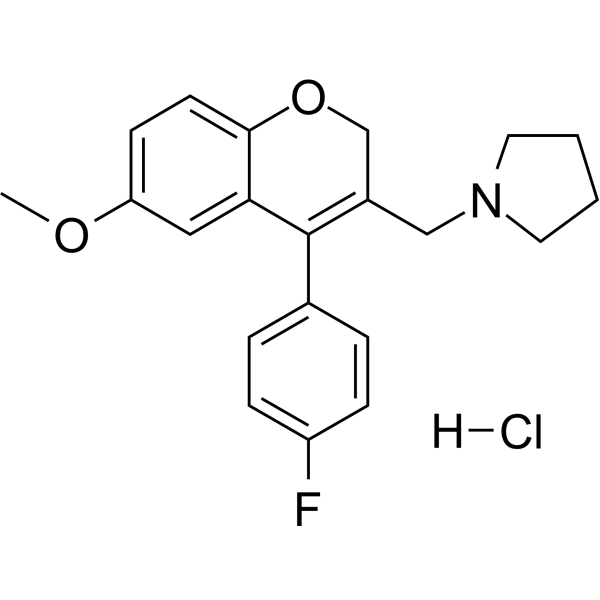
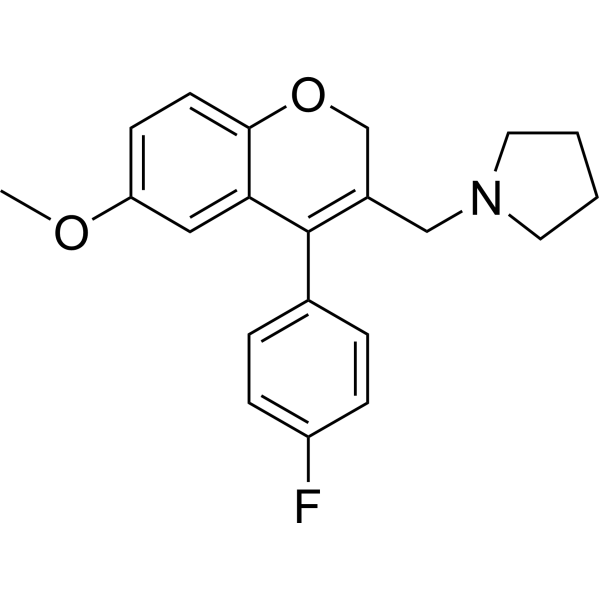
AX-024 hydrochloride (Standard) is the analytical standard of AX-024 (hydrochloride) (HY-107390A). This product is intended for research and analytical applications. AX-024 hydrochloride is an orally available, first-in-class inhibitor of the TCR-Nck interaction that selectively inhibits TCR-triggered T cell activation with an IC50 ~1 nM. AX-024 hydrochloride modulates cell signaling by targeting SH3 domains. AX-024 hydrochloride has low-acute toxicity and high potency and selectivity, and strongly inhibit the production of IL-6, TNF-α, IFN-γ, IL-10 and IL-17A.
For research use only. We do not sell to patients.
- CAS No.: 1704801-24-0
- Formula: C21H23ClFNO2
- Molecular Weight:375.86
-
Storage:
Please store the product under the recommended conditions in the Certificate of Analysis.


To place orders, for customer services and technical support, please contact: MedChemExpress USA
Tel: 609-228-6898 E-mail: [email protected] [email protected]


-
 Biological Activity
-
Chemical Information
- Protocols
- Purity & Documentation
- References
-
 Help & FAQs


-
HY-107390A
AX-024 hydrochlorideTCR-Nck Interaction Inhibitor -
HY-A0003
LenalidomideImmunomodulator -
HY-14658
ThalidomideCereblon Inhibitor -
HY-107390
AX-024TCR Inhibitor -
HY-15760
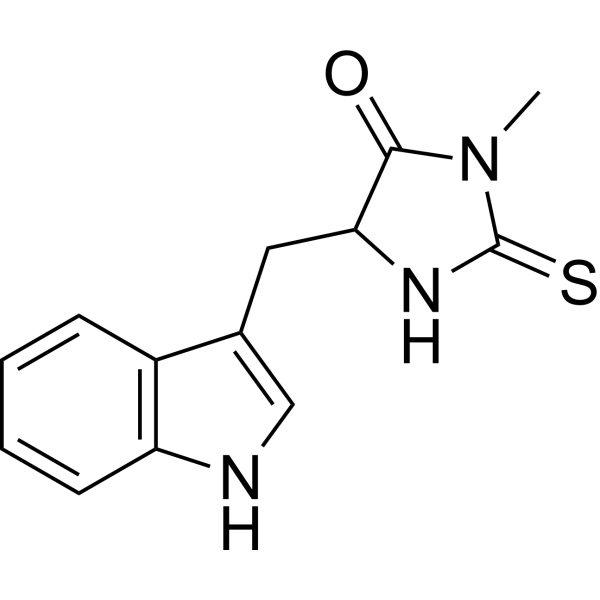
Necrostatin-1RIPK1 Inhibitor -
HY-10984
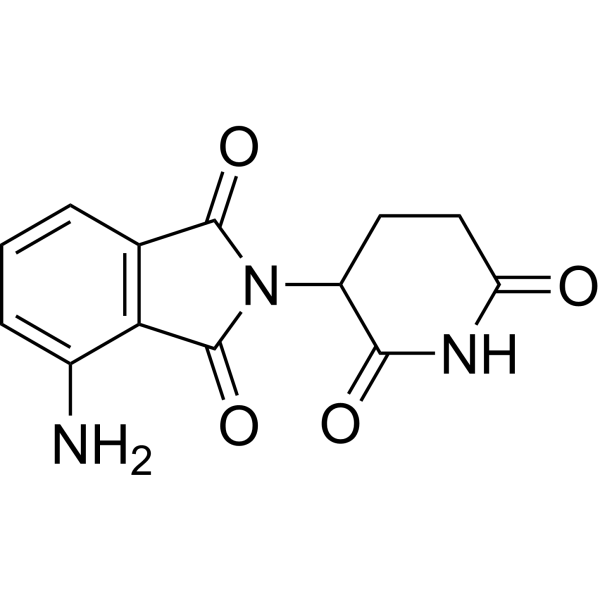
PomalidomideImmunomodulatory Agent -

HY-14658R
Thalidomide (Standard)Cereblon Inhibitor -
HY-15509A
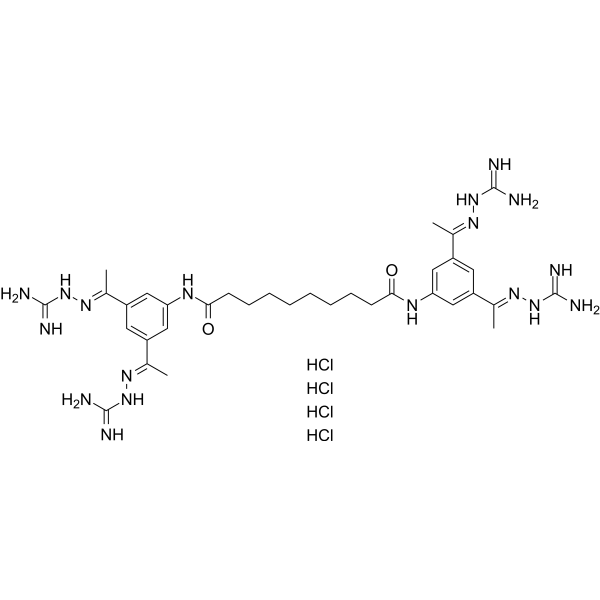
Semapimod tetrahydrochlorideProinflammatory Cytokine Inhibitor -

HY-A0003R
Lenalidomide (Standard)Reference Standard -

HY-P99219
SifalimumabAnti-IFNα mAb -
HY-N4285
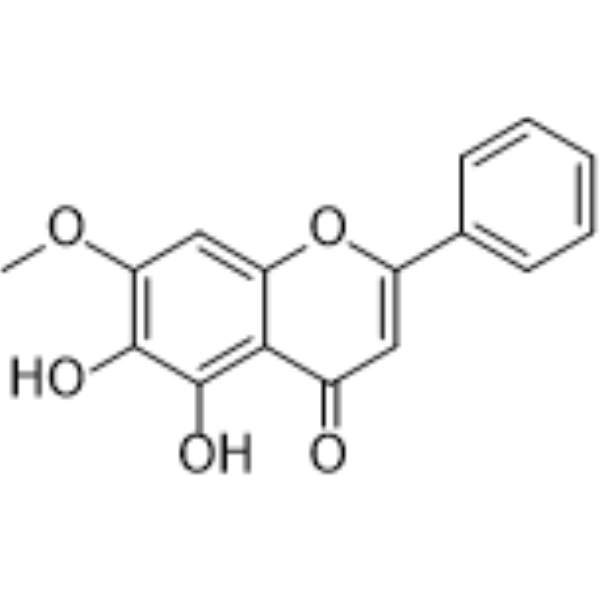
NegleteinFlavone -
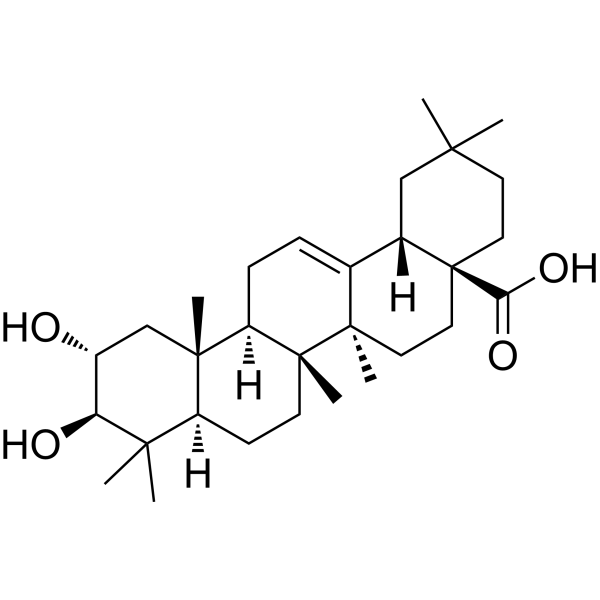
HY-N0629
Maslinic acidBacterial Inhibitor


Biological Activity
Description
IC50 & Target
IL-6, TNFα, IFN-γ, IL-10 and IL-17A[1]


Chemical Information
-
CAS No. 1704801-24-0
-
Molecular Weight 375.86
-
Formula C21H23ClFNO2
-
SMILES
COC1=CC=C(OC2)C(C(C3=CC=C(F)C=C3)=C2CN4CCCC4)=C1.[H]Cl
-
Shipping
Room temperature in continental US; may vary elsewhere.
-
Storage
Please store the product under the recommended conditions in the Certificate of Analysis.

Protocols
-
Cell Cytotoxicity Assay
Cytotoxicity assays are usually based on the assessment of cell membrane damage, which can also be indirectly detected by measuring cell viability. Detection methods include MTT assay, CKK-8 assay, LDH assay and ATP assay, etc.
-
Research Protocol for Cancer Immunology
Cancer immunology studies how the immune system recognizes, suppresses, edits, or fails to eliminate malignant cells through tumor antigen release, antigen presentation, T-cell priming, immune trafficking, tumor-cell killing, and feedback inhibition in the tumor microenvironment. The cancer-immunity cycle links tumor antigenicity, dendritic-cell priming, CD8+ T-cell infiltration, cytotoxic function, and immune-checkpoint regulation to tumor rejection or immune escape. Immune-checkpoint pathways such as PD-1/PD-L1 and CTLA-4 suppress antitumor T-cell activity and can be therapeutically blocked, but many tumors remain resistant because of poor antigen presentation, weak T-cell infiltration, suppressive myeloid cells, regulatory T cells, and tumor-intrinsic immune-exclusion programs. Unresolved questions include which immune-cell states predict response, how tumor-intrinsic pathways exclude immune cells, how myeloid suppression limits checkpoint blockade, and which combination strategies
-
Acute Systemic Toxicity Study
Acute systemic toxicity studies evaluate adverse effects occurring after a single exposure, or repeated exposure within a short acute window, and the main in vivo readouts are mortality, moribund condition, clinical signs, body-weight change, and gross pathological findings; acute oral toxicity methods were developed to replace classical LD50 testing with reduced-animal designs such as fixed-dose procedure, acute toxic class method, and up-and-down procedure. The fixed-dose procedure classifies acute toxicity by administering predefined dose levels and observing evident toxicity rather than using death as the primary endpoint, whereas the acute toxic class method uses sequential groups of three animals per step and the up-and-down procedure doses animals sequentially to estimate an LD50 with fewer animals than conventional LD50 testing.


Purity & Documentation
References

Calculators
Concentration (start) × Volume (start) = Concentration (final) × Volume (final)


AX-024 hydrochloride (Standard) Related Classifications
HY-107390AR Related Classifications
 Powered by Bioz