



Buffer Reagents
Buffer solutions are generally composed of mixtures of weak acids or weak bases and their corresponding salts,commonly used to maintain the stability of the pH value of the reaction system and ensure the integrity of biomolecules and reactions.
MCE provides a range of high-purity grade raw materials that can be used to prepare various buffer solutions such as inorganic salt buffers, zwitterionic buffers and PCR buffers.

1.5M Tris-HCl Buffer, pH 8.8 is a plant protein extraction buffer. 1.5M Tris-HCl Buffer, pH 8.8 can isolate cytoplasmic proteins from Marchantia, but the protein yield is low and the SDS-PAGE band profile is poor. 1.5M Tris-HCl Buffer, pH 8.8 can be used for proteomic studies on the liverwort Dumortiera hirsuta.


- Formula: KCl
- Molecular Weight: 74.55
Potassium chloride, ≥99.99% trace metals basis (Potassium chloride, suitable for the extraction and solubilization of proteins), is an inorganic salt used in the preparation of phosphate buffers. With very low metal impurity content, it is suitable for protein extraction and dissolution.
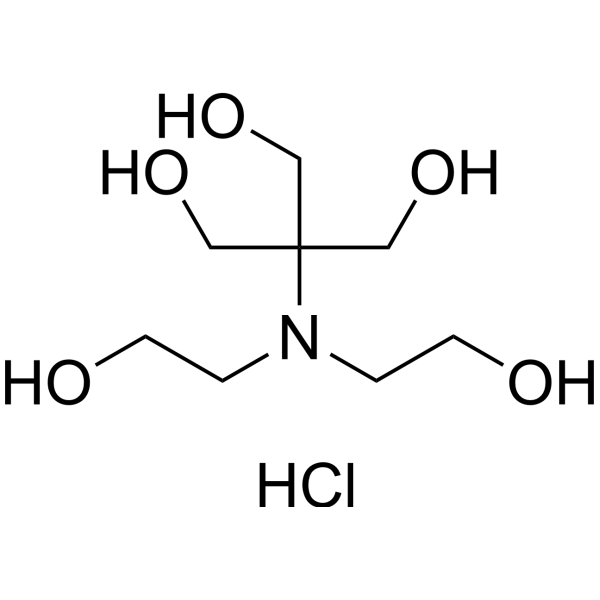
- Formula: C8H20ClNO5
- Molecular Weight: 245.70
Bis-Tris hydrochloride is an amine buffer suitable for protein and nucleic acid systems with a pH buffer range of 5.8-7.2. Bis-Tris hydrochloride can also be mixed with HEPES and cacodylic acid buffer to create a pH 8 environment and monitor fluorescence emission intensity at 305 nm. Gels formulated with Bis-Tris also avoid protein degradation in samples prepared at higher pH (pH 8.5).
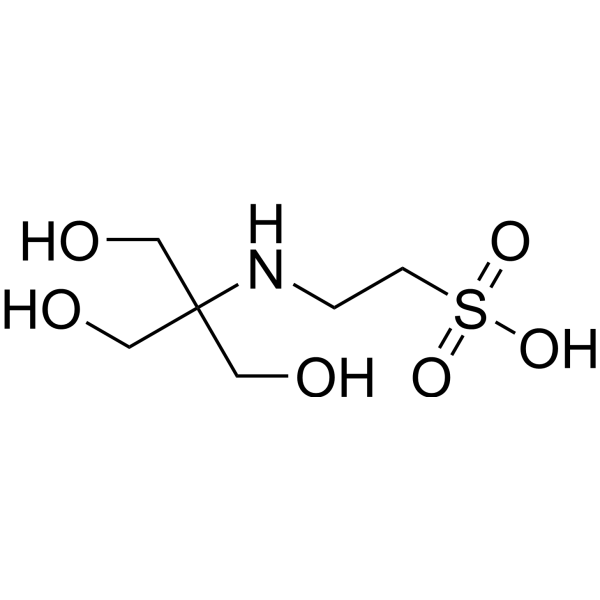
- Formula: C6H15NO6S
- Molecular Weight: 229.25
TES is an excellent hydrogen ion buffer. TES has characteristics such as an appropriate dissociation constant, a low metal-binding constant, and high water solubility. TES can be used in the research of mammalian cell culture, viruses, and so on.
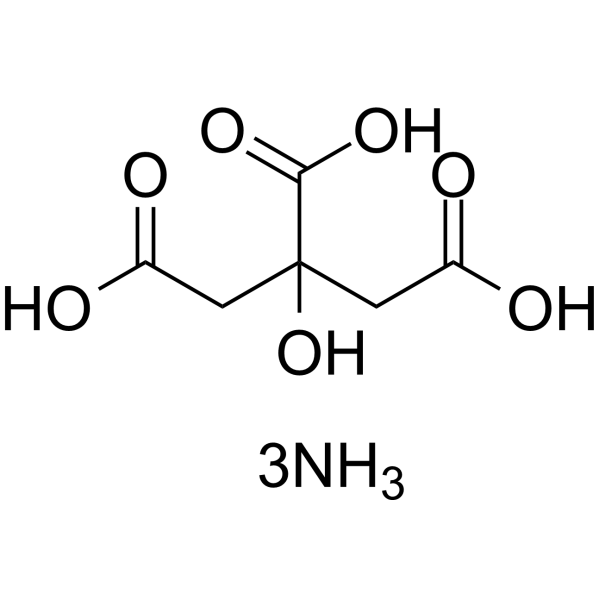
- Formula: C6H17N3O7
- Molecular Weight: 243.22
Citric acid triammonium (Triammonium citrate) is a natural preservative and food tartness enhancer. Citric acid triammonium induces apoptosis and cell cycle arrest at G2/M phase and S phase in HaCaT cells. Citric acid triammonium cause oxidative damage of the liver by means of the decrease of antioxidative enzyme activities. Citric acid triammonium is also an acidulant, emulsifier, sequestrant and buffering agent widely used across many industries.

- Formula: C6H14N2O7
- Molecular Weight: 226.18
Ammonium citrate dibasic, 99% (Ammonium hydrogencitrate, 99%; Diammonium hydrogen citrate, 99%) is a natural preservative and food tartness enhancer. Ammonium citrate dibasic, 99% induces apoptosis and cell cycle arrest at G2/M phase and S phase in HaCaT cells. Ammonium citrate dibasic, 99% cause oxidative damage of the liver by means of the decrease of antioxidative enzyme activities. Ammonium citrate dibasic, 99% is also an acidulant, emulsifier, sequestrant and buffering agent widely used across many industries.

- Formula: [(NH4)3PO4]n
Ammonium polyphosphate, n<20, water solubility>90 g/100 mL is a class of inorganic polyphosphate polymers that chelate metal ions. Ammonium polyphosphate, n<20, water solubility>90 g/100 mL is used as a raw material for agricultural chelated slow-release phosphorus fertilizers, and also serves as a reactive crosslinking component and flame retardant component in bio-based wood bio-adhesives. Ammonium polyphosphate, n<20, water solubility>90 g/100 mL is also used in research related to pH buffer reagents.
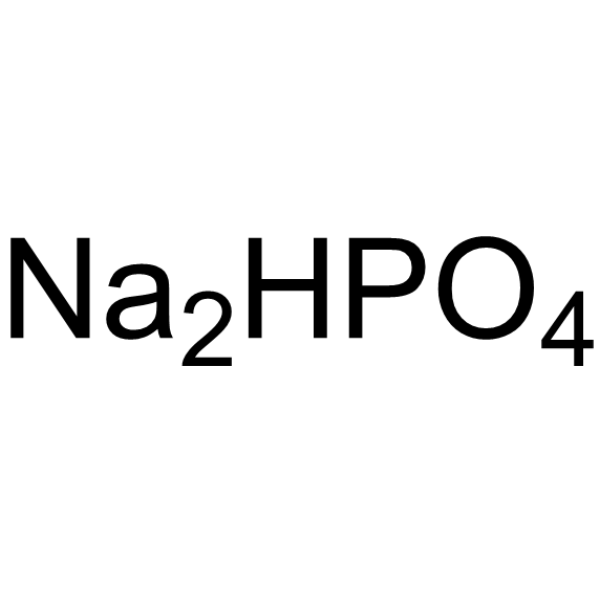
- Formula: HNa2O4P
- Molecular Weight: 141.96
Sodium phosphate dibasic (Disodium hydrogen phosphate), for molecular biology, is a type of phosphate salt that can be used in molecular biology research to prepare stable buffers free of RNase/DNase/protease.
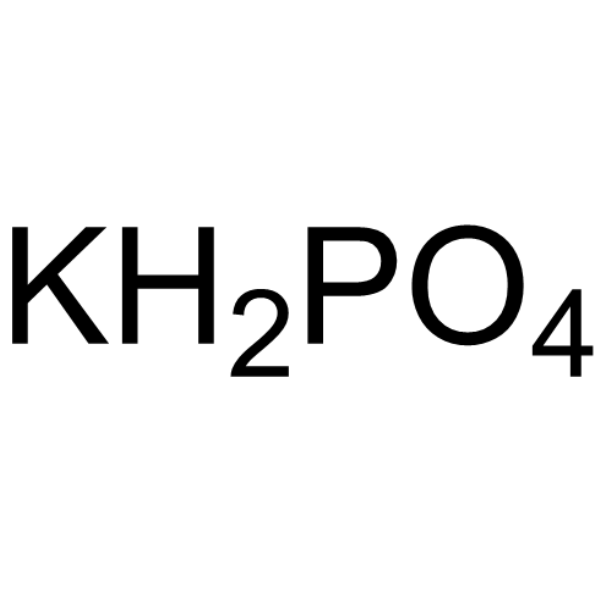
- Formula: H2KO4P
- Molecular Weight: 136.09
Potassium dihydrogen phosphate, for cell culture (Potassium phosphate monobasic, for cell culture) is a cell culture reagent. Potassium dihydrogen phosphate, for cell culture activates NF-κB. Potassium dihydrogen phosphate, for cell culture upregulates the expression of dental/osteogenic markers (OCN, DSP/DSPP, OSX, RUNX2, ALP) and enhances the mineralization capacity of human periodontal ligament stem cells. Potassium dihydrogen phosphate, for cell culture promotes the proliferation of human periodontal ligament stem cells in logarithmic growth phase. Potassium dihydrogen phosphate, for cell culture promotes the growth of somatic embryos of Dendrobium Sonia, increases leaf number, leaf length and fresh weight of tissue-cultured seedlings. Potassium dihydrogen phosphate, for cell culture is applicable to periodontal disease-related research.

- Formula: ClNa
- Molecular Weight: 58.44
Sodium chloride is an orally active salt. Sodium chloride induces the expression of ATP1A1. Sodium chloride induces the pro-inflammatory cytokines IL-2, TNFα, IL-9 and several chemokines. Sodium chloride enhances the anti-tumor activities of Digoxin (HY-B1049) against small cell lung cancer. Sodium chloride drives autoimmune disease by the induction of pathogenic Th17 cells.
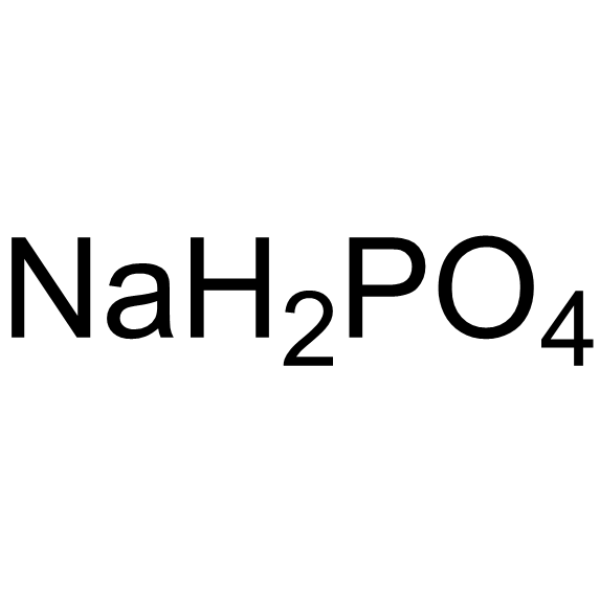
- Formula: NaH2PO4
- Molecular Weight: 119.98
Anhydrous sodium dihydrogen phosphate, for HPLC is widely used in molecular biology, biochemistry and chromatography.
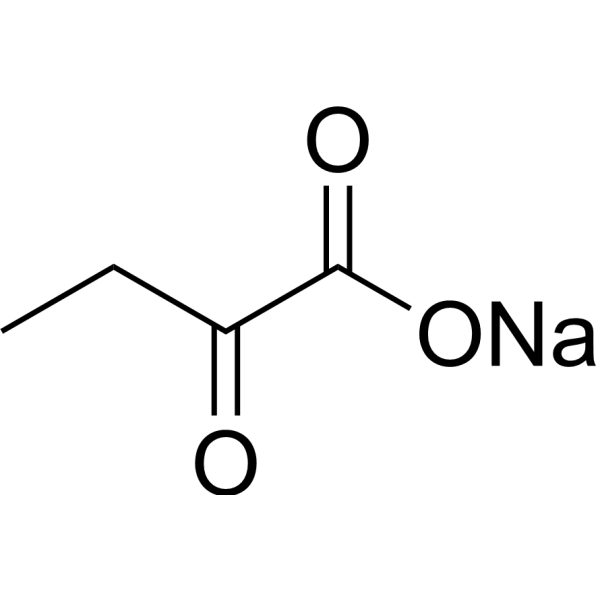
- Formula: C4H5NaO3
- Molecular Weight: 124.07
Sodium 2-oxobutanoate is an organic compound commonly used as a food additive and industrial raw material. It can be used as an acidity regulator, leavening agent and preservative, and is often used in the fields of bread, baked goods and canning. In addition, the compound is used in the production of certain industrial products, such as in plastics, textiles and dyes.

- Formula: K2CO3
- Molecular Weight: 138.21
Potassium carbonate, with a purity of 99%, is an inorganic compound. At low concentrations, potassium carbonate can be used as an alkaline treatment agent and feed buffer in pork processing, as well as to inhibit the synthesis of milk fat in dairy cows.

- Formula: C6H8O7.3/2Ca.2H2O
- Molecular Weight: 288.30
Calcium citrate tetrahydrate, 99% exhibits the ability to release more calcium ions in a short time therefore allowing a high activity, and a high concentration of calcium ions that can stimulate bone formation.


- Formula: C2H3KO2
- Molecular Weight: 98.14
Potassium acetate, for molecular biology is an acetate salt commonly used as a deicing agent, food preservative and potassium source. Potassium acetate, for molecular biology can serve as an activator for preparing waste tea-based activated carbon, and is applied to the adsorption of Acid Blue 25 dye.

- Formula: (NH4N)2CO3
- Molecular Weight: 96.09
Ammonium carbonate (Ammonium carbonate), 99% is a solid amino compound that functions as a buffer, pH regulator, pore-forming agent, and electrocatalytic oxidation substrate. Ammonium carbonate, 99% is a GRAS-grade direct food additive with no restricted daily intake specified by FAO/WHO, and it shows no acute skin toxicity, clinical signs of toxicity, or effects on body weight in rats. Ammonium carbonate, 99% undergoes electrocatalytic oxidation in alkaline solutions with a Pt/C catalyst (carbonate adsorption interferes with activity). Ammonium carbonate, 99% can serve as a fuel for low-temperature polymer fuel cells and anion exchange membrane fuel cells (with performance superior to pure ammonia), and can also form pores in the carrier-free Pt cathode catalyst layer after low-temperature decomposition, thereby enhancing catalyst activity under low-humidity conditions and the performance of proton exchange membrane fuel cells.
Sodium phosphate buffer 0.02 M, pH 6.9 is a commonly used aqueous biological buffer that maintains a stable pH value. Sodium phosphate buffer 0.02 M, pH 6.9 is often used in enzyme activity assays, such as α-amylase assays. Sodium phosphate buffer 0.02 M, pH 6.9 is prepared by mixing disodium hydrogen phosphate (Na2HPO4) (HY-B2243) and sodium dihydrogen phosphate (NaH2PO4) (HY-Y0308) to a total concentration of 0.02 M.
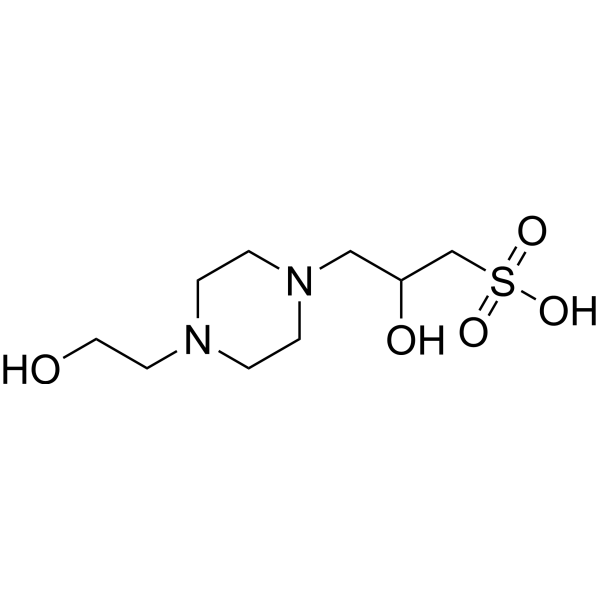
- Formula: C9H20N2O5S
- Molecular Weight: 268.33
HEPPSO is a zwitterionic Good's buffer suitable for physiological pH conditions. HEPPSO forms high-order oligomers in aqueous solutions and can form a 1:1 complex with Cu2+ via its hydroxyalkyl and tertiary amine groups. However, HEPPSO contains a structurally similar trace impurity lacking an alkanesulfonic acid side chain. The complex formed by this impurity and Cu2+ has a very low Ka; therefore, HEPPSO may interfere with studies on copper speciation analysis in natural water bodies.



