



Etretinate
Based on 1 publication(s) in Google Scholar
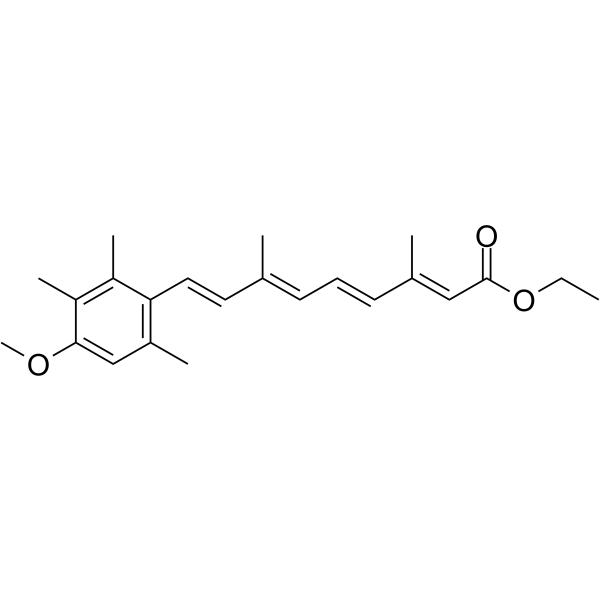
Etretinate (Ro 10-9359) is an orally effective regulator of epidermal differentiation. Etretinate reduces procollagen mRNA expression and induces apoptosis of dermal infiltrating cells. Etretinate inhibits keratinization, normalizes epidermal cell renewal, increases stratum corneum hydration and transepidermal water loss, and exerts a mild keratolytic effect. Etretinate can be used in research on scleroderma, ichthyosis, and psoriasis.
Nos produits utilisent uniquement pour la recherche. Nous ne vendons pas aux patients.
- Pureté : 99.78%
- CAS No.: 54350-48-0
- Formule: C23H30O3
- Masse moléculaire:354.48
-
Stockage:Powder -20°C, 3 years , 4°C, 2 years ; In solvent -80°C, 2 years , -20°C, 1 year

To place orders, for customer services and technical support, please contact: MedChemExpress USA
Tel: 609-228-6898 E-mail: [email protected] [email protected]


-
 Activité biologique
-
Chemical Information
-
Solvant et solubilité
- Protocole
- Pureté et documentation
- Références
-
 Help & FAQs


-
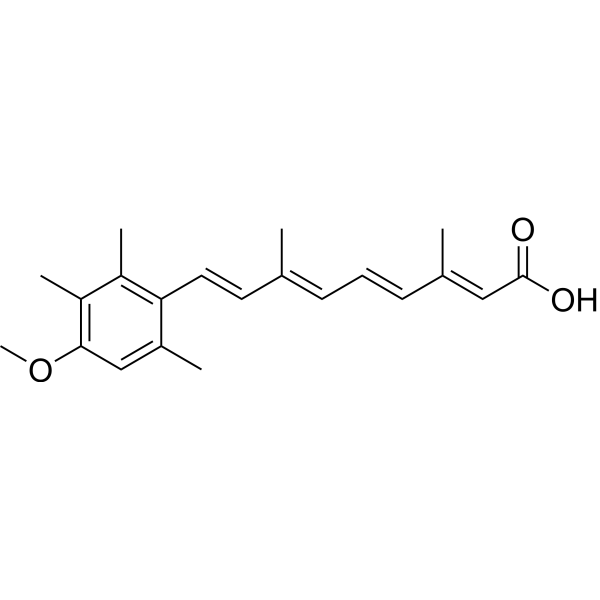
HY-B0107
AcitretinAutophagy Inducer -
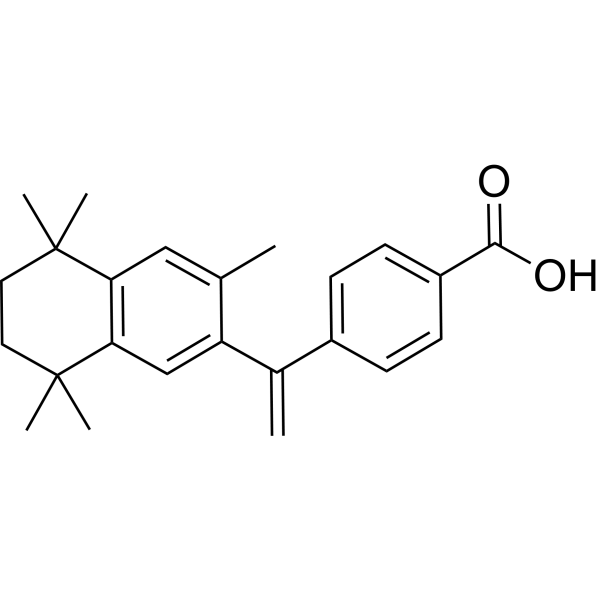
HY-14171
BexaroteneRXR Agonist -
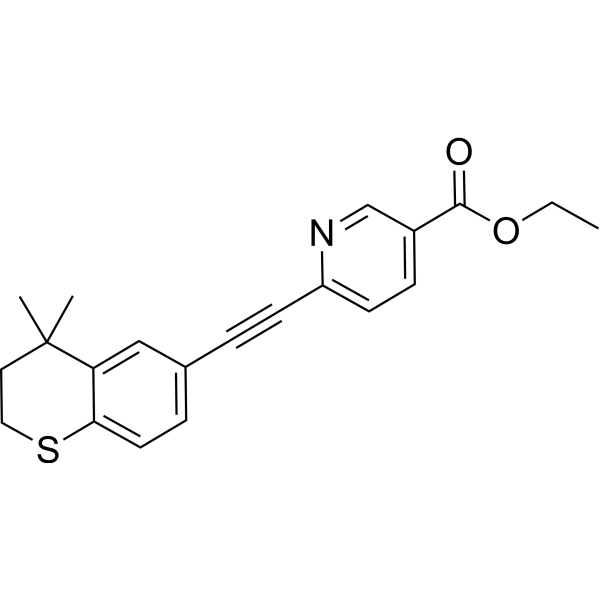
HY-15388
TazaroteneRAR Agonist -
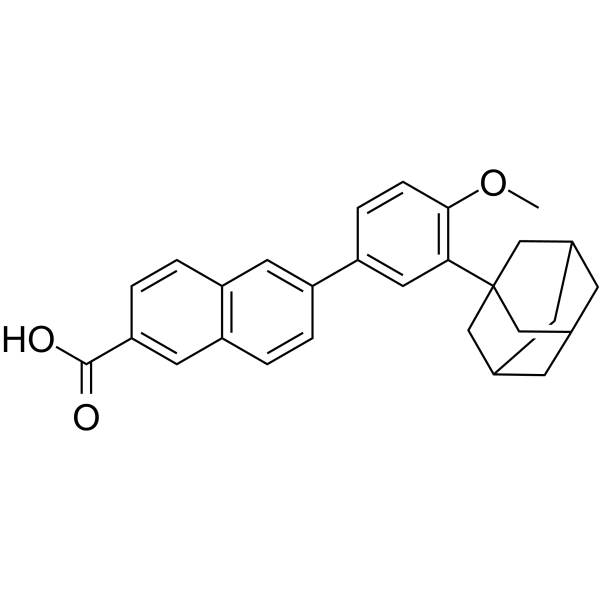
HY-B0091
AdapaleneRAR Agonist -
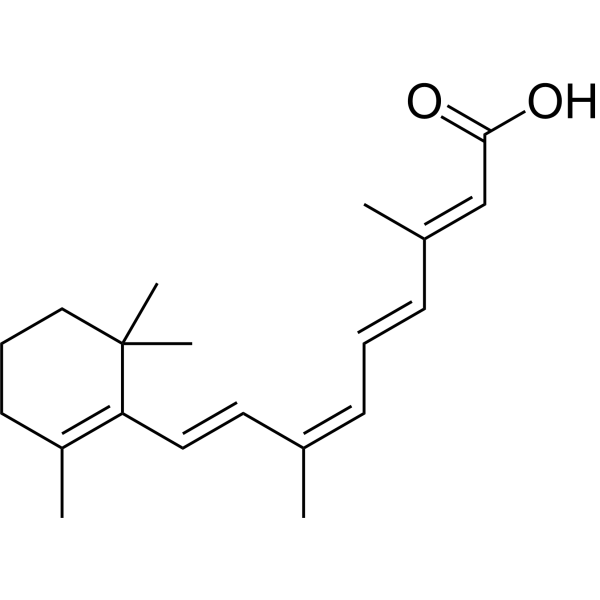
HY-15128
9-cis-Retinoic acidRAR/RXR Agonist -
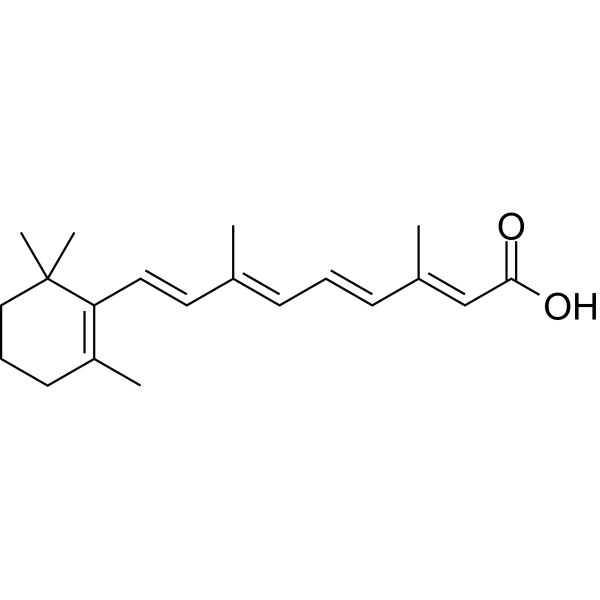
HY-14649
Retinoic acidRAR Agonist -
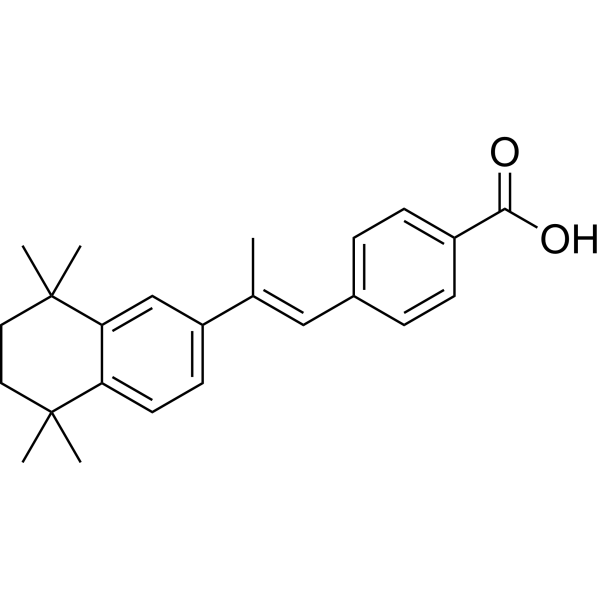
HY-15682
TTNPBApoptosis Inducer -

HY-B0797R
Etretinate (Standard)Reference Standard -
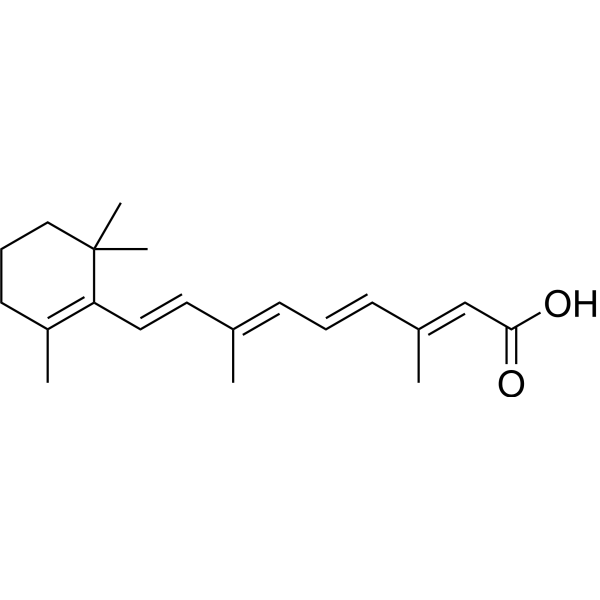
HY-14649R
Retinoic acid (Standard) -
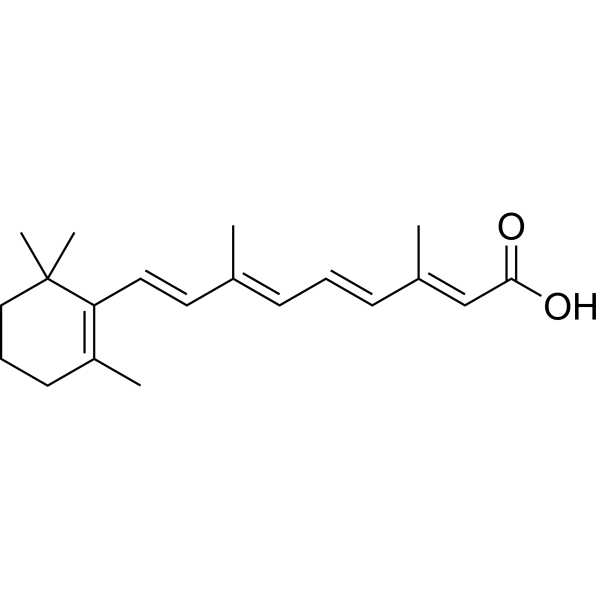
HY-14649G
Retinoic acid (GMP)RAR Agonist -
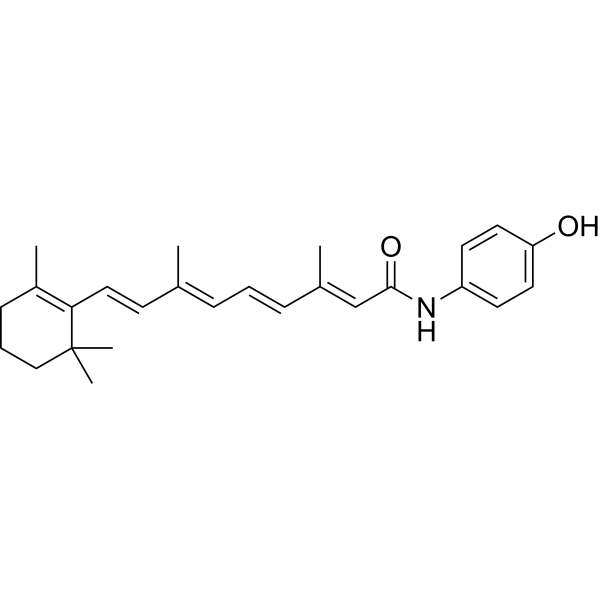
HY-15373
FenretinideAutophagy Inducer -
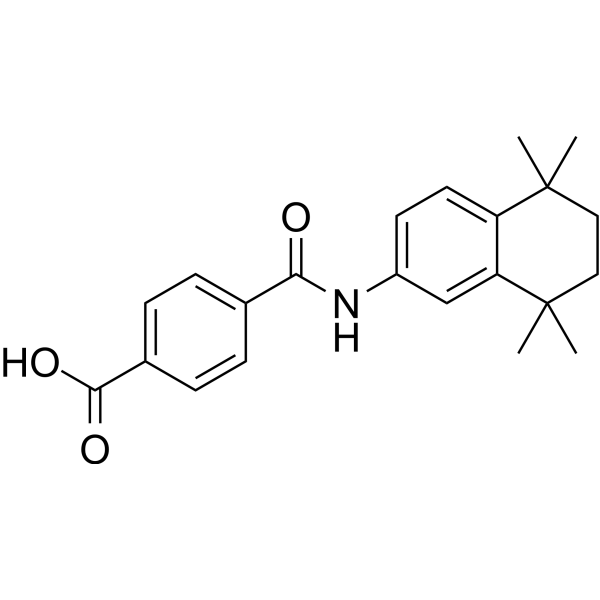
HY-14652
TamibaroteneApoptosis Inducer


Activité biologique
Description
In Vivo
MedChemExpress (MCE) has not independently confirmed the accuracy of these methods. They are for reference only.
-
Animal Model:BALB/c (female, 6 weeks old, approximately 20 g)[1]
-
Dosage:10 mg/kg
-
Administration:p.o.; daily; 1-28 days
-
Result:Mean dermal thickness in Bleomycin mice was 352.657 μm on Day 14 and 305.555 μm on Day 28.
Day 28 thickness was lower than Day 14 and lower than vehicle/no-agent controls.
On Day 28, collagen bundle amount was similar to Day 0, with minimal increase in collagen bundle thickness.
Collagen bundle fragmentation was prominent, especially on Day 28.
Dermal TUNEL-positive cell density was higher on Day 14 than in control groups.
Procollagen α1(I)/β-actin mRNA ratio decreased on Day 1 and increased on Day 14 relative to negative controls.
No difference was noted on Day 6.
Subcutaneous tissue thickness increased on Day 28.
-
Animal Model:Wistar (male, 190-220 g at study start)[4]
-
Dosage:2 mg/kg body weight/day; 5 mg/kg body weight/day; 20 mg/kg body weight/day
-
Administration:i.g.; once daily; 15 days
-
Result:No abnormal changes in serum retinol or thyroid hormone levels were observed at a dosage of 2 mg/kg.
At a dosage of 5 mg/kg/day, only a slight decrease in serum triiodothyronine was detected.
Administration at 20 mg/kg/day for 15 days resulted in more severe effects: compared to the control group, rats experienced a 23% reduction in body weight and a 62% decrease in serum retinol (while hepatic vitamin A stores remained unaffected), with serum thyroxine and triiodothyronine levels 24% and 29% lower, respectively, than those of the control group.


Chemical Information
-
CAS No. 54350-48-0
-
Appearance Solid
-
Masse moléculaire 354.48
-
Formule C23H30O3
-
Color Light yellow to yellow
-
SMILES
O=C(OCC)/C=C(C)/C=C/C=C(C)/C=C/C1=C(C)C=C(OC)C(C)=C1C
-
Synonyms
Ro 10-9359
-
Livraison
Room temperature in continental US; may vary elsewhere.
-
Stockage
Powder -20°C 3 years 4°C 2 years In solvent -80°C 2 years -20°C 1 year


Publications (1)
-
Journal Impact Factor
-
Most Recent
-
Nat Commun
Bone morphogenetic protein (BMP) signaling determines neuroblastoma cell fate and sensitivity to retinoic acid. [Abstract]2025 Feb 28;16(1):2036. PMID: 40021625


Solvant et solubilité
In Vitro:
DMSO : 25 mg/mL (70.53 mM; Need ultrasonic; Hygroscopic DMSO has a significant impact on the solubility of product, please use newly opened DMSO)
Please refer to the solubility information to select the appropriate solvent. Once prepared, please aliquot and store the solution to prevent product inactivation from repeated freeze-thaw cycles.
Storage method and period of stock solution: -80°C, 2 years; -20°C, 1 year. When stored at -80°C, please use it within 2 years. When stored at -20°C, please use it within 1 year.
Concentration (start) × Volume (start) = Concentration (final) × Volume (final)
In Vivo:
Select the appropriate dissolution method based on your experimental animal and administration route.
- For the following dissolution methods, please ensure to first prepare a clear stock solution using an In Vitro approach and then sequentially add co-solvents:
- To ensure reliable experimental results, the clarified stock solution can be appropriately stored based on storage conditions. As for the working solution for In Vivo experiments, it is recommended to prepare freshly and use it on the same day.
- The percentages shown for the solvents indicate their volumetric ratio in the final prepared solution. If precipitation or phase separation occurs during preparation, heat and/or sonication can be used to aid dissolution.
In Vivo Dissolution Calculator
Please enter the basic information of animal experiments:
-
-
-
-
Recommended: Prepare an additional quantity of animals to account for potential losses during experiments.
Please enter your animal formula composition:
-
%DMSO +
Recommended: Keep the proportion of DMSO in working solution below 2% if your animal is weak.
-
%+
-
+%Tween-80 + +
-
%Saline +
The co-solvents required include: DMSO, . All of co-solvents are available by MedChemExpress (MCE). , Tween 80. All of co-solvents are available by MedChemExpress (MCE).
Working solution concentration: 0.22 mg/mL
Method for preparing stock solution: mg drug dissolved in μL DMSO. Stock solution concentration: mg/mL.
1. Take μL DMSO stock solution;
2. Add μL .
μL , mix evenly;
3. Then add μL Tween 80, mix evenly;
4. Then add μL
Please ensure that the stock solution in the first step is dissolved to a clear state, and add co-solvents in sequence. You can use ultrasonic heating (ultrasonic cleaner, recommended frequency 20-40 kHz), vortexing, etc. to assist dissolution.


Pureté et documentation


Références

Complete Stock Solution Preparation Table
Please refer to the solubility information to select the appropriate solvent. Once prepared, please aliquot and store the solution to prevent product inactivation from repeated freeze-thaw cycles.
Storage method and period of stock solution: -80°C, 2 years; -20°C, 1 year. When stored at -80°C, please use it within 2 years. When stored at -20°C, please use it within 1 year.
| Optional Solvent | Concentration Solvent Mass | 1 mg | 5 mg | 10 mg | 25 mg |
|---|---|---|---|---|---|
| DMSO | 1 mM | 2.8210 mL | 14.1052 mL | 28.2103 mL | 70.5258 mL |
| 5 mM | 0.5642 mL | 2.8210 mL | 5.6421 mL | 14.1052 mL | |
| 10 mM | 0.2821 mL | 1.4105 mL | 2.8210 mL | 7.0526 mL | |
| 15 mM | 0.1881 mL | 0.9403 mL | 1.8807 mL | 4.7017 mL | |
| 20 mM | 0.1411 mL | 0.7053 mL | 1.4105 mL | 3.5263 mL | |
| 25 mM | 0.1128 mL | 0.5642 mL | 1.1284 mL | 2.8210 mL | |
| 30 mM | 0.0940 mL | 0.4702 mL | 0.9403 mL | 2.3509 mL | |
| 40 mM | 0.0705 mL | 0.3526 mL | 0.7053 mL | 1.7631 mL | |
| 50 mM | 0.0564 mL | 0.2821 mL | 0.5642 mL | 1.4105 mL | |
| 60 mM | 0.0470 mL | 0.2351 mL | 0.4702 mL | 1.1754 mL |


Etretinate Related Classifications
HY-B0797 Related Classifications
 Powered by Bioz
Keywords
- Etretinate
- 54350-48-0
- Ro 10-9359
- Biochemical Assay Reagents
- Apoptosis
- UDP-glucuronyltransferase activity
- apoptosis
- collagen deposition
- epidermal cell turnover
- epidermal differentiation
- keratinization
- procollagen mRNA expression
- sebaceous gland growth
- stratum corneum hydration
- transepidermal water loss
- Inhibitor
- inhibitor
- inhibit