



Seletalisib
Based on 2 publication(s) in Google Scholar
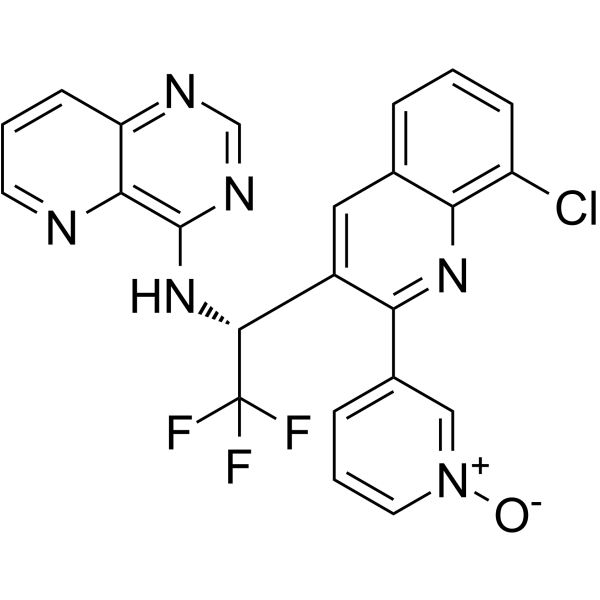
Seletalisib (UCB5857) is potent and selective PI3Kδ inhibitor with an IC50 of 12 nM.
Nos produits utilisent uniquement pour la recherche. Nous ne vendons pas aux patients.
- Pureté : 99.79%
- CAS No.: 1362850-20-1
- Formule: C23H14ClF3N6O
- Masse moléculaire:482.85
-
Stockage:Powder -20°C, 3 years , 4°C, 2 years ; In solvent -80°C, 2 years , -20°C, 1 year

To place orders, for customer services and technical support, please contact: MedChemExpress USA
Tel: 609-228-6898 E-mail: [email protected] [email protected]


-
 Activité biologique
-
Chemical Information
-
Solvant et solubilité
- Pureté et documentation
- Références
-
 Help & FAQs


-
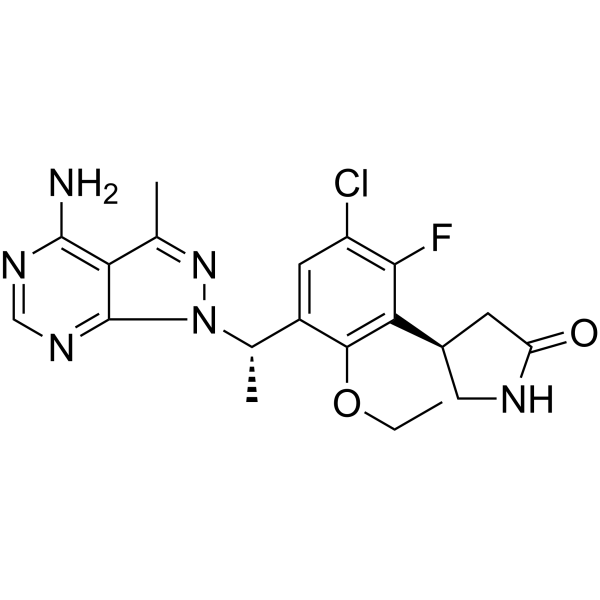
HY-109068
ParsaclisibPI3Kδ Inhibitor -
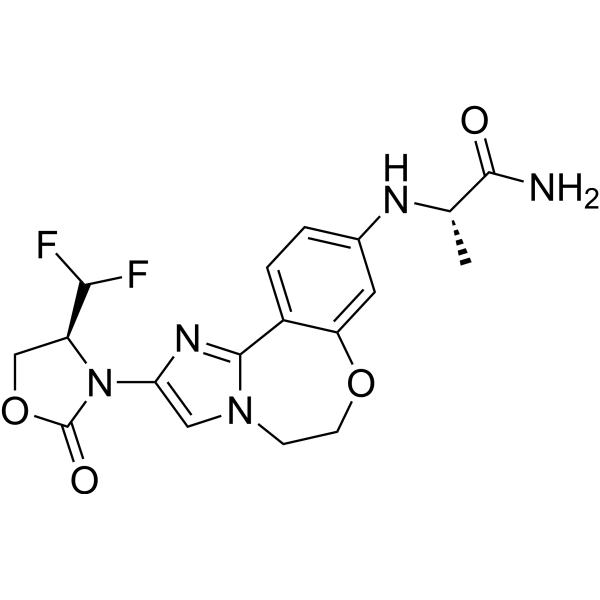
HY-101562
InavolisibPI3Kα Inhibitor -
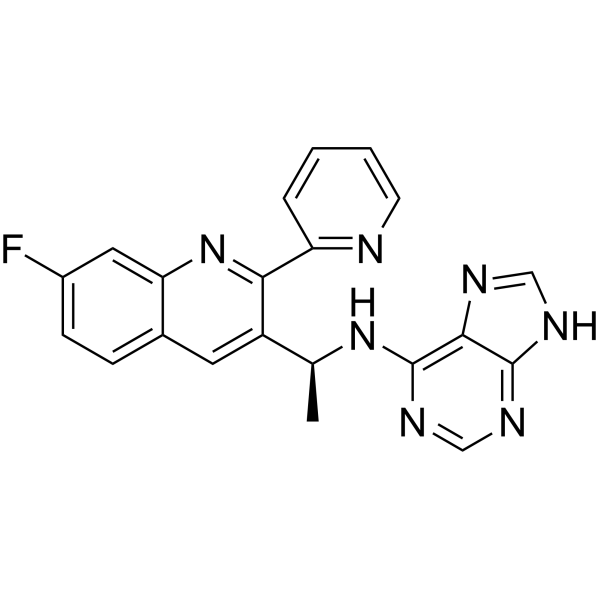
HY-12948
AMG319PI3Kδ Inhibitor -
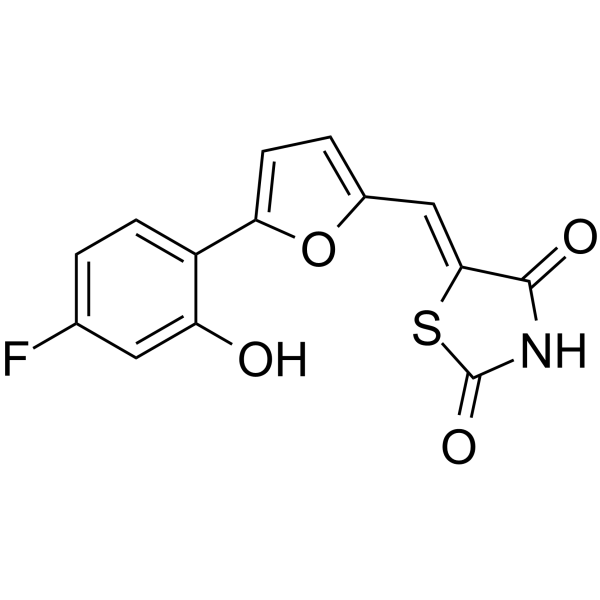
HY-13532
AS-252424PI3K Inhibitor -
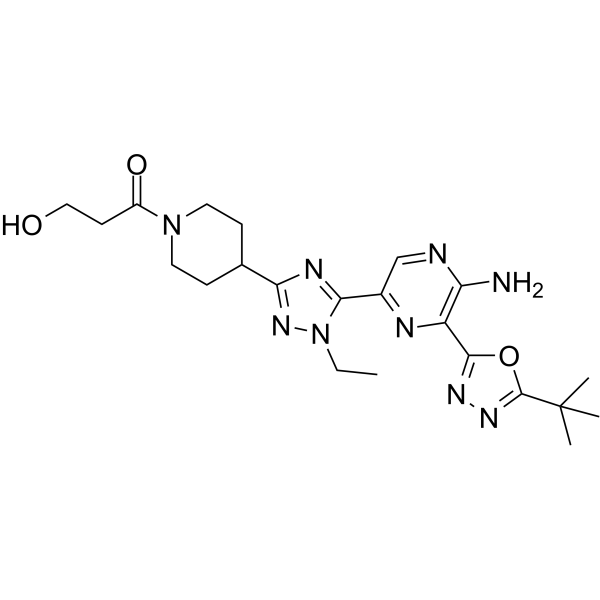
HY-12869
AZD-8835PI3Kα/δ Inhibitor -
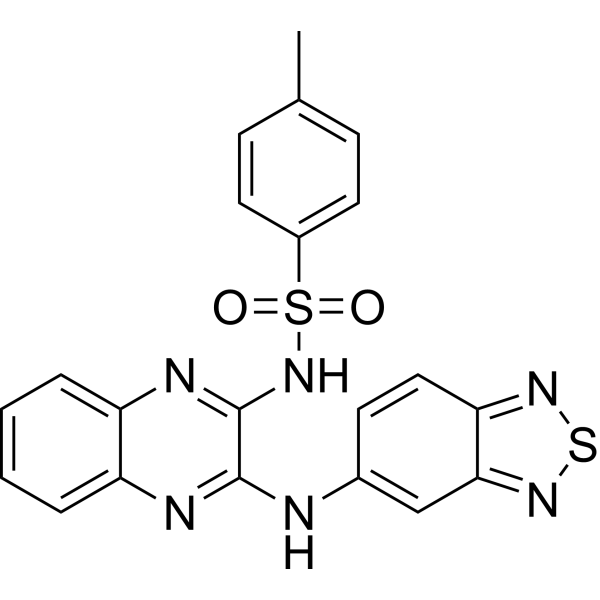
HY-11105
Pilaralisib analogueApoptosis Inducer -
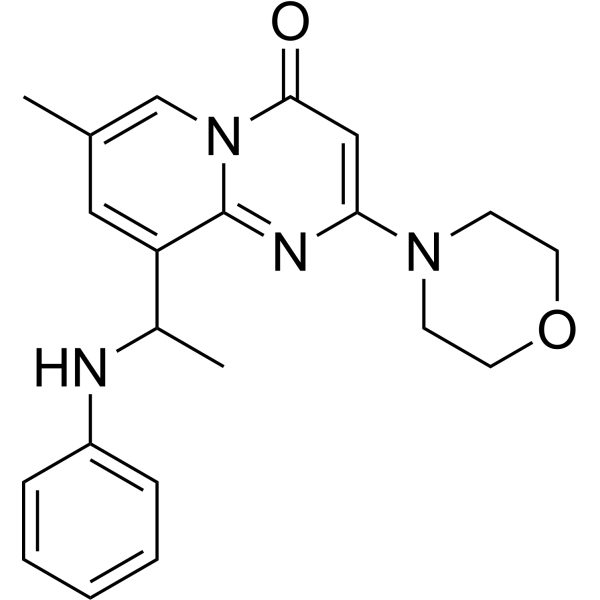
HY-10114
TGX-221Keap1-Nrf2 Interaction Inhibitor -
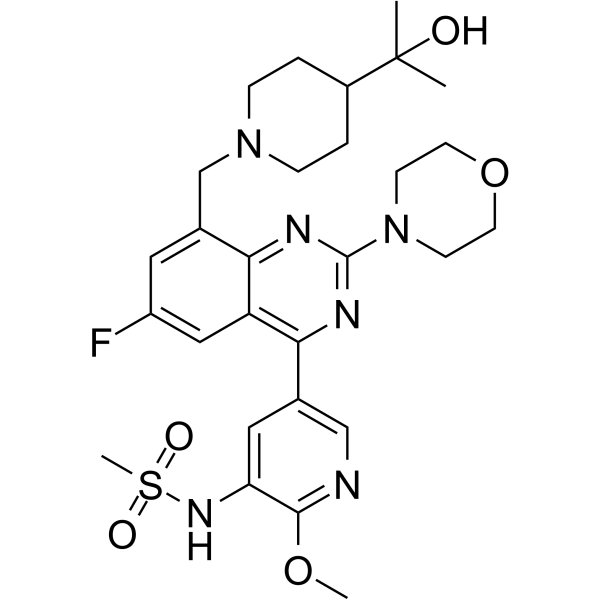
HY-102031
LinperlisibPI3Kδ Inhibitor -
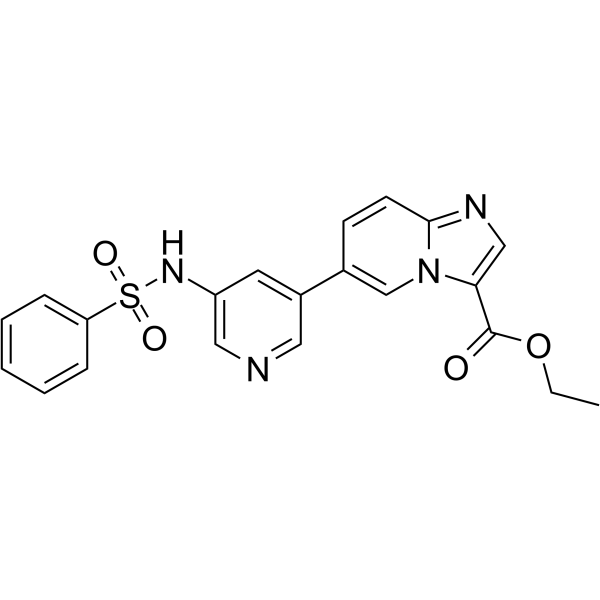
HY-15868
HS-173PI3Kα Inhibitor -
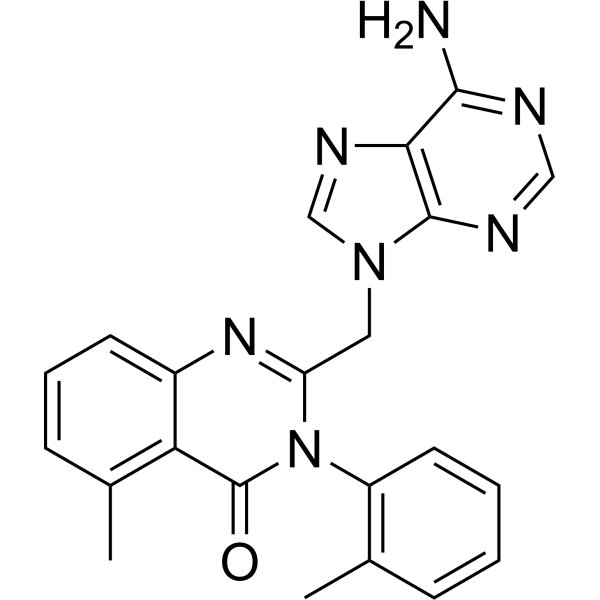
HY-10110
IC-87114PI3Kδ Inhibitor -
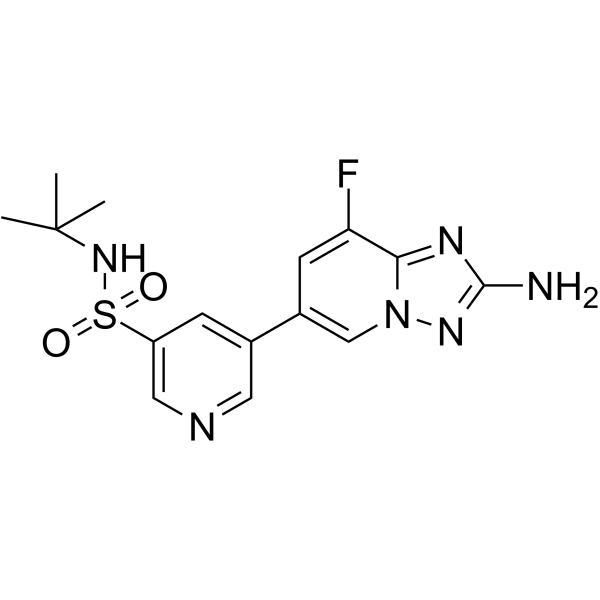
HY-15294
CZC24832PI3Kγ Inhibitor -

HY-16754R
Seletalisib (Standard)PI3Kδ Inhibitor
Publications Citing Use of MedChemExpress (MCE) Seletalisib
More

Activité biologique
Description
IC50 & Target
[1]|
PI3Kδ 12 nM (IC50) |
Cellular Effect
|
Cell Line

|
Type | Value | Description | References |
|---|---|---|---|---|
| Neutrophil | IC50 |
16 nM
Compound: 13
|
Cytotoxicity against in human Neutrophil cells
Cytotoxicity against in human Neutrophil cells
|
[PMID: 30582813] |
In Vitro
Seletalisib is a potent, ATP-competitive and highly selective PI3Kδ inhibitor able to block AKT phosphorylation following activation of the BCR in a B-cell line. Seletalisib inhibits N-formyl peptides (fMLP)-stimulated but not phorbol myristate acetate (PMA)-stimulated superoxide release from human neutrophils consistent with a PI3Kδ-specific activity. No indications of cytotoxicity are observed in PBMCs or other cell types treated with seletalisib. seletalisib blocks human T-cell production of several cytokines from activated T-cells. Seletalisib inhibits T-cell differentiation to Th1, Th2, and Th17 subtypes. Additionally, seletalisib inhibits B-cell proliferation and cytokine release. In human whole blood assays, seletalisib inhibits CD69 expression upon B-cell activation and anti-IgE-mediated basophil degranulation[1].
MedChemExpress (MCE) has not independently confirmed the accuracy of these methods. They are for reference only.
In Vivo
MedChemExpress (MCE) has not independently confirmed the accuracy of these methods. They are for reference only.
Essai clinique
| NCT Number | Sponsor | Condition | Start Date |
Phase
|
|---|---|---|---|---|
| NCT01329991 | Plexxikon| | 2011-05 | PHASE1 |


Chemical Information
-
CAS No. 1362850-20-1
-
Appearance Solid
-
Masse moléculaire 482.85
-
Formule C23H14ClF3N6O
-
Color White to light yellow
-
SMILES
FC(F)(F)[C@H](NC1=C2C(C=CC=N2)=NC=N1)C3=CC4=CC=CC(Cl)=C4N=C3C5=CC=C[N+]([O-])=C5
-
Synonyms
UCB5857
-
Livraison
Room temperature in continental US; may vary elsewhere.
-
Stockage
Powder -20°C 3 years 4°C 2 years In solvent -80°C 2 years -20°C 1 year


Publications (2)
-
Journal Impact Factor
-
Most Recent
-
Phytomedicine
CBX5 loss drives Pl3Kδ inhibitor resistance in mantle cell lymphoma and propolis restores sensitivity by inducing CBX5-mediated ferroptosis. [Abstract]2025 Jul 25:143:156911. PMID: 40466505 -
Cells
PI3Kδ Sustains Keratinocyte Hyperproliferation and Epithelial Inflammation: Implications for a Topically Druggable Target in Psoriasis. [Abstract]2021 Oct 2;10(10):2636. PMID: 34685616


Solvant et solubilité
In Vitro:
DMSO : ≥ 83.3 mg/mL (172.52 mM; Hygroscopic DMSO has a significant impact on the solubility of product, please use newly opened DMSO)
* "≥" means soluble, but saturation unknown.
Please refer to the solubility information to select the appropriate solvent. Once prepared, please aliquot and store the solution to prevent product inactivation from repeated freeze-thaw cycles.
Storage method and period of stock solution: -80°C, 2 years; -20°C, 1 year. When stored at -80°C, please use it within 2 years. When stored at -20°C, please use it within 1 year.
Please refer to the solubility information to select the appropriate solvent. Once prepared, please aliquot and store the solution to prevent product inactivation from repeated freeze-thaw cycles.
Storage method and period of stock solution: -80°C, 2 years; -20°C, 1 year. When stored at -80°C, please use it within 2 years. When stored at -20°C, please use it within 1 year.
Concentration (start) × Volume (start) = Concentration (final) × Volume (final)
In Vivo:
Select the appropriate dissolution method based on your experimental animal and administration route.
- For the following dissolution methods, please ensure to first prepare a clear stock solution using an In Vitro approach and then sequentially add co-solvents:
- To ensure reliable experimental results, the clarified stock solution can be appropriately stored based on storage conditions. As for the working solution for In Vivo experiments, it is recommended to prepare freshly and use it on the same day.
- The percentages shown for the solvents indicate their volumetric ratio in the final prepared solution. If precipitation or phase separation occurs during preparation, heat and/or sonication can be used to aid dissolution.
In Vivo Dissolution Calculator
Please enter the basic information of animal experiments:
-
-
-
-
Recommended: Prepare an additional quantity of animals to account for potential losses during experiments.
Please enter your animal formula composition:
-
%DMSO +
Recommended: Keep the proportion of DMSO in working solution below 2% if your animal is weak.
-
%+
-
+%Tween-80 + +
-
%Saline +
The co-solvents required include: DMSO, . All of co-solvents are available by MedChemExpress (MCE). , Tween 80. All of co-solvents are available by MedChemExpress (MCE).
Working solution concentration: 0.22 mg/mL
Method for preparing stock solution: mg drug dissolved in μL DMSO. Stock solution concentration: mg/mL.
1. Take μL DMSO stock solution;
2. Add μL .
μL , mix evenly;
3. Then add μL Tween 80, mix evenly;
4. Then add μL
Please ensure that the stock solution in the first step is dissolved to a clear state, and add co-solvents in sequence. You can use ultrasonic heating (ultrasonic cleaner, recommended frequency 20-40 kHz), vortexing, etc. to assist dissolution.


Pureté et documentation
-
Fiche technique (280 KB)
-
SDS (393 KB)
- English - EN (393 KB)
- Français - FR (393 KB)
- Deutsch - DE (393 KB)
- Norwegian - NO (393 KB)
- Español - ES (393 KB)
- Swedish - SV (393 KB)
- Italian - IT (393 KB)
- Korean - KR (393 KB)
- Portuguese - PT (393 KB)
-
Instruction de manipulation (2659 KB)
Références


Complete Stock Solution Preparation Table
Please refer to the solubility information to select the appropriate solvent. Once prepared, please aliquot and store the solution to prevent product inactivation from repeated freeze-thaw cycles.
Storage method and period of stock solution: -80°C, 2 years; -20°C, 1 year. When stored at -80°C, please use it within 2 years. When stored at -20°C, please use it within 1 year.
| Optional Solvent | Concentration Solvent Mass | 1 mg | 5 mg | 10 mg | 25 mg |
|---|---|---|---|---|---|
| DMSO | 1 mM | 2.0710 mL | 10.3552 mL | 20.7104 mL | 51.7759 mL |
| 5 mM | 0.4142 mL | 2.0710 mL | 4.1421 mL | 10.3552 mL | |
| 10 mM | 0.2071 mL | 1.0355 mL | 2.0710 mL | 5.1776 mL | |
| 15 mM | 0.1381 mL | 0.6903 mL | 1.3807 mL | 3.4517 mL | |
| 20 mM | 0.1036 mL | 0.5178 mL | 1.0355 mL | 2.5888 mL | |
| 25 mM | 0.0828 mL | 0.4142 mL | 0.8284 mL | 2.0710 mL | |
| 30 mM | 0.0690 mL | 0.3452 mL | 0.6903 mL | 1.7259 mL | |
| 40 mM | 0.0518 mL | 0.2589 mL | 0.5178 mL | 1.2944 mL | |
| 50 mM | 0.0414 mL | 0.2071 mL | 0.4142 mL | 1.0355 mL | |
| 60 mM | 0.0345 mL | 0.1726 mL | 0.3452 mL | 0.8629 mL | |
| 80 mM | 0.0259 mL | 0.1294 mL | 0.2589 mL | 0.6472 mL | |
| 100 mM | 0.0207 mL | 0.1036 mL | 0.2071 mL | 0.5178 mL |


Seletalisib Related Classifications
HY-16754 Related Classifications
 Powered by Bioz